Mulbagal
The eastern temple town near the Andhra border — the monolithic Kurudumale Ganesha, the Anjaneya and Virupaksha temples, the Sripadaraja mutt at Narasimha Tirtha, the Ramalingeshwara heritage of Avani and the Devarayasamudra lake.
Where to go in Kolar
Kolar
The district capital of the eastern plateau — the Ganga-Chola Kolaramma temple that named the town, the Vijayanagara Someshwara temple by the old fort, and the boulder caves and spring of Antara Gange on its edge.
Kolar Gold Fields
The historic gold-mining town about 30 km from Kolar — the deep-shaft BGML heritage and colonial townscape of KGF, and the colossal lingam field of Kotilingeshwara at Kammasandra nearby.
Bangarapet
The railway-junction taluk west of KGF — Hyder Ali’s birthplace fort at Budikote, the hilltop Bangaru Tirupati temple, and the Palar reservoir of Bethamangala.
Mulbagal
The eastern temple town near the Andhra border — the monolithic Kurudumale Ganesha, the Anjaneya and Virupaksha temples, the Sripadaraja mutt at Narasimha Tirtha, the Ramalingeshwara heritage of Avani and the Devarayasamudra lake.
Malur
The western taluk toward Bengaluru — the living granite stone-sculpture village of Shivarapatna, the "Shilpakashi of Karnataka".
How to reach Mulbagal
Mulbagal is a Kolar base for The Kolar Gold Fields, the Ganga-Chola Kolaramma and Vijayanagara Someshwara temples, the caves of Antara Gange, the giant Kotilingeshwara lingam, the monolithic Kurudumale Ganesha, the Ramachandra heritage of Avani, Hyder Ali’s Budikote fort and the sculptors of Shivarapatna.
Places in Mulbagal
Every verified place in Mulbagal — filter by what you’re after.
Verified places are being added. The category filters will fill in as approved stays, restaurants, experiences, sights, shops and nature listings go live.
List your placePlaces to Visit in Mulbagal
The best tourist places to visit in Mulbagal — temples, viewpoints, lakes, heritage and nature, each with a full guide, how to reach it and what to see nearby.
A famous temple at Kurudumale about 10 km north of Mulbagal, housing a ~4 m monolithic Ganesha said to be swayambhu, set in a finely carved Vijayanagara pillared mantapa — one of the largest Ganesha idols in Karnataka. This temple guide belongs to the Mulbagal planning base in Kolar, Karnataka, with route context, best-time notes and verified inventory categories for stays, food, operators, shops, wellness and transport as they are approved.
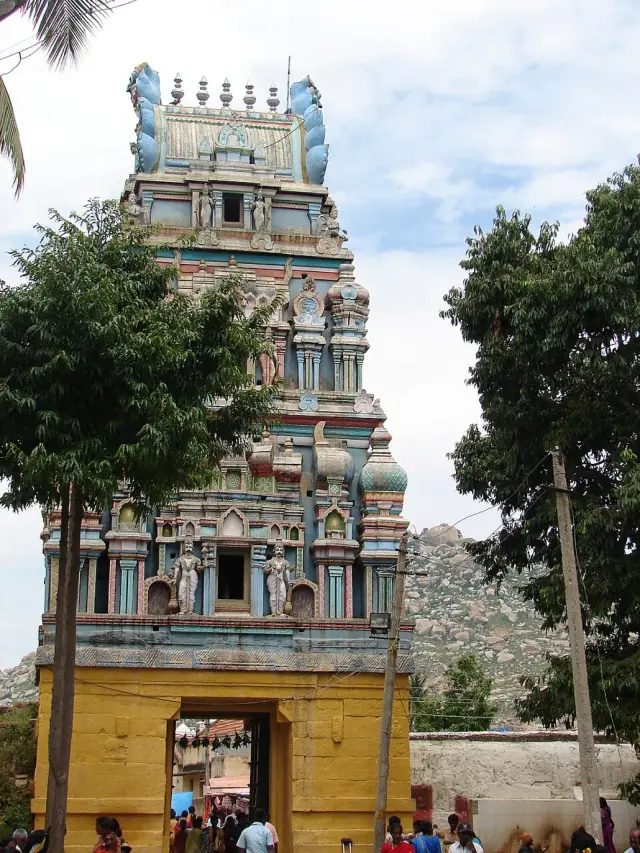
Open guide →A revered Hanuman (Anjaneya) temple in Mulbagal town, associated with the Dvaita saint Vyasaraja, and housing shrines to Rama-Sita, Lakshmi-Narasimha and Venugopala — a central pilgrimage of the temple town called the "Dakshina Mandara". This temple guide belongs to the Mulbagal planning base in Kolar, Karnataka, with route context, best-time notes and verified inventory categories for stays, food, operators, shops, wellness and transport as they are approved.
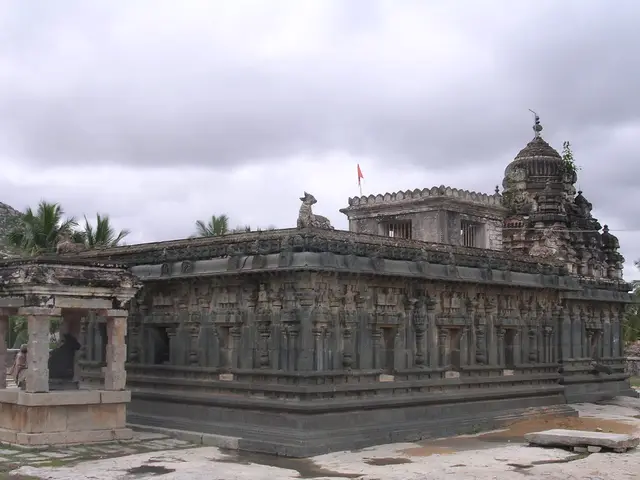
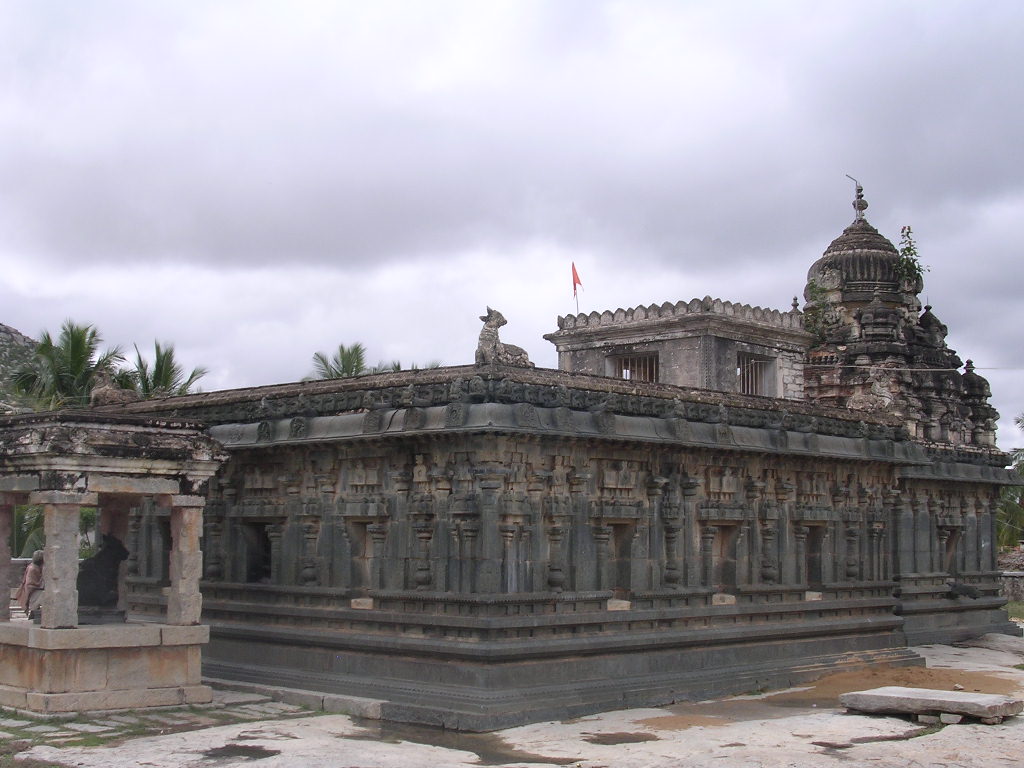
Open guide →A finely carved Shiva temple near Mulbagal with a Simha-vahini Durga shrine and an ornamental temple tank — a lesser-known heritage temple of the eastern plateau. (Distinct from the Virupaksha temple of Hampi.) This temple guide belongs to the Mulbagal planning base in Kolar, Karnataka, with route context, best-time notes and verified inventory categories for stays, food, operators, shops, wellness and transport as they are approved.
Open guide →A cave shrine and Dvaita matha near Mulbagal around a swayambhu Yoga-Narasimha on a boulder, where the 15th-century saint Sripadaraja — teacher of Vyasaraja — lived and taught; the Sripadaraja Mutt and its brindavana stand here. This heritage guide belongs to the Mulbagal planning base in Kolar, Karnataka, with route context, best-time notes and verified inventory categories for stays, food, operators, shops, wellness and transport as they are approved.
Open guide →A heritage temple village about 13 km from Mulbagal, called the "Gaya of the South" — the 10th-century Nolamba Ramalingeshwara group of ASI-protected Shiva temples (their lingas named for Rama, Lakshmana, Bharata and Shatrughna) below the Avani Betta hill, whose Sita temple is linked to the Valmiki-ashram and Lava–Kusha legend. This heritage guide belongs to the Mulbagal planning base in Kolar, Karnataka, with route context, best-time notes and verified inventory categories for stays, food, operators, shops, wellness and transport as they are approved.
Open guide →A large historic reservoir of about 500 acres in the Mulbagal country, a scenic and bird-rich picnic lake fed by the plateau’s seasonal streams. This lake guide belongs to the Mulbagal planning base in Kolar, Karnataka, with route context, best-time notes and verified inventory categories for stays, food, operators, shops, wellness and transport as they are approved.
Open guide →Get listed in Mulbagal for free
Roampedia is commission-free. Travellers discover your business, book directly and contact you through official details. Basic listings are free, while Gold and Platinum package upgrades can be requested from the owner dashboard after approval.
Mulbagal travel FAQs
What are the best places to visit in Mulbagal?
Top places to visit in Mulbagal include Kurudumale Ganesha Temple, Anjaneya Swamy Temple, Mulbagal, Virupaksha Temple, Mulbagal, Narasimha Tirtha (Sripadaraja Mutt), Avani, Devarayasamudra Lake — each has a full guide with how to reach it and what to see nearby on this page.
How do I reach Mulbagal?
The nearest airport to Mulbagal is Kempegowda International, Bengaluru (BLR) ~70 km from Kolar. The rail gateway is Bangarapet (BWT) Junction — the district rail gateway on the Bengaluru–Chennai line — with Kolar and KGF on branch lines; trains from Bengaluru, Chennai and Chintamani. NH-75 (the Bengaluru–Chennai highway) runs through Kolar; KSRTC hubs at Kolar, KGF, Bangarapet and Mulbagal with frequent buses from Bengaluru. A car or auto is best for Antara Gange, Avani, Budikote and Kurudumale.
What is the best time to visit Mulbagal?
October to February is the coolest, most comfortable season to visit Mulbagal and the rest of Karnataka. March to May is hot on the plains, and the June–September southwest monsoon brings the main rains, heaviest along the coast and Western Ghats.