What to expect
Highlights
- Identify the principal structure before photographing it.
- Read architecture and setting together.
- Respect current worship or commemoration.
- Combine it with one realistic nearby stop.
Anjaneya Swamy Temple, Mulbagal is a central Mulbagal shrine dedicated to Anjaneya and associated with the Dvaita teacher Vyasaraja.
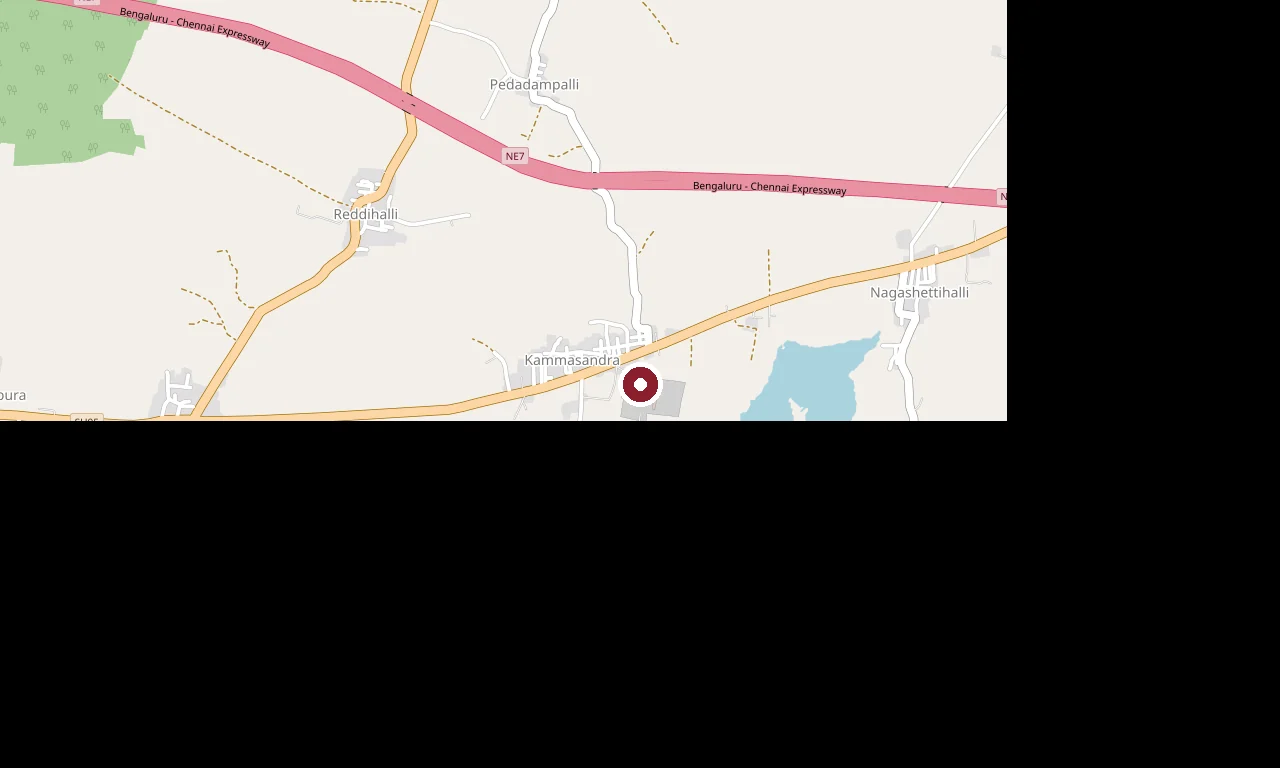
OpenStreetMap view centred on Anjaneya Swamy Temple, Mulbagal; the marker identifies the mapped subject, not a guaranteed public entrance.
Check entry arrangements. Ask temple staff about visitor entry, dress requirements and access to the inner shrine before you travel, especially if you are visiting as a non-Hindu.
Dress respectfully and follow the institution’s admission and photography rules.
The temple belongs to Mulbagal’s dense pilgrimage landscape and should be visited for present worship as well as its historical association.
Hanuman devotion, offerings and festival crowds set the rhythm. Follow current darshan lines, dress rules and photography instructions.
Anjaneya Swamy Temple, Mulbagal is a central Mulbagal shrine dedicated to Anjaneya and associated with the Dvaita teacher Vyasaraja.
Anjaneya Swamy Temple, Mulbagal is a central Mulbagal shrine dedicated to Anjaneya and associated with the Dvaita teacher Vyasaraja.
The temple belongs to Mulbagal’s dense pilgrimage landscape and should be visited for present worship as well as its historical association.
Hanuman devotion, offerings and festival crowds set the rhythm. Follow current darshan lines, dress rules and photography instructions.
The useful way to read Anjaneya Swamy Temple, Mulbagal is to slow down and keep the named subject separate from neighbouring monuments, institutions and landscapes. Current signs and staff directions settle what is open; the map centre is orientation, not an invented entrance.
Hanuman devotion, offerings and festival crowds set the rhythm. Follow current darshan lines, dress rules and photography instructions.
The temple belongs to Mulbagal’s dense pilgrimage landscape and should be visited for present worship as well as its historical association.
The documented record places Anjaneya Swamy Temple, Mulbagal within Kolar district. Claims beyond the cited government, institutional and mapped evidence are deliberately avoided.
Identify the principal structure before photographing it.
Read architecture and setting together.
Respect current worship or commemoration.
Combine it with one realistic nearby stop.
October to February, preferably morning; check festival crowds and closures.
Live forecast loads in your browser.
Sunset is in about 42 minutes.
Sun and moon are calculated for this location and shown in IST. Photography windows are the hour around sunrise and sunset; the sunset bearing is degrees clockwise from true north. Moon phase is accurate to about half a day.
Browse local stays, food, activities and useful shops. Confirm current service directly; rural options identify their own locality.

Book with the place itself. India’s cyber-crime coordination centre warned in April 2025 that convincing copies of hotel and pilgrimage booking sites are being pushed through sponsored search and social ads, taking payment for rooms the property never hears about. Every listing here links to the business’s own contact details and its own Google or Bing profile — we take no commission and sit in nobody’s payment path. If a booking page reached you through an ad, check the address bar against the property’s own site before you pay. Fraud can be reported on cybercrime.gov.in or on 1930.
Choose a local circuit or a separate road outing. Check worship, market and forest access independently; these places do not share one admission or timetable.
Kurudumale Ganesha Temple.
living templeKurudumale Ganesha TempleA major monolithic Ganesha shrine north of Mulbagal with its own darshan plan.
Avani and the Mulbagal temple circuit.
protected temples and hillAvani temple villageNolamba temples and a separate hill pilgrimage make an unhurried extension.

Budikote fort village.
fort villageBudikoteHyder Ali’s birthplace village and ruined fort form a separate Bangarapet-side visit.
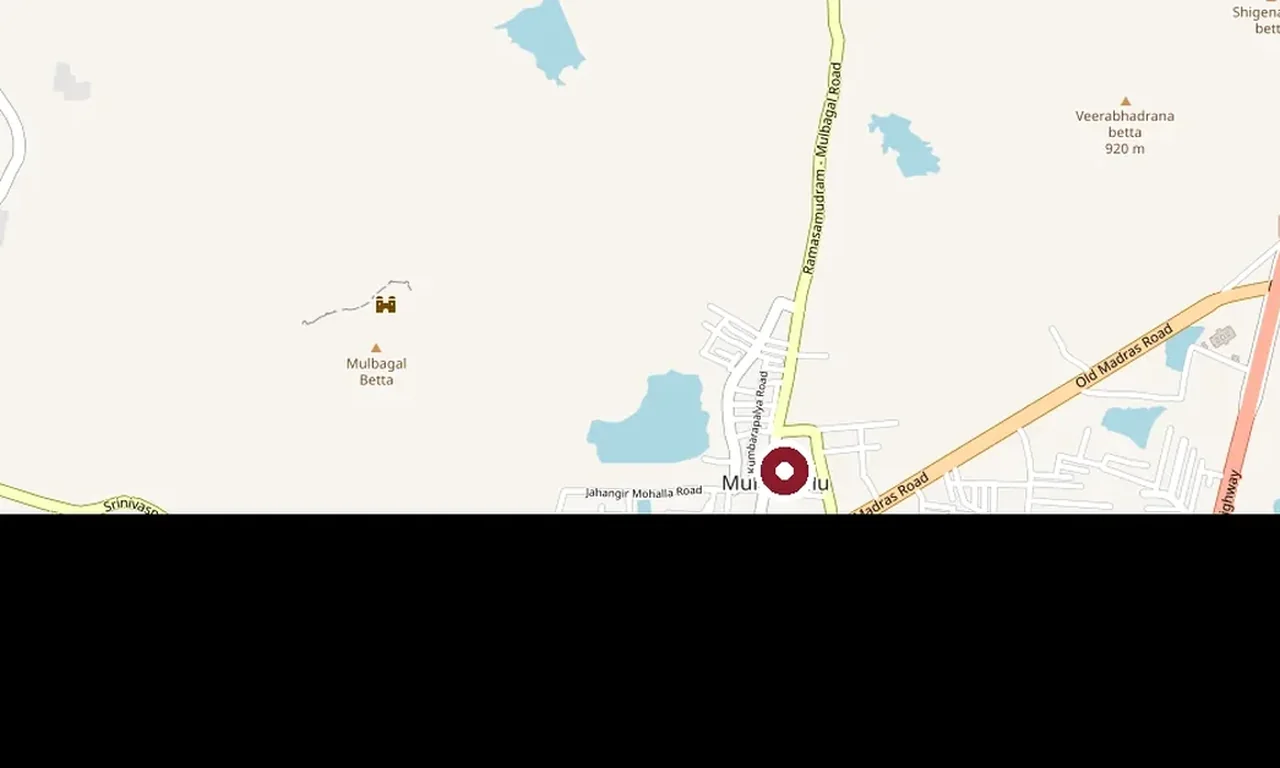
Mulbagal mapped context for the separate Narasimha Tirtha visit.
Dvaita pilgrimageNarasimha TirthaA separate Mulbagal matha and cave-shrine visit associated with Sripadaraja.
Roampedia is commission-free — own or know a stay, eatery, guide or shop near Anjaneya Swamy Temple, Mulbagal? List it and it appears here once verified.
Add a nearby businessEntry: No verified current public tariff is published; use only official on-site or authority information.
Photography: Photograph only from open public positions; do not cross barriers or disturb people or wildlife.
Parking: Use only a signed or locally directed space that does not block homes, gates, buses or emergency access.
Move slowly on the open visitor route and ask before entering side paths or compounds.
Online taxis: App-taxi pickup is not dependable at Anjaneya Swamy Temple, Mulbagal. Arrange a return vehicle or confirm a local driver before arrival.
If you are travelling by bus or ferry, check the return service with the operator before setting out. Leave time to reach the stop or jetty after your visit.
Ask at the jetty or stand for the time of the last service back, not the next one. If you miss it, an auto or app cab is the fallback — agree the fare before you get in.
Checked 6 September 2026 against source 1source 2. Conditions change and surfaces vary with weather — if step-free access is essential, confirm with the site before you travel.
For toilets, drinking water or a cash machine, ask at the site or a nearby business. No local service locations are available on this page.
Emergency numbers are verified against official government and state tourism sources. 112 works anywhere in India.
Use mulbagal for dependable meals and drinking water; do not assume the destination itself has refreshments.
Explore food in Mulbagal →Eat before the last-mile journey and carry sealed drinking water.
Plan lunch in the town centre after the visit rather than carrying food into protected, sacred or waterside ground.
Local stops come first, followed by separate district outings. Check each place’s own access and return journey; this is a choice of visits, not a single walking circuit.

Virupaksha Temple, Mulbagal
templeVirupaksha Temple, MulbagalA finely carved Shiva temple near Mulbagal with a Simha-vahini Durga shrine and an ornamental temple tank — a lesser-known heritage temple of the eastern plateau. (Distinct from the Virupaksha temple of Hampi.)
A cave shrine and Dvaita matha near Mulbagal around a swayambhu Yoga-Narasimha on a boulder, where the 15th-century saint Sripadaraja — teacher of Vyasaraja — lived and taught; the Sripadaraja Mutt and its brindavana stand here.
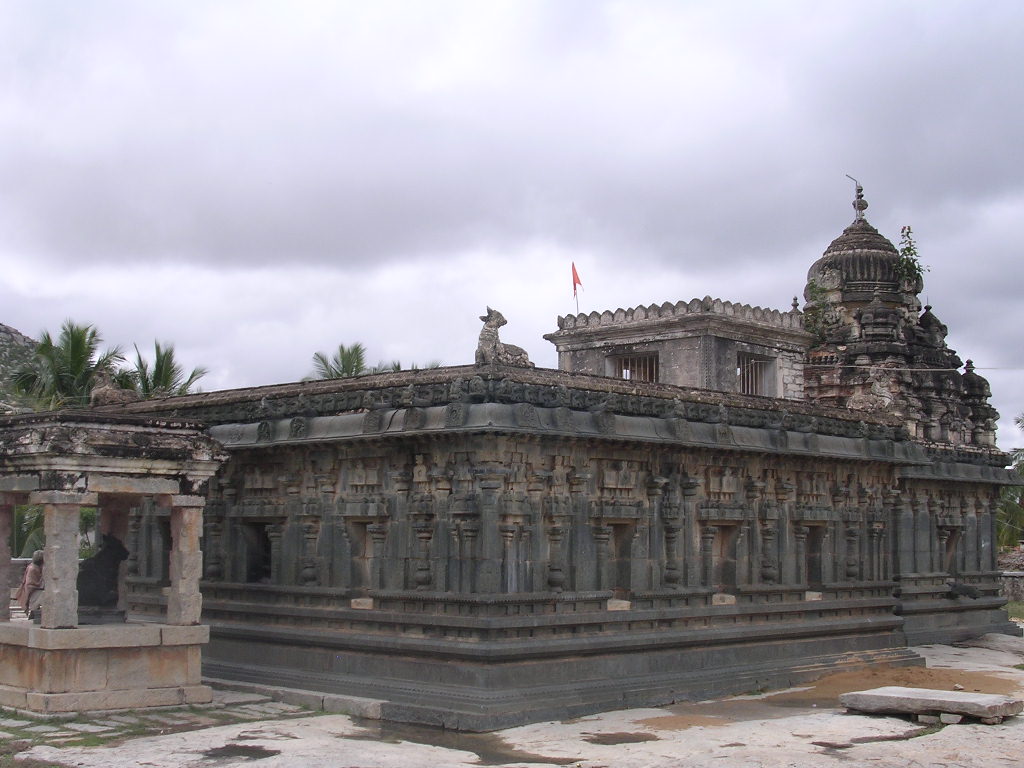
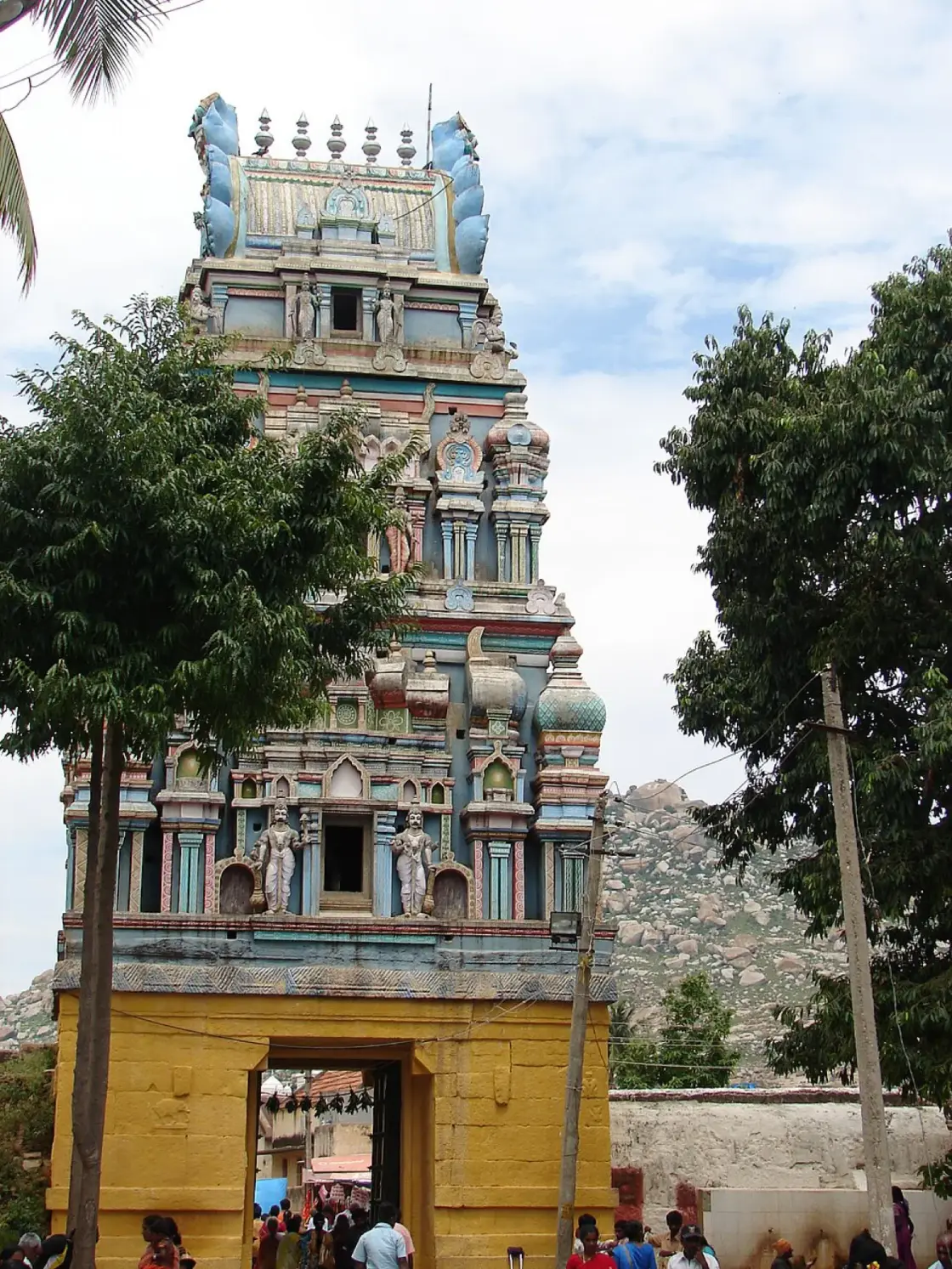
A public-domain photograph catalogued as Kurudumale temple; retained with a cautious caption because the Commons description does not name the exact façade.
templeKurudumale Ganesha TempleThe active Sri Vinayaka shrine administered as TM000276. Its exact entrance should not be inferred from Someshvara’s map point.
The Ramalingeshwara temple group at Avani, a separate heritage village from Kurudumale.
heritageAvaniA separate village and hill outing centred on the Ramalingeshwara temple group. Allow daylight, water and an independent road return.
A large historic reservoir of about 500 acres in the Mulbagal country, a scenic and bird-rich picnic lake fed by the plateau’s seasonal streams.

Bangaru Tirupati
templeBangaru TirupatiA hilltop Sri Venkataramana Swamy temple at Guttahalli in Bangarapet taluk, said to resemble the great Tirupati shrine, with adjoining Varaha, Vinayaka and Anjaneya shrines — a busy Vishnu pilgrimage of the district. (Distinct from Andhra’s Tirupati and from Ghati Subramanya.)

Bethamangala (Palar Dam)
damBethamangala (Palar Dam)A separate reservoir landscape. Keep to public ground, obey waterworks restrictions and do not swim.
The monumental linga and Nandi at Kotilingeshwara, a separate pilgrimage complex.
templeKotilingeshwaraA large active Shiva pilgrimage complex near KGF with its own opening, crowd and footwear arrangements.
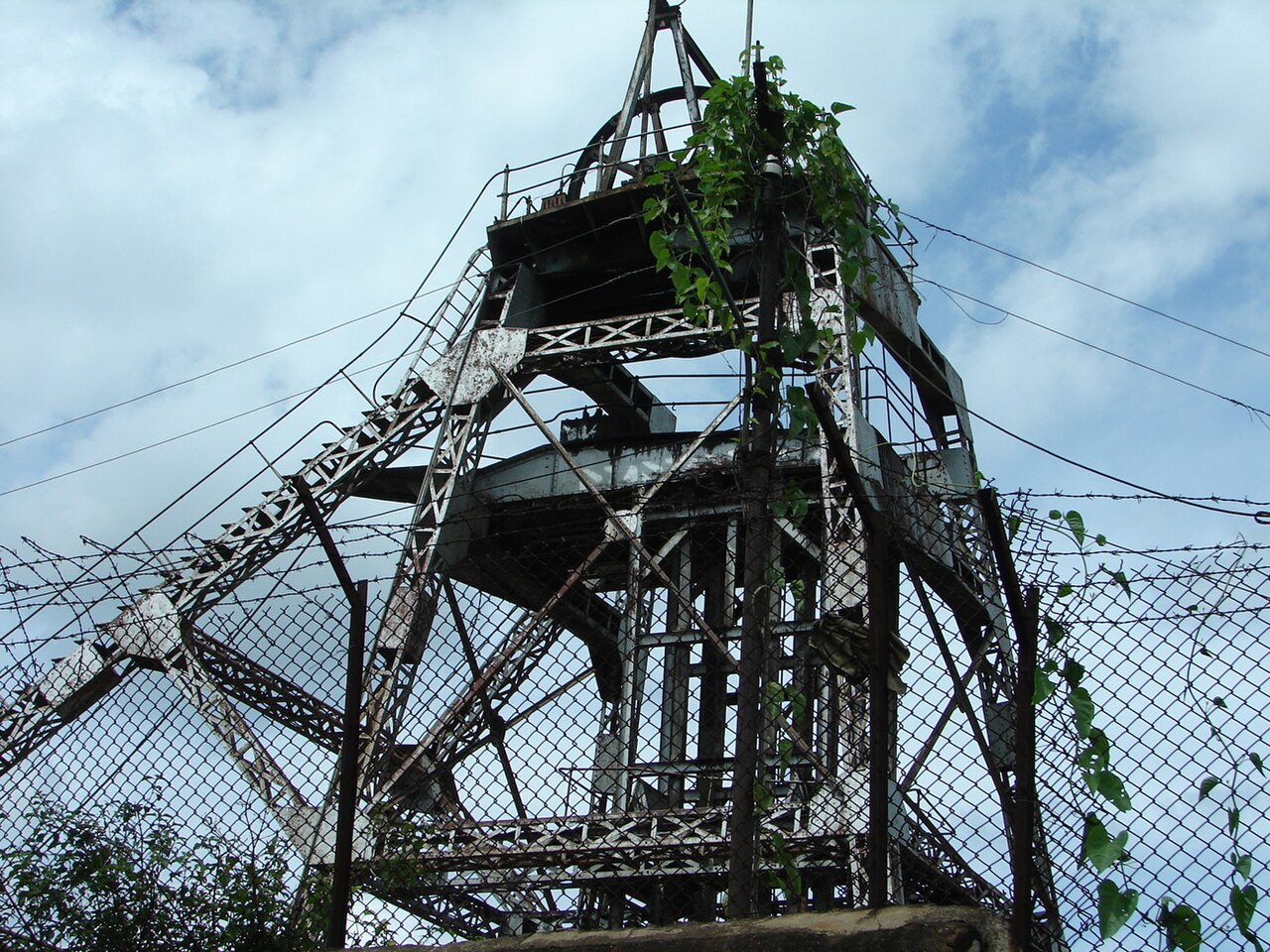
Champion Reef mine-shaft heritage at KGF; mine access is restricted.
heritageKolar Gold Fields (KGF)A historic mining town best read from public streets; shafts, compounds and industrial land are not an open museum.

Kolaramma Temple
templeKolaramma TempleThe Ganga-and-Chola Shakti temple in Kolar town after which the district is named — a Dravida vimana of about the 10th–11th century with twin shrines to Kolaramma and the Saptamatrikas, and fine Chola-era bronzes and inscriptions.

Someshwara Temple, Kolar
templeSomeshwara Temple, KolarA large 14th-century Vijayanagara Shiva temple near the old fort of Kolar town, an ASI Monument of National Importance with a soaring gopura, a deep temple tank and richly carved yali pillars. (Distinct from the Someshwara temples of Dharwad and Ulsoor.)

Antara Gange
caveAntara GangeA boulder-strewn hill of the Shatashrunga range about 3 km from Kolar town, known for its perennial Basavanna spring that feeds a stone tank, its volcanic cave passages and monkeys, and the steps up to the Kashi Visweswara shrine — a popular cave-trek and rappelling spot.
Nearby toilets, pharmacies, ATMs, seating and vets are community-mapped and may be incomplete or out of date. Map data © OpenStreetMap contributors | Walking times © openrouteservice.org by HeiGIT
The locator identifies the temple precinct. Use the currently open worship entrance and follow any procession diversions.
Anjaneya Swamy Temple, Mulbagal is a central Mulbagal shrine dedicated to Anjaneya and associated with the Dvaita teacher Vyasaraja.
The temple belongs to Mulbagal’s dense pilgrimage landscape and should be visited for present worship as well as its historical association.
Approach through mulbagal using the exact mapped feature and confirm the final public entrance locally.
Opening arrangements depend on the place: worship sessions, museum days and controlled forest or dam access are different. Use the linked official source or a posted local notice, and plan rural visits in daylight.
No current fee is guessed here. Pay only an officially displayed or receipted charge.
Ask for the nearest vehicle drop-off and step-free public area; thresholds, uneven ground and rural approaches may remain barriers.
October to February, preferably morning; check festival crowds and closures.
Entry: No verified current public tariff is published; use only official on-site or authority information. Timings: There is no single timetable for this group. Follow the linked official source or posted notice for worship, institutional, museum, forest or dam access, and keep rural visits to useful daylight.
Allow 1–2 unhurried hours, excluding the road journey.
Nearby you can pair Virupaksha Temple, Mulbagal, Narasimha Tirtha (Sripadaraja Mutt), Kurudumale Ganesha Temple, Avani.
Use daylight, stable public paths and current local directions; do not climb walls, sculpture, roofs or loose rock. Ask before entering worship, institutional, household or protected spaces and retain transport for the return.
Local stories and practical reading for a visit to Anjaneya Swamy Temple, Mulbagal and its surroundings.
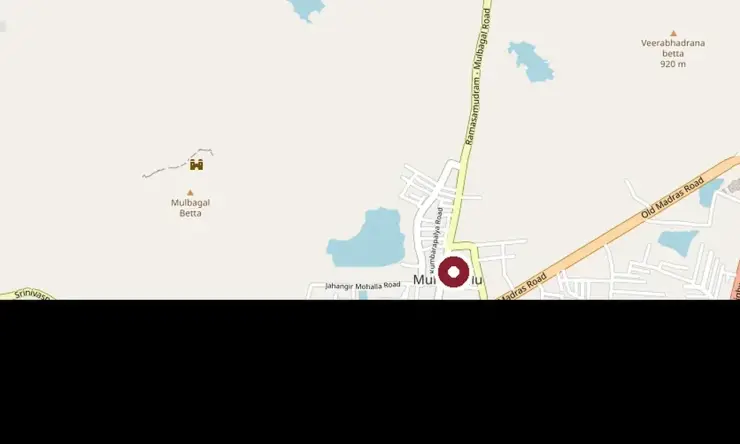
OpenStreetMap context centred on Anjaneya Swamy Temple, Mulbagal; this planning image does not assert a gate or public path.
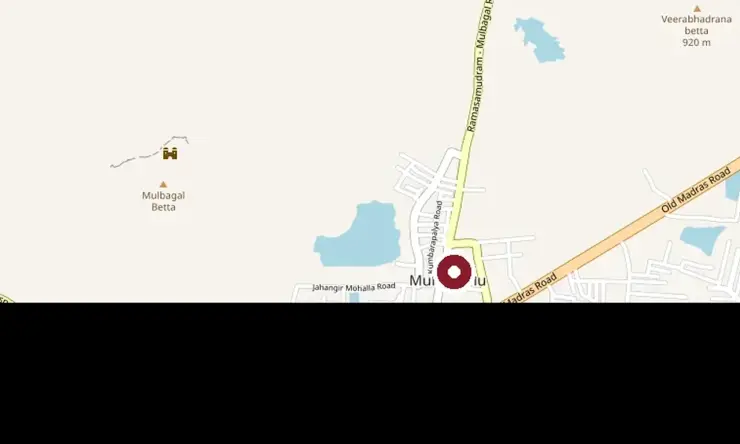
OpenStreetMap context centred on Anjaneya Swamy Temple, Mulbagal; this planning image does not assert a gate or public path.
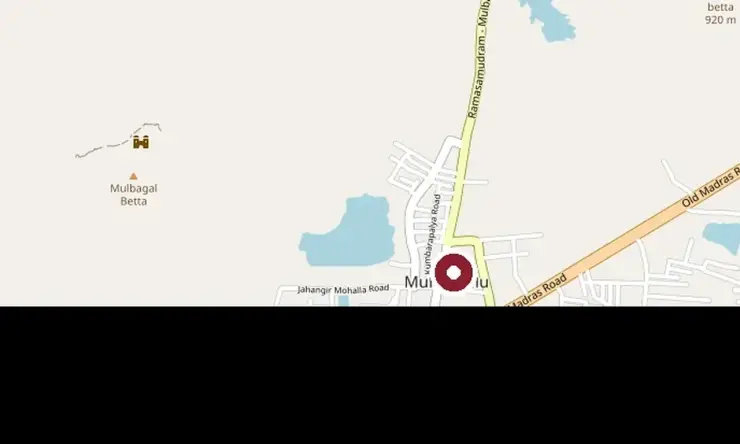
OpenStreetMap context centred on Anjaneya Swamy Temple, Mulbagal; this planning image does not assert a gate or public path.
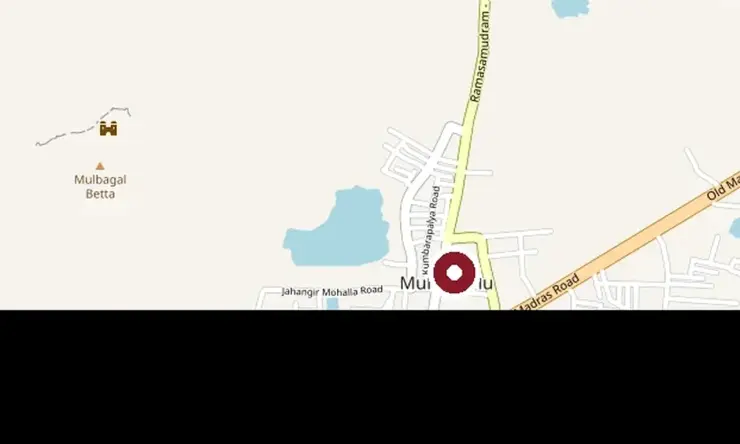
OpenStreetMap context centred on Anjaneya Swamy Temple, Mulbagal; this planning image does not assert a gate or public path.
Photographs: © OpenStreetMap contributors, ODbL (ODbL), Ganesha1 (Public domain), Megarajnaga (Public domain), Sudhir Herle, CC BY-SA 4.0, via Wikimedia Commons (CC BY-SA 4.0), Vijethnbharadwaj, CC BY-SA 4.0, via Wikimedia Commons (CC BY-SA 4.0), Shyamal, CC BY-SA 3.0, via Wikimedia Commons (CC BY-SA 3.0), Mithila, Public domain, via Wikimedia Commons (Public domain), Adu65 at English Wikipedia, Public domain, via Wikimedia Commons (Public domain), Hariharan Arunachalam ( NIC ), CC BY-SA 3.0, via Wikimedia Commons (CC BY-SA 3.0), kumararun85, CC BY-SA 3.0, via Wikimedia Commons (CC BY-SA 3.0), Sneha G Gupta, CC BY-SA 4.0, via Wikimedia Commons (CC BY-SA 4.0). Wikimedia Commons.