What to expect
Highlights
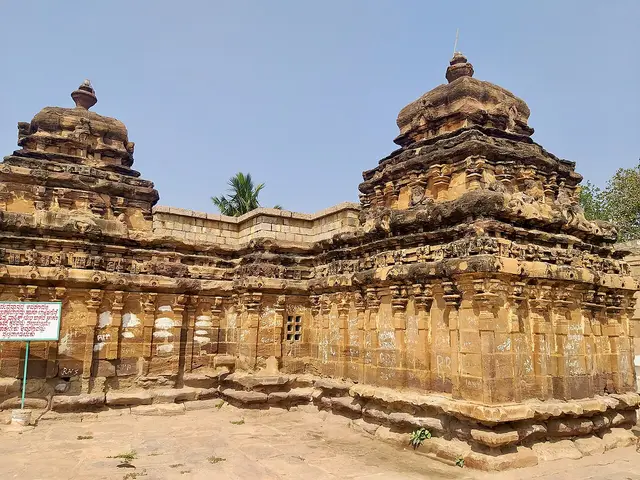
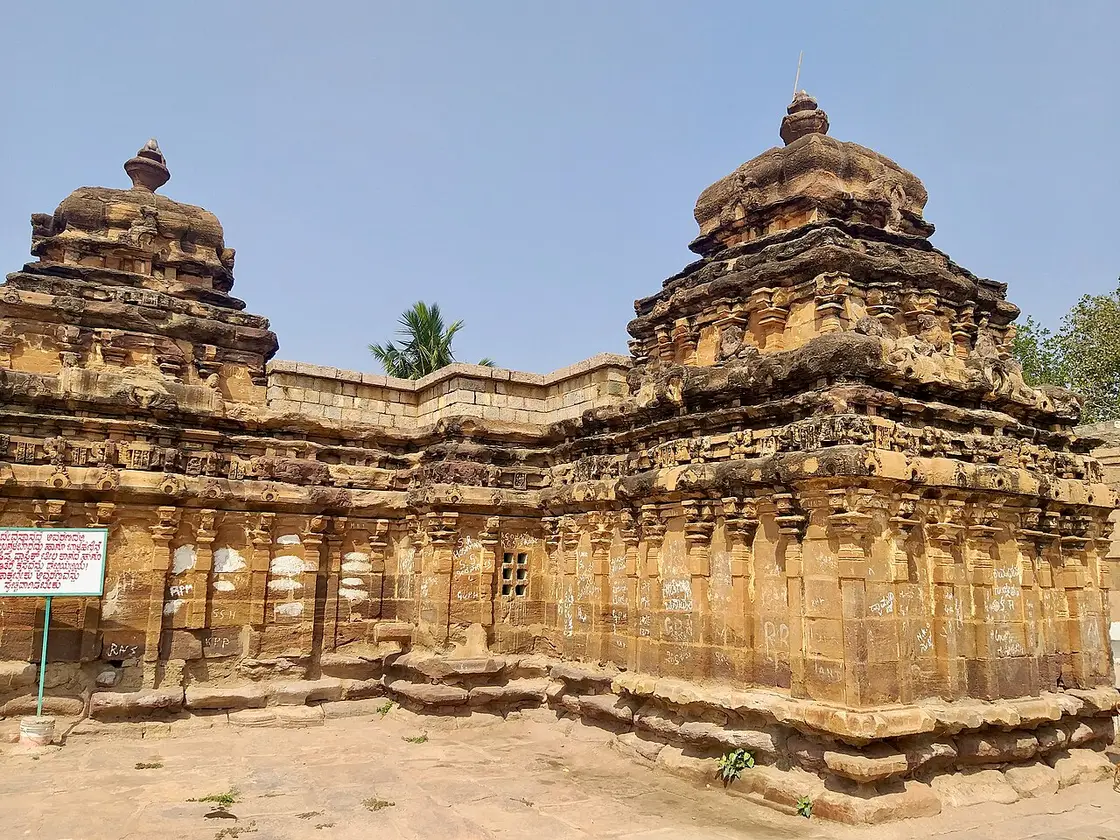
- Navalinga Temples, Kukanoor — A rare 9th-century Rashtrakuta–early-Chalukya complex at Kukanoor (Kuknur) with nine linga sanctums set in a row, richly built in the Deccan style and carrying old inscriptions.
The old temple town of Kukanoor (Kuknur) — the nine-shrine Navalinga temples of the Rashtrakuta–Chalukya age.
Live forecast loads in your browser.
Sun and moon are calculated for this location and shown in IST. Photography windows are the hour around sunrise and sunset; the sunset bearing is degrees clockwise from true north. Moon phase is accurate to about half a day.
 Fort & edicts base
The district town of Koppal (ancient Kopana) — the "impregnable" hill fort, the Gavisiddeshwara matha and its huge January jatre, and the Ashokan rock edicts at Gavimath and Palkigundu.
 Featured: Itagi Mahadeva Temple
The Yelburga belt — the great Western Chalukyan Mahadeva temple at Itagi, the "emperor among temples".
 Featured: Kanakachalapathi Temple, Kanakagiri
The Nayaka palegar capital of Kanakagiri ("Swarnagiri") — the towered Kanakachalapathi temple of Lakshmi Narasimha.
 Featured: Anjanadri Hill
The ancient left-bank village of Anegundi (Kishkindha), older than Hampi and across the Tungabhadra from it — the Anjanadri hill of Hanuman, the sacred Pampa Sarovar, the Ranganatha and Chintamani temples and the Gagan Mahal palace.
 Featured: Hire Benakal
The rice-bowl town of Gangavathi — the Hire Benakal megalithic necropolis, the scenic Sanapur lake, the Huligemma hill temple and the Kummata (Kammata Durga) fort.
Koppal district is known for: The Koppal hill fort and the Ashokan edicts of Gavimath and Palkigundu, the Chalukyan Mahadeva temple at Itagi and the Navalinga temples of Kukanoor, the Nayaka temple-town of Kanakagiri, and the Anegundi–Kishkindha cluster (Anjanadri Hill, Pampa Sarovar) with the Hire Benakal megaliths.
Every verified place in Kukanoor — filter by what you’re after.
Verified places are being added. The category filters will fill in as approved stays, restaurants, experiences, sights, shops and nature listings go live.
List your placeThe best tourist places to visit in Kukanoor — temples, viewpoints, lakes, heritage and nature, each with a full guide, how to reach it and what to see nearby.
Roampedia is commission-free. Travellers discover your business, book directly and contact you through official details. Basic listings are free, while Gold and Platinum package upgrades can be requested from the owner dashboard after approval.
We have not published a story about Kukanoor itself yet. These cover Koppal, the district it sits in, and travel in Karnataka generally.
We have not published a story about a place in Kukanoor itself yet. These are the nearest things we have written.

Gavimath and Palkigundu are separate hillocks, paired in one protected monument entry and joined by the voice of a Mauryan emperor.

The fort is not the work of one founder. Each power that needed this granite hill added a gate, wall, story or scar.

The stone pillars are only one layer. Koppal understands Gavimath through trividha dasoha: spiritual, educational and food service.
Wider guides to Koppal — its coast, its culture and the routes through it.

The route is short; the sun and the climbs are not. Put the fort first and use midday for food and rest.

Four core stops fit into one honest town day: the fort, Gavimath and Ashoka’s two rock-edict hillocks.

The district has too much for one loop. Choose Chalukya temples or the Tungabhadra landscape, then give that route a day.
Top places to visit in Kukanoor include Navalinga Temples, Kukanoor — each has a full guide with how to reach it and what to see nearby on this page.
The nearest airport to Kukanoor is Hubballi (HBX) ~140 km; Ballari (VDY, Vidyanagar/Toranagallu) ~90 km; Hyderabad (HYD) ~300 km. The rail gateway is Koppal (KBL) and Munirabad/Ginigera on the Hubballi–Guntakal line; Hosapete Junction (~35 km) for wider connections. NH-50 and NH-63; KSRTC and private buses from Hosapete (~35 km), Hubballi, Ballari and Bengaluru (~350 km); a car is best for Anegundi, Itagi, Kanakagiri and Hire Benakal.
October to February is the coolest, most comfortable season to visit Kukanoor and the rest of Karnataka. March to May is hot on the plains, and the June–September southwest monsoon brings the main rains, heaviest along the coast and Western Ghats.