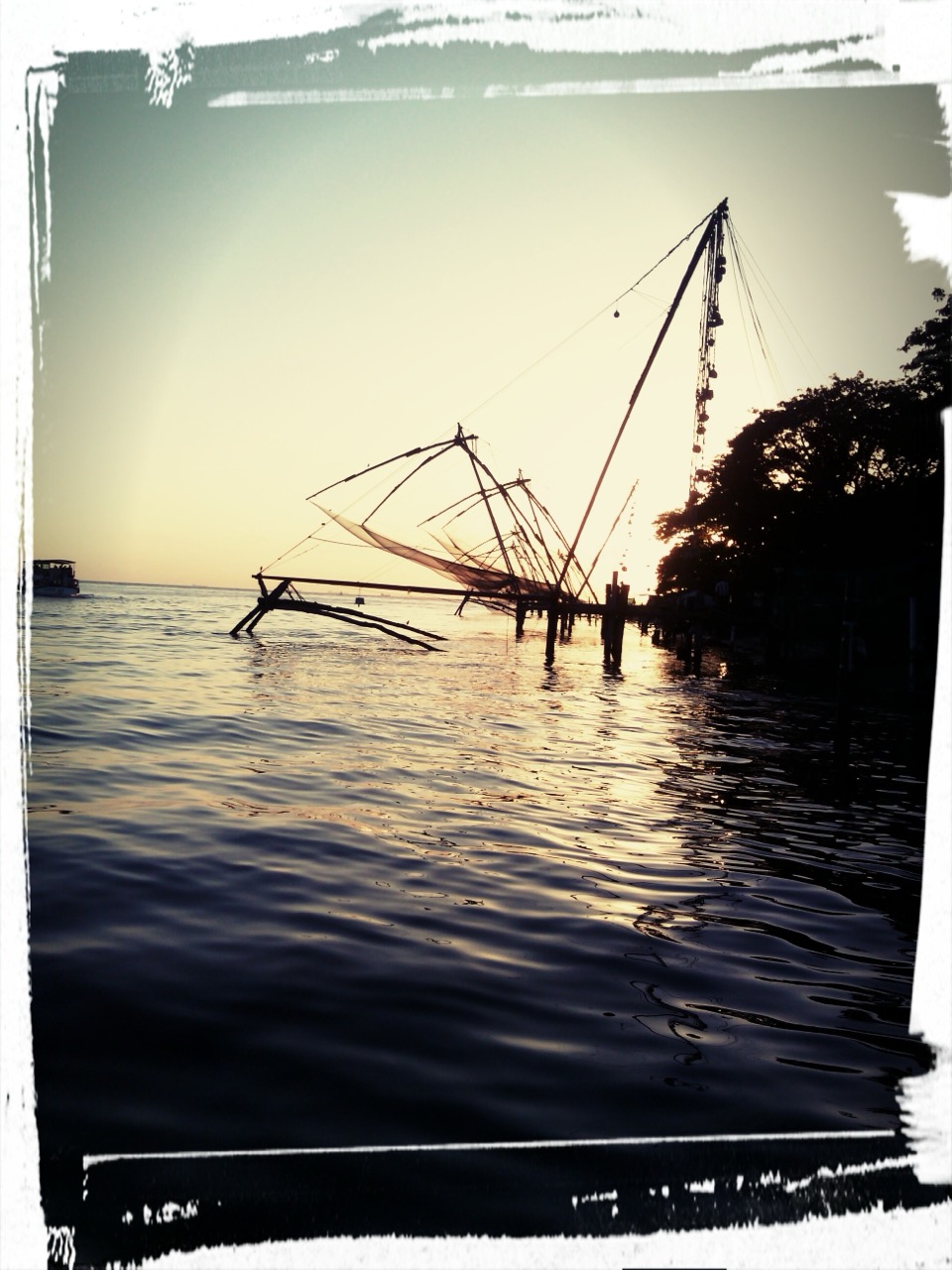
The row of giant cantilevered nets along the harbour mouth is the image most people carry away from Fort Kochi. They're beautiful — and they're still a working fishery, not a set piece. Here's what you're looking at and how to see it well.
- What: shore-operated lift nets ("Chinese fishing nets"), each worked by up to six people.
- Where: along the Fort Kochi waterfront, beside Fort Kochi Beach.
- Best time: sunset for photos; early morning to watch a catch hauled in.
- Cost: free to view; tip if you're shown how a net is worked.
What exactly are they?
Formally they're "shore-operated lift nets." Each structure stands at least 10 metres tall: a cantilever holds a horizontal net of 20 metres or more out over the water, counterbalanced by large stones hung from ropes at the other end. A team walks the beam and pulls the ropes to dip and lift the net — a slow, choreographed haul that brings up whatever is passing on the tide.
A 14th-century arrival
By tradition the nets were introduced by Chinese traders who reached the Malabar Coast in the 14th century — and the technique remains unusual in India, found mainly around Kochi and Kollam. It's often tied to that folk reading of the city's name, co-chin, "like China." Whether the etymology holds or not, the nets have been part of Kochi's working shoreline for centuries. The full backstory sits inside our history of Fort Kochi.
When to go, and how to shoot it
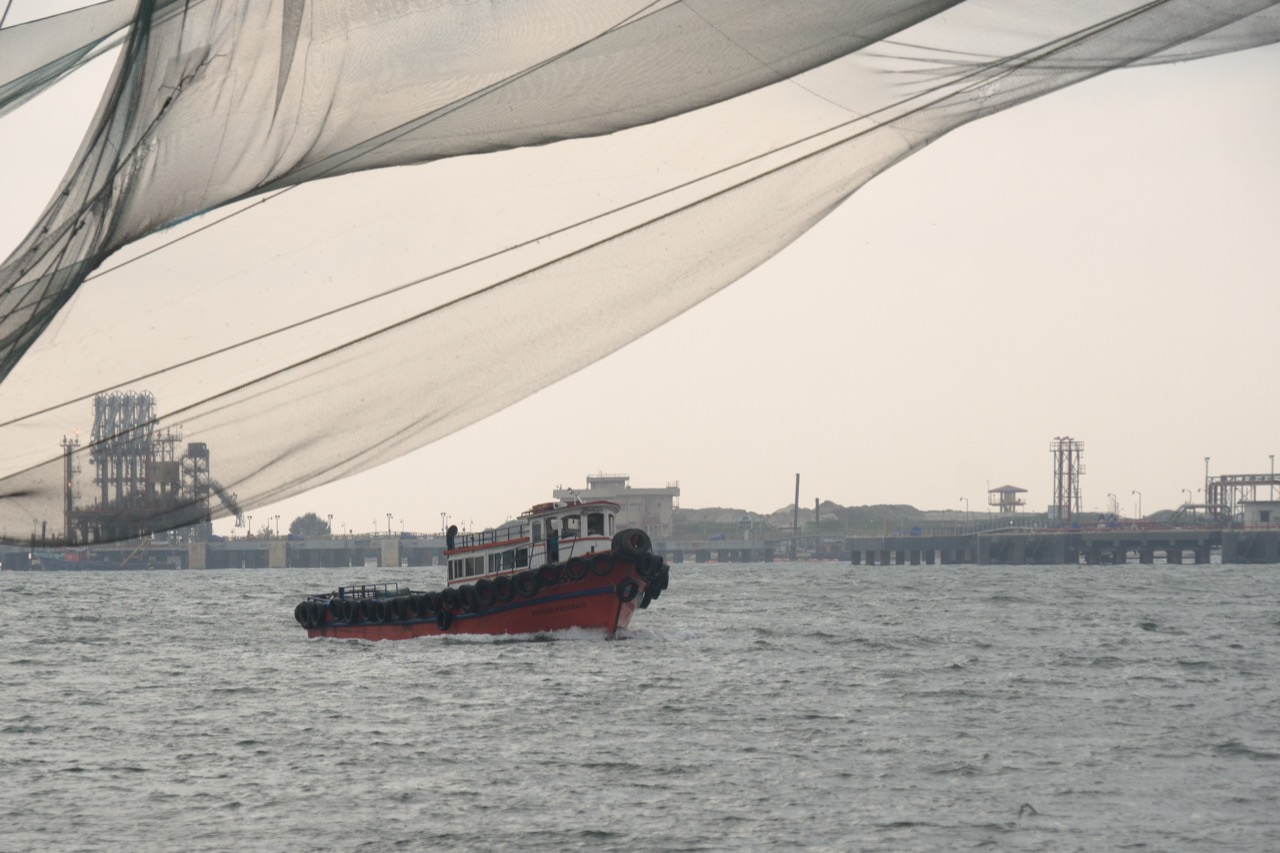
For photographs, come at sunset, when the frames silhouette against the sky and the light is warm. To see the nets actually worked, come early in the morning when crews haul the first catch. The fishermen will often let you watch or even help lift a net — offer a small tip if they do. The freshest seafood in Fort Kochi is sold right here, sometimes cooked to order at the stalls behind the nets.
Make a half-day of it
The nets sit beside Fort Kochi Beach and a short walk from St Francis Church and the Santa Cruz Basilica — easy to string together. See the rest in our things to do in Fort Kochi guide.
Nearby and worth pairing
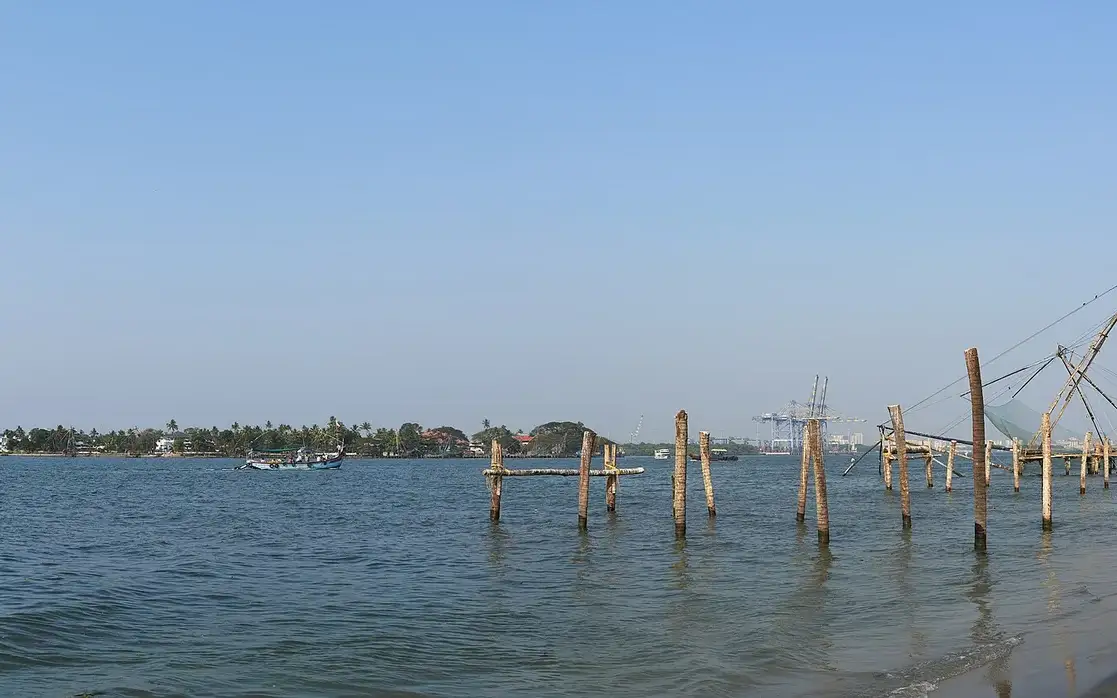
The cheena vala themselves — the counterweighted shore nets at Vasco da Gama Square, worked at dawn and toward sunset. Watch from the promenade: since the 2025 platform collapse, operators may not take visitors onto the nets.
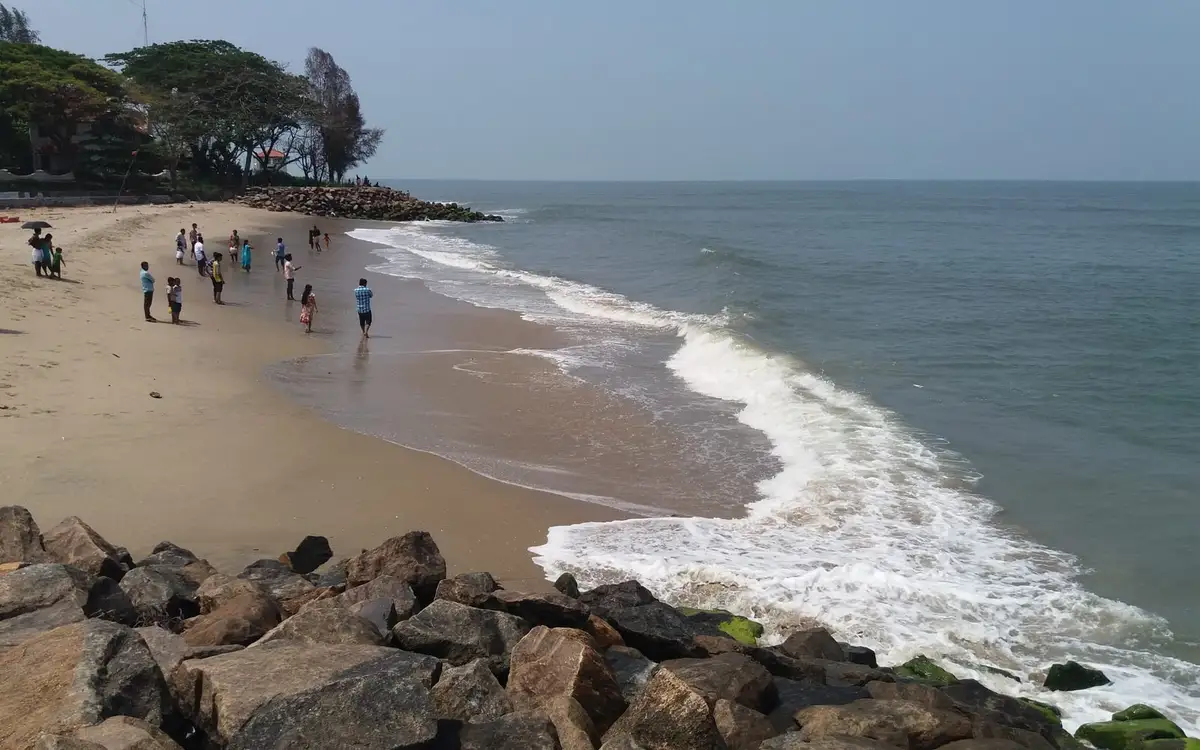
The town’s strolling beach beside the fishing nets — sunset is its hour. Currents make swimming unsafe; the sand, the promenade and the light are the point.
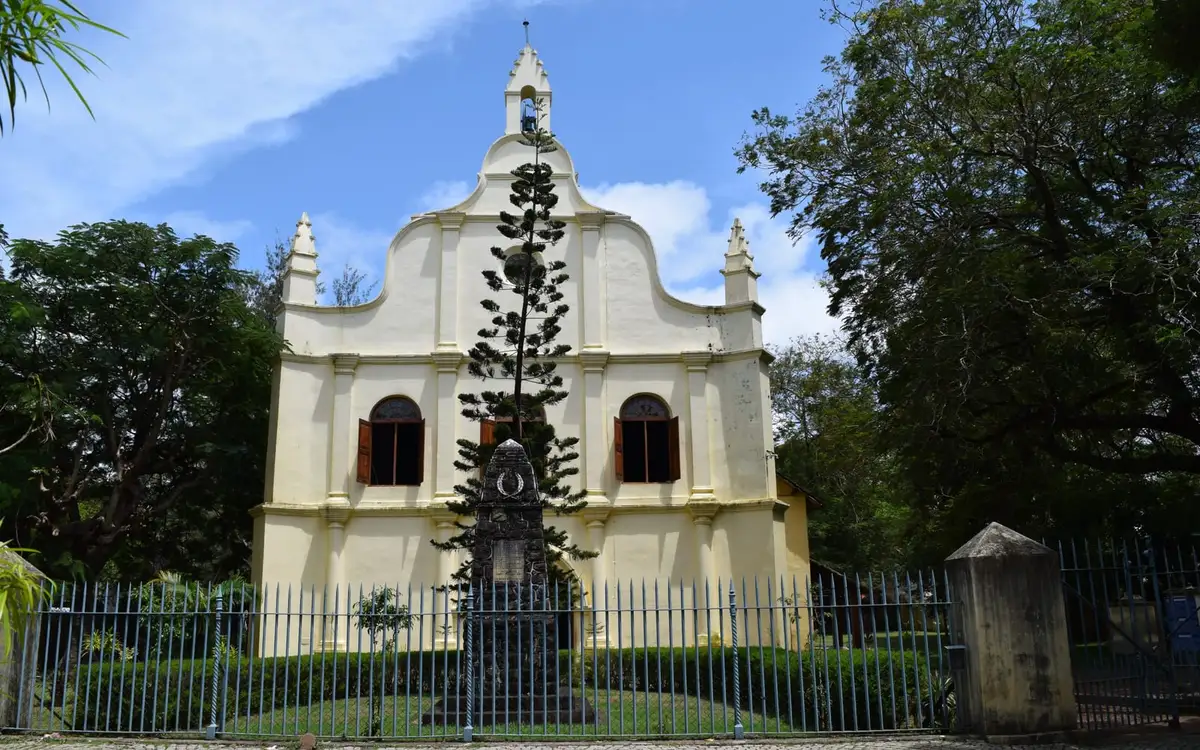
The oldest European church in India, begun in 1503 — Vasco da Gama was buried here for fourteen years before Lisbon reclaimed him. A working parish; services take precedence on Sundays.
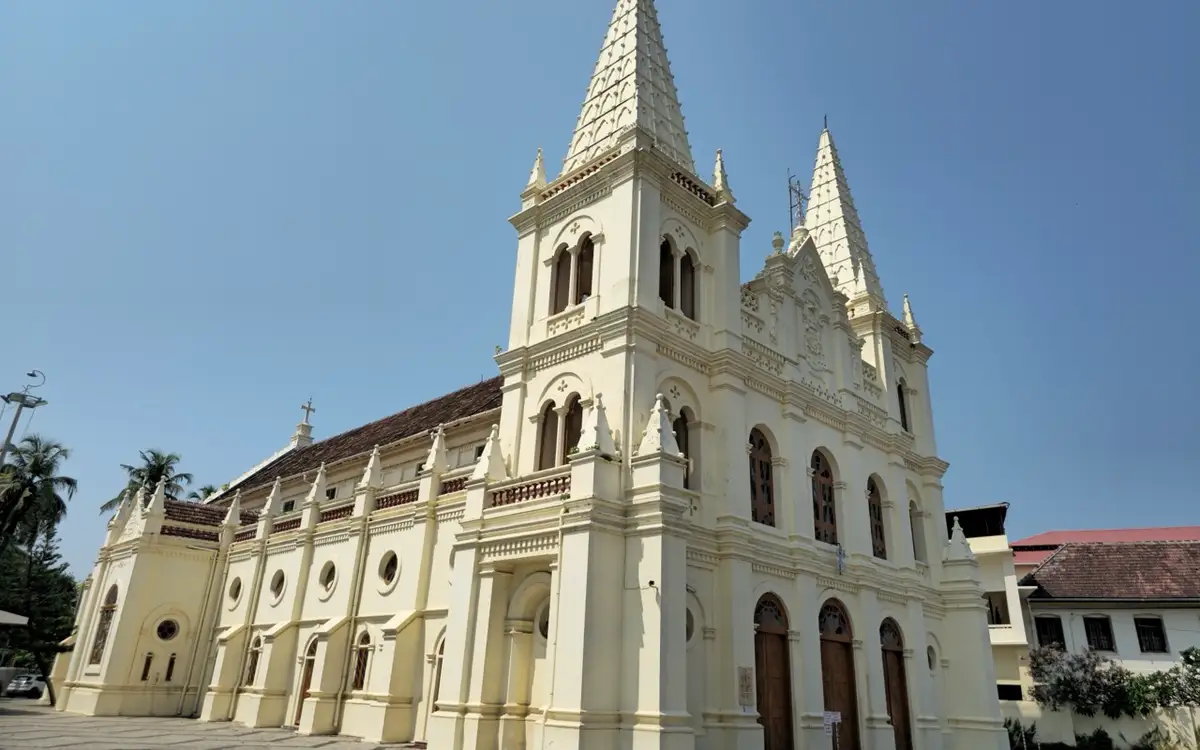
The basilica on KB Jacob Road with one of Kerala’s most richly painted church interiors — rebuilt grander after the British levelled its predecessor. A working cathedral; services take precedence.
Frequently asked questions
What are the Chinese fishing nets in Kochi?
They are shore-operated lift nets — large cantilevered fishing structures, each worked by a team, that dip a wide net into the harbour and lift it to catch fish on the tide. They're among Fort Kochi's most iconic sights.
What is the best time to see the Chinese fishing nets?
Sunset is best for photographs; early morning is best for watching a catch being hauled in.
Do the Chinese fishing nets still work?
Yes — they remain a working fishery. Crews haul catches daily, and fresh fish is sold at stalls right by the nets.
Is there an entry fee for the Chinese fishing nets?
No, viewing them is free. It's courteous to tip if fishermen show you how a net is operated.