What to expect
Highlights
- Sea views and sunset at Fort Kochi Beach
- Nearby seafood, cafes or beach walks where available
- Easy pairing with local stays and short day trips
Public seafront beside the Chinese fishing nets — a walking-and-sunset beach, not a swimming beach. This beach guide is organized from Fort Kochi in Ernakulam district, with practical planning for routes, timing, nearby stays, food, operators and direct local inventory. Use it to compare what to see, how long to spend, when to go and which beach stays, seafood restaurants, taxis, cafes, rentals and sunset-friendly local services should be verified around Fort Kochi Beach.
Fort Kochi Beach belongs under Fort Kochi, one of the practical travel bases in Ernakulam district. Use Fort Kochi for stays, food, local transport and operators, then plan this place as a focused stop rather than an isolated pin.
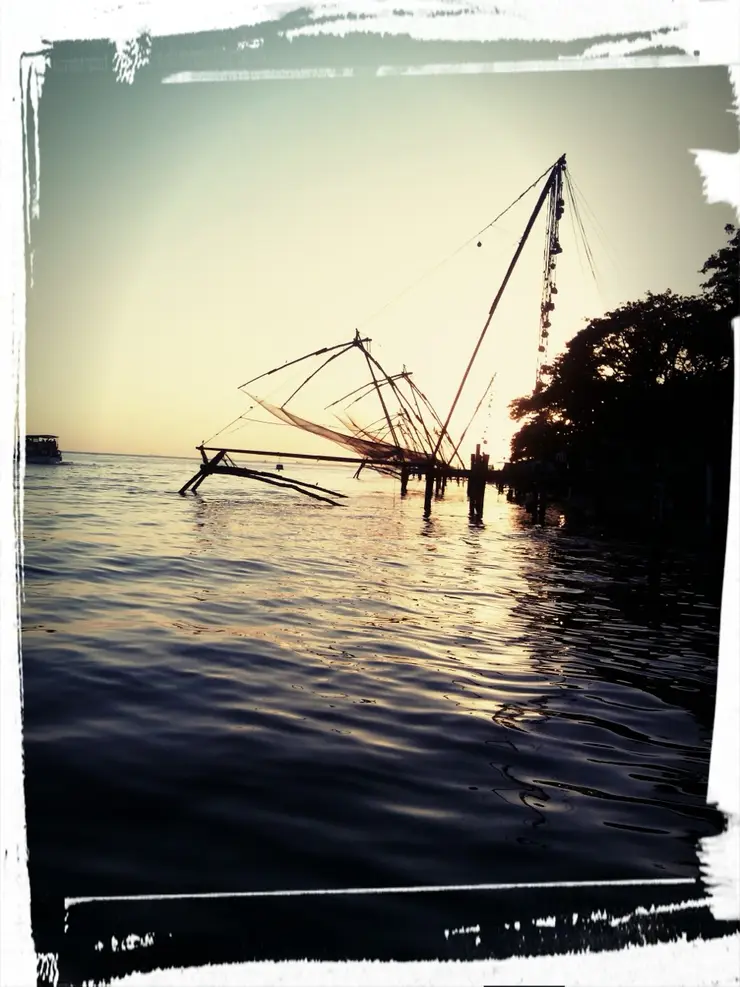
A crescent of grey-gold sand where cantilevered Chinese fishing nets dip into the Arabian Sea against the burning colours of a Kochi sunset — a promenade to walk, not to swim.
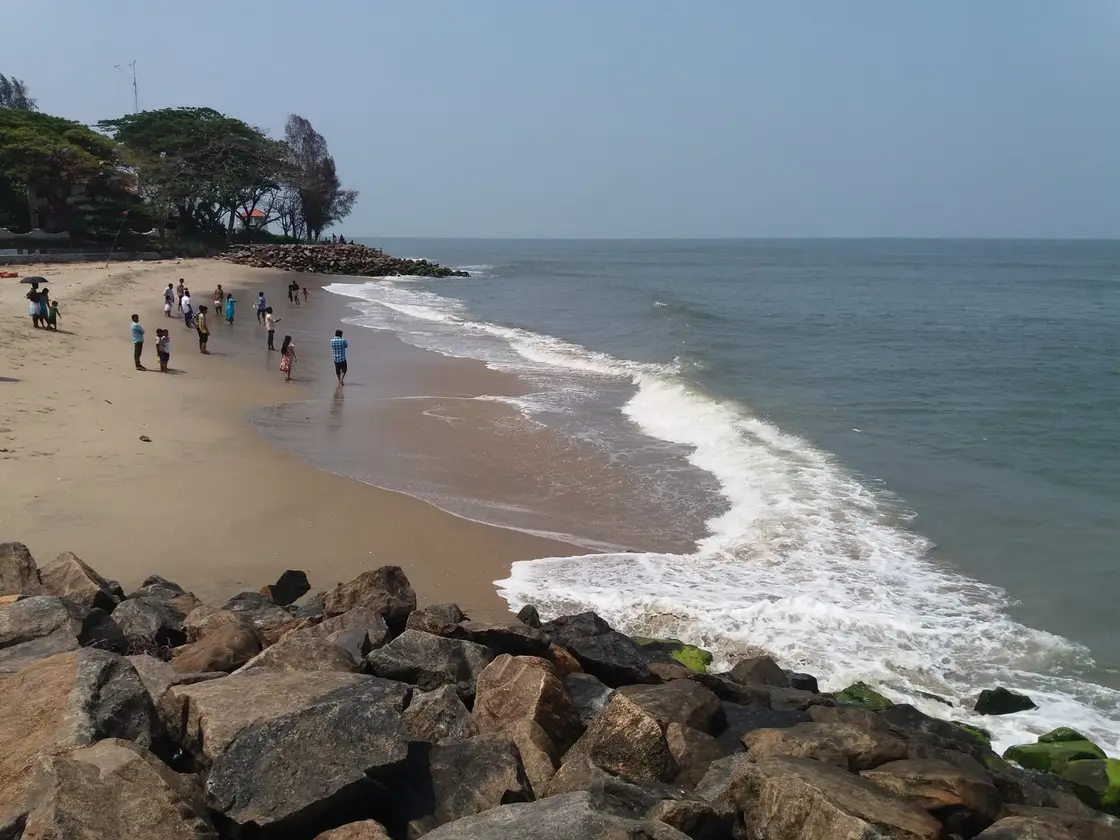
Fort Kochi Beach is less a bathing beach than a living seafront — a curving ribbon of sand and sea wall on the northern lip of the peninsula, where the backwaters spill out into the Arabian Sea. People come here not to plunge into the water but to walk, to sit on the granite kerb, to buy roasted peanuts and cut fruit, and above all to watch the light change over the harbour mouth as the day folds into evening.
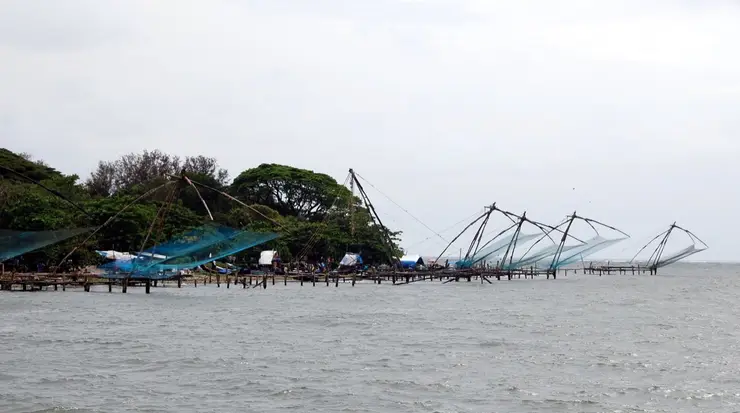
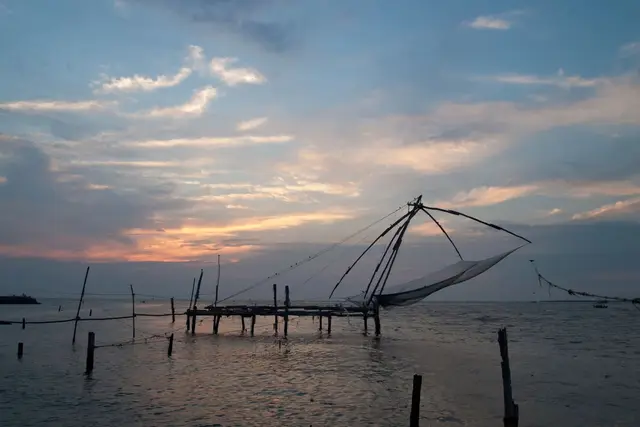
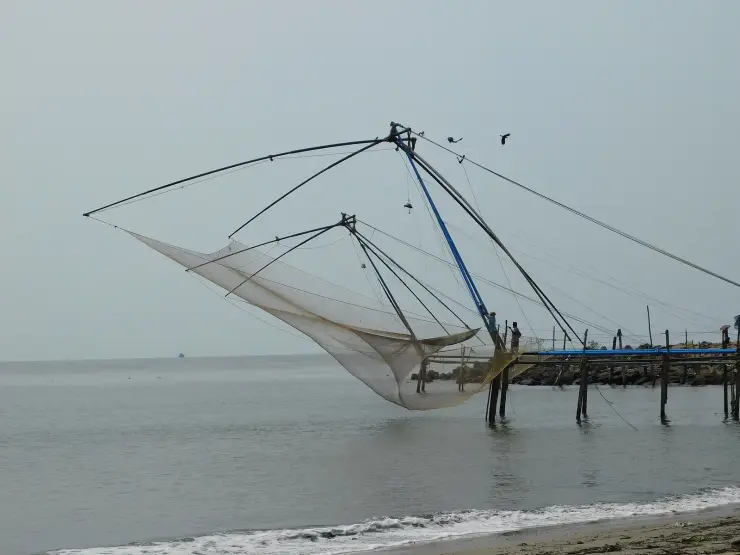
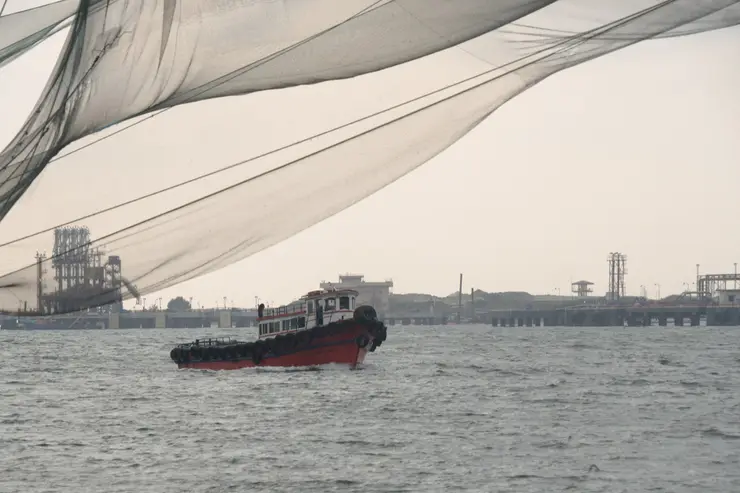
The beach owes its fame to the row of Chinese fishing nets — the cheena vala — that stand silhouetted along the waterline like the ribs of great wooden birds. Each net is a cantilever of teak and bamboo weighted with stones, lowered into the tide and hauled up by a small team of fishermen leaning on the counterweights. Their spidery frames, strung with fairy lights after dark, have become the single most photographed image of the whole of Kerala, and they turn the seafront into an open-air theatre of an old, patient craft.
Behind the nets runs Vasco da Gama Square, a thin strip of promenade lined with stalls. Here the morning catch is sold within arm’s reach of the sea — prawns, squid, karimeen and reef fish laid out on ice — and a cluster of shacks will cook whatever you pick, tossed in chilli and curry leaves while you wait. The smell of frying fish, the calls of the vendors and the slap of waves on the sea wall give the beach a working, unpolished character that the glossier resorts nearby cannot fake.
The sand itself is narrow and, near the nets, often strewn with the debris of a busy harbour — driftwood, fishing rope, the odd plastic bag carried in on the tide. This is not a place of sunbathing and swimming; the water is churned by strong currents and crossed by the ships, tugs and ferries that thread the entrance to one of India’s great natural harbours. What the beach offers instead is atmosphere: the throb of a real port town at the edge of the ocean.
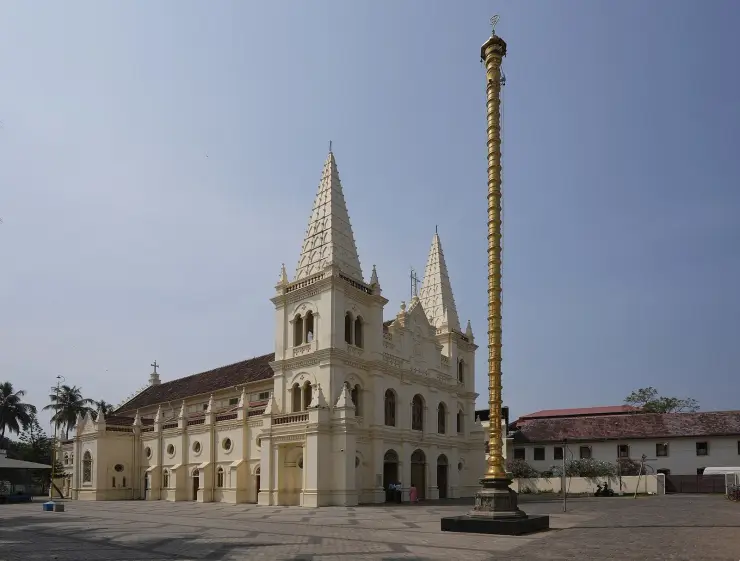
All of this sits against the backdrop of the colonial quarter — a low skyline of tiled roofs, church spires and merchant houses left by the Portuguese, Dutch and British. A few minutes on foot from the sand stand St Francis Church, the Santa Cruz Basilica and, across the peninsula, the Mattancherry (Dutch) Palace and the old Jew Town, so a sunset stroll on the beach can easily unspool into an afternoon of heritage-walking.
In recent years the seafront has taken on a second life as the beating heart of the Kochi-Muziris Biennale, South Asia’s largest contemporary-art festival, whose venues cluster in the warehouses and yards of Fort Kochi. During the Biennale months the promenade fills with artists, students and travellers, and installations spill out towards the water, so the same stretch of sand that frames the ancient nets also frames some of the most talked-about art in the country.
Stand on this sand and you are standing in front of a city that nobody can agree how to name, on a harbour that did not exist seven hundred years ago. Both of those are true, and together they are the best story on the seafront.
Take the harbour first. Kochi is not an ancient port. The tradition — and it is the founding legend of the entire coast here — holds that in 1341 a catastrophic flood came down the Periyar, dumped an enormous load of silt at the shore, choked the fabled Roman-era port of Muziris out of existence, and in the same convulsion tore open the estuary that became Kochi harbour. One river, one monsoon, and the greatest trading port of the ancient Malabar coast was buried while a new one was carved beside it. Vypin island across the water is held to have been thrown up by the same flood, and its calendar — the Puthuvype era, the Era of the New Deposit — starts that year and is still counted from it. Every ship in the view in front of you is floating on the consequence.
Historians are more careful than the legend is. No direct eyewitness account of the 1341 flood survives; the single-catastrophe version is inferred backwards from that calendar, from the excavations at Pattanam that are the best current candidate for Muziris, and from the plain fact that the harbour is young. Silting is a slow process as often as a sudden one. But something happened, and the coast remembers it as a single night.
Then the name, which has three explanations and no winner. The most repeated derives Kochi from koch azhi, Malayalam for a small lagoon — which fits a harbour that opened as a gap in the sand. A second traces it to kaci, simply a harbour. The third is the one visitors enjoy most: that Chinese traders from the court of Kublai Khan gave the place a version of the name of their own homeland, which is why a Kerala town and a stretch of Indochina ended up sharing a word. That last one is folk etymology of the most enjoyable kind and should be treated as such — but the Chinese presence behind it is real. The earliest known written reference to Kochi anywhere comes from Ma Huan, the chronicler who sailed with the Ming admiral Zheng He in the early fifteenth century.
Which brings you to the nets, and to the one thing on this beach that everybody misdates. The cheena vala are routinely described as a gift from Kublai Khan's court, and you will hear it said on the sand every evening. Kublai Khan died in 1294. The nets are generally placed on this coast between about 1350 and 1450 — after him, and contemporary with Zheng He's fleets rather than with the Mongol court. The Chinese connection is genuine and the specific attribution is not, and it is a rare case where the true version is the better one: these things arrived with the largest treasure fleet the pre-modern world ever put to sea.
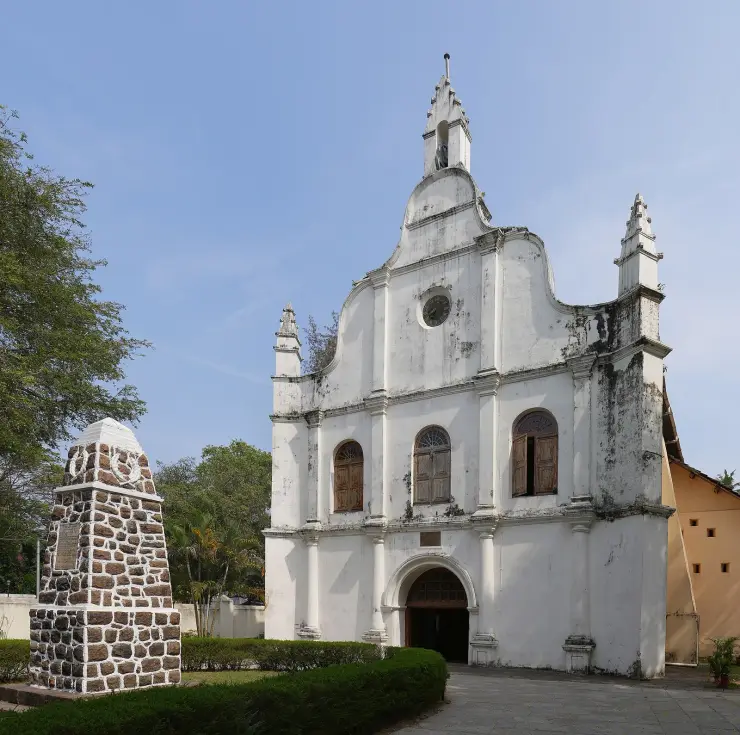
Fort Kochi is often called the first European township in India, and the beach is its front door to the sea. In 1503 the Portuguese, granted permission by the Raja of Cochin, raised Fort Emmanuel on this shore — named after King Manuel of Portugal and consecrated on 1 October 1503 — with St Francis Church built close behind it. The settlement that grew around the fort gave the quarter its enduring name.
Power on this seafront changed hands with the wider fortunes of the spice trade. The Portuguese held Fort Kochi until 1663, when the Dutch stormed the town, seized the harbour and dismantled much of the Portuguese establishment, keeping only a few churches. The Dutch strengthened the fort and ran the port for well over a century.
In 1795 the British defeated the Dutch and took Fort Kochi, anglicising the name to Fort Cochin and developing it into a major naval and commercial base of the Malabar Coast. The layers of these three colonial regimes — Portuguese, Dutch and British — remain legible in the churches, cemeteries, godowns and bungalows that stand just inland from the sand, making the beach the threshold to an unusually intact European heritage quarter.
The Chinese fishing nets that define the shore are older still than the Europeans. They are traditionally said to have been introduced to the Malabar coast in the 14th–15th centuries, popularly attributed to Chinese traders and to the fleets of the admiral Zheng He, whose voyages between 1405 and 1433 anchored at Kochi and are credited with spreading the technique; the nets are thought to have established themselves here roughly between 1350 and 1450. A competing scholarly view holds that they were brought later by Portuguese Casado settlers from Macau. Whatever their exact route, they gave Kochi its most recognisable emblem and are locally known as cheena vala.
For centuries the nets and the shore belonged to the fishing community, who worked the harbour mouth as they still do today. As tourism grew, the working seafront was gradually reimagined as a heritage promenade — Vasco da Gama Square laid out beside the nets, the sea wall repaired, and the beach woven into the walking circuit of the old town — even as the fishermen continued to lower and lift their great wooden frames with the tide.
See the iconic Chinese fishing nets — Kerala’s most photographed sight — worked by hand against the open sea.
Catch one of the finest sunsets on the Kerala coast, with the nets silhouetted against the sky and the harbour lights coming on.
Eat fish at its freshest: pick your catch at the seafront stalls and have it cooked on the spot.
Step straight from the sand into the colonial quarter — St Francis Church, Santa Cruz Basilica, Dutch Palace and Jew Town are all within a short walk or cycle.
Soak up the atmosphere of a genuine working harbour, with ferries, ships and fishermen framing the view.
Visit during the Kochi-Muziris Biennale, when the seafront becomes the hub of South Asia’s largest contemporary-art festival.
Road km to Ernakulam; ghat roads and traffic vary — allow extra.
November to February for dry weather; avoid rough-sea days during monsoon warnings.
Live forecast loads in your browser.
Check the official alert before you travel. Kerala’s beaches, waterfalls and trekking routes close at short notice during heavy rain, and district alert levels change day to day. We do not publish an alert level of our own — read it from the state authority: Kerala State Disaster Management Authority, or the district control room on 1077.
Sun and moon are calculated for this location and shown in IST. Photography windows are the hour around sunrise and sunset; the sunset bearing is degrees clockwise from true north. Moon phase is accurate to about half a day.
Verified hotels, homestays, restaurants, experiences, sights, shops and rentals around Fort Kochi Beach — commission-free, with direct contact. Filter by what you need.
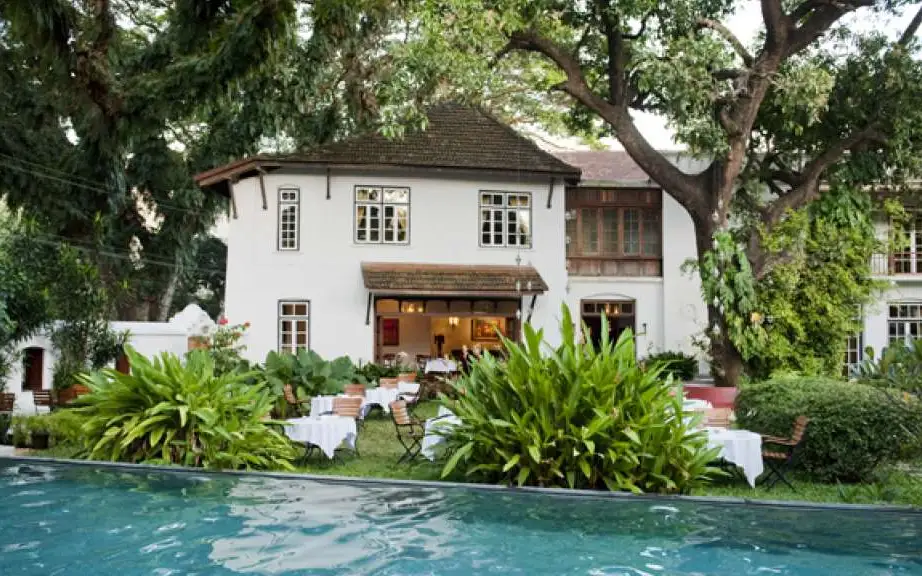
Heritage hotel on Tower Road in Fort Kochi with direct Kerala Tourism-listed contacts. Contact direct · Fort Kochi, Tower Road, Heritage hotel.
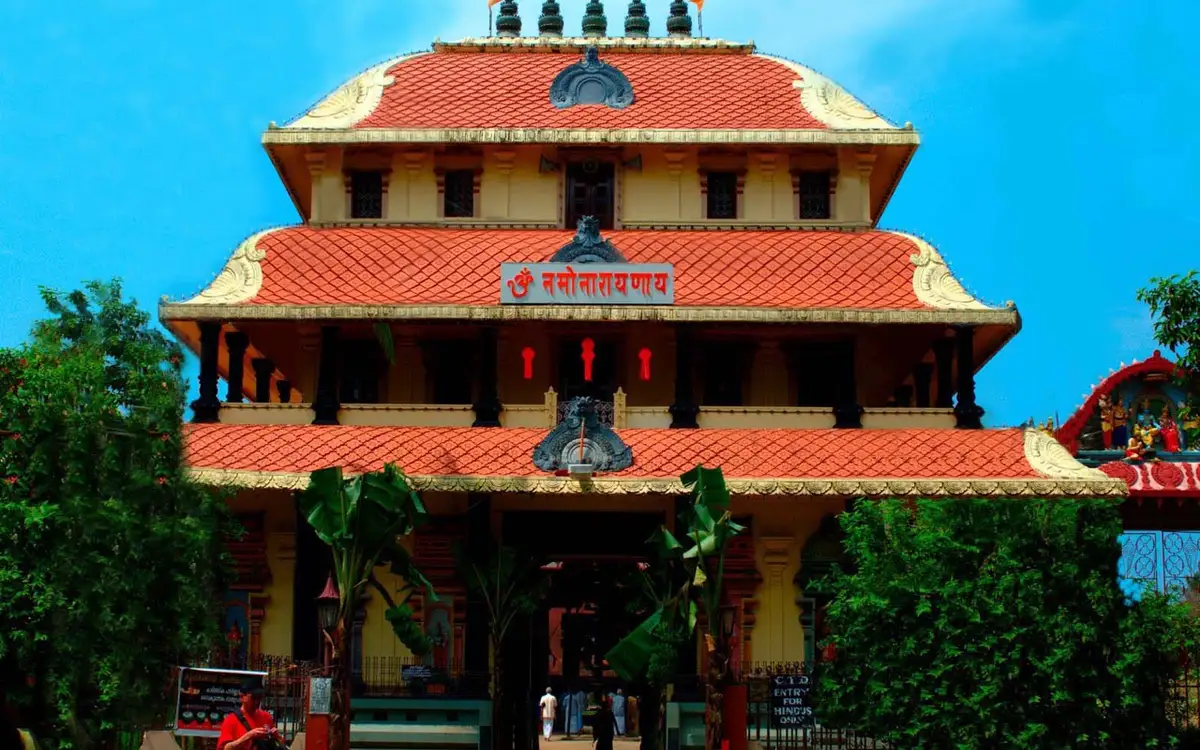
Gosripuram Thirumala Devaswom — the principal temple of Kochi’s Gowda Saraswat Brahmin community, in the Mattancherry lanes. An active shrine with its own dress and entry customs.
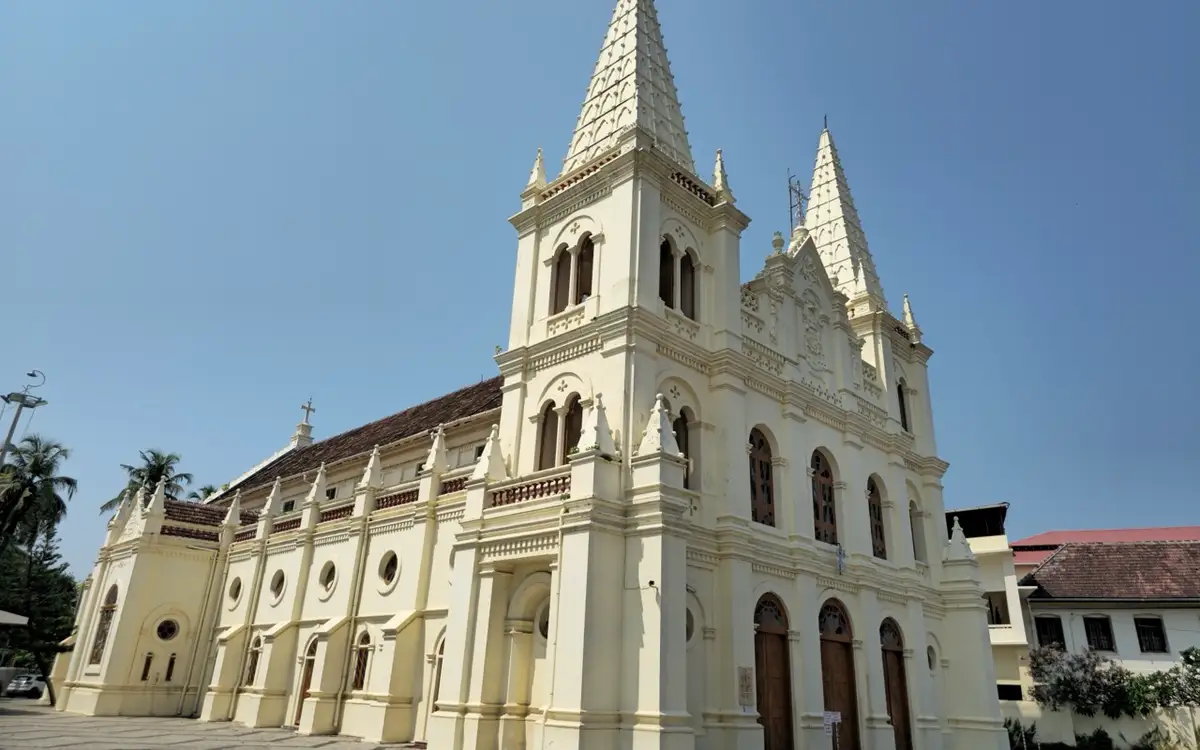
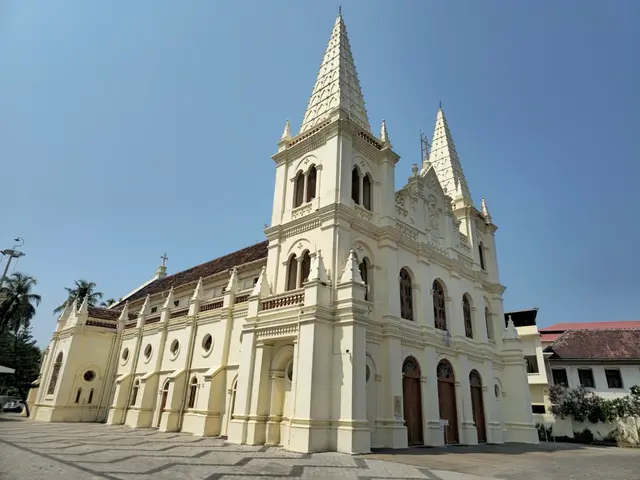
The basilica on KB Jacob Road with one of Kerala’s most richly painted church interiors — rebuilt grander after the British levelled its predecessor. A working cathedral; services take precedence.
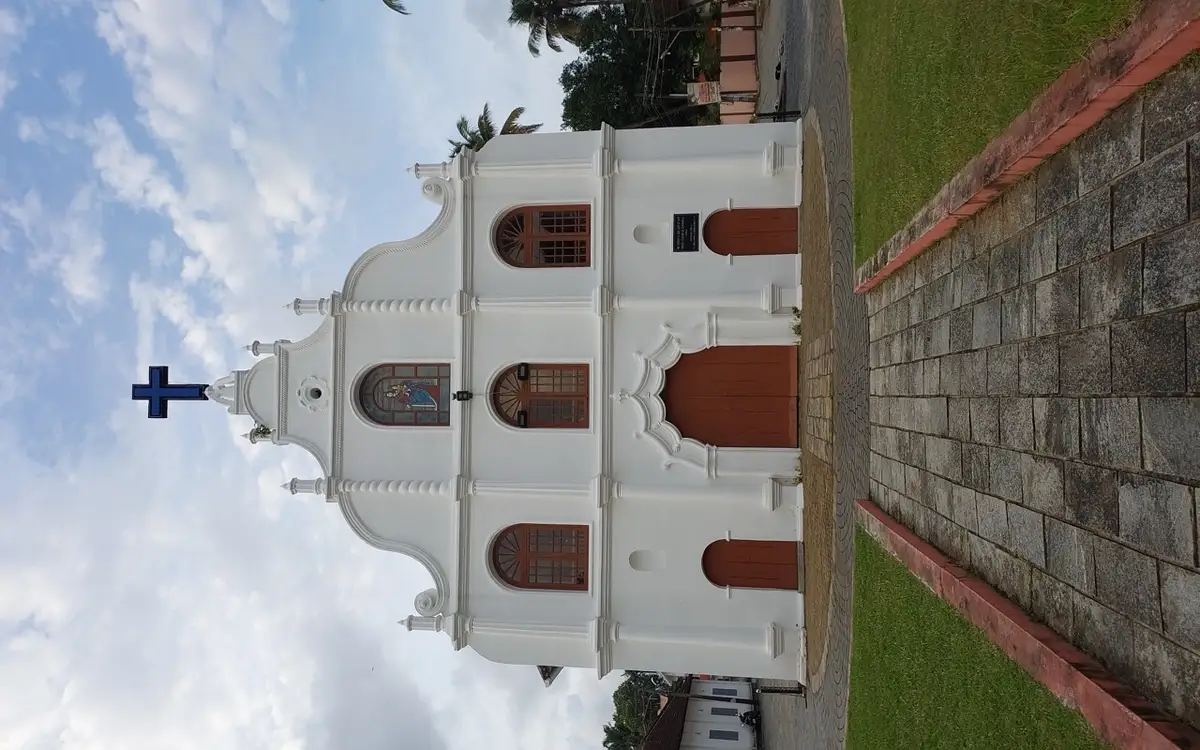
The Portuguese-founded Our Lady of Hope on Vypin island, across the ro-ro crossing from Fort Kochi — one of the oldest church foundations on this coast, and an active parish.
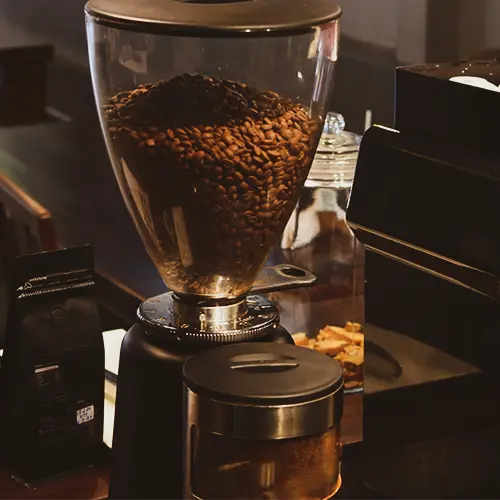
Café (coffee shop, italian, burger, pasta, dessert) on Princess St, Fort Nagar in Fort Kochi.
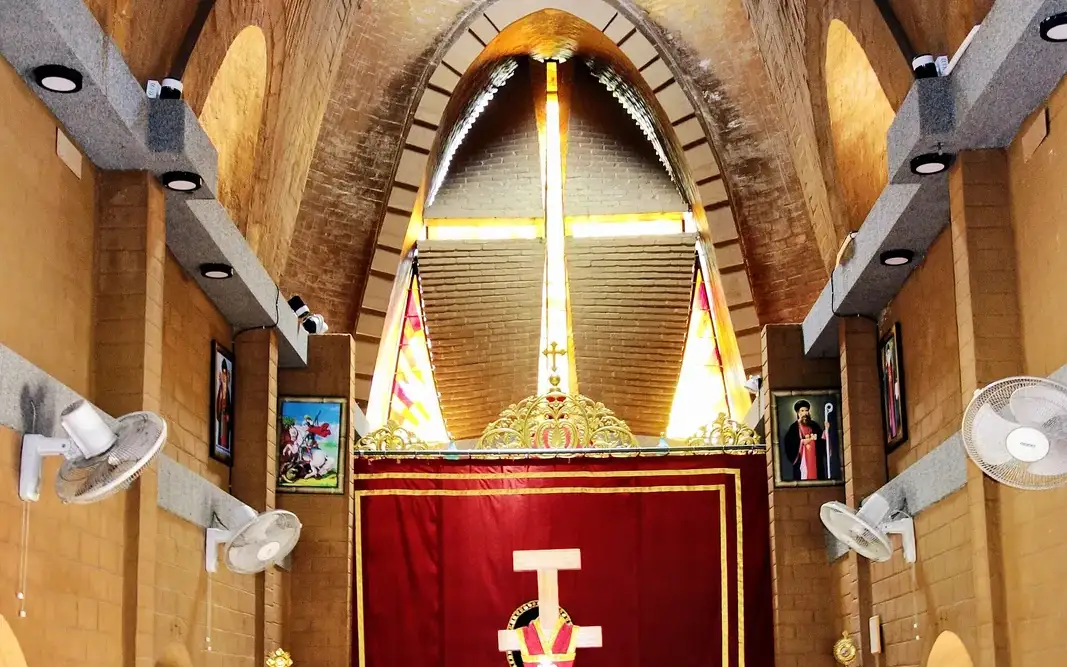
The Coonan Cross church at Mattancherry — heir to the 1653 oath in which Kerala’s St Thomas Christians renounced Portuguese control, a hinge moment in Indian church history.
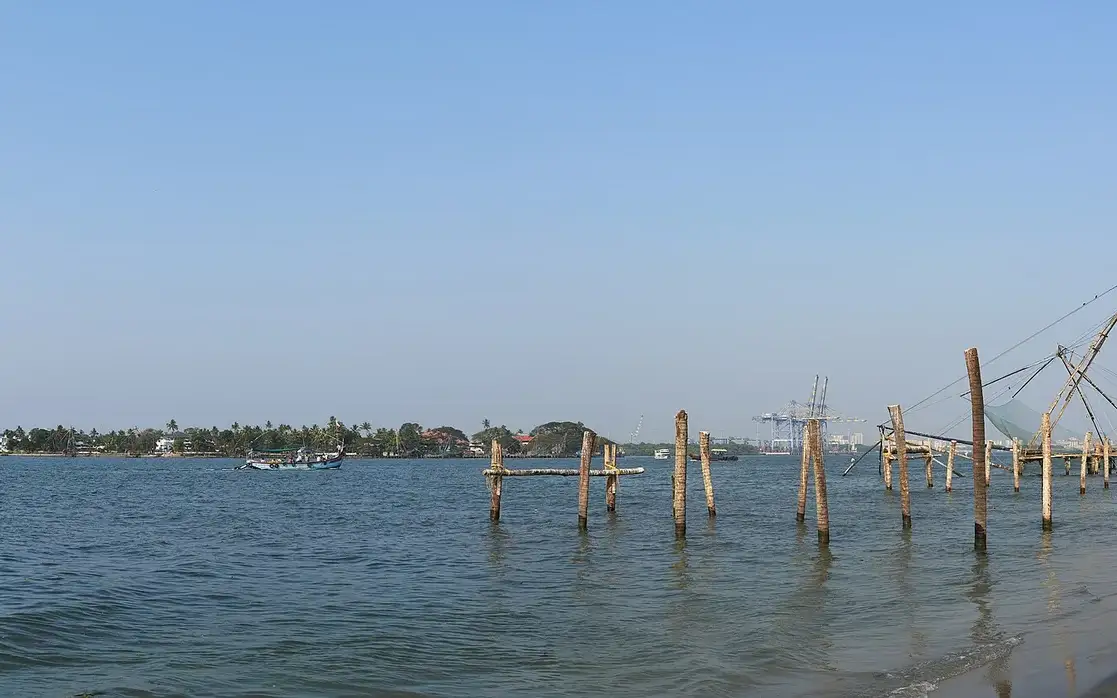
The cheena vala themselves — the counterweighted shore nets at Vasco da Gama Square, worked at dawn and toward sunset. Watch from the promenade: since the 2025 platform collapse, operators may not take visitors onto the nets.
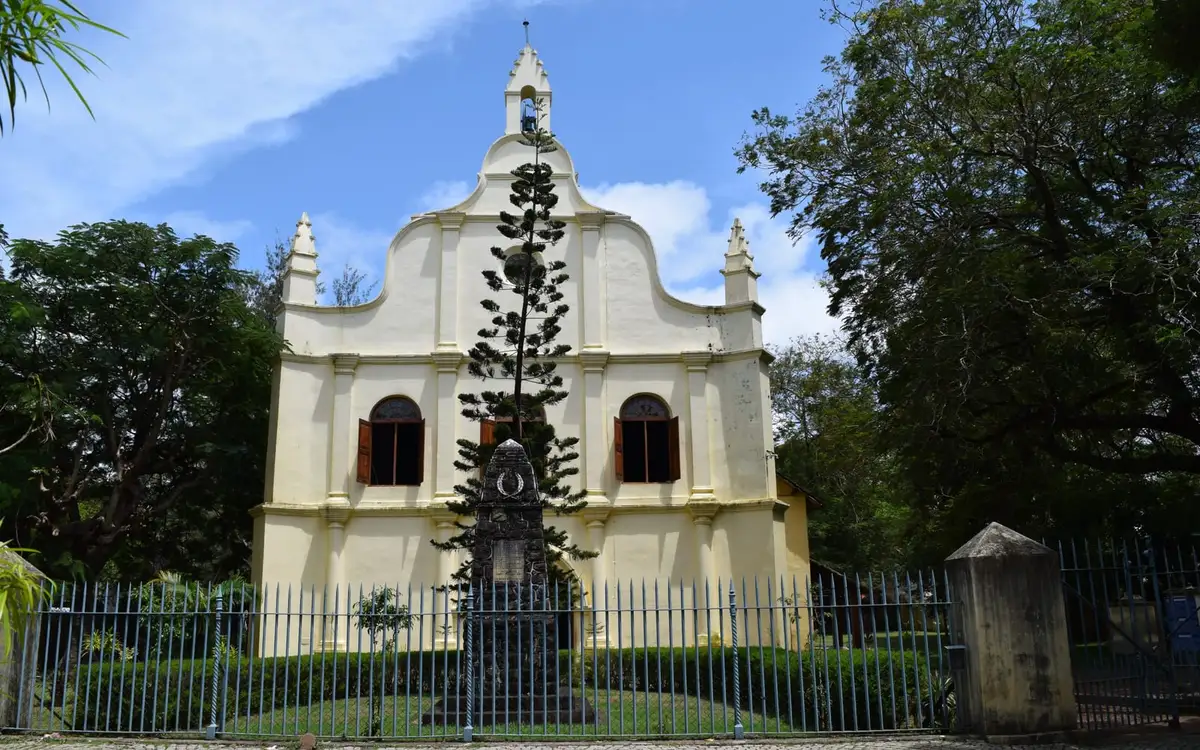
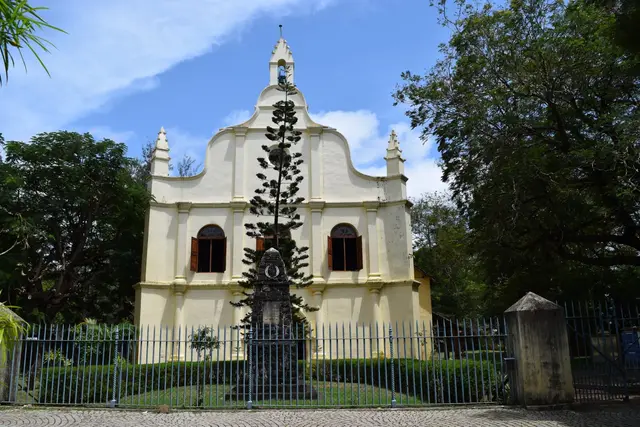
The oldest European church in India, begun in 1503 — Vasco da Gama was buried here for fourteen years before Lisbon reclaimed him. A working parish; services take precedence on Sundays.
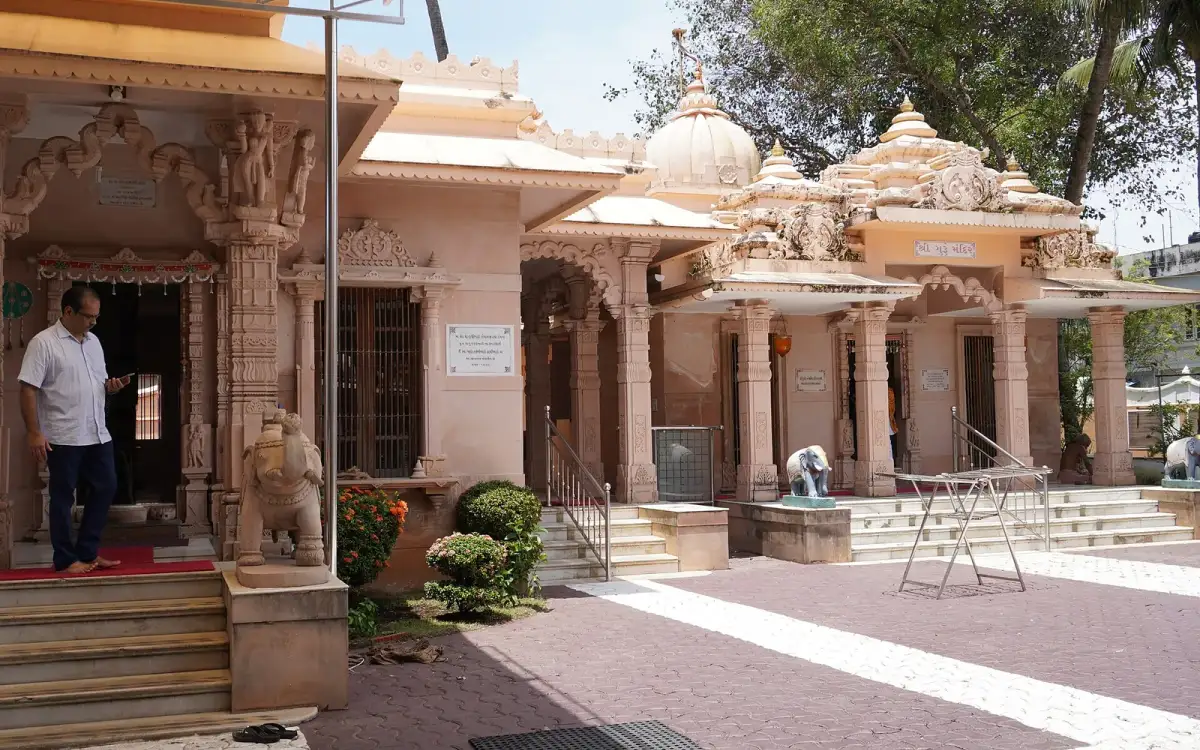
The Gujarati quarter’s Jain temple on Gujarathi Road, Mattancherry — a carved marble compound known for the midday pigeon feeding in its courtyard.

Ayurveda and wellness centre on Bishop Joseph Kureethara Road — massage and panchakarma programmes inside the quarter itself, and the page’s highest-rated wellness listing.
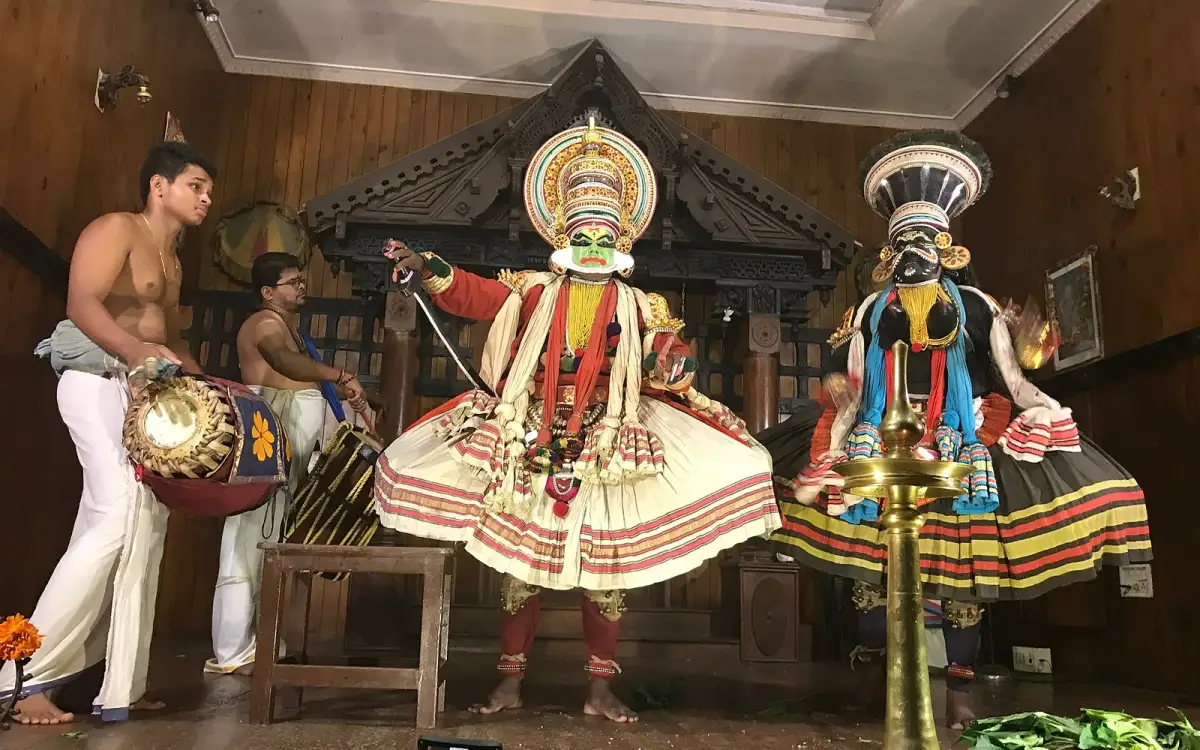
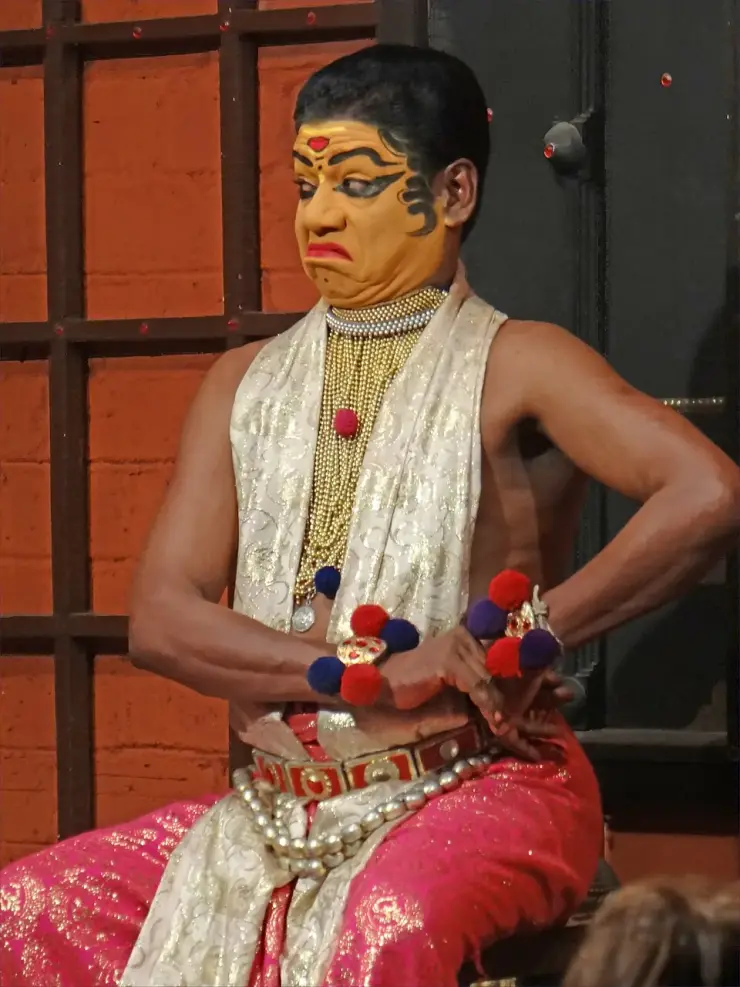
Fort Kochi cultural centre for Kathakali, Kalaripayattu, classical music and related performances. Published show prices; confirm direct · Fort Kochi, Kathakali, Kalaripayattu.
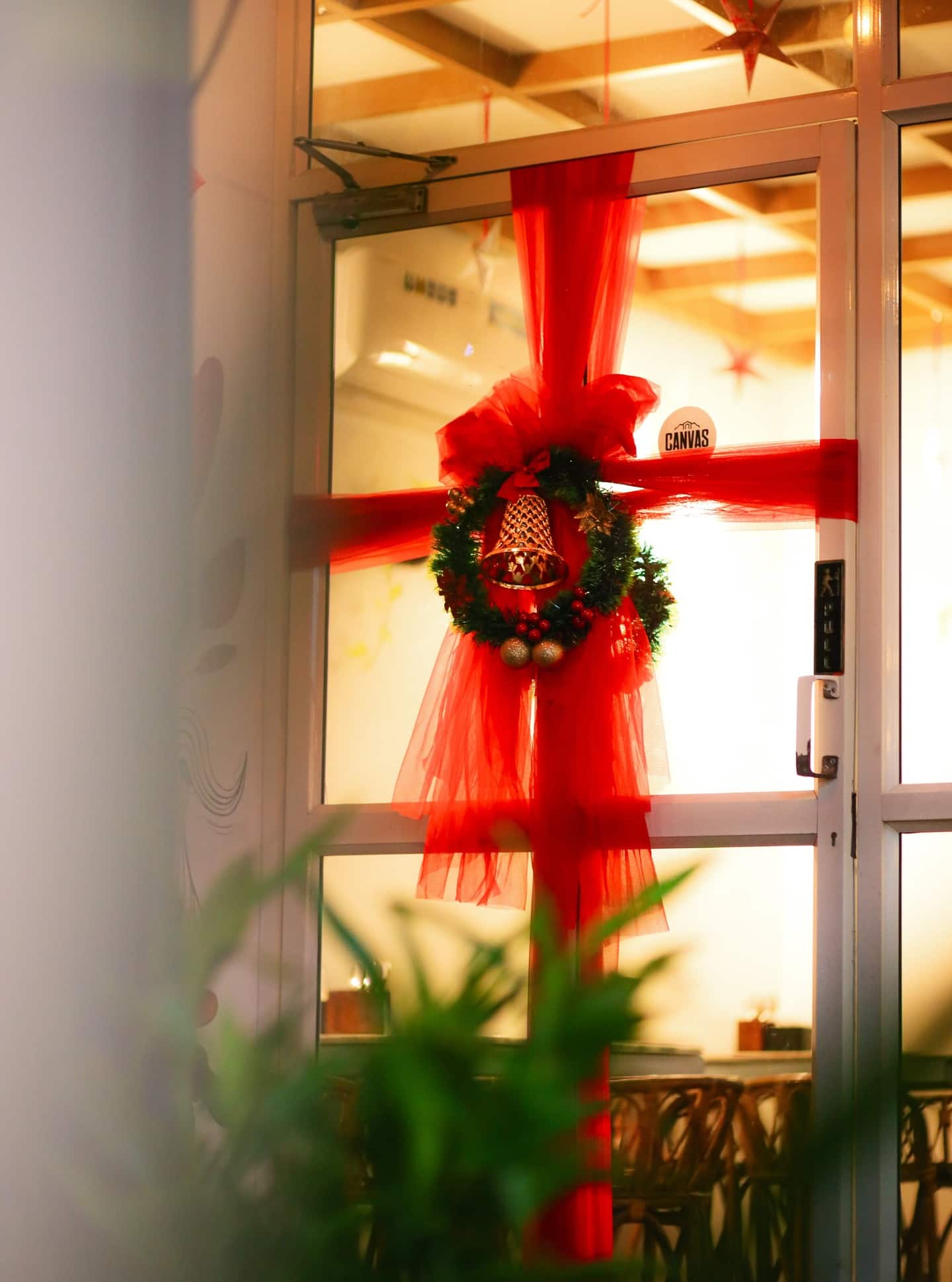
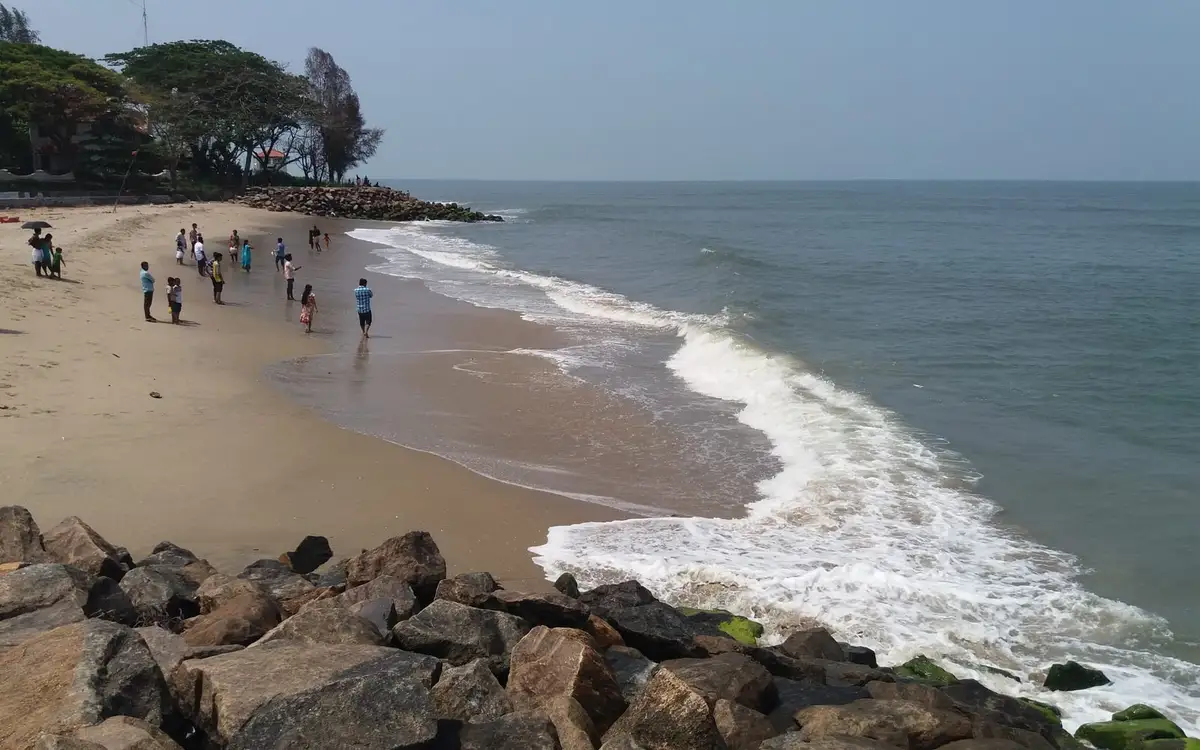
The town’s strolling beach beside the fishing nets — sunset is its hour. Currents make swimming unsafe; the sand, the promenade and the light are the point.
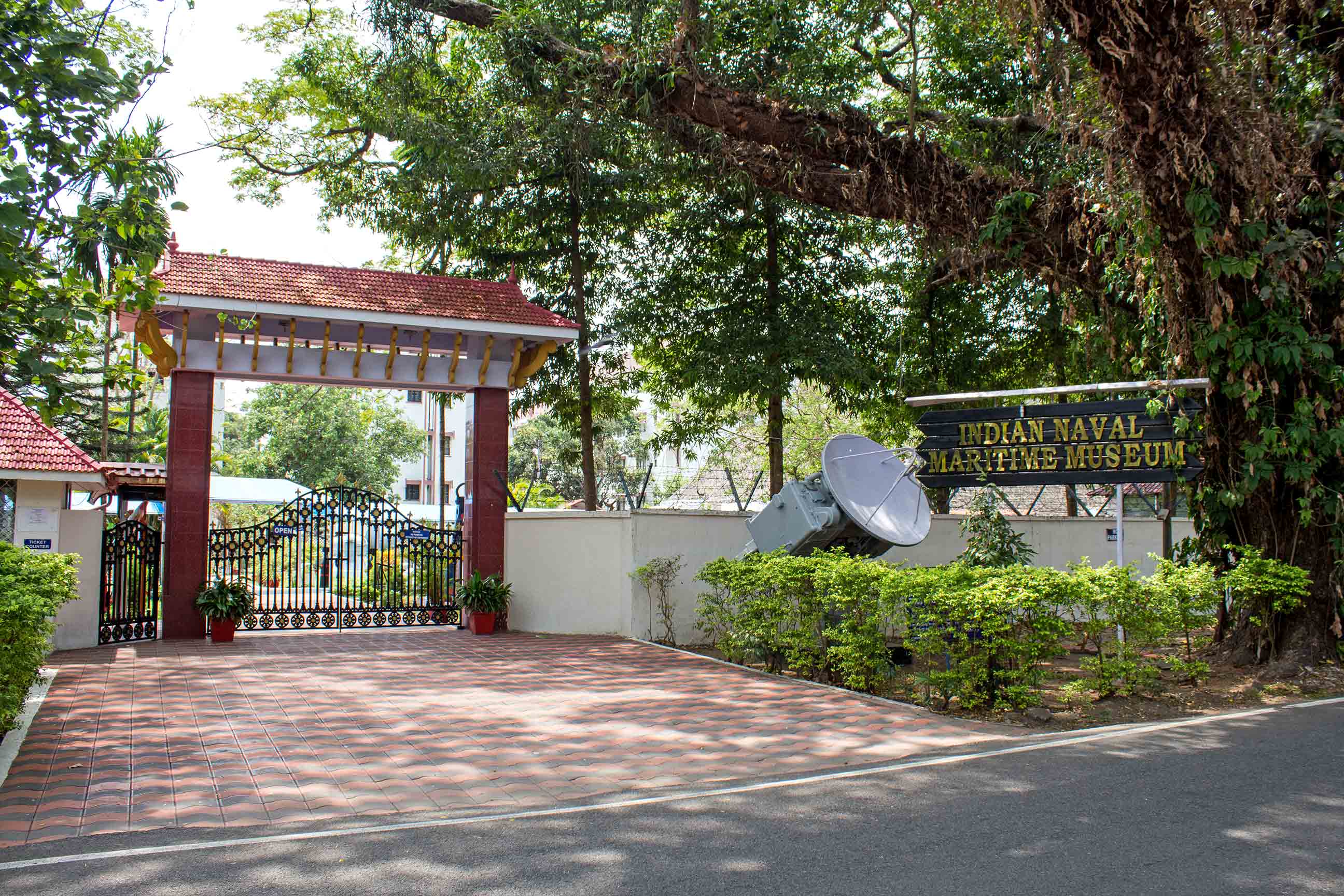
The Navy-run maritime museum off KJ Herschel Road — ship models and naval history in a walled compound south of the parade ground. Ticketed, and the hours are the Navy’s.
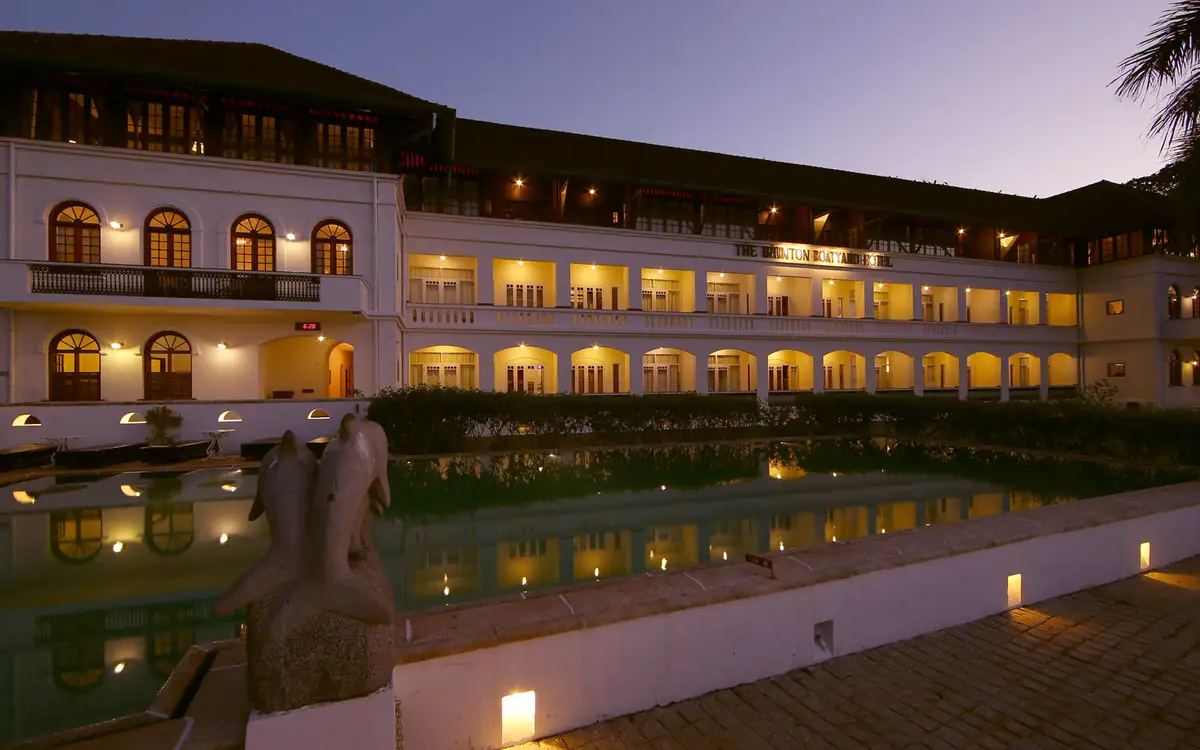
Heritage hotel on the site of George Brunton’s Victorian boatyard at Calvathy, rebuilt in trading-era style around a harbour-facing court — the rooms look onto the ship channel.
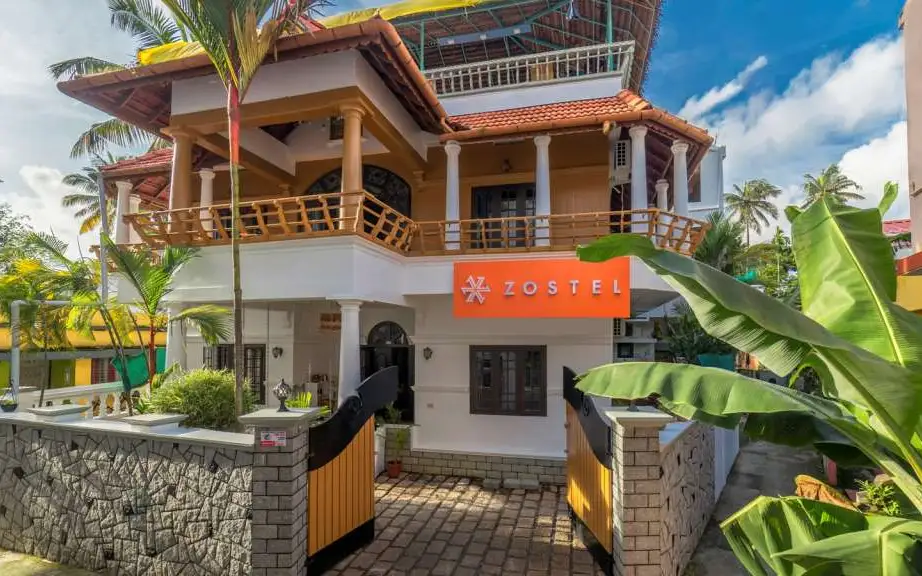
Fort Kochi branch of the Zostel backpacker chain — dorms and private rooms, the quarter’s main hostel option.
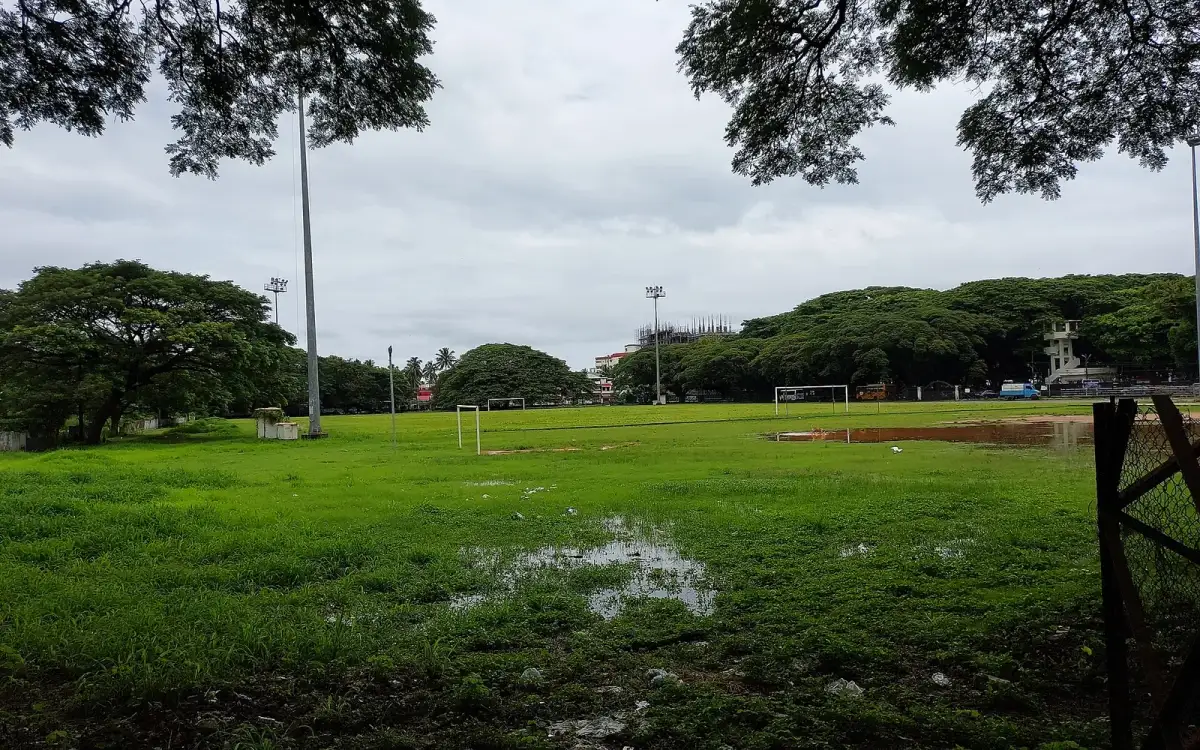
The green beside Veli Ground at the quarter’s southern edge — open ground for an evening walk rather than a destination in itself.
Fort Kochi’s big maidan — the football-and-cricket ground created on land the Vannar washer community gave up, the exchange that built the Dhobi Khana beside it.

Homestay on 1/1519, Chirattapalam Rd, behind Dr Abraham Dental Clinic, Amaravathy, Fort Kochi, Kochi, Kerala 682001, Indien in Fort Kochi.
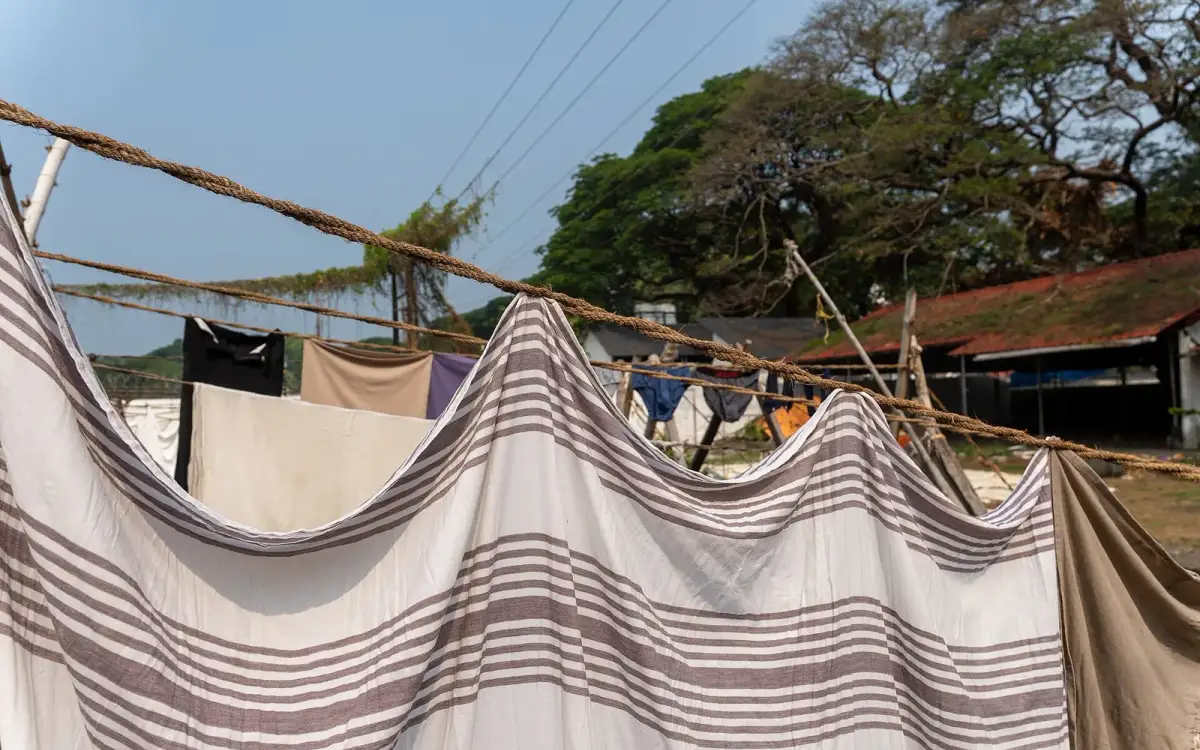
The Vannar community’s open-air laundry at Veli — wash pens, beating stones and drying lines still worked by hand. A workplace, not an exhibit: go in the morning, and ask before photographing.
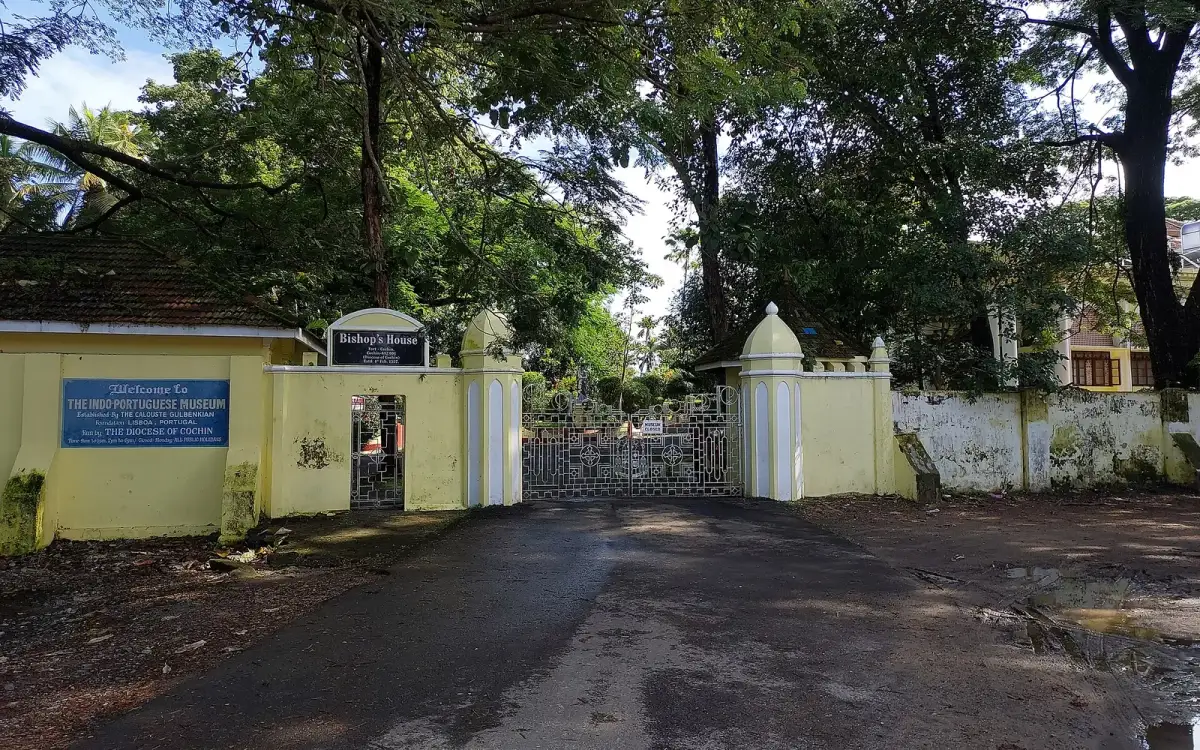
The Indo-Portuguese Museum in the Bishop’s House garden — five centuries of Catholic-era altarpieces, vestments and processional art, with a stretch of the old fort wall in the basement. Keeps a weekly closing day; check before walking over.
Portuguese-era parish of Our Lady of Life on the Mattancherry side — an active church of the old Latin Catholic quarter.
The Indo-Dutch bungalow of 1667 built on the old fort’s Stromberg bastion, at the head of Vasco da Gama Square — long an official residence, now a museum building.
Orthodox Syrian parish church in the eastern lanes of the quarter — an active congregation, and an interior for worshippers first.
Book with the place itself. India’s cyber-crime coordination centre warned in April 2025 that convincing copies of hotel and pilgrimage booking sites are being pushed through sponsored search and social ads, taking payment for rooms the property never hears about. Every listing here links to the business’s own contact details and its own Google or Bing profile — we take no commission and sit in nobody’s payment path. If a booking page reached you through an ad, check the address bar against the property’s own site before you pay. Fraud can be reported on cybercrime.gov.in or on 1930.
Fort Kochi Beach sits in Fort Kochi, and these cover the whole quarter rather than this one spot — they are built from the same verified listings shown above, ordered by how much we can verify about each one. We carry no traveller ratings: review scores belong to the platform that collected them and we are not licensed to republish them. Nobody pays to appear.
Ordered by a real routed walk from Fort Kochi Beach — a different question, and a different answer, from the town-wide Fort Kochi lists below.
10 more places around Fort Kochi, each worth a day of its own.
440 m · 5 min walk
Kerala’s most walkable heritage quarter, with Chinese fishing nets, colonial churches, art cafes and Mattancherry nearby.

270 m · 3 min walk
The giant cantilevered lift nets that are Fort Kochi’s emblem, strung along the shore at Vasco da Gama Square and still landing fish. Even their origin is argued — popular tradition credits Chinese traders of Zheng He’s era, some scholars later Portuguese settlers from Macau — and the argument is part of the attraction.
340 m · 4 min walk
Believed to be the oldest European church in India (1503); Vasco da Gama was buried here before his remains were moved to Lisbon.
630 m · 8 min walk
One of the finest churches in Kerala, with a richly painted interior, beside the Kerala Kathakali Centre in Fort Kochi.
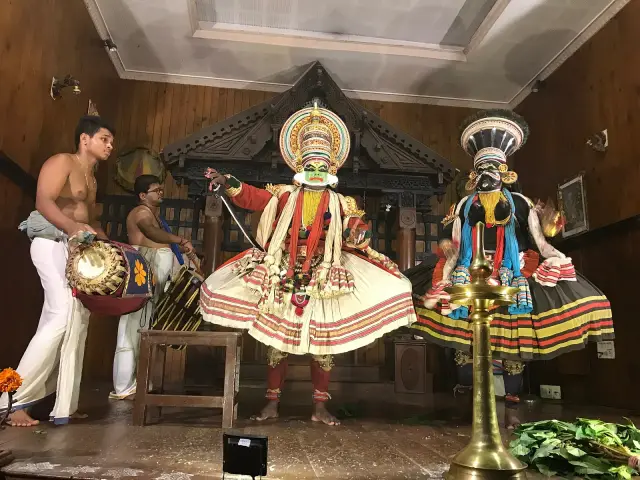
750 m · 9 min walk
Evening Kathakali and Kerala classical-art performances in Fort Kochi, with make-up shown before the show.
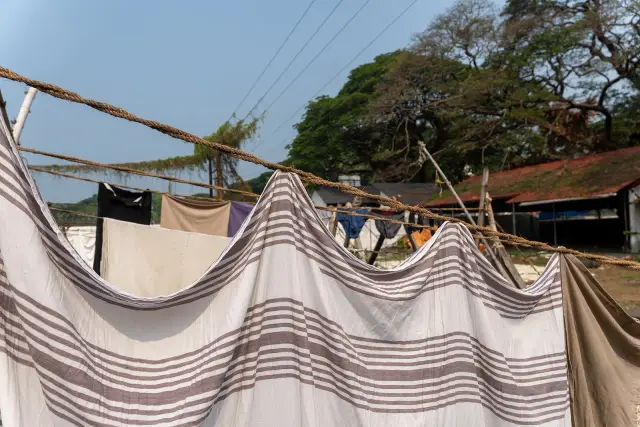
2.1 km · 3 min drive
A working colonial-era community open-air laundry in Fort Kochi, still used by traditional washermen families.

830 m · 10 min walk
A large 19th-century waterfront trading compound in Fort Kochi, the principal venue of the Kochi-Muziris Biennale.
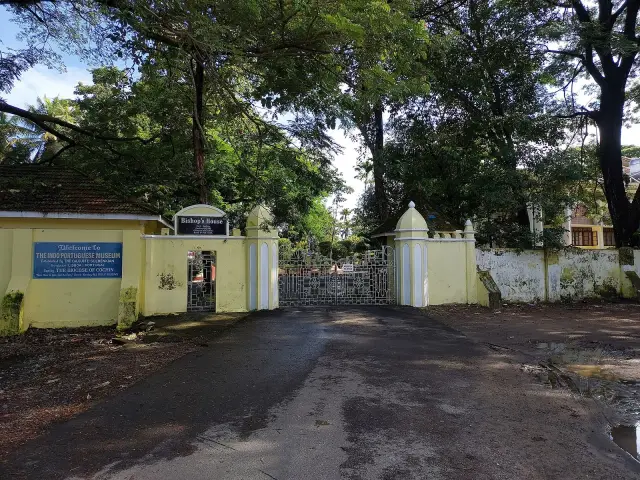
820 m · 10 min walk
Museum of Kerala’s Indo-Portuguese Catholic heritage in the Bishop’s House garden, Fort Kochi.
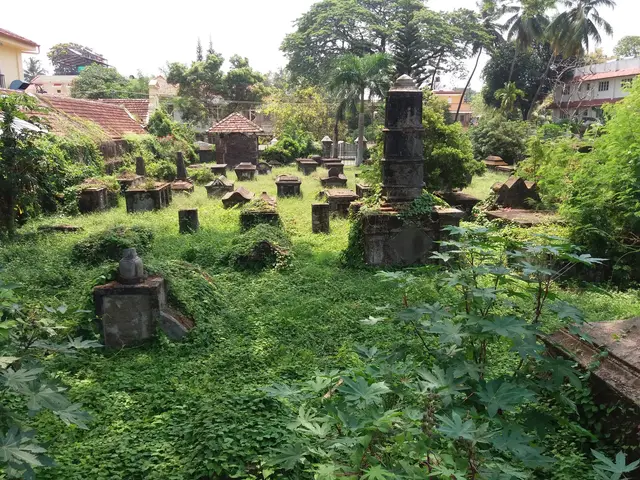
460 m · 6 min walk
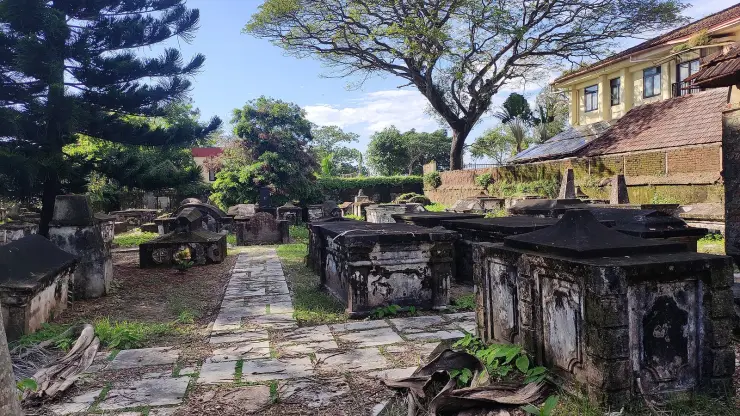
The 1724 burial ground of Kochi’s Dutch colonial officials and merchants, beside St Francis Church — ASI-protected, and usually locked.
480 m · 6 min walk
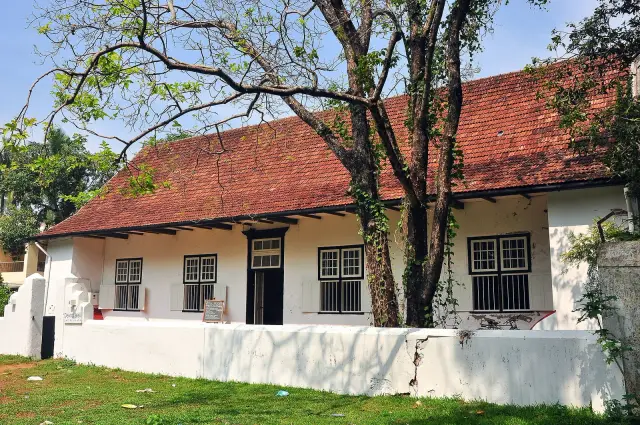
A restored 17th-century Dutch bungalow on the Fort Kochi parade ground, now a contemporary art gallery and cafe.
Roampedia is commission-free — own or know a stay, eatery, guide or shop near Fort Kochi Beach? List it and it appears here once verified.
Add a nearby businessEntry: Free to walk the seafront. The fishermen working the Chinese fishing nets may ask for a tip to watch them haul a net, which is a normal courtesy. Do not go up onto a net platform: on 21 November 2025 a platform at Vasco da Gama Square gave way and dropped seven visitors into about 15 feet of water, and Fort Kochi police then barred operators from taking tourists onto them, charging the operator and the owner. Watch from the promenade instead.
Photography: One of the most photogenic spots in Kerala — the silhouetted nets at sunset are the classic shot. Golden hour and blue hour both reward, and the fishermen at work make strong human-interest frames; ask before photographing people up close.
Parking: We do not hold verified parking rates, capacity or hours for the seafront, and will not estimate them. Ask locally or arrive by ferry, bus or auto.
Work out your return before you settle in for the sunset. Public transport here thins out sharply in the evening, and Fort Kochi Beach is easier to reach than to leave. We do not publish departure times: there is no official live feed we are permitted to republish, and a wrong time here would strand you. Check the operator directly on the day.
Ask at the jetty or stand for the time of the last service back, not the next one. If you miss it, an auto or app cab is the fallback — agree the fare before you get in.
Checked 4 August 2026 against source 1source 2. Conditions change and surfaces vary with weather — if step-free access is essential, confirm with the site before you travel.
Charge cap and free-transaction limits: Reserve Bank of India, in force since 1 May 2025.
Mapped within about 1.2 km of Fort Kochi Beach, with real walking routes rather than straight-line distances. Community-mapped data: opening hours are shown only where they are recorded, and this is not a complete list — something unmapped may well be closer. Please confirm on the ground.
Fort Kochi is one of Kerala’s safest and most walkable tourist quarters, comfortable by day and on the main lanes after dark. Violent crime against visitors is rare — the realistic risks are auto/guide scams, petty theft in crowds, and the sea, not personal danger.
Safety guidance last reviewed 15 June 2026. Always check your own government's current travel advice before you travel.
Emergency numbers are verified against official government and state tourism sources. 112 works anywhere in India.
Kochi’s iconic cantilevered shore-operated fishing nets along the Fort Kochi seafront at Vasco da Gama Square, best photographed at sunset.
270 m · 3 min walkBelieved to be the oldest European church in India (1503); Vasco da Gama was buried here before his remains were moved to Lisbon.
340 m · 4 min walkKerala’s most walkable heritage quarter, with Chinese fishing nets, colonial churches, art cafes and Mattancherry nearby.
440 m · 5 min walkThe 1724 burial ground of Kochi’s Dutch colonial officials and merchants, beside St Francis Church — ASI-protected, and usually locked.
460 m · 6 min walkA restored 17th-century Dutch bungalow on the Fort Kochi parade ground, now a contemporary art gallery and cafe.
480 m · 6 min walkOne of the finest churches in Kerala, with a richly painted interior, beside the Kerala Kathakali Centre in Fort Kochi.
630 m · 8 min walkEvening Kathakali and Kerala classical-art performances in Fort Kochi, with make-up shown before the show.
750 m · 9 min walkMuseum of Kerala’s Indo-Portuguese Catholic heritage in the Bishop’s House garden, Fort Kochi.
820 m · 10 min walkA large 19th-century waterfront trading compound in Fort Kochi, the principal venue of the Kochi-Muziris Biennale.
830 m · 10 min walk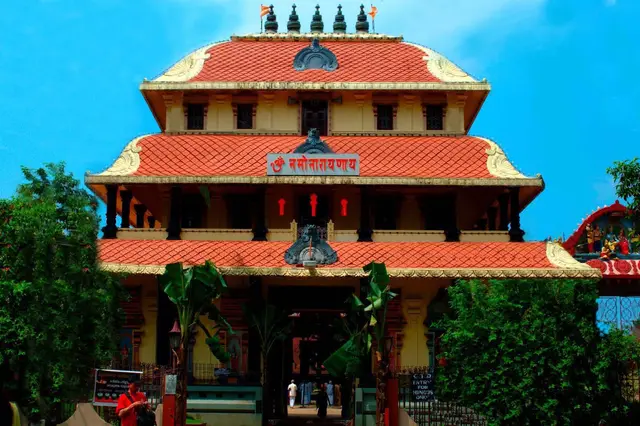
A historic Gowda Saraswat Brahmin temple in Cherlai, Mattancherry, central to Kochi’s Konkani community.
1.7 km · 21 min walk · straight line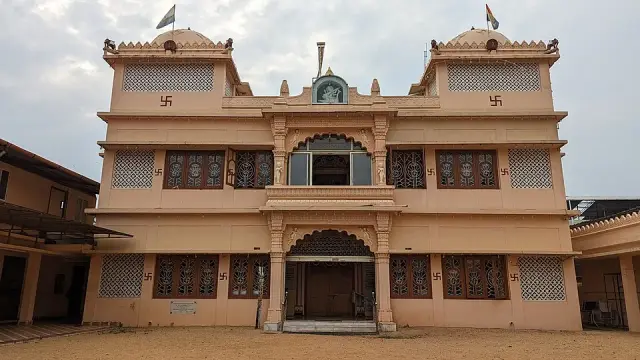
An ornate Jain temple in Mattancherry’s Gujarati quarter, raised in 1904 by Hirubai in memory of her husband Jivraj Dhanji and dedicated to Dharmanatha, the fifteenth Tirthankara — known for its white marble work and the daily midday feeding of the pigeons outside.
1.7 km · 21 min walk · straight lineA working colonial-era community open-air laundry in Fort Kochi, still used by traditional washermen families.
2.1 km · 3 min driveWalking and driving times are real routed distances, except the few marked “straight line”, which are direct-line estimates and will read short. Fare figures are estimates from Kerala’s notified auto/taxi tariff and exclude waiting and night charges. Routing: © openrouteservice.org by HeiGIT | Map data © OpenStreetMap contributors
Nearby toilets, pharmacies, ATMs, seating and vets are community-mapped and may be incomplete or out of date. Map data © OpenStreetMap contributors | Walking times © openrouteservice.org by HeiGIT
It is not a recommended swimming beach. The water is affected by strong currents and busy harbour shipping, and the beach is better enjoyed as a walking and sunset promenade than for bathing.
The row of cantilevered Chinese fishing nets (cheena vala) along the shore, and the spectacular sunsets behind them, together with the colonial heritage quarter just inland.
The seafront is open and free to walk. The fishermen working the Chinese fishing nets may ask for a small tip if you want to watch them haul a net, which is a normal courtesy — agree the amount first. Do not accept an offer to go up onto a platform: one collapsed under a tour group on 21 November 2025, dropping seven people into about 15 feet of water, and Fort Kochi police barred operators from allowing it.
Late afternoon into sunset is the highlight, when the light is best and the nets are being worked. The cooler, drier months from roughly October to March are the most comfortable overall.
Fort Kochi sits on a peninsula reached by road via the bridges or, more scenically, by ferry from Ernakulam mainland. The beach is a short walk or auto-rickshaw ride from anywhere in the Fort Kochi quarter.
Not currently. The Biennale runs only every second year: the sixth edition closed on 31 March 2026, and the seventh is announced to open in December 2027, curated by Kader Attia — the first foreign curator in its history. Outside an edition the warehouse venues are closed, so check the dates before booking a trip around it.
No. On 21 November 2025 a platform gave way at Vasco da Gama Square and dropped seven visitors into about 15 feet of water. Fort Kochi police then barred operators from allowing tourists onto the platforms and charged the operator and the owner. Watch from the promenade — the walkway gives a clear view of the whole cantilever.
We deliberately do not publish a figure, because the rate is negotiated rather than posted and would go stale. What matters is the method: agree the per-kilo rate, the weight, the cooking charge and the unit it is charged in, and any extras, all before you buy the fish. Published accounts quote the cooking charge per kilo, per item and per meal, so name the unit. The opening ask is commonly several times what people end up paying, and negotiating is expected.
About 4.5 km — not a walk, despite what some guides suggest. Take an auto, or use the Mattancherry Water Metro terminal that opened in October 2025.
Fort Kochi was designated Kerala's first differently-abled-friendly heritage site under the Barrier Free Kerala programme in 2016, with handrails and projected standing areas built so that wheelchair users could view the fishing nets. That designation is from 2016 and we have not re-surveyed the current condition of the infrastructure, so please confirm on arrival.
There are two different boat systems. The Kochi Water Metro terminal is about 126 m — a 2 minute walk — from Vasco da Gama Square and the nets. The older, much cheaper State Water Transport Department ferry docks at the Junkar jetty, about 356 m or a 4 minute walk away. Decide which you want before you set off, because they leave from different jetties on the Ernakulam side too.
Combine the beach with a heritage walk to St Francis Church, Santa Cruz Basilica, the Mattancherry (Dutch) Palace and Jew Town, browse the cafes and art galleries of the quarter, or take a harbour ferry ride.
November to February for dry weather; avoid rough-sea days during monsoon warnings.
Entry: Free to walk the seafront. The fishermen working the Chinese fishing nets may ask for a tip to watch them haul a net, which is a normal courtesy. Do not go up onto a net platform: on 21 November 2025 a platform at Vasco da Gama Square gave way and dropped seven visitors into about 15 feet of water, and Fort Kochi police then barred operators from taking tourists onto them, charging the operator and the owner. Watch from the promenade instead.. Timings: Open seafront accessible through the day; late afternoon to sunset is the main draw, when the nets are worked and the light is at its best.
Base yourself in Fort Kochi or a nearby town in Ernakulam, then confirm the last-mile route locally before leaving. Arrive before sunset if you want photos and a calmer walk; beach roads can slow down in the evening. If the visit depends on forest, temple, boat, ferry, weather or seasonal access, check the official/local rule on the day before travel.
1 to 3 hours, longer if staying for food or sunset.
Nearby you can pair Chinese Fishing Nets (270 m), St. Francis Church (340 m), Fort Kochi (440 m), Dutch Cemetery (460 m).
Do not swim during rough-sea warnings. Avoid isolated stretches after dark unless with a trusted local/operator.
Written about Fort Kochi Beach itself — its history, its legends and the arguments about them.
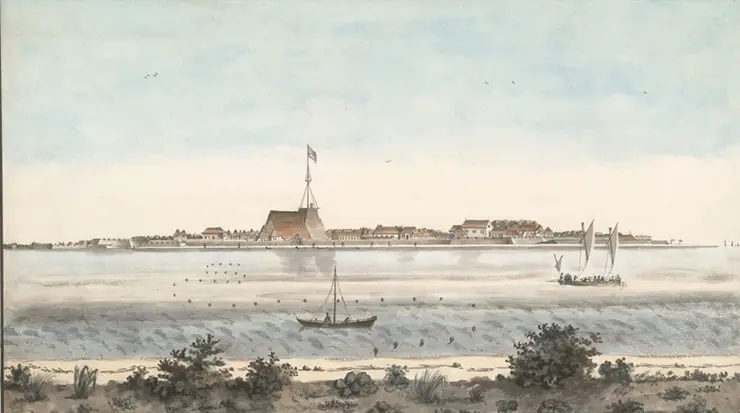
Fort Kochi Beach sits in Fort Kochi, so these cover the streets, buildings and surroundings around it.
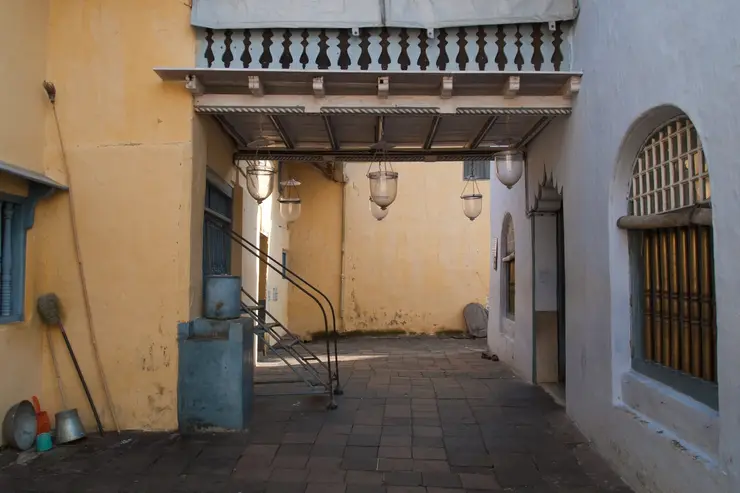
Written about Fort Kochi as a whole rather than about Fort Kochi Beach — its history, its streets, and how to spend a day in it.
Route-level itineraries and practical guides for the rest of Kerala.
Photographs: Vis M (CC BY-SA 4.0), Rangan Datta Wiki (CC BY-SA 4.0). Wikimedia Commons.