What to expect
Highlights
- Heritage experience at Aspinwall House
- Architecture, local stories and old trade/cultural routes
- Good fit for guided walks and nearby cafes/shops
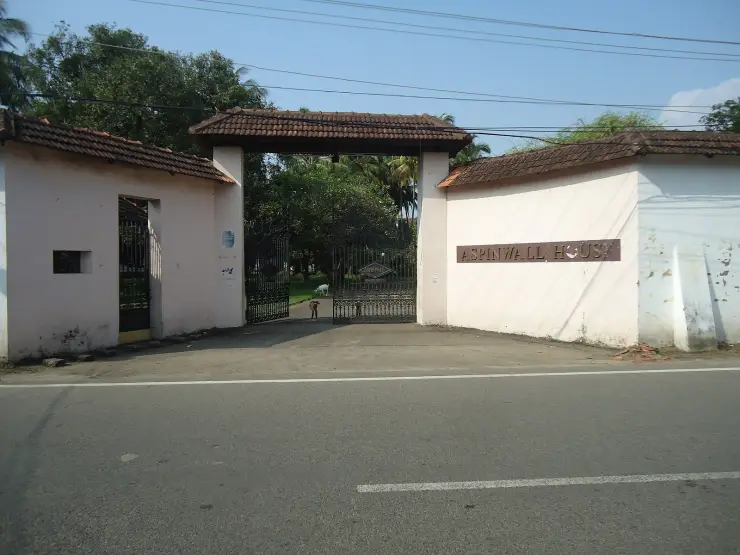
A large 19th-century waterfront trading compound in Fort Kochi, the principal venue of the Kochi-Muziris Biennale.
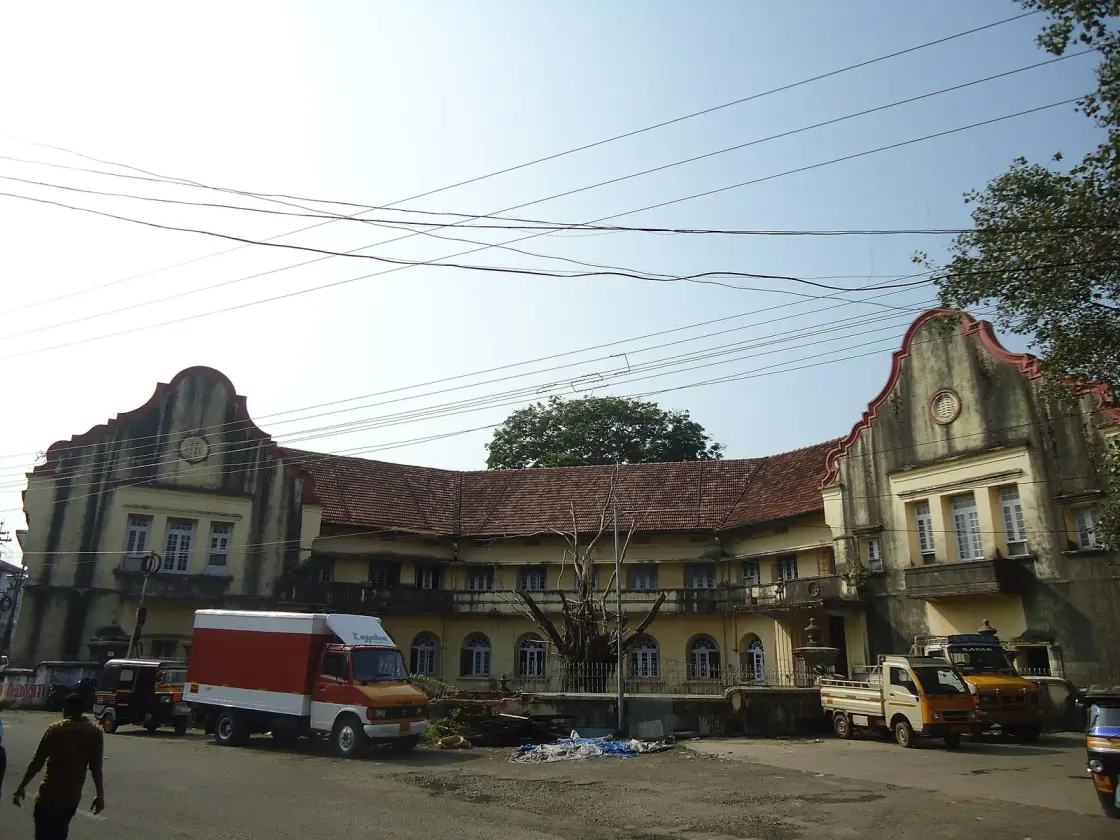
A long, low, sea-facing compound on the Fort Kochi waterfront, Aspinwall House was built to move cargo, not to be looked at. Coconut oil, pepper, timber, ginger, turmeric, hides, coir, coffee, tea and rubber passed through these godowns on their way to the harbour. Since 2012 it has been the principal venue of the Kochi-Muziris Biennale, and the raw warehouse floors that once held sacks of pepper now hold contemporary art from around the world. It is the most famous address in Fort Kochi that you cannot simply walk into.
Aspinwall House is not a building so much as a working plan laid out on the ground. Office block, residential bungalow, warehouses, outbuildings — arranged for the movement of goods between the road and the water, with the harbour on one side and the town on the other. Nothing about it was designed to impress a visitor. That is precisely why it is the most atmospheric space in Fort Kochi.
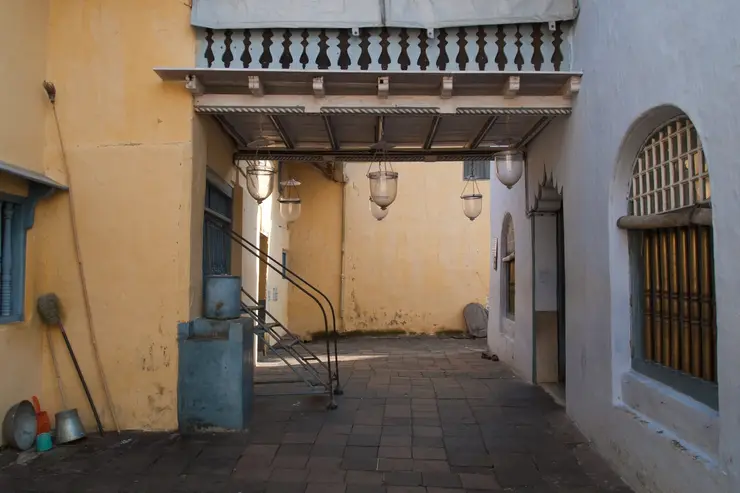
The godowns are enormous, plain and structurally honest: long spans, high roofs, wide doors sized for cargo, floors worn by a century of loading. The coir godown in particular has become the signature Biennale space, and much of what people remember about the festival — the scale, the light, the sense of art placed inside working history rather than a white cube — comes from this one room.
Stand at the seaward edge and the logic of the place resolves. The compound faces the harbour it was built to serve. Everything that made Kochi rich came past this frontage. The estate sits on the road running from Fort Kochi towards Mattancherry, which is to say it sits on the spine of the spice trade, halfway between the European quarter and the warehouses of Jew Town.
What was traded here is worth reading slowly, because it is the economic history of Kerala in a list: coconut oil, pepper, timber, lemongrass oil, ginger, turmeric, spices, hides, and later coir, coffee, tea and rubber. Some of those are ancient Malabar exports. Others — tea, rubber, coffee — are plantation crops of the colonial economy, and their appearance in the ledger marks the point where Kerala's uplands were remade to feed European demand.
The Biennale did something unusual with all this. Rather than restoring the compound into a polished heritage attraction, it left the rawness alone and put art into it. The peeling walls, the industrial volumes and the salt in the air are part of the experience, and a great deal of the festival's international reputation rests on this compound's refusal to be tidied up.
It helps to know that the compound is not a preserved relic with a company name attached to it. Aspinwall and Company is still trading out of Kochi — shipping and logistics, coffee, coir, rubber plantations, tourism — and this waterfront estate is corporate property belonging to a going concern, not a heritage site awaiting a use. That single fact explains most of what frustrates visitors here: why there are no opening hours, why nobody is selling tickets between Biennales, and why the parts you are shown are the parts the owner has agreed to lend. The Biennale is a tenant of a working company, and always has been.
The catch, and it disappoints people every week, is that Aspinwall House is privately owned and is not a public monument. It opens principally as a Biennale venue, and typically only parts of it — the coir godown and the director's bungalow — are ever given over to visitors. Between editions the gates are often simply shut.
The building you photograph is not the building John Aspinwall built. This is the most common misunderstanding about the site, and it is a matter of record rather than opinion.
The company was founded in 1867. But the great fire of 1889 tore through Fort Kochi and destroyed a great deal of the quarter, Aspinwall's premises among them. The structure standing today dates from after that fire, generally given as 1890. So when a guide tells you that you are looking at an 1867 building, the arithmetic does not hold: you are looking at the replacement, put up by a company that had just watched its warehouses burn.
A second and gentler myth is that Aspinwall House is a Biennale building. It is not, and the reverse is closer to the truth: the Biennale moved into a working colonial trading compound and took its character from it. The art is the newcomer here by about a century and a half.
The fire is worth telling properly, because it is the reason so much of Fort Kochi is younger than it looks. On 4 January 1889 a pattemari lying off the premises of Brunton and Co. caught fire. Wind and current pushed the burning vessel ashore, into a waterfront of timber godowns roofed with thatch — about the most combustible arrangement a nineteenth-century port could have devised. Something on the order of three hundred houses and commercial properties went, Aspinwall’s among them.
So the godowns that are now among the best exhibition spaces in India were built by a firm doing disaster recovery. The scale of them, the height, the long unbroken floors that curators now covet — those are the proportions of a working cargo shed put up in a hurry in about 1890, not the design of anyone thinking about art. That is the quiet joke of the Biennale: the space works so well because nobody was trying to make a gallery.
The founding is usually told as a beginning and it was really a purchase. John H. Aspinwall did not arrive on this coast and build a trading house out of nothing in 1867; he bought one. The business he acquired that year belonged to Scott Brothers, and what he did was put his own name on an existing concern and expand it — into shipping, timber, spices and agricultural produce, and eventually into the long list of commodities that ran through these godowns. It is a small correction and it changes the character of the story: this is a nineteenth-century acquisition, not a foundation myth.
And here is the thing almost nobody visiting the Biennale realises. Aspinwall and Company did not become history. It is still trading — one of the oldest commercial firms on the Malabar coast, still headquartered in Kochi, still a listed company, with businesses in shipping and logistics, coffee trading and export, coir, rubber plantations and tourism.
Who owns it is the better part. In 1956, when the firm became a public limited company, the royal family of Travancore acquired a shareholding. In the early 1970s the English owners decided to disinvest, and the family took over the major part of the stock; it has held the controlling interest ever since. So the compound where the international art world gathers every other year belongs to a British colonial trading house that is now controlled by a Kerala royal family — the ownership of the place having quietly changed hands in exactly the direction the art inside it tends to talk about. Nothing at the venue says so.
In 1867 an English trader named John H. Aspinwall took over the business of Scott Brothers in Cochin and founded Aspinwall & Company. The firm dealt in shipping services alongside timber, spices and agricultural produce, and grew into one of the significant European trading houses on the Malabar coast.
Aspinwall himself became a figure in the town rather than merely a merchant in it. He presided over the Cochin Chamber of Commerce, and served as Chairman of Fort Kochi Municipality from 1875 to 1878. When news of his death reached Kochi, shops and businesses across Fort Kochi are recorded as having shut as a mark of respect — an unusual tribute for a foreign trader, and a measure of how thoroughly the firm had woven itself into the town.
The fire of 1889 was the great rupture. It destroyed much property in Fort Kochi, including the company's premises, and the compound was rebuilt afterwards — the present structure is dated to 1890. The quarter you walk through today is in significant part a post-1889 town wearing a much older name.
Through the twentieth century the company's trade shifted with the region's economy, taking in coir, coffee, tea and rubber alongside the older Malabar exports. The waterfront compound remained its Cochin base.
The ownership changed hands in the middle of that century, and the change is more interesting than the trade. Aspinwall and Company became a public limited company in 1956, and the royal family of Travancore took a shareholding at that point. In the early 1970s the English owners decided to disinvest, and the family acquired the major part of the stock; it has held the controlling interest ever since. The firm did not fold, get absorbed or become a heritage shell — it is still trading out of Kochi as a listed company, with businesses in shipping and logistics, coffee trading and export, coir, rubber plantations and tourism.
In 2012 the first Kochi-Muziris Biennale opened, and Aspinwall House was its principal venue. It has held that role across subsequent editions, and its godowns have become the images by which the Biennale is known internationally. The estate remains privately owned.
Because during a Biennale it is the best exhibition space in India — enormous, raw, sea-facing, and completely unlike a conventional gallery.
Because it is the clearest surviving picture of how the Fort Kochi waterfront actually worked: a compound organised around cargo, with the harbour at its feet.
Because the trade list — pepper and coconut oil alongside tea, coffee and rubber — is the economic history of Kerala compressed into one estate.
Because it is the one place in the quarter where the colonial period is neither prettified nor apologised for; it is simply left standing, and used.
And because if you have any interest in contemporary art, this is the address that put Indian contemporary art on the international festival map.
Because the ownership story is better than the architecture: a British trading house whose controlling stake has been held by the royal family of Travancore since the early 1970s, and which is still trading today.
Road km to Ernakulam; ghat roads and traffic vary — allow extra.
November to February and early mornings are best for walking; avoid midday heat where possible.
Live forecast loads in your browser.
Sun and moon are calculated for this location and shown in IST. Photography windows are the hour around sunrise and sunset; the sunset bearing is degrees clockwise from true north. Moon phase is accurate to about half a day.
Browse listed stays, food, activities, sights, shops and rentals around Aspinwall House. Check each listing’s locality and contact the business directly for current arrangements.
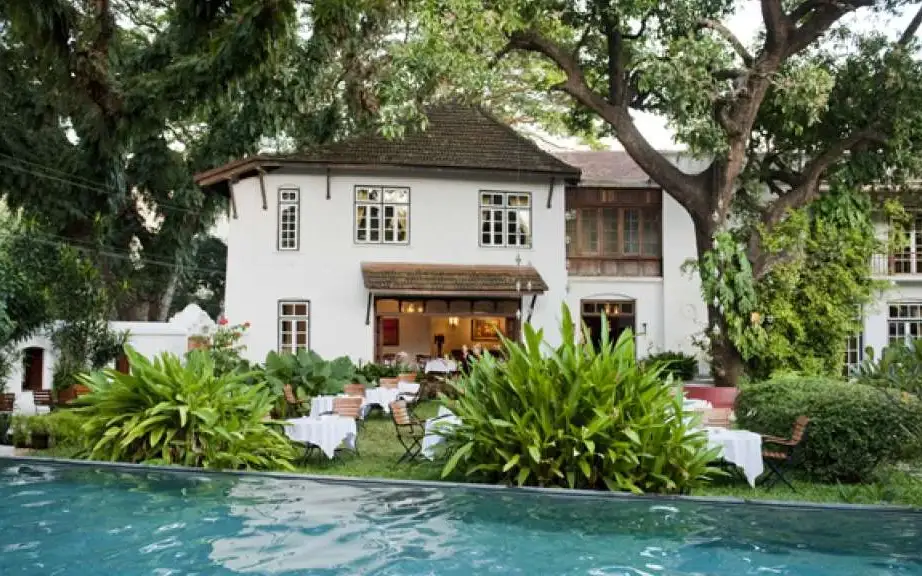
Heritage hotel on Tower Road in Fort Kochi with direct Kerala Tourism-listed contacts. Fort Kochi, Tower Road, Heritage hotel.
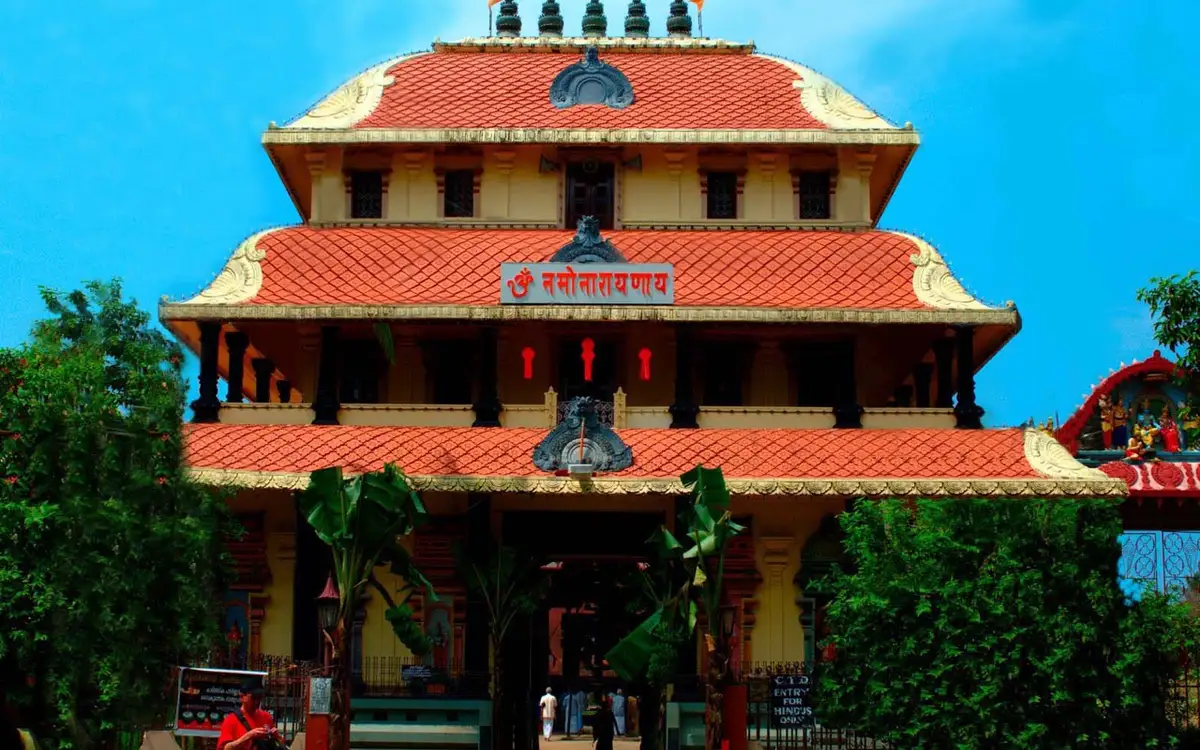
Gosripuram Thirumala Devaswom — the principal temple of Kochi’s Gowda Saraswat Brahmin community, in the Mattancherry lanes. An active shrine with its own dress and entry customs.
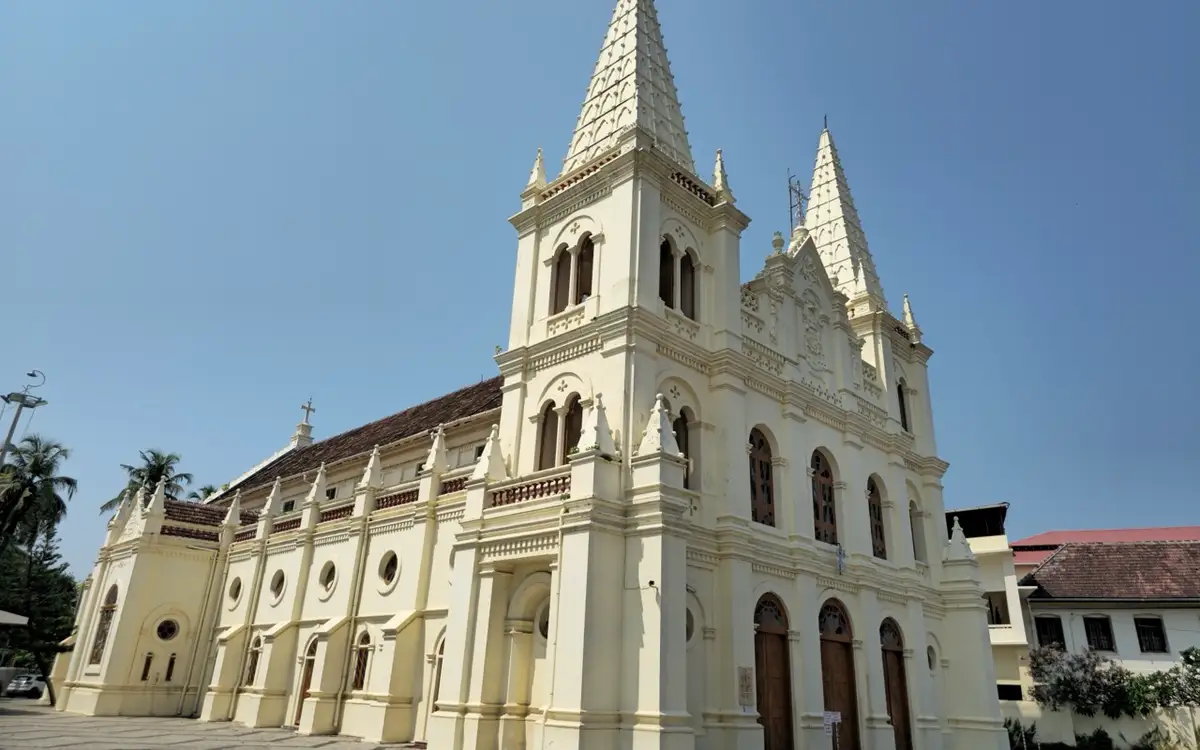
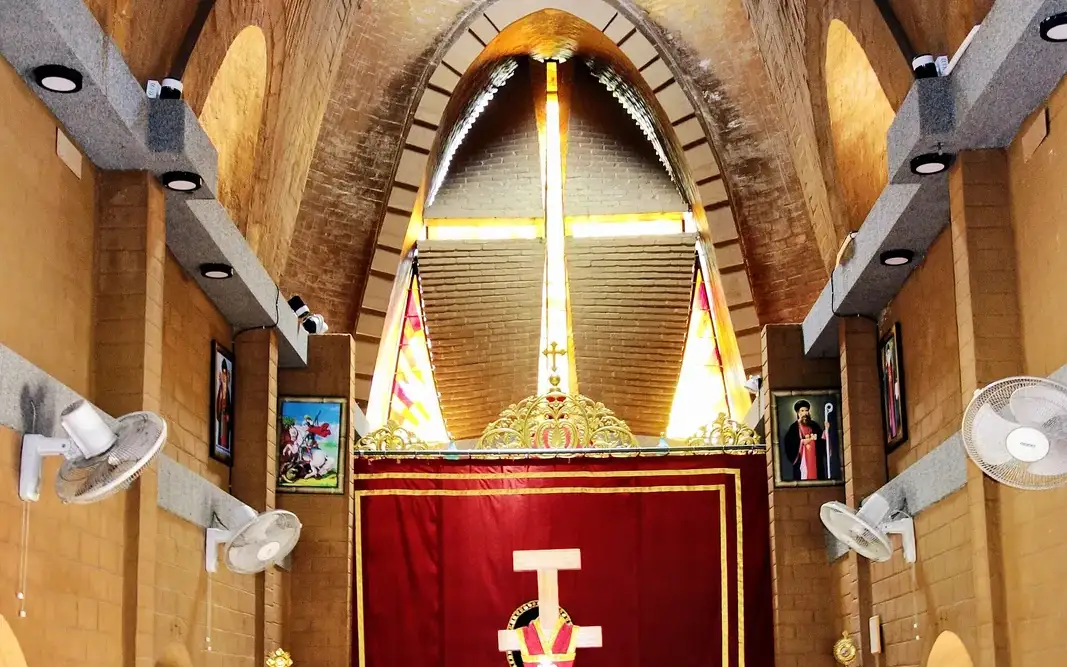
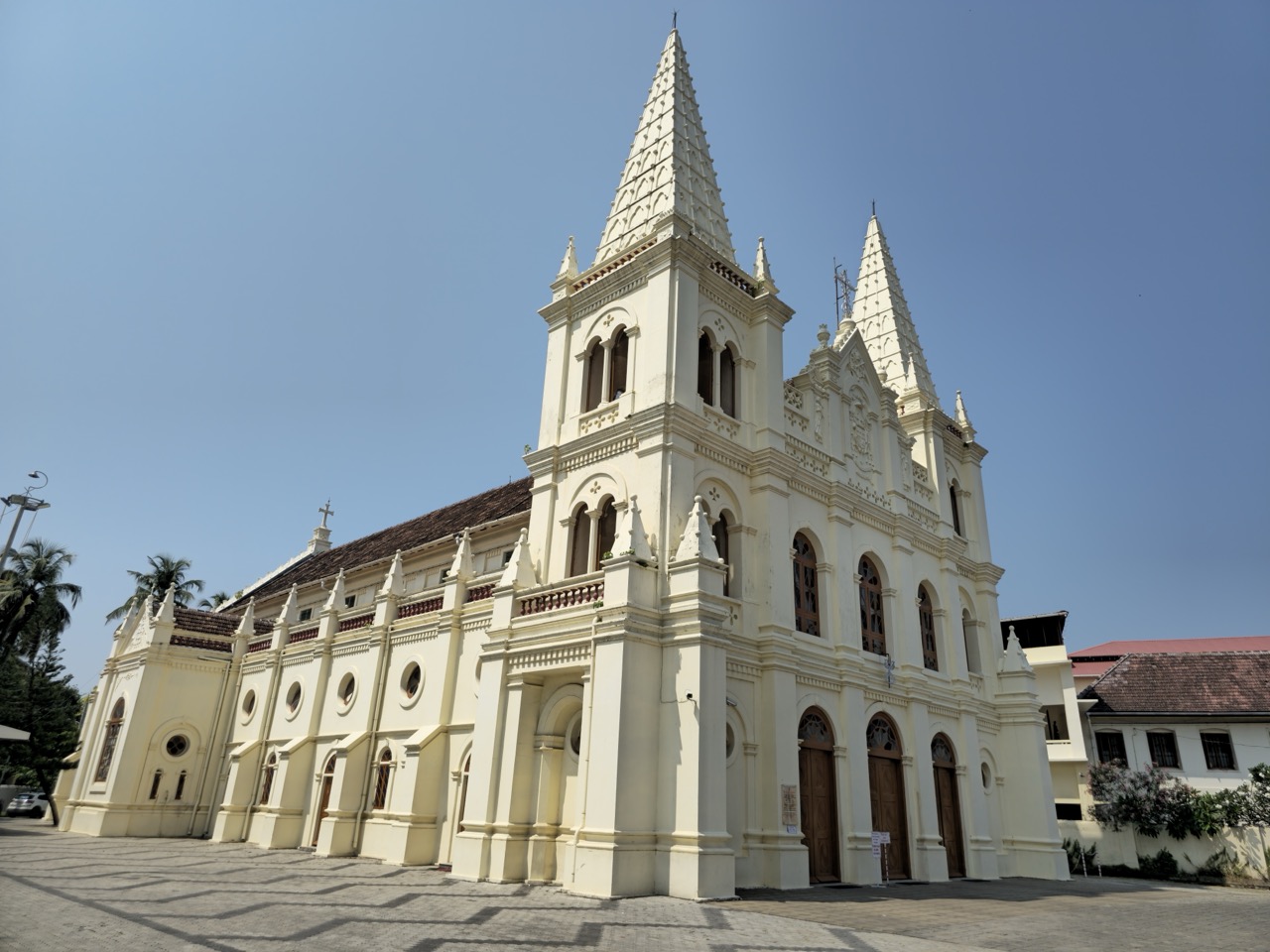
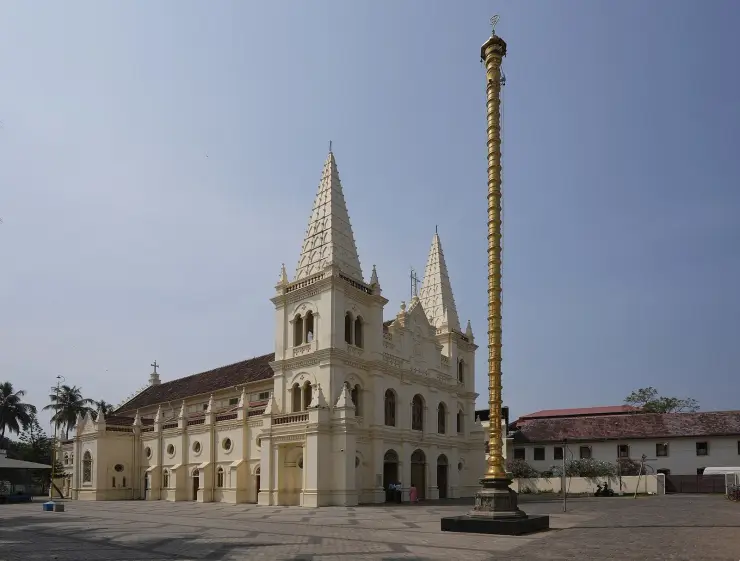
The basilica on KB Jacob Road with one of Kerala’s most richly painted church interiors — rebuilt grander after the British levelled its predecessor. A working cathedral; services take precedence.
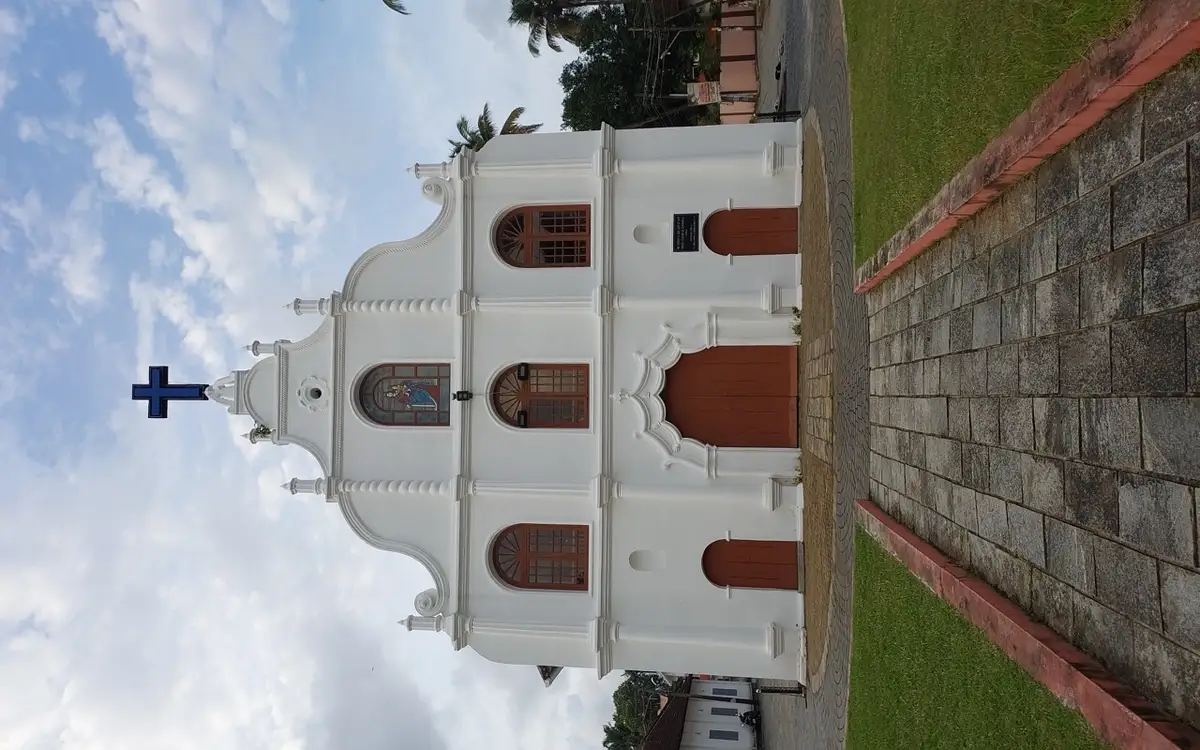
The Portuguese-founded Our Lady of Hope on Vypin island, across the ro-ro crossing from Fort Kochi — one of the oldest church foundations on this coast, and an active parish.
Trouvaille is on Princess Street in Fort Nagar, Fort Kochi. Its own menu distinguishes coffee and breakfast from pasta, burgers, small plates and desserts. A quick coffee stop and a full meal need different amounts of time; check the current menu before choosing.
The Coonan Cross church at Mattancherry — heir to the 1653 oath in which Kerala’s St Thomas Christians renounced Portuguese control, a hinge moment in Indian church history.
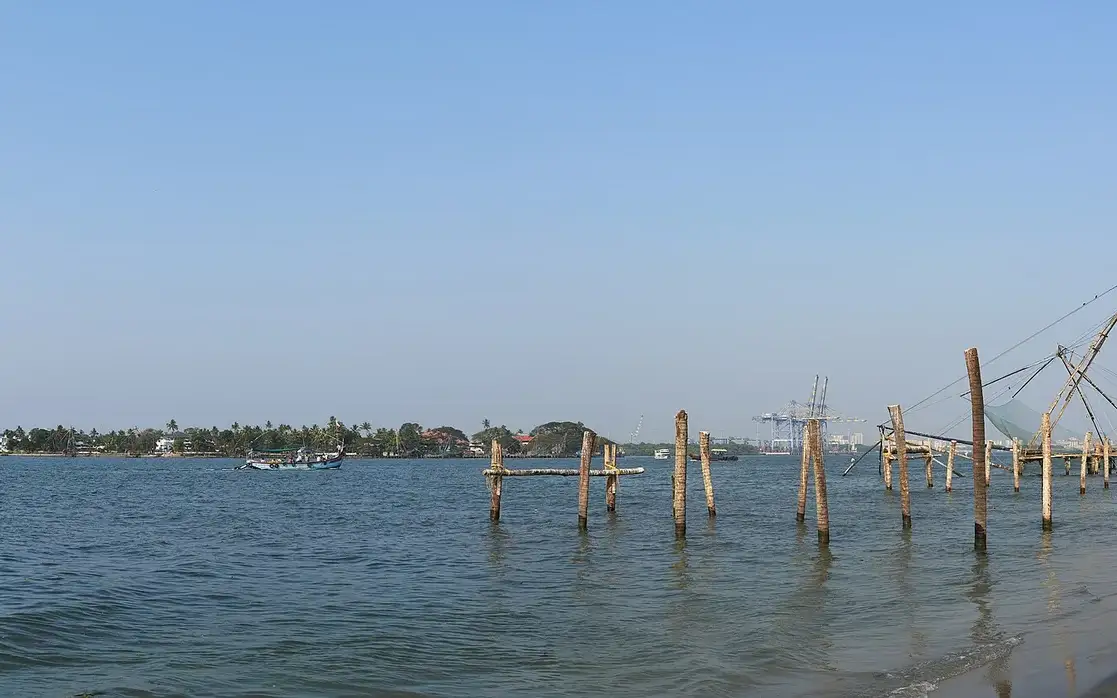
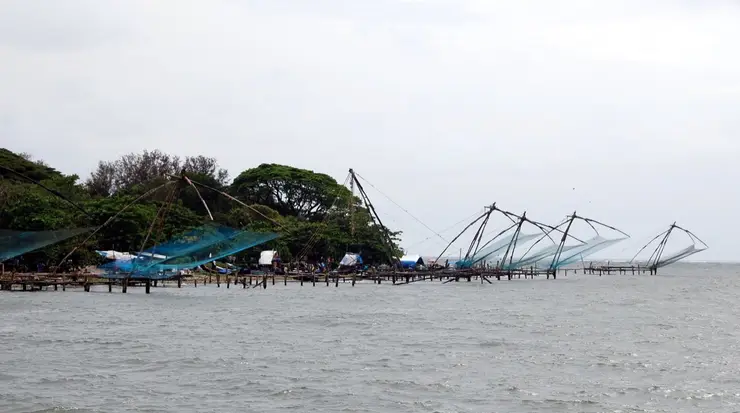
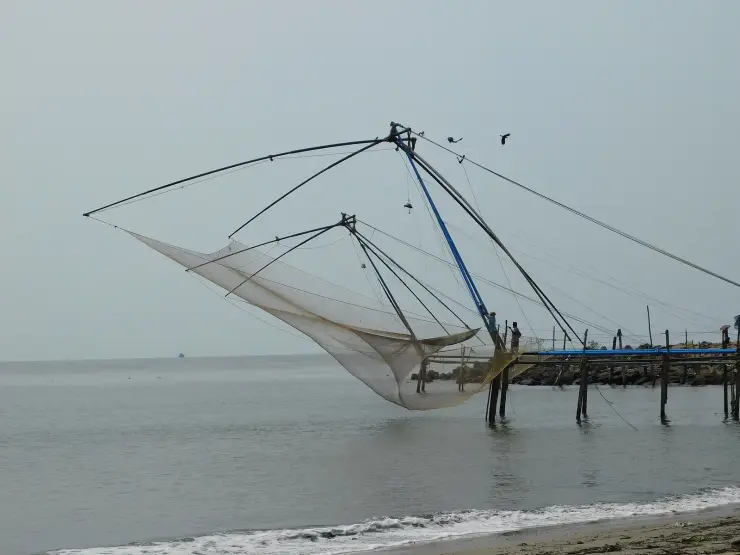
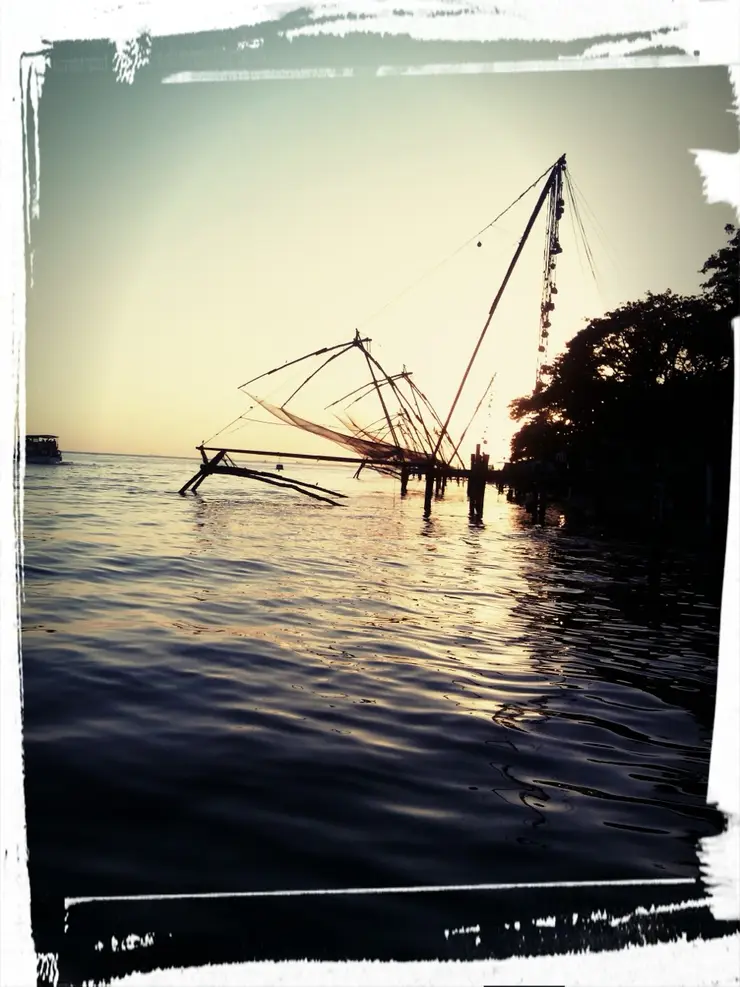
The cheena vala themselves — the counterweighted shore nets at Vasco da Gama Square, worked at dawn and toward sunset. Watch from the promenade: since the 2025 platform collapse, operators may not take visitors onto the nets.
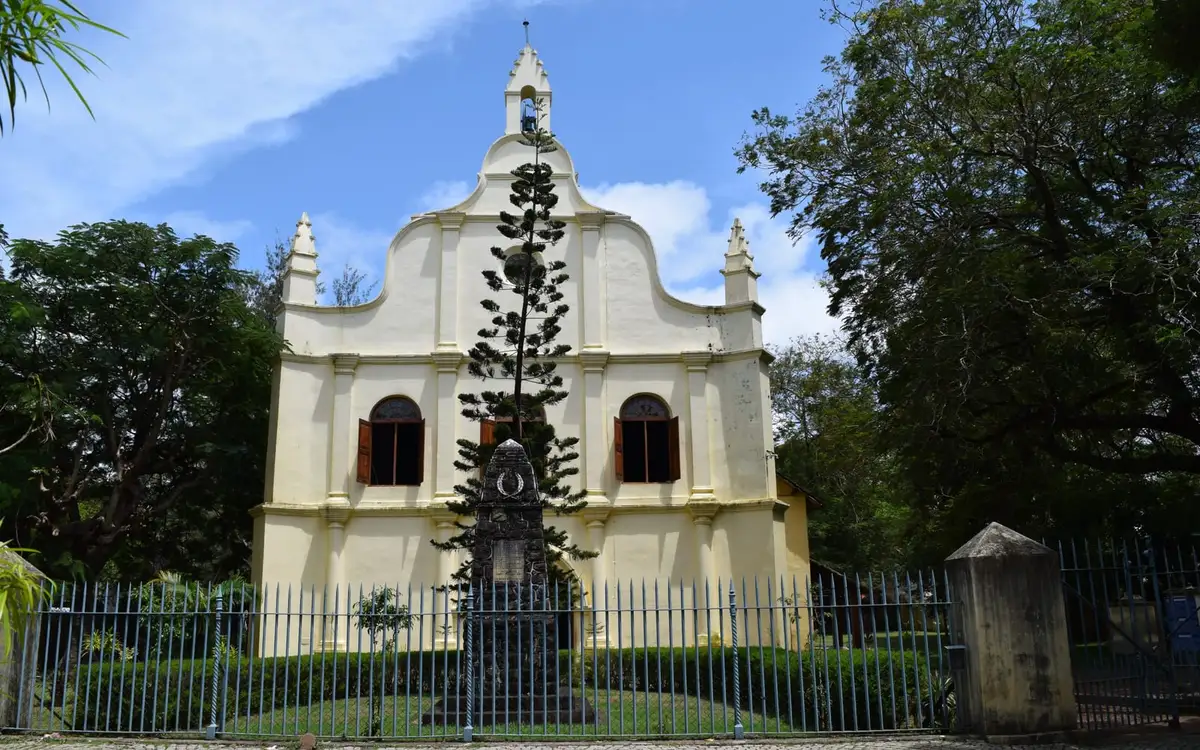
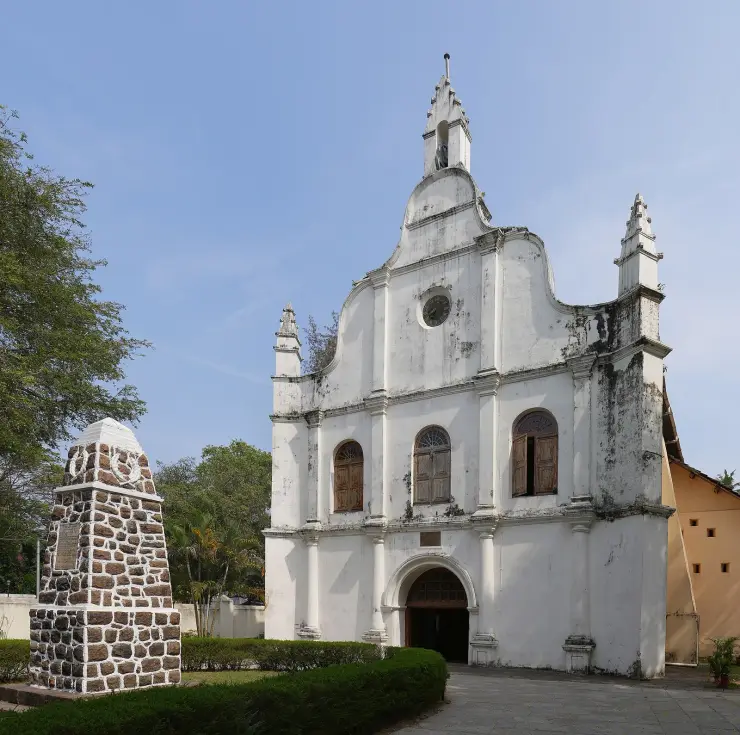
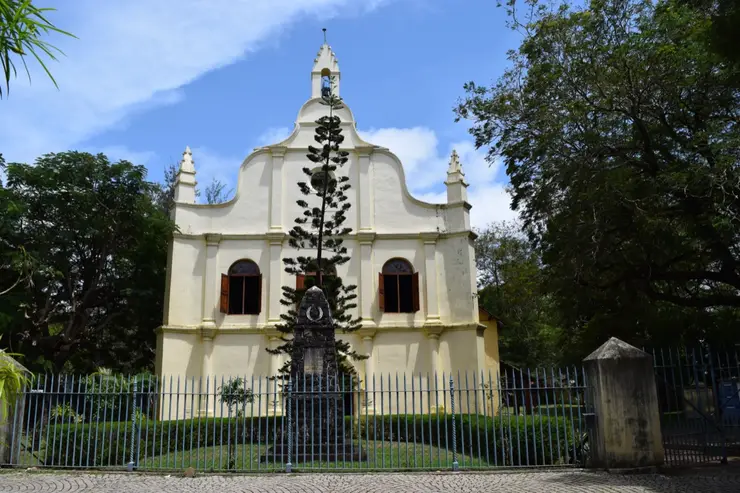
The oldest European church in India, begun in 1503 — Vasco da Gama was buried here for fourteen years before Lisbon reclaimed him. A working parish; services take precedence on Sundays.
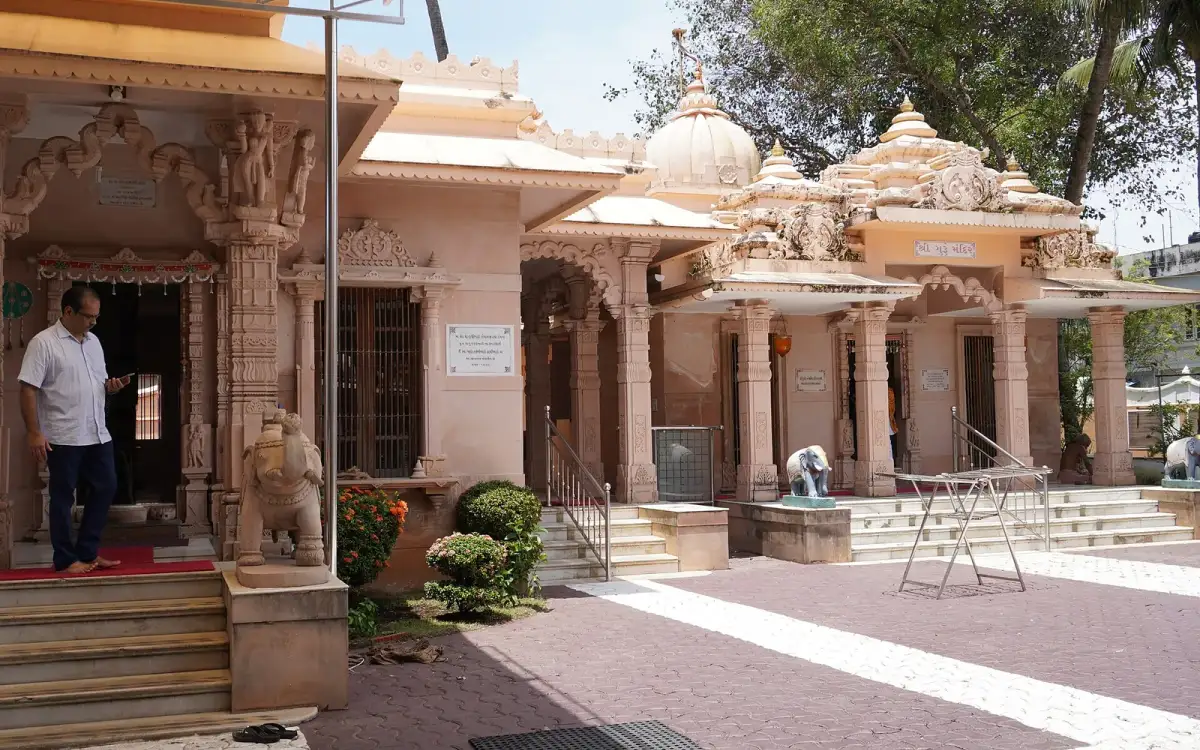
The Gujarati quarter’s Jain temple on Gujarathi Road, Mattancherry — a carved marble compound known for the midday pigeon feeding in its courtyard.
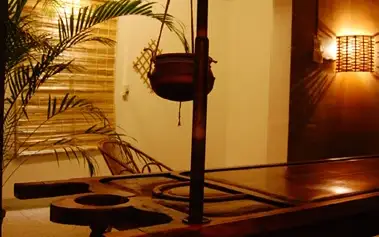
Ayurville offers Ayurveda and massage appointments in Fort Kochi. Discuss the chosen service, duration and suitability with the centre before booking; a spa session and a medical treatment programme are different arrangements.
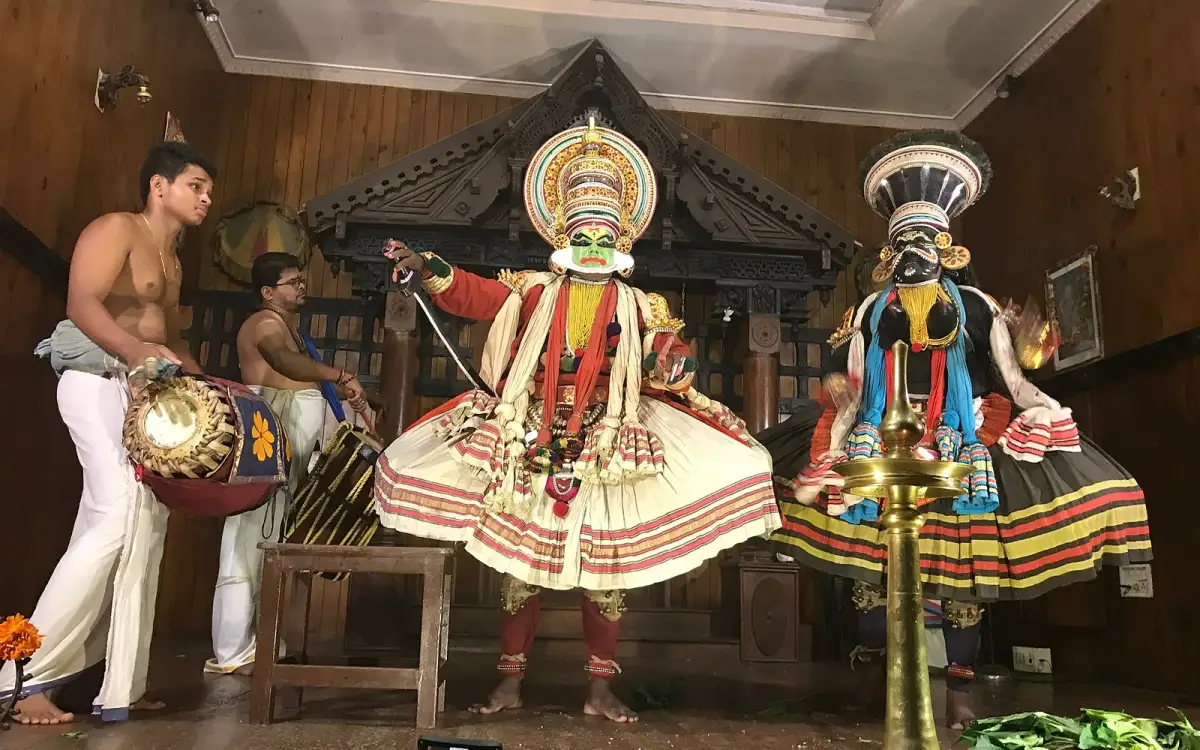
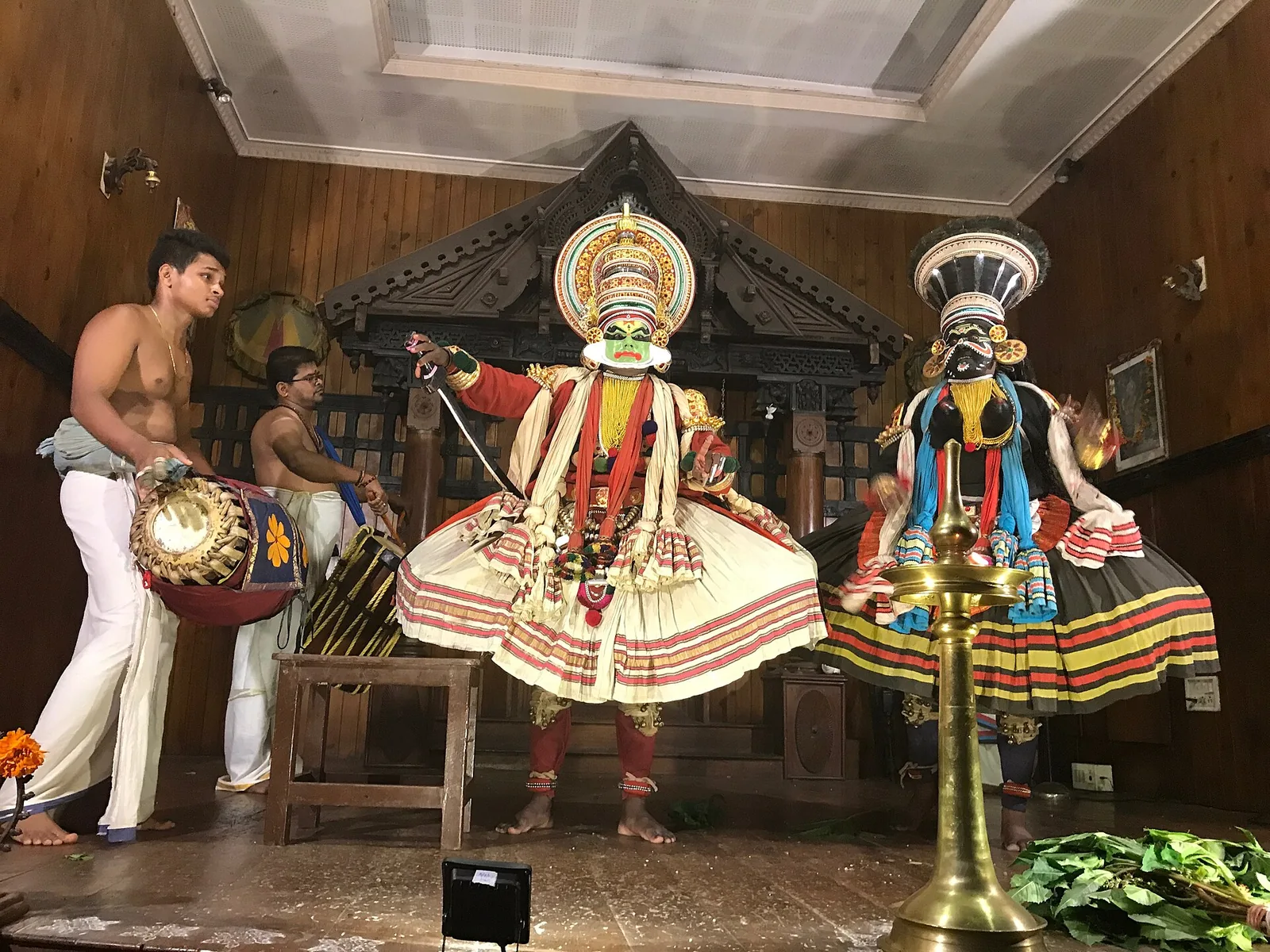
Fort Kochi cultural centre for Kathakali, Kalaripayattu, classical music and related performances. Published show prices; confirm direct · Fort Kochi, Kathakali, Kalaripayattu.
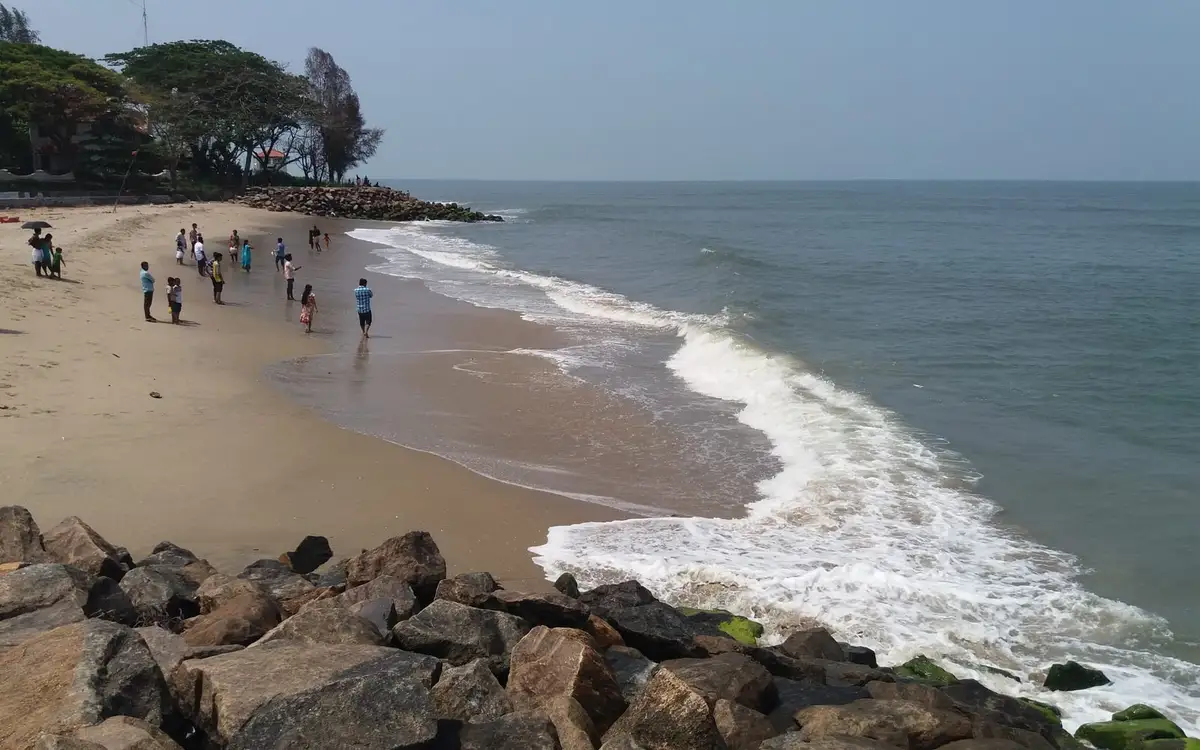
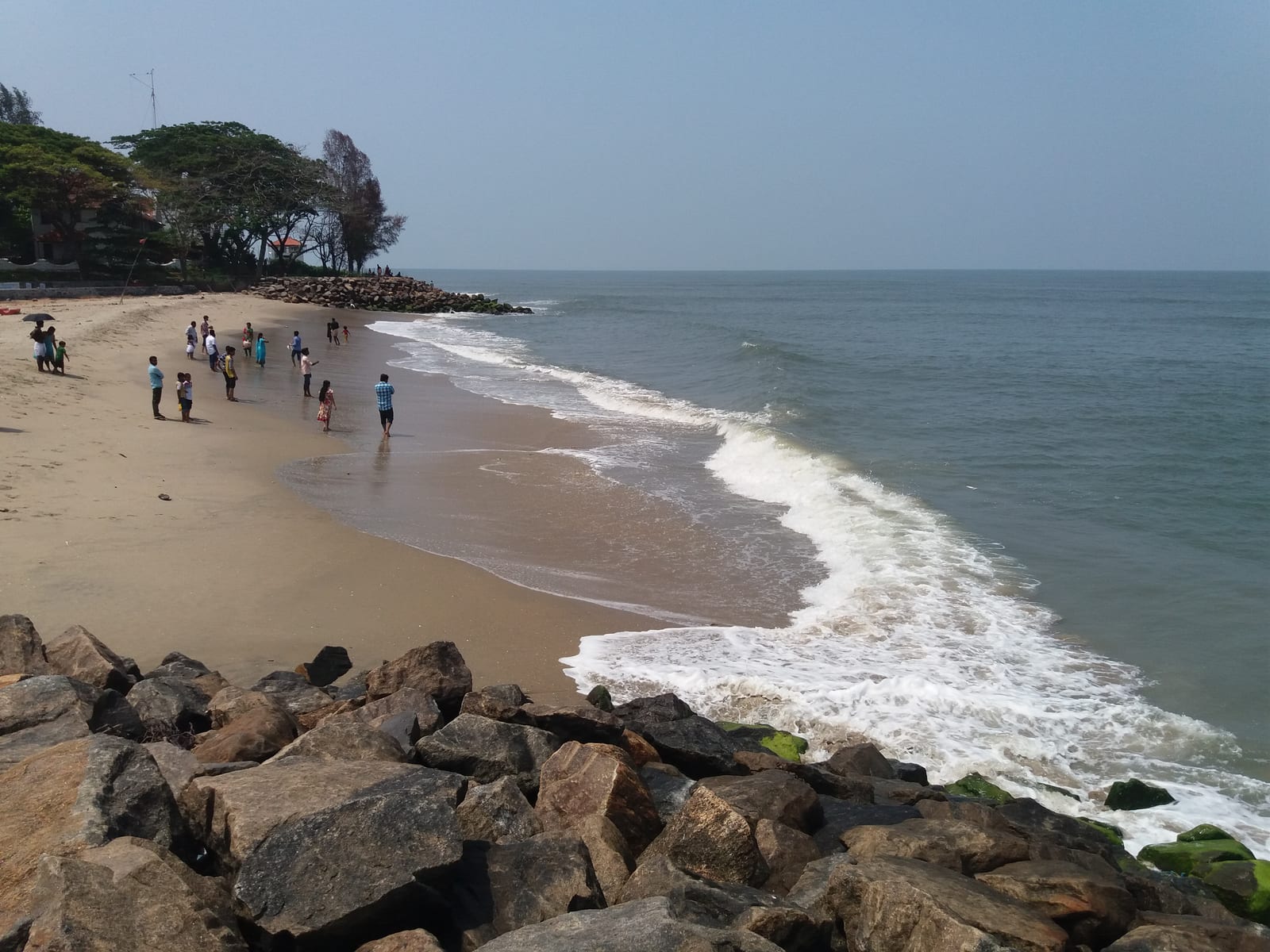
The town’s strolling beach beside the fishing nets — sunset is its hour. Currents make swimming unsafe; the sand, the promenade and the light are the point.
Budget hotel by the Vypin bus stand, across the ro-ro from Fort Kochi — a practical island-side base rather than a heritage-quarter stay.
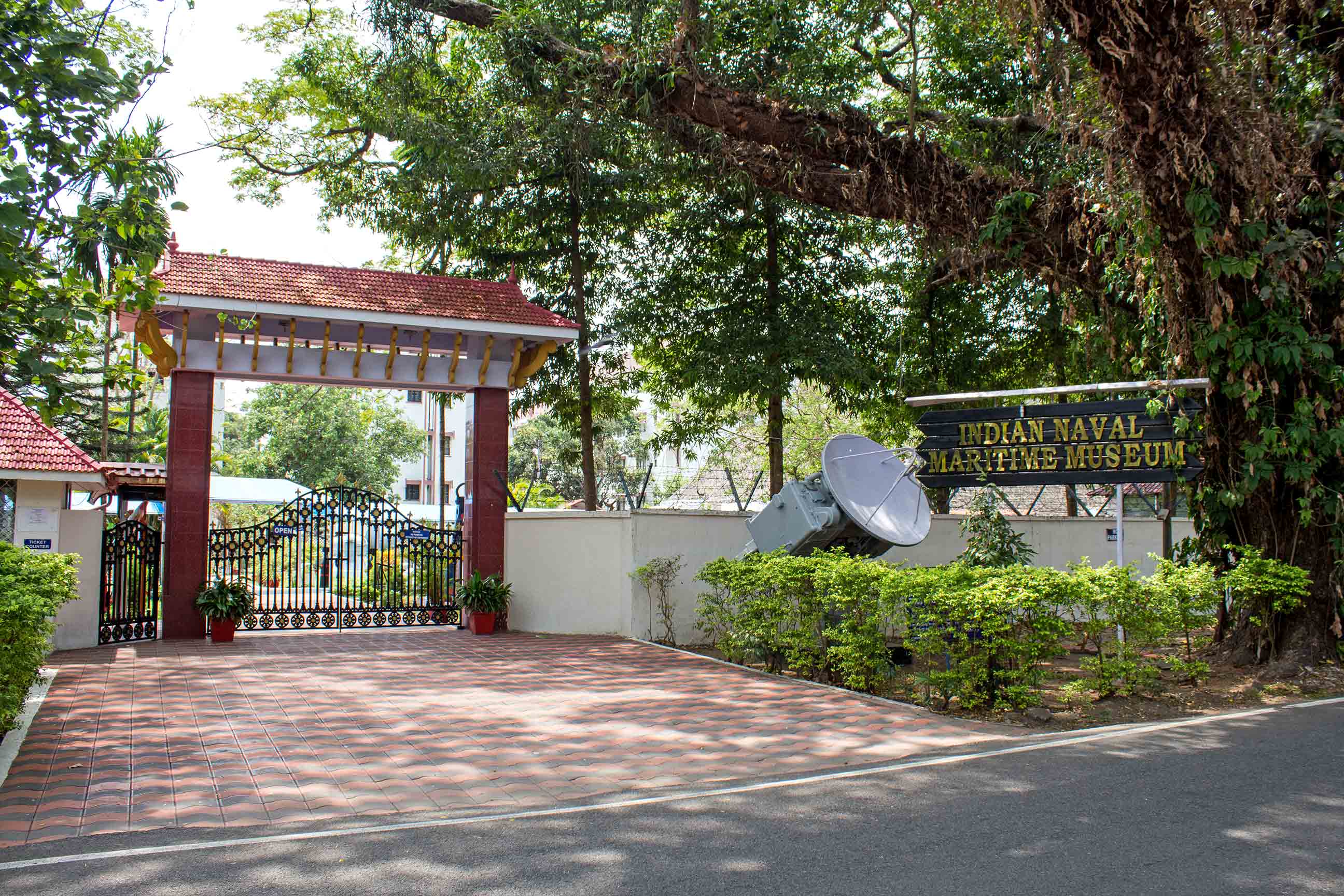
The Navy-run maritime museum off KJ Herschel Road — ship models and naval history in a walled compound south of the parade ground. Ticketed, and the hours are the Navy’s.
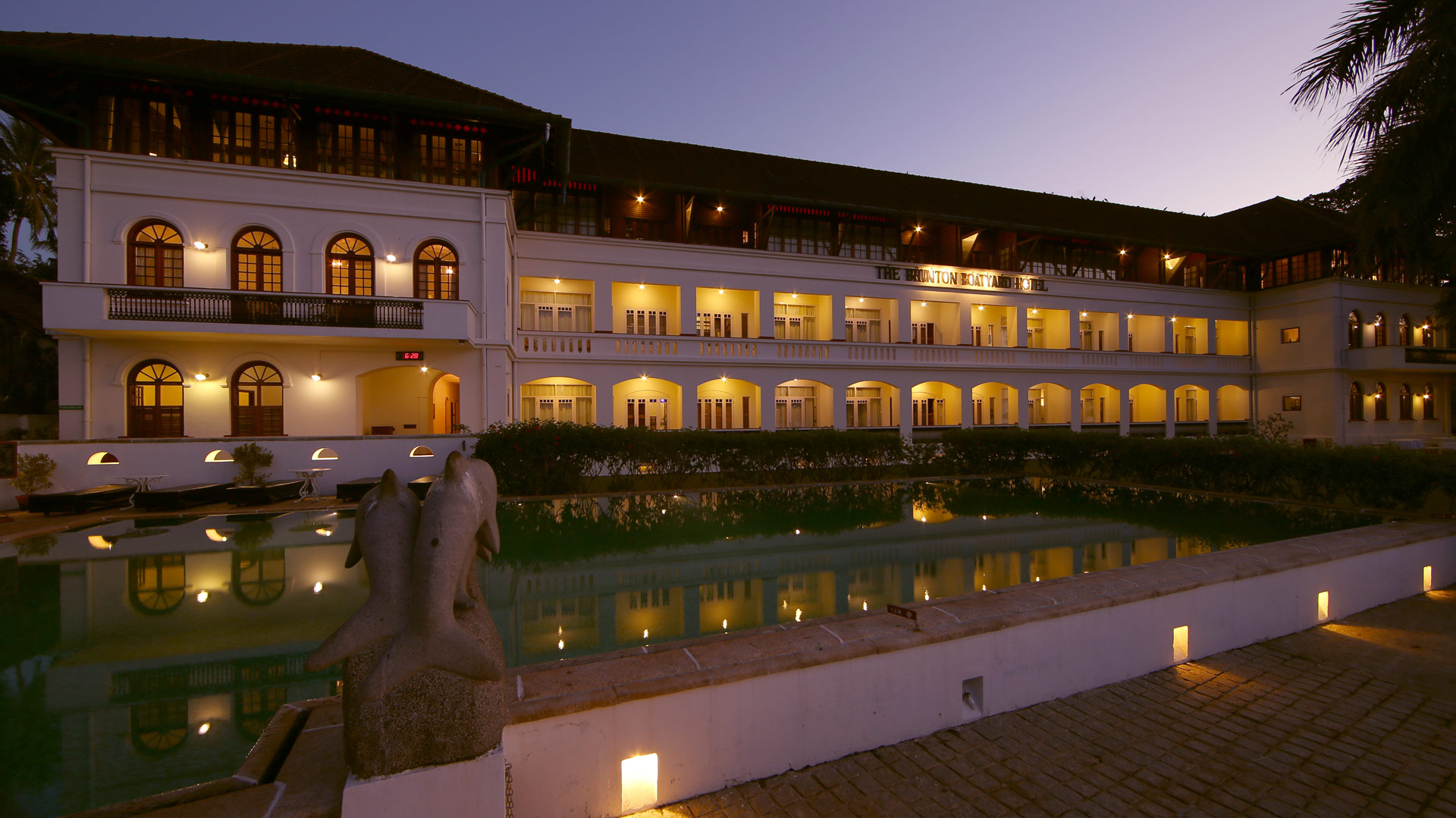
Brunton Boatyard is a waterfront CGH Earth hotel built on a former boatyard site in Fort Kochi. Its colonial-inspired setting and History Restaurant are distinct reasons to compare it with an inland homestay. Ask about the room category, dining reservation and current arrival arrangements.
The green beside Veli Ground at the quarter’s southern edge — open ground for an evening walk rather than a destination in itself.
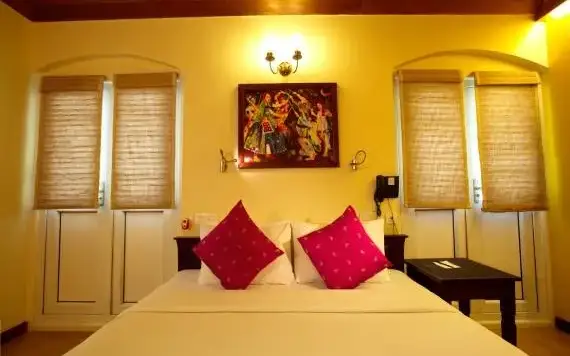
Boutique hotel in a colonial trading bungalow at Kunnumpuram — built for a trading company and later a tea firm’s guest house, hence the name.
Boutique hotel at No 18, KB Jacob Road — upper-mid rooms a short walk from both the basilica and the beach.
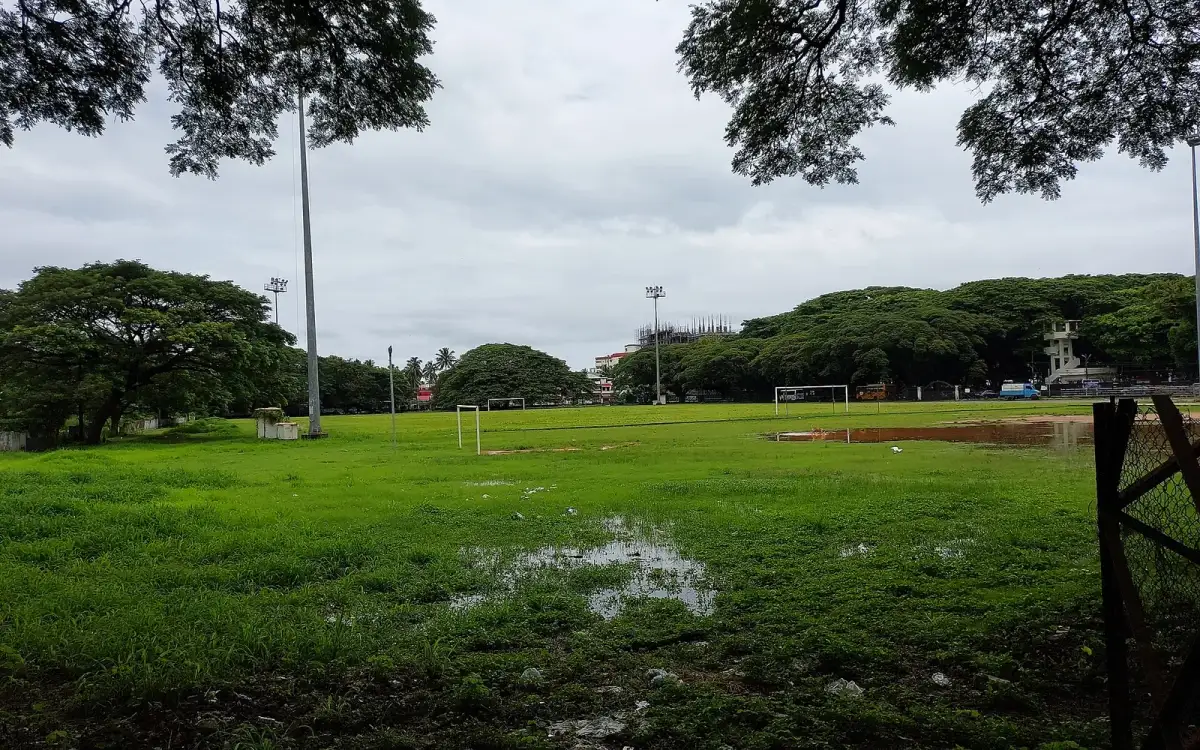
Fort Kochi’s big maidan — the football-and-cricket ground created on land the Vannar washer community gave up, the exchange that built the Dhobi Khana beside it.
Guestland Homestay is on Chirattapalam Road in Amaravathy, Fort Kochi, behind Dr Abraham Dental Clinic. The operator offers AC double, AC single and non-AC single rooms; compare the room category and inclusions with the hosts before booking.
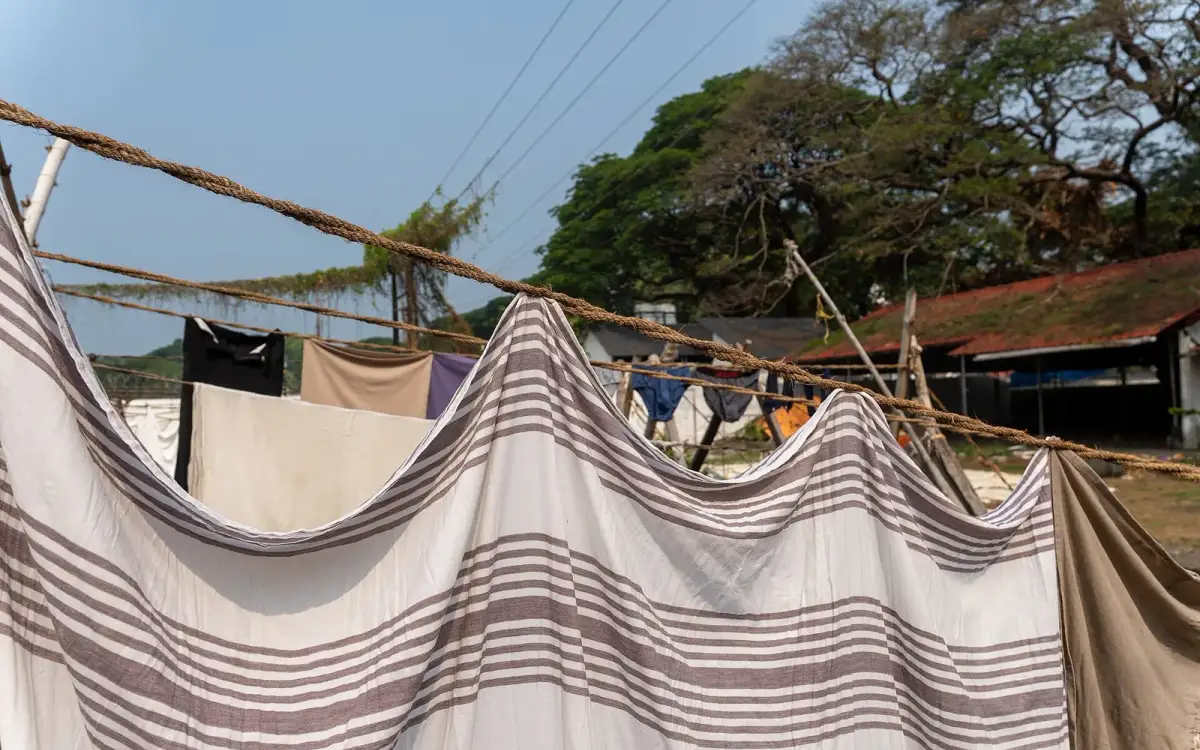
The Vannar community’s open-air laundry at Veli — wash pens, beating stones and drying lines still worked by hand. A workplace, not an exhibit: go in the morning, and ask before photographing.
The Koder family’s early-1900s mansion on Tower Road — the house of Kochi’s best-known Jewish trading family, now a boutique heritage hotel.
Heritage hotel built around a Portuguese-era courtyard off Princess Street — creaking floors and planters’ chairs rather than polish, which is the charm.
Book with the place itself. India’s cyber-crime coordination centre warned in April 2025 that convincing copies of hotel and pilgrimage booking sites are being pushed through sponsored search and social ads, taking payment for rooms the property never hears about. Use the contact and source details on each profile to confirm the exact business and booking channel. A directory entry or map pin alone does not establish an operator’s identity or current availability. Roampedia takes no commission and does not collect booking payments. If a booking page reached you through an ad, check the address bar against the property’s own site before you pay. Fraud can be reported on cybercrime.gov.in or on 1930.
Browse food, accommodation and activities across Fort Kochi. Check each address and journey before adding it to your day; these selections are not all beside Aspinwall House.
10 more places around Fort Kochi. Open a guide to plan the visit and onward journey.
690 m · 8 min walk
Kerala’s most walkable heritage quarter, with Chinese fishing nets, colonial churches, art cafes and Mattancherry nearby.
560 m · 7 min walk
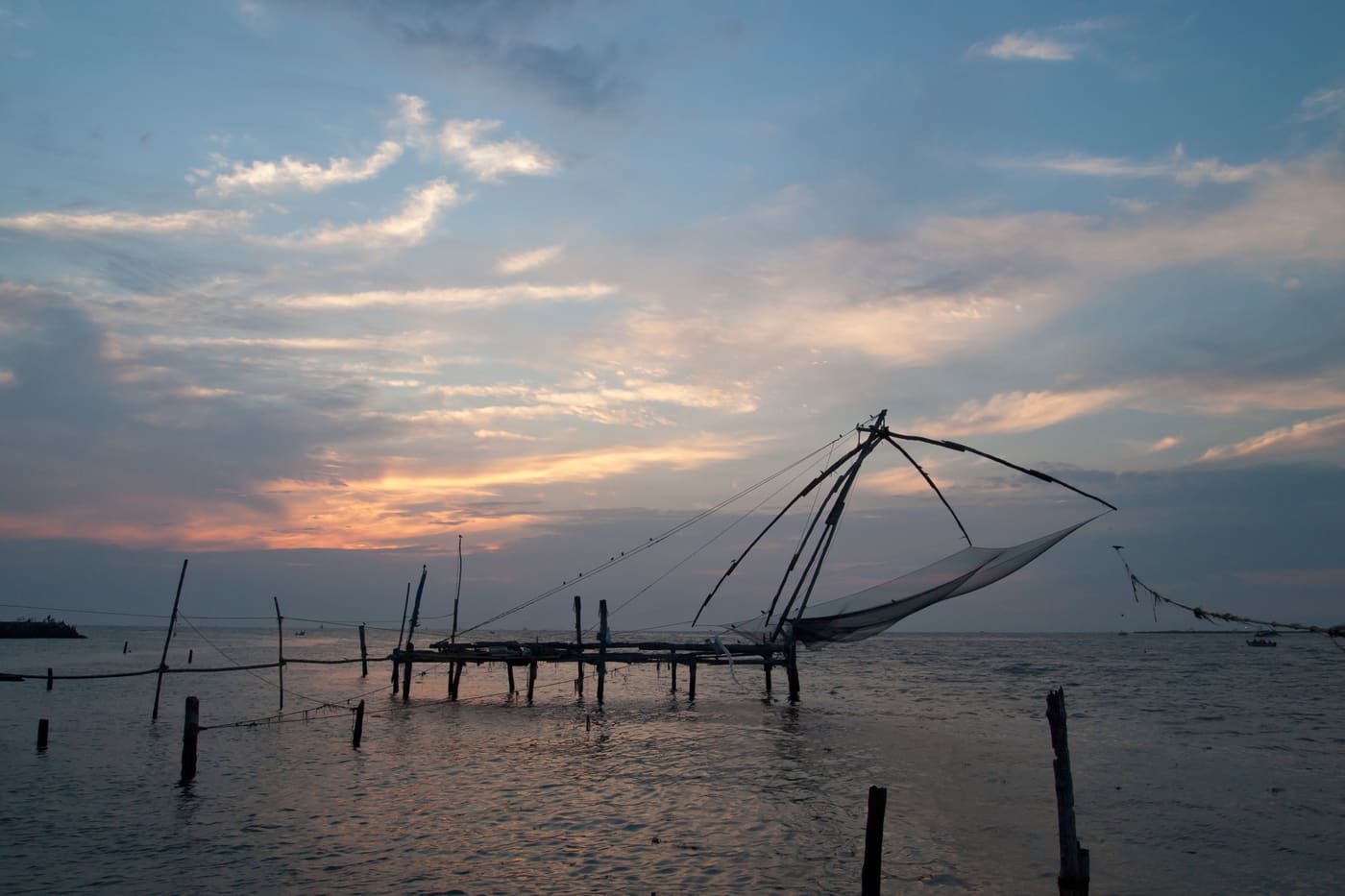
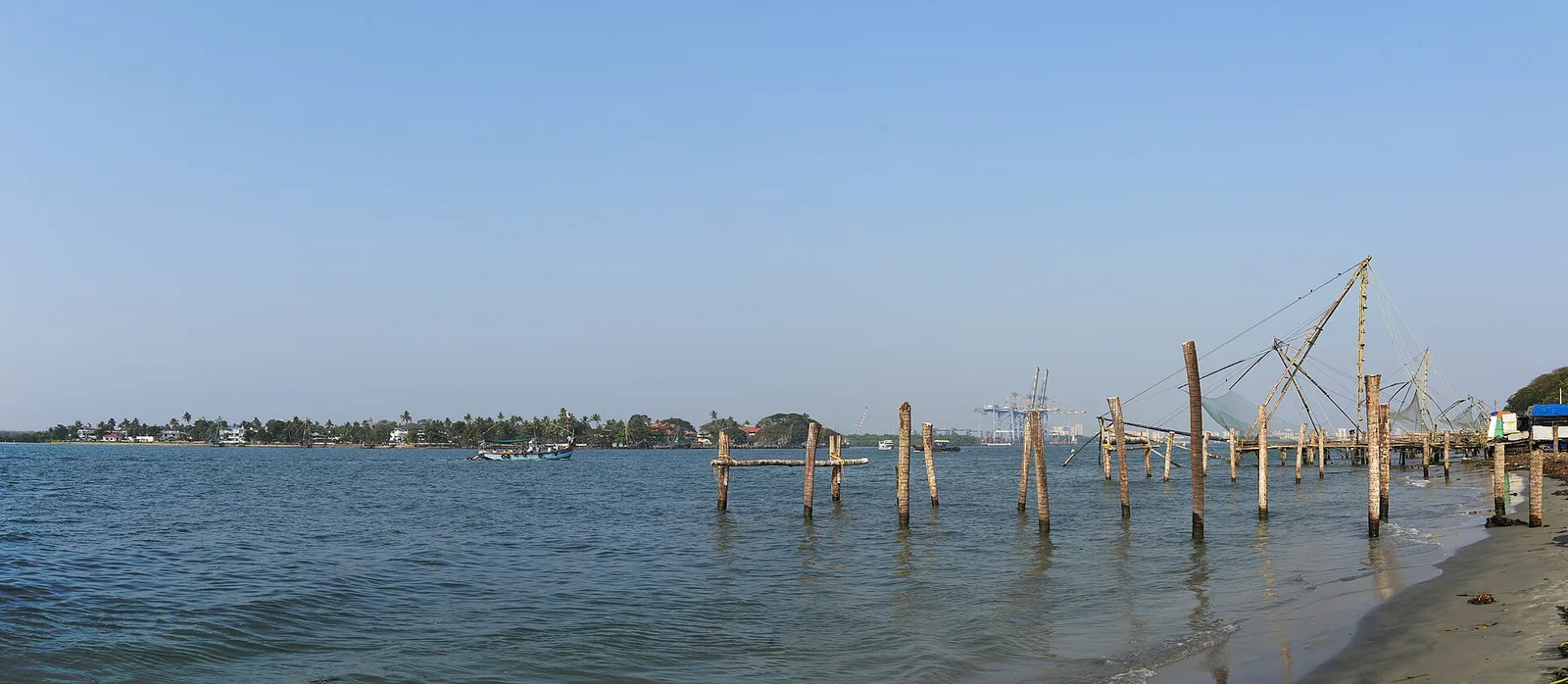
The giant cantilevered lift nets that are Fort Kochi’s emblem, strung along the shore at Vasco da Gama Square and still landing fish. Even their origin is argued — popular tradition credits Chinese traders of Zheng He’s era, some scholars later Portuguese settlers from Macau — and the argument is part of the attraction.
840 m · 10 min walk
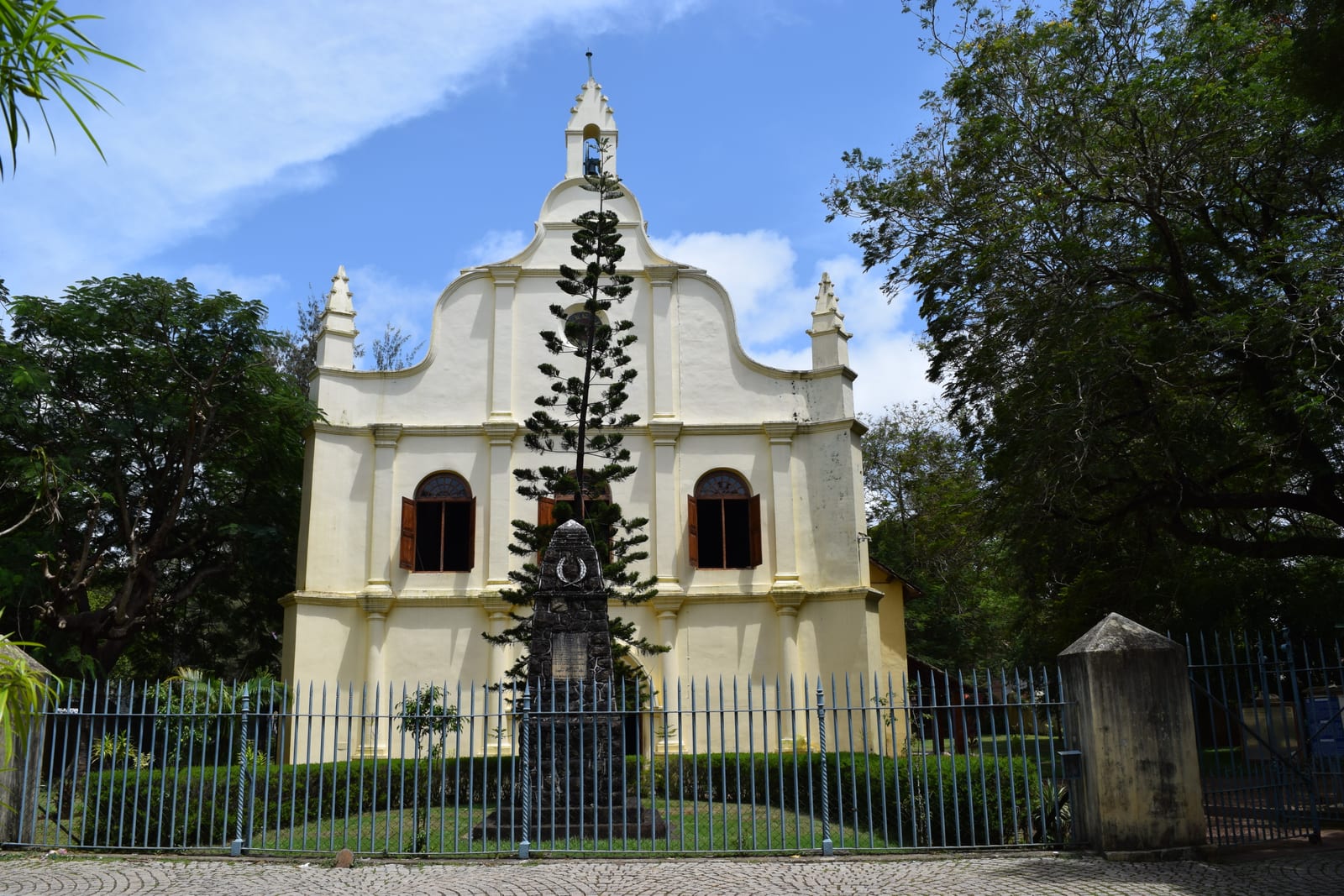
Believed to be the oldest European church in India (1503); Vasco da Gama was buried here before his remains were moved to Lisbon.
780 m · 9 min walk
One of the finest churches in Kerala, with a richly painted interior, beside the Kerala Kathakali Centre in Fort Kochi.
840 m · 10 min walk
Evening Kathakali and Kerala classical-art performances in Fort Kochi, with make-up shown before the show.
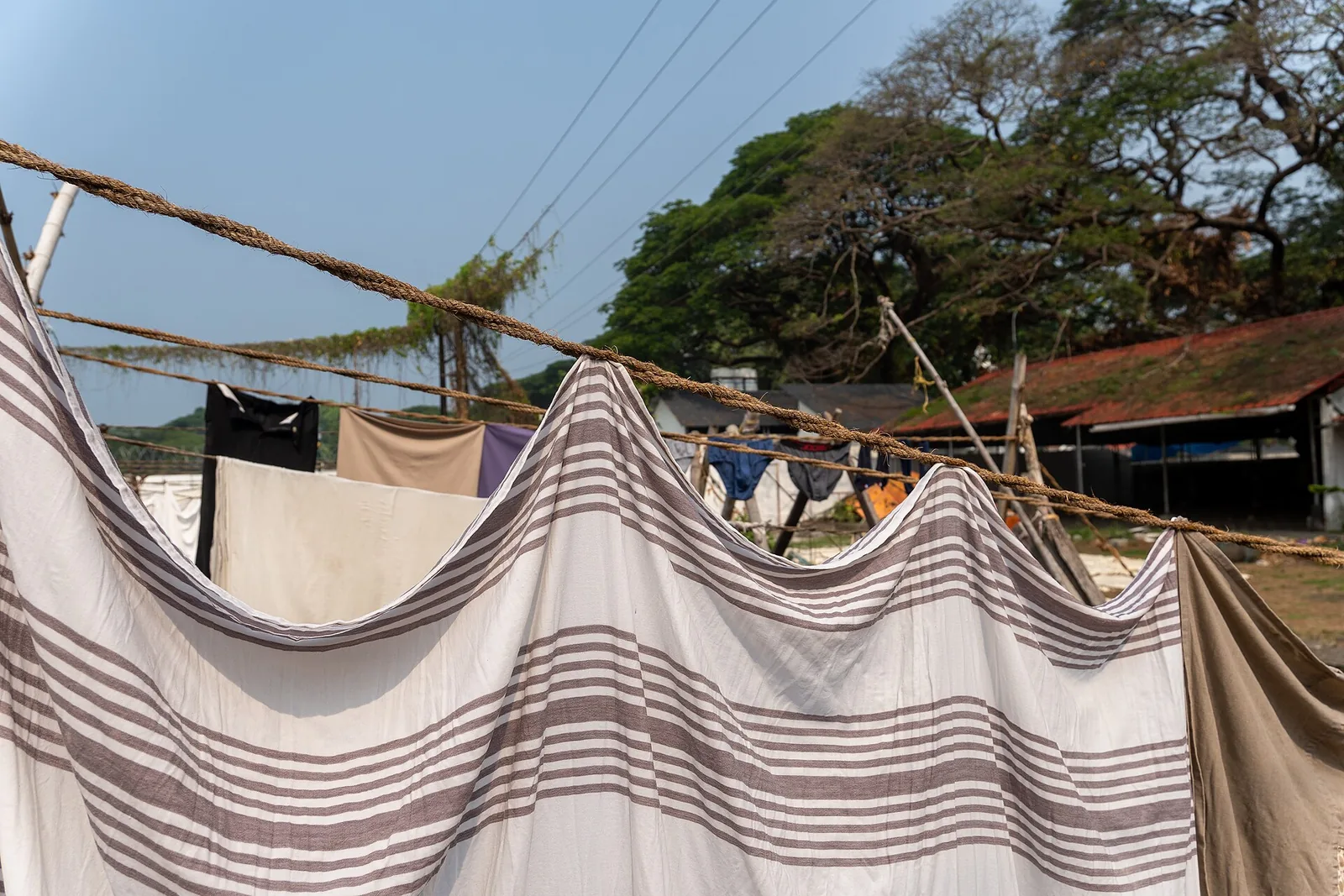
A working colonial-era community open-air laundry in Fort Kochi, still used by traditional washermen families.
830 m · 10 min walk
Public seafront beside the Chinese fishing nets — a walking-and-sunset beach, not a swimming beach.
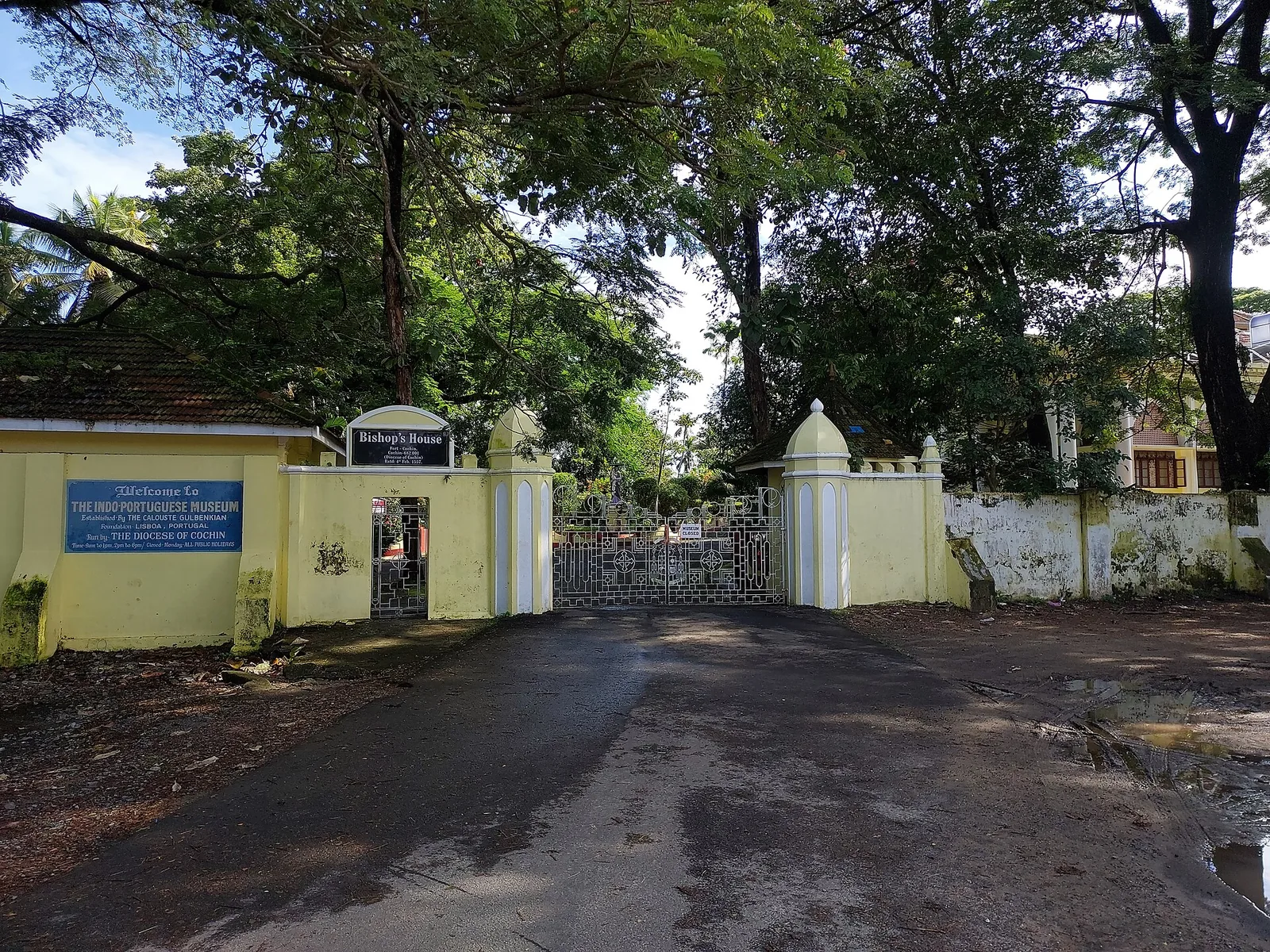
1.3 km · 15 min walk
Museum of Kerala’s Indo-Portuguese Catholic heritage in the Bishop’s House garden, Fort Kochi.
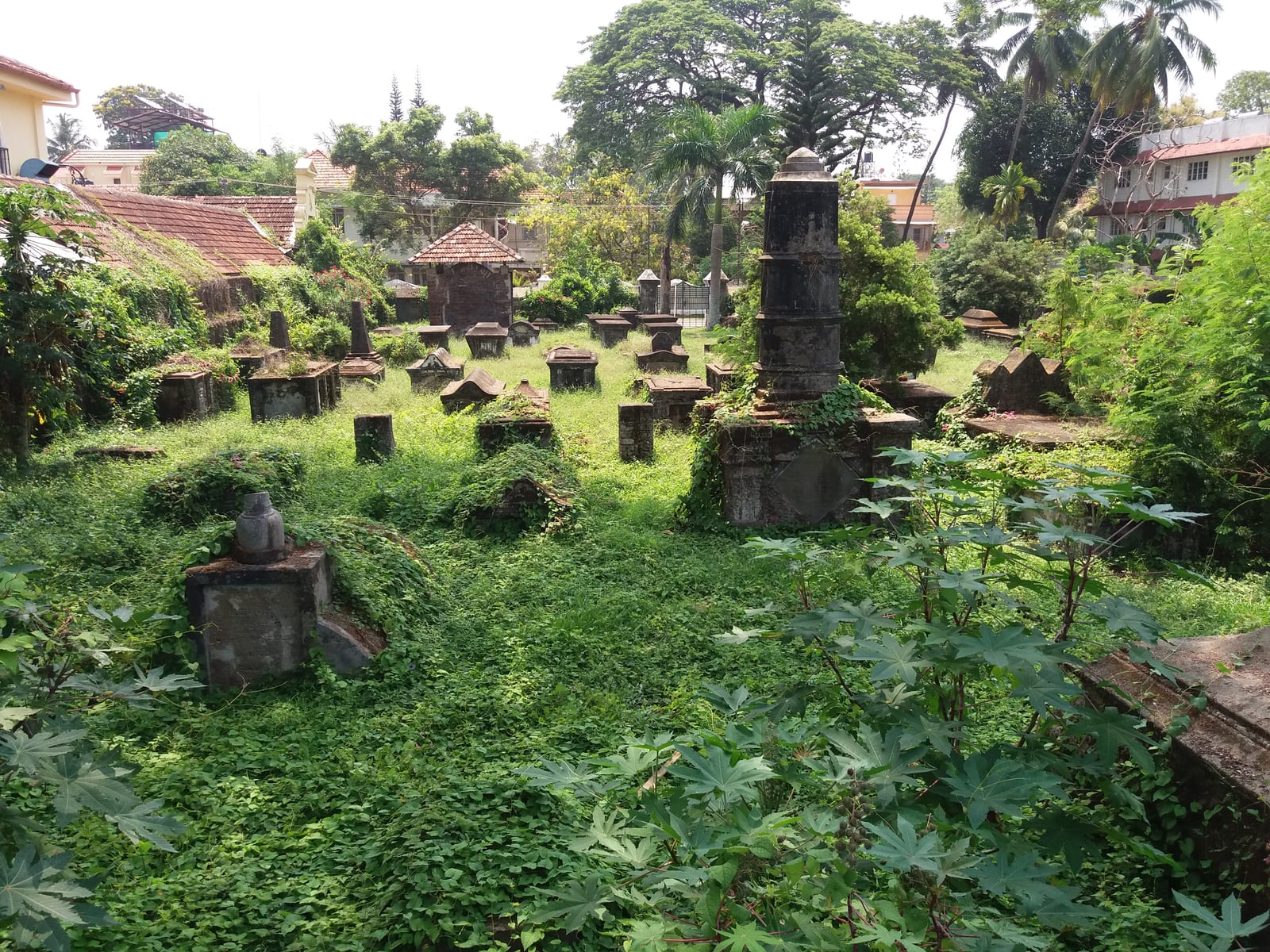
1.3 km · 15 min walk
The 1724 burial ground of Kochi’s Dutch colonial officials and merchants, beside St Francis Church — ASI-protected, and usually locked.
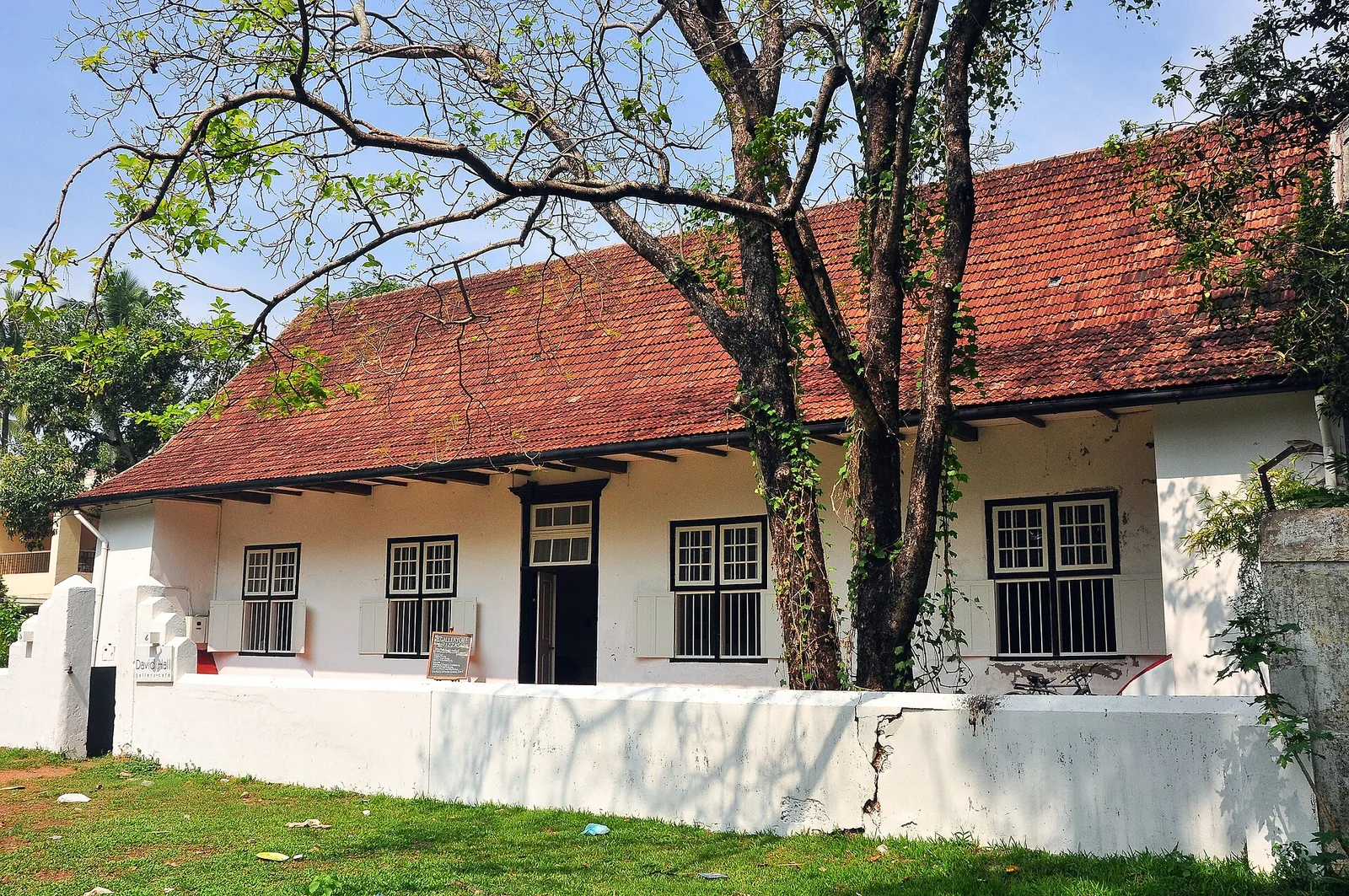
1.0 km · 12 min walk
A restored 17th-century Dutch bungalow on the Fort Kochi parade ground, now a contemporary art gallery and cafe.
Roampedia is commission-free — own or know a stay, eatery, guide or shop near Aspinwall House? Submit public business details for review.
Add a nearby businessEntry: There is no general admission to Aspinwall House. The compound is privately owned and is opened to the public chiefly as a Kochi-Muziris Biennale venue, on the Biennale's own ticket; outside those periods and outside the areas put to public use, it is not a walk-in attraction.
Festivals: Aspinwall House has been the principal venue of the Kochi-Muziris Biennale since the first edition in 2012, and is also used for other cultural programming. Biennale editions do not run annually — check the current cycle before travelling for one.
Photography: Photography policy is set by whatever exhibition is running; individual artworks are often restricted even where the venue permits general photography. The seaward elevation and the coir godown interiors are the classic subjects. Ask at the desk rather than assuming.
If you are travelling by bus or ferry, check the return service with the operator before setting out. Leave time to reach the stop or jetty after your visit.
Ask at the jetty or stand for the time of the last service back, not the next one. If you miss it, an auto or app cab is the fallback — agree the fare before you get in.
Checked 8 August 2026 against source 1source 2. Conditions change and surfaces vary with weather — if step-free access is essential, confirm with the site before you travel.
Charge cap and free-transaction limits: Reserve Bank of India, ATM FAQ updated 4 July 2025; checked 4 October 2026.
These services are listed within about 1.2 km of Aspinwall House. Walking distances follow mapped routes; access and opening hours can change. Other services may be closer but are not included here.
Fort Kochi is one of Kerala’s safest and most walkable tourist quarters, comfortable by day and on the main lanes after dark. Violent crime against visitors is rare — the realistic risks are auto/guide scams, petty theft in crowds, and the sea, not personal danger.
Safety guidance last reviewed 15 June 2026. Always check your own government's current travel advice before you travel.
Published emergency and visitor-assistance contacts. For an immediate emergency, call 112. Shared Kerala contact sources checked 4 October 2026; publication does not establish a tested live response.
Kochi’s iconic cantilevered shore-operated fishing nets along the Fort Kochi seafront at Vasco da Gama Square, best photographed at sunset.
560 m · 7 min walkKerala’s most walkable heritage quarter, with Chinese fishing nets, colonial churches, art cafes and Mattancherry nearby.
690 m · 8 min walkOne of the finest churches in Kerala, with a richly painted interior, beside the Kerala Kathakali Centre in Fort Kochi.
780 m · 9 min walkPublic seafront beside the Chinese fishing nets — a walking-and-sunset beach, not a swimming beach.
830 m · 10 min walkEvening Kathakali and Kerala classical-art performances in Fort Kochi, with make-up shown before the show.
840 m · 10 min walkBelieved to be the oldest European church in India (1503); Vasco da Gama was buried here before his remains were moved to Lisbon.
840 m · 10 min walkA restored 17th-century Dutch bungalow on the Fort Kochi parade ground, now a contemporary art gallery and cafe.
1.0 km · 12 min walk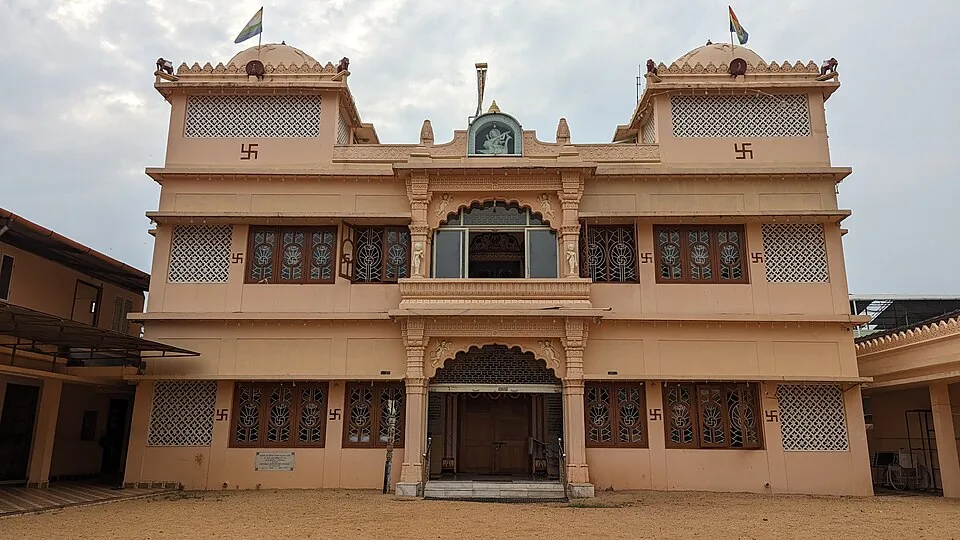
An ornate Jain temple in Mattancherry’s Gujarati quarter, raised in 1904 by Hirubai in memory of her husband Jivraj Dhanji and dedicated to Dharmanatha, the fifteenth Tirthankara — known for its white marble work and the daily midday feeding of the pigeons outside.
1.2 km · straight lineThe 1724 burial ground of Kochi’s Dutch colonial officials and merchants, beside St Francis Church — ASI-protected, and usually locked.
1.3 km · 15 min walkMuseum of Kerala’s Indo-Portuguese Catholic heritage in the Bishop’s House garden, Fort Kochi.
1.3 km · 15 min walk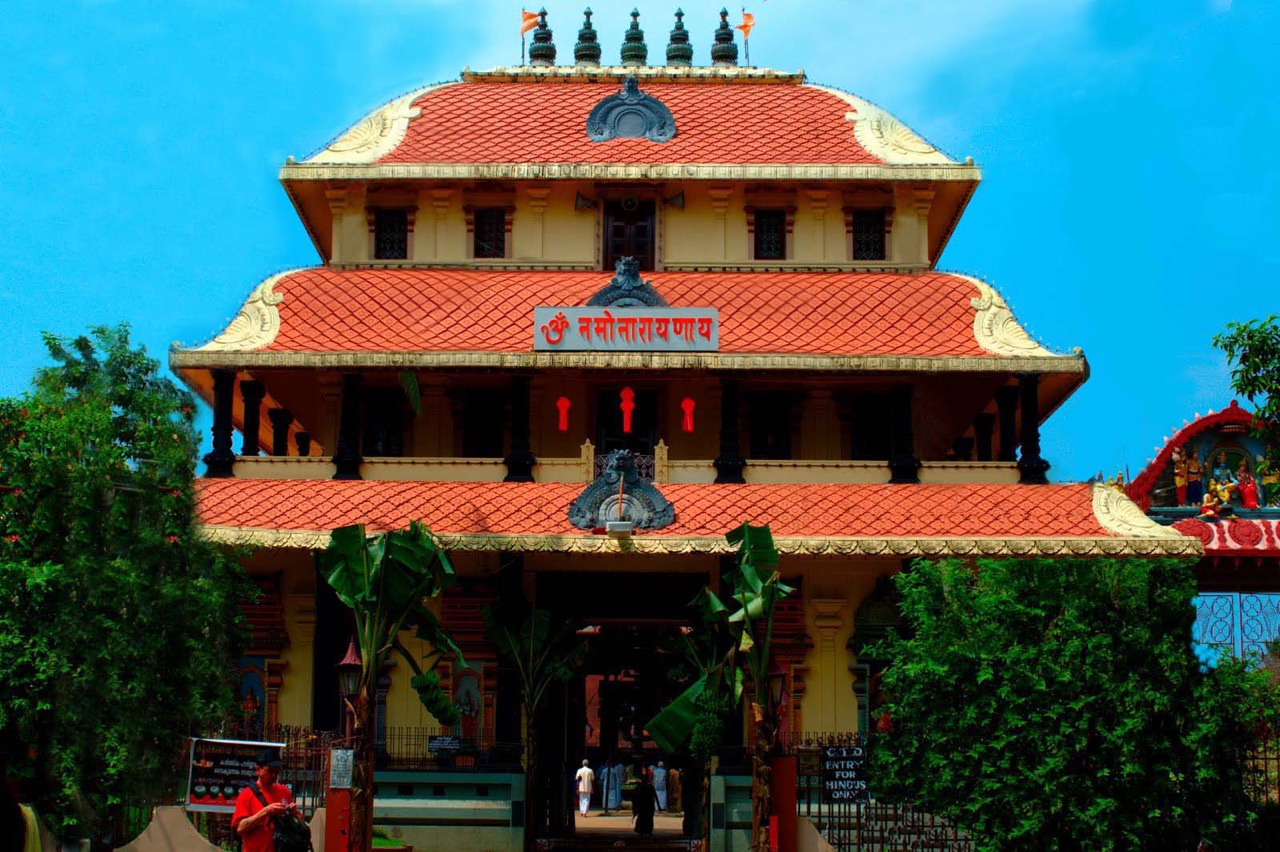
A historic Gowda Saraswat Brahmin temple in Cherlai, Mattancherry, central to Kochi’s Konkani community.
1.4 km · straight line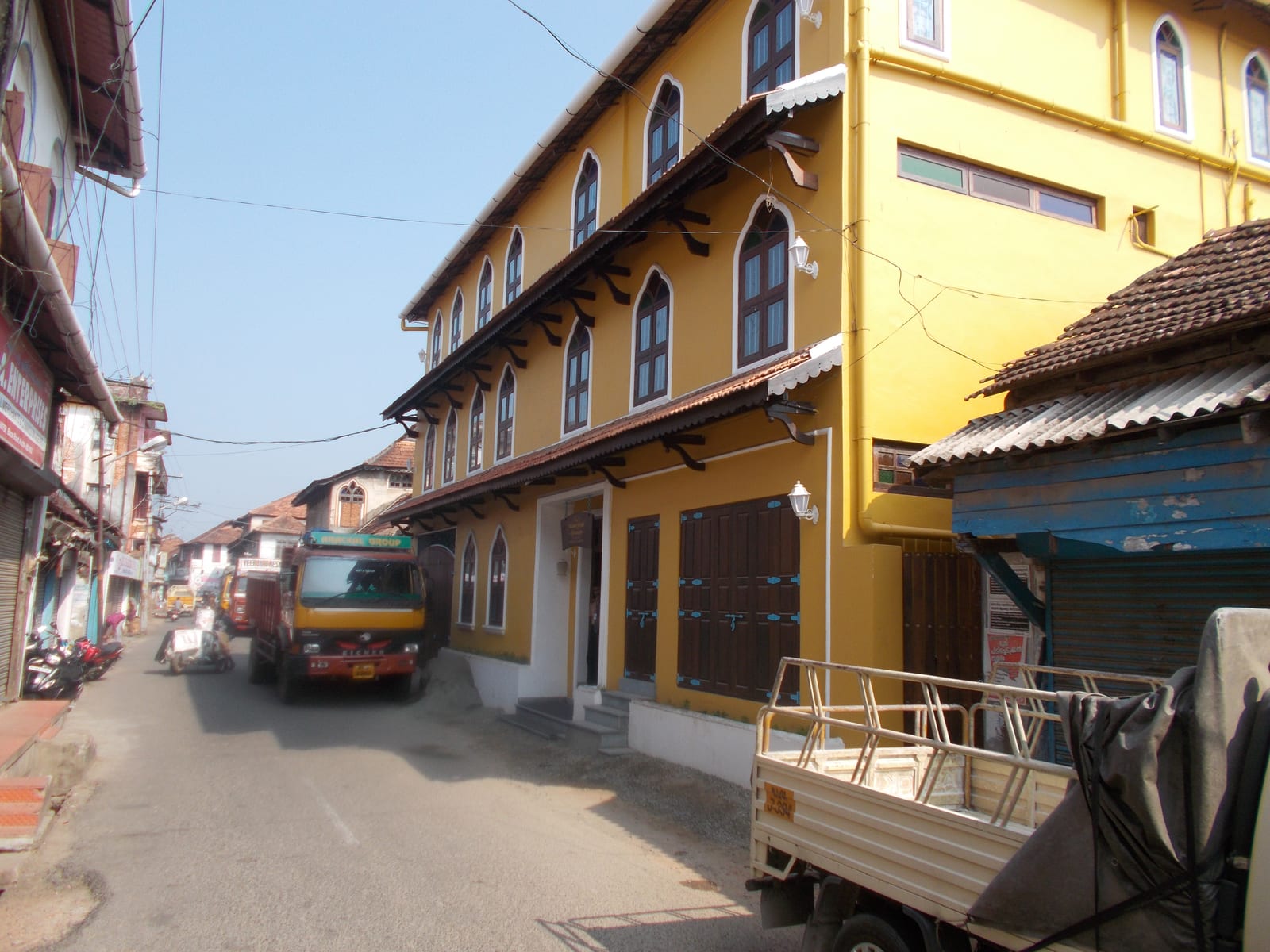
The working spice quarter along Mattancherry’s Bazaar Road — godowns where pepper, ginger, turmeric and cardamom are still graded, sacked and weighed, and where the smell reaches the street before the signage does.
1.6 km · straight lineRoad and walking figures are route estimates, with travel times dependent on access, traffic and conditions. Figures marked “straight line” show direct separation and do not describe a road or walking route. Fare estimates use Kerala’s 26 April 2022 auto/taxi notification and exclude waiting, night and applicable one-way surcharges. Confirm the current meter or operator quote before travelling. Routing: © openrouteservice.org by HeiGIT | Map data © OpenStreetMap contributors
Nearby toilets, pharmacies, ATMs, seating and vets are community-mapped and may be incomplete or out of date. Map data © OpenStreetMap contributors | Walking times © openrouteservice.org by HeiGIT
No. The compound is privately owned and is not a general walk-in attraction. It opens principally as a venue of the Kochi-Muziris Biennale, on the Biennale's ticket, and there is no standing public timetable between editions. Check the Kochi Biennale Foundation's current listings before you plan a visit — arriving to find the gates shut is the most common wasted journey in Fort Kochi.
There is no general admission because there is no general admission. When it opens as a Biennale venue, entry is on the Biennale ticket.
Typically only parts of it — the coir godown and the director's bungalow are the spaces usually given over to visitors. The rest of the estate stays private.
No. The company was founded in 1867, but the great Fort Kochi fire of 1889 destroyed the premises, and the structure you see was built afterwards, generally dated to 1890.
An English trader who acquired the business of Scott Brothers in 1867 and founded Aspinwall & Company. He presided over the Cochin Chamber of Commerce and was Chairman of Fort Kochi Municipality from 1875 to 1878. Shops in Fort Kochi are recorded as closing on news of his death.
It does, and it is still headquartered in Kochi — one of the oldest commercial firms on the Malabar coast, still a listed company, with businesses in shipping and logistics, coffee trading and export, coir, rubber plantations and tourism. The compound the Biennale uses belongs to a company that is very much still trading, which is a good part of why it is not open to the public between editions.
The controlling interest in Aspinwall and Company is held by the royal family of Travancore. The family took a shareholding in 1956, when the firm became a public limited company, and acquired the major part of the stock in the early 1970s when the English owners decided to disinvest. A British colonial trading house on the Fort Kochi waterfront has therefore been under Kerala ownership for more than half a century — which the venue signage never mentions.
The waterfront approach and the ground-floor spaces, including the coir godown, are broadly level. For the 2025–26 Biennale, temporary lifts were installed here and at Pepper House to reach upper floors — but those are an edition-specific provision, not a permanent fitting, so do not assume upper floors are reachable at other times. Confirm with the venue for the current programme.
Because it was deliberately left that way. Rather than polishing the estate into a heritage attraction, the Biennale put art into the raw godowns and left the peeling walls, the industrial volumes and the salt air alone. A good part of the festival's international reputation rests on that decision — the spaces read as working history rather than as a white cube, and the effect would not survive a restoration.
During a Biennale, two to four hours. It is the largest venue on the circuit and the one people most often underestimate. Outside a Biennale, it is a five-minute look at a gate.
November to February and early mornings are best for walking; avoid midday heat where possible.
Entry: There is no general admission to Aspinwall House. The compound is privately owned and is opened to the public chiefly as a Kochi-Muziris Biennale venue, on the Biennale's own ticket; outside those periods and outside the areas put to public use, it is not a walk-in attraction. Timings: Opening depends entirely on what is running. During a Biennale edition the venue keeps the festival's published hours; between editions there is no standing public timetable, and visitors regularly arrive to find the gates shut. Check the Kochi Biennale Foundation's current listings before planning a visit.
Base yourself in Fort Kochi or a nearby town in Ernakulam, then confirm the last-mile route locally before leaving. Walkable heritage areas are best done slowly; combine nearby streets, museums, markets and food stops. If the visit depends on forest, temple, boat, ferry, weather or seasonal access, check the official/local rule on the day before travel.
1 to 3 hours.
Nearby you can pair Chinese Fishing Nets (560 m, route estimate), Fort Kochi (690 m, route estimate), Santa Cruz Cathedral Basilica (780 m, route estimate), Fort Kochi Beach (830 m, route estimate).
Watch traffic on narrow heritage streets. Keep valuables close in crowded markets.
Written about Aspinwall House itself — its history, its legends and the arguments about them.
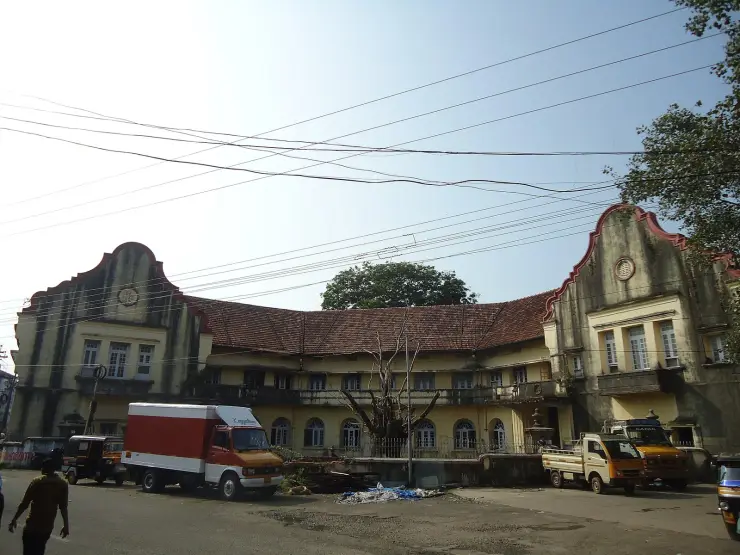
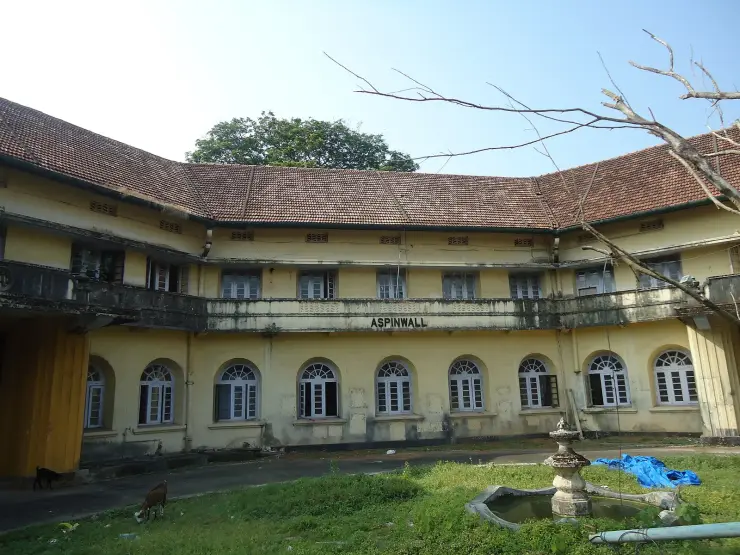
These guides explore Fort Kochi and the surrounding area. Choose a visit that fits your interests, allowing separately for travel between stops.

Written about Fort Kochi as a whole rather than about Aspinwall House — its history, its streets, and how to spend a day in it.
Route-level itineraries and practical guides for the rest of Kerala.
Photographs: Ranjith Siji (CC BY 3.0). Wikimedia Commons.