What to expect
Highlights
- The display of the nine emotions, shown one after another by the actor.
- The white chutti frame around the face, built from paper over hours.
- The live drums and singers that carry every word the actor cannot say.
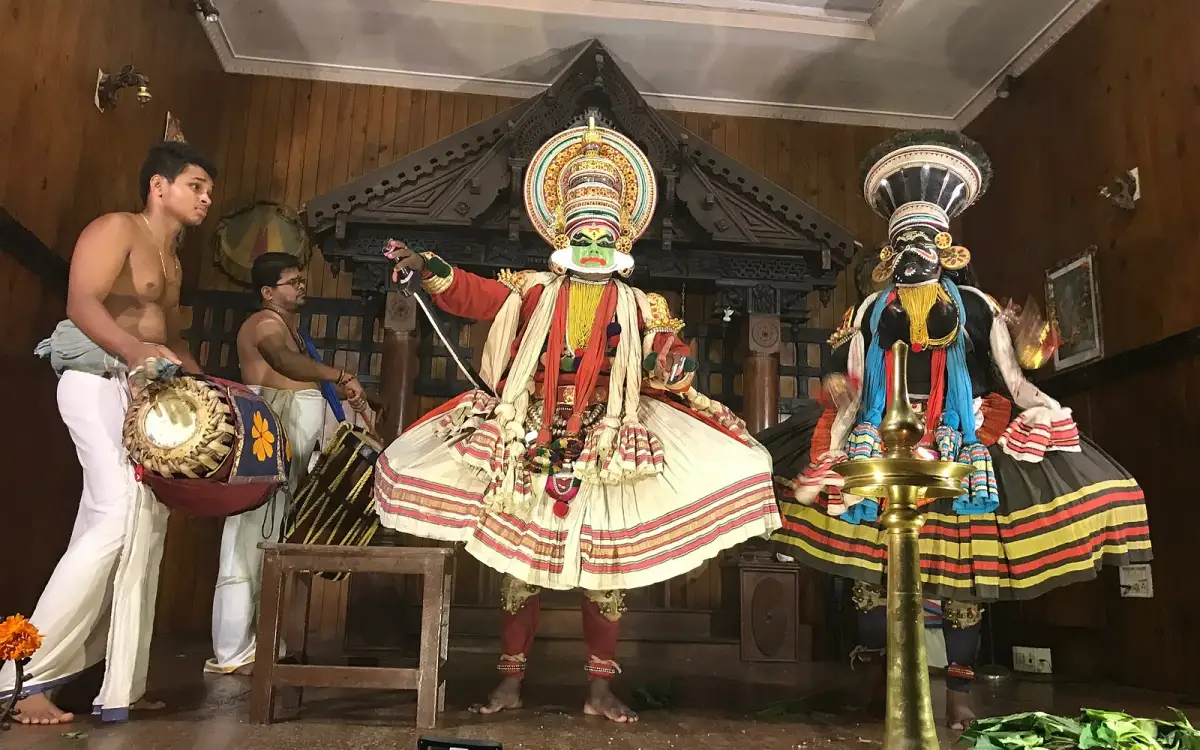
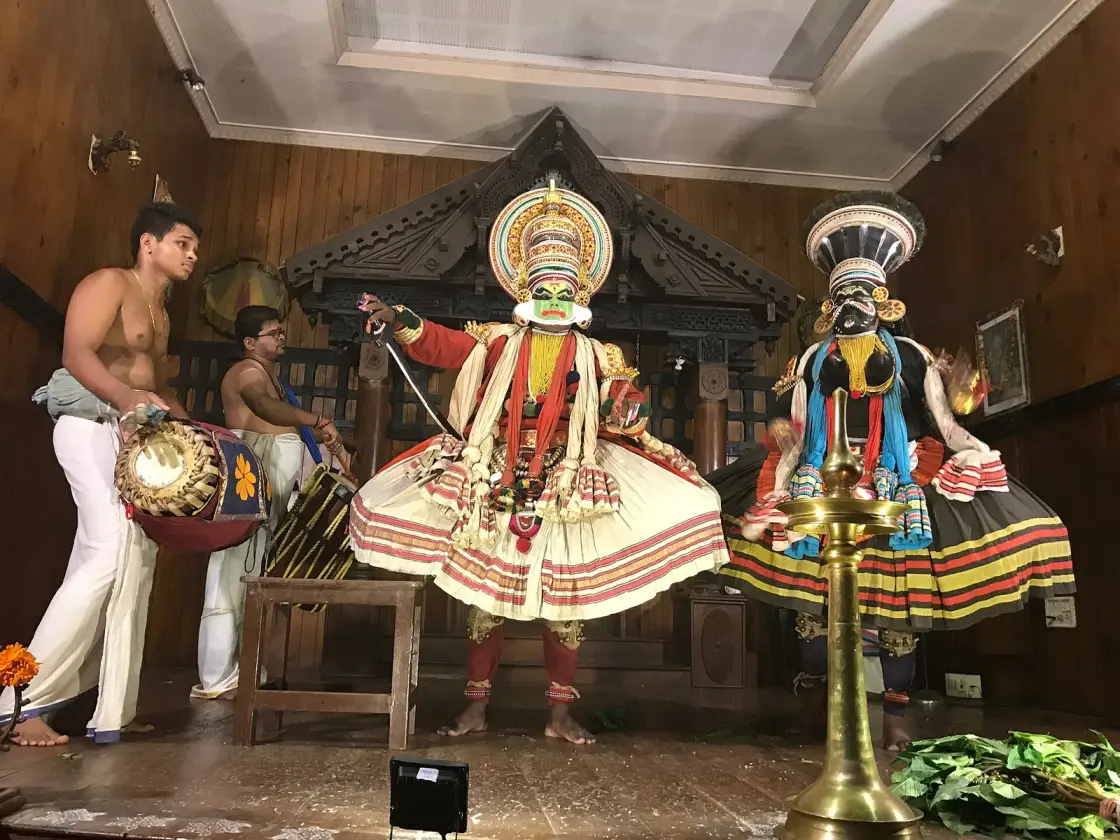
The Kerala Kathakali Centre is an evening stage for Kathakali in the old heart of Fort Kochi. Kathakali is the classical story play of Kerala. The actors never speak. They tell the whole story with their hands, their eyes and their painted faces, while singers and drummers carry the words and the rhythm.
Plan it as the last stop of a day in the old town. Learn a few hand signs and face colours before you go, and sit near the front. A short show in Fort Kochi is the easiest way to meet this art in a single evening. Our guide to reading Kathakali mudras and the nine emotions explains the code in more depth.
An evening hall where a silent actor tells an old epic with painted face, trained eyes and hands that speak a language.
Start with the name of the art. Kathakali means "story play". Kerala Tourism says it grew up in Kerala in the 17th century, from a Ramayana play called Ramanattam. The stories still come from the Ramayana, the Mahabharata and the Puranas. So the scene you see at the centre comes from a very old story that local audiences know well.
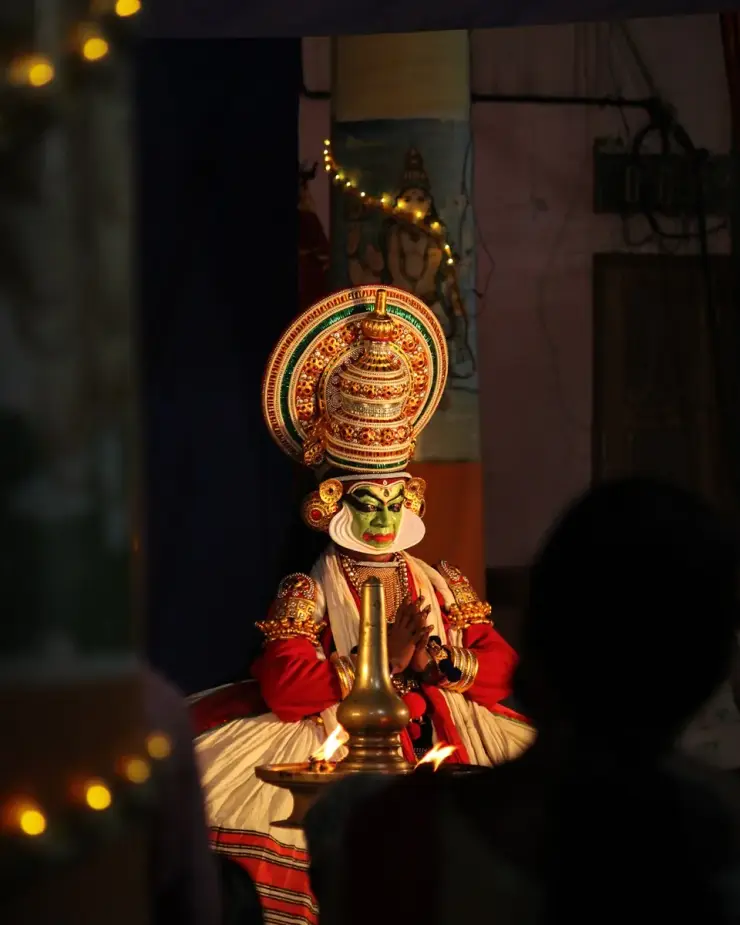
Watch the faces before anyone moves. The colour of a face tells you the type of character. Green, called pacha, marks noble heroes such as gods and kings. Kathi marks proud anti-heroes. A red beard marks a very wicked character, and a white beard a refined one, most often Hanuman. Black faces, called kari, mark hunters and forest dwellers. Yellow faces, called minukku, mark women, sages and messengers.
Then watch the hands. The hand signs are called mudras. Kerala Tourism says Kathakali has twenty-four basic mudras, and some carry thirty or forty meanings. Many Fort Kochi shows open by showing a few signs. Catch even one sign again later in the play, and you will start to follow the scene.
Now watch the eyes and cheeks. They carry the nine emotions, called the navarasas. These are love, valour, comedy, anger, pity, fear, disgust, wonder and peace. Many shows include a short display of all nine, one after another. Students once trained with a guru for twelve years to gain this control.
Listen to the music behind the actor. Two singers stand at the back. The lead singer is the ponnani, and the shinkidi repeats the verses. The chenda is a tall drum struck with sticks, and the maddalam is played with the hands. A brass gong called the chengila and cymbals called the ilathalam keep the beat. Kathakali was made for open courtyards, so the sound fills a small hall.
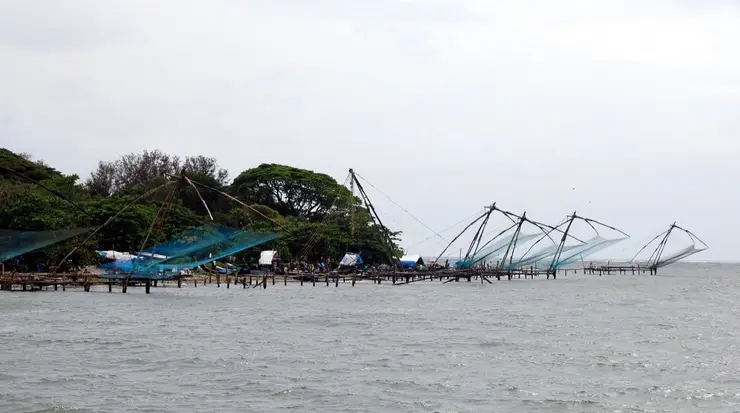
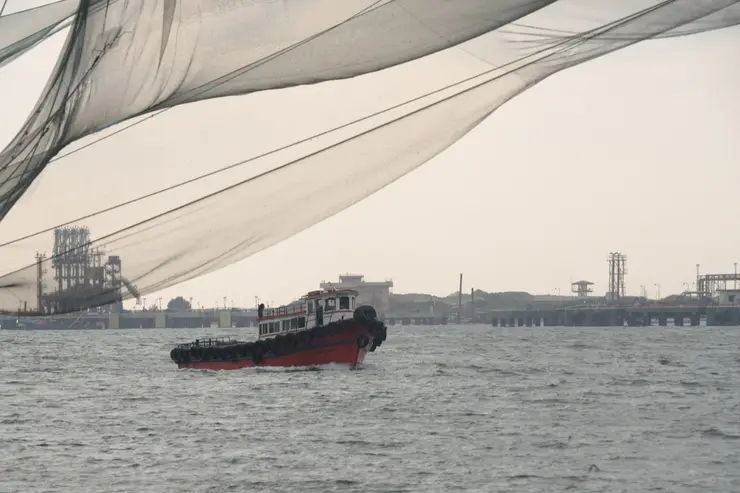
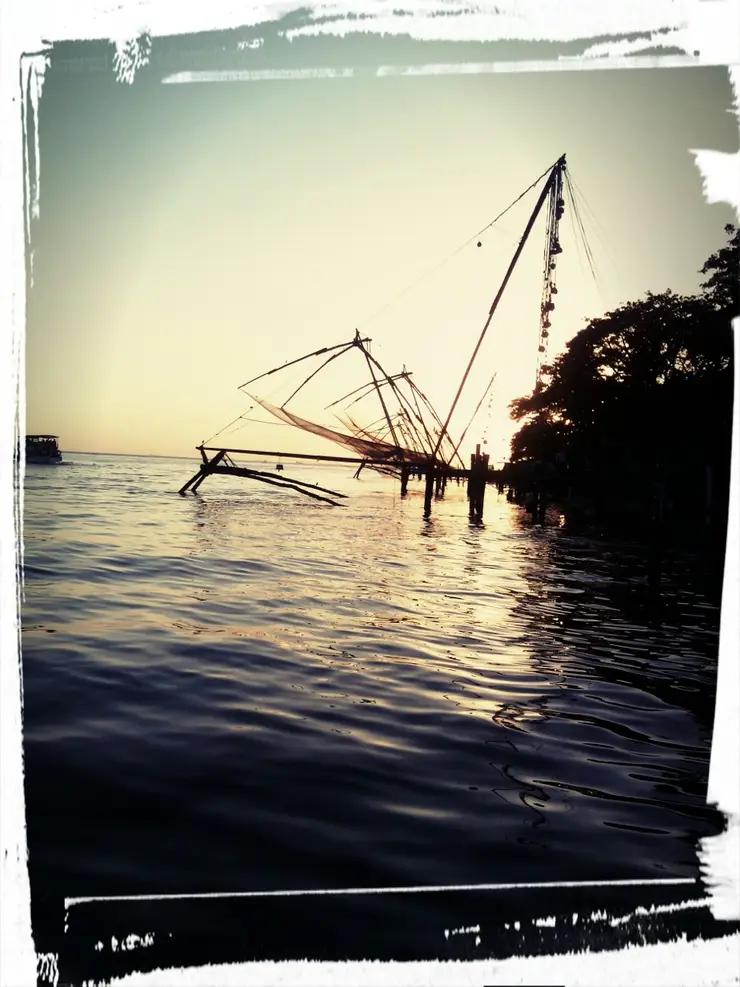
Finally, think about the length. Old Kathakali plays ran all night, and some stories took several nights. A Fort Kochi evening is far shorter. It usually brings a short talk on the signs and the emotions and one scene from a longer play. Before the show, walk to the Chinese fishing nets at sunset, or visit St Francis Church a few minutes away.
Many visitors think the red eyes of the actors are painted on. Kerala Tourism says actors traditionally reddened their eyes with natural herbs. Red eyes make each glance easier to see from the back of a hall. The eyes are the main tool of the actor, so this detail matters.
A second common belief is that a short show is not real Kathakali. The visitor show is a single scene, not a full night. But the training, the music and the make-up are the real thing. It opens a door for people who would never sit through a whole night.
17th century: Kerala Tourism says Kathakali grew up in Kerala, from Ramanattam, a Ramayana play created by the King of Kottarakkara.
17th century onward: the Kottayam royal family wrote four major plays drawn from the Mahabharata, which are still performed.
18th century: Kaplingadu Narayanan Namboothiri refined the style of acting and staging, says Kerala Tourism.
1930: the poet Vallathol Narayana Menon founded Kerala Kalamandalam, now at Cheruthuruthy, to give the art a lasting home.
See classical Kerala theatre in an easy evening format close to the old town.
Learn a few of the twenty-four basic hand signs and spot them in the play.
Watch an actor show all nine emotions with the eyes and face alone.
Read the painted faces and tell the hero from the villain at a glance.
Hear the chenda drum, the brass gong and live singers in a small hall.
End a day of walking in Fort Kochi with an evening that belongs to Kerala.
Road km to Ernakulam; ghat roads and traffic vary — allow extra.
Evening, after a sunset walk on the beach; November to February brings cooler weather for walking.
Live forecast loads in your browser.
Sunset is in about 3 hours.
Sun and moon are calculated for this location and shown in IST. Photography windows are the hour around sunrise and sunset; the sunset bearing is degrees clockwise from true north. Moon phase is accurate to about half a day.
Listed stays, food, activities, sights, shops and rentals around Kerala Kathakali Centre, each with its locality and direct contact details.
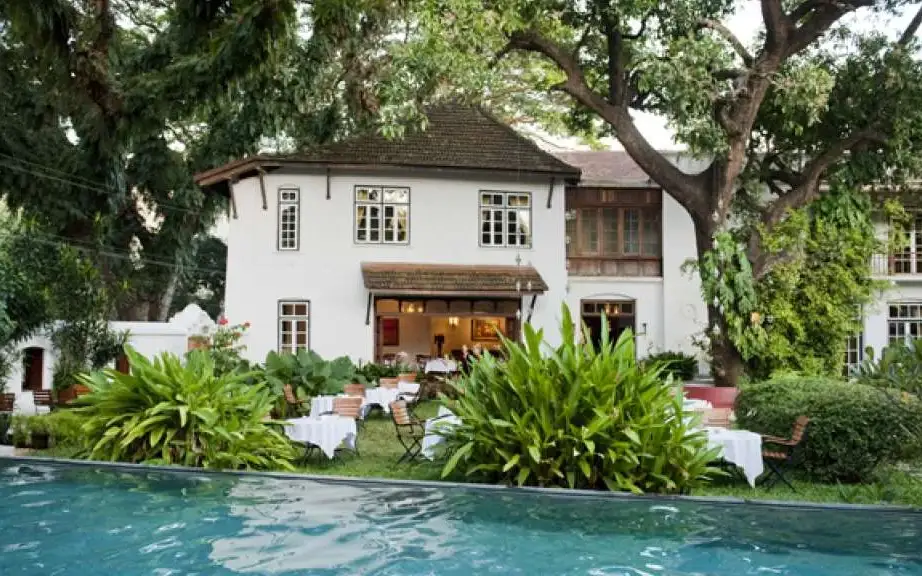
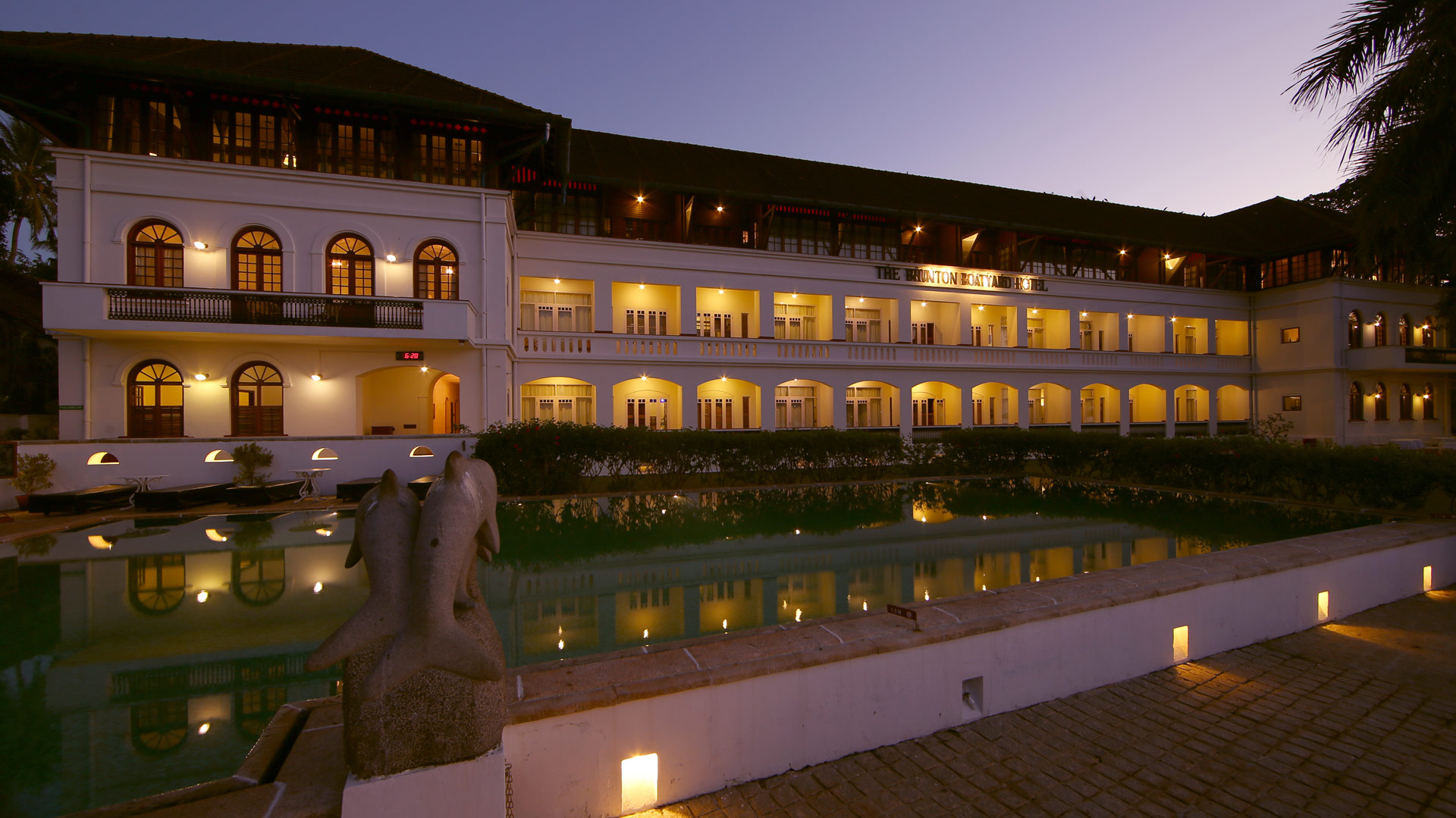
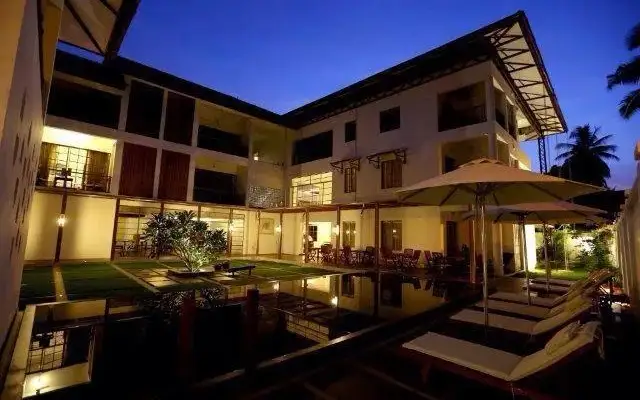
Boutique heritage hotel in a 300-year-old Dutch-style building on Tower Road, Fort Kochi, with a pool and spa.
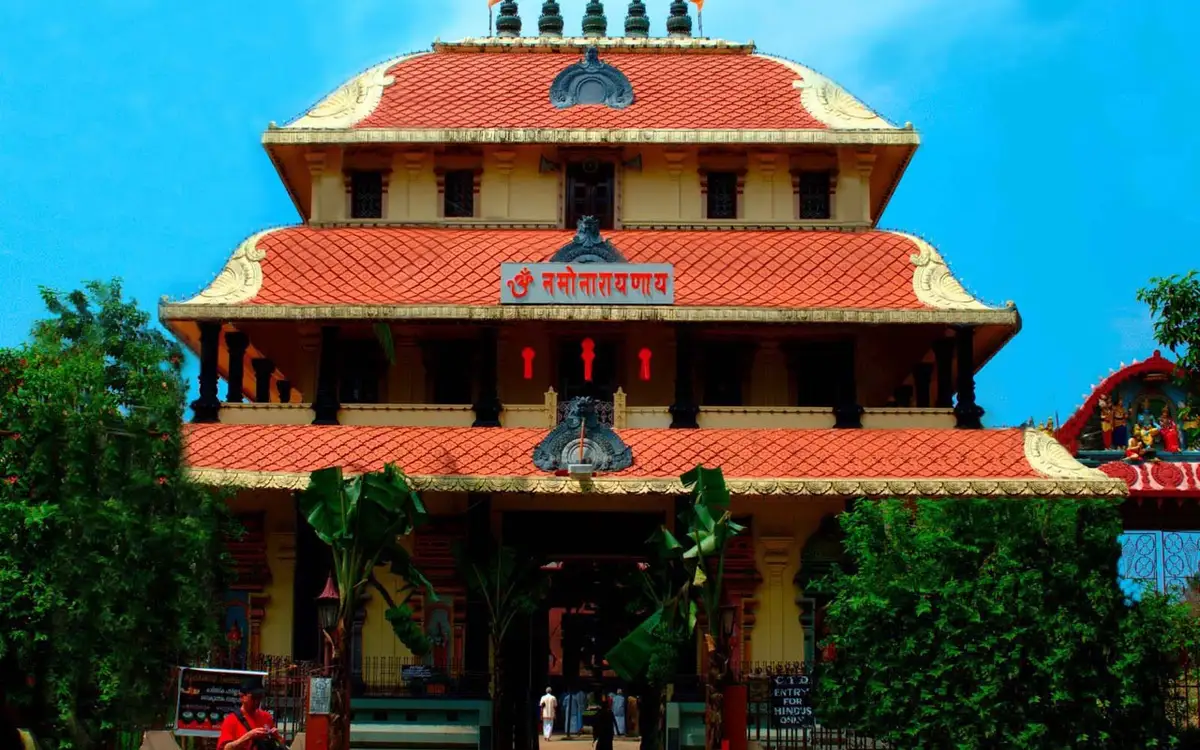
Gowda Saraswat Brahmin temple to Venkatachalapathy at Cherlai, Mattancherry, with a famous large bronze bell.
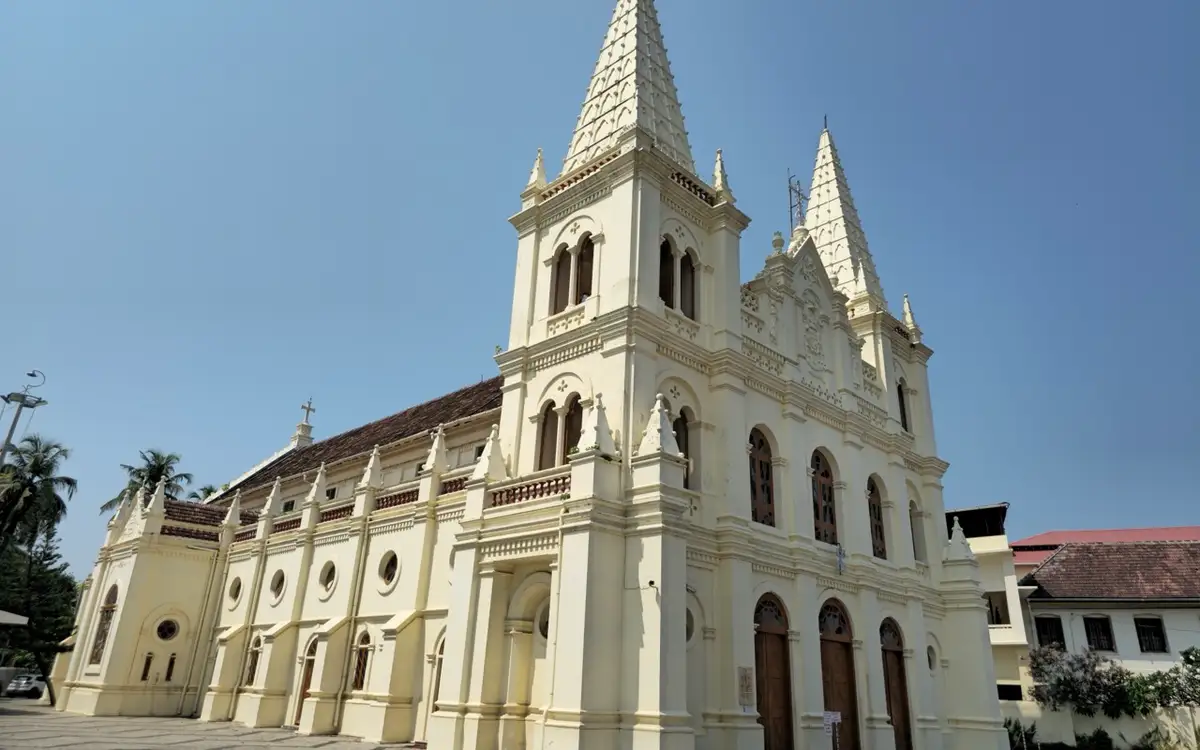
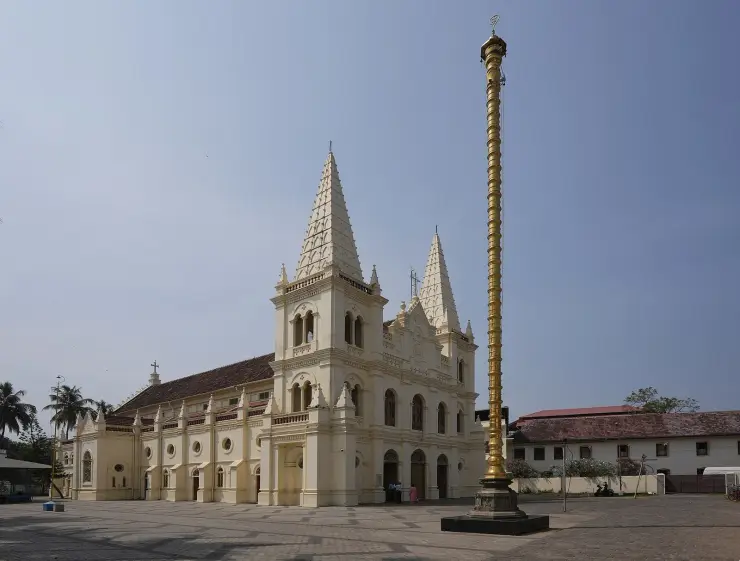
The cathedral of the Diocese of Kochi, first built in 1505, rebuilt in 1887 and raised to a basilica in 1984.
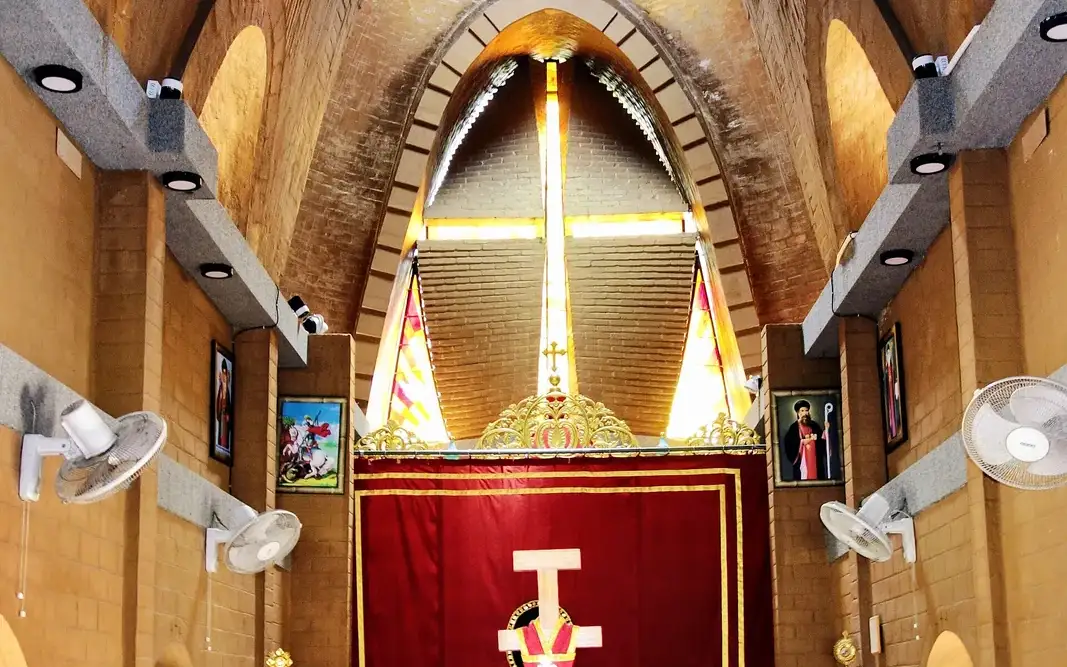
Mattancherry Orthodox church at the site of the 1653 Koonan Kurishu (Leaning Cross) Oath against Portuguese church control.
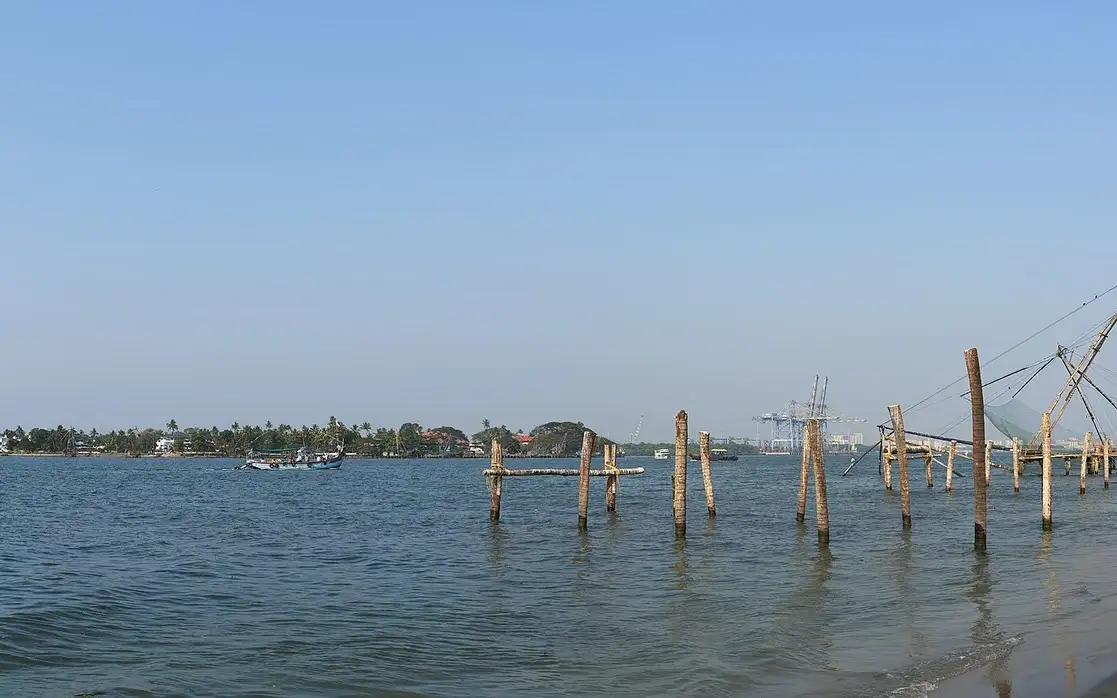
Fort Kochi's shore-operated Chinese fishing nets, teak and bamboo lift nets in use since the 14th century, best seen from Vasco da Gama Square.
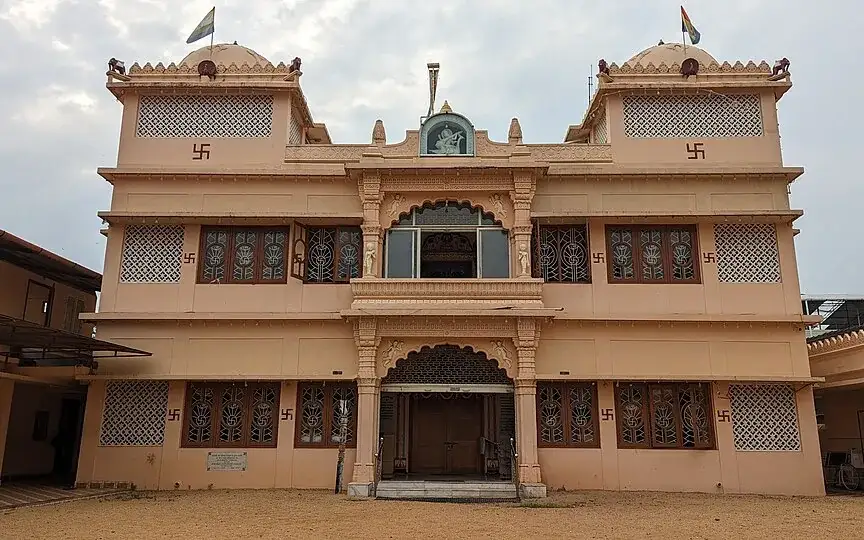
A Gujarat-style Jain temple on Gujarati Road, Mattancherry, built in 1904 and dedicated to Dharmanatha.
Fort Kochi theatre for evening Kathakali, Kalaripayattu and classical music, plus classes in yoga, dance and Kerala cooking.
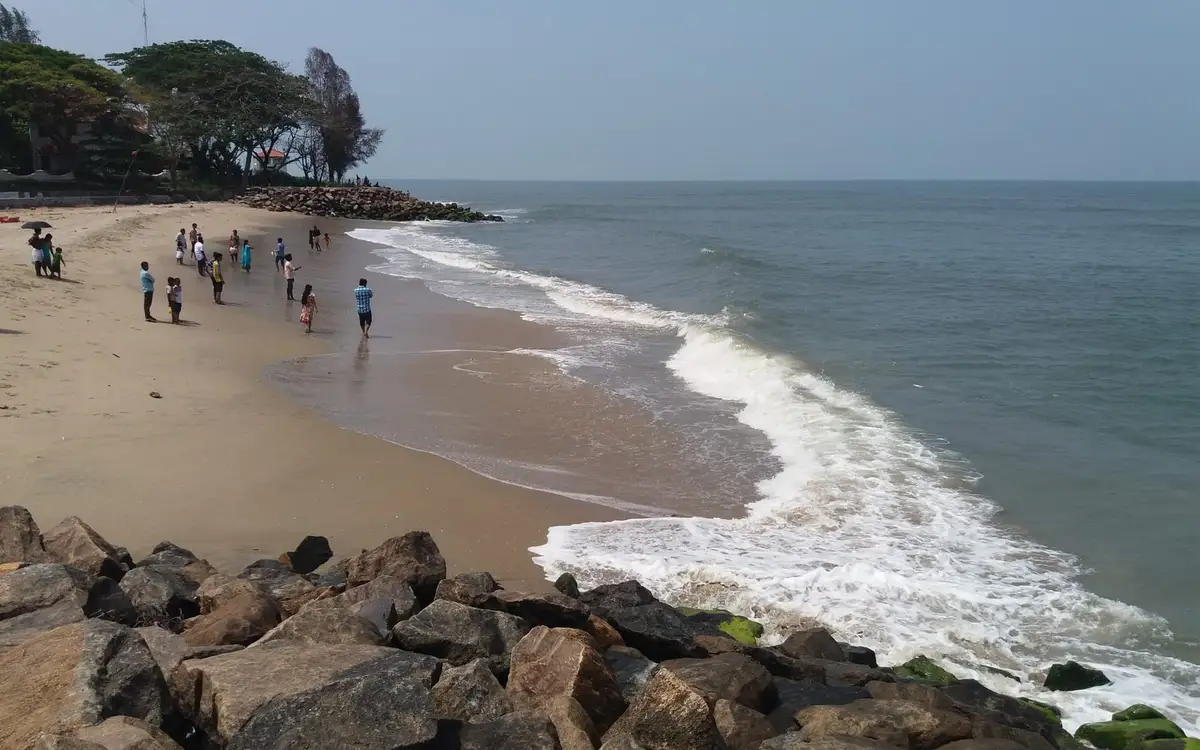
A calm Arabian Sea beach lined with Chinese fishing nets, known for its sunsets and the New Year's Eve Cochin Carnival.
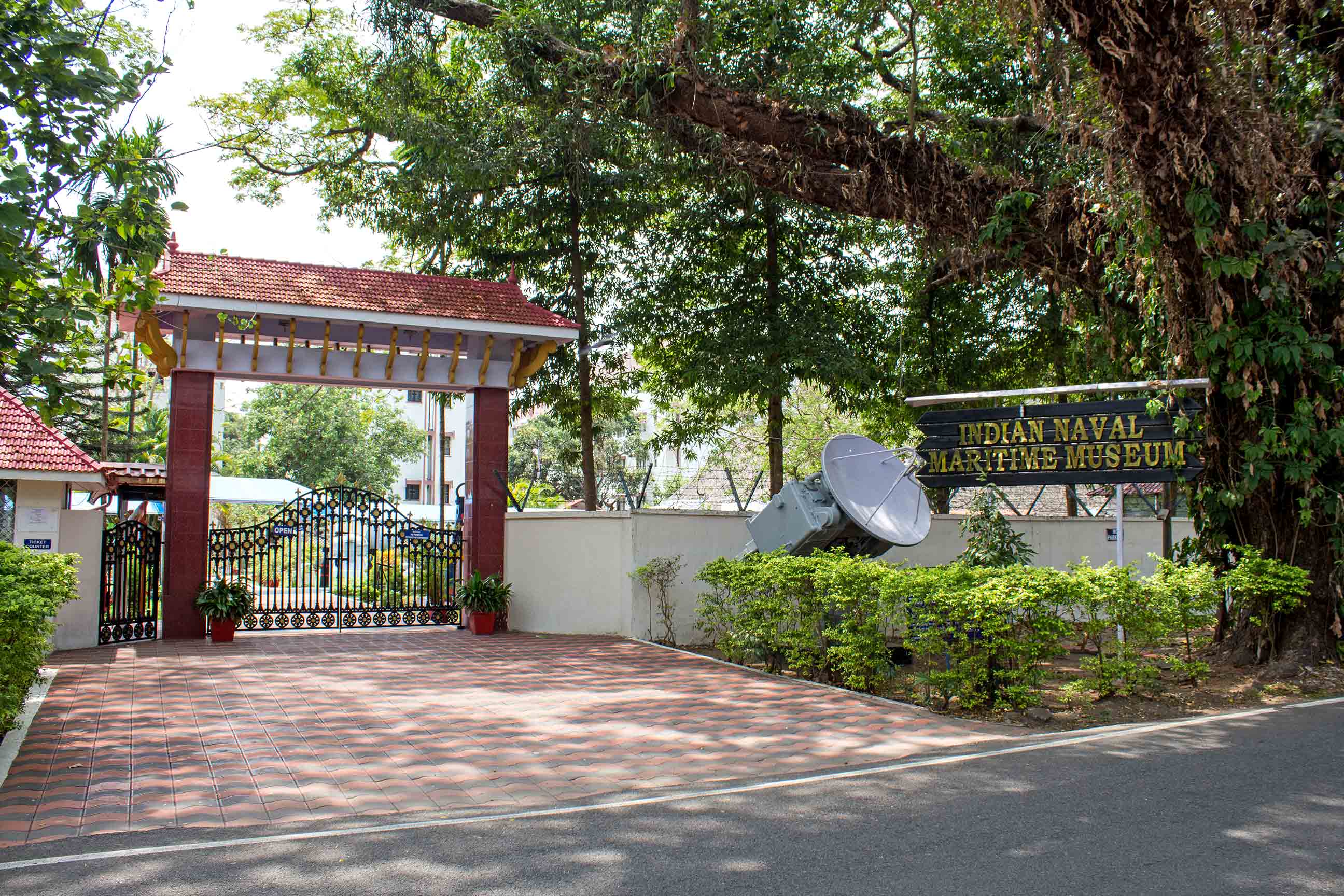
A naval history museum inside INS Dronacharya, tracing India's maritime past from the Indus Valley to modern naval operations.
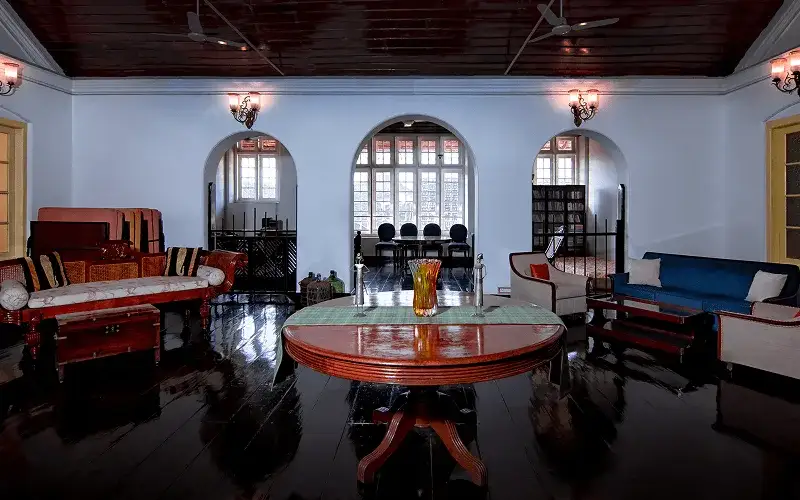
A CGH Earth heritage hotel on the Fort Kochi waterfront, with 22 sea-facing rooms and the History Restaurant.
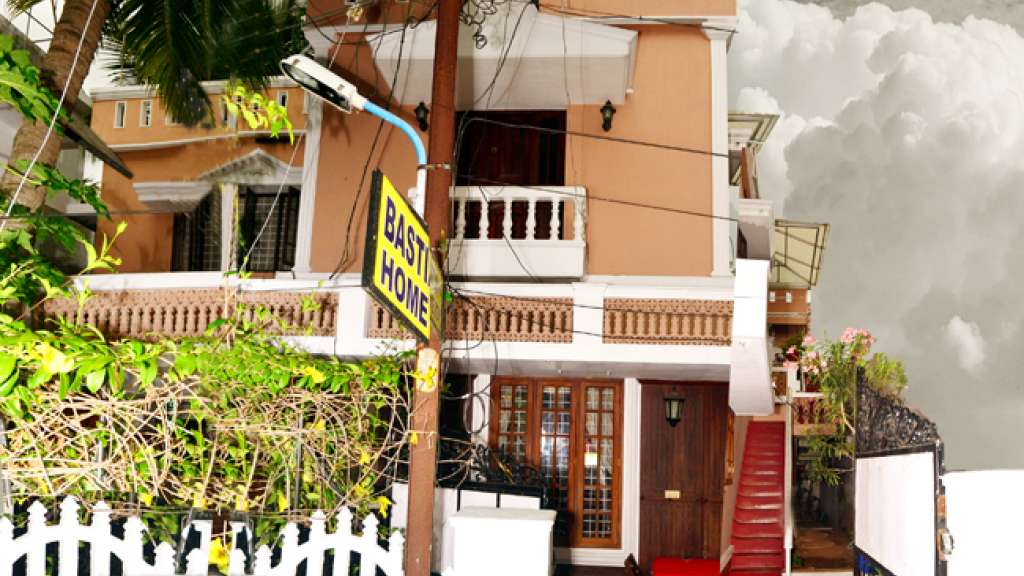
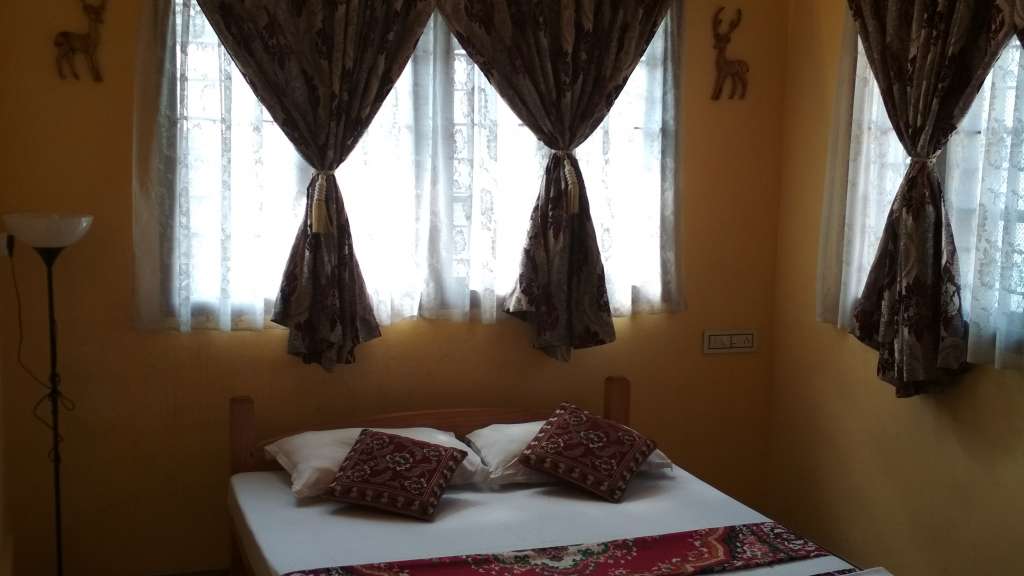
A Silver House family homestay on K. B. Jacob Road with four rooms and home-cooked Kerala food. WiFi.
Kerala Tourism Silver House homestay at Pattalam, Fort Kochi, with a garden terrace and free Wi-Fi. WiFi.
Heritage boutique hotel in a 1912 trading bungalow at Kunumpuram, Fort Kochi, with heritage rooms, a restaurant and garden.
A Fort Kochi hotel with rooms and suites, Raintree Restaurant, QISSA Coffee Shop, a pool and a rooftop bar.
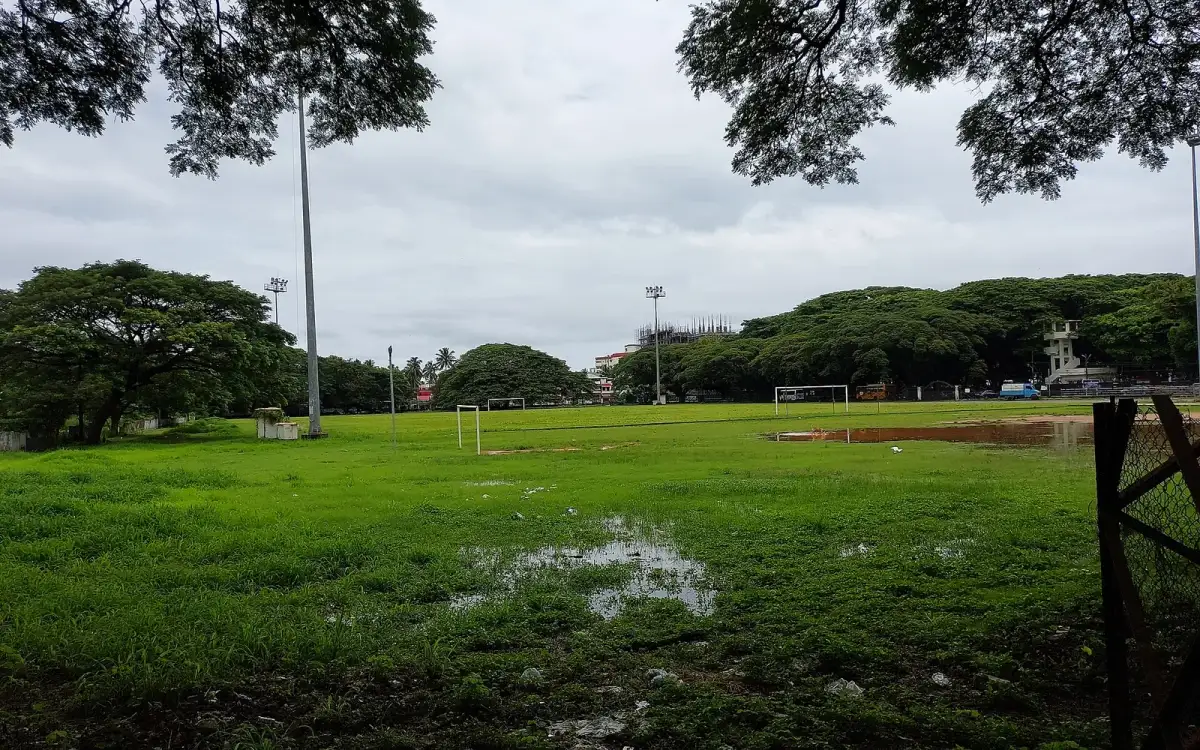
A large open ground at Veli in Fort Kochi, used for football and New Year celebrations.
A family-run homestay on Chirattapalam Road in Amaravathy, Fort Kochi, with balcony rooms and home-cooked meals.
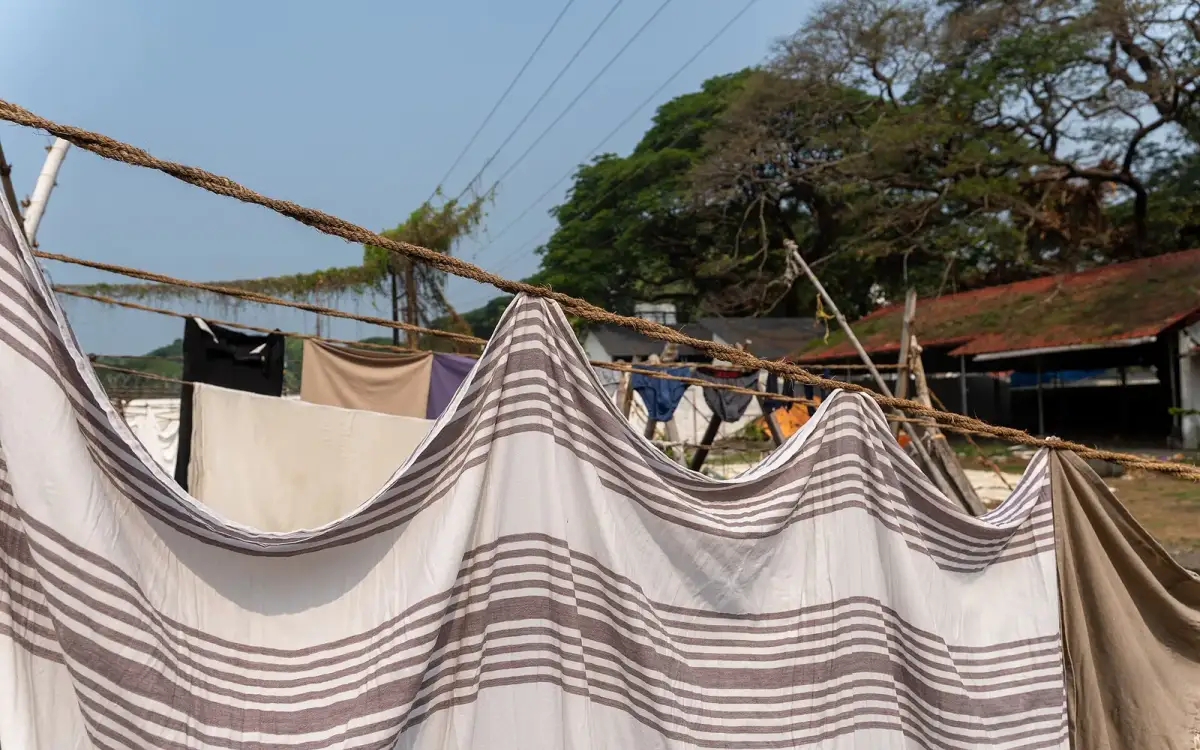
Community hand laundry at Veli in Fort Kochi, where Vannar washermen still wash, sun-dry and charcoal-iron by hand.
A long beach on Vypeen Island with the Puthuvype Lighthouse, across the harbour from Fort Kochi.
The Koder family’s early-1900s mansion on Tower Road — the house of Kochi’s best-known Jewish trading family, now a boutique heritage hotel.
Family-owned heritage hotel with nine antique-furnished rooms in a 200-year-old house on Princess Street, Fort Kochi.
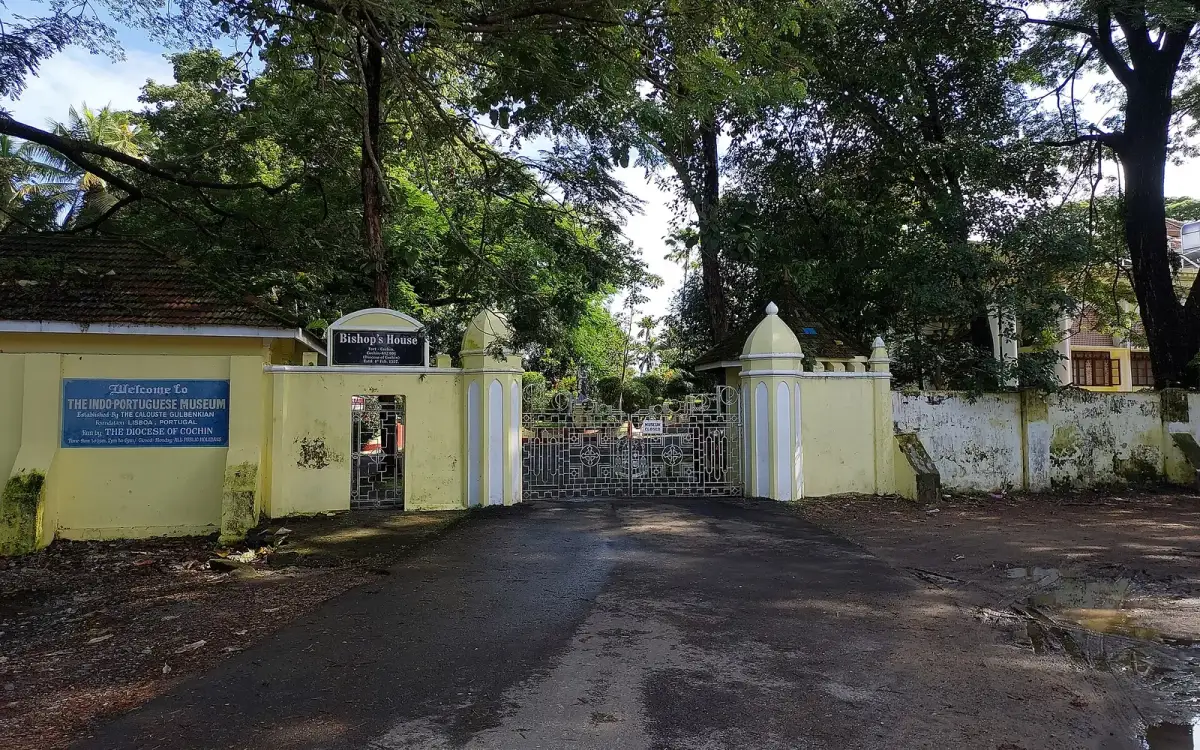
A museum of Indo-Portuguese church art in the Bishop's House compound, with altar pieces, crosses and vestments.
A CGH Earth boutique hotel in Fort Kochi with colonial-style rooms, a restaurant and a small pool. Fort Kochi, Napier Street, CGH Earth.
Portuguese-era Latin Catholic church at Fort Vypin, across the harbour mouth from Fort Kochi, dating to 1605.
A Mattancherry church on Bazaar Road, the site of the 1653 Coonan Cross Oath against Portuguese church rule.
Book with the place itself. India’s cyber-crime coordination centre warned in April 2025 that convincing copies of hotel and pilgrimage booking sites are being pushed through sponsored search and social ads, taking payment for rooms the property never hears about. Each profile carries the business’s own contact details and its source. Roampedia takes no commission and does not collect booking payments. Booking pages reached through ads sometimes imitate a property’s own site. Fraud can be reported on cybercrime.gov.in or on 1930.
Browse food, accommodation and activities across Fort Kochi. These selections are not all beside Kerala Kathakali Centre.
10 more places around Fort Kochi. Open a guide to plan the visit and onward journey.
390 m · 5 min walk
Kerala’s most walkable heritage quarter, with Chinese fishing nets, colonial churches, art cafes and Mattancherry nearby.
700 m · 8 min walk
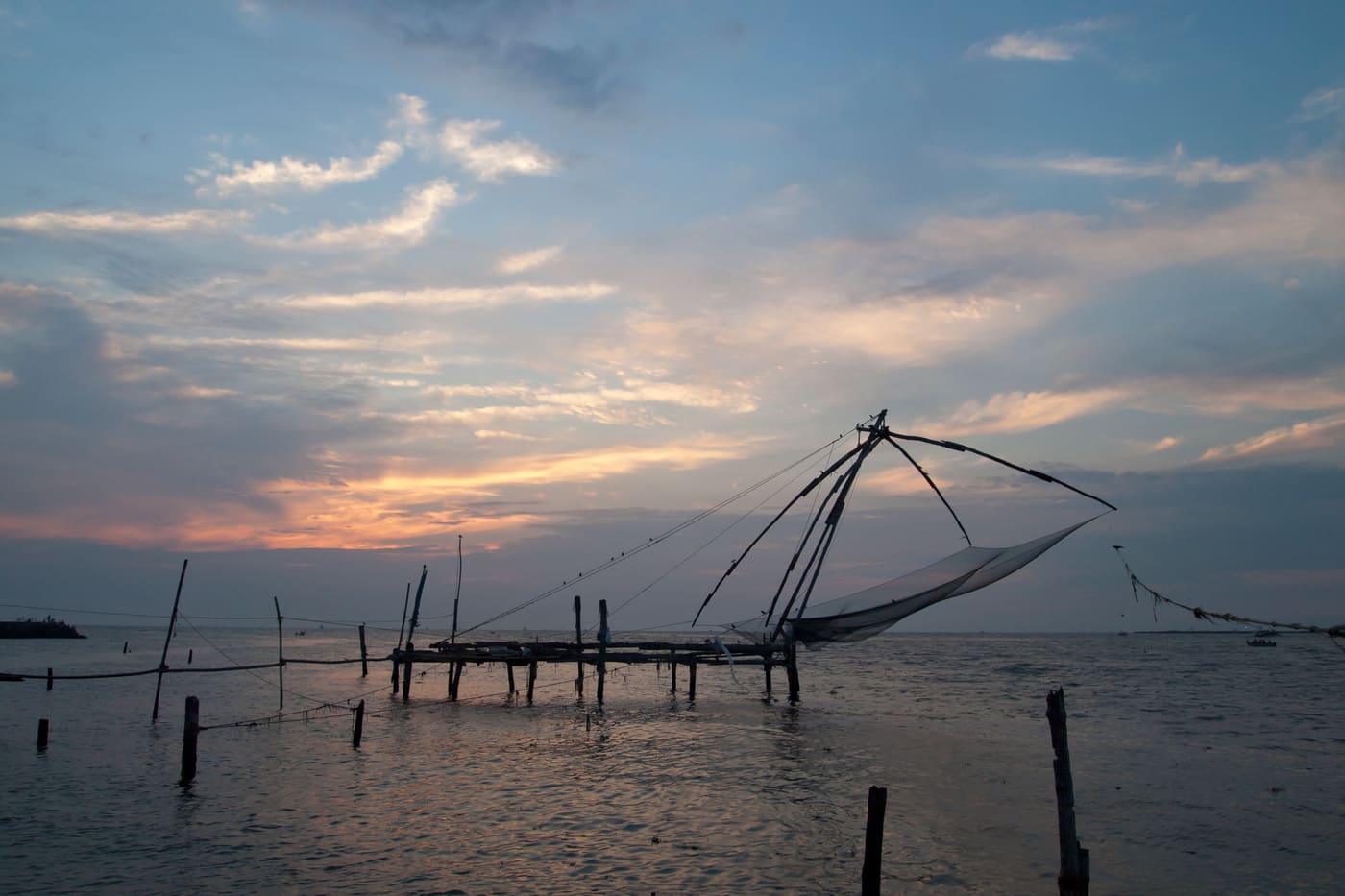
The giant cantilevered lift nets that are Fort Kochi’s emblem, strung along the shore at Vasco da Gama Square and still landing fish. Even their origin is argued — popular tradition credits Chinese traders of Zheng He’s era, some scholars later Portuguese settlers from Macau — and the argument is part of the attraction.
500 m · 6 min walk
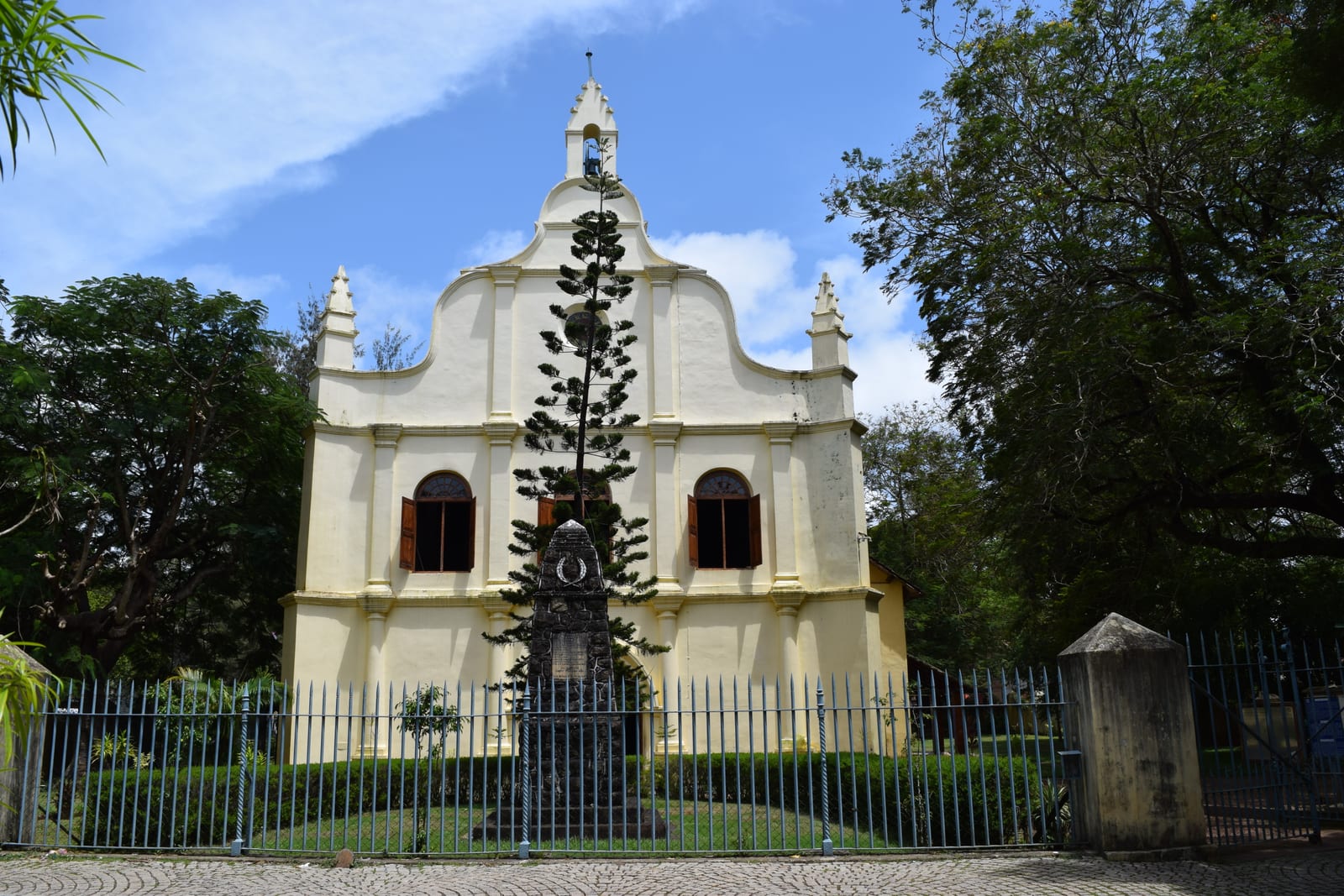
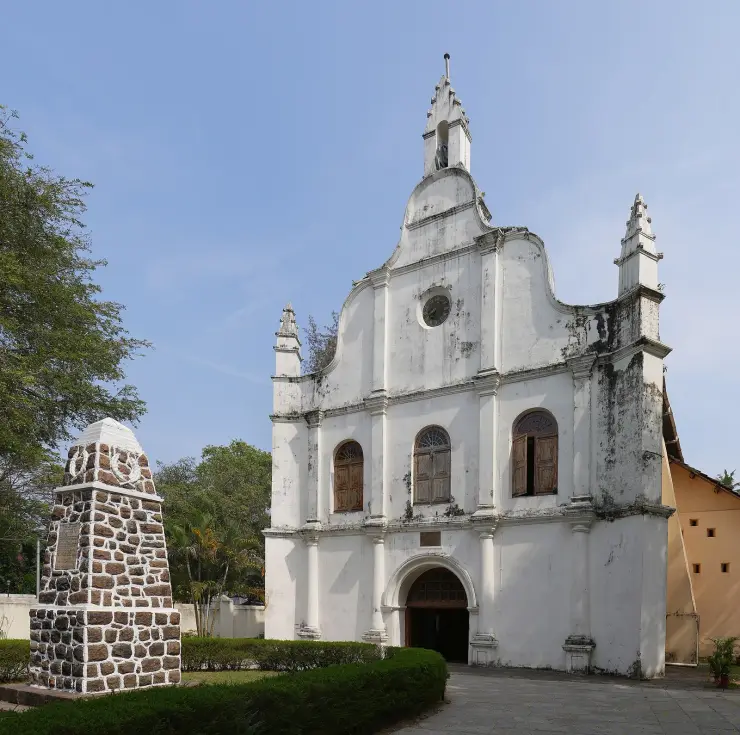
Believed to be the oldest European church in India (1503); Vasco da Gama was buried here before his remains were moved to Lisbon.
180 m · 2 min walk
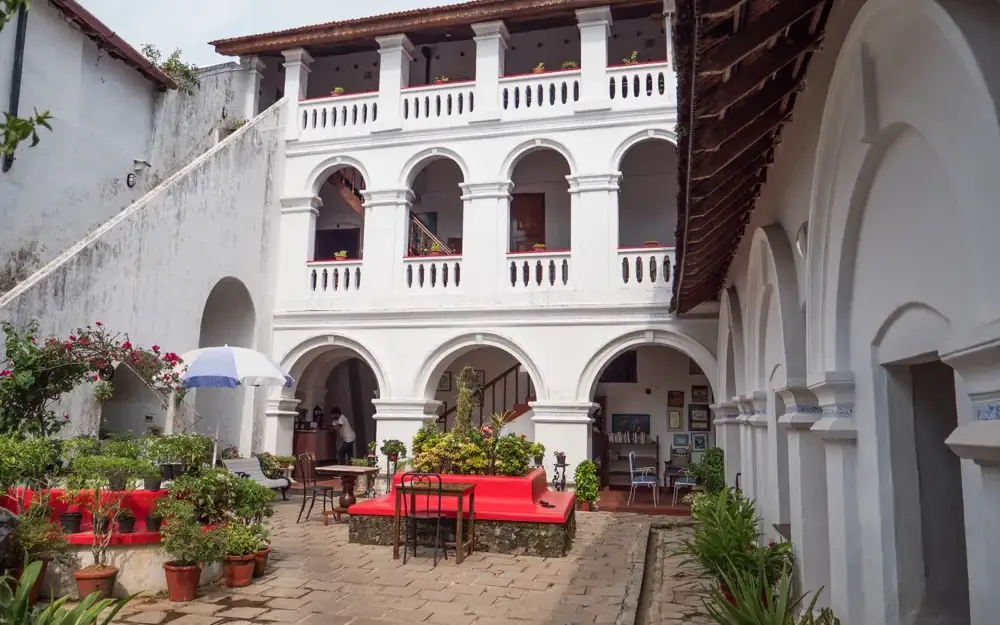
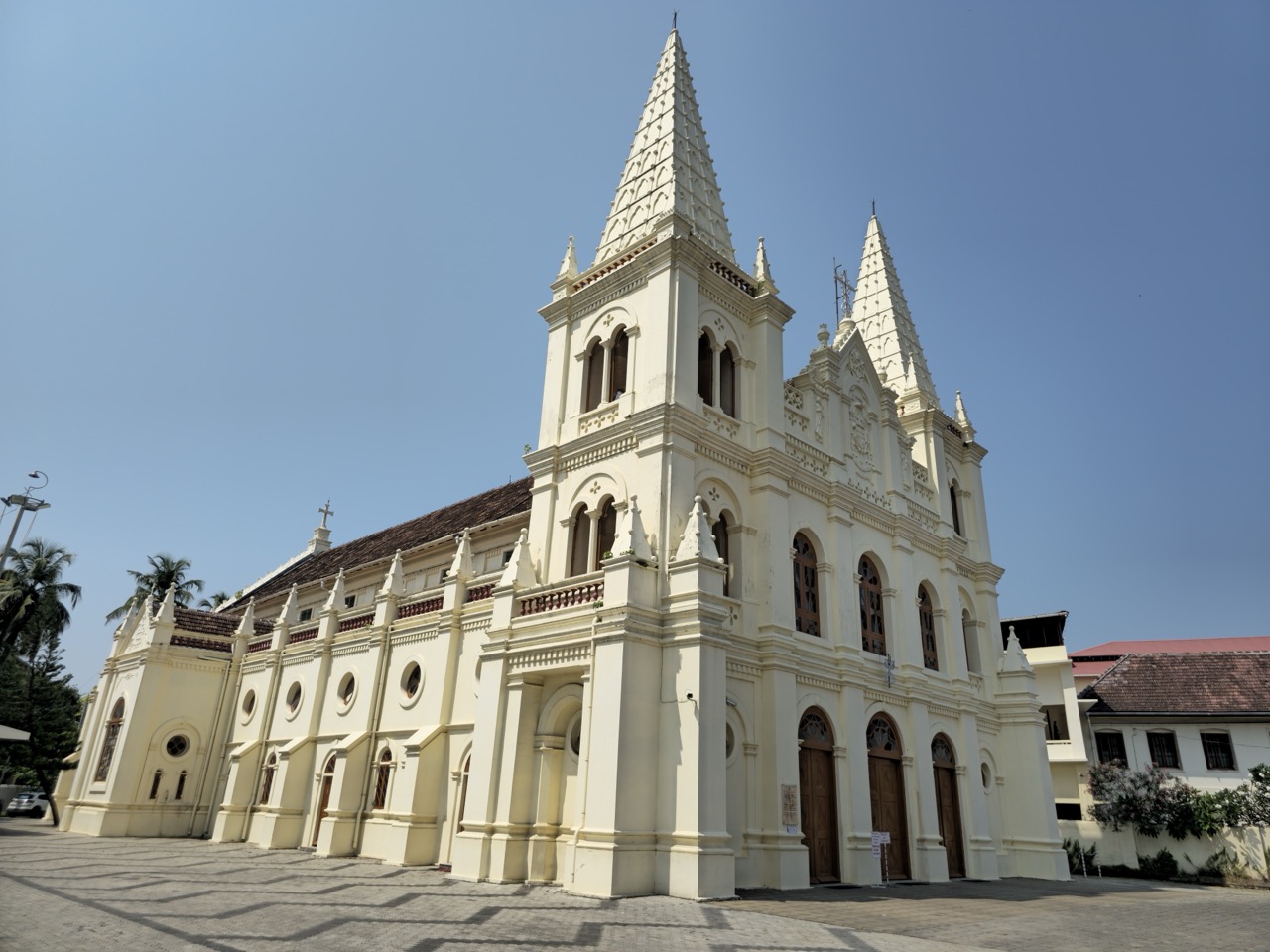
One of the finest churches in Kerala, with a richly painted interior, beside the Kerala Kathakali Centre in Fort Kochi.
1.9 km · 23 min walk
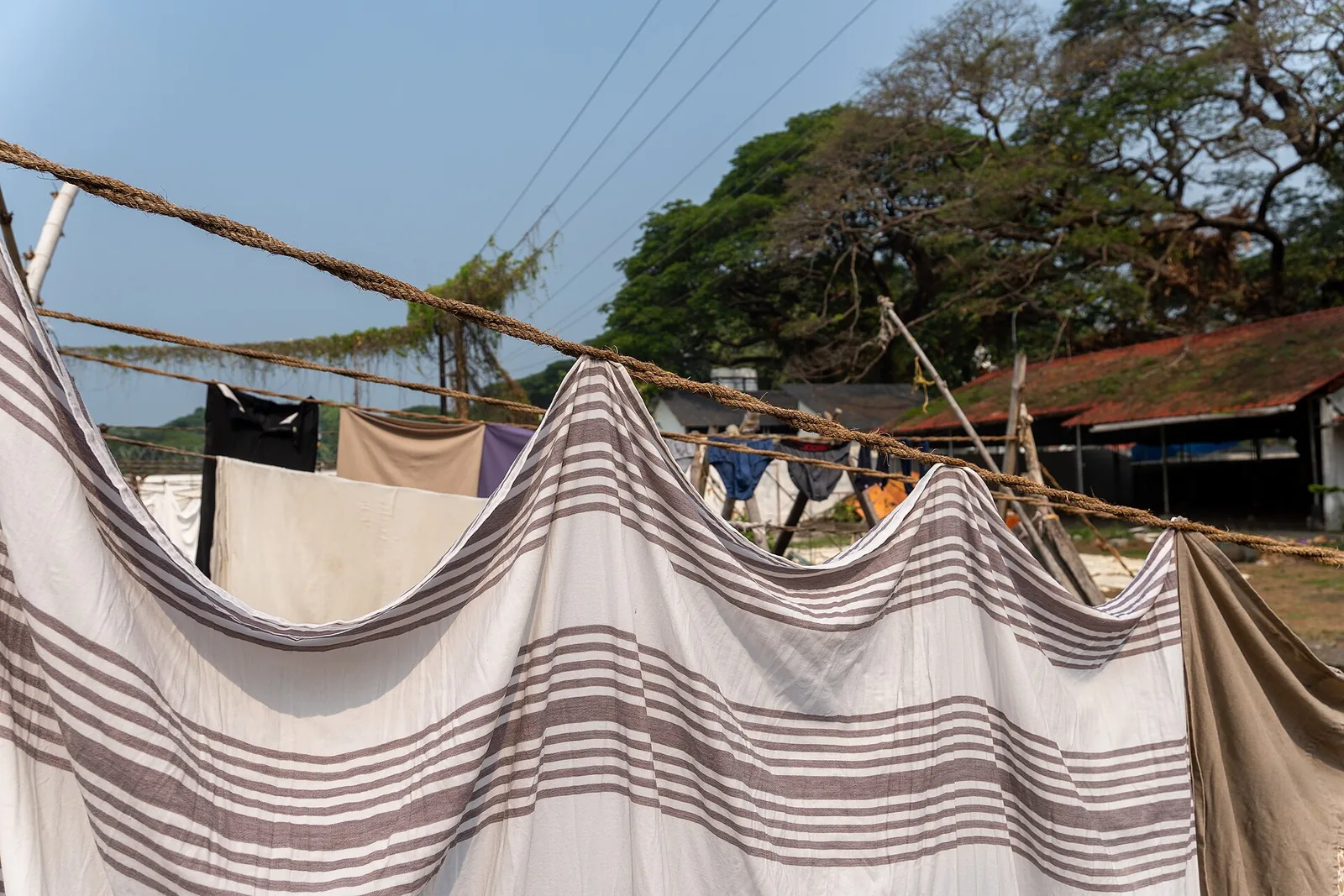
A working colonial-era community open-air laundry in Fort Kochi, still used by traditional washermen families.
750 m · 9 min walk
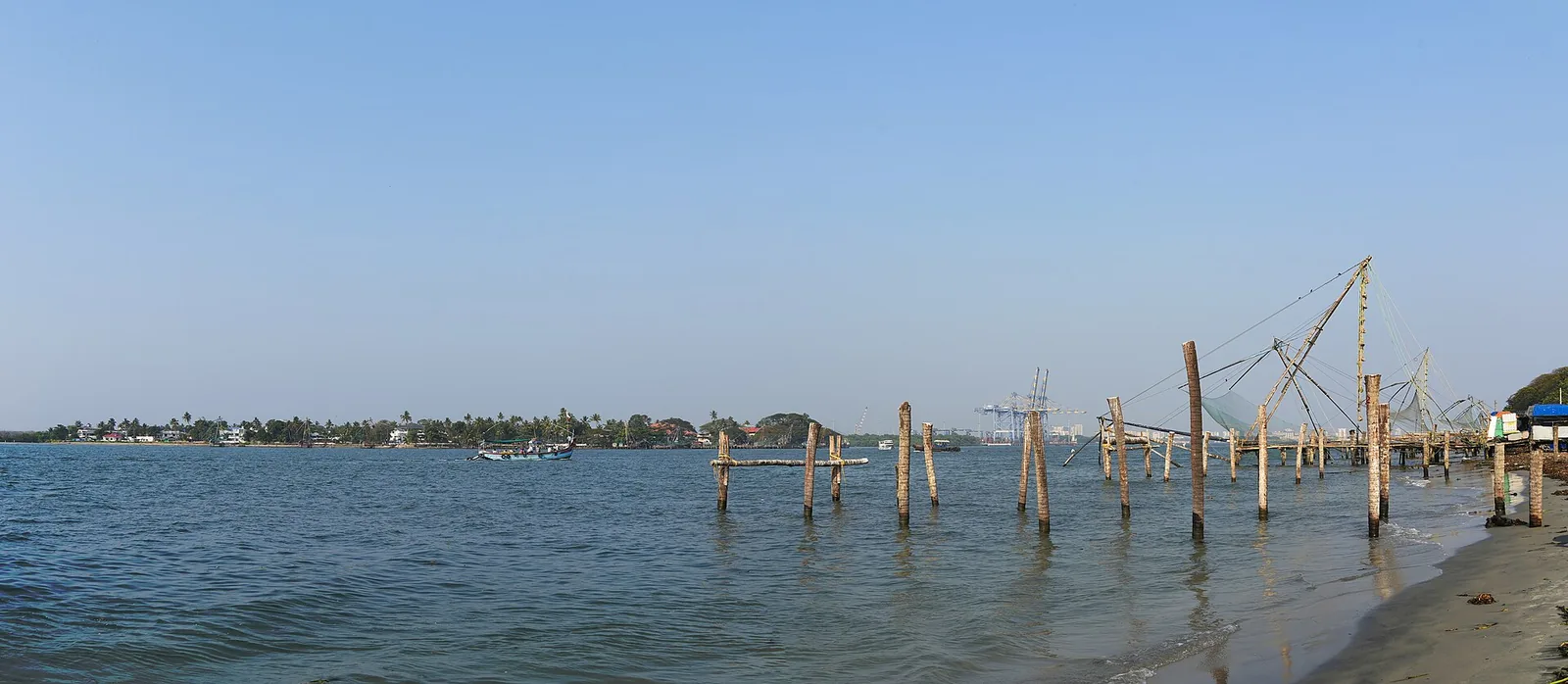
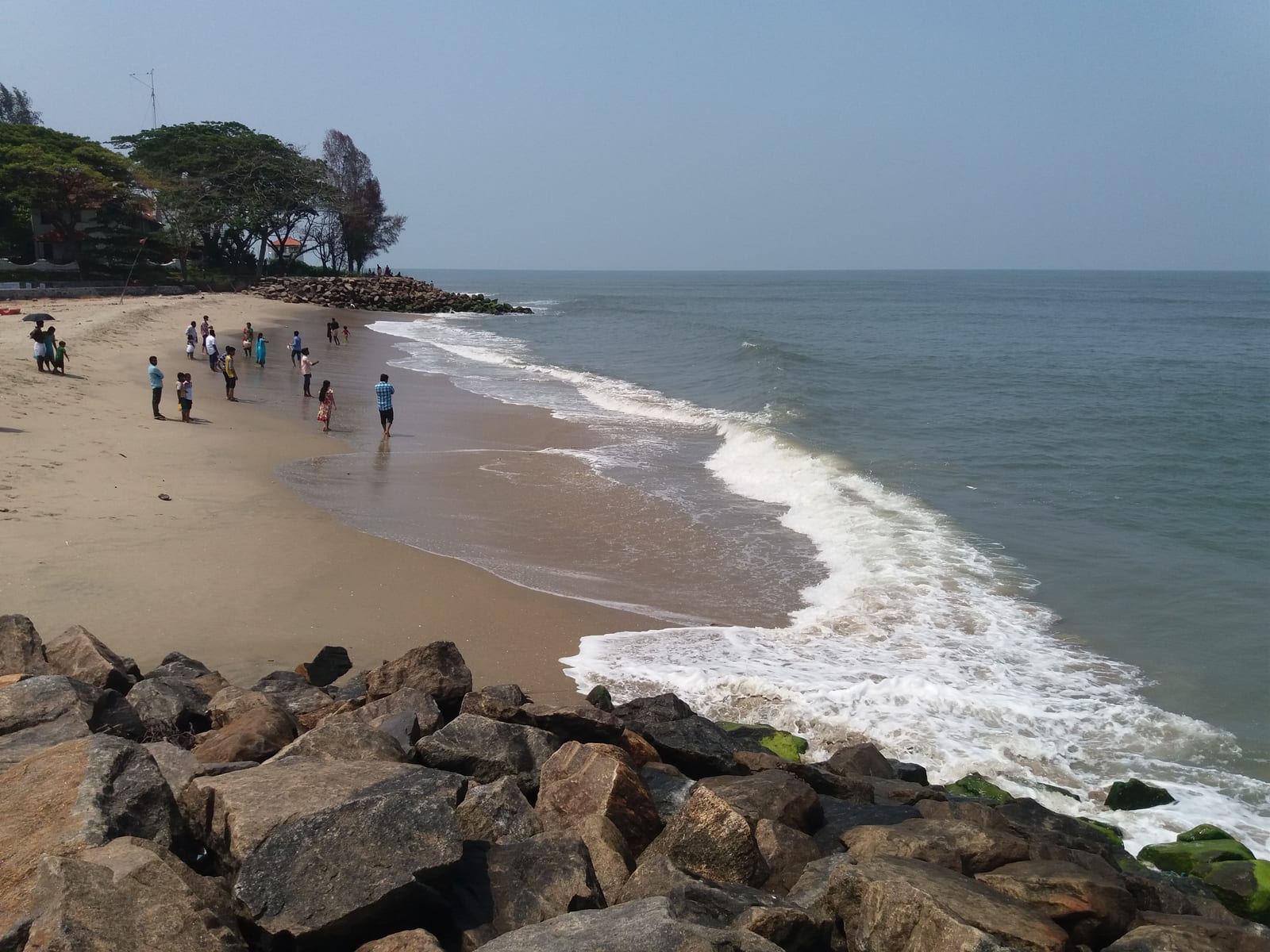
Public seafront beside the Chinese fishing nets — a walking-and-sunset beach, not a swimming beach.
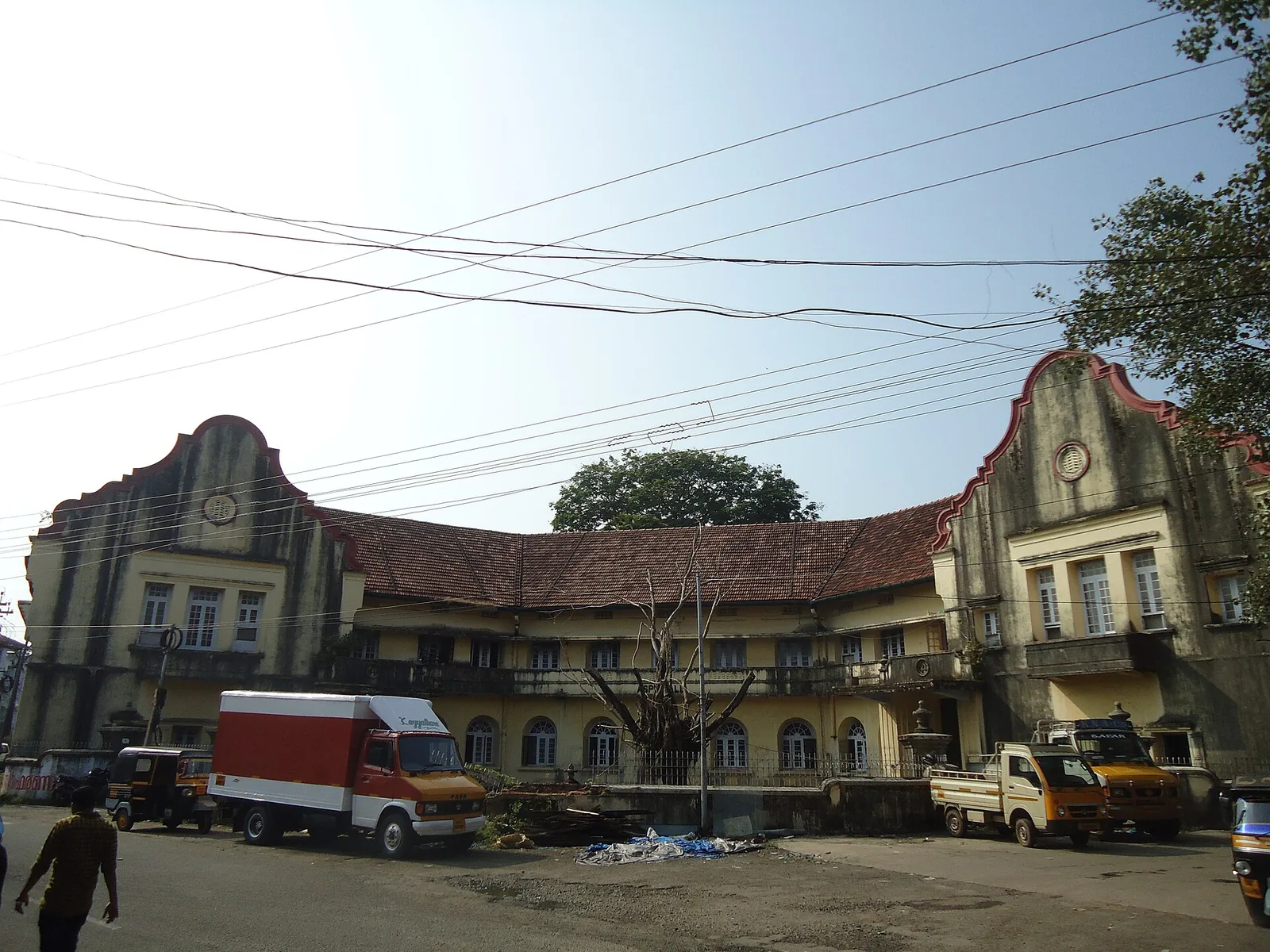
840 m · 10 min walk
A large 19th-century waterfront trading compound in Fort Kochi, the principal venue of the Kochi-Muziris Biennale.
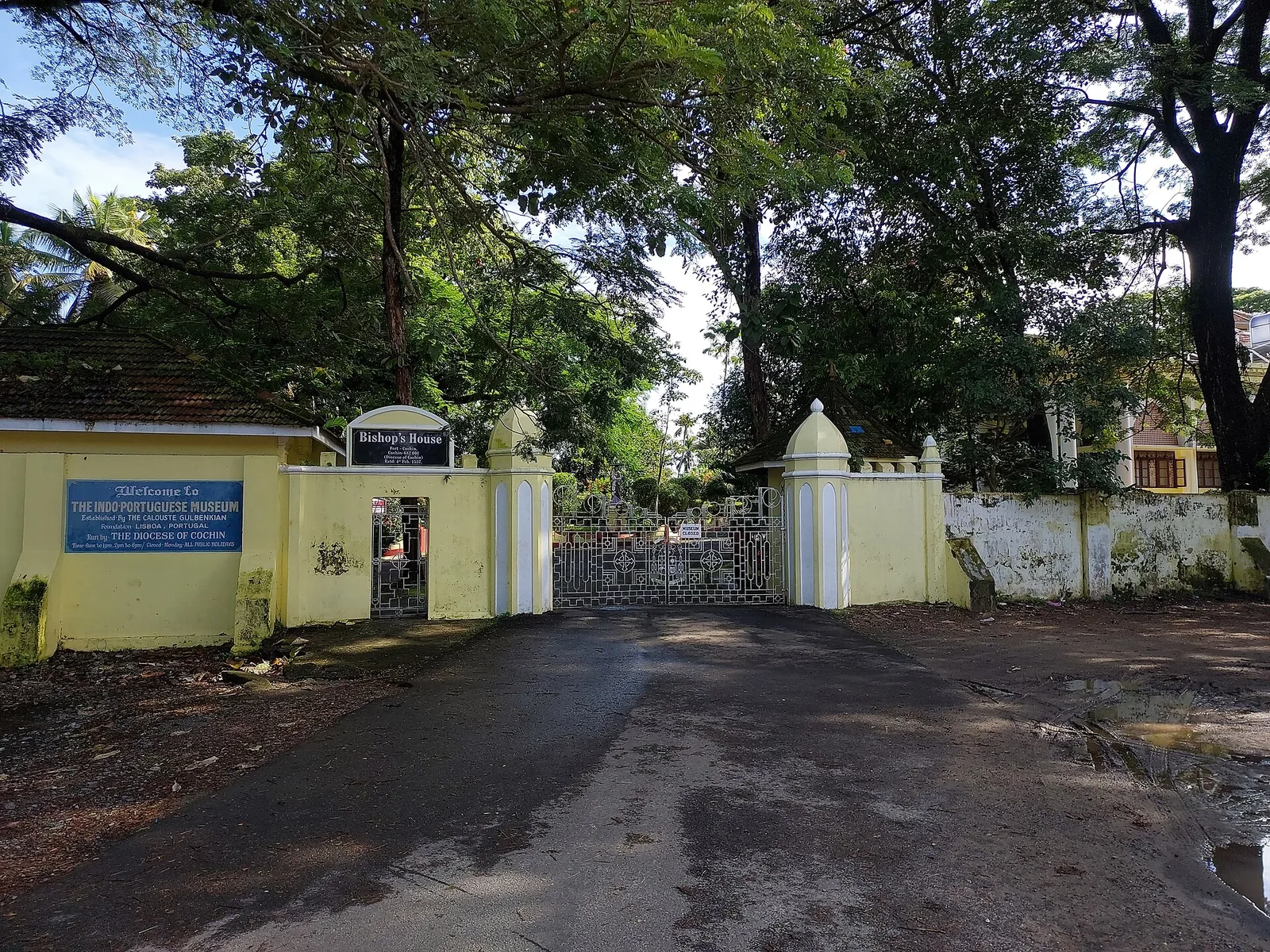
520 m · 6 min walk
Museum of Kerala’s Indo-Portuguese Catholic heritage in the Bishop’s House garden, Fort Kochi.
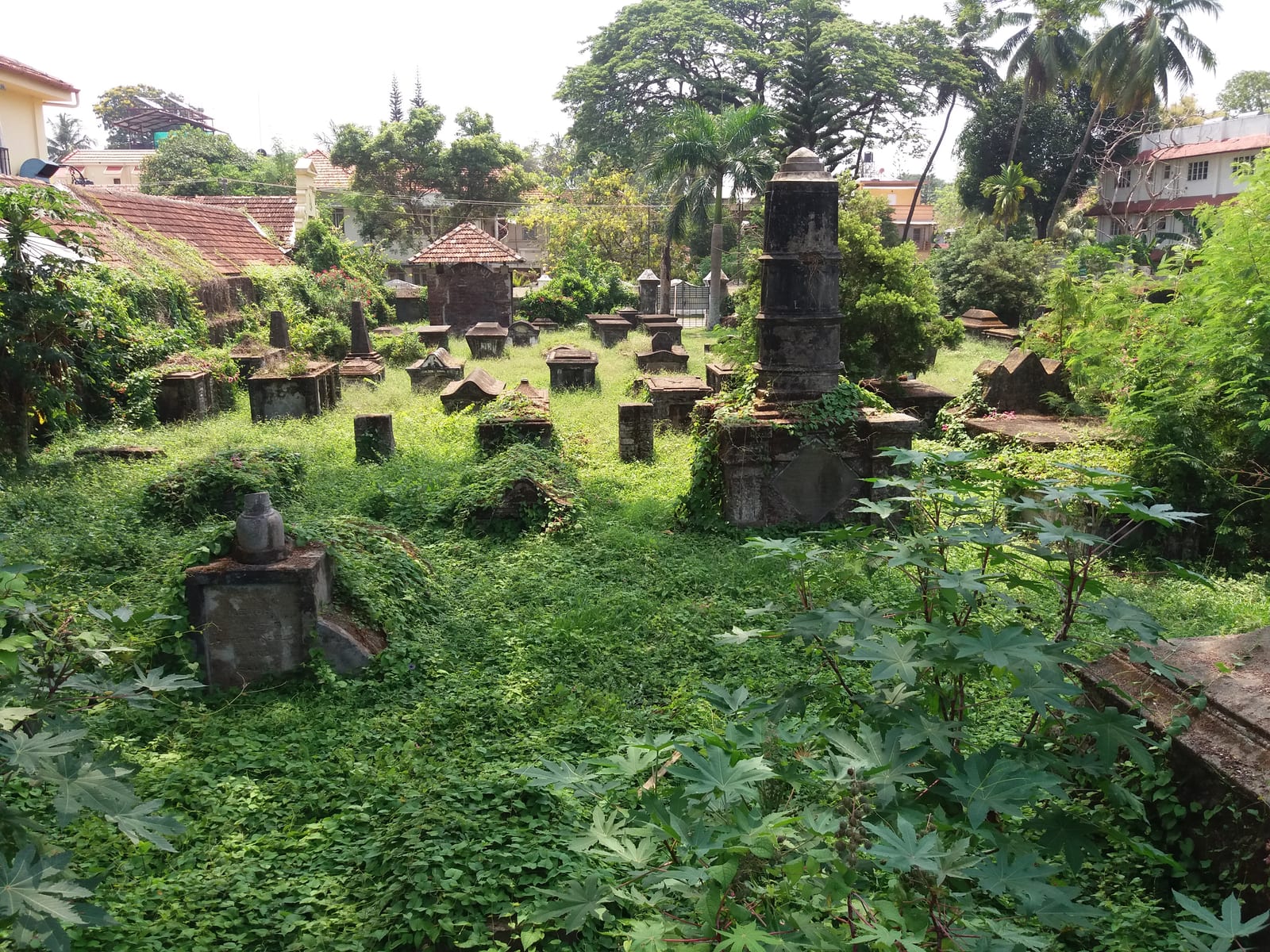
710 m · 8 min walk
The 1724 burial ground of Kochi’s Dutch colonial officials and merchants, beside St Francis Church — ASI-protected, and usually locked.
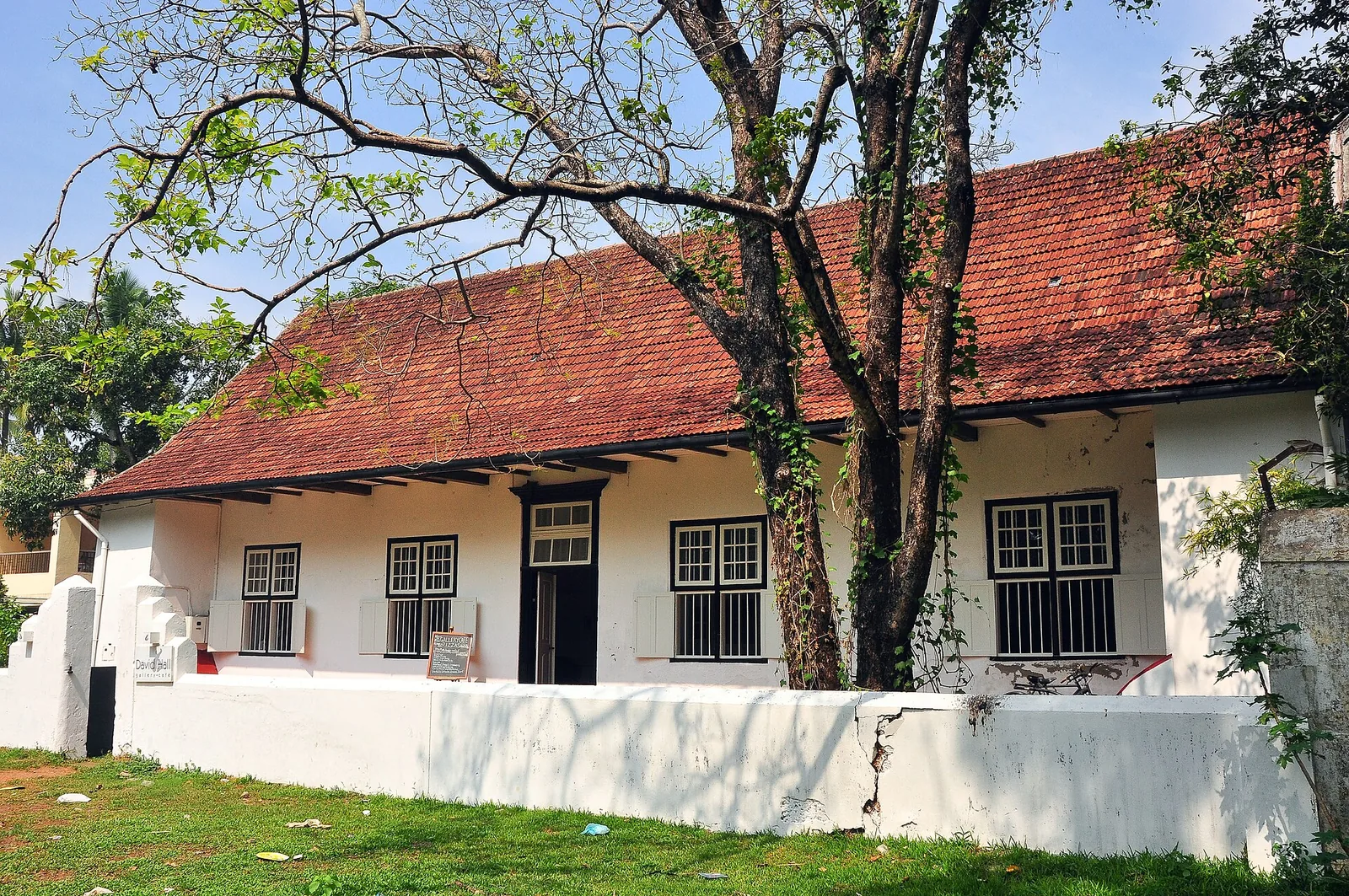
610 m · 7 min walk
A restored 17th-century Dutch bungalow on the Fort Kochi parade ground, now a contemporary art gallery and cafe.
Roampedia is commission-free — own or know a stay, eatery, guide or shop near Kerala Kathakali Centre? Submit public business details for review.
Add a nearby businessEntry: Ticketed show, around ₹250–500 per person
KB Jacob Road, Fort Kochi (Fort Kochi Water Metro terminal nearby).
Bus and ferry return services run to fixed times, so leave time to reach the stop or jetty after your visit.
The last service back from the bus stand sets the end of the day, not the next one. After it has gone, an auto or app cab is the way back.
Roampedia has not assessed step-free access at this site. Its staff can describe the entrance, steps along the route, the nearest drop-off point, seating and accessible toilets.
Charge cap and free-transaction limits: Reserve Bank of India, ATM FAQ updated 4 July 2025; checked 4 October 2026.
These services are listed within about 1.2 km of Kerala Kathakali Centre. Walking distances follow mapped routes.
Fort Kochi is one of Kerala’s safest and most walkable tourist quarters, comfortable by day and on the main lanes after dark. Violent crime against visitors is rare — the realistic risks are auto/guide scams, petty theft in crowds, and the sea, not personal danger.
Safety guidance last reviewed 15 June 2026. Each government publishes its own current travel advice for visitors to India.
Published emergency and visitor-assistance contacts. For an immediate emergency, call 112. Shared Kerala contact sources checked 4 October 2026; publication does not establish a tested live response.
One of the finest churches in Kerala, with a richly painted interior, beside the Kerala Kathakali Centre in Fort Kochi.
180 m · 2 min walkKerala’s most walkable heritage quarter, with Chinese fishing nets, colonial churches, art cafes and Mattancherry nearby.
390 m · 5 min walkBelieved to be the oldest European church in India (1503); Vasco da Gama was buried here before his remains were moved to Lisbon.
500 m · 6 min walkMuseum of Kerala’s Indo-Portuguese Catholic heritage in the Bishop’s House garden, Fort Kochi.
520 m · 6 min walkA restored 17th-century Dutch bungalow on the Fort Kochi parade ground, now a contemporary art gallery and cafe.
610 m · 7 min walkKochi’s iconic cantilevered shore-operated fishing nets along the Fort Kochi seafront at Vasco da Gama Square, best photographed at sunset.
700 m · 8 min walkThe 1724 burial ground of Kochi’s Dutch colonial officials and merchants, beside St Francis Church — ASI-protected, and usually locked.
710 m · 8 min walkPublic seafront beside the Chinese fishing nets — a walking-and-sunset beach, not a swimming beach.
750 m · 9 min walkA large 19th-century waterfront trading compound in Fort Kochi, the principal venue of the Kochi-Muziris Biennale.
840 m · 10 min walk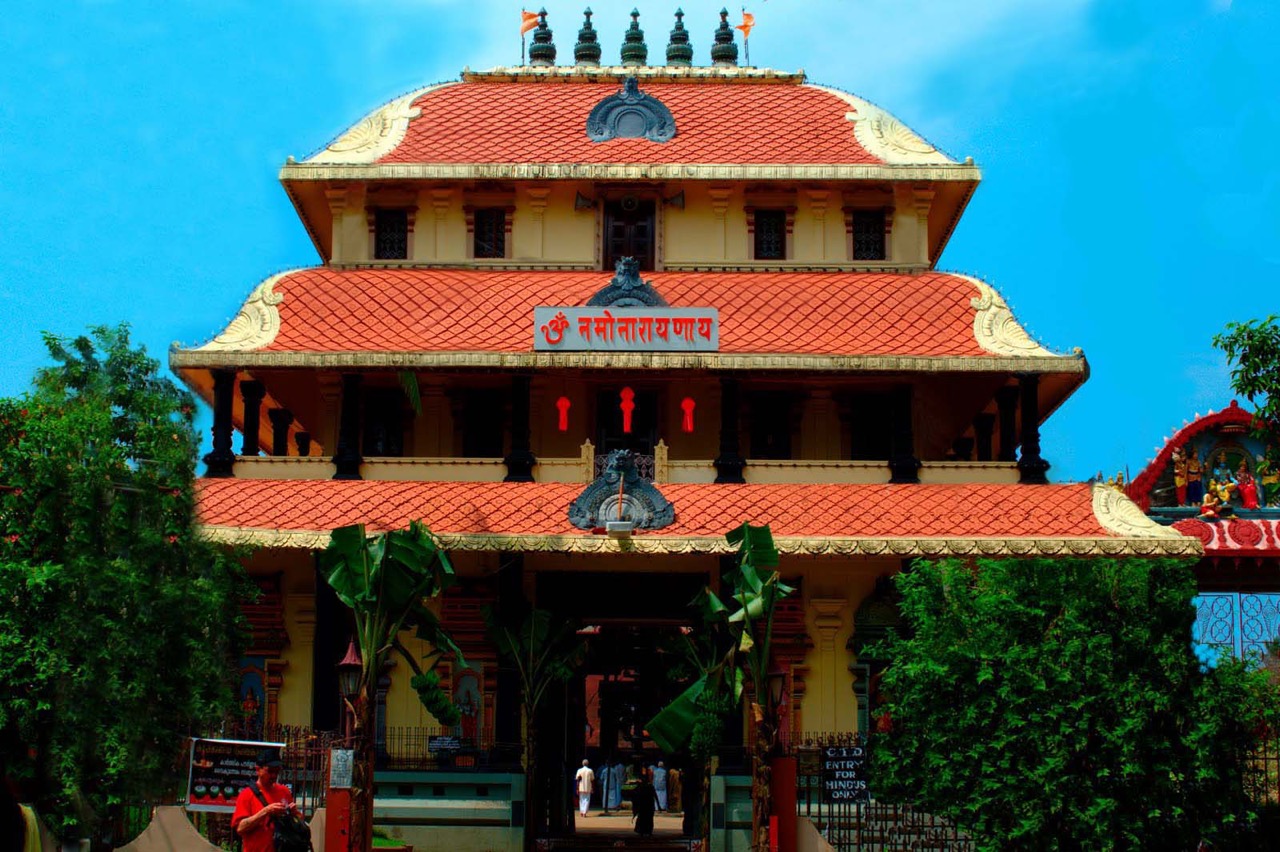
A historic Gowda Saraswat Brahmin temple in Cherlai, Mattancherry, central to Kochi’s Konkani community.
1.2 km · straight line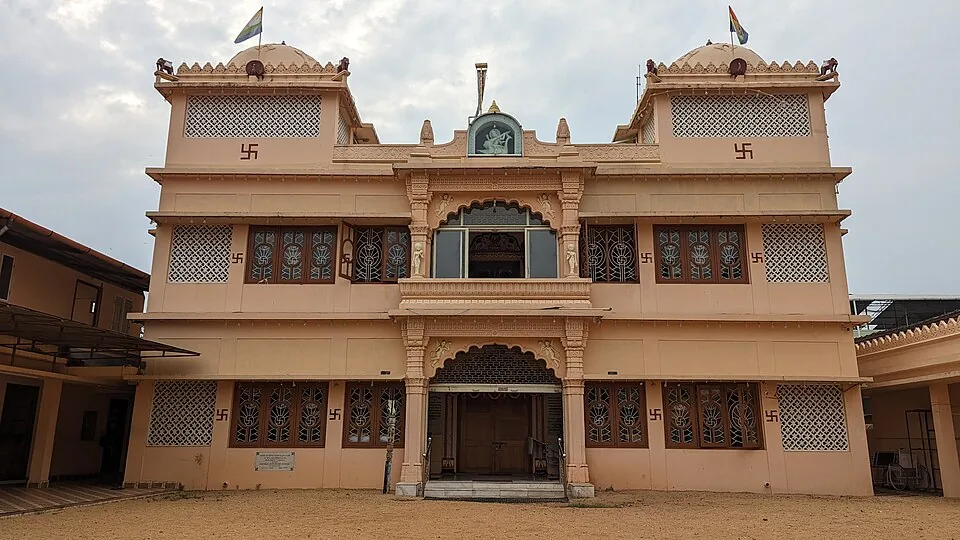
An ornate Jain temple in Mattancherry’s Gujarati quarter, raised in 1904 by Hirubai in memory of her husband Jivraj Dhanji and dedicated to Dharmanatha, the fifteenth Tirthankara — known for its white marble work and the daily midday feeding of the pigeons outside.
1.3 km · straight lineA working colonial-era community open-air laundry in Fort Kochi, still used by traditional washermen families.
1.9 km · 23 min walkRoad and walking figures are route estimates, with travel times dependent on access, traffic and conditions. Figures marked “straight line” show direct separation and do not describe a road or walking route. Fare estimates use Kerala’s 26 April 2022 auto/taxi notification and exclude waiting, night and applicable one-way surcharges. Routing: © openrouteservice.org by HeiGIT | Map data © OpenStreetMap contributors
Nearby toilets, pharmacies, ATMs, seating and vets come from OpenStreetMap community mapping. Map data © OpenStreetMap contributors | Walking times © openrouteservice.org by HeiGIT
A typical evening brings a short talk on the hand signs and the nine emotions, then one scene from a longer play. Live singers and drummers carry the story.
Yes, in part. The talk on signs and emotions gives you a key. Reading a short summary of the scene before the show helps a great deal.
They are hand signs that carry the meaning of the sung text. Kerala Tourism says there are twenty-four basic mudras, and some have thirty or forty meanings.
Green marks noble heroes, kathi marks proud anti-heroes and a red beard marks a very wicked character. Black faces mark hunters, and yellow faces mark women, sages and messengers.
Kerala Tourism says the make-up takes three to four hours in three stages.
The centre sets its own show and make-up times.
Evening, after a sunset walk on the beach; November to February brings cooler weather for walking.
Entry: Ticketed show, around ₹250–500 per person. Timings: Evening Kathakali performance around 6:00pm; make-up from about 5:00pm.
The centre is in the old part of Fort Kochi, an easy walk from the beach and churches. From Ernakulam, take the Kochi Water Metro from High Court terminal or a state ferry to Fort Kochi. Read a short summary of the scene before you go in, so you can follow the story.
About two hours, including arriving early and the show itself.
Nearby you can pair Santa Cruz Cathedral Basilica (180 m, route estimate), Fort Kochi (390 m, route estimate), St. Francis Church (500 m, route estimate), Indo-Portuguese Museum (520 m, route estimate).
The drums are loud in a small hall, so sit further back if noise troubles you. Carry a torch or phone light for the walk back through the old town lanes. Watch for traffic on the narrow lanes around the centre after dark.
Written about Kerala Kathakali Centre itself — its history, its legends and the arguments about them.
These guides explore Fort Kochi and the surrounding area. Choose a visit that fits your interests, allowing separately for travel between stops.
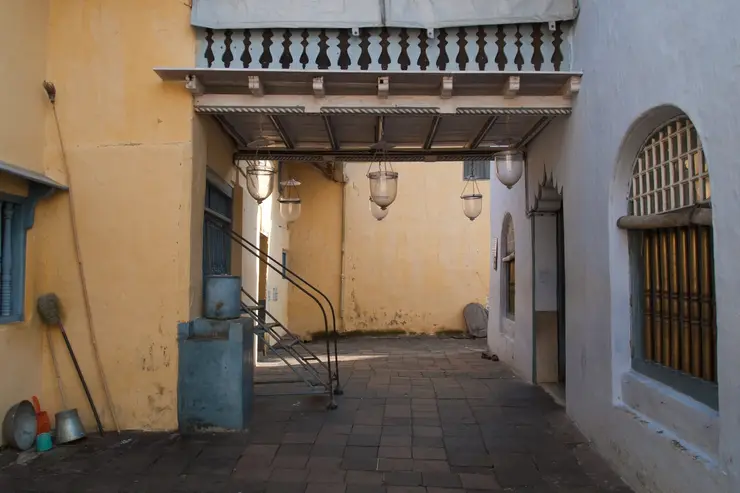
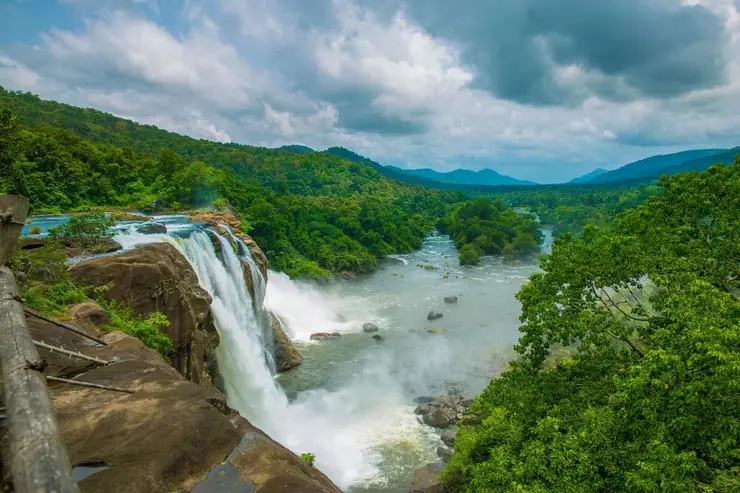
Written about Fort Kochi as a whole rather than about Kerala Kathakali Centre — its history, its streets, and how to spend a day in it.
Route-level itineraries and practical guides for the rest of Kerala.
Photographs: Ms Sarah Welch (CC BY-SA 4.0), Jean-Pierre Dalbéra (CC BY 2.0). Wikimedia Commons.