What to expect
Highlights
- Jain temple visit at Dharmanath Jain Temple
- Marble work, carved pillars and Tirthankara figures in a Gujarati idiom
- The surrounding merchant quarter and its trading history
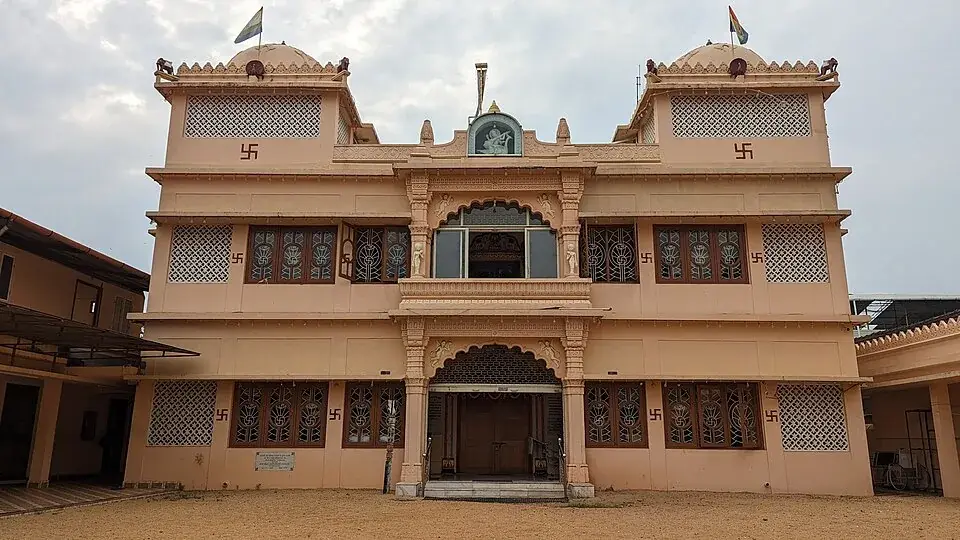
An ornate Jain temple in Mattancherry’s Gujarati quarter, raised in 1904 by Hirubai in memory of her husband Jivraj Dhanji and dedicated to Dharmanatha, the fifteenth Tirthankara — known for its white marble work and the daily midday feeding of the pigeons outside.
Check entry arrangements. Check footwear, leather-item and inner-shrine rules with temple staff before entering. Dress modestly and ask before photographing worship.
Dress respectfully and follow the institution’s admission and photography rules.
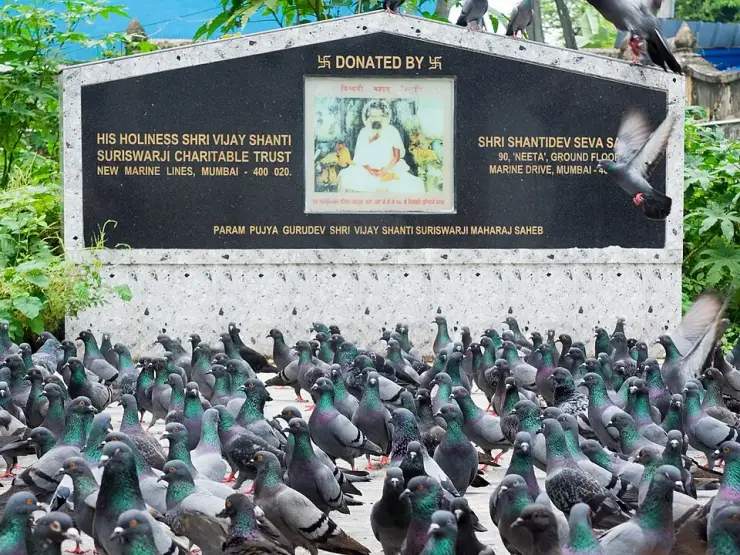
At about a quarter past twelve every day, a marble temple in a back street of Mattancherry fills the sky with pigeons. Someone strikes a steel plate and calls out; hundreds of birds come off the roofs of the spice quarter, circle the dome three times, and settle. Only after the prayers are said do they eat. The Dharmanath Jain Temple was raised in 1904 by a Kutchi widow, Hirubai, in memory of her husband Jivraj Dhanji, and it is now the most visible thing left of a merchant community that has largely gone.
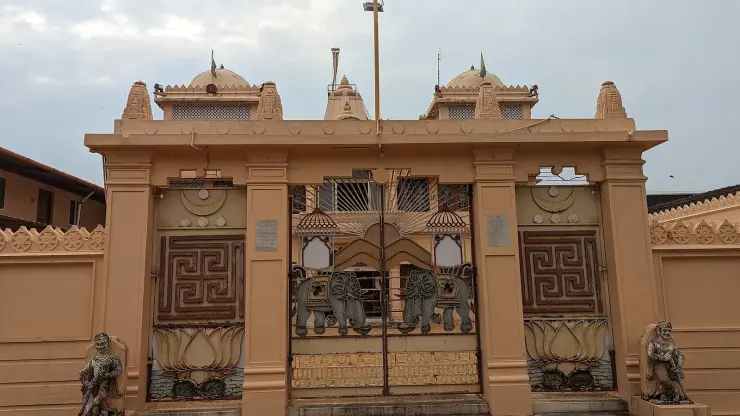
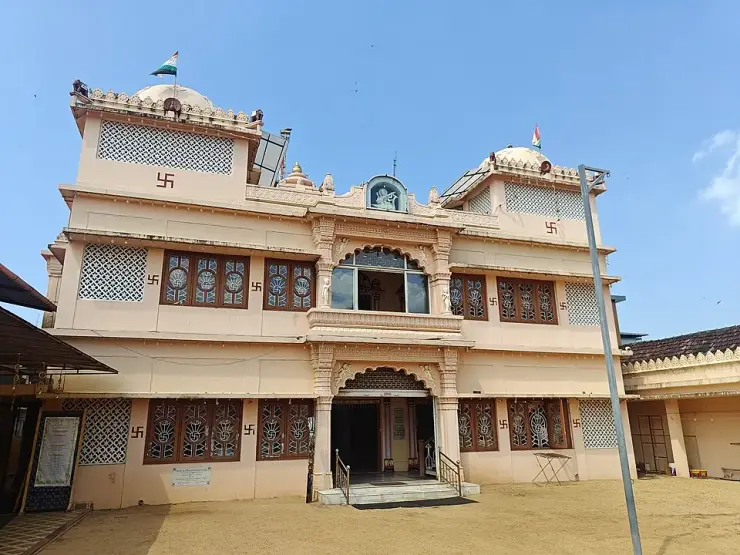
The temple is a deliberate piece of Gujarat set down in Kerala. The interior is faced throughout in white marble, with carved pillars and Tirthankara figures, in an idiom borrowed straight from the Jain temples of Gujarat and with essentially nothing in common with Kerala's own temple architecture of laterite, timber and copper roofing. That contrast is the point of the building: it was made to look like home by people a very long way from it.
The mulnayak — the principal image — is Dharmanatha, the fifteenth of the twenty-four Tirthankaras, and the idol is held by the community to be well over a thousand years old, which would make it older than the building around it by a wide margin. A second shrine inside the complex holds Chandraprabhu, installed by Sheth Popatlal Govardhan Lalan, and a Shantinath image here has a local reputation for answering petitions. The eight-day Paryushana observance, the most important fast in the Jain year, is kept here annually.
The community that built it came for business. Jain families from Kutch and Saurashtra had traded into Cochin, Kozhikode and Alappuzha for generations, and Mattancherry's spice godowns were the reason they were here at all. What is unusual is who actually built it: not a merchant house or a trade association, but one woman, Hirubai, endowing a temple as a memorial to her husband Jivraj Dhanji. Kochi has a great many buildings put up by men who wanted to be remembered. This is one put up by a woman who wanted someone else to be.
The pigeons are what most visitors come for, and it is worth timing your visit for them rather than treating them as a bonus. Shortly after noon a member of the temple strikes a steel plate and calls chalo — come — and the birds arrive in a mass off the surrounding roofs. They make three circuits of the dome, which devotees read as pradakshina, the clockwise circumambulation a worshipper performs; prayers are recited; and only then is the grain put down. Whatever you make of the birds' intentions, the sequence is real and you can watch it happen.
The practice is not a spectacle laid on for tourists. Jiva daya — active compassion towards living beings — is a working principle of Jain life rather than an abstraction, and feeding birds and animals is one of its most ordinary expressions. What the temple has added is scale and discipline: a purpose-built birdhouse stands in the compound, a tower of roughly thirty metres divided into some three hundred separate nesting compartments, which is a considerable amount of masonry to devote to pigeons.
Outside the temple, the surrounding streets still read as a distinct quarter, with Gujarati shopfronts and names among the Malayalam ones. But that community has thinned badly as the spice trade contracted and families left, which is the same story Bazaar Road tells a few minutes away. The temple is now, in effect, the community's most durable structure in the city — better attended by birds, on most days, than by the descendants of the people who paid for it.
Practically, it is a small visit and an easy one — twenty to thirty minutes, or forty-five if you wait for the birds — and it fits neatly between the palace and Bazaar Road on a Mattancherry morning. Footwear comes off, leather is generally left outside, and modest dress is expected; scarves and dhotis are usually available at the entrance if you need one.
The strangest thing about this temple is that almost everything written about it, including this page until now, gives the wrong century. You will read again and again that the Dharmanath Jain Temple was built in 1960. It was not. It was built in 1904. The temple's own dating is Vikram Samvat 1960 — the Vikram era runs about fifty-seven years ahead of the Gregorian one — and at some point a number that meant 1904 was copied out of a Jain record into an English one, lost its era, and became a year in living memory. A building that predates the First World War is routinely described as post-independence. It is a small mistake and it has been repeated for decades, and we published it ourselves until we went looking.
It matters more than a pedant's correction, because the two dates tell opposite stories. A temple of 1960 is the confident act of a community at its commercial height, a few years before the spice trade turned. A temple of 1904 is the act of a community still establishing itself, at the start of the long migration from Kutch and Saurashtra that the sources place in the early twentieth century. Move the date and the building stops being a monument to arrival and becomes part of the arriving.
The pigeons carry a legend of their own, and it is worth telling as legend. The tradition told at the temple is that the fixed feeding hour was not the community's idea at all — that a visiting monk instructed that the birds be fed at one appointed time each day rather than whenever anyone felt charitable, so that discipline would be taught to the birds and to the people together. Whether a particular monk said this, and when, is not something we can source. What is documented is the result: a punctual, unvarying midday ritual that both species now keep.
Around that has grown the claim visitors most often repeat — that the pigeons circle three times because they are performing pradakshina, and that they will not touch the grain until the prayers are finished. The circling and the waiting are observable; the reverence is an interpretation, and the temple is more careful about the distinction than most retellings are. Birds fed at a fixed time by a fixed signal learn the signal. That is not less remarkable for having an ordinary explanation, and it is not the same claim as the one on the postcard.
The 1904 correction has still not travelled, which is worth saying plainly. Kerala Tourism's own pages continue to date the building to 1960, and so do most travel listings; the encyclopaedia entry gives 1904 CE with VS 1960 alongside it, which is the reading that actually resolves the contradiction. If you are told 1960 at the door, that is not somebody being careless in front of you. It is a fifty-six-year error that has been reprinted so many times it now has more sources behind it than the truth does.
There is a second, quieter misreading built into the founder's name, and it explains why you will sometimes see this temple credited to a merchant. The record gives the builder as Hirubai Jivraj Dhanji — which is the ordinary Gujarati form, a woman's own given name followed by her husband's. Read quickly by anyone unfamiliar with it, the whole string looks like one man's name, and the temple duly gets attributed to a male trader. The same source that supplies the name says exactly what happened: she built it in memory of her husband, Jivraj Dhanji. The bai is the whole point of the sentence and it is the part that keeps getting dropped.
Jain merchants from Kutch and Saurashtra were part of the trading population that made Mattancherry what it was, alongside Konkani, Gujarati Hindu, Jewish, Muslim and Christian communities. They traded into Cochin, Kozhikode and Alappuzha, and settled around the godowns of Bazaar Road and the streets behind them.
1904 — the temple is built, and dedicated to Dharmanatha, the fifteenth of the twenty-four Tirthankaras. The date is recorded in the Vikram era as VS 1960, which is the origin of the near-universal modern error that puts the building in 1960 CE. It was raised by Hirubai in memory of her husband, Jivraj Dhanji.
The design and materials are Gujarati rather than Keralan — white marble facing, carved pillar work and Tirthankara figures in the idiom of the Jain temples of the founders' home region. A second shrine to Chandraprabhu within the complex was installed by Sheth Popatlal Govardhan Lalan.
Through the twentieth century the temple served a Jain population that had come south with the spice business and stayed. Its calendar — above all the eight-day Paryushana fast — kept a Gujarati religious year running inside a Malayali city, in the same way that the Konkani temple at Gosripuram a few streets away kept a Goan one.
Since then the trade that brought the community has contracted sharply, and much of the Gujarati and Kutchi commercial presence in Mattancherry has dispersed. The temple remains active, endowed and cared for, with a purpose-built birdhouse of some three hundred compartments added in the compound — a reasonable measure of how much it still matters to those who remain and to the wider Jain population of Kochi.
The noon pigeon feeding is a genuinely striking few minutes and unlike anything else in Kochi.
The marble interior is a complete change of register from every other religious building in Fort Kochi and Mattancherry — a piece of Gujarat, three minutes from a Dutch palace.
It is the clearest surviving marker of the Gujarati and Kutchi community whose business built much of the spice quarter.
It is small, free, quick and central, and slots into a Mattancherry walk without costing you an hour.
It gives an unusually concrete way into Jain practice — the feeding is jiva daya made visible rather than explained.
It was endowed by a widow as a memorial to her husband, which makes it a rather different kind of monument from the merchant houses and colonial trophies all around it.
Almost nobody on the standard palace-and-synagogue route goes in, so it is quiet outside the noon window.
Road km to Ernakulam; ghat roads and traffic vary — allow extra.
Late morning to midday for the rituals; October to March for comfortable travel.
Live forecast loads in your browser.
Sun and moon are calculated for this location and shown in IST. Photography windows are the hour around sunrise and sunset; the sunset bearing is degrees clockwise from true north. Moon phase is accurate to about half a day.
Browse listed stays, food, activities, sights, shops and rentals around Dharmanath Jain Temple. Check each listing’s locality and contact the business directly for current arrangements.
Synagogue in Mattancherry, Ernakulam, Kerala, India.
Museum in Mattancherry, Ernakulam, Kerala, India. Wheelchair access.
Visitor information in Mattancherry, Ernakulam, Kerala, India. Mattancherry, Kochi, Kerala.
Palace in Mattancherry, Ernakulam, Kerala, India.
Attraction in Mattancherry, Ernakulam, Kerala, India.
Museum restaurant in Jew Town/Mattancherry, paired with the Ginger House heritage-hotel complex.
Official DTPC Ernakulam contact for Mattancherry, Jew Town, Fort Kochi and Kochi heritage-route checks.
Visitor information in Mattancherry, Ernakulam, Kerala, India. Jew Town Road, Mattancherry, Kochi, Kerala 682002 · Paradesi.
Kerala Tourism source for Jew Town at Mattancherry, useful for heritage walks, antique-shop context and synagogue-area planning.
A heritage hotel in the Ginger House Building on Jew Town Road, Mattancherry, with antique furnishings central to its identity. Compare the specific room photographs and ask about steps and access through the property. Use confirmed direct contact for availability while the website and current room inventory are checked.
Daffodils Spice Court is a hotel on AB Salem Road in Jew Town, Mattancherry, an area known for spice and antique shops and colonial-era buildings. The operator identifies nearby landmarks including the Paradesi Synagogue, Mattancherry Palace Museum, Pazhayannur Royal Temple, Jain temples and mosques.
Sea Hut Homestay is on Moolumkuzhi Beach Road in Kochi, at the Mattancherry address recorded by Kerala Tourism. The operator describes a six-bedroom homestay with a sea view and double-bed accommodation. The setting gives it a coastal focus for travellers considering a smaller stay in this part of Kochi.
An older operator-submitted listing described The Waterfront Granary as a converted waterfront granary on Bazar Road, Mattancherry, with 16 air-conditioned rooms. Listed room features included temperature controls, tea-and-coffee makers, wardrobes and en-suite bathrooms.
Xandari Harbour is presented by the operator as a boutique, harbour-side hotel in Mattancherry, Kochi. The listing records an on-site restaurant and parking, plus air conditioning and televisions. The brand describes its food approach as homegrown, organic and farm-to-table.
Book with the place itself. India’s cyber-crime coordination centre warned in April 2025 that convincing copies of hotel and pilgrimage booking sites are being pushed through sponsored search and social ads, taking payment for rooms the property never hears about. Use the contact and source details on each profile to confirm the exact business and booking channel. A directory entry or map pin alone does not establish an operator’s identity or current availability. Roampedia takes no commission and does not collect booking payments. If a booking page reached you through an ad, check the address bar against the property’s own site before you pay. Fraud can be reported on cybercrime.gov.in or on 1930.
Browse food, accommodation and activities across Mattancherry. Check each address and journey before adding it to your day; these selections are not all beside Dharmanath Jain Temple.
5 more places around Mattancherry. Open a guide to plan the visit and onward journey.
1.0 km · 12 min walk
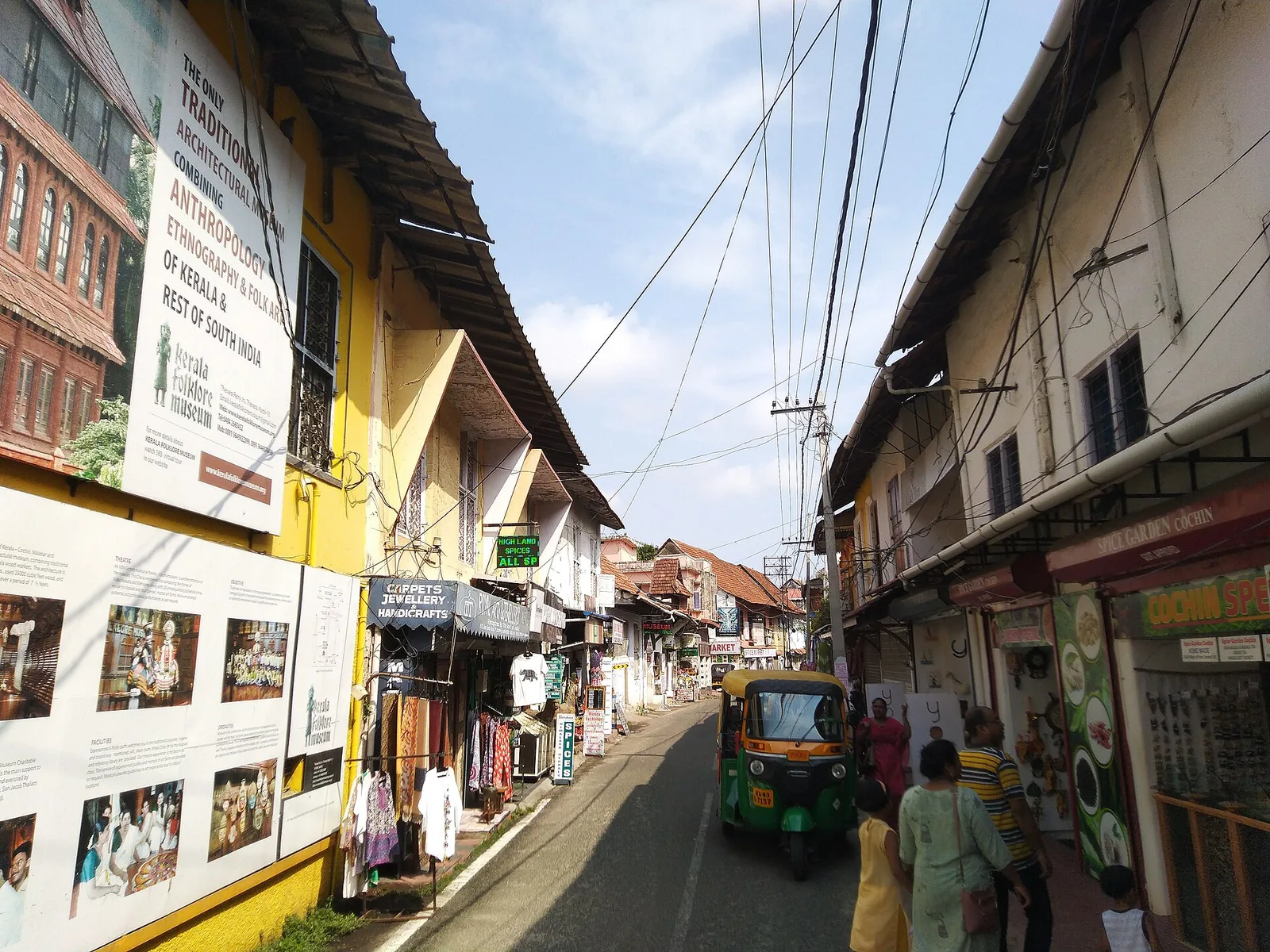
Spice warehouses, antiques, Mattancherry Palace and Paradesi Synagogue.
1.0 km · 12 min walk
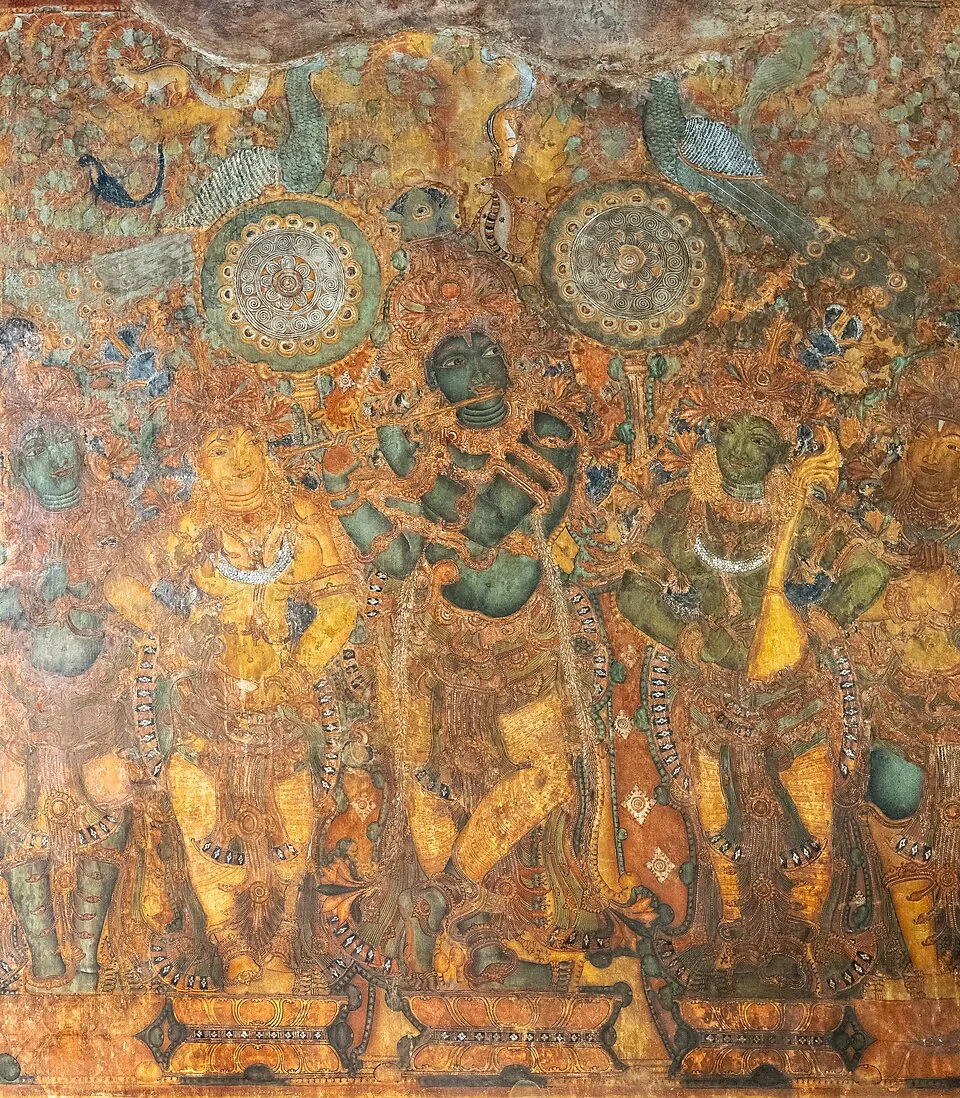
The Mattancherry Palace, known as the Dutch Palace, with celebrated Kerala mural paintings from the Ramayana and royal portraits.
1.3 km · 15 min walk
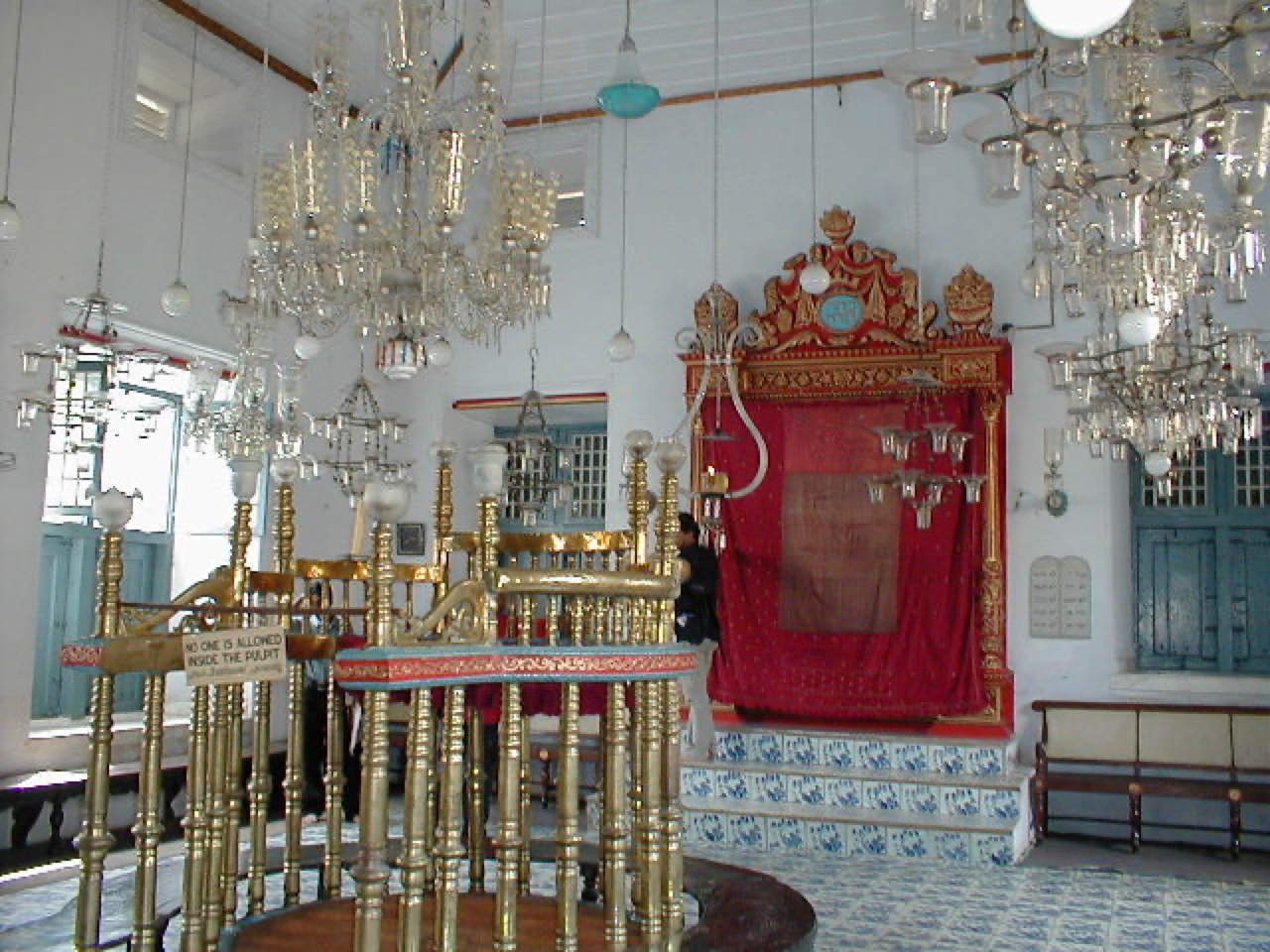
The oldest active synagogue in the Commonwealth (1568), in Jew Town, Mattancherry, with hand-painted Chinese floor tiles.
1.0 km · 11 min walk
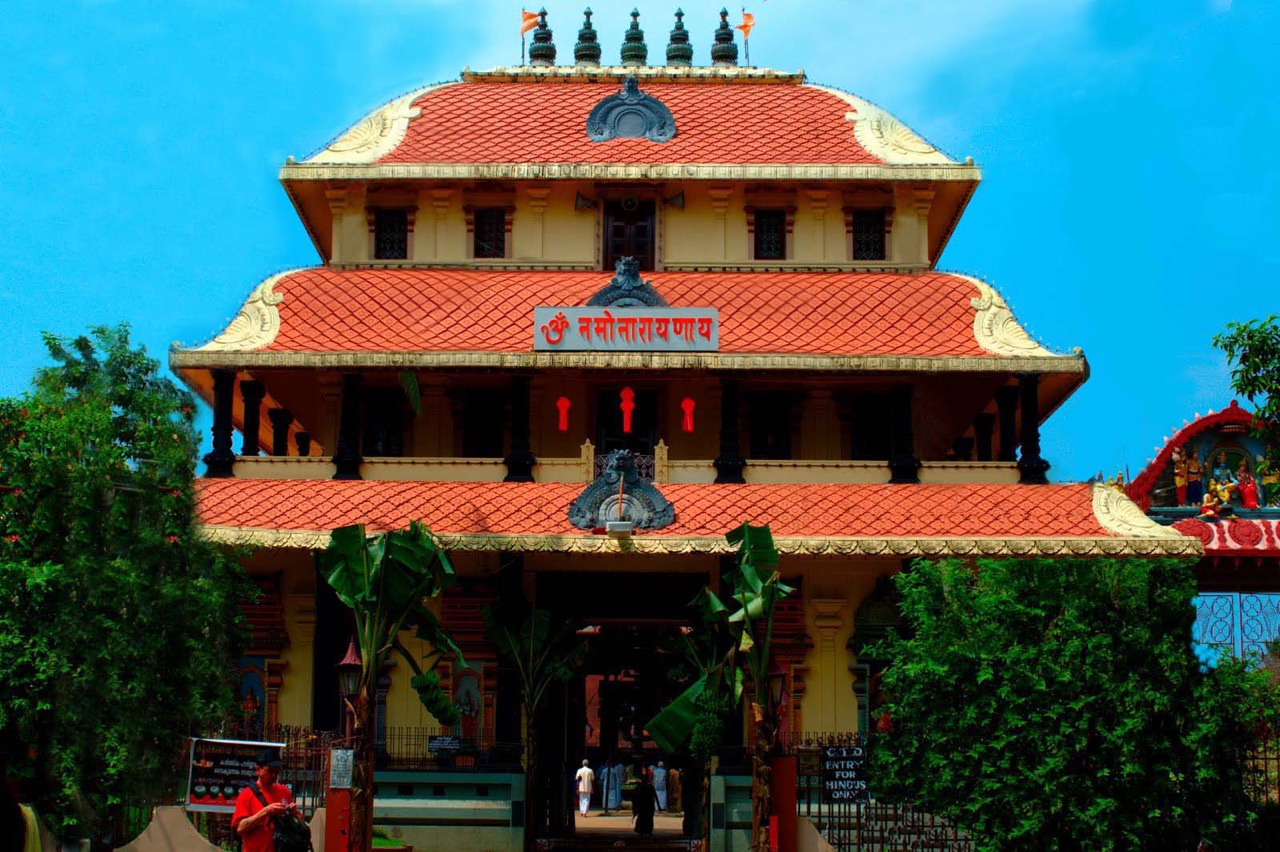
A historic Gowda Saraswat Brahmin temple in Cherlai, Mattancherry, central to Kochi’s Konkani community.
690 m · 8 min walk
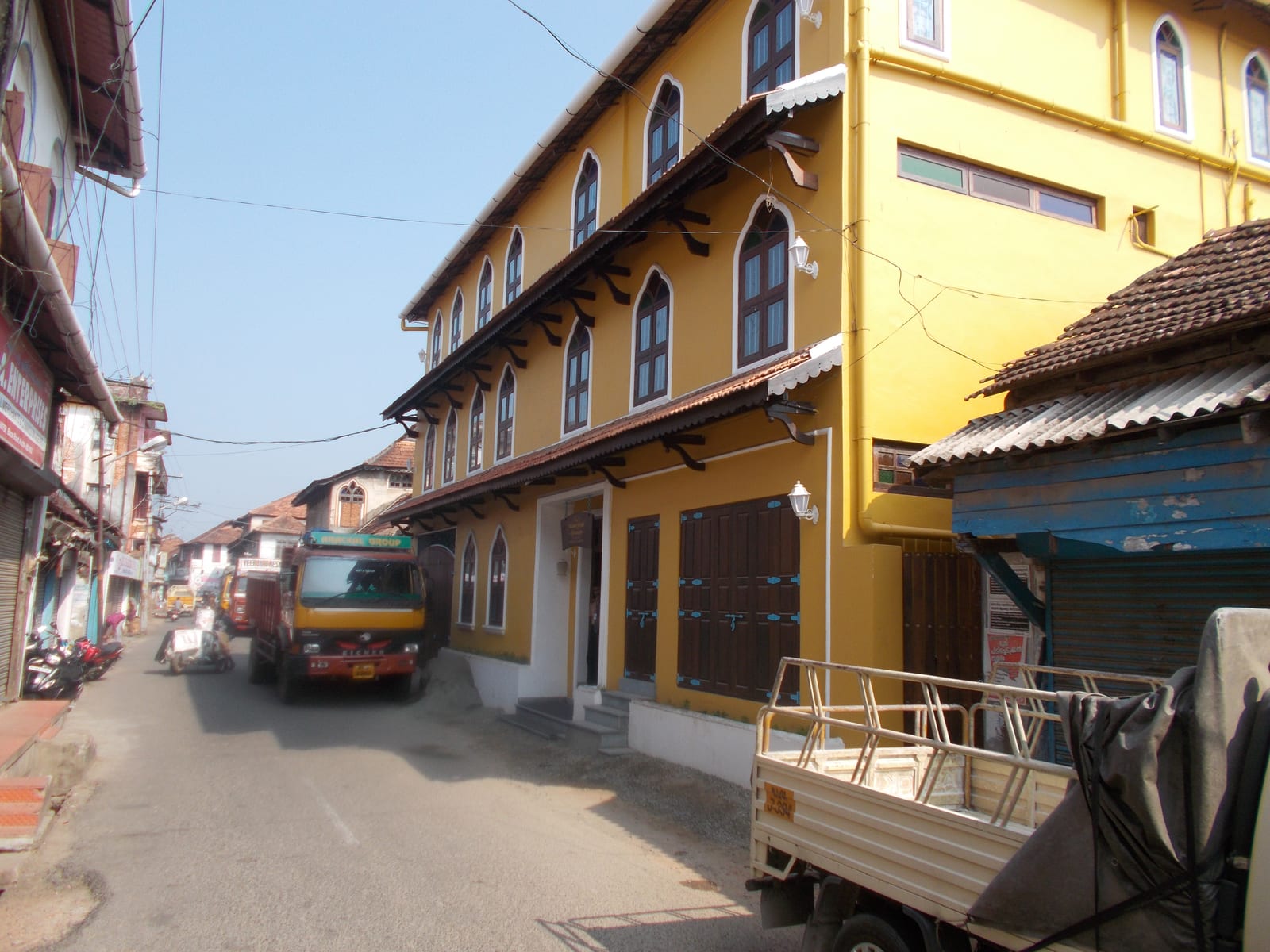
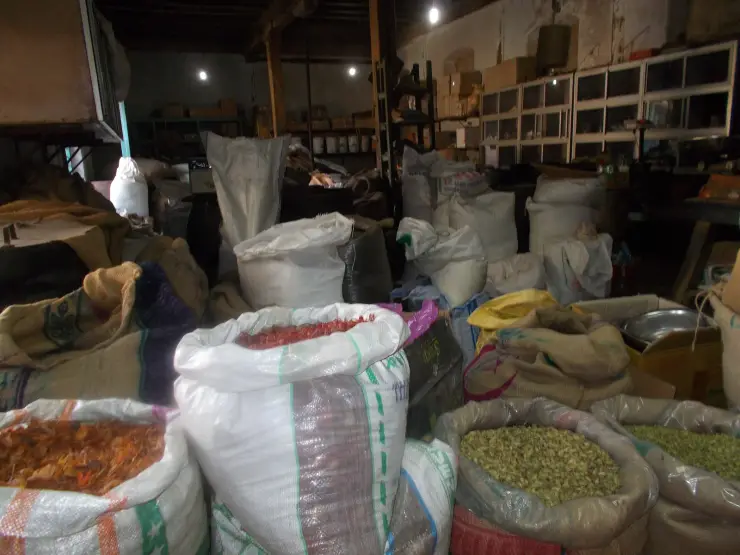
The working spice quarter along Mattancherry’s Bazaar Road — godowns where pepper, ginger, turmeric and cardamom are still graded, sacked and weighed, and where the smell reaches the street before the signage does.
Roampedia is commission-free — own or know a stay, eatery, guide or shop near Dharmanath Jain Temple? Submit public business details for review.
Add a nearby businessEntry: Free. No entry ticket.
Dress code: Modest dress: long trousers or a long skirt, shoulders covered, and women may be asked for a scarf. Scarves and dhotis are generally available at the entrance. Footwear is removed before entering, and leather items are usually left outside — a normal rule at Jain temples given the tradition of ahimsa.
Photography: Photography is generally permitted in the temple, but not during prayers and not of worshippers without asking. Confirm at the entrance.
If you are travelling by bus or ferry, check the return service with the operator before setting out. Leave time to reach the stop or jetty after your visit.
Ask at the jetty or stand for the time of the last service back, not the next one. If you miss it, an auto or app cab is the fallback — agree the fare before you get in.
If you need step-free access, contact the site before travelling. Ask about a level entrance, steps along the route, the nearest drop-off point, seating and accessible toilets.
Charge cap and free-transaction limits: Reserve Bank of India, ATM FAQ updated 4 July 2025; checked 4 October 2026.
These services are listed within about 1.2 km of Dharmanath Jain Temple. Walking distances follow mapped routes; access and opening hours can change. Other services may be closer but are not included here.
Published emergency and visitor-assistance contacts. For an immediate emergency, call 112. Shared Kerala contact sources checked 4 October 2026; publication does not establish a tested live response.
The working spice quarter along Mattancherry’s Bazaar Road — godowns where pepper, ginger, turmeric and cardamom are still graded, sacked and weighed, and where the smell reaches the street before the signage does.
690 m · 8 min walkA historic Gowda Saraswat Brahmin temple in Cherlai, Mattancherry, central to Kochi’s Konkani community.
1.0 km · 11 min walkSpice warehouses, antiques, Mattancherry Palace and Paradesi Synagogue.
1.0 km · 12 min walkThe Mattancherry Palace, known as the Dutch Palace, with celebrated Kerala mural paintings from the Ramayana and royal portraits.
1.0 km · 12 min walk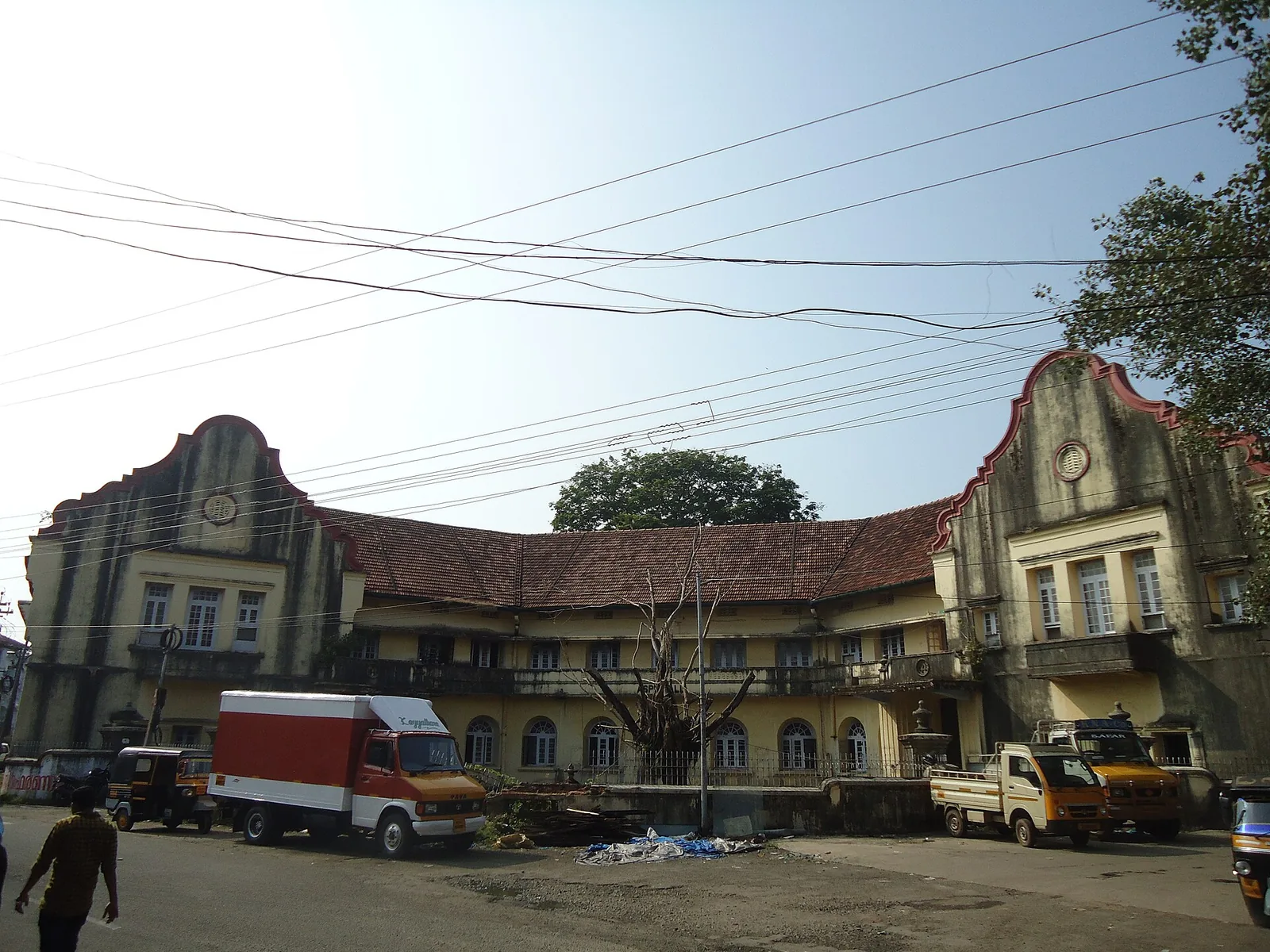
A large 19th-century waterfront trading compound in Fort Kochi, the principal venue of the Kochi-Muziris Biennale.
1.2 km · straight lineThe oldest active synagogue in the Commonwealth (1568), in Jew Town, Mattancherry, with hand-painted Chinese floor tiles.
1.3 km · 15 min walk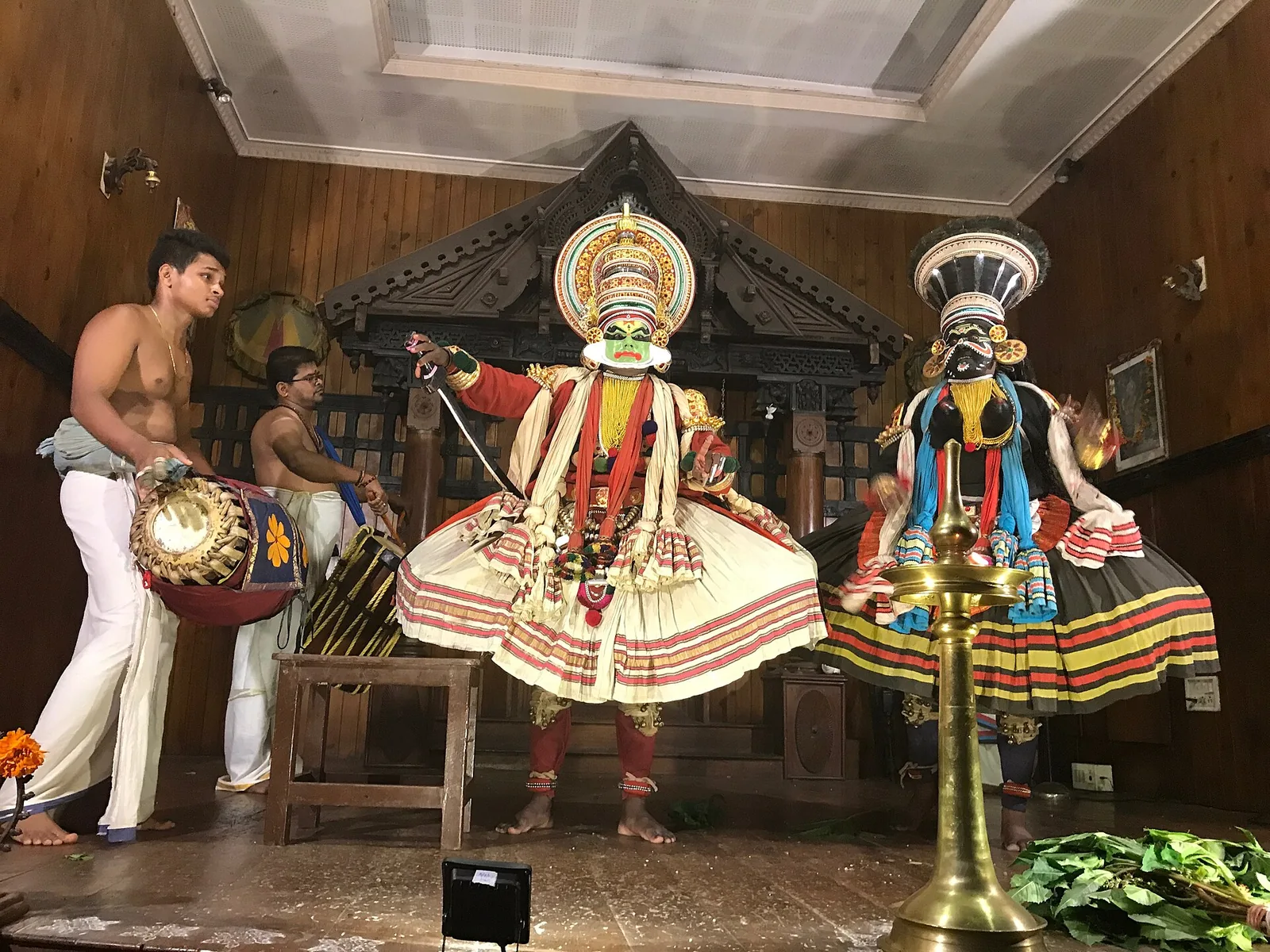
Evening Kathakali and Kerala classical-art performances in Fort Kochi, with make-up shown before the show.
1.3 km · straight line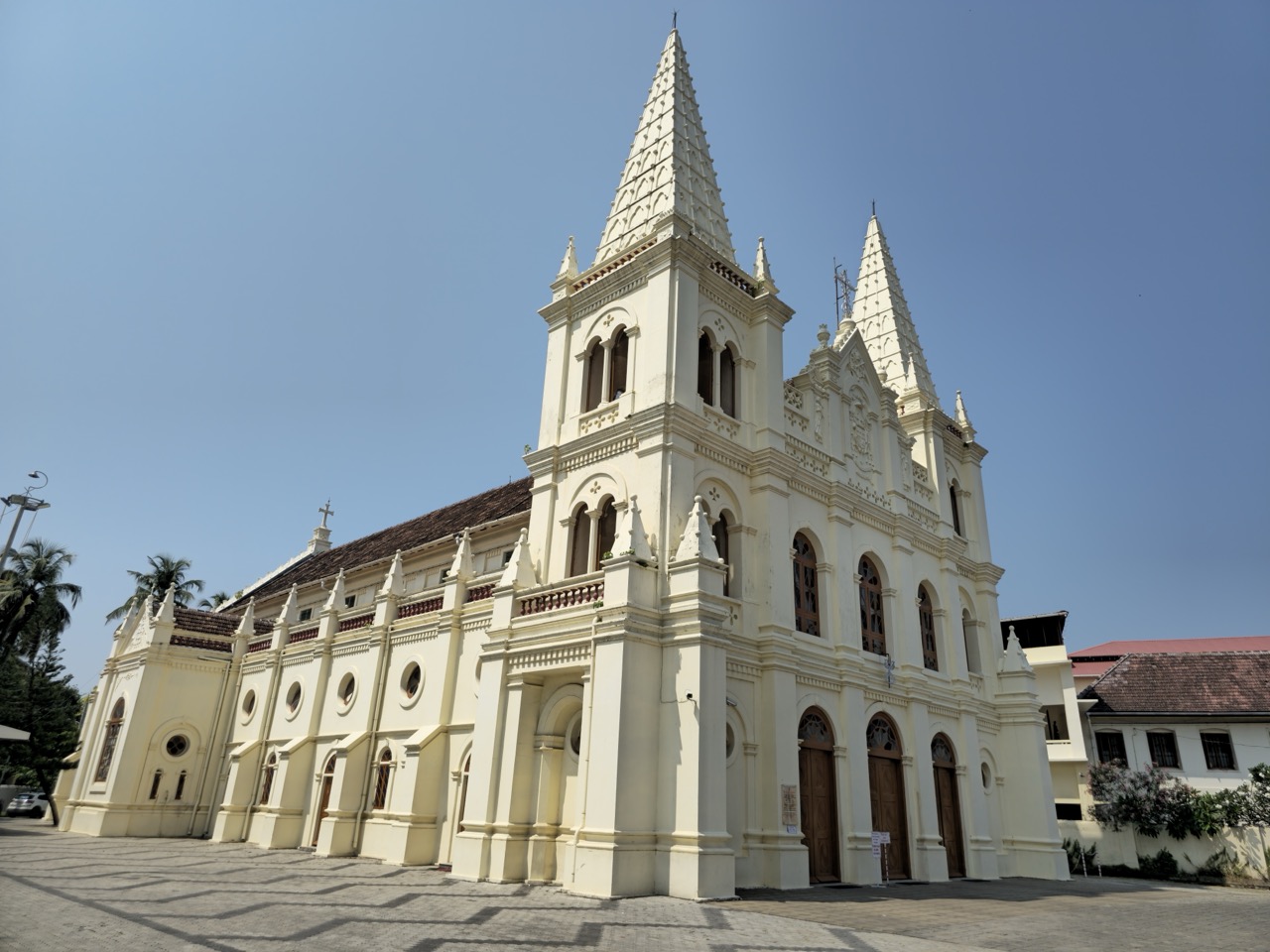
One of the finest churches in Kerala, with a richly painted interior, beside the Kerala Kathakali Centre in Fort Kochi.
1.3 km · straight line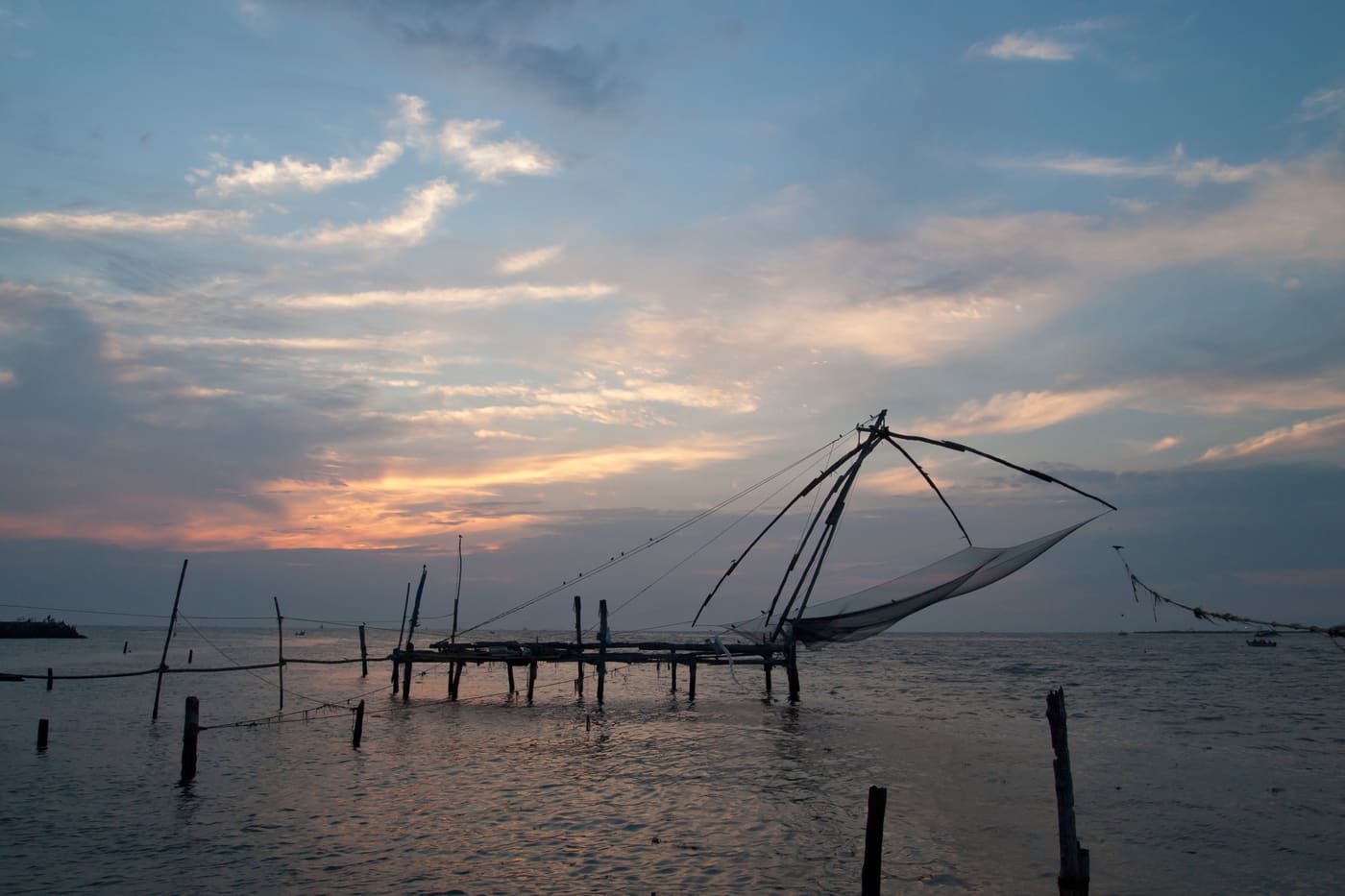
Kerala’s most walkable heritage quarter, with Chinese fishing nets, colonial churches, art cafes and Mattancherry nearby.
1.5 km · straight line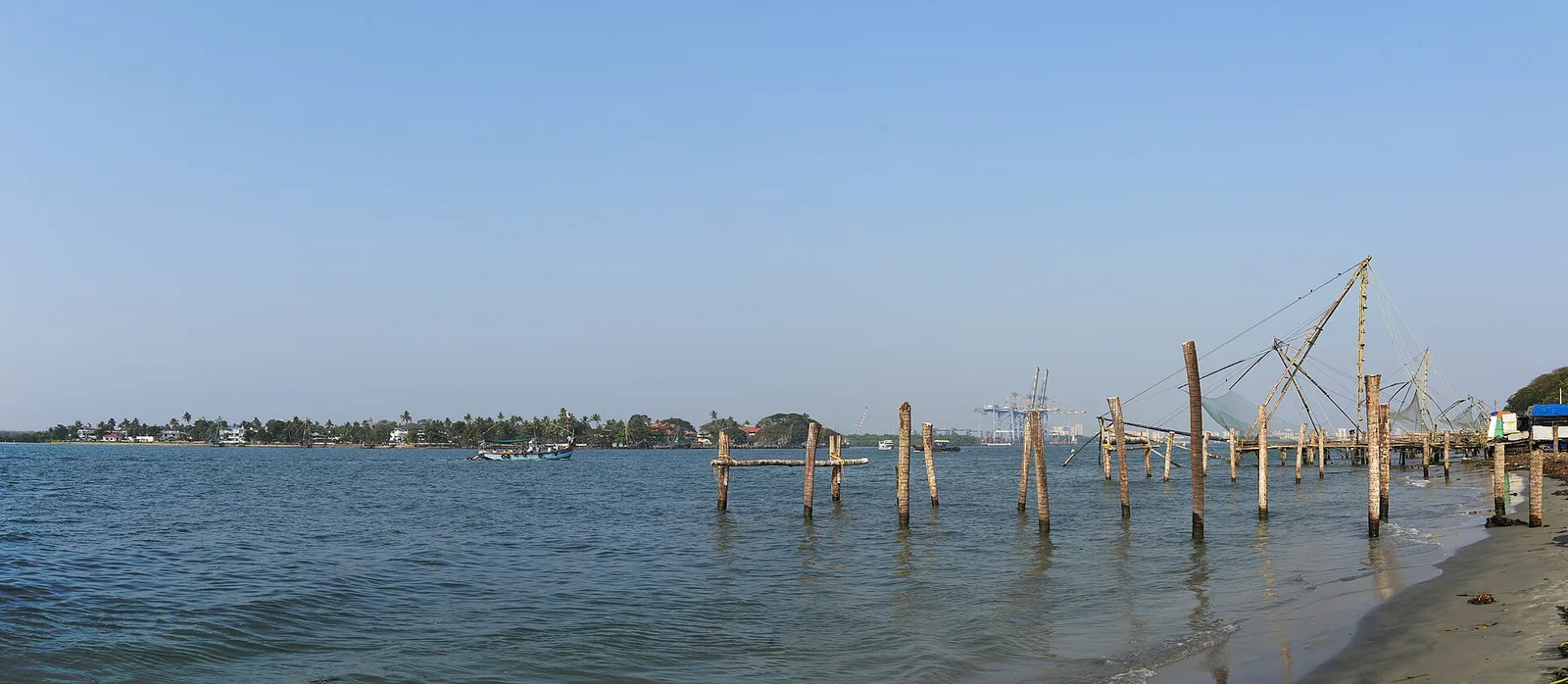
Kochi’s iconic cantilevered shore-operated fishing nets along the Fort Kochi seafront at Vasco da Gama Square, best photographed at sunset.
1.5 km · straight line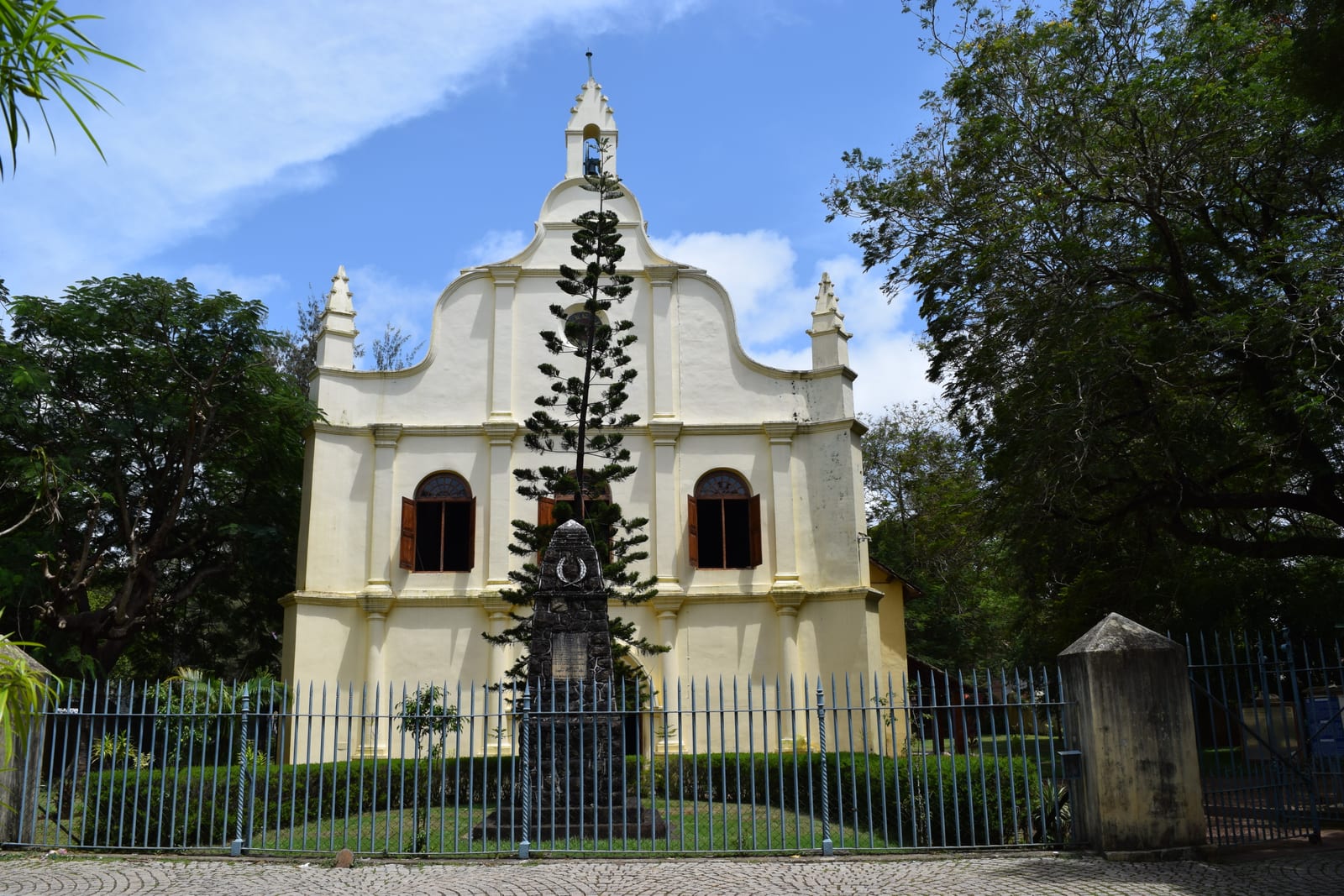
Believed to be the oldest European church in India (1503); Vasco da Gama was buried here before his remains were moved to Lisbon.
1.5 km · straight line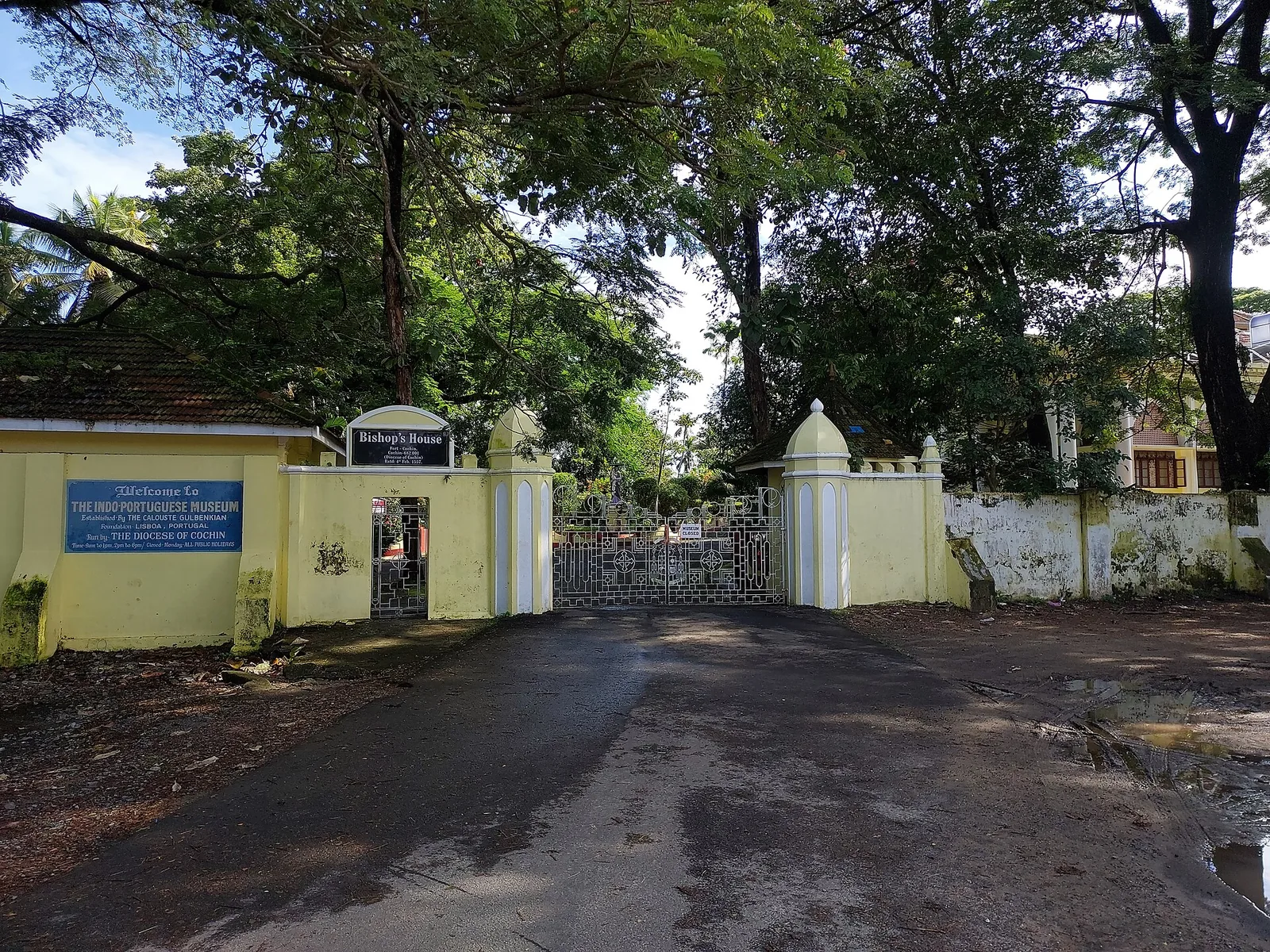
Museum of Kerala’s Indo-Portuguese Catholic heritage in the Bishop’s House garden, Fort Kochi.
1.5 km · straight lineRoad and walking figures are route estimates, with travel times dependent on access, traffic and conditions. Figures marked “straight line” show direct separation and do not describe a road or walking route. Fare estimates use Kerala’s 26 April 2022 auto/taxi notification and exclude waiting, night and applicable one-way surcharges. Confirm the current meter or operator quote before travelling. Routing: © openrouteservice.org by HeiGIT | Map data © OpenStreetMap contributors
Nearby toilets, pharmacies, ATMs, seating and vets are community-mapped and may be incomplete or out of date. Map data © OpenStreetMap contributors | Walking times © openrouteservice.org by HeiGIT
Shortly after midday — the window usually given is 12:00 to 12:30, with 12:15 the time most often quoted. Someone strikes a steel plate and calls out, the birds come in off the surrounding roofs, circle the dome three times, prayers are recited, and then the grain goes down. If the feeding is why you are coming, build the rest of your Mattancherry morning around it, because there is no second showing.
No, and this is the most widely repeated error about it. The temple dates from 1904. The confusion comes from its Vikram Samvat dating — VS 1960, an era that runs roughly fifty-seven years ahead of the Gregorian calendar — being copied into English sources as though it were a Gregorian year. We published 1960 on this page ourselves until we checked. It was raised by Hirubai in memory of her husband Jivraj Dhanji.
The waiting is real and you can watch it: the birds circle three times and do not feed until the recitation ends. Whether that constitutes reverence is a matter of interpretation, and the honest explanation is that birds fed at a fixed hour by a fixed signal learn the signal very well. Tradition at the temple holds that a visiting monk set the single daily hour precisely so that discipline would be taught to birds and people together.
Genuinely unclear, and we would rather say so than pick one. Some listings give a long daily opening of roughly 5:30am to 7:30pm; others state that general visitor access is limited to about 11:00am to 12:30pm around the midday rituals. Both circulate widely and we have not been able to reconcile them. Plan around the noon feeding and confirm anything else locally.
Visitors are plainly welcomed to the temple — it is listed as an attraction by Kerala Tourism and receives visitors daily. We have not found a published statement on access to the inner shrine specifically, so we make no claim either way; it is worth asking at the door. Behave as you would in any active place of worship.
Modest dress: long trousers or a long skirt and covered shoulders, and women may be asked for a scarf. Scarves and dhotis are generally available at the entrance. Footwear comes off before entering, and leather items — belts, bags, straps — are usually left outside, which follows from the Jain principle of ahimsa. Photography is generally allowed but not during prayers and not of worshippers without asking.
Not on its own from across the harbour, but absolutely as part of a Mattancherry morning. It is minutes from the Dutch Palace, Jew Town and Bazaar Road, costs nothing and takes half an hour. If you can arrange to be there at noon, it moves from a pleasant stop to a memorable one.
Because of pepper. Jain merchant families from Kutch and Saurashtra traded into Cochin, Kozhikode and Alappuzha for generations and settled around the Mattancherry spice godowns, and the temple was built in 1904 to serve that community. As the spice trade declined, much of that community left — which is why the building now reads as a monument to a presence rather than the centre of a large one.
A purpose-built tower for the pigeons — roughly thirty metres high and divided into around three hundred individual nesting compartments. It is a substantial piece of construction to devote to birds, and it is the clearest physical statement of jiva daya, the Jain principle of active compassion towards living beings, anywhere in Kochi.
The principal image is Dharmanatha, the fifteenth Tirthankara, and the community holds the idol itself to be far older than the 1904 building. A separate shrine within the complex houses Chandraprabhu, installed by Sheth Popatlal Govardhan Lalan, and there is a Shantinath image with a local reputation for answering petitions.
Late morning to midday for the rituals; October to March for comfortable travel.
Entry: Free. No entry ticket. Timings: Reported hours conflict and we have not been able to reconcile them: some listings give a long daily opening of roughly 5:30am to 7:30pm, others say general visitor access is limited to about 11:00am–12:30pm around the midday rituals. Both circulate widely. Plan around the noon feeding, which every account agrees on, and treat everything else as unconfirmed.
Base yourself in Mattancherry or a nearby town in Ernakulam, then confirm the last-mile route locally before leaving. Time the visit around the midday rituals — at several Kerala Jain temples that is the whole reason to come; check the door rules before you arrive. If the visit depends on forest, temple, boat, ferry, weather or seasonal access, check the official/local rule on the day before travel.
30 minutes to 1 hour.
Nearby you can pair Spice markets (690 m, route estimate), Cochin Thirumala Devaswom (1.0 km, route estimate), Mattancherry & Jew Town (1.0 km, route estimate), Dutch Palace (1.0 km, route estimate).
Marble floors are slippery in bare feet, especially when wet. Keep footwear and valuables secure at the entrance counters.
Written about Dharmanath Jain Temple itself — its history, its legends and the arguments about them.
These guides explore Mattancherry and the surrounding area. Choose a visit that fits your interests, allowing separately for travel between stops.
Route-level itineraries and practical guides for the rest of Kerala.
Photographs: Noon Plastic (CC BY 4.0), Pratyk321 (CC BY 4.0), Dumphasizer (CC BY-SA 2.0), Alex Ouseppachan (CC0). Wikimedia Commons.