It is one short lane between a palace and a synagogue, and it is named after people who almost all left. Jew Town's shops are full of carved furniture, brass lamps, ritual silver and colonial oddments — and a great deal of that stock came, originally, out of the houses along it when the community that lived in them emigrated to Israel. Walk it knowing that and it stops being a shopping lane. It becomes the most articulate corner of Kochi about what a port city loses.
The story of Mattancherry & Jew Town
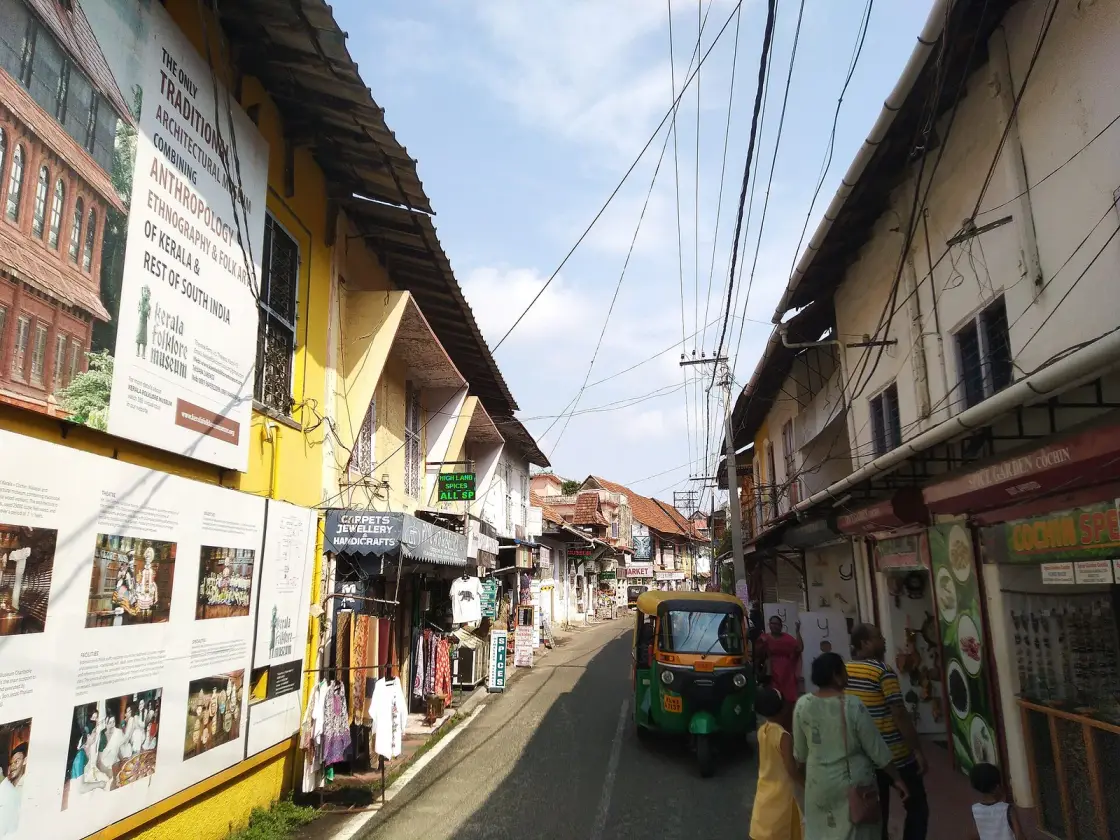
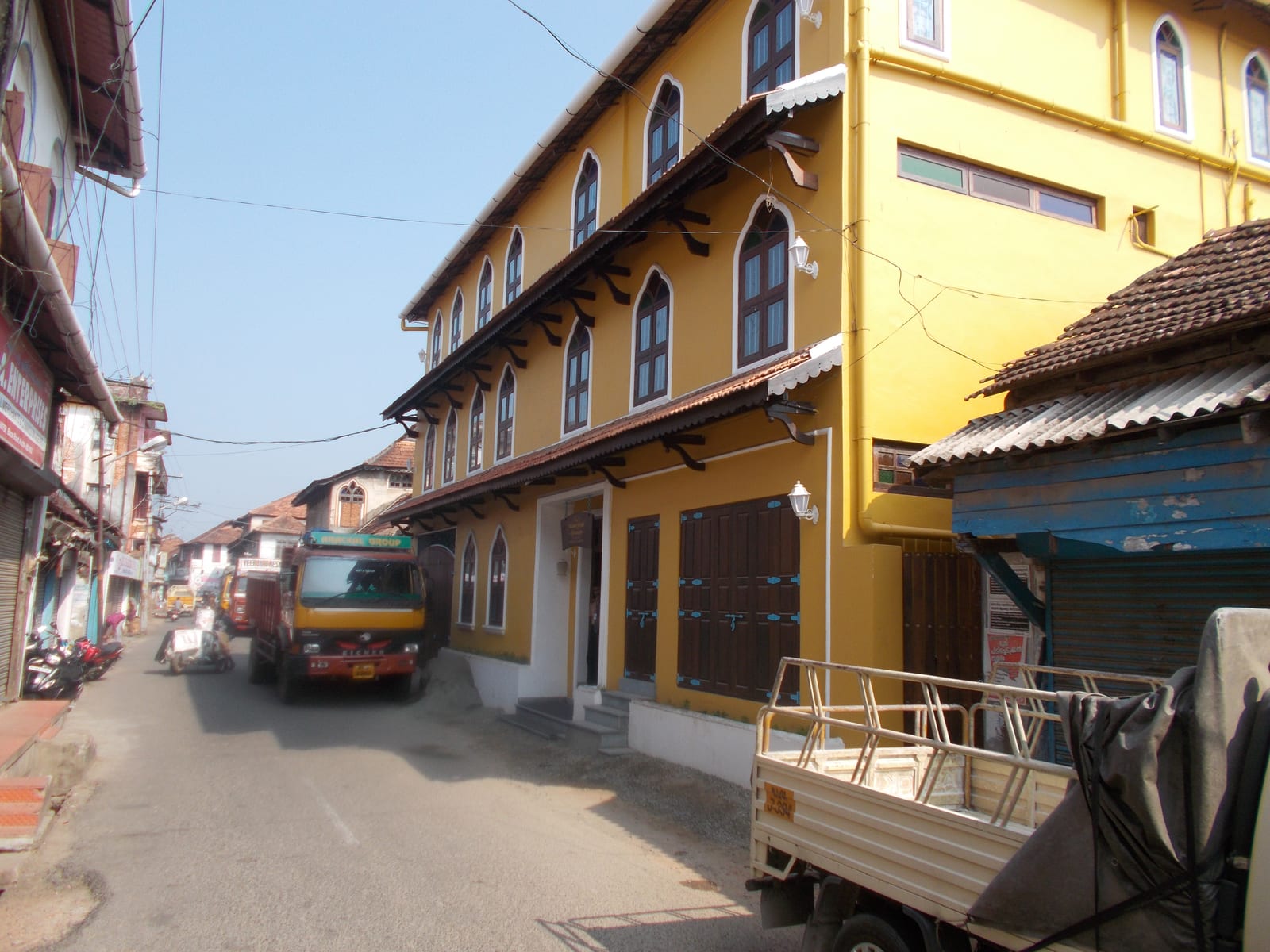
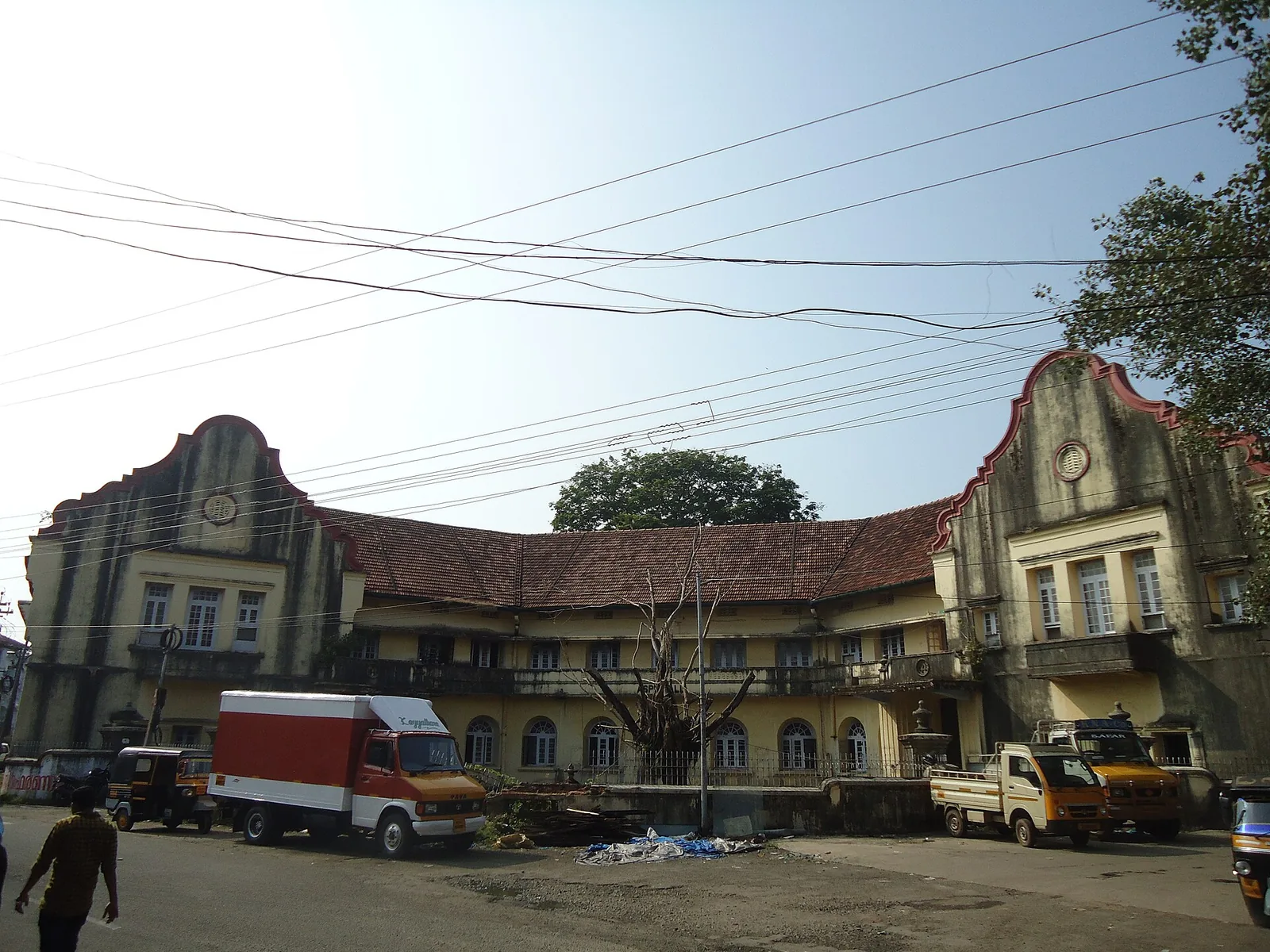
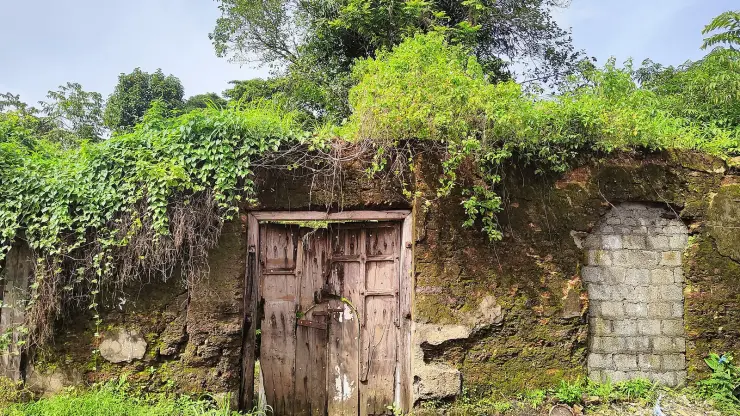
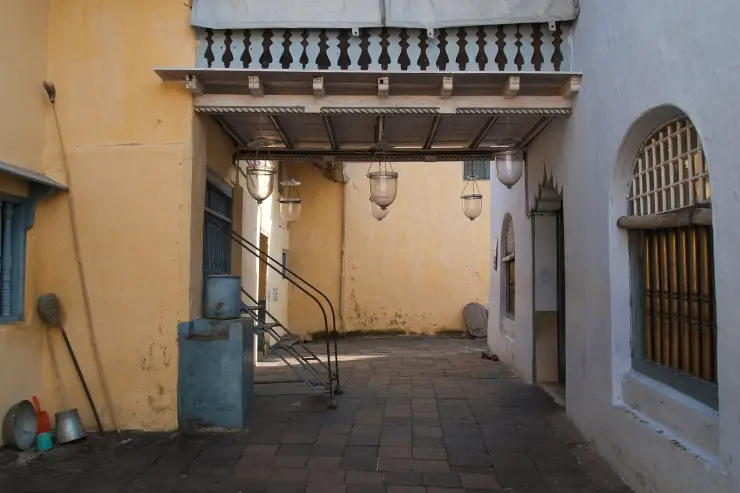
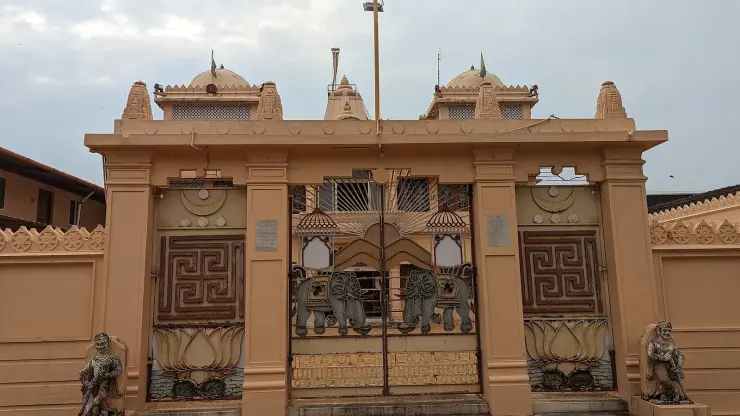
It runs from the Mattancherry Palace end down to the Paradesi Synagogue, and it is genuinely short — you can walk its length in five minutes without stopping, which almost nobody does. The buildings are narrow-fronted and pressed together, in a style that reads Dutch at the top and improvised below, and the doorways are the thing to look at: Star of David motifs and Hebrew lettering survive on buildings that now sell antiques, coffee or clothes.
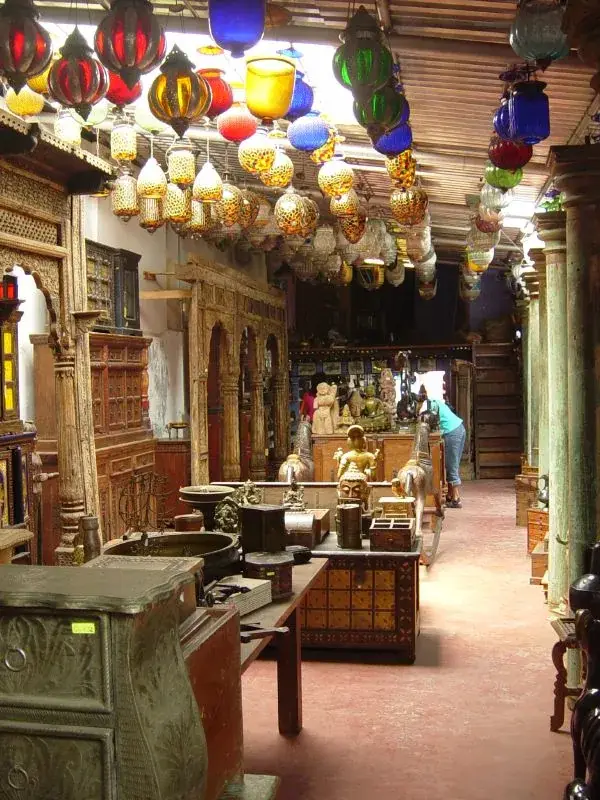
The antique trade is what it is known for now, and its origin is specific rather than general. Through the twentieth century, and especially after the founding of Israel in 1948, the great majority of Kochi's Jews emigrated. The houses along it emptied. Their contents — carved wooden furniture, vessels, lamps, curios accumulated over generations of a trading community — were bought up and put on sale in the shops that now line it. The trade in old objects here is, quite literally, the liquidation of the neighbourhood's own households.
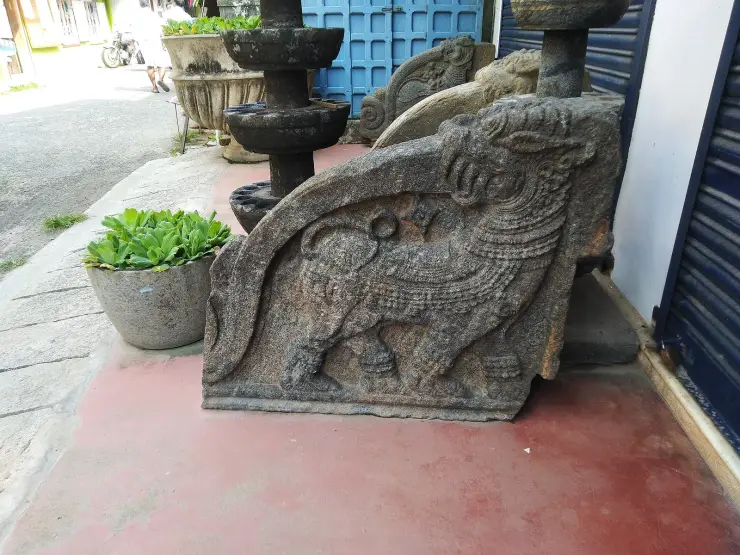
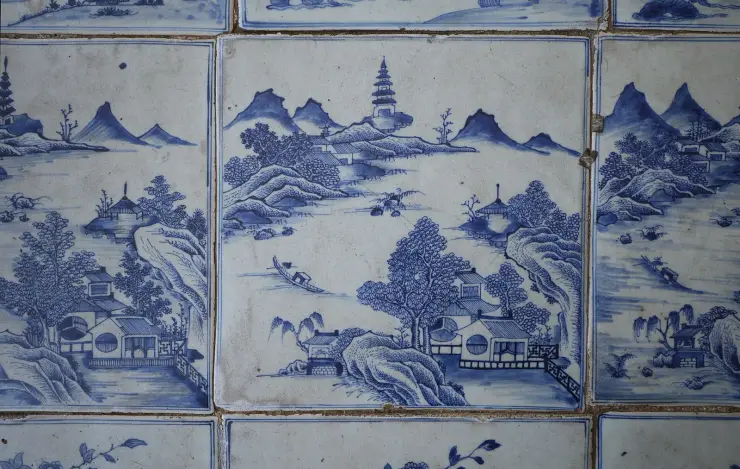
The stock is broader than that now, and it tells you what this port was: Indian pieces alongside European, Chinese and Arab ones, which is a fair inventory of who traded through Kochi. Some of it is genuinely old. A great deal of it is not, and the ages quoted to visitors should be treated as opening positions rather than facts. Bargaining is expected and prices quoted to foreigners start high.
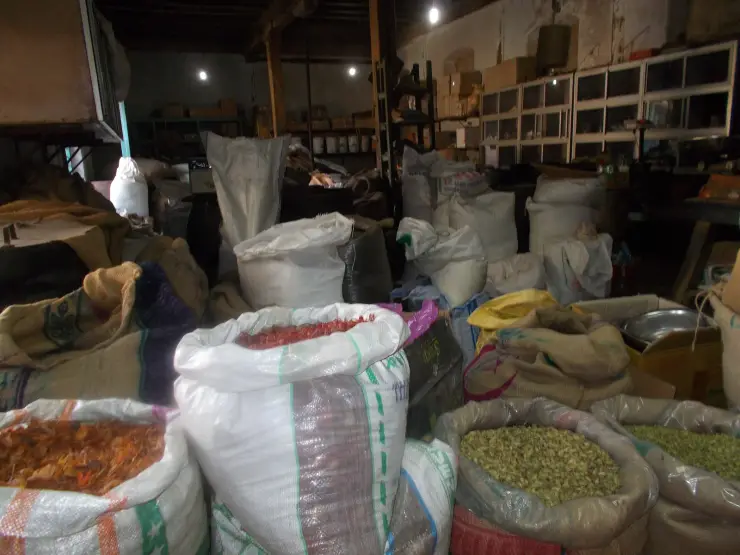
There is still commerce here that is not aimed at visitors. The international pepper trade retains a presence here, which is a direct thread back to why anyone built here in the first place, and Bazaar Road immediately to the north is still — just — a working spice quarter.
The rhythm of the street is set by two calendars. Saturday is the Jewish sabbath: the synagogue is closed and much of the street with it, and a Saturday visit is the classic wasted trip. Many dealers also shut on Sunday. In Biennale years, from December, the street is at its liveliest and its most crowded at once.
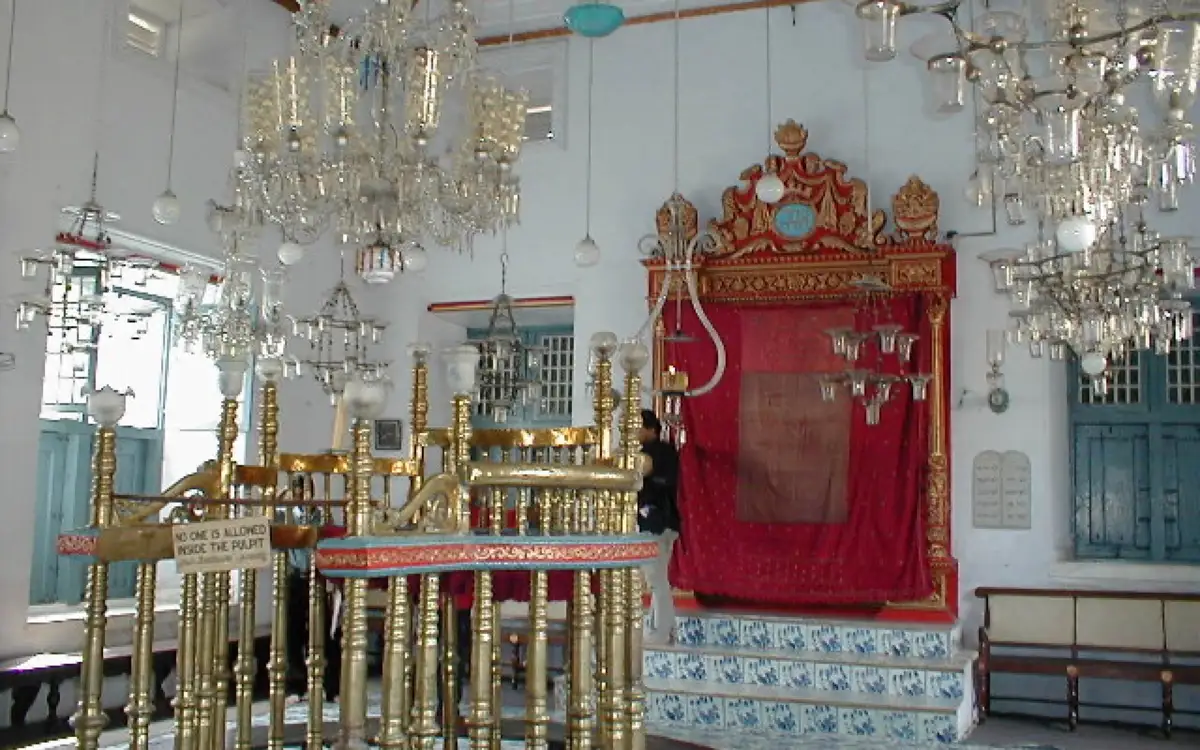
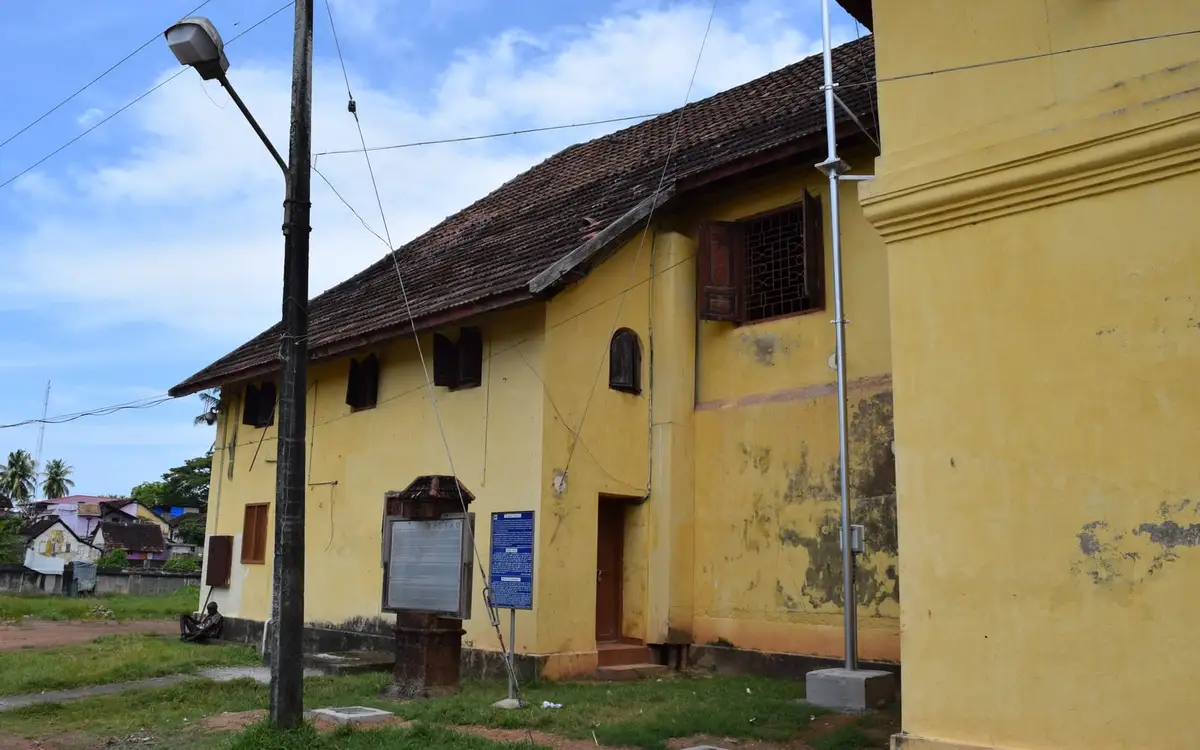
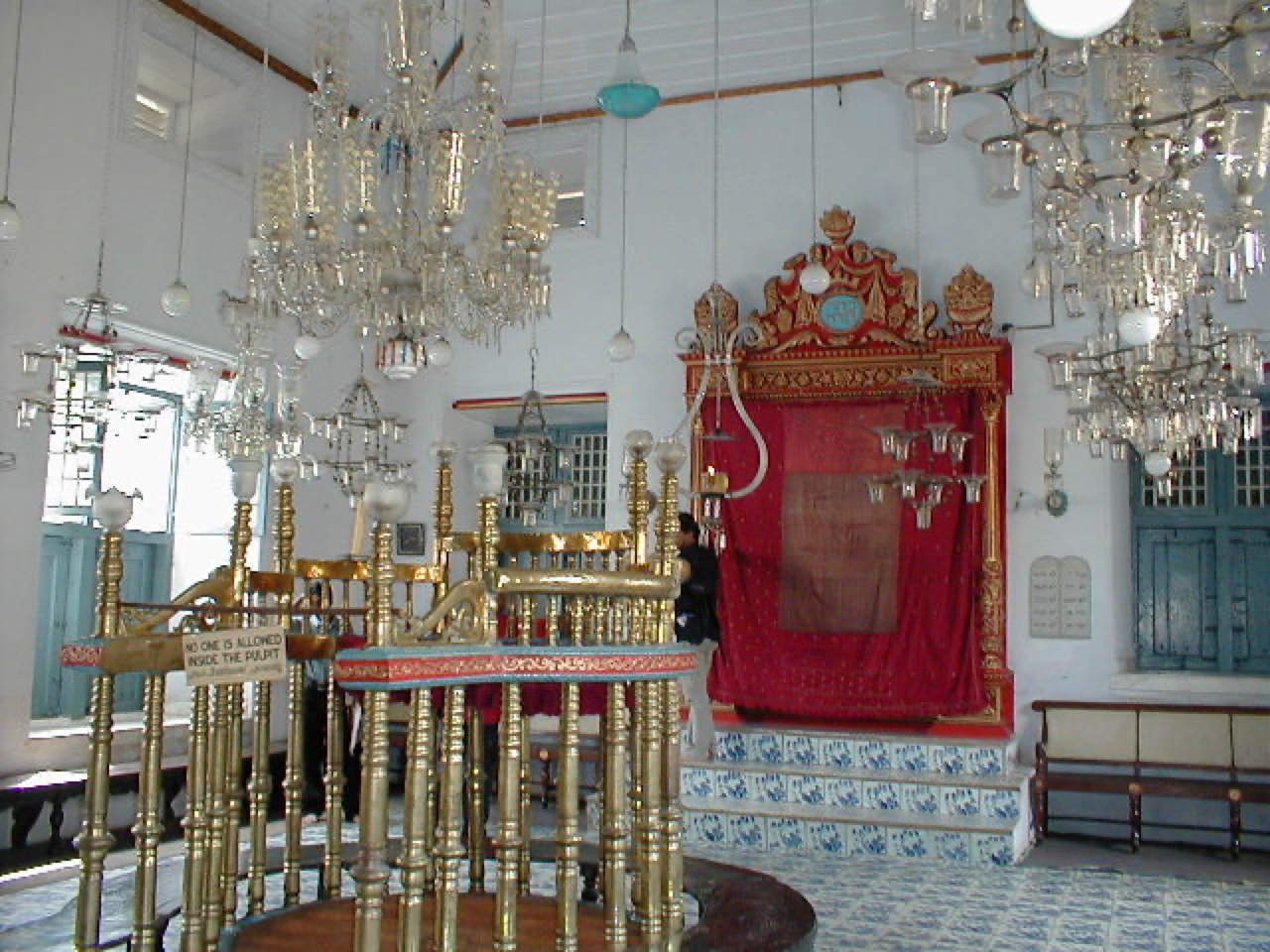
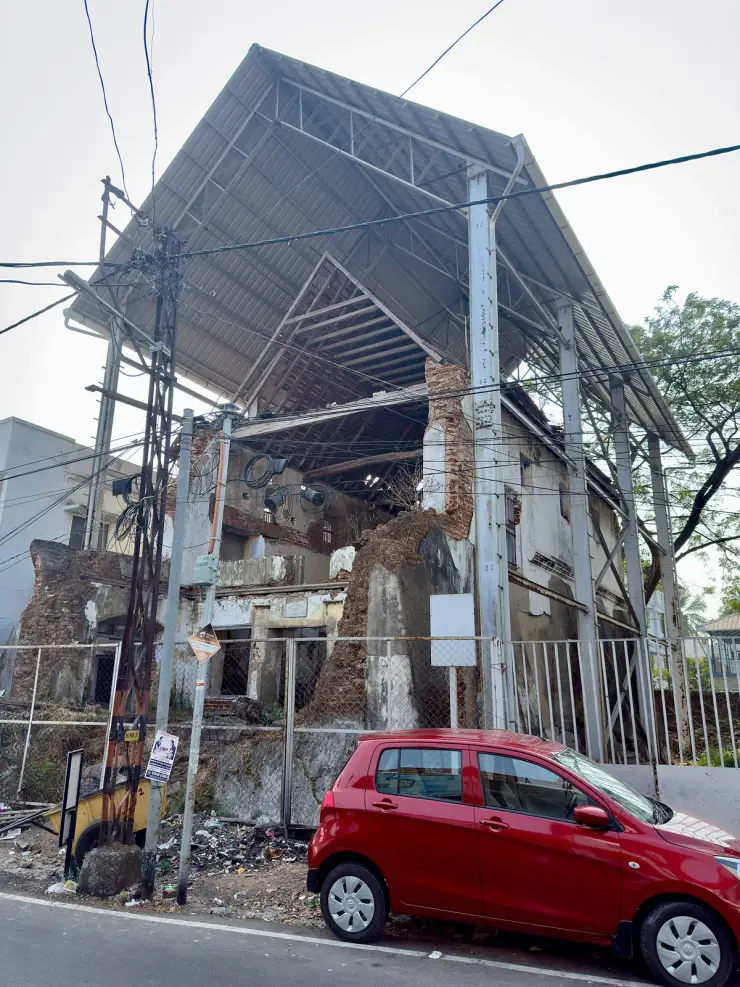
One more thing to look for as you walk, because the street is quieter about it than it should be: there were three synagogues here, not one. The Paradesi at the far end is the famous survivor. Almost immediately to its south, on the west side of the street, stood the Thekkumbhagam synagogue, now demolished. And a short way off is the Kadavumbhagam Mattancherry synagogue, known locally as the Karutha Juthapalli, built by the Malabari Jews with the permission of the Raja of Kochi after the community moved its base from Kodungallur. Three congregations on one short lane is a much better measure of how populous this quarter once was than any surviving building can give you.
Legend & myth
Start with the name, because there are three explanations for it and the prettiest one is also the one the neighbourhood likes best. In that telling, Mattancherry is a compound of the Hebrew mattana, a gift, and the Malayalam cheri, a settlement — the gift village, named for the ground the Raja of Cochin granted the Jewish community in 1524. A fuller version of the same story has a younger son of Joseph Rabban, the merchant of the copper plates, coming to Cochin and asking the king for a cheri of his own; what he received was a mattana, and the word stuck to the place. It is a lovely etymology and it makes the street's whole history fit inside its name.
It is also probably not the etymology. The more prosaic candidate is Ancherry Mattam, a Namboodiri illam that stood here, which foreign traders are said to have flattened into Matt-Ancherry and then Mattancherry — a perfectly normal way for a South Indian place name to survive in the mouths of people who cannot pronounce it. A third suggestion, less flattering and less romantic, derives it from a cheri of mutton butchers. Nobody has settled this. We give you all three because the choice between them is really a choice about whose history the street is named after, and that is the most Mattancherry question there is.
Then there is the founding date of the whole community, which is a much larger disagreement dressed up as a fact. Kochi's Jews have traditionally held that their ancestors reached the Malabar coast after the destruction of the Second Temple in 70 CE, settling at Shingly — Kodungallur — and the community's own songs preserve early settlements at Paloor, Madai and Cranganore. That tradition is honoured locally and has been recognised by the state of Kerala. Set against it, some Indian historians reach much further back still, to the ships of Solomon's time bringing peacocks, apes, ivory and ginger out of South India around the tenth century BCE.
The copper plates in the synagogue at the end of this street are where the argument becomes testable, and they cut the other way. You will be told they are some sixteen centuries old — the traditional dating puts the grant at 379 CE — and this page said as much until we checked. Modern epigraphy does not support it. The script is Vatteluttu, the granting king Bhaskara Ravi Varman reigned roughly 962 to 1020, and the palaeography places the charter at about 1000 CE; M. G. S. Narayanan set out the case in Cultural Symbiosis in Kerala in 1972 and it is now the scholarly consensus. Six centuries of the street's advertised age go with it.
None of which makes the community younger than it feels. A charter of 1000 CE granting seventy-two privileges to Joseph Rabban, proprietor of the Anjuvannam, is still a thousand-year-old document confirming a Jewish merchant establishment already important enough for a Chera king to formalise. The legend and the evidence disagree about the number, not about the fact. What is genuinely lost, if you insist on the year 379, is the more interesting truth: this street's ancestors were not refugees who washed up here, they were traders a king thought worth a charter.
Read the full history of Mattancherry & Jew Town 487 more words
History
Kochi's Jewish community is one of the oldest in India, and its Mattancherry chapter begins with a specific act of shelter: after the community at Kodungallur was displaced, the Raja of Kochi gave them land beside his own palace in 1524, which is the ground this street stands on. Sephardic Jews fleeing the Spanish expulsion arrived across the fifteenth and sixteenth centuries and settled into the same quarter.
The community was never a single body. It divided into Paradesi — 'foreign', the later European-descended arrivals — and Malabari, the older local Jews, and the two maintained separate synagogues and distinct traditions. That internal hierarchy is a substantial history in itself and is dealt with on the synagogue's own page rather than here.
The twentieth century emptied the street. With the founding of the State of Israel in 1948 emigration accelerated, and over the following decades the resident Jewish population of Kochi fell to a handful. The houses were sold or let, the contents dispersed into the antique trade, and the quarter's economy reoriented around visitors coming to see what was left.
What survives is a streetscape and a name rather than a community. That is not a criticism of the street — it has been honest about it for a long time — but it is the difference between visiting Jew Town and visiting a living Jewish quarter, and it is worth being clear about before you arrive.
The Kadavumbhagam Mattancherry synagogue is the clearest single illustration of what the emigration did, and it is not a ruin. Its interior left. When the community went to Israel, much of the intricate carved teak went with it — the ceiling woodwork in Kerala's own idiom, along with beams, lintels, doors, doorposts, steps, and the second bimah attached to the women's gallery together with its screen — dismantled and shipped out in 1991. Those interiors are now on display in the Israel Museum in Jerusalem. The building stayed in Mattancherry; the room went to another country and is in a vitrine. The Kerala Department of Archaeology notified the synagogue as a protected monument in 2016.
Why visit
It is the densest few hundred metres of history in Kochi: palace at one end, synagogue at the other, five centuries of trade in between.
The doorways alone repay a slow walk — Hebrew lettering and Stars of David on buildings that have been selling something else for fifty years.
The antique shops are worth going into even if you buy nothing; the mix of Indian, European, Chinese and Arab stock is a portrait of the port.
It is a genuinely moving place once you know where the stock came from, and that knowledge costs nothing.
Bazaar Road and the working spice godowns are a two-minute walk north, which makes a much better route than the palace-to-synagogue dash.
It is compact, walkable and entirely free unless you go inside the synagogue or the palace.