Mattancherry & Jew Town

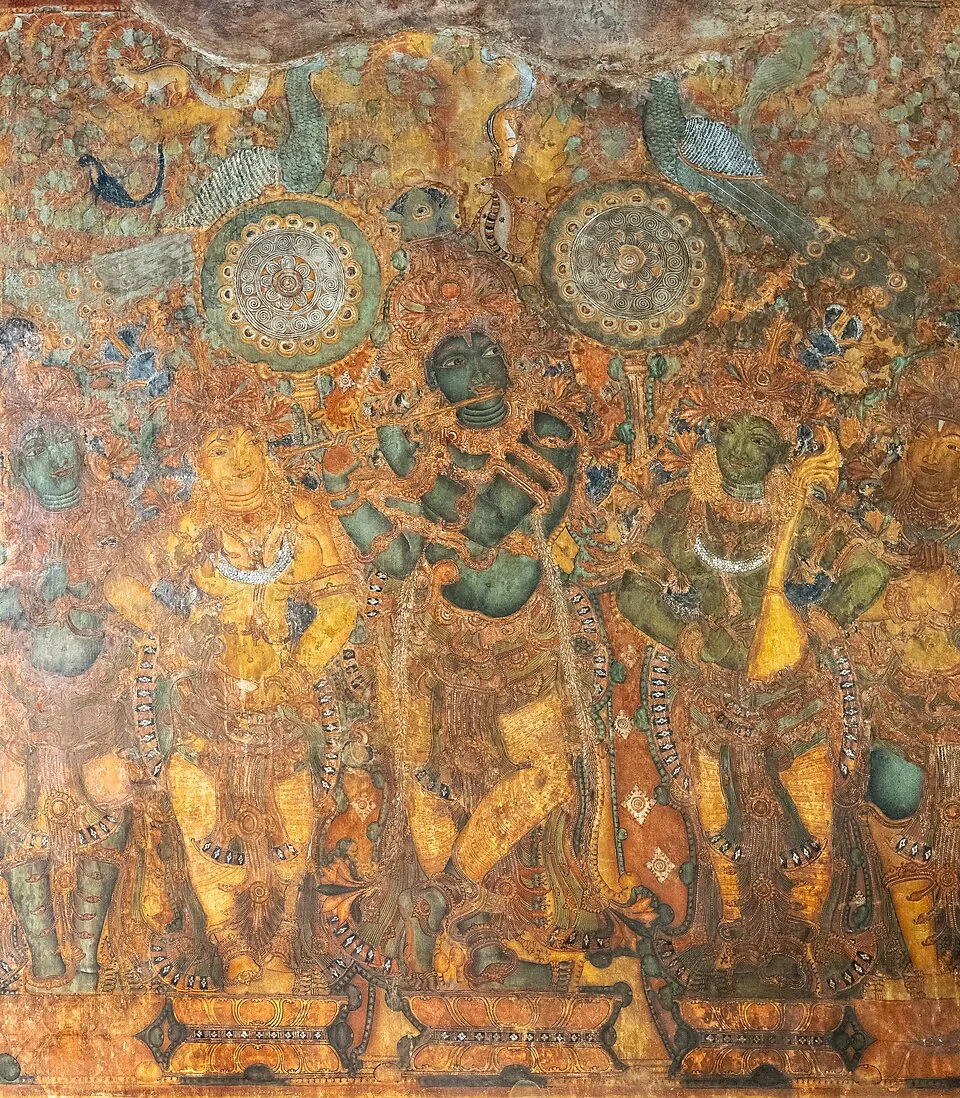
Mattancherry and Jew Town are Kochi's spice-warehouse and heritage core, anchored by Mattancherry Palace, Paradesi Synagogue streets, antique shops, Jain/temple/church layers and the old port-trade atmosphere. It is a compact but dense culture page.

Mattancherry & Jew Town, Mattancherry
Practical guide

Plan Mattancherry & Jew Town

Who's going?Tailor Mattancherry & Jew Town to your trip
Typeheritage
Nearest baseMattancherry
Best timeNovember to February is easiest for walking
Time needed2 to 4 hours
EntryFree
Nearest town/baseMattancherry
DistrictErnakulam
Place typeheritage
Time needed2 to 4 hours; full day with Fort Kochi and food stops.

Mattancherry and Jew Town are Kochi's spice-warehouse and heritage core, anchored by Mattancherry Palace, Paradesi Synagogue streets, antique shops, Jain/temple/church layers and the old port-trade atmosphere. It is a compact but dense culture page.

The visit works best when timed around monument and synagogue opening rules, because closure days and prayer/security rules can shape the route. Listings should be exact: a shop, cafe or homestay in Fort Kochi is not automatically in Jew Town.

The story

It is one short street between a palace and a synagogue, and it is named after people who almost all left. Jew Town's shops are full of carved furniture, brass lamps, ritual silver and colonial oddments — and a great deal of that stock came, originally, out of the houses on this street when the community that lived in them emigrated to Israel. Walk it knowing that and it stops being a shopping lane. It becomes the most articulate street in Kochi about what a port city loses.

The story of Mattancherry & Jew Town

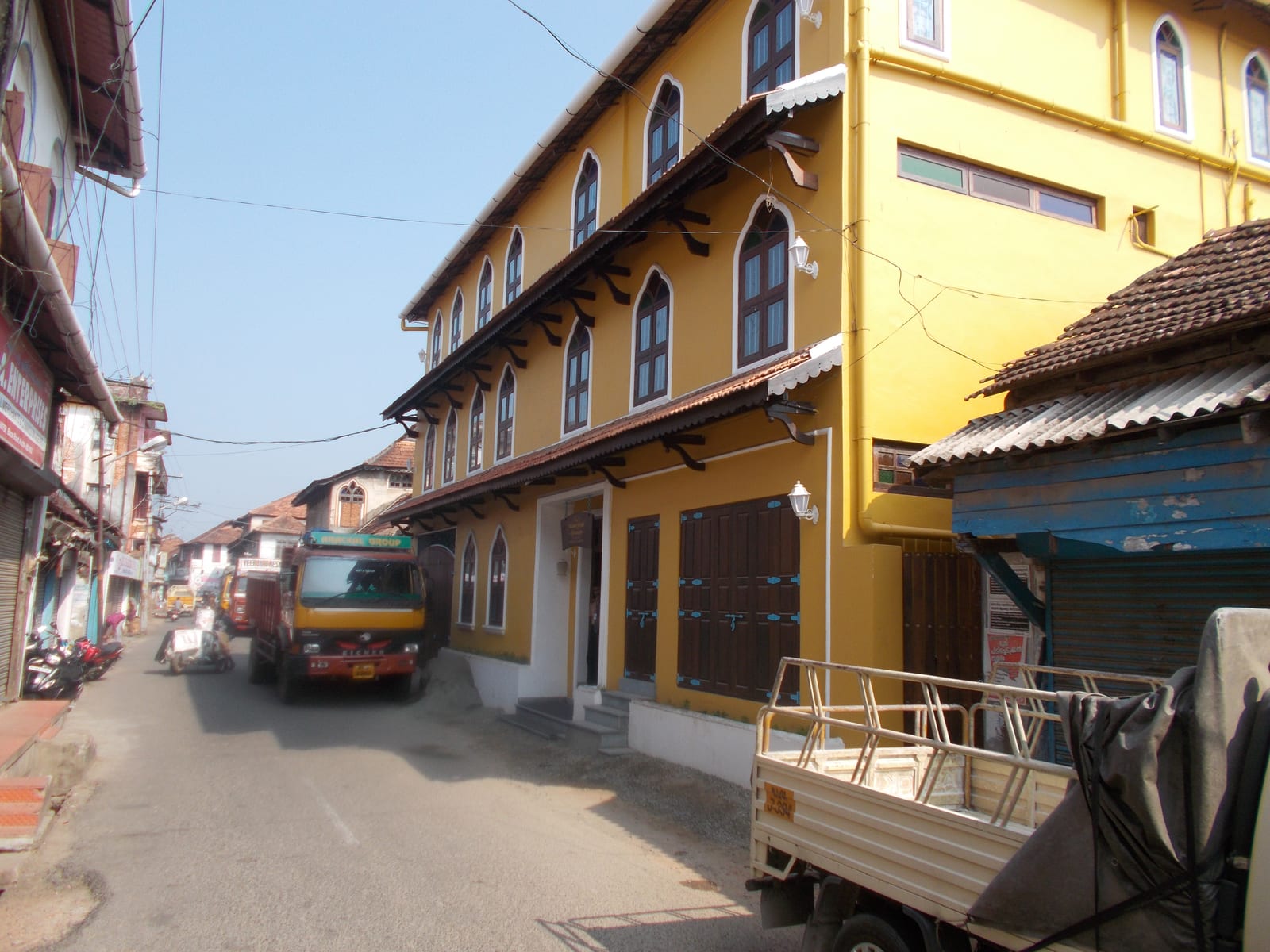
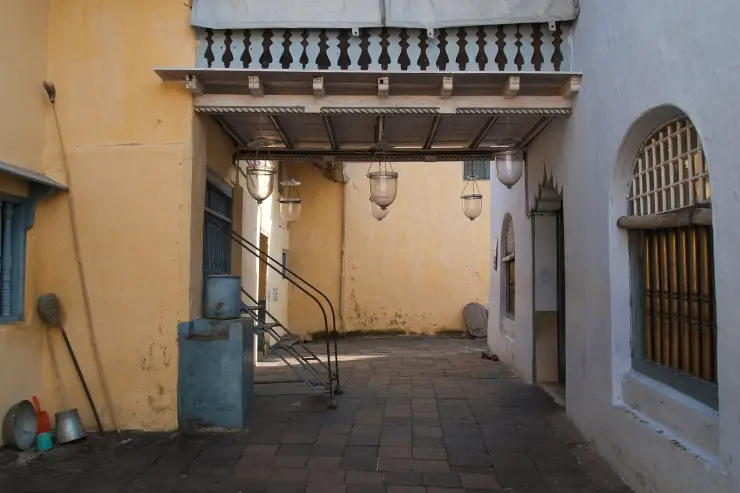
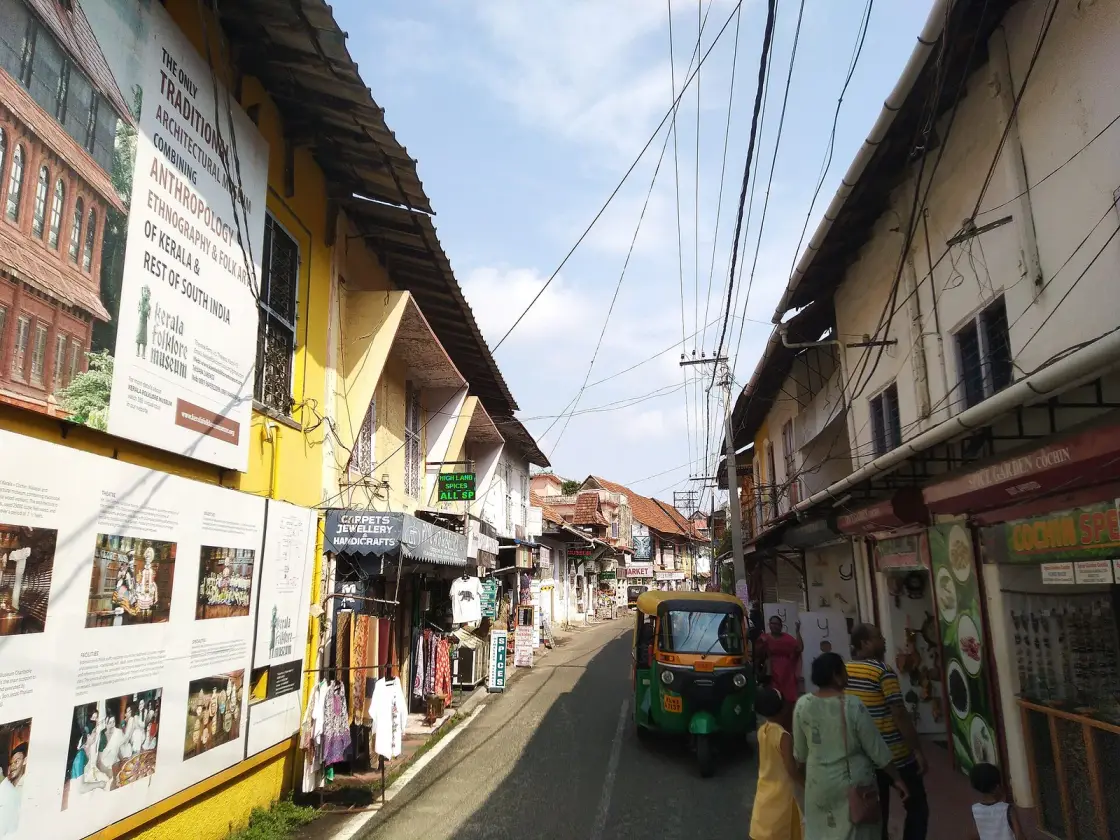
The street runs from the Mattancherry Palace end down to the Paradesi Synagogue, and it is genuinely short — you can walk its length in five minutes without stopping, which almost nobody does. The buildings are narrow-fronted and pressed together, in a style that reads Dutch at the top and improvised below, and the doorways are the thing to look at: Star of David motifs and Hebrew lettering survive on buildings that now sell antiques, coffee or clothes.

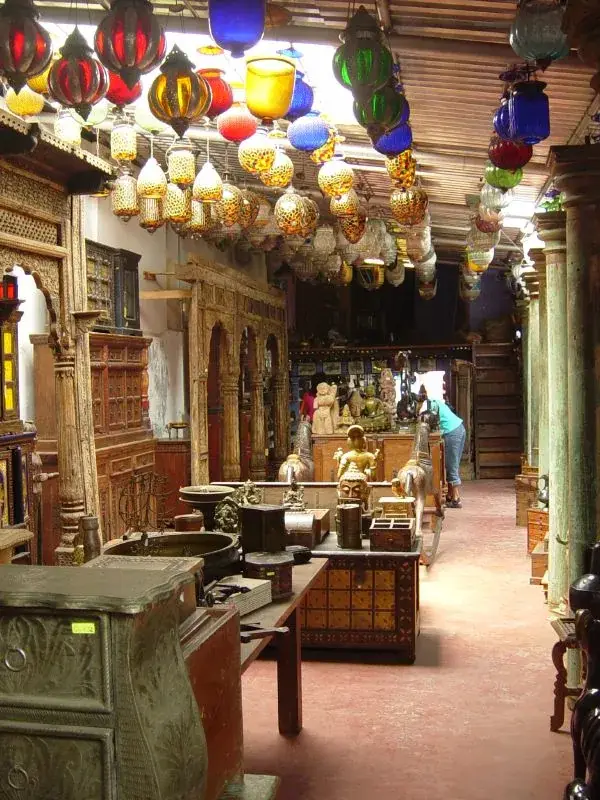
The antique trade is what the street is known for now, and its origin is specific rather than general. Through the twentieth century, and especially after the founding of Israel in 1948, the great majority of Kochi's Jews emigrated. Houses along the street emptied. Their contents — carved wooden furniture, vessels, lamps, curios accumulated over generations of a trading community — were bought up and put on sale in the shops that now line the street. The trade in old objects here is, quite literally, the liquidation of the neighbourhood's own households.

The stock is broader than that now, and it tells you what this port was: Indian pieces alongside European, Chinese and Arab ones, which is a fair inventory of who traded through Kochi. Some of it is genuinely old. A great deal of it is not, and the ages quoted to visitors should be treated as opening positions rather than facts. Bargaining is expected and prices quoted to foreigners start high.

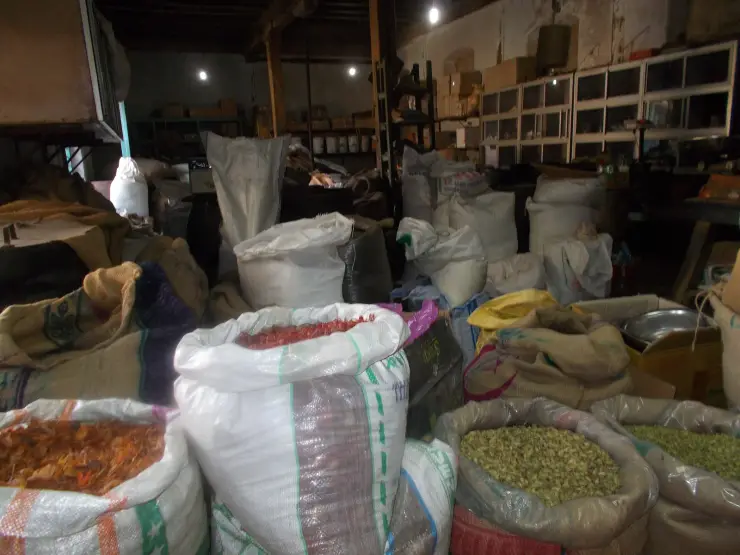
There is still commerce here that is not aimed at visitors. The international pepper trade retains a presence on this street, which is a direct thread back to why anyone built here in the first place, and Bazaar Road immediately to the north is still — just — a working spice quarter.

The rhythm of the street is set by two calendars. Saturday is the Jewish sabbath: the synagogue is closed and much of the street with it, and a Saturday visit is the classic wasted trip. Many dealers also shut on Sunday. In Biennale years, from December, the street is at its liveliest and its most crowded at once.

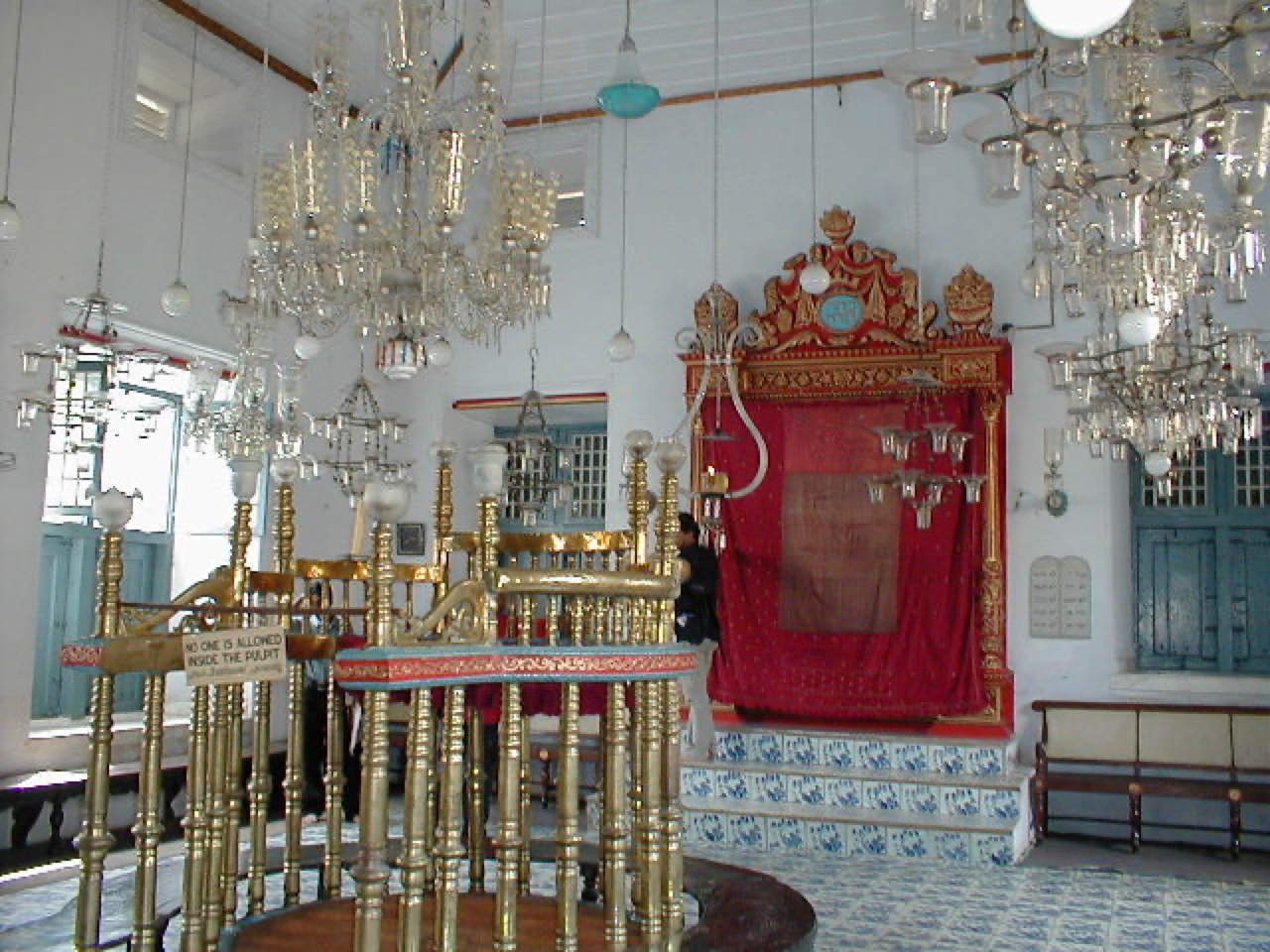
One more thing to look for as you walk, because the street is quieter about it than it should be: there were three synagogues here, not one. The Paradesi at the far end is the famous survivor. Almost immediately to its south, on the west side of the street, stood the Thekkumbhagam synagogue, now demolished. And a short way off is the Kadavumbhagam Mattancherry synagogue, known locally as the Karutha Juthapalli, built by the Malabari Jews with the permission of the Raja of Kochi after the community moved its base from Kodungallur. Three congregations on one short lane is a much better measure of how populous this quarter once was than any surviving building can give you.

Legend & myth

Start with the name, because there are three explanations for it and the prettiest one is also the one the neighbourhood likes best. In that telling, Mattancherry is a compound of the Hebrew mattana, a gift, and the Malayalam cheri, a settlement — the gift village, named for the ground the Raja of Cochin granted the Jewish community in 1524. A fuller version of the same story has a younger son of Joseph Rabban, the merchant of the copper plates, coming to Cochin and asking the king for a cheri of his own; what he received was a mattana, and the word stuck to the place. It is a lovely etymology and it makes the street's whole history fit inside its name.

It is also probably not the etymology. The more prosaic candidate is Ancherry Mattam, a Namboodiri illam that stood here, which foreign traders are said to have flattened into Matt-Ancherry and then Mattancherry — a perfectly normal way for a South Indian place name to survive in the mouths of people who cannot pronounce it. A third suggestion, less flattering and less romantic, derives it from a cheri of mutton butchers. Nobody has settled this. We give you all three because the choice between them is really a choice about whose history the street is named after, and that is the most Mattancherry question there is.

Then there is the founding date of the whole community, which is a much larger disagreement dressed up as a fact. Kochi's Jews have traditionally held that their ancestors reached the Malabar coast after the destruction of the Second Temple in 70 CE, settling at Shingly — Kodungallur — and the community's own songs preserve early settlements at Paloor, Madai and Cranganore. That tradition is honoured locally and has been recognised by the state of Kerala. Set against it, some Indian historians reach much further back still, to the ships of Solomon's time bringing peacocks, apes, ivory and ginger out of South India around the tenth century BCE.

The copper plates in the synagogue at the end of this street are where the argument becomes testable, and they cut the other way. You will be told they are some sixteen centuries old — the traditional dating puts the grant at 379 CE — and this page said as much until we checked. Modern epigraphy does not support it. The script is Vatteluttu, the granting king Bhaskara Ravi Varman reigned roughly 962 to 1020, and the palaeography places the charter at about 1000 CE; M. G. S. Narayanan set out the case in Cultural Symbiosis in Kerala in 1972 and it is now the scholarly consensus. Six centuries of the street's advertised age go with it.

None of which makes the community younger than it feels. A charter of 1000 CE granting seventy-two privileges to Joseph Rabban, proprietor of the Anjuvannam, is still a thousand-year-old document confirming a Jewish merchant establishment already important enough for a Chera king to formalise. The legend and the evidence disagree about the number, not about the fact. What is genuinely lost, if you insist on the year 379, is the more interesting truth: this street's ancestors were not refugees who washed up here, they were traders a king thought worth a charter.

Read the full history of Mattancherry & Jew Town 487 more words

History

Kochi's Jewish community is one of the oldest in India, and its Mattancherry chapter begins with a specific act of shelter: after the community at Kodungallur was displaced, the Raja of Kochi gave them land beside his own palace in 1524, which is the ground this street stands on. Sephardic Jews fleeing the Spanish expulsion arrived across the fifteenth and sixteenth centuries and settled into the same quarter.

The community was never a single body. It divided into Paradesi — 'foreign', the later European-descended arrivals — and Malabari, the older local Jews, and the two maintained separate synagogues and distinct traditions. That internal hierarchy is a substantial history in itself and is dealt with on the synagogue's own page rather than here.

The twentieth century emptied the street. With the founding of the State of Israel in 1948 emigration accelerated, and over the following decades the resident Jewish population of Kochi fell to a handful. The houses were sold or let, the contents dispersed into the antique trade, and the quarter's economy reoriented around visitors coming to see what was left.

What survives is a streetscape and a name rather than a community. That is not a criticism of the street — it has been honest about it for a long time — but it is the difference between visiting Jew Town and visiting a living Jewish quarter, and it is worth being clear about before you arrive.

The Kadavumbhagam Mattancherry synagogue is the clearest single illustration of what the emigration did, and it is not a ruin. Its interior left. When the community went to Israel, much of the intricate carved teak went with it — the ceiling woodwork in Kerala's own idiom, along with beams, lintels, doors, doorposts, steps, and the second bimah attached to the women's gallery together with its screen — dismantled and shipped out in 1991. Those interiors are now on display in the Israel Museum in Jerusalem. The building stayed in Mattancherry; the room went to another country and is in a vitrine. The Kerala Department of Archaeology notified the synagogue as a protected monument in 2016.

Why visit

It is the densest few hundred metres of history in Kochi: palace at one end, synagogue at the other, five centuries of trade in between.

The doorways alone repay a slow walk — Hebrew lettering and Stars of David on buildings that have been selling something else for fifty years.

The antique shops are worth going into even if you buy nothing; the mix of Indian, European, Chinese and Arab stock is a portrait of the port.

It is a genuinely moving place once you know where the stock came from, and that knowledge costs nothing.

Bazaar Road and the working spice godowns are a two-minute walk north, which makes a much better route than the palace-to-synagogue dash.

It is compact, walkable and entirely free unless you go inside the synagogue or the palace.
What to expect

Highlights

  • Mattancherry Palace, Paradesi Synagogue area, spice warehouses, antiques and heritage streets.
  • Natural walking connection to Fort Kochi with ferries/Water Metro improving access.
  • Inventory priority for heritage guides, antique/craft shops, cafes, homestays and responsible walking tours.
Getting there

How to visit

  • Base in Fort Kochi or Mattancherry and walk/auto between the two quarters.
  • Check palace/synagogue opening days and visitor rules before finalising the sequence.
  • Visit earlier in the day for shopping and heritage streets before heat and parking pressure rise.

Distance by road

  • Kozhikode175 km
  • Coimbatore190 km
  • Thiruvananthapuram206 km
  • Madurai278 km
  • Mysuru348 km

Road km to Ernakulam; ghat roads and traffic vary — allow extra.

Timing

Best time

November to February is easiest for walking. Avoid building a tight plan on monument closure days or major holidays.

Weather in Mattancherry & Jew TownSeasonal guide

Live forecast loads in your browser.

Today at Mattancherry & Jew Town
Sunrise6:16 am
Sunset6:44 pm
Golden hour best light5:44 pm–6:44 pm
Blue hour after sunset6:44 pm–7:09 pm
Sun sets toward compass bearingWNW · 285°
Moon tonight🌒 Waxing crescent · 1%
South-west monsoon. June to September is the south-west monsoon in Kerala. Expect heavy showers, mostly in bursts rather than all day — carry rain cover, allow extra time for getting around, and note that ferries and open-air sites are the first things affected.

Sun and moon are calculated for this location and shown in IST. Photography windows are the hour around sunrise and sunset; the sunset bearing is degrees clockwise from true north. Moon phase is accurate to about half a day.

Visitor notes

  • Antique and craft purchases should be checked for provenance and export restrictions where relevant.
  • Narrow streets can get crowded with buses and autos.
  • Water-side transport can save time when services are operating.
Safety

Good to know

  • Keep valuables close in crowded market streets.
  • Respect synagogue, palace and worship-site rules.
  • Use verified guides and avoid pressure-selling in tourist-shop lanes.
Stay · eat · do · rent · see · shop

Stays, food & things to do near Mattancherry & Jew Town

Verified hotels, homestays, restaurants, experiences, sights, shops and rentals around Mattancherry & Jew Town — commission-free, with direct contact. Filter by what you need.

2 places to stay near Mattancherry & Jew Town

S
Spice Holidays (Homestay)
Place to stay
Top pick
Hotel · Mattancherry
Spice Holidays (Homestay)
4.6 (78) 2.4 km · 4 min drive ~₹40–50 by auto

Hotel in Mattancherry, Ernakulam, Kerala, India. Rated 4.6 from 78 reviews.

Directions Commission-freeView details
G
Ginger House Museum Hotel
Place to stay
Verified
Hotel · Mattancherry
Ginger House Museum Hotel

Kerala Tourism-listed museum hotel in Jew Town, Mattancherry. Contact direct · Mattancherry, Jew Town, Museum hotel.

Commission-freeView details

Book with the place itself. India’s cyber-crime coordination centre warned in April 2025 that convincing copies of hotel and pilgrimage booking sites are being pushed through sponsored search and social ads, taking payment for rooms the property never hears about. Every listing here links to the business’s own contact details and its own Google or Bing profile — we take no commission and sit in nobody’s payment path. If a booking page reached you through an ad, check the address bar against the property’s own site before you pay. Fraud can be reported on cybercrime.gov.in or on 1930.

Ranked by rating

The best of Mattancherry, ranked

Mattancherry & Jew Town sits in Mattancherry, and these cover the whole quarter rather than this one spot — they are built from the same verified listings shown above, ordered by real traveller ratings and review counts. Nobody pays to appear.

Roampedia is commission-free — own or know a stay, eatery, guide or shop near Mattancherry & Jew Town? List it and it appears here once verified.

Add a nearby business
Before you go

Mattancherry & Jew Town — at a glance

TimingsShops generally open mid-morning and trade to early evening. The street is effectively closed on Saturday, the Jewish sabbath, and many dealers also shut on Sunday — a Saturday visit is the classic wasted trip here (indicative — confirm locally).
Best timeNovember to February. The street is roofed by buildings rather than trees and gets close and hot from March; the December–January Biennale years bring both the best atmosphere and the worst crowds.

Entry: Free to walk. The street itself costs nothing; the synagogue at its southern end charges its own small ticket and keeps its own closing days, and the shops are shops (indicative — confirm locally).

Photography: Shopfronts and the street are fine. Many antique dealers do not want their stock photographed — ask. The synagogue at the end has its own no-photography rule inside.

Getting here

How to reach Mattancherry & Jew Town

  • ✈︎ By air Cochin International Airport (COK) is roughly 40–45 km, about 1.5–2 hours by road (indicative — confirm locally).
  • 🚆︎ By train Ernakulam Junction (South) or Ernakulam Town, about 12–14 km (indicative — confirm locally).
  • 🚗︎ By road About 3 km from Fort Kochi by autorickshaw; the street is closed to through traffic at the synagogue end.
  • 🚌︎ By bus Buses from Ernakulam to Mattancherry; get down at the palace and walk (indicative — confirm locally).
  • ⛴︎ By boat The Mattancherry ferry from Ernakulam jetty is the pleasant way in, then about a ten-minute walk.
Getting back

Work out your return before you settle in for the sunset. Services on this coast thin out sharply in the evening, and Mattancherry & Jew Town is easier to reach than to leave. We do not publish departure times: there is no official live feed we are permitted to republish, and a wrong time here would strand you. Check the operator directly on the day.

Ask at the jetty or stand for the time of the last service back, not the next one. If you miss it, an auto or app cab is the fallback — agree the fare before you get in.

Do

Things to do

  • Walk the whole street end to end — it is short, and the change from palace end to synagogue end is the point.
  • Look at the doorways: Star of David motifs, Hebrew lettering and 19th-century Dutch-influenced fronts survive on buildings now selling something else entirely.
  • Go into the antique shops even if you are not buying; much of the stock is Indian, European, Chinese and Arab, which tells you what this port was.
  • Find the pepper exchange building — the international pepper trade still has a presence on this street.
  • Pair it with Bazaar Road immediately north, where the spice trade that built all this still just about runs.
Plan

Good to know

  • Not on a Saturday. The synagogue is shut and much of the street is too.
  • Prices in the antique shops are opening positions and are quoted higher to visitors. Bargain, and be sceptical of any age claimed for an object.
  • Genuine antiquities over a hundred years old cannot legally be exported from India. If a dealer tells you a piece is 200 years old and also exportable, one of those statements is wrong.
  • The street is very narrow with no pavement. Go early if you dislike crowds.
Stay safe

Safety

  • Crowded and pickpocket-prone in season; keep bags closed and in front.
  • Autorickshaws and handcarts still push through the northern half — listen behind you.

The antique trade that defines this street today is not an old Jew Town industry — it is what filled the space the community left. After the founding of Israel in 1948 most of Kochi's Jews emigrated, houses along the street emptied, and their contents — carved furniture, brass, lamps, ritual objects — were bought up and put on sale in the shops that now line it. So the street sells, quite literally, the belongings of the people it is named after. That is worth knowing before you walk it; it changes what the shops look like.

Getting around Mattancherry & Jew Town

We have not assessed physical access at this place yet. Across India, step-free routes, handrails and accessible toilets are the exception rather than the rule, and pavements are often interrupted — if step-free access matters to you, contact the site or a local operator before committing to the trip.

Practical things near Mattancherry & Jew Town
ToiletsPublic toilet 1.8 km · 22 min walkMapped Dec 2022DirectionsBus stopsAnavathil Bus stop134 m · 2 min walkMapped Jan 2022DirectionsTaxi & auto standsTaxi / auto stand 189 m · 2 min walkMapped Jan 2023DirectionsFerry jettiesMattanchery water metro terminal 210 m · 3 min walkDaily 07:20–07:30Mapped May 2026DirectionsFuelHP Fuel station167 m · 2 min walkSurveyed Dec 2022DirectionsPharmacyCochin Coperative Medical Shop 562 m · 7 min walkMapped Jul 2013DirectionsHospitalMattancherry Government Hospital 286 m · 3 min walkMapped Sept 2021DirectionsPolice stationCustoms Police station1.9 km · 23 min walkMapped Nov 2019DirectionsATMATM 264 m · 3 min walkMapped Sept 2024DirectionsBankBank of Baroda 303 m · 4 min walkMo-Sa 10:00-16:00; Su,PH offMapped Feb 2026DirectionsWater & snacksMargin Free Super market 581 m · 7 min walkMapped Jul 2013DirectionsGroceries & bakeryGreengrocer 473 m · 6 min walkMapped Aug 2016DirectionsBarber & salonHairdresser 1.3 km · 15 min walkMapped Jul 2013DirectionsBookshopBookshop 221 m · 3 min walkMapped Sept 2019DirectionsPost officeMattancherry Post Office 432 m · 5 min walkMapped Sept 2021DirectionsSomewhere to prayThekkemadom Dharma Sastha Temple 227 m · 3 min walkMapped May 2018DirectionsPark or gardenPark 1.7 km · 20 min walkMapped Jan 2020DirectionsPublic art & memorialsGalley 'c' seven Public artwork278 m · 3 min walkMapped Sept 2019DirectionsVetVeterinary Clinic Mattancherry 230 m · 3 min walkMapped Sept 2021Directions
What the cash actually costs
  • Withdrawing from a bank that is not your own is free for a set number of times a month, then costs up to ₹23 plus GST — about ₹27 a withdrawal. This is not one of the RBI’s six metro centres, so the allowance here is the higher one: at least five free other-bank withdrawals a month, and at least five at your own bank.
  • That free allowance belongs to Indian bank accounts. On a card issued abroad your own bank’s international withdrawal and exchange charges apply instead. If the machine offers to bill you in your home currency, choose rupees — the conversion rate on that offer is set by the machine, not by your bank.
  • Given a choice, use an ATM inside or attached to a branch: it sits in view of staff and cameras, and there is someone to ask if the machine keeps your card. A machine standing alone on a tourist street is the one to be wary of. Banks are listed here alongside the ATMs, but the map data does not record which ATMs sit inside a branch — check when you get there.

Charge cap and free-transaction limits: Reserve Bank of India, in force since 1 May 2025.

Mapped within about 1.2 km of Mattancherry & Jew Town, with real walking routes rather than straight-line distances. Community-mapped data: opening hours are shown only where they are recorded, and this is not a complete list — something unmapped may well be closer. Please confirm on the ground.

If you need help at Mattancherry & Jew Town
112All emergencies (police · fire · medical)The single number to call in any emergency (ERSS).

Emergency numbers are verified against official government and state tourism sources. 112 works anywhere in India.

Nearby

What’s near Mattancherry & Jew Town

museumDutch Palace 50 m · 1 min walk
heritageSpice markets 450 m · 5 min walk
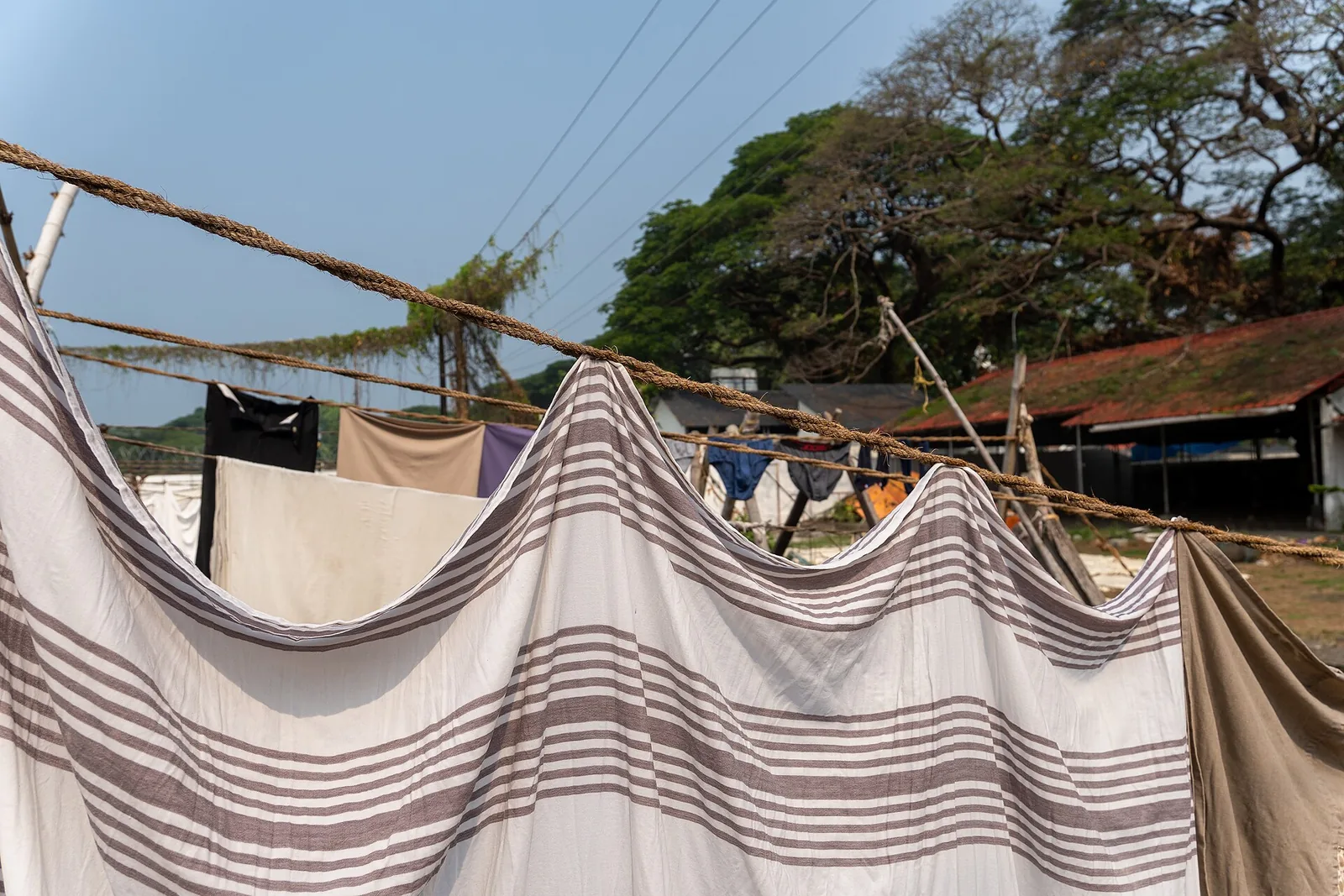
heritageDhobi Khana 1.8 km · 22 min walk
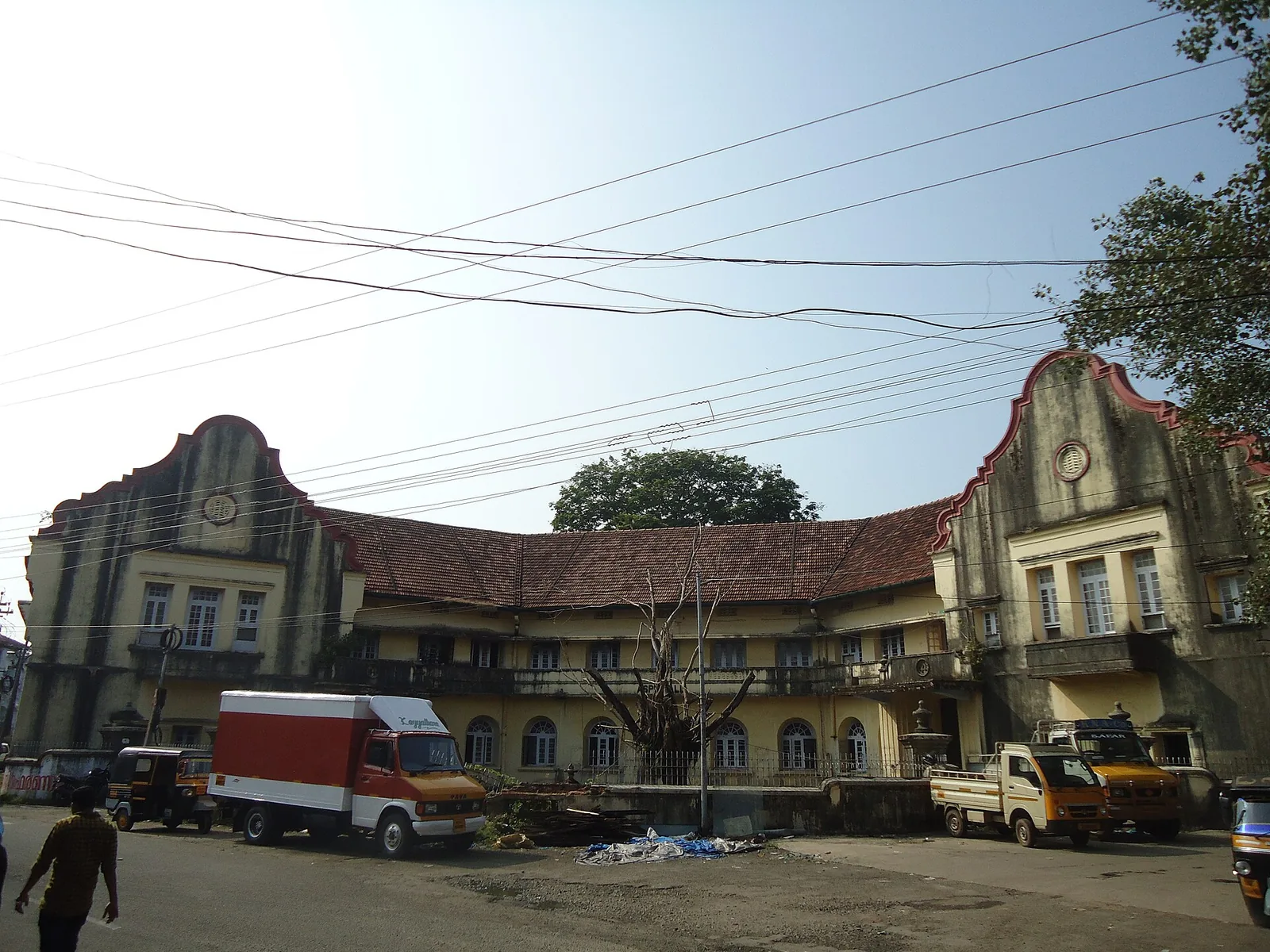
heritageAspinwall House 1.8 km · 23 min walk
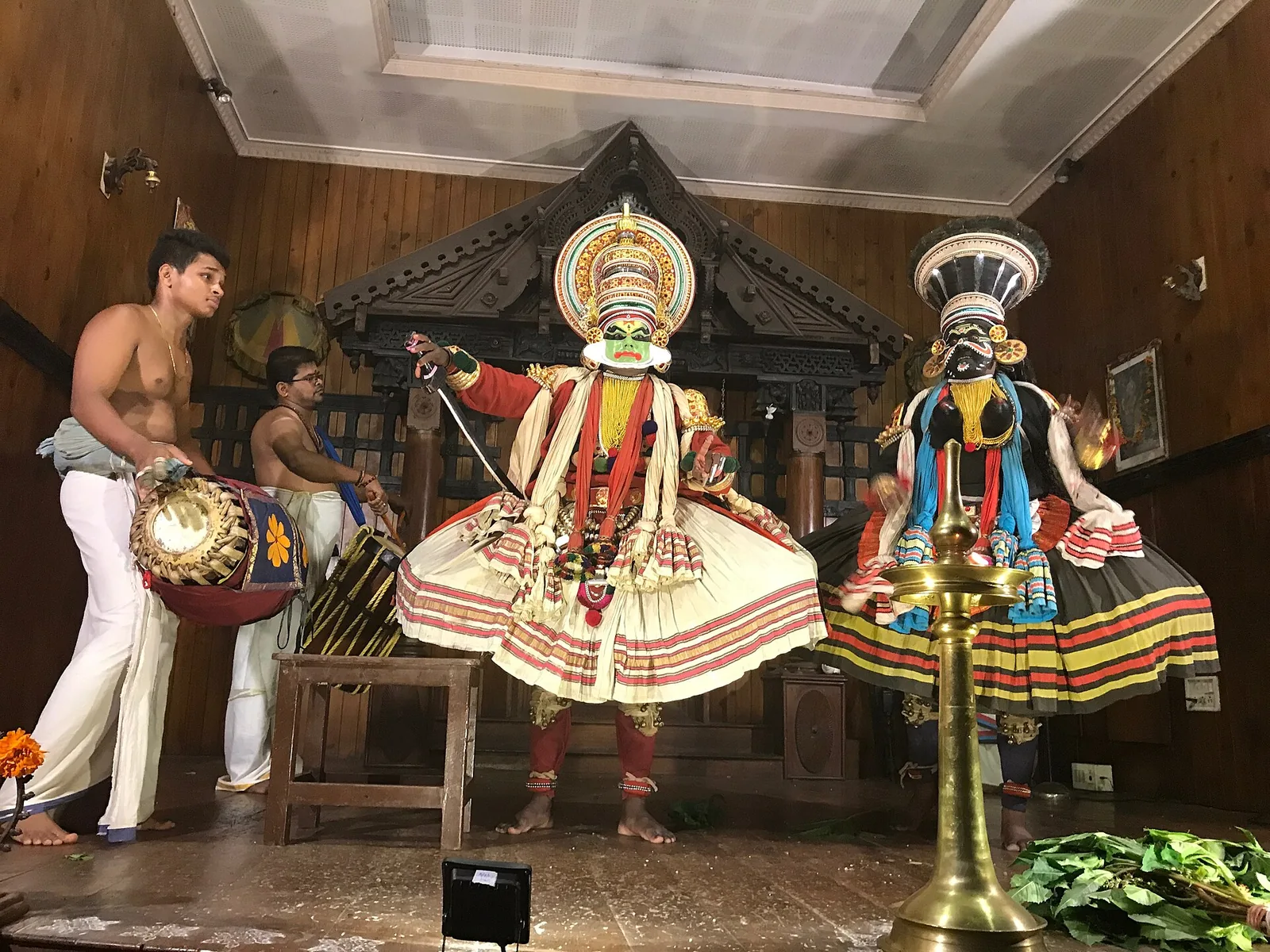
heritageKerala Kathakali Centre 1.9 km · 24 min walk
heritageFort Kochi 2.1 km · 26 min walk
churchSt. Francis Church 2.1 km · 27 min walk

All 6 places to visit in Mattancherry →

Walking and driving times are real routed distances, not straight lines. Fare figures are estimates from Kerala’s notified auto/taxi tariff and exclude waiting and night charges. Routing: © openrouteservice.org by HeiGIT | Map data © OpenStreetMap contributors

Nearby toilets, pharmacies, ATMs, seating and vets are community-mapped and may be incomplete or out of date. Map data © OpenStreetMap contributors | Walking times © openrouteservice.org by HeiGIT

On the map

Where Mattancherry & Jew Town is

Good to know

Mattancherry & Jew Town — frequently asked

Is anything open on Saturday?

Not much, and this is the mistake to avoid. Saturday is the Jewish sabbath — the Paradesi Synagogue is closed and a good part of the street shuts with it. Many dealers also close on Sunday. Go on a weekday, ideally in the morning, when Bazaar Road is working too.

Are the antiques genuine?

Some are; a lot are not, and the ages quoted are best treated as sales talk. There is also a legal point worth knowing: genuine antiquities over a hundred years old cannot be exported from India. If a dealer assures you a piece is two hundred years old and also perfectly exportable, one of those two claims is false. Bargain hard, buy what you like for its own sake, and do not pay a premium for an unverifiable date.

Are there still Jews living in Jew Town?

Very few. The community numbered in the thousands and now numbers a handful — the great majority emigrated to Israel in the decades following its founding in 1948. The synagogue survives and the street keeps the name, but this is a heritage quarter rather than a living Jewish neighbourhood, and it is more honest to say so.

How long do I need?

An hour and a half to two hours for the street and its shops. Half a day if you do it properly — the Mattancherry Palace at one end, the synagogue at the other, this street between them and Bazaar Road immediately north. That is the walk this quarter is actually built for.

How many synagogues were there in Jew Town?

Three on this one short lane. The Paradesi at the far end is the survivor and the one on every itinerary. The Thekkumbhagam synagogue stood almost immediately to its south on the west side of the street and has been demolished. The Kadavumbhagam Mattancherry synagogue, the Karutha Juthapalli, was built by the Malabari Jews with the Raja of Kochi's permission after the community moved its base from Kodungallur; the Kerala Department of Archaeology notified it as a protected monument in 2016.

What happened to the Kadavumbhagam Mattancherry synagogue's interior?

It was taken to Israel. In 1991 much of the carved teak was dismantled and shipped out — the ceiling woodwork in Kerala's own architectural idiom, along with beams, lintels, doors, doorposts, steps and the second bimah attached to the women's gallery with its screen. Those interiors are now on display in the Israel Museum, Jerusalem. The shell of the building remains in Mattancherry.

Is this the Kadavumbhagam synagogue that reopened in 2025?

No, and the two are easy to confuse because they share a name. The one that opened to visitors on 2 February 2025 is the Kadavumbhagam synagogue in Ernakulam, on Market Road behind the plant shop run by Eliyas Josephai, who led its restoration from 2003. The Mattancherry Kadavumbhagam is a different building on this side of the harbour, and it is the one whose interior went to Jerusalem.

Where did the antiques in the shops come from?

Originally, from the houses on this street. Through the twentieth century, and especially after 1948, most of Kochi's Jews emigrated and the houses emptied; carved furniture, vessels, lamps and curios accumulated over generations were bought up and put on sale in the shops now lining the lane. The stock has broadened a great deal since, and much of what is offered as old is not — but the trade itself began as the liquidation of the neighbourhood's own households.

Why is the street full of antique shops?

Because the houses emptied. As the Jewish community emigrated through the twentieth century, the contents of their homes — carved furniture, brass and copper vessels, lamps, curios — were bought up and sold on from the shops on this street. The trade grew directly out of the departure, and the old spice godowns and trading houses along the street were converted into shops, hotels and cafes to serve it.

Can I get here by ferry?

Yes, and it is the nicest way in. The Mattancherry ferry from Ernakulam boat jetty lands near the northern end of Bazaar Road, about ten minutes' walk away, so you arrive through the spice quarter rather than by autorickshaw through traffic.

When is the best time to visit Mattancherry & Jew Town?

November to February is easiest for walking. Avoid building a tight plan on monument closure days or major holidays.

What are the entry fee and timings at Mattancherry & Jew Town?

Entry: Free to walk. The street itself costs nothing; the synagogue at its southern end charges its own small ticket and keeps its own closing days, and the shops are shops (indicative — confirm locally).. Timings: Shops generally open mid-morning and trade to early evening. The street is effectively closed on Saturday, the Jewish sabbath, and many dealers also shut on Sunday — a Saturday visit is the classic wasted trip here (indicative — confirm locally).. Fees and timings are indicative — confirm on site before you travel.

How do I reach Mattancherry & Jew Town?

Base in Fort Kochi or Mattancherry and walk/auto between the two quarters. Check palace/synagogue opening days and visitor rules before finalising the sequence. Visit earlier in the day for shopping and heritage streets before heat and parking pressure rise.

How much time do I need for Mattancherry & Jew Town?

2 to 4 hours; full day with Fort Kochi and food stops.

What else is near Mattancherry & Jew Town?

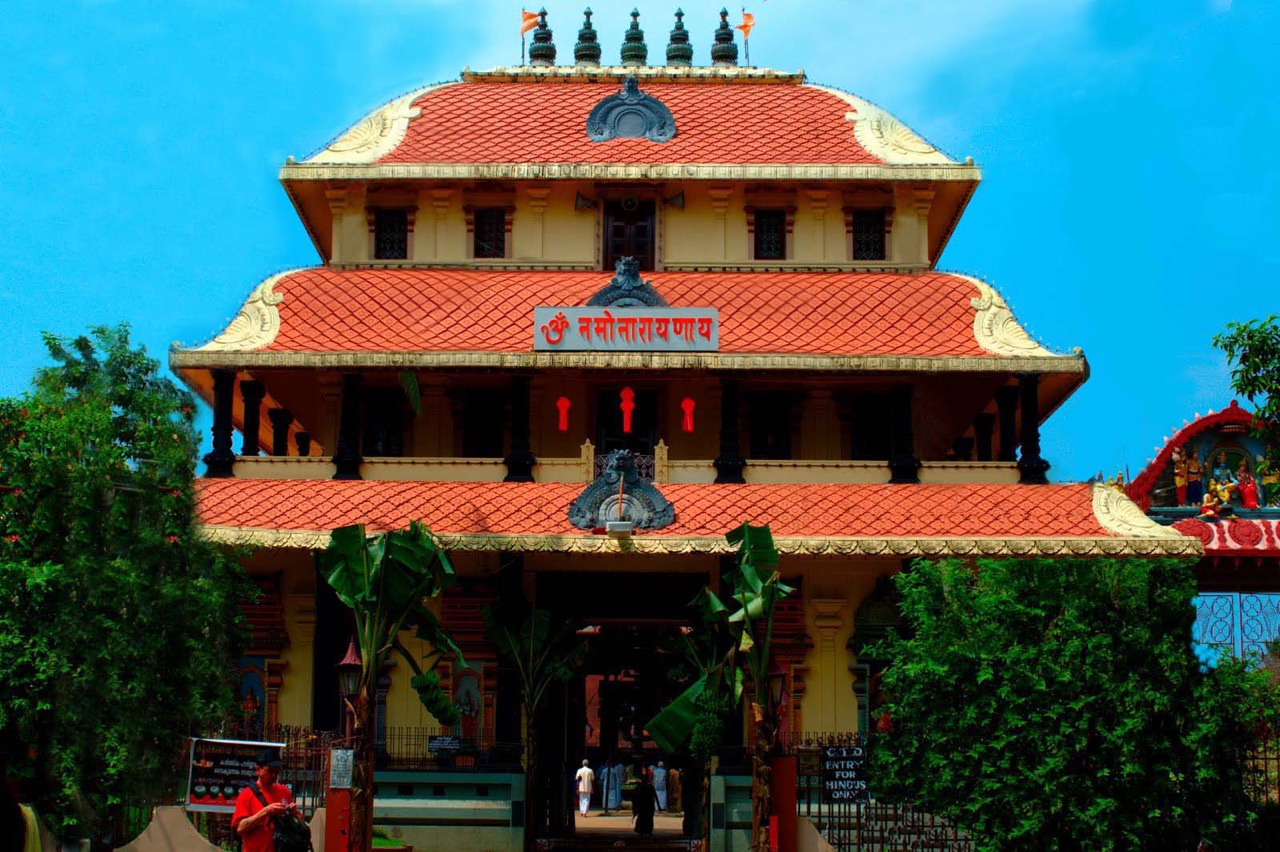
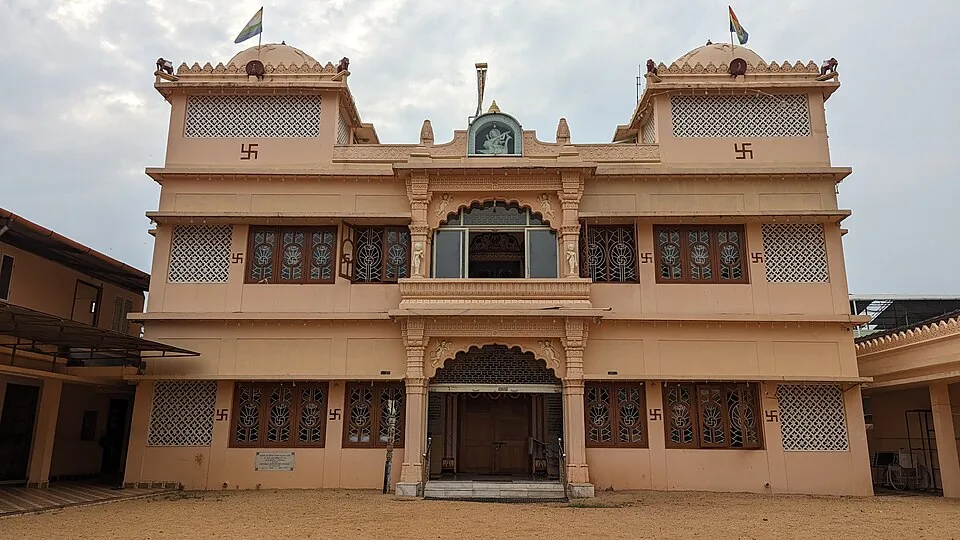
Nearby you can pair Dutch Palace (50 m), Mattancherry Paradesi Synagogue (60 m), Spice markets (320 m), Dharmanath Jain Temple (630 m).

What should I know before visiting Mattancherry & Jew Town?

Keep valuables close in crowded market streets. Respect synagogue, palace and worship-site rules. Use verified guides and avoid pressure-selling in tourist-shop lanes.

Read before you go

Mattancherry & Jew Town guides, stories & itineraries

Stories & history of Mattancherry & Jew Town

Written about Mattancherry & Jew Town itself — its history, its legends and the arguments about them.

Around Mattancherry

Mattancherry & Jew Town sits in Mattancherry, so these cover the streets, buildings and harbour you will walk through to reach it.

Kerala-wide guides & itineraries

See all 171 Ernakulam guides & stories →

Image credits