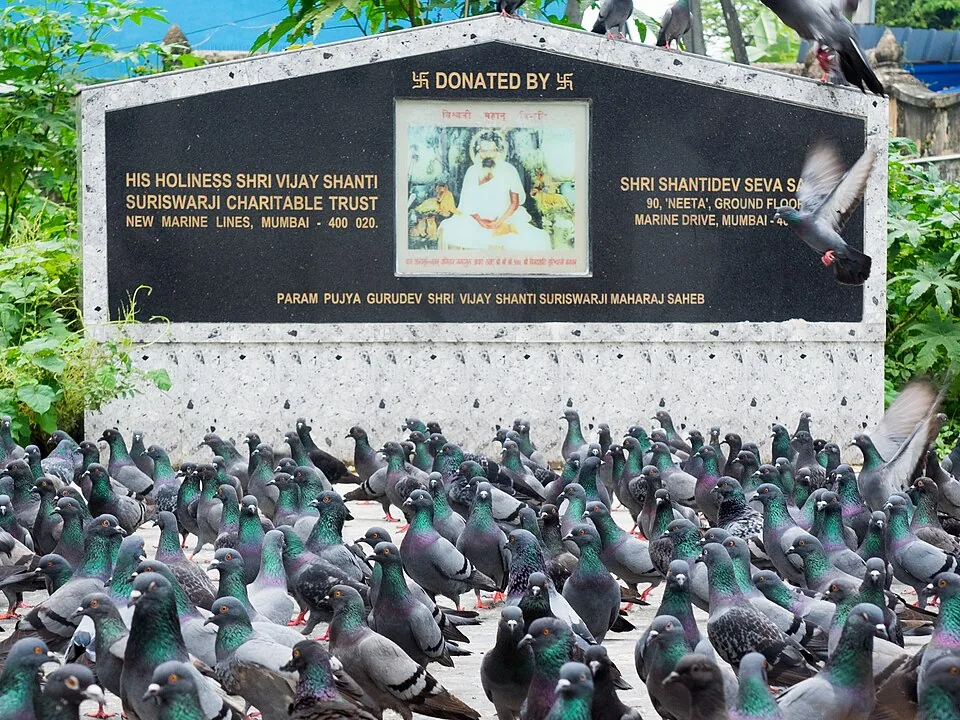
Look up the Dharmanath Jain Temple in Mattancherry and you will be told, almost everywhere, that it was built in 1960. This page said so too until we went and checked. It was built in 1904. The difference is fifty-six years and it changes what the building means.
Where 1960 comes from
The temple’s founding is recorded in the Vikram Samvat era, the calendar in general use across Gujarat and much of northern and western India. The Vikram era runs roughly fifty-seven years ahead of the Gregorian one, so Vikram Samvat 1960 corresponds to 1903–04 CE. At some point a number that meant 1904 was copied out of a Jain record into an English one, lost the two letters in front of it, and became a year within living memory.
It is an entirely ordinary kind of mistake and it has proved extraordinarily durable, because 1960 is a plausible date. A marble temple in good condition, built by a merchant community at the height of the spice trade, reads perfectly well as post-independence. Nothing about the building contradicts the wrong answer, which is exactly why nobody checked.
- Published almost everywhere: built 1960.
- Actually: built 1904 — recorded as Vikram Samvat 1960.
- The Vikram era runs about 57 years ahead of the Gregorian calendar.
- VS 1960 = 1903–04 CE.
Why fifty-six years matters
Because the two dates tell opposite stories about the community that built it. A temple of 1960 is a confident act by a merchant class at its commercial peak, a few years before the spice trade turned and the departures began — a monument to having arrived.
A temple of 1904 is something else. It sits at the start of the migration that brought Jain families from Kutch and Saurashtra south to Cochin, Kozhikode and Alappuzha in numbers during the early twentieth century. It is not a monument to having arrived. It is part of the arriving: the thing you build first, so that the place you have moved to can hold a religious year.
And a widow built it
The other thing the wrong date has hidden is the founder, who is named in the sources and almost never mentioned in the guidebooks. The temple was raised by Hirubai, in memory of her husband Jivraj Dhanji. Not a trade association, not a merchant syndicate, not a family firm — one woman, endowing a temple as a memorial.
Kochi has a great many buildings put up by men who wanted to be remembered: palaces given to buy trading rights, warehouses with founders’ names on the lintels, churches raised by companies. This is a building put up by a woman who wanted someone else to be remembered, and it has spent a century being described without her in it.
What else the record actually says
The principal image is Dharmanatha, the fifteenth of the twenty-four Tirthankaras, and the community holds the idol itself to be far older than the building — well over a thousand years, by their account, which would make it an object that arrived rather than one that was commissioned. A separate shrine within the complex houses Chandraprabhu, installed by Sheth Popatlal Govardhan Lalan, and a Shantinath image here has a local reputation for answering petitions.
The eight-day Paryushana fast, the most important observance in the Jain year, is kept here annually. That is the real function of the place and always has been: to run a Gujarati religious calendar inside a Malayali city — the same job the Konkani temple at Gosripuram does a few streets away, and for the same reason.
Frequently asked questions
When was the Dharmanath Jain Temple in Mattancherry built?
1904. The near-universal date of 1960 is the temple’s Vikram Samvat dating — VS 1960 — mistaken for a Gregorian year. The Vikram era runs about fifty-seven years ahead of the Gregorian calendar, so VS 1960 corresponds to 1903–04 CE.
Who founded the Dharmanath Jain Temple?
Hirubai, who raised it in memory of her husband Jivraj Dhanji. She is named in the sources and almost never mentioned in guidebooks — one of the things the wrong founding date has helped obscure.
What is Vikram Samvat?
A calendar era in general use across Gujarat and much of northern and western India, running roughly fifty-seven years ahead of the Gregorian calendar. Indian religious records commonly date events in it, which is how a temple of 1904 came to be published everywhere as a temple of 1960.
Why did Jain families from Gujarat settle in Kochi?
For the spice trade. Jain merchants from Kutch and Saurashtra traded into Cochin, Kozhikode and Alappuzha, and came south in numbers during the early twentieth century, settling around the Mattancherry godowns. The temple served that community; as the trade contracted, much of it left.
How old is the main idol in the temple?
The community holds the Dharmanatha image to be well over a thousand years old — considerably older than the 1904 building around it. That would make it something the community brought with it rather than commissioned locally, though we have seen no independent dating of the idol itself.
What is Paryushana?
The most important observance of the Jain year: an eight-day festival of fasting, reflection and self-purification. It is kept annually at this temple, and it is the clearest sign that the building exists to run a Gujarati religious calendar inside a Malayalam-speaking city.