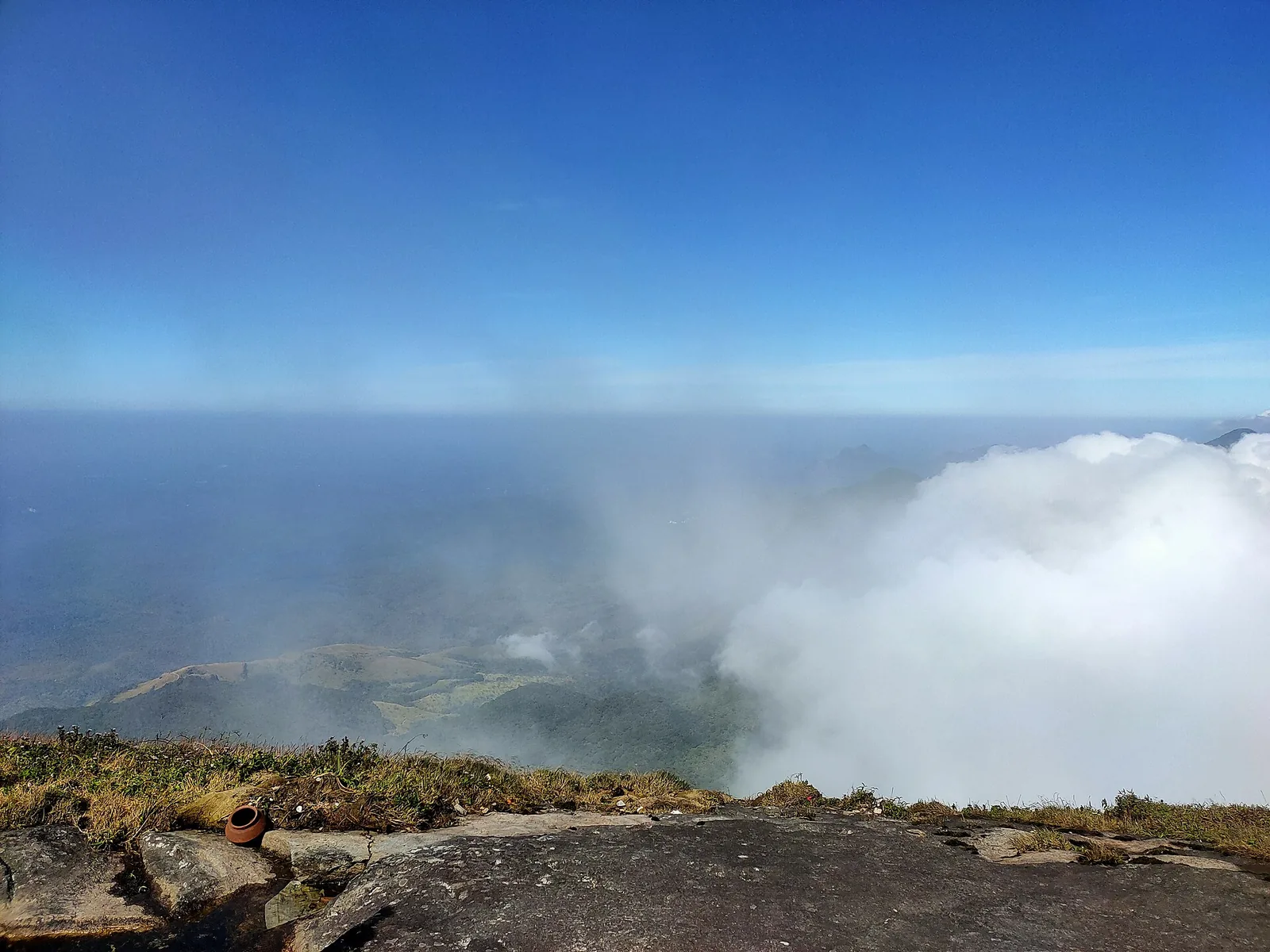
Agasthyarkoodam carries the name of Sage Agastya, a figure whose stories reach across South India. Kerala Tourism retells his journey south and connects the summit with a shrine in his memory. For some visitors, that sacred association is the reason to think of the mountain at all. It deserves to be told as tradition, with care for the people who live with it, rather than converted into a dated diary of a climb.
A story of moving south
In the tourism retelling, Agastya travels south to restore balance. The theme makes the mountain a point of orientation in a much wider cultural map. It is not evidence that a historical person reached this precise summit in a year a travel guide can supply. The peak’s name and shrine show that the tradition remains attached to the place even when the story is not treated as literal topographical history.
The account also associates the sage with knowledge and practice. Such claims should be attributed to their tradition. In particular, a statement that mountain air or a plant has a healing effect is not a medical conclusion established by the legend. Respecting the sacred account does not require asking it to answer scientific questions it was not made to answer.
A forest with people in it
UNESCO describes the Agasthyamala Biosphere Reserve as a protected southern Western Ghats landscape with distinctive plant life and tribal settlements, including Kani communities. This is not an empty backdrop around a shrine. The ecological and human record sits beside the sacred story and changes how a visitor should imagine the route.
The height and ranking story explains why the mountain’s value cannot be reduced to a mistaken place on a list. The access-history story shows how the permitted trek itself became a subject of public argument. These are different chapters of one place.
A permitted route is not unlimited access
The Forest Department controls trekking through protected habitat. A permit grants a defined journey under current rules; it does not open every ritual space, community area or forest path. Ask about the present route, guide and group conditions before booking. A traveller can learn the tradition without treating the summit as a stage on which every private practice must become visible.
Agasthyarkoodam is compelling because several kinds of meaning meet there: a sage’s name, a living forest, a shrine and people whose relationship to the land continues. The strongest story allows each its own source and boundary.