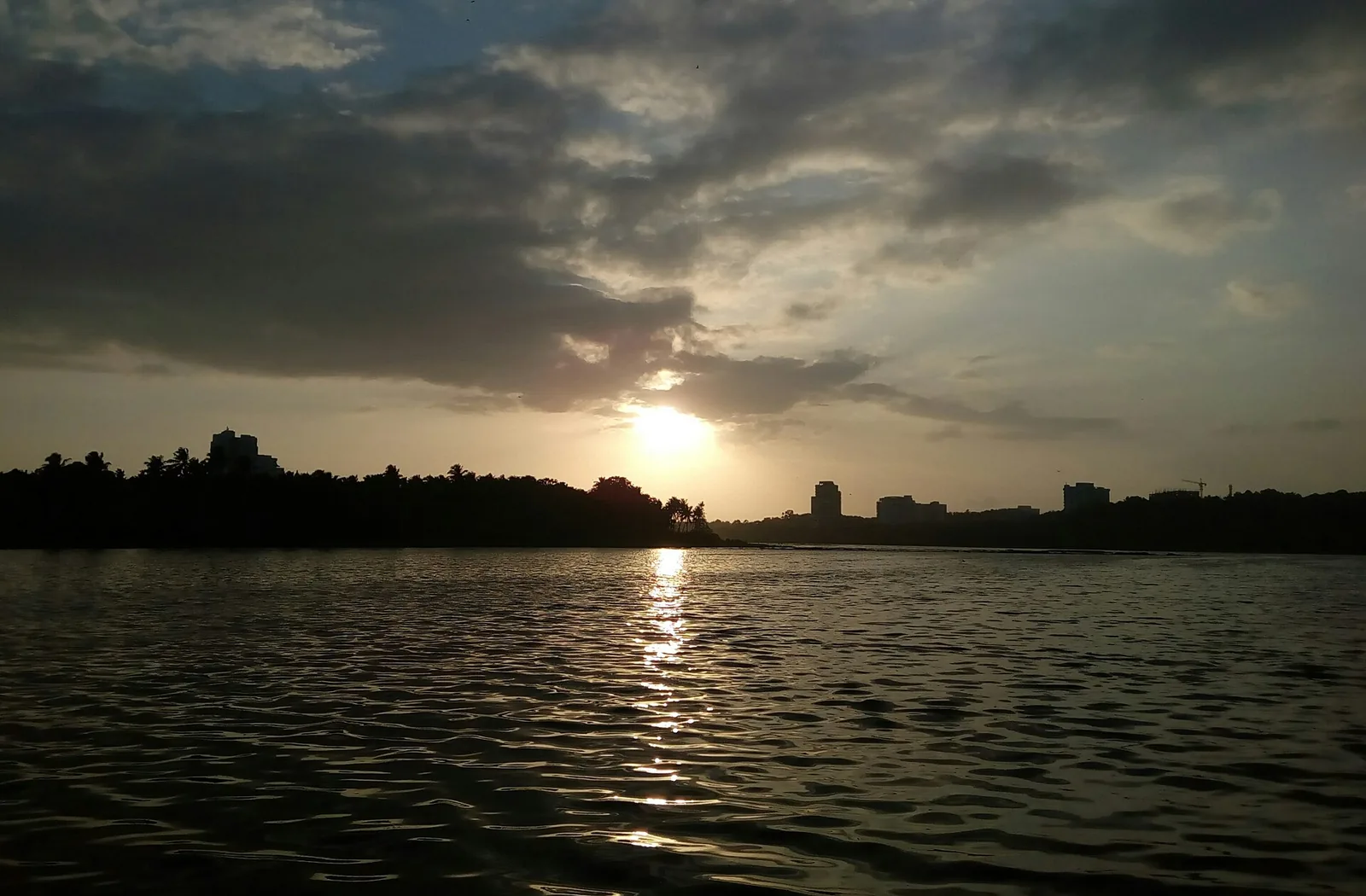
In 2026, Akkulam acquired a new identity: the southern starting point named in a 280 km waterway project towards Chettuva. That sounds like the beginning of a boat journey. Yet a project can be inaugurated before a traveller can buy a ticket from one end to the other. The distance between those two events is the real story at Akkulam Lake.
The old idea beneath the new announcement
Kerala’s western edge already had backwaters, rivers and man-made canals. The problem was not inventing water; it was making separate reaches useful together. Cochin International Airport Limited describes Kerala Waterways and Infrastructures Limited, its joint venture with the state government, as responsible for renovating the West Coast Canal from Kovalam towards Bekal. The project’s ambition is a network, not a single freshly dug trench.
KWIL’s annual report reads like the underside of a grand map: separate canal reaches, studies, land acquisition and works in different stages. On the map, one line can run north. On the ground, each bridge, landing and shallow section poses its own question.
A milestone, then the missing timetable
The Akkulam–Chettuva stretch was presented as a 280 km first phase in 2026. An inaugural boat and an opened project make a powerful image. They do not establish a scheduled passenger service over the whole distance, a ticket office at Akkulam for Chettuva, or a freight service ready for ordinary customers. Those require an operator, published departures and workable boarding and return arrangements. We found project announcements, but no official through-passenger timetable to put on this page.
There is another boundary on the map. The Kovalam–Akkulam reach south of the lake is separately listed for land acquisition in KIIFB’s project register. So even a successful first-phase opening cannot be turned into the claim that the entire Kovalam–Bekal corridor is finished. At Varkala, the restored canal tunnels tell their own local story; the Varkala waterway article follows that stretch.
What the project changes for a visitor
It changes the question to ask. A visitor interested in the canal should ask where a boat actually leaves, where it goes, whether it returns and who sells the ticket. A route drawn across 280 km is not an itinerary until those answers exist for the date of travel. Akkulam can still be a lakefront outing while the larger transport ambition develops around it.
That is less dramatic than saying you can sail from the capital to Thrissur. It is also more interesting: a nineteenth-century network is being assembled into a twenty-first-century service, piece by piece. The opening was a milestone. The first dependable through timetable, when one is published, will be another.
Frequently asked questions
Can I book an Akkulam-to-Chettuva boat?
Do not infer a through passenger service from the project inauguration. Confirm a current departure, route and booking channel with the operator before planning that journey.
Who is rebuilding the West Coast Canal?
Kerala Waterways and Infrastructures Limited, a joint venture of the Kerala government and Cochin International Airport Limited, is responsible for renovation work.
Is the whole Kovalam–Bekal route finished?
The first-phase announcement does not establish that. KIIFB lists the Kovalam–Akkulam section separately for land acquisition, and other reaches have their own work and status.