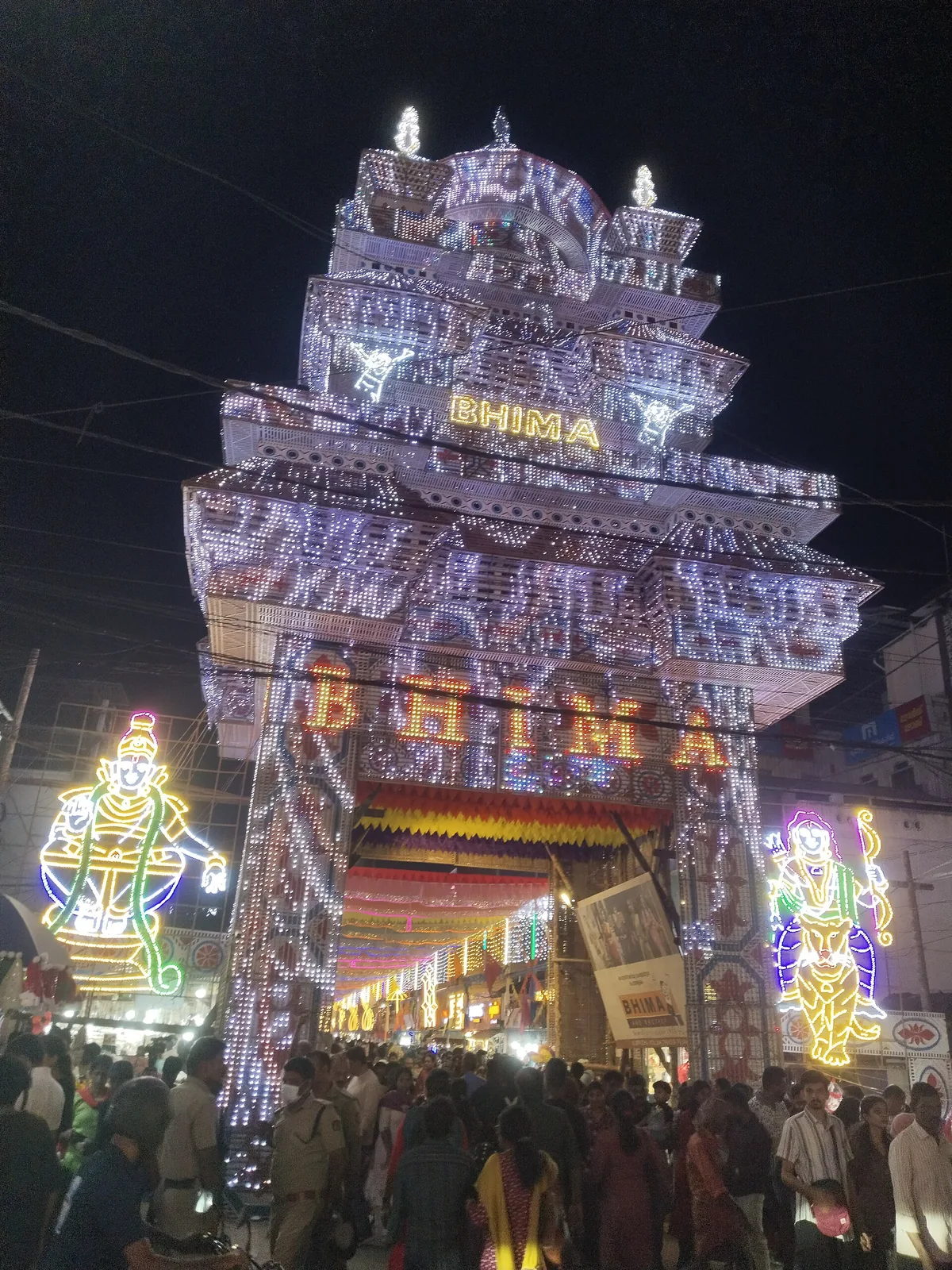
You will not get through a day in Alappuzha without being told it is the Venice of the East. It is on signage, in brochures, on hotel frontages and in a great deal of otherwise careful writing. We think it is worth knowing what the phrase is actually worth.
Roughly forty of them
The Venice of the East is not a title conferred on a city. It is a Victorian travel habit — the reflex of comparing any place with waterways to the one European city the reader was assumed to know.
Something like forty cities across fourteen countries have carried it. Within India alone it has been applied to Srinagar and to Udaipur, neither of which is remotely like Alappuzha or like each other. Beyond India: Suzhou, Bangkok, Dhaka, Basra, Malacca, Osaka, Kyoto, Manila, Palembang.
A label shared with thirty-nine other places is not a distinction. It is a category, and the category is “had water and was written about by Europeans”.
And the Curzon quotation
The nickname usually arrives attached to Lord Curzon, Viceroy of India, along with a quotation about nature having spent upon this land her richest bounties, ending with the phrase itself.
The Curzon attribution appears only in secondary tourism accounts, several of which qualify it as hearsay and at least one of which gives a different date. No cited Curzon document, viceregal tour paper or archival record supports it, so treat the story as local tradition rather than established history.
That does not prove he never said it. It means the attribution rests on repetition rather than on evidence, and repetition is not a source — it is the same shape as a dozen other claims where a famous Briton has been bolted onto a local landmark to give it borrowed weight. Our position is to print it as popularly credited to Curzon, and to say plainly that the credit is unsupported.
What is lost by using it
The real objection is not pedantry. It is that the nickname is a worse description than the truth.
Venice is a city built on a lagoon over centuries, without a plan, by a republic. Alappuzha is a planned Travancore port opened in a single decision in 1762, laid out on two canals dug for two different reasons — one a moat, one a trade artery — to export coir. One of those is a far more interesting thing to be, and it is specific to this town in a way that “has canals, therefore Venice” never can be.
Nor is the borrowed nickname needed. The town has its own annual event, and it is not shared with thirty-nine other cities: Mullakkal Chirappu, a 41-day festival culminating in December, when the temple street rather than the waterfront becomes the centre of the town, strung end to end with illuminations of the kind at the top of this article.
Use the phrase if it helps someone picture the place. Just do not mistake it for a fact about Alappuzha. It is a fact about the people who named it.
Frequently asked questions
Which cities are called the Venice of the East?
Around forty across fourteen countries, including Srinagar and Udaipur in India, plus Suzhou, Bangkok, Dhaka, Basra, Malacca, Osaka, Kyoto, Manila and Palembang. It is a Victorian travel comparison rather than a conferred title.
Did Lord Curzon call Alappuzha the Venice of the East?
It is popularly credited to him, usually with a quotation about nature’s richest bounties, but we could find no primary record — no Curzon document, viceregal tour paper or archival citation. Every source carrying it is secondary and tourism-oriented, several hedge it with “it is said”, and one dates it differently. Treat it as unverified.
What is Alappuzha actually distinctive for?
Being a planned port. It was opened in 1762 by Raja Kesavadas and laid out on two parallel canals cut for opposite purposes — the Vadai Canal as a defensive moat, the Commercial Canal for trade — and that plan still explains the shape of the town. It is also where India’s first coir factory opened, in 1859.
What is Mullakkal Chirappu?
The town’s own annual festival at the Mullakkal Devi temple — 41 days, culminating in December, when the temple street becomes the centre of the town and is strung with large illuminated gateways, many of them commercially sponsored.