A lighthouse photograph usually ends at the lantern. The museum at Alappuzha invites visitors to begin there instead: what produced the light, what shaped it, and how did a mariner recognise it? A lamp displayed behind glass turns that distant point of brightness into an object with parts, materials and a particular method of operation.
Start with one object
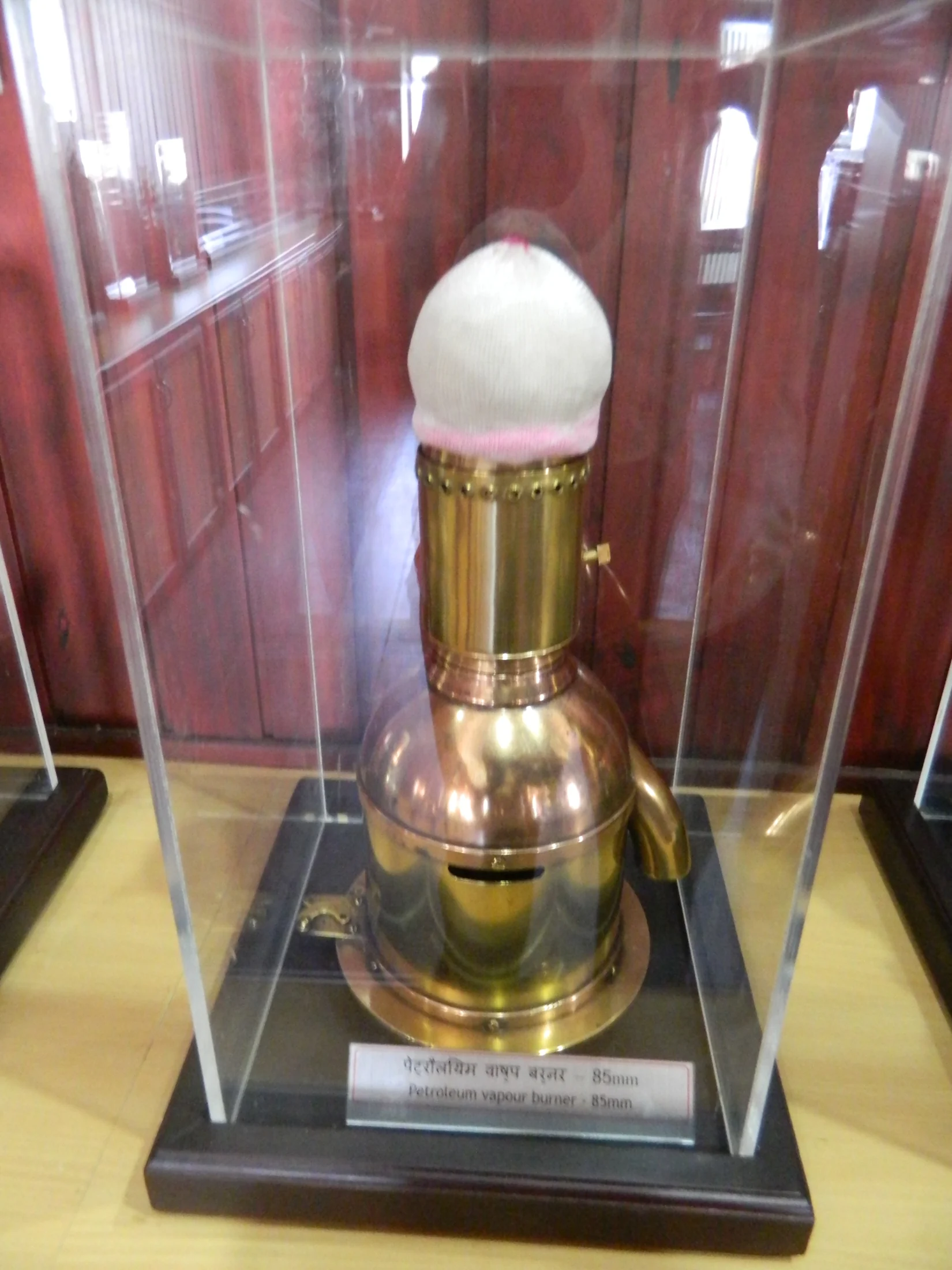
The petroleum-vapour burner shown here has a pale mantle above its metal body and an identifying label beside it. The object is modest in size compared with the tower outside. That contrast is useful. The building supplies height and shelter, but the signal depends on much smaller equipment arranged within the lantern.
Look first at the visible shape before moving to the label. Notice the separation between the supporting body and the light-producing part, then look at how the exhibit is held upright. A careful observation of one object gives the museum a starting point; it is easier to compare the next lamp once there is a concrete form to compare it with.
The lamp is only part of the system
The operator’s museum account lists optical apparatus as well as lamps. These belong together because producing light and directing it towards the sea are different tasks. The shape and arrangement of optical surfaces matter alongside the source of illumination. A display of equipment makes that relationship more tangible than the simple phrase “lighthouse beam”.
The same account describes gas flashers, sun valves, lamp changers and a rotating beacon among the exhibits. Each name points to a different operational question: how the light is supplied, how its behaviour is controlled and how the apparatus continues working. Read the explanatory labels for the objects actually on display rather than assuming that every mechanism is part of the present lantern.
A recognisable rhythm
The station ledger records a white flash every fifteen seconds. That characteristic is a form of identification. A visitor sees a tower with red-and-white bands in daylight, while a vessel at sea can use the behaviour of the light after dark. The visible building and the timed signal identify the station in different ways.
This is a helpful question to carry from case to case: which part of the equipment produces brightness, and which part helps create or control the signal? The answer will vary by exhibit. There is no need to memorise every model or technical dimension to appreciate the difference between an ordinary lamp and an apparatus built for dependable navigation.
The museum has its own history
DGLL’s heritage nomination describes the conversion of an old ammunition-store building into the museum during the lighthouse’s 150-year celebrations. It also records the return of the original lighting apparatus from the operator’s optical laboratory in Kolkata. The collection links the working station to earlier equipment that would otherwise be separated from its original setting.
Finish by looking at the tower again. The small museum objects now give the distant lantern a more concrete meaning. The building raises a signal above the town, but its function rests on a succession of carefully designed devices. That connection between large structure and small mechanism is the most useful thing to take from the museum.
Sources: The operator’s museum and heritage account and Alappuzha station ledger.
Plan the visit: Alappuzha Beach & Lighthouse.