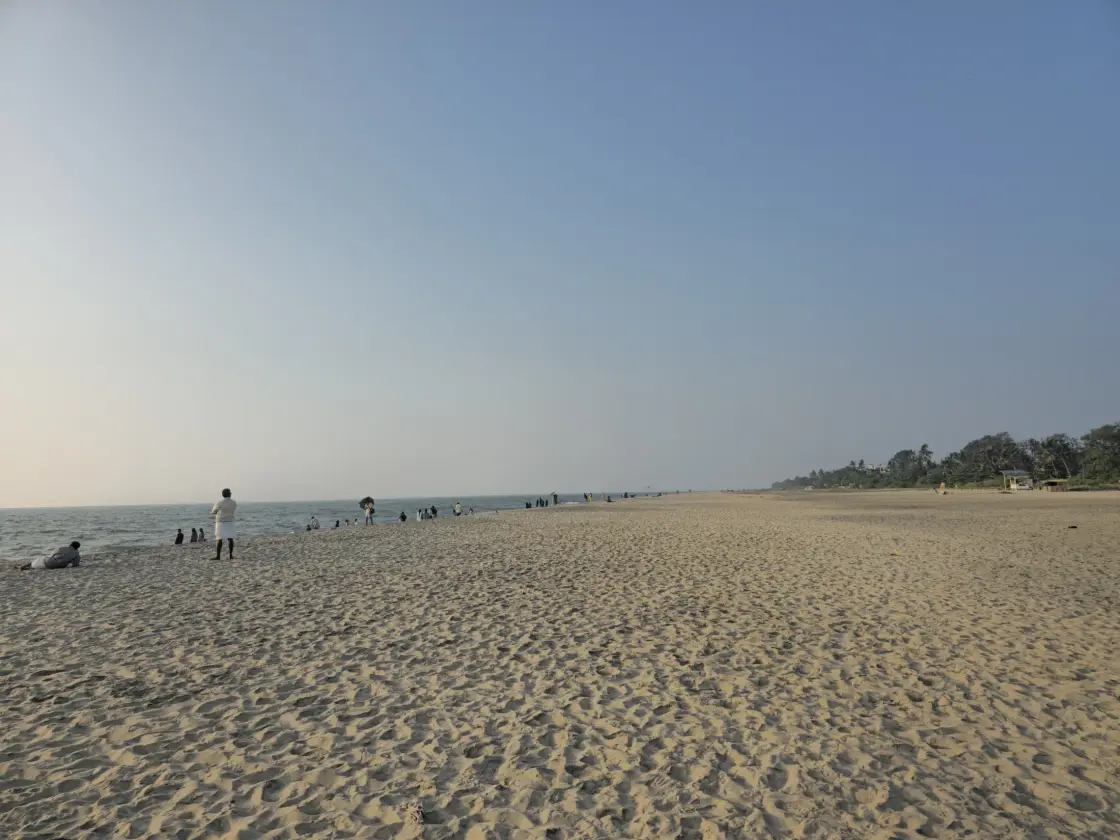
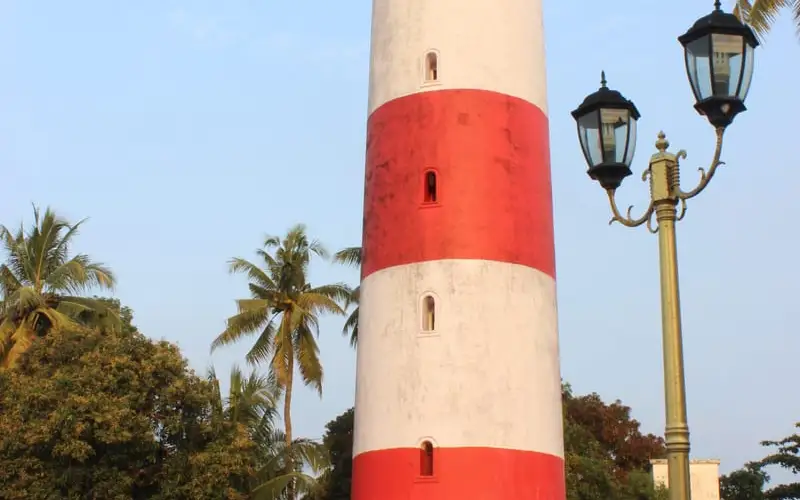
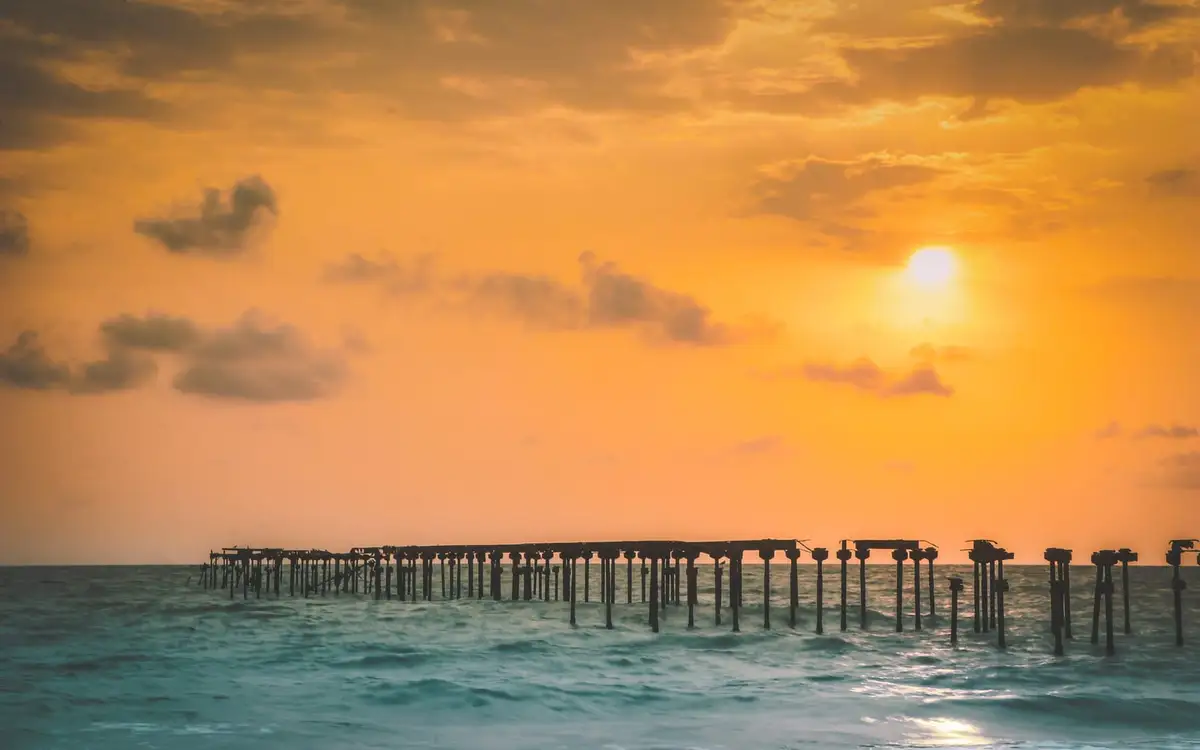
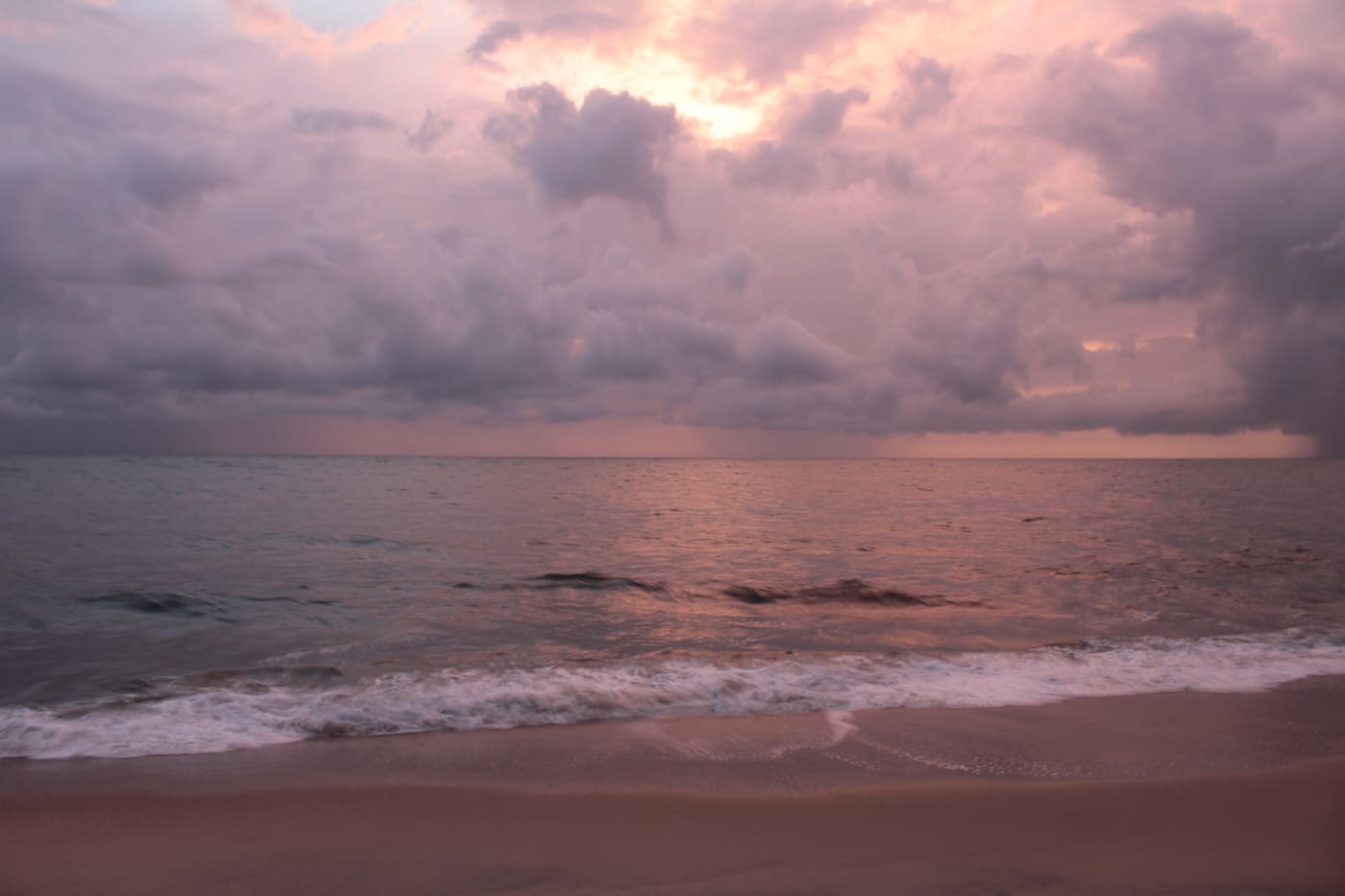
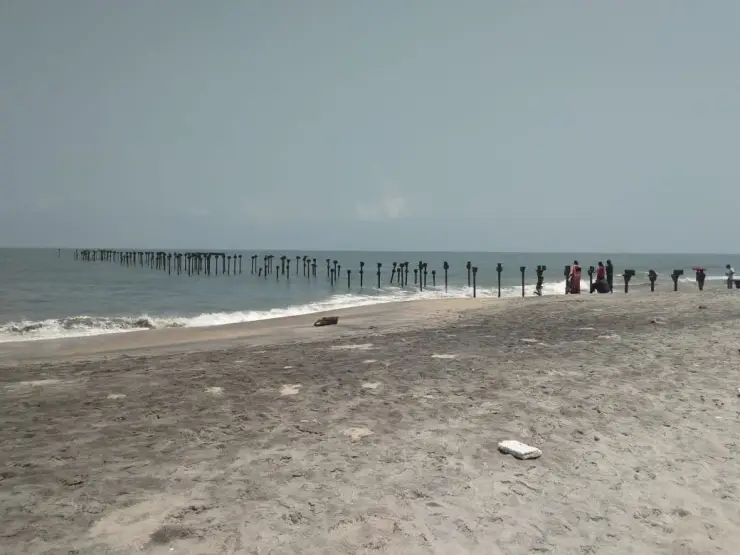
A line of pier posts and a banded tower tell two different parts of Alappuzha’s maritime story. One reaches out into the surf; the other stands back among palms and buildings. Together they make the town’s sea-facing edge easier to read than a beach photograph alone.
The story of Alappuzha Beach & Lighthouse
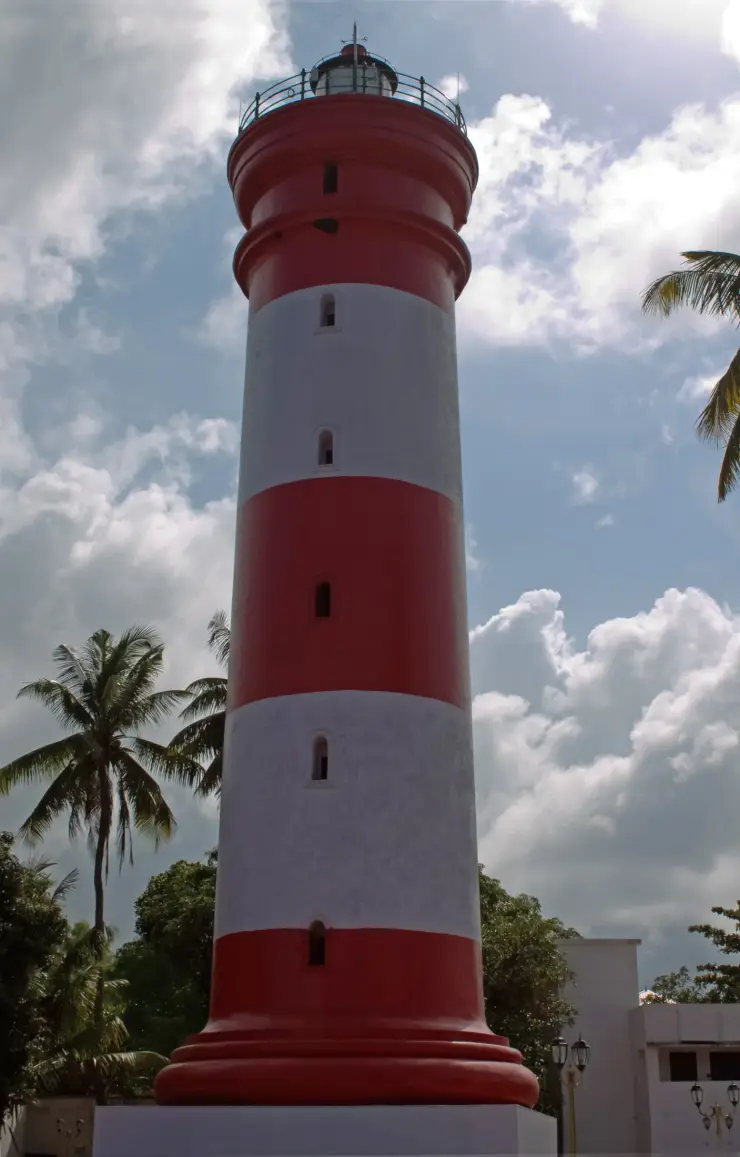
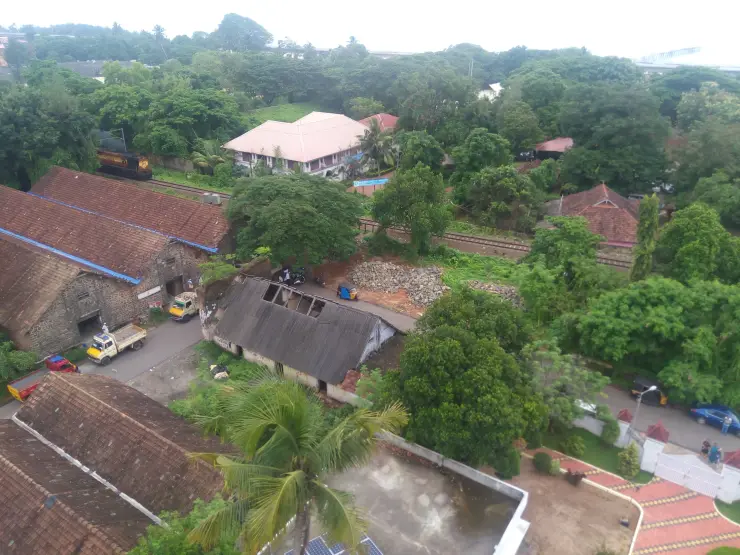
The lighthouse is substantial without dominating every part of the shoreline. Its red-and-white cylindrical shaft rises from a separate compound on C.C.S.B. Road, with a lantern and gallery at the top. From below, palms and tiled roofs provide scale. From above, the sea becomes one element in a view that also includes streets, the railway and the low urban fabric.
The station entered service on 28 March 1862, according to the Directorate General of Lighthouses and Lightships. That date belongs to the commissioned tower, not the beginning of Alappuzha’s relationship with the sea. The port and its inland water connections already formed the setting in which a more capable coastal light became useful.
The maritime heritage account submitted by DGLL describes an earlier light on a port flag mast and a new stone tower proposed in 1860. It names port officer Hugh Crawford in the construction story. These details connect the building to the work of a port rather than presenting it as an isolated ornament on the coast.
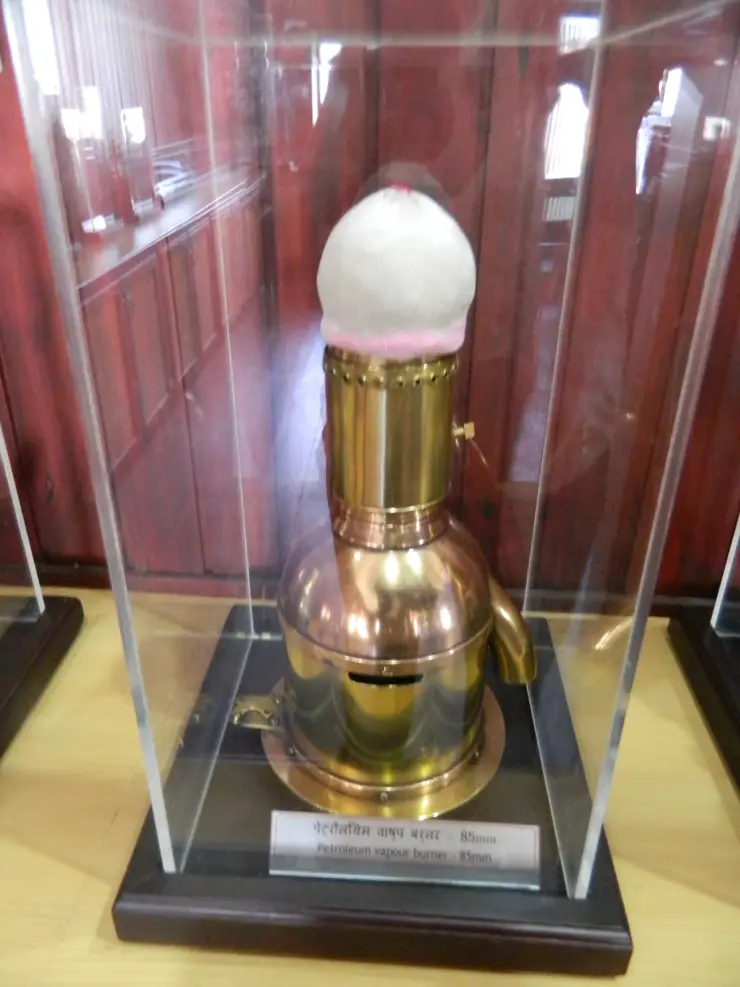
The tower’s survival is only part of the engineering history. The source of light and the apparatus around it changed over time. A visitor looking at the red-and-white exterior sees a persistent landmark; the museum introduces the less visible succession of lamps, lenses and mechanisms that allowed the station to continue doing its job.
DGLL’s ledger describes a revolving beacon and a white flash every fifteen seconds. The rhythm matters: a navigational light communicates through a recognisable characteristic, not simply by shining brightly. The museum’s older equipment gives this otherwise abstract function a physical form in glass, metal and carefully arranged optical surfaces.
The museum occupies a historic building within the station. In its heritage nomination, DGLL describes the conversion of an old ammunition store and the return of the original nineteenth-century lighting apparatus from its optical laboratory in Kolkata. The station therefore preserves both a working signal and objects associated with earlier stages of that work.
At the beach, the surviving pier posts offer a different kind of evidence. Their repeated spacing establishes a direction through the water even where the structure is incomplete. Waves partly conceal the lower sections, and the line changes appearance with the light and sea. The remains can be read from the shore without trying to make them into a walking route.
The landward view is equally revealing. Contemporary beach photographs include the elevated bypass, vendors, open sand and groups of visitors. These belong to the present city. They sit alongside the older maritime traces, showing a waterfront that has continued to change rather than a port scene preserved exactly as it was.
Combining the museum and shore gives the outing a clear sequence. First examine the tools used to signal towards the sea; then stand on the beach and look at the maritime landscape those signals served. The tower, pier remains, roads and railway make more sense as connected parts of a town than as separate items to collect in photographs.
The museum's gas flashers and sun valves explain a less obvious part of lighthouse work: producing a regular signal without keeping a person beside a flame at every moment. DGLL's heritage account lists these mechanisms alongside lamps, drum optics and lamp changers. Compare the source of illumination with the apparatus that controls or directs it. They do different jobs, even when assembled into one navigational system, and recognising that distinction makes the larger beacon easier to understand.
The station ledger also separates tower height from elevation above mean sea level. It records a 28-metre masonry tower and an elevation of 33 metres. These are different measurements, not competing answers to the same question. The first describes the structure; the second places the light in relation to the sea. That distinction matters in a building whose purpose is to be recognised offshore, while the visitor experiences its height through an internal ascent and the view from the admitted upper level.
On returning to ground level, look again at the lantern above the red-and-white shaft. The tower carries the equipment into a useful position, while the equipment gives the light its characteristic signal. The museum's objects explain the second task and the exterior explains the first. This is why the station rewards time indoors as well as a climb: a broad coastal view shows where the lighthouse stands, but the smaller glass and metal exhibits explain what the building was constructed to do.