Where Kerala’s coast slows to the rhythm of the tide — a long, palm-fringed ribbon of pale sand fronting a working fishing village, and one of the state’s most beloved unhurried escapes.
The story of Marari Beach
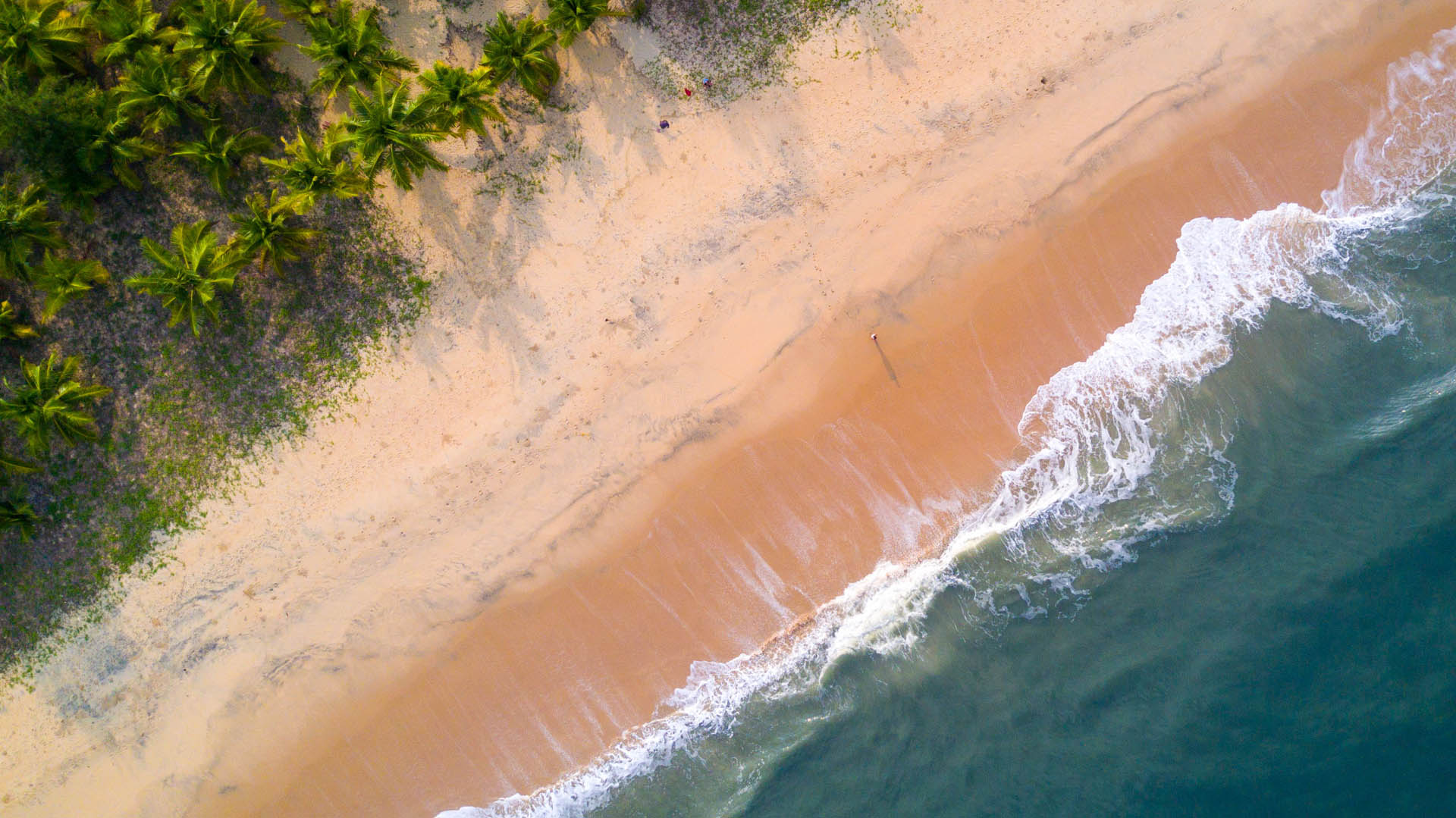
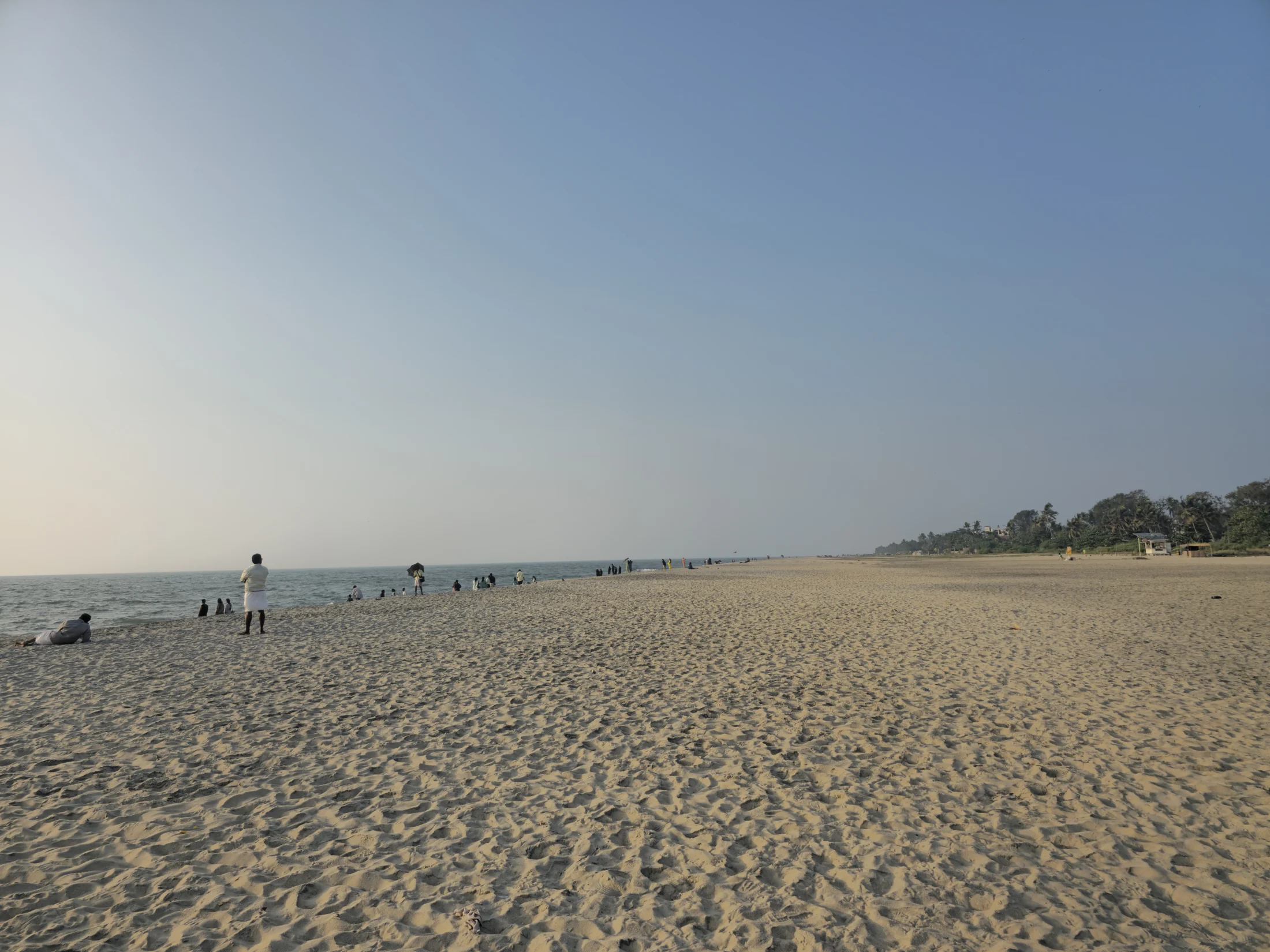
Marari Beach unspools for kilometres along the Arabian Sea coast at Mararikulam, roughly midway between the port city of Cochin and the backwater town of Alappuzha (Alleppey). It takes its name — and its soul — from the fishing village of Mararikulam that lies just behind the dunes. This is not a manicured tourist strip but a genuine stretch of Kerala shoreline: a wide, gently shelving beach backed by dense coconut groves, catamarans hauled up on the sand, and drying nets strung between the palms.
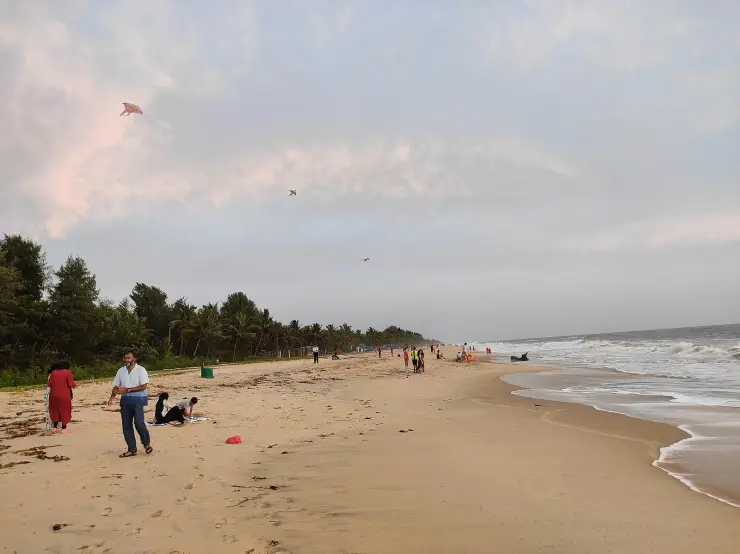
What Marari is depends almost entirely on when you stand on it, and it is worth being straight about that, because a great deal of writing about this beach — our own included, until we went back and looked at the photographs — describes a deserted shore where you meet more fishermen than sunbathers. The pictures do not support it. On a February evening in 2024 a photographer walked this sand and recorded kites by the half-dozen in the air at once, a hawker working the crowd with a rack of kites and balloons, sunloungers, a long row of coloured umbrellas and several hundred people strung out along the waterline. On an ordinary weekday evening in the monsoon, in August 2022, there were still families sitting out, walkers, and children with kites. By January 2025 there were cafe tables and chairs under a line of bulbs slung from a palm. Marari is genuinely quieter than Kovalam or Varkala, and much less built up. It is not empty.
What is exceptional here is not solitude but space. The belt of dry sand is unusually wide — wide enough that the evening crowd gathers in a band along the water and leaves a great pale expanse behind it — and the beach runs so far in both directions that walking for fifteen minutes in either direction will generally give you as much quiet as you want. Come early and you get the other Marari: the boats already out, a few walkers, crows on the tideline and the sand printed only with last night’s footsteps.
The working fishing village is the constant underneath all of it. Each dawn and dusk the fishermen of Mararikulam push their craft out through the surf, much as their families have for generations, and stretches of the beach become a hive of hauling lines, sorting fish and mending nets. Watching a team drag in a laden shore-seine, or a lone figure paddling a small boat out through a grey monsoon swell, is the beach’s great free spectacle — and it happens alongside the kite-flying and the tea-drinking rather than instead of it.
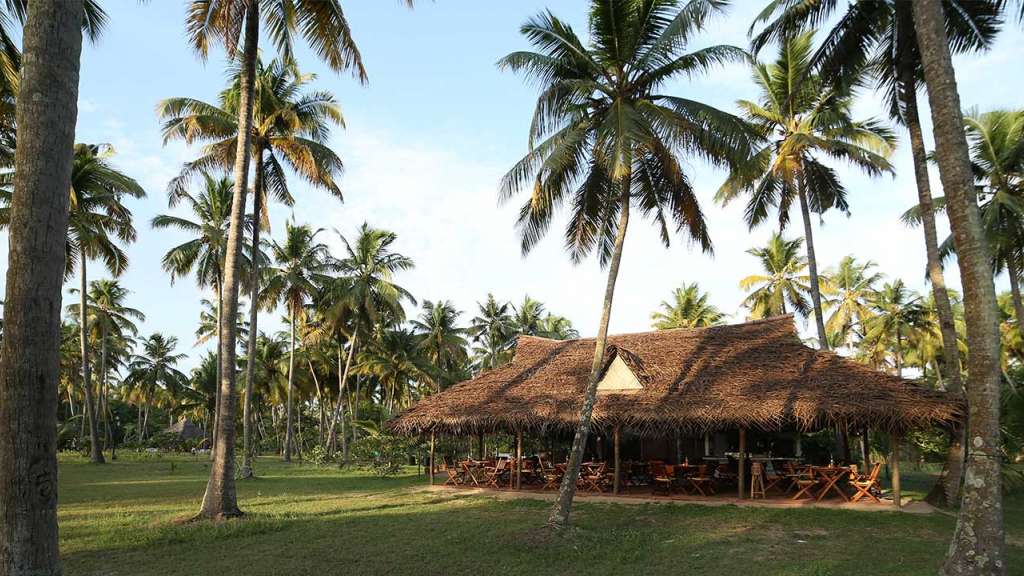
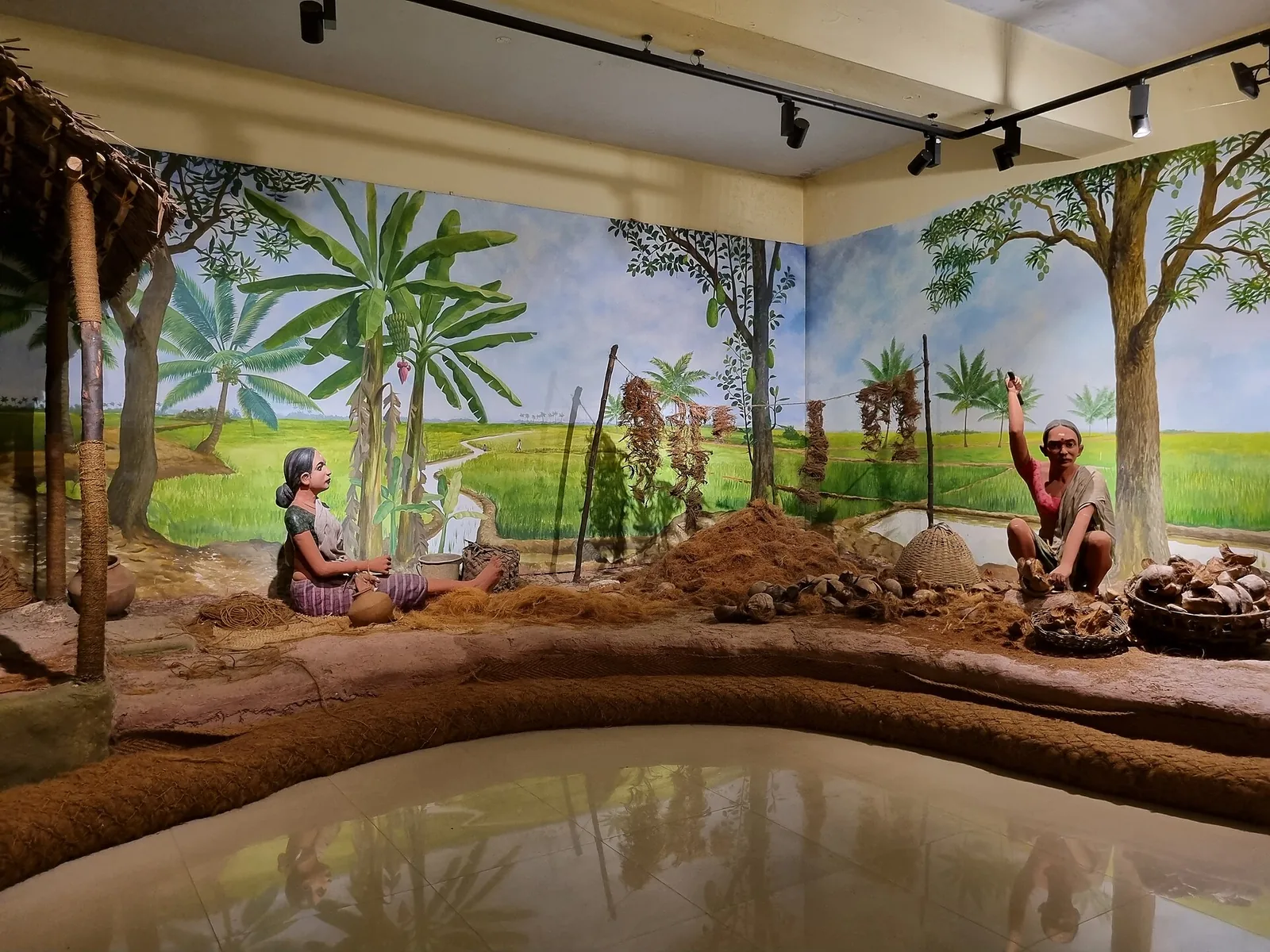
Behind the sand, the landscape is quintessential coastal Kerala: swaying coconut palms, quiet village lanes threading between thatched and tiled homes, little ponds, and pockets of paddy and coir-making. It is flat, green and made for slow exploration on foot or by bicycle. The soundtrack inland is wind in the fronds, the boom of the surf and the occasional bell of a bicycle — the village really is quiet, even on the evenings when the beach is not.
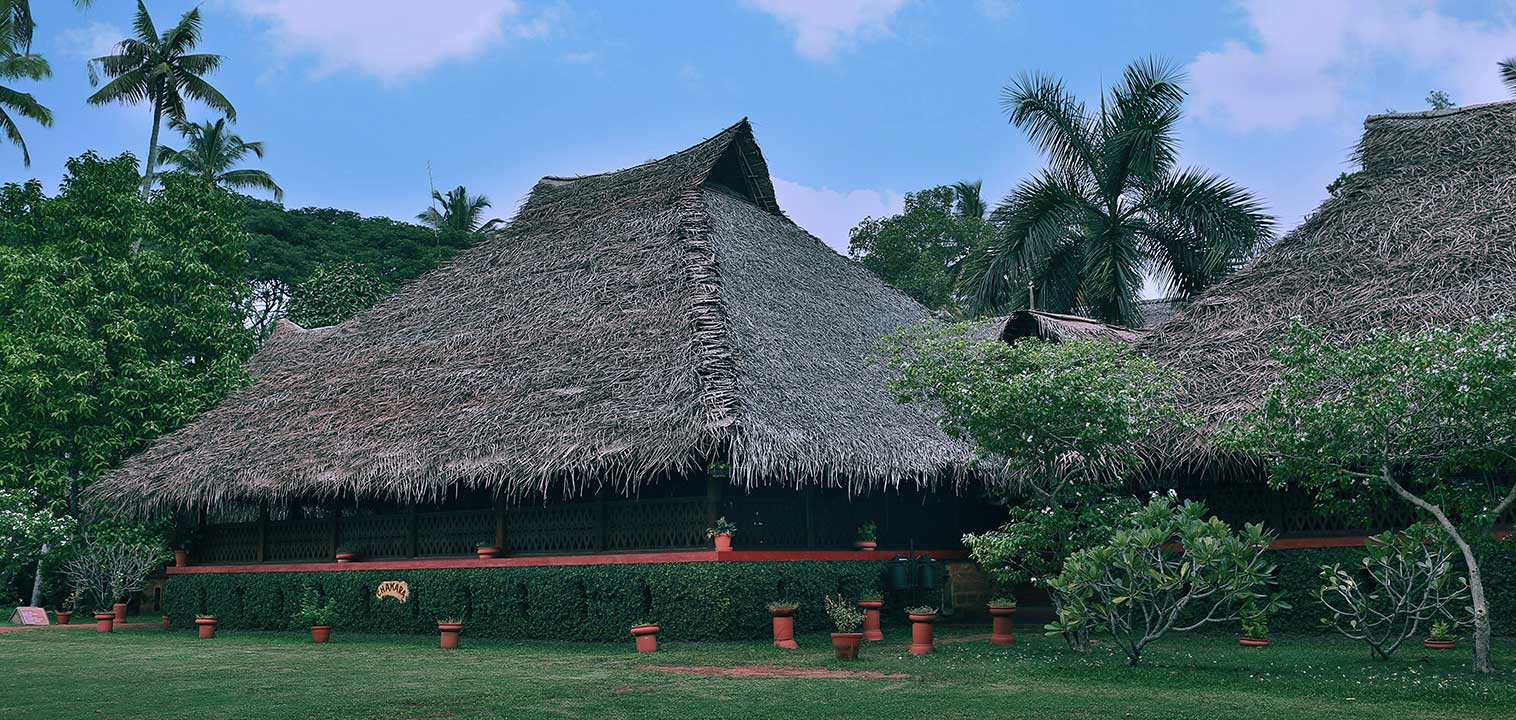
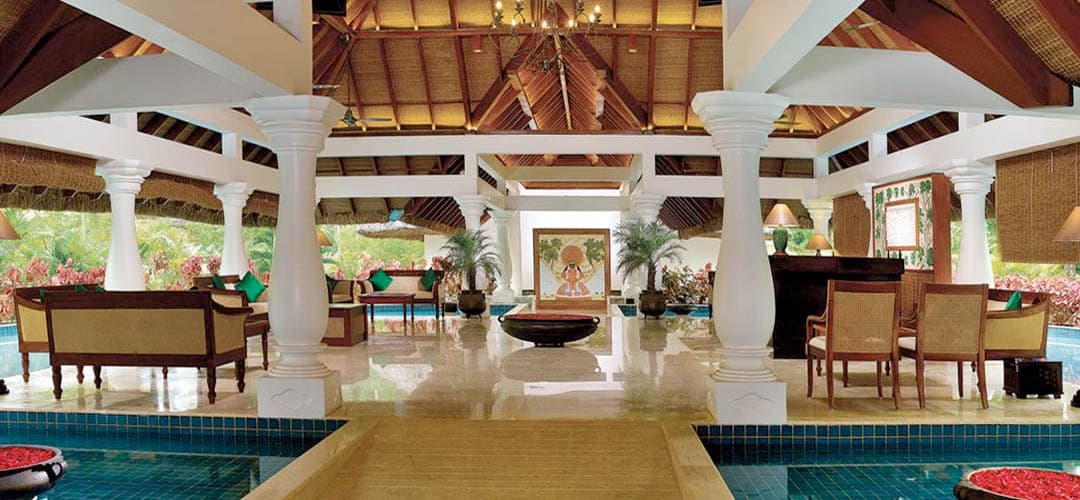
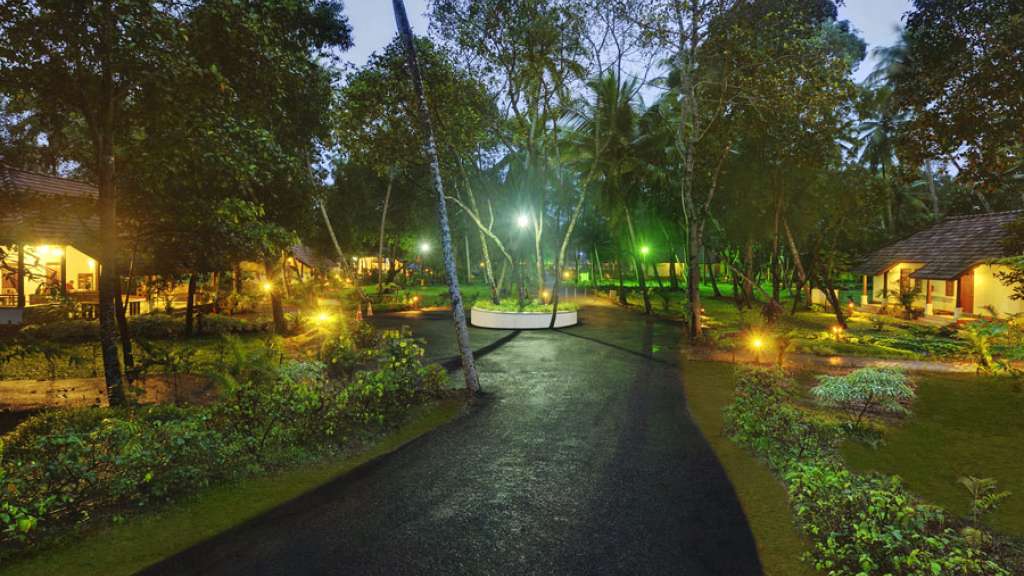
Marari has become synonymous with relaxed, low-key and eco-conscious hospitality. The pioneering Marari Beach Resort, run by the CGH Earth group, spreads across acres of coconut grove behind the beach, its cottages consciously modelled on the fishermen’s own dwellings, and it helped put this quiet coast on the map for barefoot luxury and Ayurveda. A cluster of smaller homestays, boutique retreats and beach guesthouses has since grown up around the village, but the mood stays deliberately unhurried — hammocks, spa treatments, yoga at sunrise and long, lazy lunches of just-landed seafood.
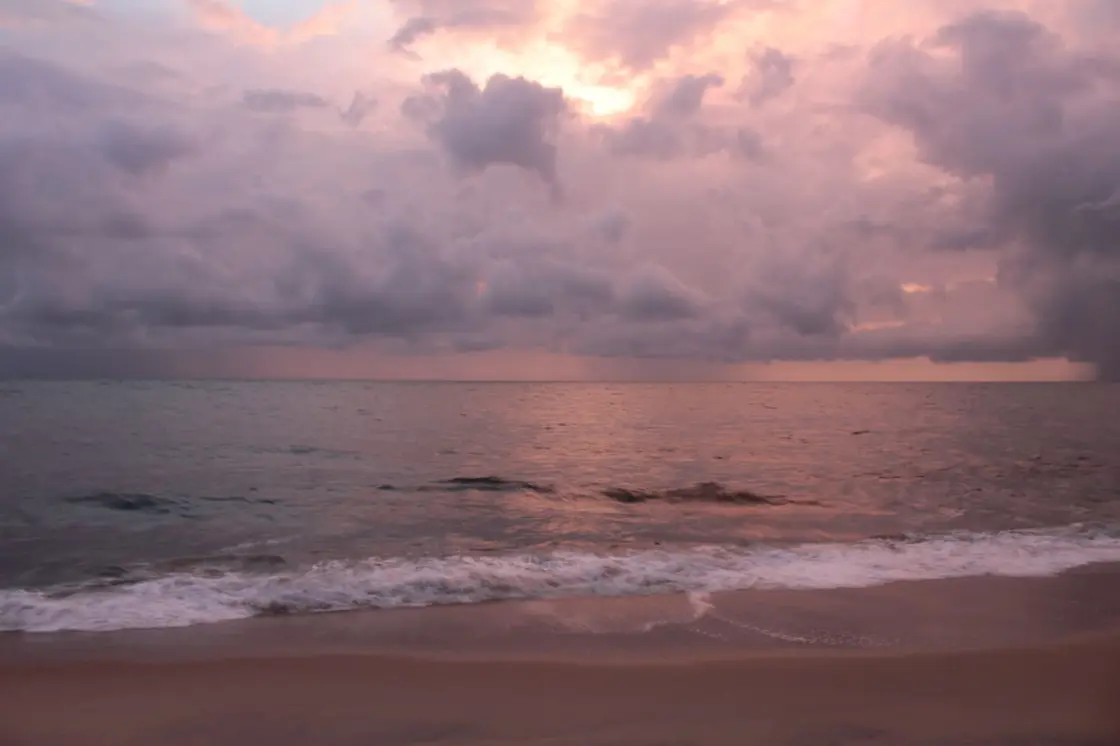
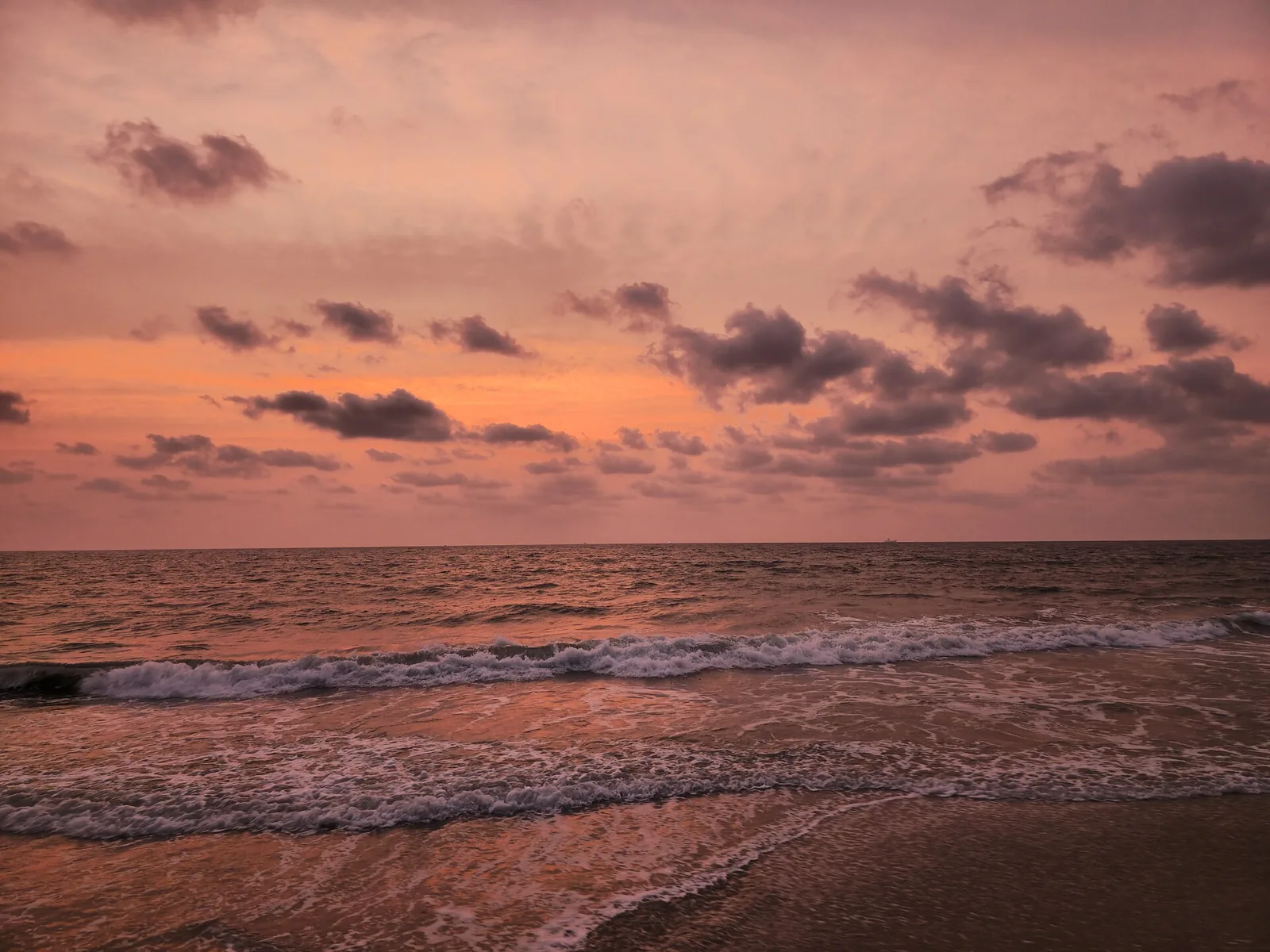
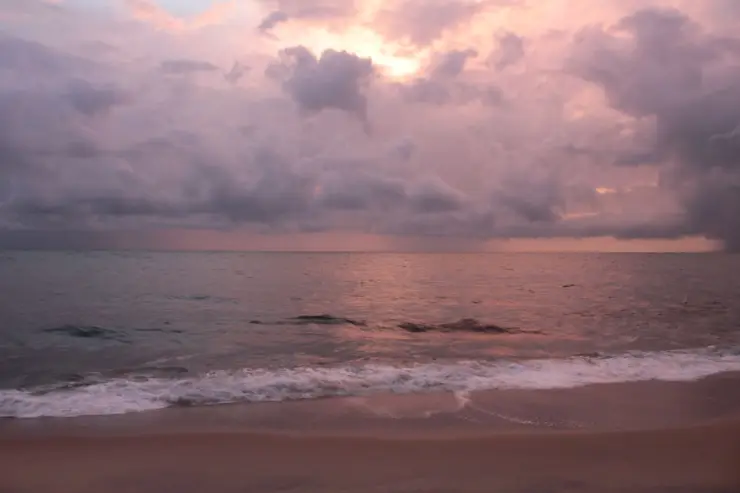
The sunsets are the reward at the end of the day. With the Arabian Sea filling the whole western horizon and palms silhouetted along the shore, the sky over Marari turns molten as the fishing boats come in, and the beach fills briefly with villagers, strolling guests and children playing cricket on the firm wet sand before darkness settles.
What really sets Marari apart is context. It is a tranquil counterpoint to Kerala’s more developed and crowded beaches such as Kovalam and Varkala — quieter, wider, less commercial — while sitting barely a short drive from the Alappuzha backwaters and their famous houseboats. That pairing of restful shoreline and world-class backwater cruising, all within easy reach of Cochin, makes Marari a natural place to begin or end a Kerala journey.
Legend & myth
Marari Beach is the shore of Mararikulam, and the village has a founding legend that ends, once a year, on this sand.
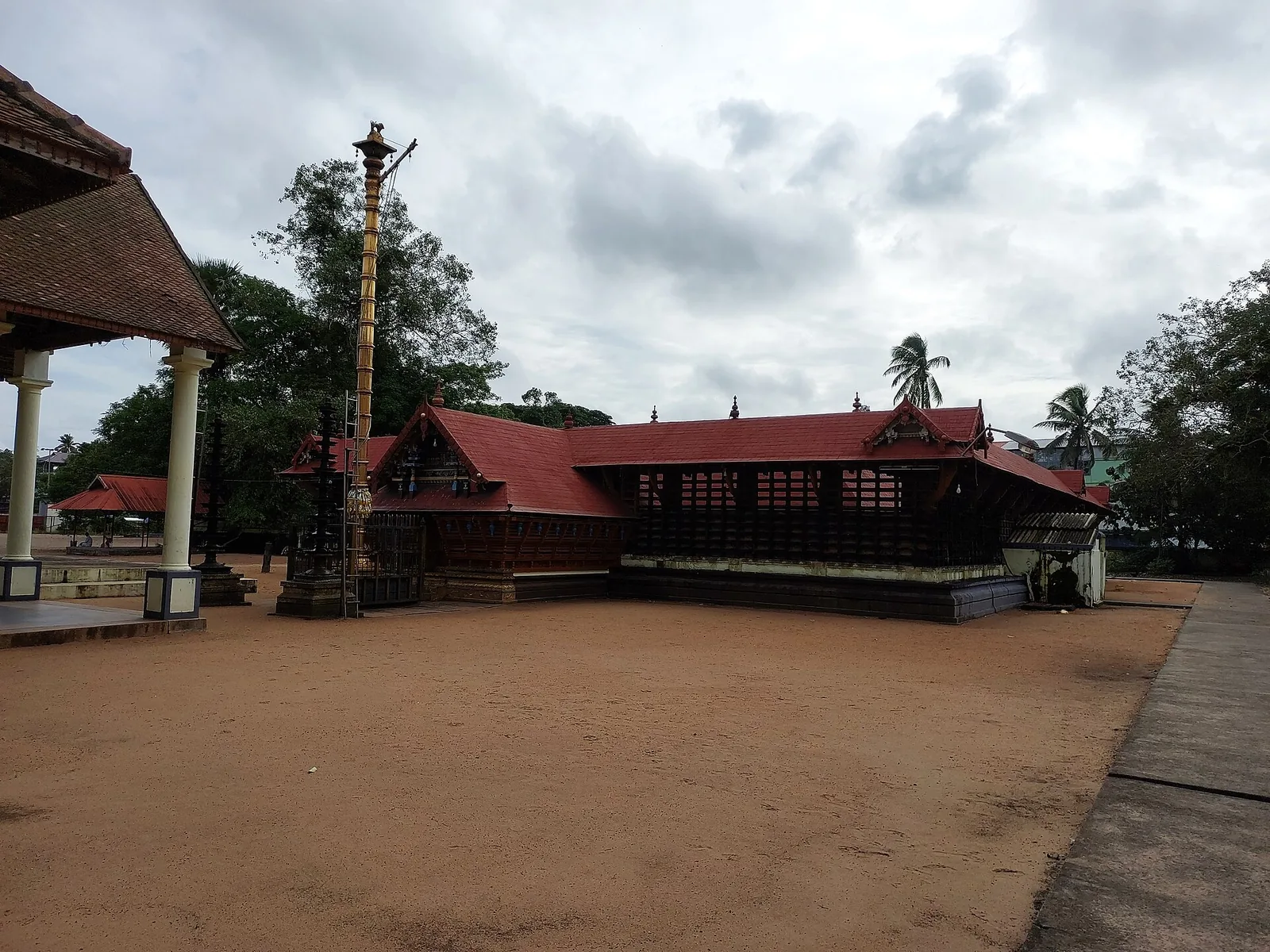
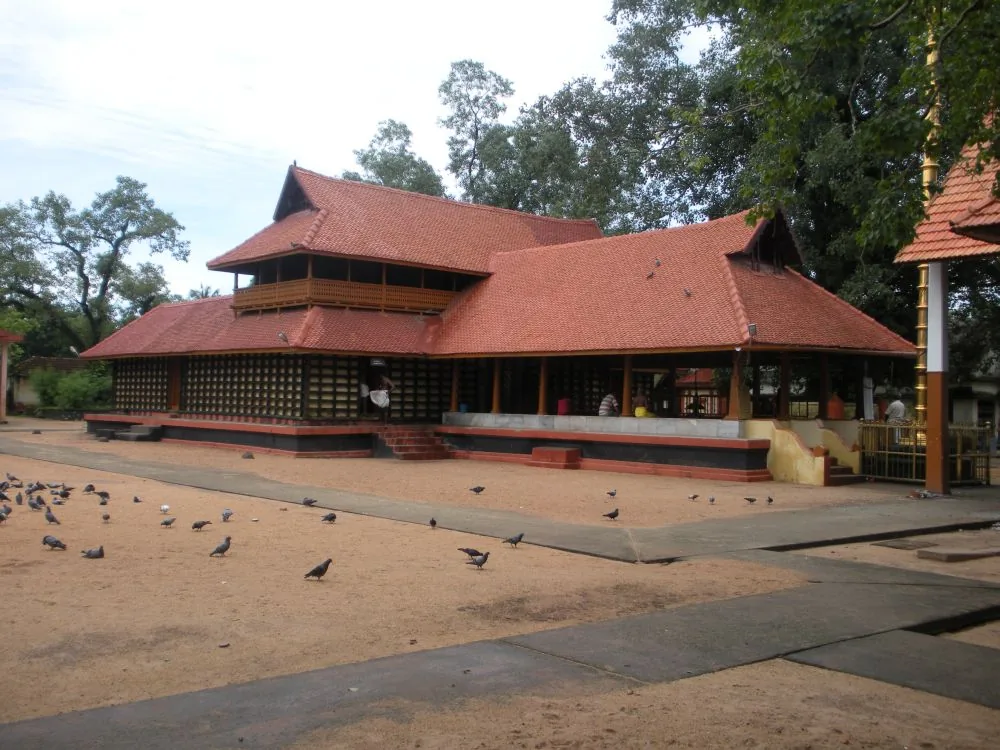
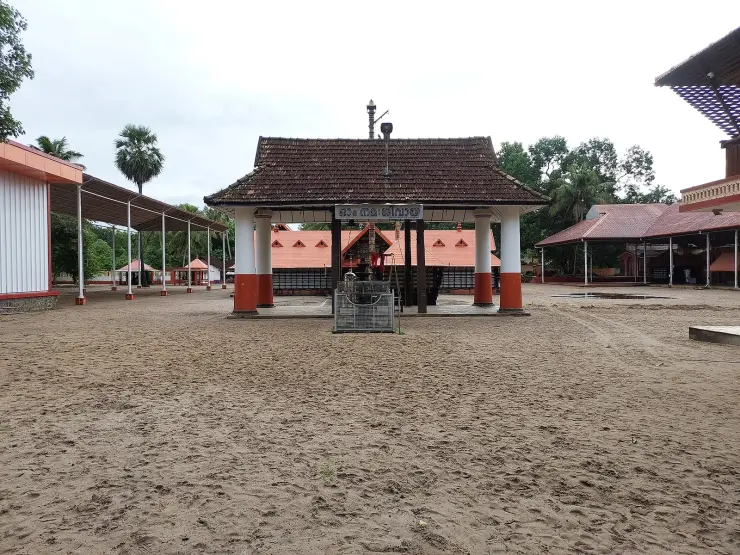
The story is told of the plot immediately south of the Mararikulam Mahadeva temple. A Pulaya woman had come to cut pandanus leaf there. Wanting to sharpen her sickle, she rubbed it against a stone lying nearby — and blood ran from the stone. Terrified, she went to the Valiya Namboothiri of the Paduthol Pazhur Mana, who came and understood what she had found: the blood was flowing from a swayambhu Shiva linga, a lingam not carved but self-manifested. ⚠ The village article says only that a woman found it; the temple's own article specifies a Pulaya woman, and we follow the fuller telling rather than the one that leaves her caste out.
The Namboothiri prepared a particular payasam, called śaiśyam, and offered it to the stone in propitiation. That offering never stopped. Śaiśyam remains the chief nivedyam of Mararikulathappan to this day, which makes this one of those legends whose proof is on the offering counter — a dish still being cooked because of what a woman with a blunt sickle found in a field. A second self-manifested stone nearby was identified as Swayamvara Parvathi.
The shrine that stands there now grew backwards out of that discovery, and the Malayalam account is careful about the order. What existed first, on the north side of the present compound, was a temple of Dhanvantari — the physician form of Vishnu, the deity of Ayurveda — known then as the Mannuvelil temple, and running perfectly well. The pandanus grew around it, the mats woven from that leaf were carried to the neighbouring villages and sold, and it was in the plot south of this working medicine shrine that the woman stopped to sharpen her sickle. Only afterwards, with two self-manifested stones to serve, was the great temple built to give Shiva and Parvati equal standing, and shrines added for the sons of Shiva — Ganapati, Subrahmanya and Ayyappan.
The name has its own folk derivation, and it is a compact piece of Sanskrit wordplay: Maran is Kamadeva, the god of desire; ari is his enemy or slayer, which is Shiva, who burned Kamadeva to ash; and kalam is the land. Maran-ari-kalam, the land of the slayer of Kama, contracting over time to Mararikulam. ⚠ The two Malayalam articles do not quite agree, and the disagreement is worth keeping rather than tidying: the village account says the sickle was sharpened on a stone lying at the steps of a pond, and the linga was later installed on that pond bank, which reads the second half of the name as kulam, a pond, quite literally. The temple's own account says kalam, land, worn down to kulam. One name, two stories, and the village tells both.
🔑 And then there is the arattu, which is the reason any of this belongs on a page about a beach. The temple's ten-day flag festival falls in Kumbham, the Malayalam month that straddles February and March: the flag goes up on the shashthi of the dark fortnight, the pallivetta — the god's ritual hunt — is held on Mahashivaratri night, and the whole thing ends on the new moon with the arattu, the ceremonial bathing of the deity. That bath is taken in the Arabian Sea. The procession leaves the temple by its western gate and travels the two kilometres west to this shore, and the god of Mararikulam is bathed in the surf.
This is rare but not unique, and the distinction matters. Malayalam Wikipedia describes Mararikulam as one of the few Kerala temples whose arattu is performed in the sea — and uses very nearly the same sentence of the Janardanaswamy temple at Varkala and the Thiruvanchikulam Shiva temple at Kodungallur, both of which we also cover. So: a small club, not a solitary case. Afterwards the deity is bathed a second time in the temple's south-western pond, the Harinatheertham, which is also where balitharpanam — the offering to the ancestors — is performed on the new moons of Karkidakam, Thulam and Makaram.
The gate the procession leaves by is worth a look on any other day of the year. In 2016 a large sculpture was set above the western entrance: the face of Shiva in his most terrible aspect, the raudra bhava he is said to have worn after burning Kamadeva to ash — which is the same Shiva the whole village is named for. It has become one of the temple's best-known features, and it faces west, down the road to the sea.
So the relationship between the village and this shoreline is not scenic, it is liturgical. Once a year the god of Mararikulam comes down to Marari Beach. If you are on the sand on the right day you are not watching a procession arrive at a viewpoint; you are watching the end of a two-kilometre journey that the whole village makes with him.
Read the full history of Marari Beach 578 more words
History
Mararikulam grew up over centuries as a traditional coastal settlement of Kerala’s Alappuzha (Alleppey) region, sustained by fishing, coir-making and small-scale coconut agriculture. Its life has always been shaped by close interaction with the sea and the neighbouring backwater systems, and the local community relied on indigenous fishing techniques and the seasonal rhythms of the Arabian Sea — a maritime culture that still defines the village today.
The broader Alappuzha coast has long been one of Kerala’s most storied stretches of shoreline. Alleppey, just to the south, rose in the colonial era as a busy port and coir-trading centre laced with canals — attracting the widely shared ‘Venice of the East’ billing — while the lagoons and lakes inland became the celebrated Kerala backwaters. Mararikulam sat quietly within this network as a fishing village rather than a trading town, which is much of the reason it was never built up the way the port and the beach resorts to its south and north were.
Marari’s emergence as a travel destination came late, and by design gently. As Kerala rose to international prominence from the late 20th century on the strength of its backwaters, greenery and culture, the coast at Mararikulam was developed with a lighter touch than the mass-tourism beaches. The turn toward responsible and eco-conscious tourism that gathered momentum in Kerala from the late 1990s suited Marari perfectly, and the beach built its reputation on tranquillity rather than nightlife.
The single most influential development was the Marari Beach Resort, operated by the CGH Earth group — a Kerala hospitality pioneer with roots stretching back to the mid-20th century and a long-standing commitment to ecological responsibility. Set in a coconut grove directly behind the fishing village, with cottages echoing the fisherfolk’s dwellings and cuisine drawn from local traditions, it framed Marari as a place of barefoot, sustainable luxury and Ayurveda, and drew international recognition for its approach. Its success seeded a wider ecosystem of homestays and small retreats along the shore.
Through all of this the underlying fishing economy has endured. Mararikulam remains a genuinely working village where the daily catch, drying nets and beached catamarans are part of everyday life, not a staged attraction — the continuity of that livelihood is precisely what gives Marari its character. What has changed, and changed recently, is who else is on the sand. Alongside the resort guests the beach has become an evening destination for Kerala itself: families driving down from Cherthala and Alappuzha, kite and snack sellers who set up for the last two hours of light, and a fringe of chairs, umbrellas and small cafes at the top of the beach. That is not a decline from some earlier emptiness. It is a working village shore doing what popular Indian beaches do at the end of the day.
Why visit
One of Kerala’s longest and widest beaches — an unusually deep belt of sand, and space to walk for ages.
A genuine working fishing village: watch the boats and shore-seines come in at dawn and dusk.
Quieter and far less built up than Kovalam or Varkala — though busy in the evenings, not deserted.
The Mararikulam Mahadeva temple, 2 km inland, brings its god down to this shore for a sea arattu each Kumbham.
Classic coconut-grove scenery, ideal for cycling and slow village wandering.
Home to pioneering eco and Ayurveda resorts, including CGH Earth’s Marari Beach Resort.
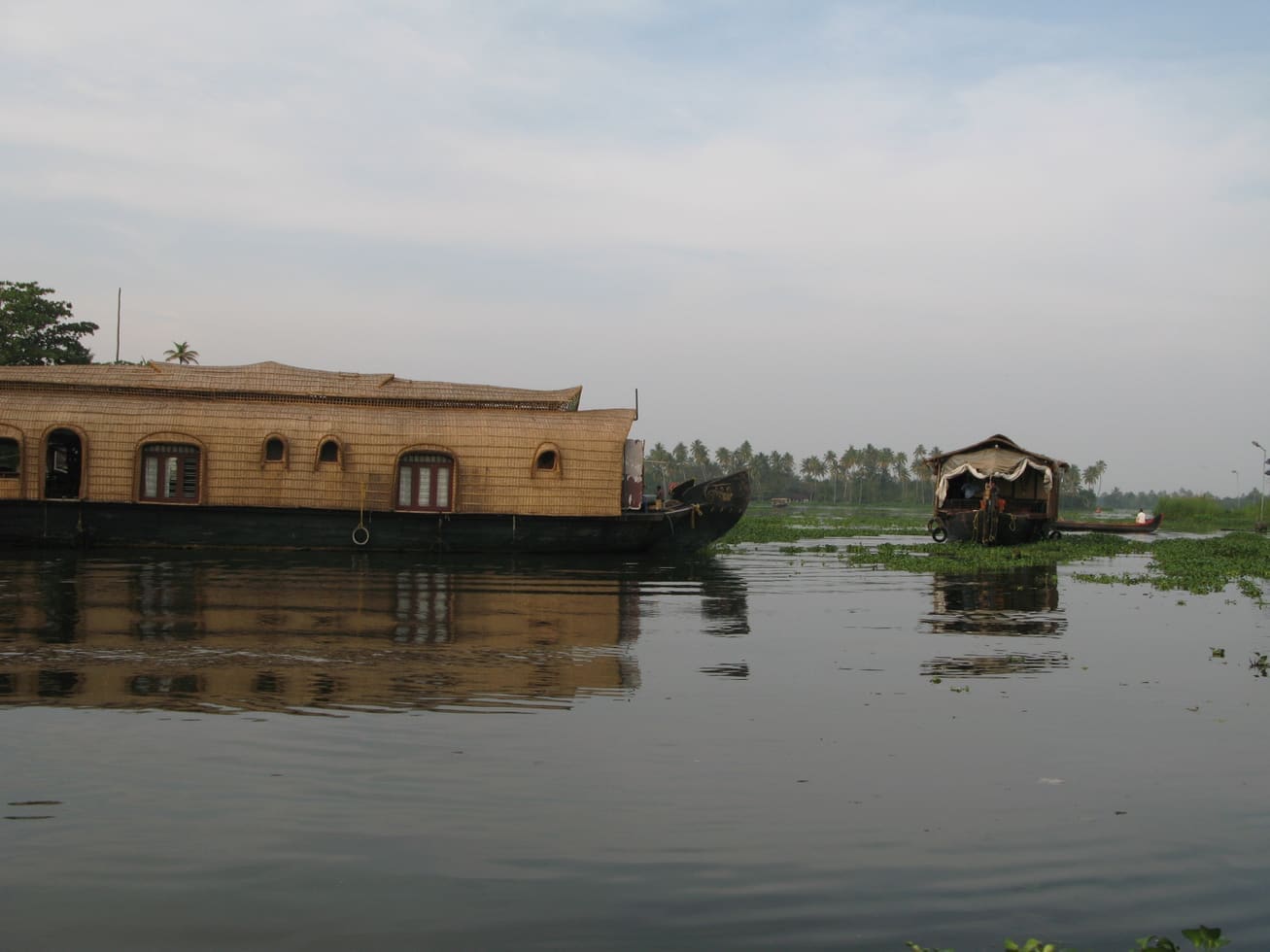
A short drive from the Alappuzha backwaters and houseboats, and easy from Cochin.