What to expect
Highlights
- Temple visit at Cherthala Karthyayani Temple
- Kerala temple architecture and rituals
- Local food, shops and pilgrim services nearby
The Devi temple in the middle of Cherthala town, one of the 108 Durgalayas — where the goddess sits about four feet below ground level, hundreds of cockerels released as offerings live in the compound, and the town’s own name is said to come from the legend of her rescue from the mud.
Check entry arrangements. Ask temple staff about visitor entry, dress requirements and access to the inner shrine before you travel, especially if you are visiting as a non-Hindu.
Dress respectfully and follow the institution’s admission and photography rules.
Cherthala is a working taluk town on the highway between Alappuzha and Kochi, and its temple is not tucked away on the edge of it but sitting in the middle, its gateway opening straight onto a street of flower stalls and watch repairers. Inside, three things are unusual at once. The goddess is not raised on a plinth but sunk about four feet below the level of the ground, on a square of laterite, in a form with no definite shape. Hundreds of cockerels wander the compound, released there by devotees as offerings and simply left to live. And the name of the town itself — Cherthala, the head in the mud — is said to come from what happened here when a wandering sage caught the goddess by the hair as she sank into the seventh pond.
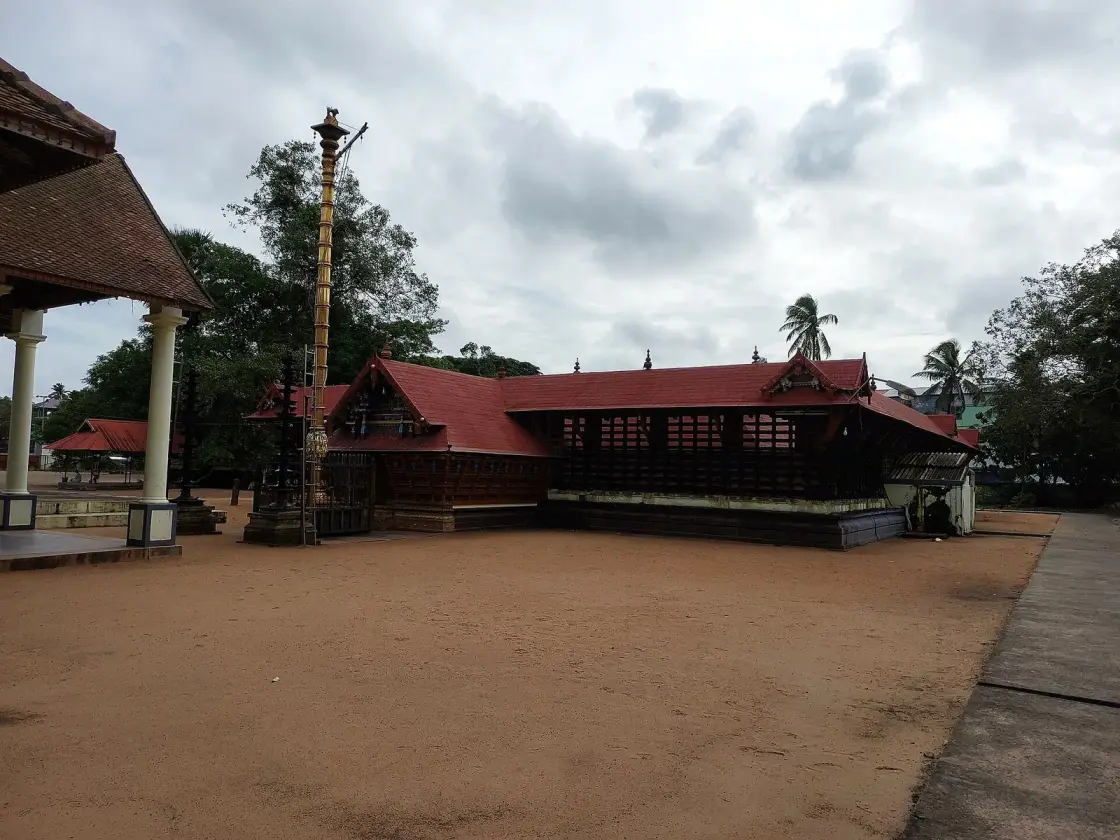
The temple stands in the heart of Cherthala, on the roadside, in a town of about 45 minutes' drive north of Alappuzha on NH-66 and rather less to the southern edge of Kochi. That position matters to the character of the place: the gopuram opens onto shops, the flower sellers work from stalls against the outer wall, and the compound behind is entered from the commercial life of the town rather than approached across fields. Beyond the gate it opens out completely — a very large expanse of red laterite sand, a gold-sheathed flagstaff, a pillared mandapam, and the temple itself under long red-tiled roofs.
The single most striking piece of building here is the wall. The outer face of the nalambalam is covered, corner to corner and floor to eave, in a dense grid of oil-lamp niches — a vilakkumadam of hundreds of small black cells, so that on a festival night the whole rectangle of the temple can be outlined in flame. Bells hang under the gables above it. It is worth walking the full circuit of the outside for that alone, and it is the frame that most repays a photograph.
The presiding deity is Karthyayani, counted among the Navadurgas and understood here as the gentle, beautiful aspect of Adiparashakti; the temple is one of the 108 Durgalayas, and it is administered by the Travancore Devaswom Board. What is unusual is the installation. The goddess is set about four feet below ground level on a square laterite platform, facing east, and the form is described as having no definite shape — the English source likens it to a Shivalingam. Because she rose rather than was placed, the tradition holds the presence to be swayambhu, self-manifested. She is worshipped in several aspects, as Mahakali, Mahalakshmi, Mahasaraswati and Parvati, and she is known as Mangalya Dayini, the giver of marriage, so that families come here about obstacles to a daughter's wedding.
There are three sreekovils, not one. Besides the Devi, both Shiva and Vishnu are installed, which the Malayalam account notes as a rare arrangement — the two are not often given full sanctums together in the same Kerala temple. The sub-shrines include Ganapati, the serpent deities, and a Sastha who is known here by the local name Kavudayon and who carries more weight than a sub-deity usually does; he has an offering of his own, the Aalthadi, made by people seeking relief from bodily illness.
Then there are the birds. The principal offering at Cherthala is not a lamp or a garland but a cockerel: devotees buy a bird and release it into the temple, and the released birds stay. The result is that the compound has hundreds of them, and you meet them the moment you walk in — roosters on the sand, on the steps, along the walls, entirely unbothered. A visitor who knows nothing else about the temple will remember this, and it is worth knowing in advance that they are not strays but the visible accumulation of a vow.
The other great offering is thadi, and it is a piece of cookery as much as ritual. Rice flour is mixed with honey, banana, grapes, sugar candy, dry ginger, cardamom and cumin; the mixture is packed into a tube rolled from an areca palm sheath; the tube is buried in the ground and a fire is lit over it, and the offering bakes in the earth. It is vowed against illness. Alongside it the temple's other vazhipadus are the more familiar ones — archana, Rakta Pushpanjali, Swayamvara Pushpanjali for marriage, muzhukappu with sandalwood paste, kalabham, and the thalappoli in which women carry lit lamps on flower-dressed plates in the goddess's processions.
Darshan runs roughly 5 am to noon and 5 pm to 8 pm. The great occasion is the Cherthala Pooram in Meenam (March–April), with padayani performances across several days — a Saraswati Padayani on Pooyam, and further padayanis on Ayilyam, Makam and Pooram, which is the main day. Navaratri in Kanni and Thrikkarthika in Vrichikam are also kept with some ceremony. Two things about the festival are odd enough to be worth flagging, and are set out in the history section below: the flag is hoisted after the festival has already begun, and the arattu happens with a frequency that no ordinary Kerala temple festival matches.
The story here is a chase, and it ends with the name of a town. Vilwamangalam Swamiyar — the sage who recurs through Kerala's temple legends — was travelling and stopped to rest at Cherthala under a tree. Around him lay a scatter of ponds with swans on them. While he sat there he caught sight of a young woman of unmistakable divinity, and knew her at once for Karthyayani, one of the Navadurgas. He rose to approach her; she slipped away and leapt into one of the ponds.
The next day the same thing happened, and the next. Six days, six ponds; each time he saw her, each time she went into the water and was gone. On the seventh day she leapt again — but the seventh pond was not clear water. It was thick with cheru, the mud. Before she could go under, the Swamiyar caught her by the hair and pulled her head clear. From that — cheru and thala, the head in the mud — the tradition says the place took the name Cherthala, and the goddess, having been held, stayed.
Two things need saying about that plainly. The first is that it is a folk etymology and we print it as one. A name-story that fits this neatly is exactly the kind of explanation that assembles itself after the fact, and no source we can check offers independent evidence for the derivation; what can be said is that the tradition is local, specific and old enough to be the standard account. We give it as what Cherthala believes about its own name, not as settled linguistics — the same treatment given to Shonadri and Chengannur on our Chengannur pages.
The second is about Vilwamangalam himself. He turns up all over Kerala — our own Pathiramanal page notes that he is attached to sites from Guruvayur to Ambalappuzha, and a legend that needs only a wandering sage can be moved anywhere. So his presence in this story is not evidence of anything. What makes the Cherthala episode worth telling is precisely that it is not portable: it is an explanation of one particular town's name, tied to a specific number of specific ponds, and it cannot be lifted and used elsewhere without becoming visibly absurd.
The sources part company on where he was going. The Malayalam account has him travelling from the Anantha Padmanabha temple at Thiruvananthapuram towards Guruvayur, and resting at Cherthala on the way. The English account has him on his way back after consecrating Padmanabhaswamy, seeing the Devi at this place and consecrating her here. The difference is not trivial — one version has him passing through and being ambushed by a vision, the other has him arriving as a consecrator — and rather than pick, we give both. On the substance they agree: a sage, a divine woman, water, and a goddess who ended up staying.
The seven ponds are not only a narrative device. Descriptions of the temple's annual festival mention them as real features of the place, which is the usual and rather satisfying shape of a Kerala origin legend: the story explains a landscape that is still, more or less, there to be walked around. And the goddess's title of Mangalya Dayini, the giver of marriage, sits oddly well against a legend in which she spends six days refusing to be caught.
There is very little firm dating here, and it is better to say so than to manufacture a chronology. What the temple's standing rests on is its inclusion among the 108 Durgalayas of Kerala — the Durga temples paired in tradition with the 108 Shivalayas, both sets ascribed in legend to Parashurama — and on the scale of its festival rather than on any inscription or charter we can point to. It is administered today by the Travancore Devaswom Board.
One historical fact is precise, and it is not a religious one. On 18 January 1937 Mahatma Gandhi spoke at this temple. The date sits in a charged period for exactly this kind of building: the Travancore Temple Entry Proclamation had been issued in November 1936, opening the state's temples to all Hindus regardless of caste, and Gandhi toured Travancore afterwards. We record the speech and its date because both are documented; we do not put words into it, because we have not seen a text of what he said here.
Two features of the festival are genuinely unusual and are worth setting down carefully, because both are the sort of thing that gets flattened in retelling. The first is the order of ceremonies. In almost every Kerala temple the kodiyettam, the hoisting of the festival flag, opens the utsavam. At Cherthala the Malayalam account states that the festival begins first and the flag goes up some days later — the flag-hoisting falls on the Makayiram asterism in Meenam, and the festival's main day is Pooram. A temple that starts its festival before raising its flag is doing something deliberate, and it is recorded here as a peculiarity of this temple rather than explained, because no source we have explains it.
The second concerns the arattu, the ceremonial bathing of the deity, which at most Kerala temples happens once, at the close of the annual festival. Here our two sources both say it happens far more often, but they do not say the same thing. The English article says the arattu is held twice every day through the annual festival, and offers Chottanikkara — where it is daily — as the comparison. The Malayalam article says there is an arattu on each of the seven days. Those are different claims, we cannot reconcile them from the sources we have, and we would rather print both than average them into a number nobody wrote.
A third claim is best handled by attribution. The English article calls the Cherthala Pooram “the second famous pooram in Kerala”, presumably behind Thrissur. No source is given for the ranking, and a superlative repeated from one page to another is not evidence — so we report that the claim is made rather than making it ourselves. What is not in doubt is that the pooram is a major regional festival with a distinctive padayani tradition attached to it, run across several asterism-days on a very large sand ground built for exactly that purpose.
For the sunken sanctum. The goddess sits about four feet below ground level on a square of laterite, in a form with no definite shape, and the tradition reads that as proof she rose here rather than being installed. It is an arrangement you will not meet often.
For the lamp wall. The outer face of the nalambalam is a solid grid of oil-lamp niches from plinth to eave, hundreds of them, so that the whole rectangle of the temple can be lit at once. Walk the full circuit outside.
For the cockerels. Releasing a rooster is the temple's principal offering and the released birds stay, so the compound is full of them. It is the detail everyone remembers, and it is a vow made visible rather than a curiosity.
For the thadi. Rice flour, honey, banana, grapes, sugar candy, dry ginger, cardamom and cumin, packed into a rolled areca sheath, buried, and baked under a fire lit over it — an offering against illness that is also a genuinely unusual piece of cooking.
For the Cherthala Pooram in Meenam, with padayanis across Pooyam, Ayilyam, Makam and Pooram, on a sand ground big enough to show you what the festival is for. Come in March or April if you can choose.
Because it is in the middle of a real town rather than at the end of a lane. The gateway opens onto flower stalls and shopfronts on NH-66 between Alappuzha and Kochi, which makes it one of the easiest major Devi temples in the district to reach and to fold into a longer drive.
Road km to Alappuzha; ghat roads and traffic vary — allow extra.
Morning or early evening is usually best; festival days can be powerful but crowded.
Live forecast loads in your browser.
Sun and moon are calculated for this location and shown in IST. Photography windows are the hour around sunrise and sunset; the sunset bearing is degrees clockwise from true north. Moon phase is accurate to about half a day.
Verified hotels, homestays, restaurants, experiences, sights, shops and rentals around Cherthala Karthyayani Temple — commission-free, with direct contact. Filter by what you need.
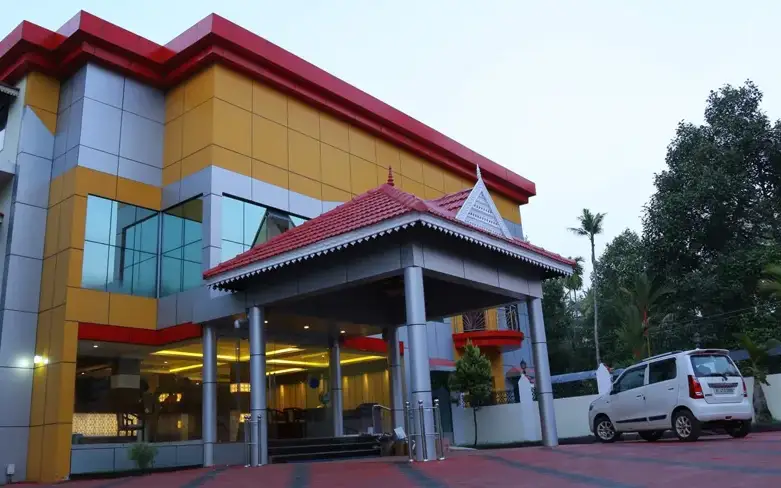
Hotel Keerthy Regency is on Thanneermukkom Road near Cherthala’s KSRTC bus station. Consider it when the bus connection or Cherthala town is central to your trip. Ask which room type is available and whether breakfast and late arrival are included in the quote.
Kerala Tourism-registered Ayurveda centre at Chethy, Cherthala.
KTDC's own lake resort at Thanneermukkom, on the Cherthala side of the Vembanad bund.
Green Leaf-classified backwater resort at Vayalar, Cherthala.
Southern Railway station (code SRTL) on the Ernakulam–Alappuzha coastal line. Cherthala, Alappuzha District, Kerala.
Smrithi Mandapam and literary museum at Raghavaparambil, the poet's Vayalar home.
Kerala Tourism-listed lakeside hotel at Kannankara, Thanneermukkom.
Kerala Tourism 4-star resort at Kanichukulangara in Cherthala taluk.
The KSRTC bus station at Kodathikavala, the town's main road-transport hub.
Government of Kerala IT park and SEZ at Pallipuram, Cherthala taluk.
Cooperative coffee house beside the KSRTC stand, the handiest cheap meal in Cherthala.
Teak-furnished serviced villa at Varanam, let to one family at a time. Pulikan Chira, Varanam P.O., Cherthala, Alappuzha, Kerala.
Registered Ethnic Cuisine home kitchen of the Kerala Responsible Tourism Mission.
Book with the place itself. India’s cyber-crime coordination centre warned in April 2025 that convincing copies of hotel and pilgrimage booking sites are being pushed through sponsored search and social ads, taking payment for rooms the property never hears about. Every listing here links to the business’s own contact details and its own Google or Bing profile — we take no commission and sit in nobody’s payment path. If a booking page reached you through an ad, check the address bar against the property’s own site before you pay. Fraud can be reported on cybercrime.gov.in or on 1930.
Find food, accommodation and activities across Cherthala. Browse the guides for places to eat, stay and explore along your route.
One more place around Cherthala worth a day of its own.
A small inhabited Vembanad-side island near Ezhupunna where sunset, local boat access and respect for residents matter more than conventional attraction facilities.
Roampedia is commission-free — own or know a stay, eatery, guide or shop near Cherthala Karthyayani Temple? List it and it appears here once verified.
Add a nearby businessEntry: No ticket. Vazhipadus — archana, Rakta Pushpanjali, Swayamvara Pushpanjali, muzhukappu, kalabham, the thadi, and the release of a cockerel — are paid for individually at the counter.
Dress code: Travancore Devaswom Board convention — mundu or dhoti for men, who remove their shirts inside; saree, set-mundu or long skirt and blouse for women. Entry to the temple proper follows the usual Kerala practice.
Festivals: The Cherthala Pooram in Meenam, with padayani across several asterism-days. ⚠ TWO ODDITIES, both recorded rather than explained: the kodiyettam (flag-hoisting) falls on Makayiram, after the festival has already started, where almost every Kerala temple hoists first; and the arattu happens far more often than the usual once a year — en.wikipedia says twice every day of the festival, ml.wikipedia says once on each of seven days. Those are different claims and we print both.
Photography: Devaswom rules apply around the sanctum — ask rather than assume. The lamp-niche wall, the sand ground and the flagstaff are the frames that work, and the cockerels are everywhere.
If you are travelling by bus or ferry, check the return service with the operator before setting out. Leave time to reach the stop or jetty after your visit.
Ask at the bus stand for the time of the last service back, not the next one. If you miss it, an auto or app cab is the fallback — agree the fare before you get in.
If you need step-free access, contact the site before travelling. Ask about a level entrance, steps along the route, the nearest drop-off point, seating and accessible toilets.
Charge cap and free-transaction limits: Reserve Bank of India, in force since 1 May 2025.
These services are listed within about 1.2 km of Cherthala Karthyayani Temple. Walking distances follow mapped routes; access and opening hours can change. Other services may be closer but are not included here.
Emergency numbers are verified against official government and state tourism sources. 112 works anywhere in India.
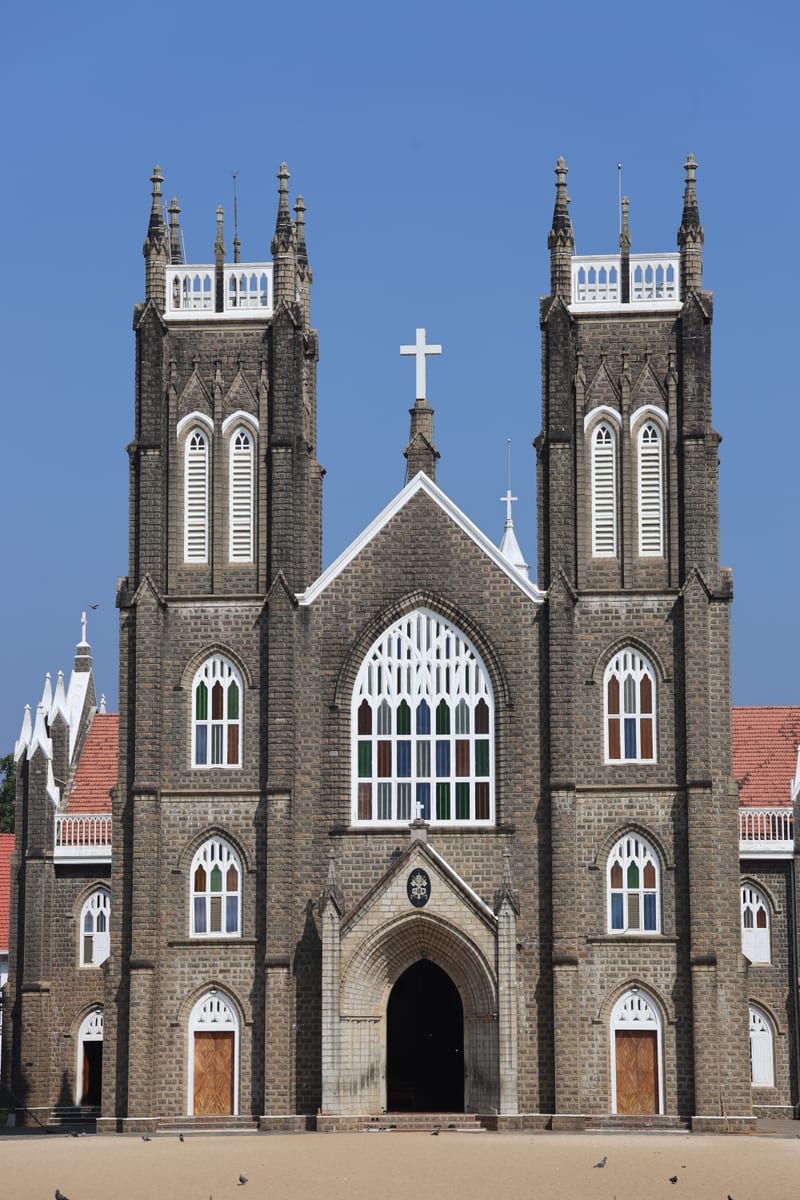
St Andrew’s Forane Basilica at Arthunkal, a major coastal pilgrimage church north of Alappuzha.
5.3 km · ~13 min by auto · straight line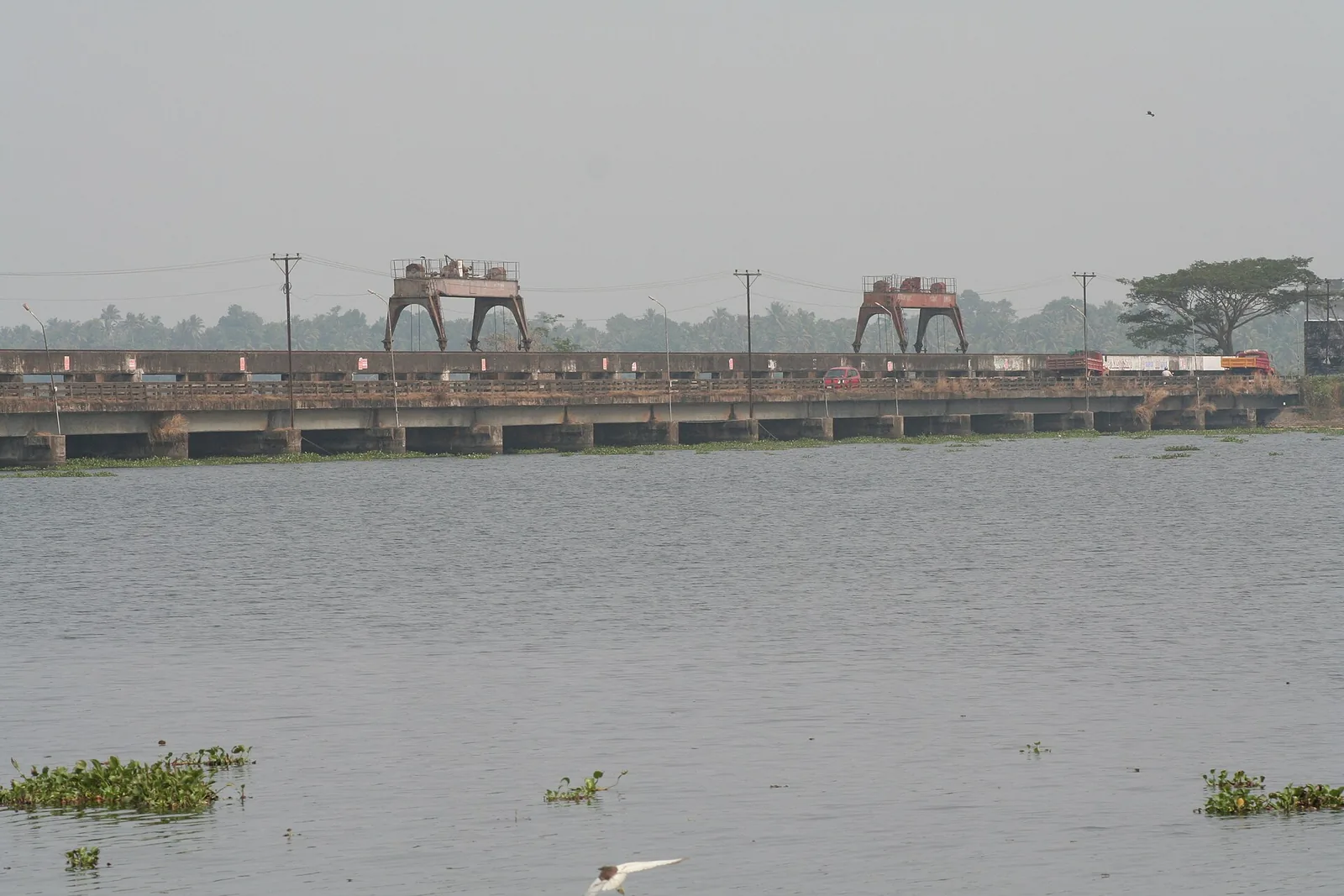
Salt-water barrier and bridge across Vembanad Lake that keeps the sea out of Kuttanad’s paddy in the cropping season — a long causeway with lake views.
6.5 km · ~16 min by auto · straight line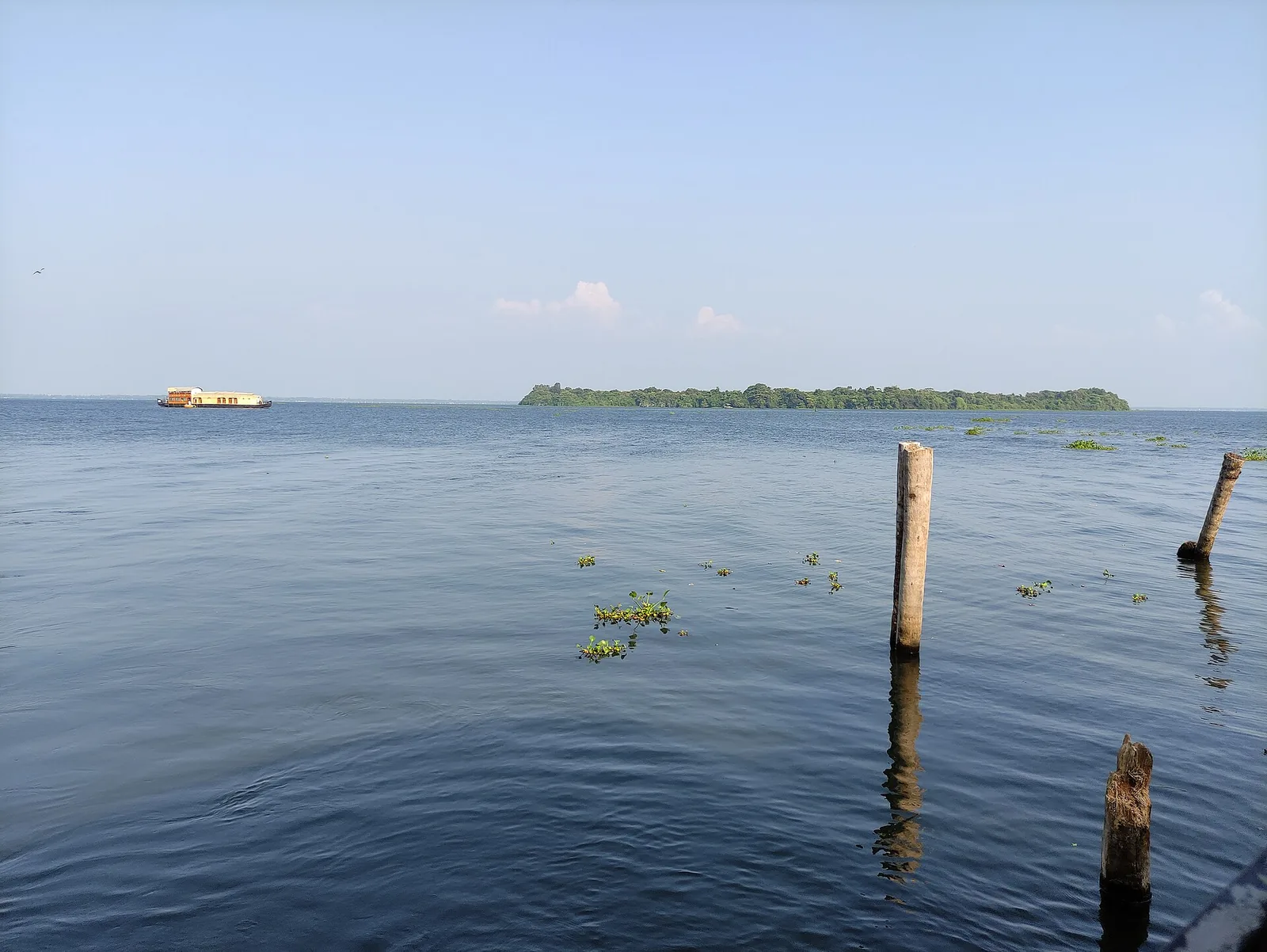
Small Vembanad Lake island known for birdwatching.
8.9 km · ~15 min by cab · straight line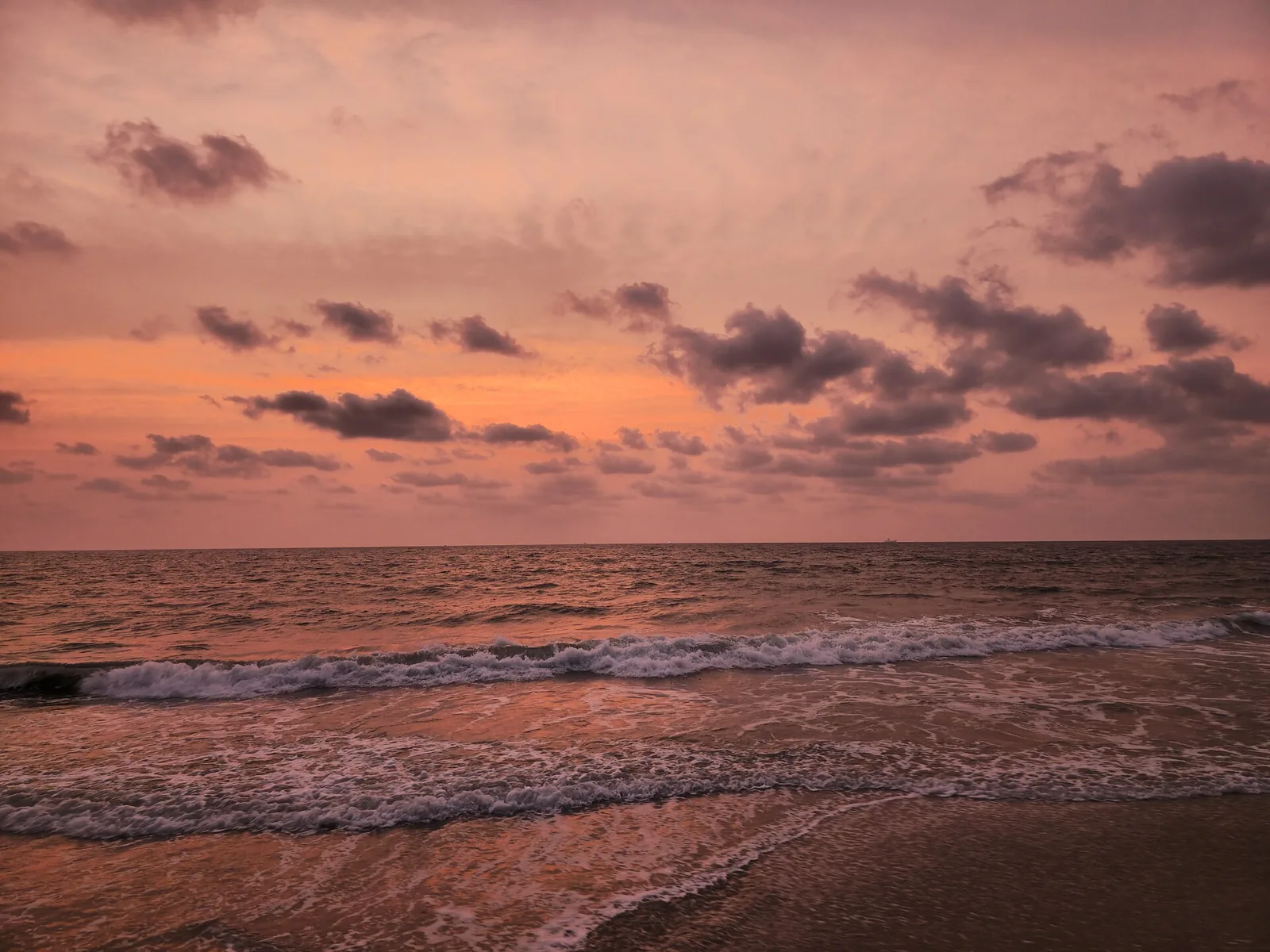
Estuary beach at the north Alappuzha coast near Cherthala where backwater meets sea.
9.3 km · ~15 min by cab · straight line
Quiet beach belt north of Alappuzha, popular for relaxed stays.
10.8 km · ~18 min by cab · straight line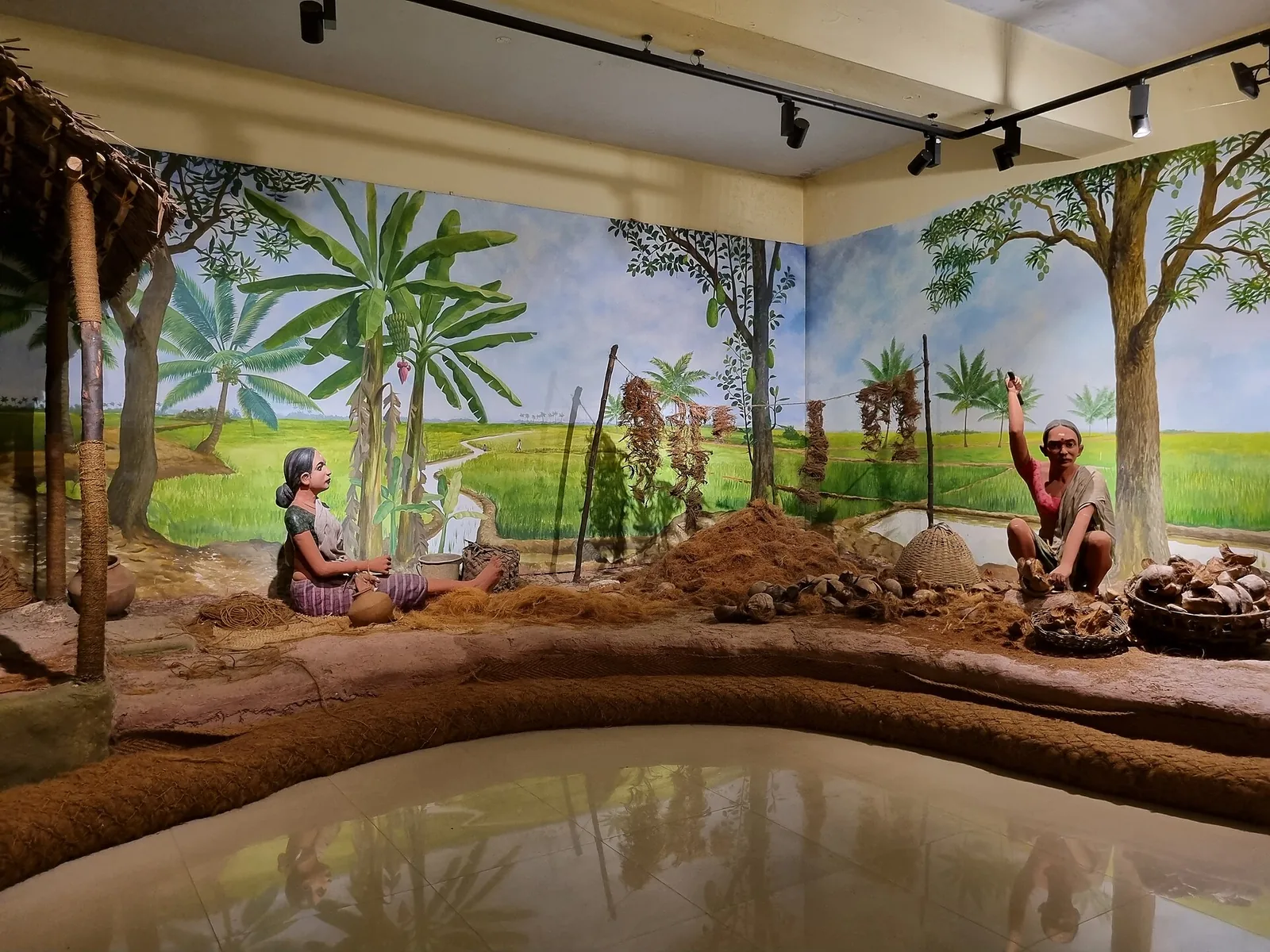
Museum on Kerala’s coir (coconut-fibre) heritage — the craft Alappuzha built its trade on.
13.8 km · ~23 min by cab · straight line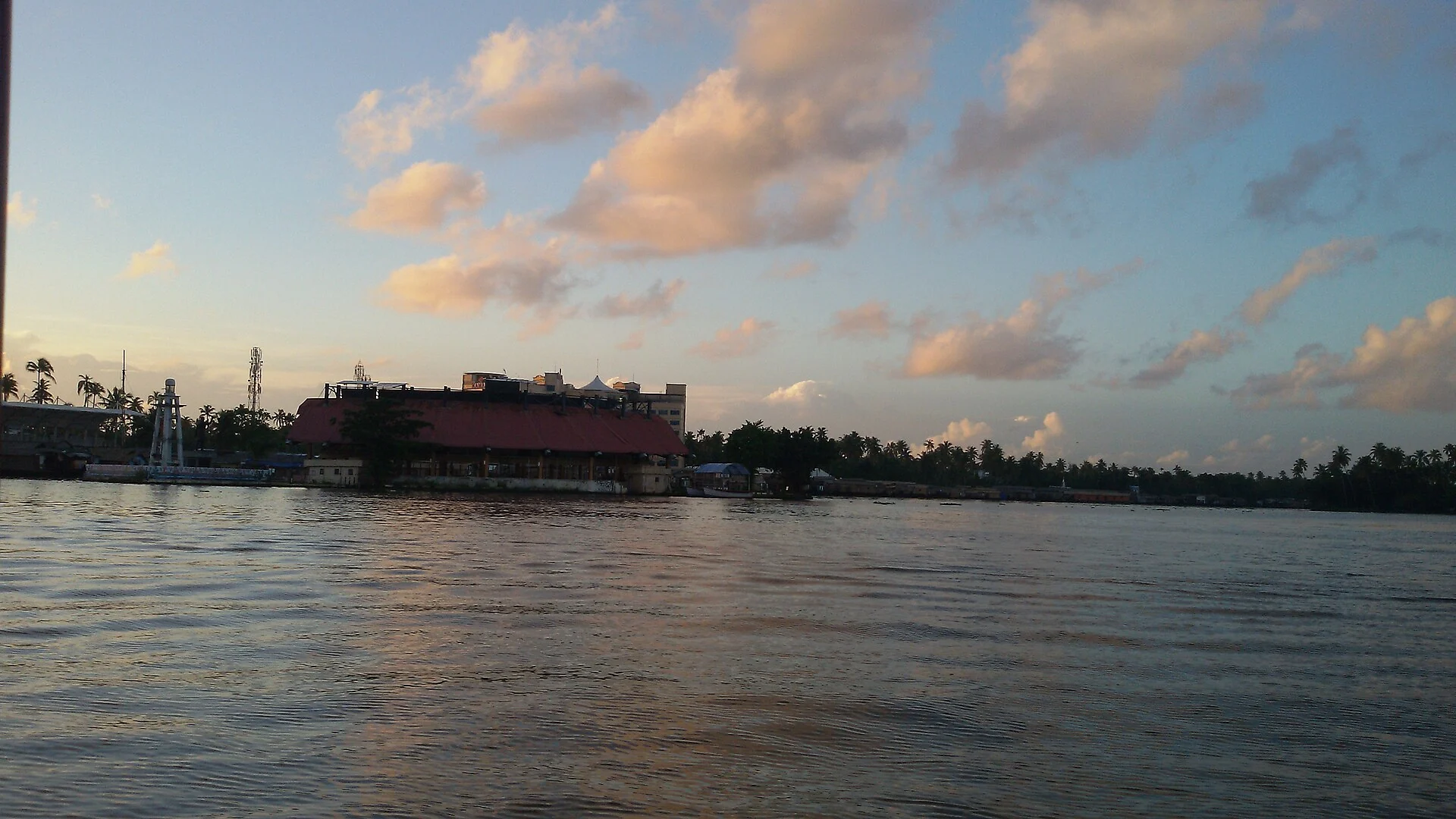
Finishing-point lake of the Nehru Trophy Boat Race and the main houseboat cruising water off Alappuzha.
20.6 km · ~34 min by cab · straight line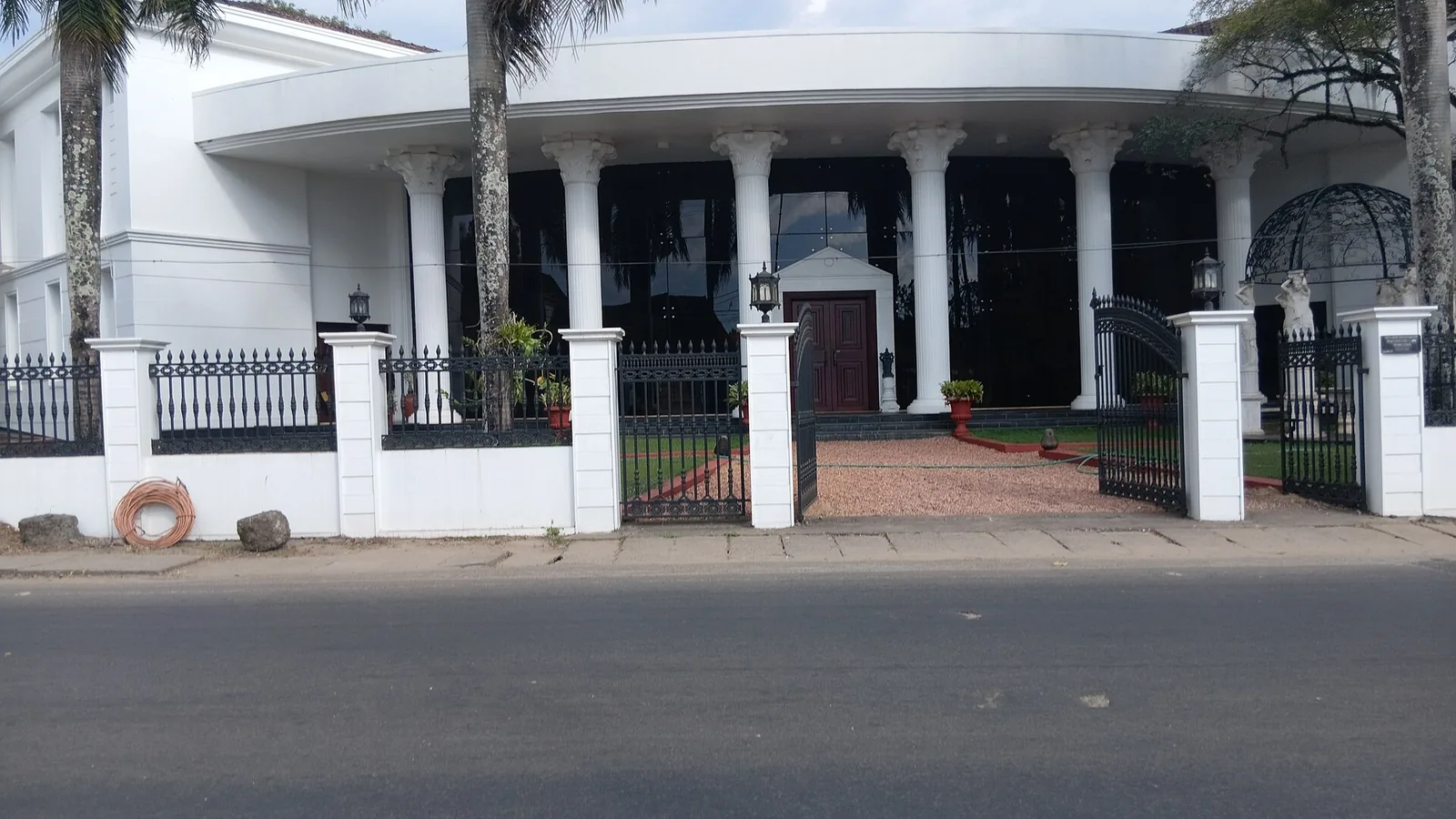
Private memorial museum in Thathampally with a large collection of paintings, ivory, crystal and antiques.
20.8 km · ~35 min by cab · straight line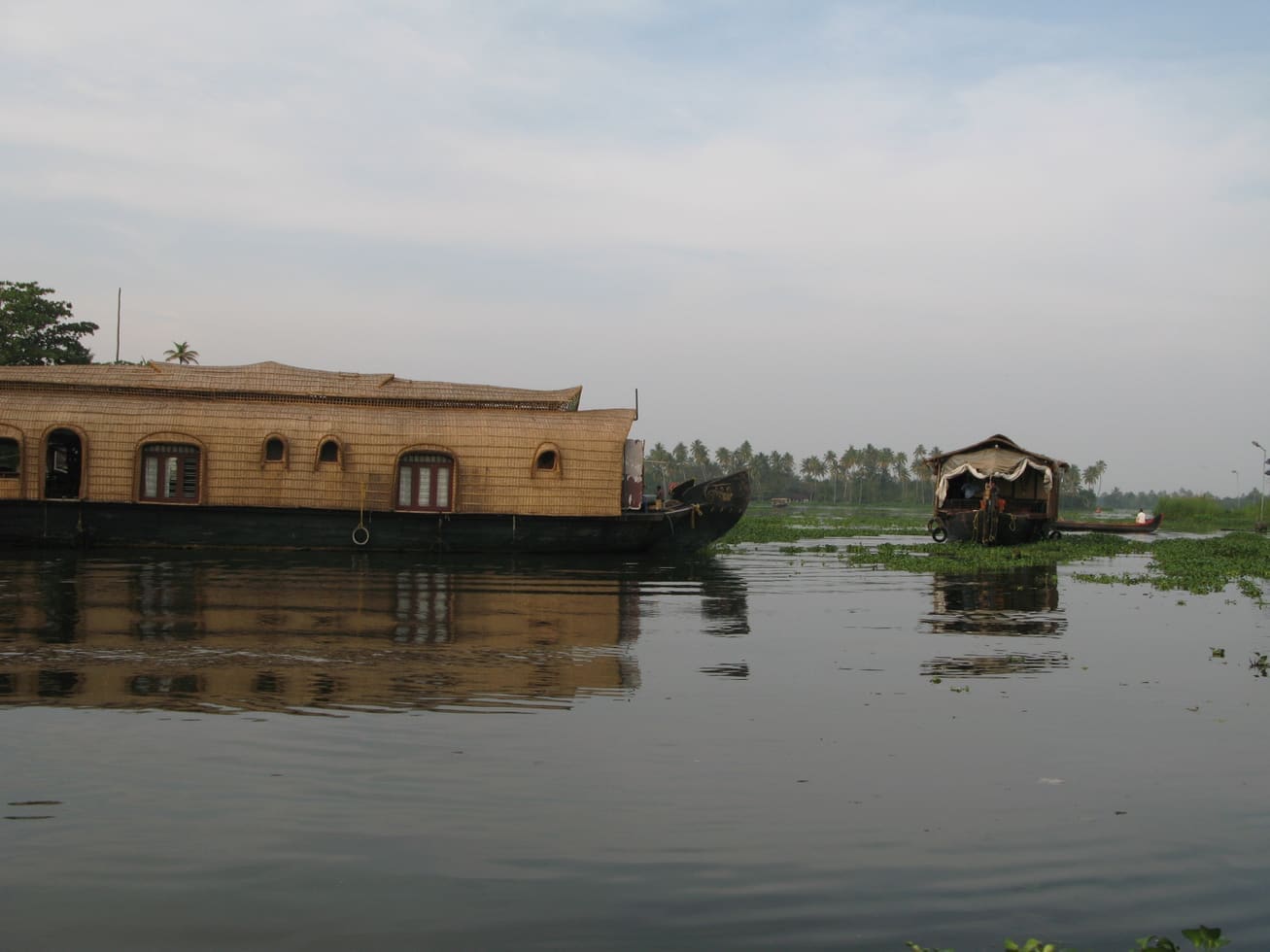
Backwater and houseboat hub with canals, beach, lighthouse and Finishing Point jetty.
20.9 km · ~35 min by cab · straight line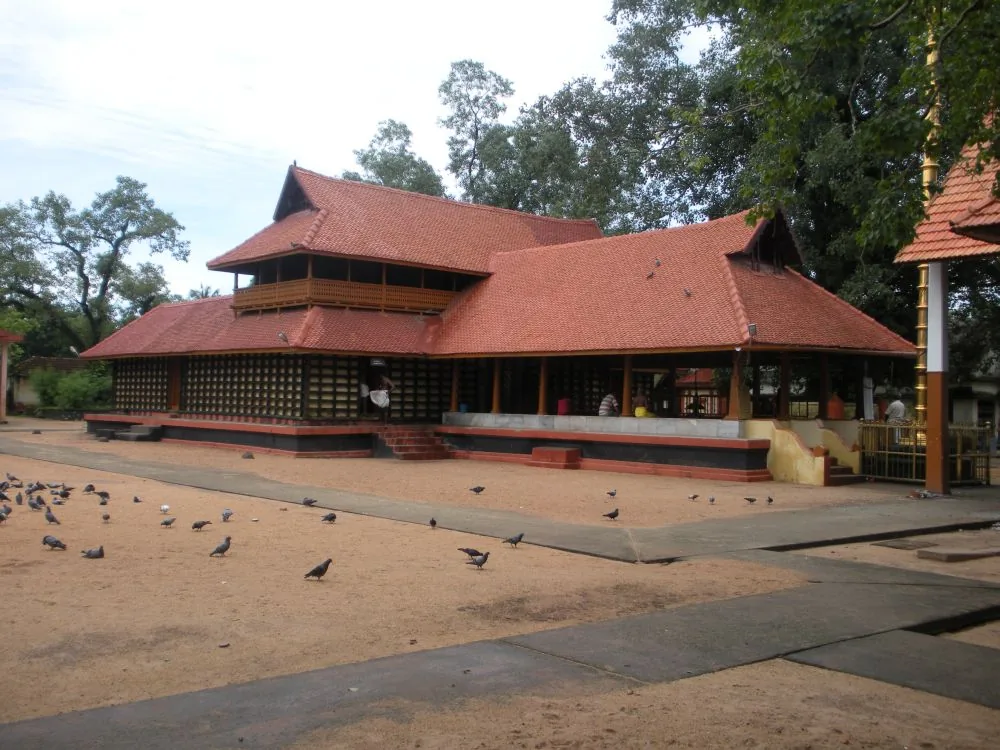
Central Alappuzha town temple (Mullakkal Rajarajeswari) famous for the annual Mullackal Chirappu festival.
21.0 km · ~35 min by cab · straight line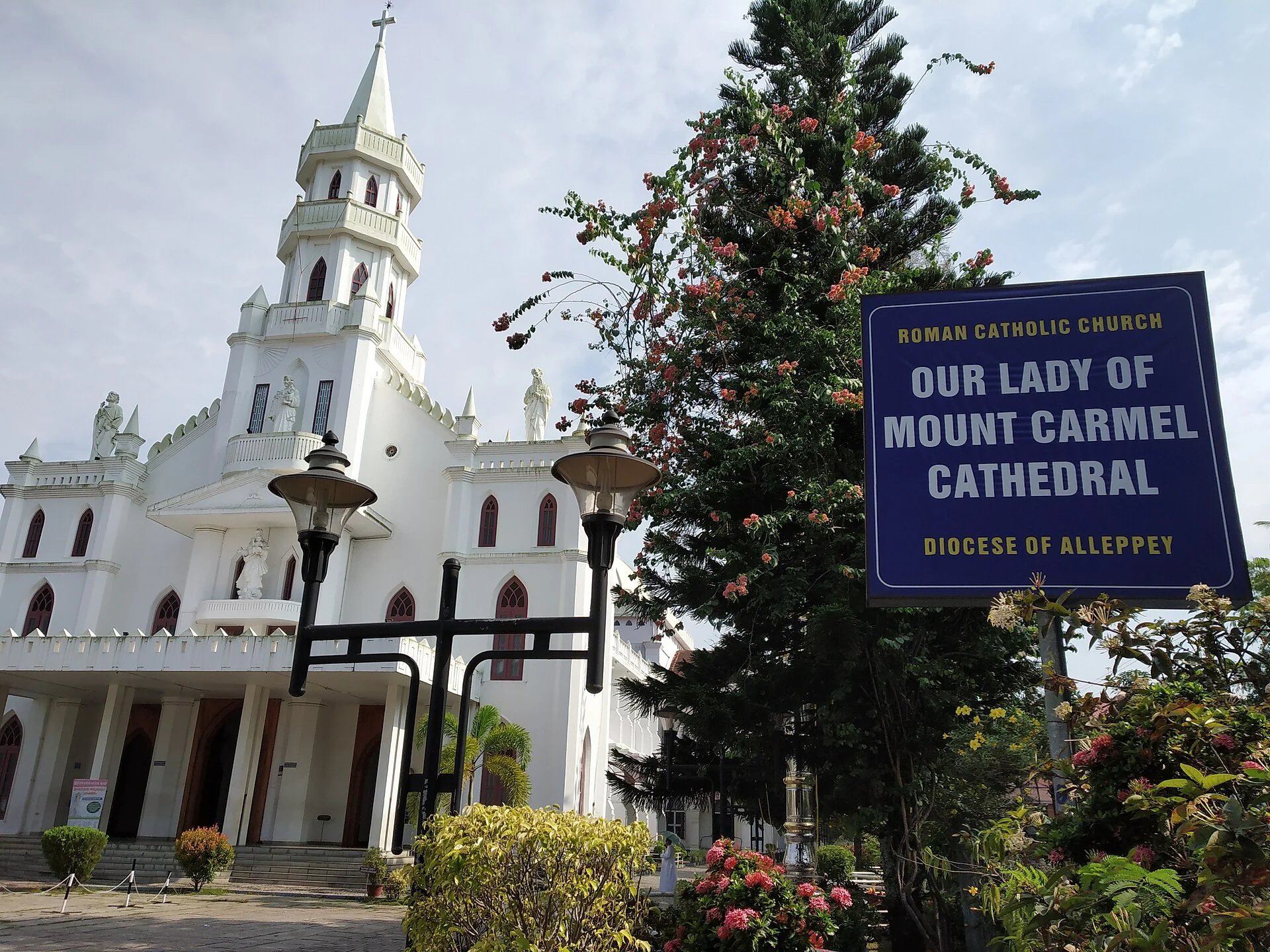
Landmark 19th-century cathedral of the Alappuzha diocese near the town centre.
21.1 km · ~35 min by cab · straight line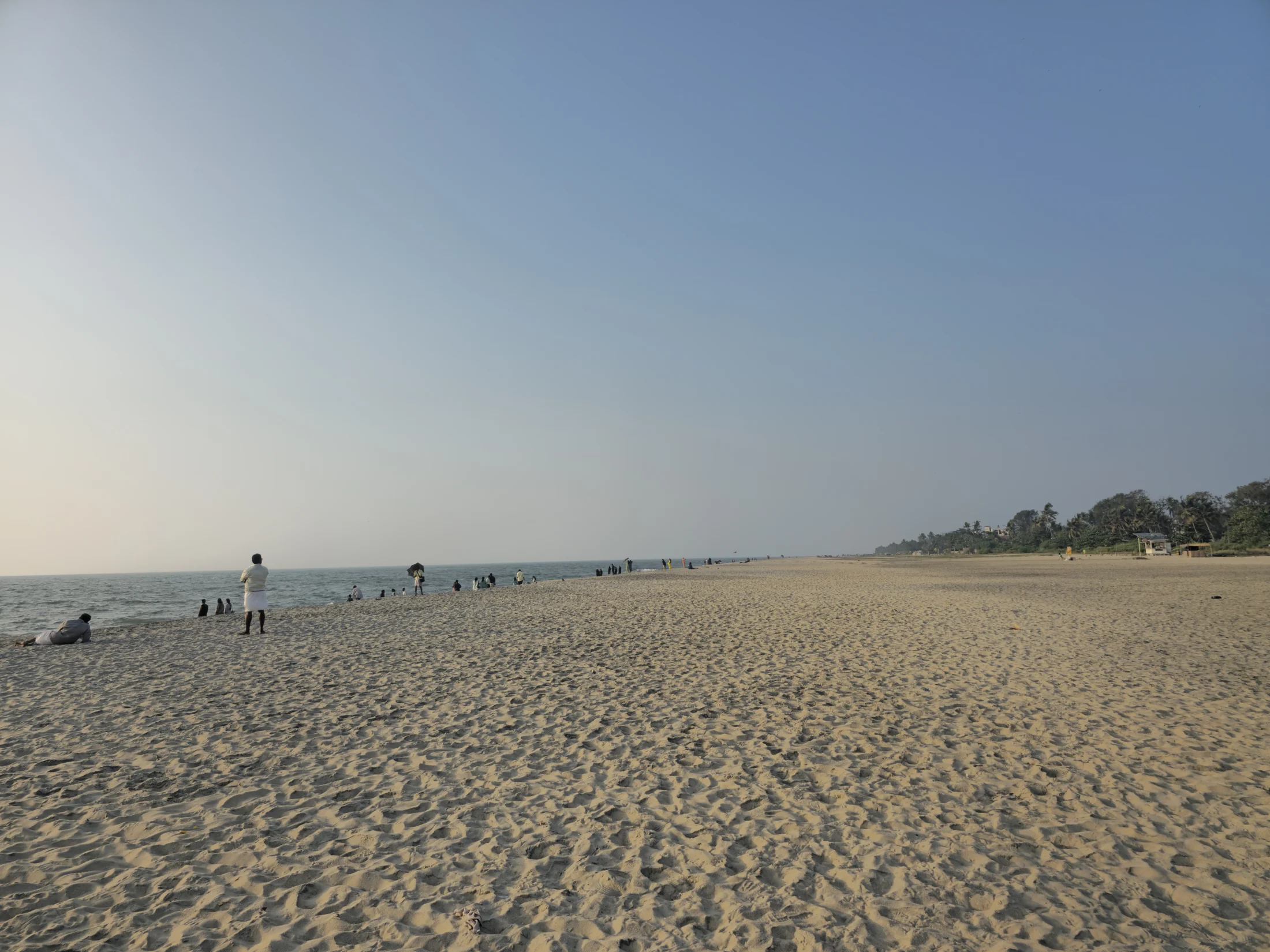
Pair Alappuzha’s broad town beach and old pier remains with the red-and-white lighthouse on C.C.S.B. Road, commissioned in 1862 and still maintained as a navigational light.
21.5 km · ~36 min by cab · straight lineNearby toilets, pharmacies, ATMs, seating and vets are community-mapped and may be incomplete or out of date. Map data © OpenStreetMap contributors | Walking times © openrouteservice.org by HeiGIT
Because releasing a cockerel is the principal offering here. Devotees buy a bird and let it go inside the temple, and the released birds remain in the compound, so there are hundreds of them on the sand and along the walls. They are the visible accumulation of a vow, not strays.
By tradition, from this temple's legend. Vilwamangalam Swamiyar is said to have pursued a divine woman he recognised as Karthyayani, who escaped into a pond on each of six days; on the seventh the pond was thick with mud, and he caught her by the hair and lifted her head clear. Cheru, mud, and thala, head, are said to give Cherthala. We print it as the town's own tradition rather than as settled etymology.
She is installed about four feet below the level of the ground, on a square laterite platform facing east, in a form described as having no definite shape — the English source compares it to a Shivalingam. That is taken as a sign of swayambhu, self-manifestation. The temple also has three sreekovils, with Shiva and Vishnu both given full sanctums alongside the Devi, which is itself uncommon.
In Meenam, roughly March–April, with padayani performances on the Pooyam, Ayilyam, Makam and Pooram asterisms and Pooram as the main day. ⚠ Unusually, the flag-hoisting does not open the festival here — it falls on Makayiram, some days after the utsavam has already begun.
Roughly 5 am to 12 noon and 5 pm to 8 pm, with no entry ticket; vazhipadus are paid at the counter. It is a Travancore Devaswom Board temple, so the usual Kerala dress code and entry convention apply.
The temple is on the roadside in the centre of Cherthala, a taluk town on NH-66 between Alappuzha and Kochi. Cherthala railway station is in the town, and any Alappuzha–Ernakulam bus passes through; autos run from the station and the bus stand. It is an easy stop on a drive between Kochi and Alappuzha rather than a detour.
Morning or early evening is usually best; festival days can be powerful but crowded.
Entry: No ticket. Vazhipadus — archana, Rakta Pushpanjali, Swayamvara Pushpanjali, muzhukappu, kalabham, the thadi, and the release of a cockerel — are paid for individually at the counter. Timings: Darshan roughly 5 am to 12 noon and 5 pm to 8 pm. Festival days differ.
Base yourself in Cherthala or a nearby town in Alappuzha, then confirm the last-mile route locally before leaving. Check temple entry customs, dress rules and festival crowd conditions before arrival. If the visit depends on forest, temple, boat, ferry, weather or seasonal access, check the official/local rule on the day before travel.
45 minutes to 2 hours, longer during festival or queue periods.
Nearby you can pair Arthunkal Church (5.3 km), Thanneermukkom Bund (6.5 km), Pathiramanal Island (8.9 km), Andhakaranazhi Beach (9.3 km).
Use official counters for offerings/tickets where applicable. Keep footwear and valuables secure in crowded areas.
Written about Cherthala Karthyayani Temple itself — its history, its legends and the arguments about them.


These guides explore Cherthala and the surrounding area. Choose a visit that fits your interests, allowing separately for travel between stops.


Route-level itineraries and practical guides for the rest of Kerala.
Photographs: Vis M (CC BY-SA 4.0), Vanischenu (CC BY-SA 3.0). Wikimedia Commons.