Marari Beach

Marari Beach at Mararikulam is Alappuzha district's quiet beach alternative to the busier backwater town, useful for travellers who want a few coastal nights before or after Alleppey, Kumarakom or Kochi. The tone is village-beach relaxation rather than nightlife.

Marari Beach, Mararikulam
Practical guide

Plan Marari Beach

Who's going?Tailor Marari Beach to your trip
Typebeach
AreaMararikulam
DistrictAlappuzha
Best timeNovember to February is the most…
Time needed2 to 3 hours for a beach stop
EntryFree
Places to visit3Listed businesses5

Many properties use "Marari" broadly. Before booking, pin down how far the beach really is, what the rooms actually look like, how food is arranged, how you get there, and whether the place is in Mararikulam village, along the wider coast belt or inland.

The story

Where Kerala’s coast slows to the rhythm of the tide — a long, palm-fringed ribbon of pale sand fronting a working fishing village, and one of the state’s most beloved unhurried escapes.

The story of Marari Beach

Marari Beach unspools for kilometres along the Arabian Sea coast at Mararikulam, roughly midway between the port city of Cochin and the backwater town of Alappuzha (Alleppey). It takes its name — and its soul — from the fishing village of Mararikulam that lies just behind the dunes. This is not a manicured tourist strip but a genuine stretch of Kerala shoreline: a wide, gently shelving beach backed by dense coconut groves, catamarans hauled up on the sand, and drying nets strung between the palms.

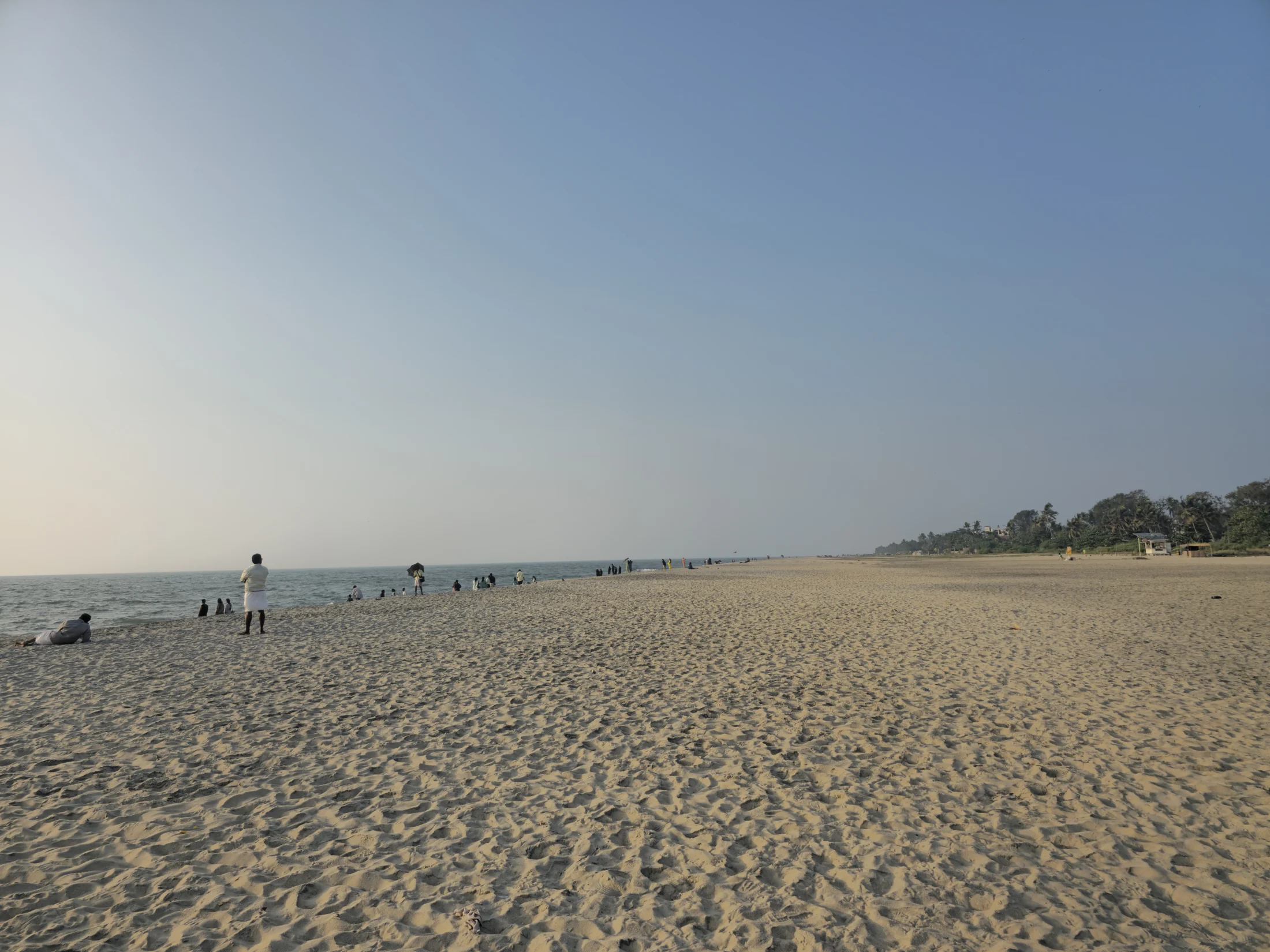
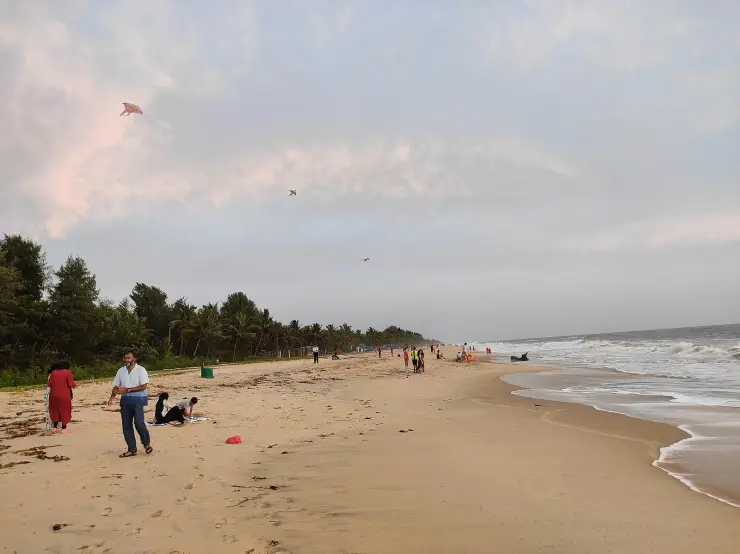
What Marari is depends almost entirely on when you stand on it, and it is worth being straight about that, because a great deal of writing about this beach — our own included, until we went back and looked at the photographs — describes a deserted shore where you meet more fishermen than sunbathers. The pictures do not support it. On a February evening in 2024 a photographer walked this sand and recorded kites by the half-dozen in the air at once, a hawker working the crowd with a rack of kites and balloons, sunloungers, a long row of coloured umbrellas and several hundred people strung out along the waterline. On an ordinary weekday evening in the monsoon, in August 2022, there were still families sitting out, walkers, and children with kites. By January 2025 there were cafe tables and chairs under a line of bulbs slung from a palm. Marari is genuinely quieter than Kovalam or Varkala, and much less built up. It is not empty.

What is exceptional here is not solitude but space. The belt of dry sand is unusually wide — wide enough that the evening crowd gathers in a band along the water and leaves a great pale expanse behind it — and the beach runs so far in both directions that walking for fifteen minutes in either direction will generally give you as much quiet as you want. Come early and you get the other Marari: the boats already out, a few walkers, crows on the tideline and the sand printed only with last night’s footsteps.

The working fishing village is the constant underneath all of it. Each dawn and dusk the fishermen of Mararikulam push their craft out through the surf, much as their families have for generations, and stretches of the beach become a hive of hauling lines, sorting fish and mending nets. Watching a team drag in a laden shore-seine, or a lone figure paddling a small boat out through a grey monsoon swell, is the beach’s great free spectacle — and it happens alongside the kite-flying and the tea-drinking rather than instead of it.

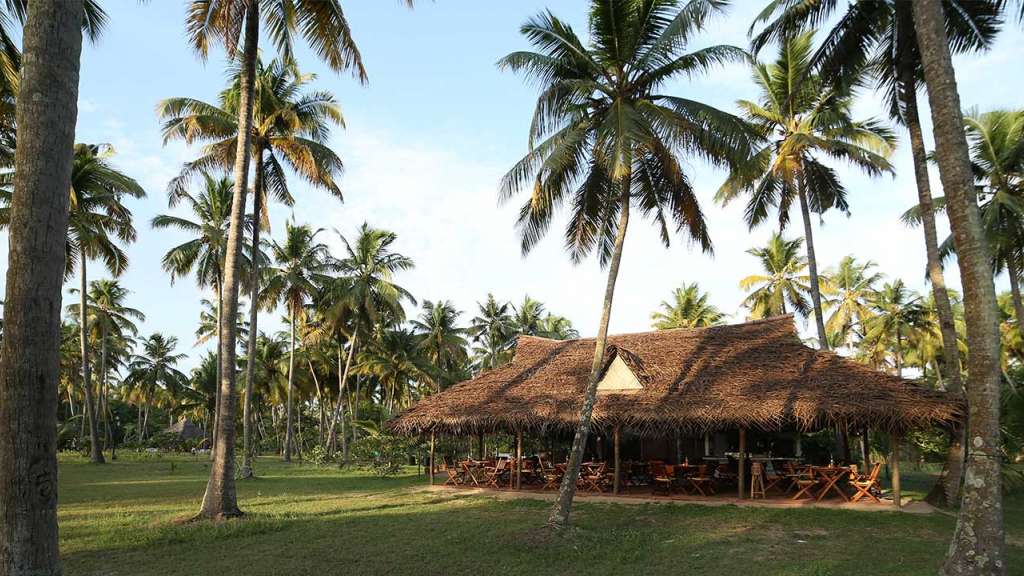
Behind the sand, the landscape is quintessential coastal Kerala: swaying coconut palms, quiet village lanes threading between thatched and tiled homes, little ponds, and pockets of paddy and coir-making. It is flat, green and made for slow exploration on foot or by bicycle. The soundtrack inland is wind in the fronds, the boom of the surf and the occasional bell of a bicycle — the village really is quiet, even on the evenings when the beach is not.

Marari has become synonymous with relaxed, low-key and eco-conscious hospitality. The pioneering Marari Beach Resort, run by the CGH Earth group, spreads across acres of coconut grove behind the beach, its cottages consciously modelled on the fishermen’s own dwellings, and it helped put this quiet coast on the map for barefoot luxury and Ayurveda. A cluster of smaller homestays, boutique retreats and beach guesthouses has since grown up around the village, but the mood stays deliberately unhurried — hammocks, spa treatments, yoga at sunrise and long, lazy lunches of just-landed seafood.

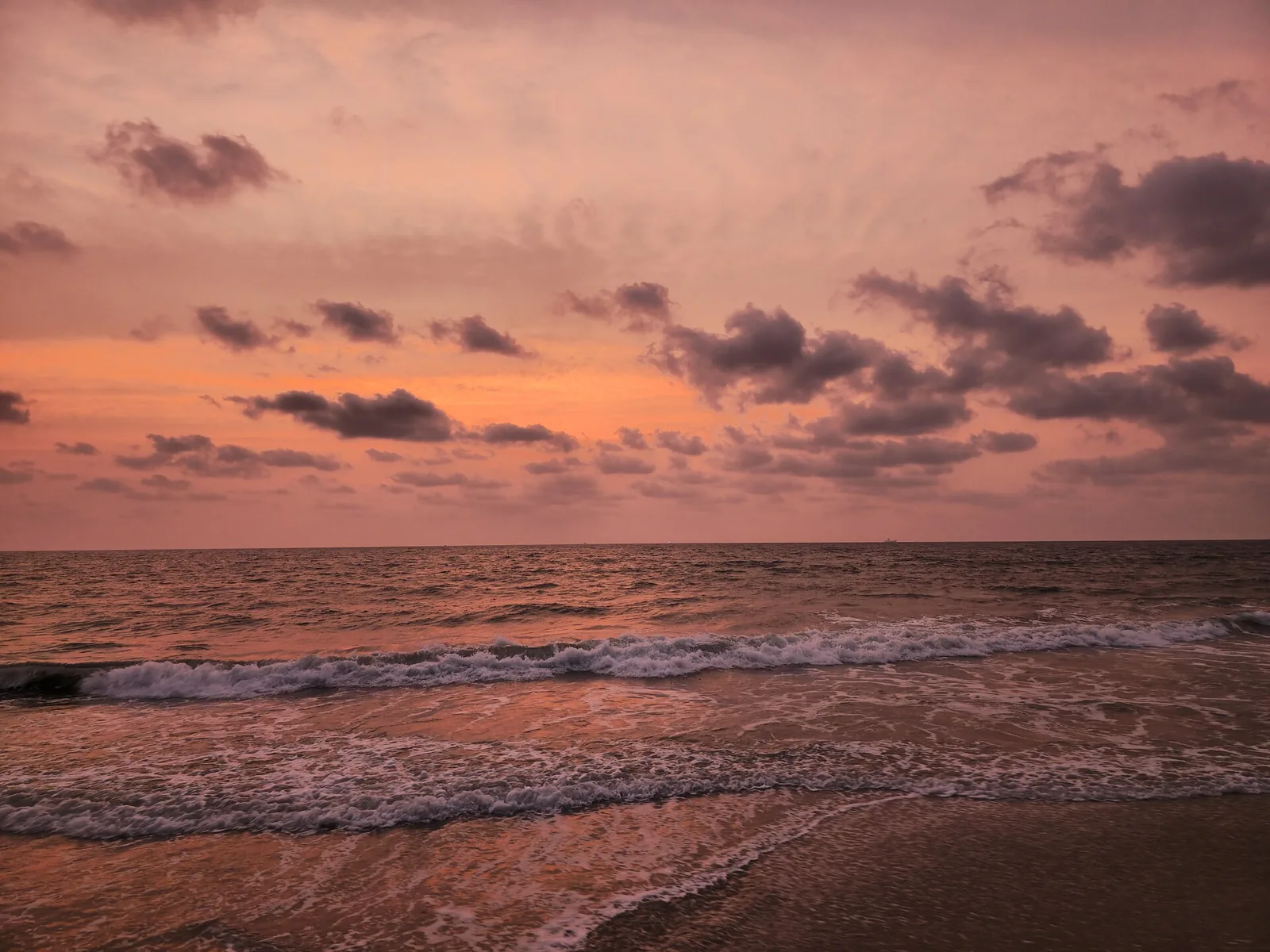
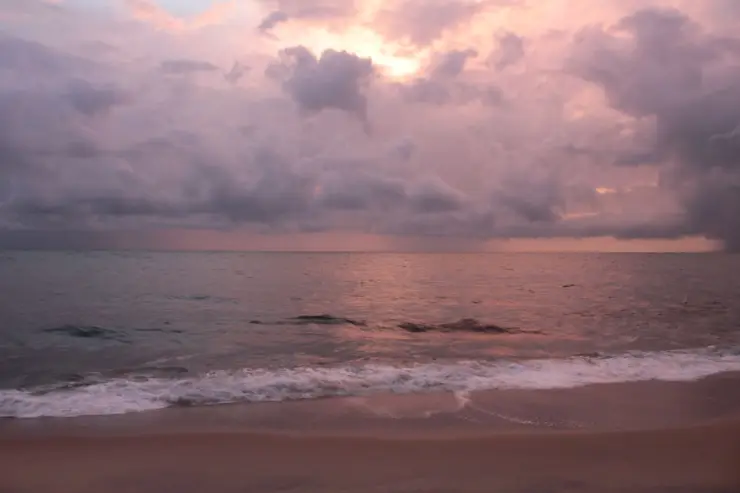
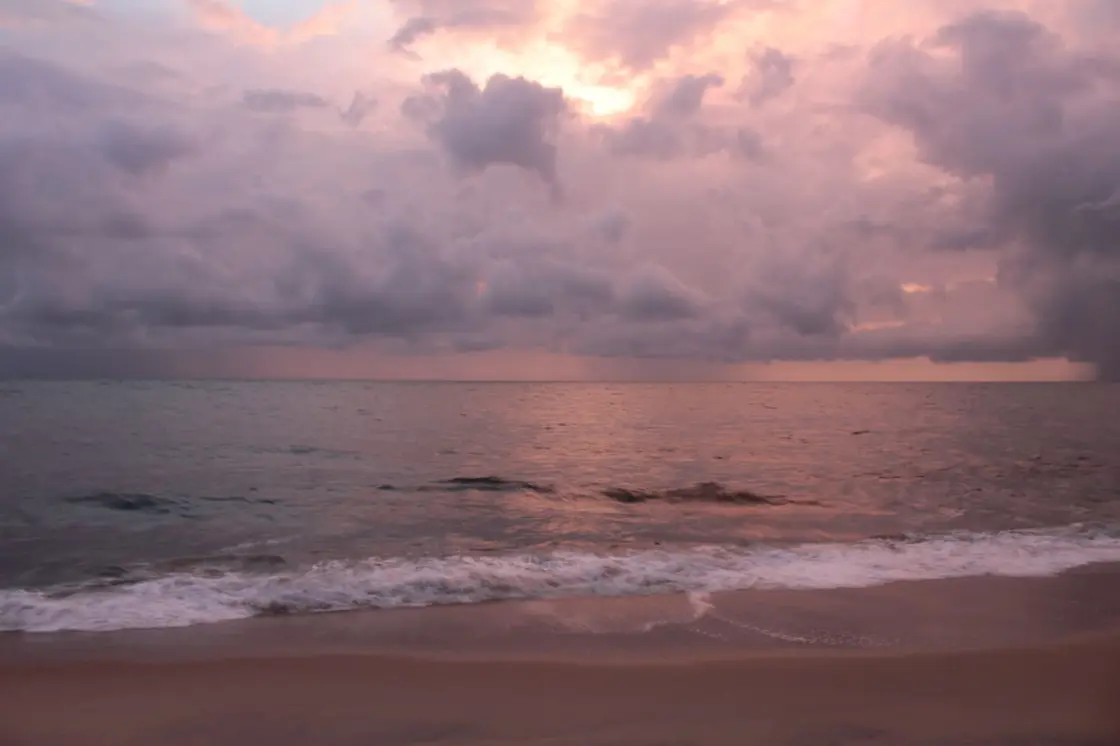
The sunsets are the reward at the end of the day. With the Arabian Sea filling the whole western horizon and palms silhouetted along the shore, the sky over Marari turns molten as the fishing boats come in, and the beach fills briefly with villagers, strolling guests and children playing cricket on the firm wet sand before darkness settles.

What really sets Marari apart is context. It is a tranquil counterpoint to Kerala’s more developed and crowded beaches such as Kovalam and Varkala — quieter, wider, less commercial — while sitting barely a short drive from the Alappuzha backwaters and their famous houseboats. That pairing of restful shoreline and world-class backwater cruising, all within easy reach of Cochin, makes Marari a natural place to begin or end a Kerala journey.

Legend & myth

Marari Beach is the shore of Mararikulam, and the village has a founding legend that ends, once a year, on this sand.

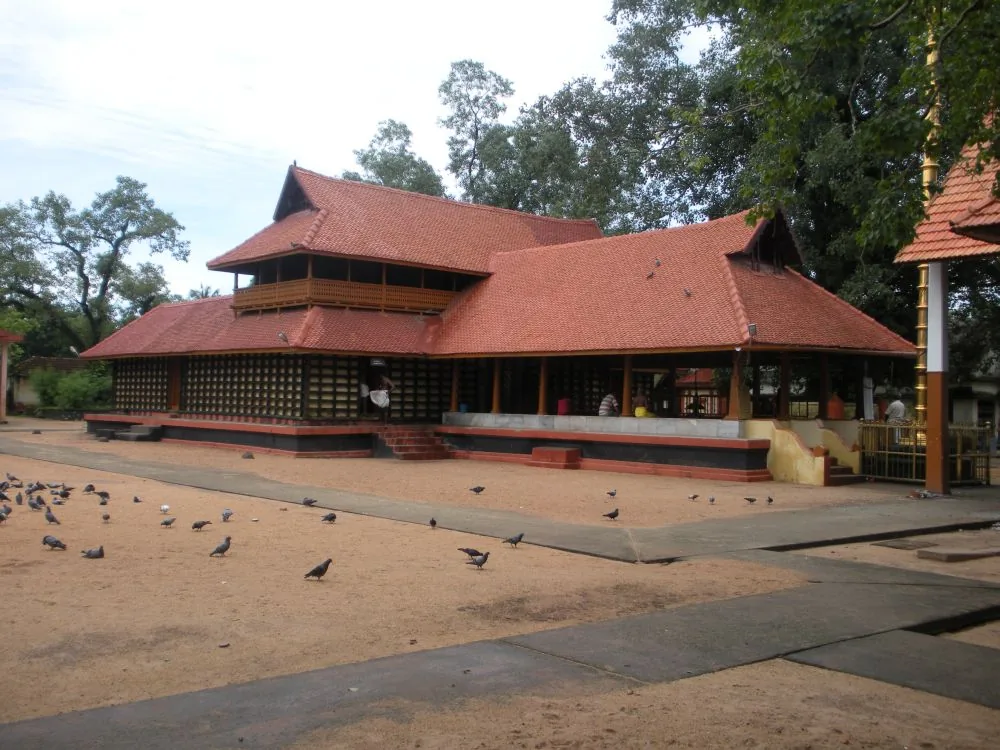
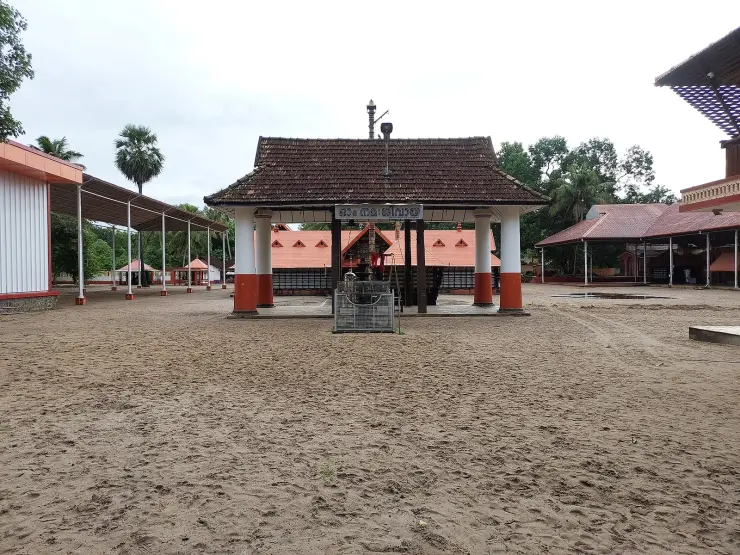
The story is told of the plot immediately south of the Mararikulam Mahadeva temple. A Pulaya woman had come to cut pandanus leaf there. Wanting to sharpen her sickle, she rubbed it against a stone lying nearby — and blood ran from the stone. Terrified, she went to the Valiya Namboothiri of the Paduthol Pazhur Mana, who came and understood what she had found: the blood was flowing from a swayambhu Shiva linga, a lingam not carved but self-manifested. ⚠ The village article says only that a woman found it; the temple's own article specifies a Pulaya woman, and we follow the fuller telling rather than the one that leaves her caste out.

The Namboothiri prepared a particular payasam, called śaiśyam, and offered it to the stone in propitiation. That offering never stopped. Śaiśyam remains the chief nivedyam of Mararikulathappan to this day, which makes this one of those legends whose proof is on the offering counter — a dish still being cooked because of what a woman with a blunt sickle found in a field. A second self-manifested stone nearby was identified as Swayamvara Parvathi.

The shrine that stands there now grew backwards out of that discovery, and the Malayalam account is careful about the order. What existed first, on the north side of the present compound, was a temple of Dhanvantari — the physician form of Vishnu, the deity of Ayurveda — known then as the Mannuvelil temple, and running perfectly well. The pandanus grew around it, the mats woven from that leaf were carried to the neighbouring villages and sold, and it was in the plot south of this working medicine shrine that the woman stopped to sharpen her sickle. Only afterwards, with two self-manifested stones to serve, was the great temple built to give Shiva and Parvati equal standing, and shrines added for the sons of Shiva — Ganapati, Subrahmanya and Ayyappan.

The name has its own folk derivation, and it is a compact piece of Sanskrit wordplay: Maran is Kamadeva, the god of desire; ari is his enemy or slayer, which is Shiva, who burned Kamadeva to ash; and kalam is the land. Maran-ari-kalam, the land of the slayer of Kama, contracting over time to Mararikulam. ⚠ The two Malayalam articles do not quite agree, and the disagreement is worth keeping rather than tidying: the village account says the sickle was sharpened on a stone lying at the steps of a pond, and the linga was later installed on that pond bank, which reads the second half of the name as kulam, a pond, quite literally. The temple's own account says kalam, land, worn down to kulam. One name, two stories, and the village tells both.

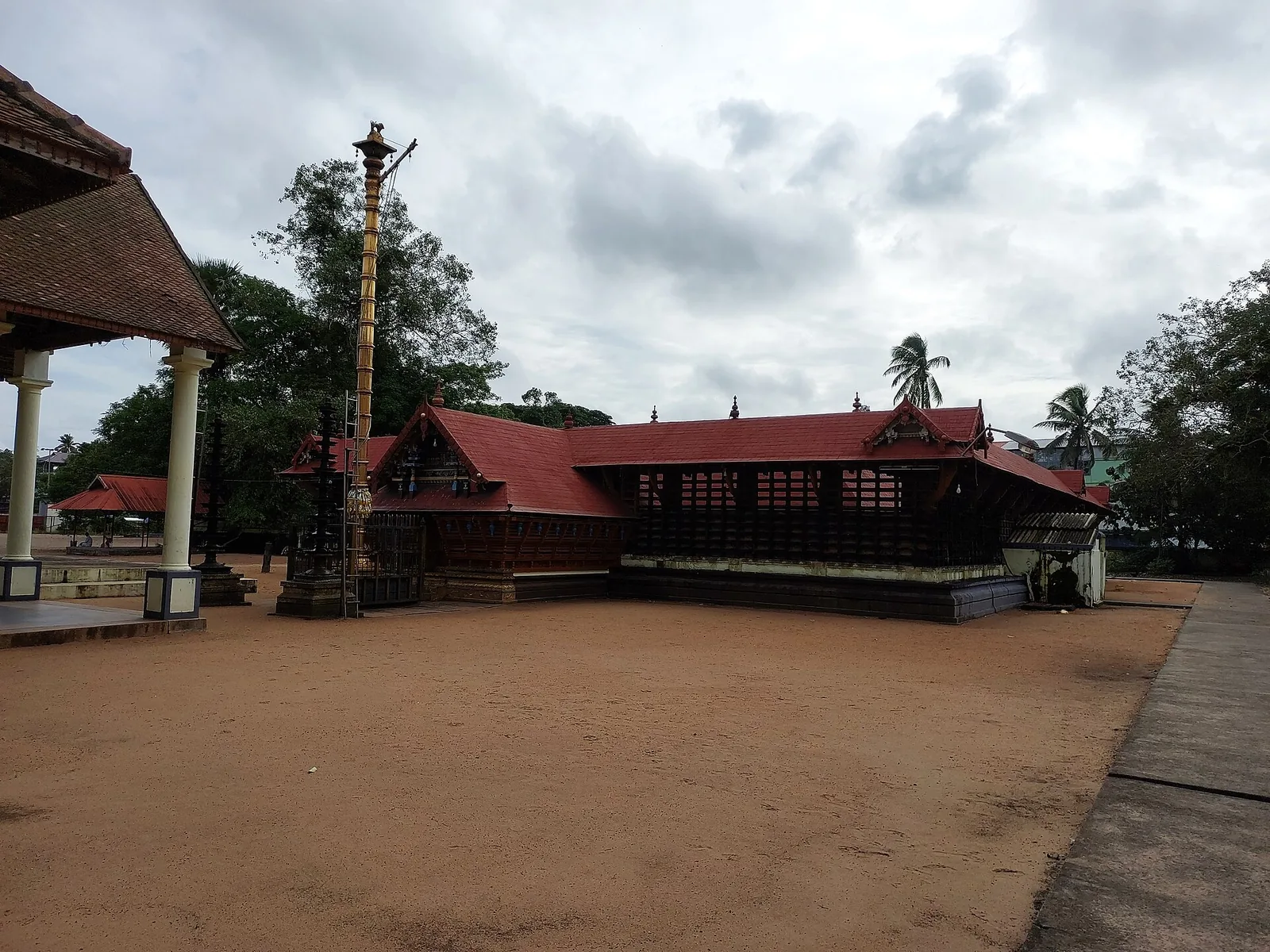
🔑 And then there is the arattu, which is the reason any of this belongs on a page about a beach. The temple's ten-day flag festival falls in Kumbham, the Malayalam month that straddles February and March: the flag goes up on the shashthi of the dark fortnight, the pallivetta — the god's ritual hunt — is held on Mahashivaratri night, and the whole thing ends on the new moon with the arattu, the ceremonial bathing of the deity. That bath is taken in the Arabian Sea. The procession leaves the temple by its western gate and travels the two kilometres west to this shore, and the god of Mararikulam is bathed in the surf.

This is rare but not unique, and the distinction matters. Malayalam Wikipedia describes Mararikulam as one of the few Kerala temples whose arattu is performed in the sea — and uses very nearly the same sentence of the Janardanaswamy temple at Varkala and the Thiruvanchikulam Shiva temple at Kodungallur, both of which we also cover. So: a small club, not a solitary case. Afterwards the deity is bathed a second time in the temple's south-western pond, the Harinatheertham, which is also where balitharpanam — the offering to the ancestors — is performed on the new moons of Karkidakam, Thulam and Makaram.

The gate the procession leaves by is worth a look on any other day of the year. In 2016 a large sculpture was set above the western entrance: the face of Shiva in his most terrible aspect, the raudra bhava he is said to have worn after burning Kamadeva to ash — which is the same Shiva the whole village is named for. It has become one of the temple's best-known features, and it faces west, down the road to the sea.

So the relationship between the village and this shoreline is not scenic, it is liturgical. Once a year the god of Mararikulam comes down to Marari Beach. If you are on the sand on the right day you are not watching a procession arrive at a viewpoint; you are watching the end of a two-kilometre journey that the whole village makes with him.

Read the full history of Marari Beach 578 more words

History

Mararikulam grew up over centuries as a traditional coastal settlement of Kerala’s Alappuzha (Alleppey) region, sustained by fishing, coir-making and small-scale coconut agriculture. Its life has always been shaped by close interaction with the sea and the neighbouring backwater systems, and the local community relied on indigenous fishing techniques and the seasonal rhythms of the Arabian Sea — a maritime culture that still defines the village today.

The broader Alappuzha coast has long been one of Kerala’s most storied stretches of shoreline. Alleppey, just to the south, rose in the colonial era as a busy port and coir-trading centre laced with canals — attracting the widely shared ‘Venice of the East’ billing — while the lagoons and lakes inland became the celebrated Kerala backwaters. Mararikulam sat quietly within this network as a fishing village rather than a trading town, which is much of the reason it was never built up the way the port and the beach resorts to its south and north were.

Marari’s emergence as a travel destination came late, and by design gently. As Kerala rose to international prominence from the late 20th century on the strength of its backwaters, greenery and culture, the coast at Mararikulam was developed with a lighter touch than the mass-tourism beaches. The turn toward responsible and eco-conscious tourism that gathered momentum in Kerala from the late 1990s suited Marari perfectly, and the beach built its reputation on tranquillity rather than nightlife.

The single most influential development was the Marari Beach Resort, operated by the CGH Earth group — a Kerala hospitality pioneer with roots stretching back to the mid-20th century and a long-standing commitment to ecological responsibility. Set in a coconut grove directly behind the fishing village, with cottages echoing the fisherfolk’s dwellings and cuisine drawn from local traditions, it framed Marari as a place of barefoot, sustainable luxury and Ayurveda, and drew international recognition for its approach. Its success seeded a wider ecosystem of homestays and small retreats along the shore.

Through all of this the underlying fishing economy has endured. Mararikulam remains a genuinely working village where the daily catch, drying nets and beached catamarans are part of everyday life, not a staged attraction — the continuity of that livelihood is precisely what gives Marari its character. What has changed, and changed recently, is who else is on the sand. Alongside the resort guests the beach has become an evening destination for Kerala itself: families driving down from Cherthala and Alappuzha, kite and snack sellers who set up for the last two hours of light, and a fringe of chairs, umbrellas and small cafes at the top of the beach. That is not a decline from some earlier emptiness. It is a working village shore doing what popular Indian beaches do at the end of the day.

Why visit

One of Kerala’s longest and widest beaches — an unusually deep belt of sand, and space to walk for ages.

A genuine working fishing village: watch the boats and shore-seines come in at dawn and dusk.

Quieter and far less built up than Kovalam or Varkala — though busy in the evenings, not deserted.

The Mararikulam Mahadeva temple, 2 km inland, brings its god down to this shore for a sea arattu each Kumbham.

Classic coconut-grove scenery, ideal for cycling and slow village wandering.

Home to pioneering eco and Ayurveda resorts, including CGH Earth’s Marari Beach Resort.

A short drive from the Alappuzha backwaters and houseboats, and easy from Cochin.
What to expect

Highlights

  • Quiet palm-backed beach belt north of Alappuzha town.
  • Easy pairing with Alleppey houseboats, Kumarakom/Vembanad and Kochi airport routes.
  • The businesses around this place are beach stays, seafood restaurants, taxis, cycles and wellness centres.
Getting there

How to visit

  • Base in Mararikulam for beach time, or visit as a half-day from Alappuzha town.
  • Confirm exact beach access and property location before booking a stay.
  • Use Marari as a slow coast stop rather than trying to combine too many inland attractions the same day.

Distance by road

  • Kochi55 km
  • Thiruvananthapuram154 km
  • Kozhikode226 km
  • Coimbatore235 km
  • Madurai281 km

Road km to Alappuzha; ghat roads and traffic vary — allow extra.

Timing

Best time

November to February is the most comfortable beach season. Monsoon is quieter but swimming and beach condition depend on local warnings.

Weather in Marari BeachSeasonal guide

Live forecast loads in your browser.

Today at Marari Beach
Sunrise6:14 am
Sunset6:23 pm
Golden hour best light5:23 pm–6:23 pm
Blue hour after sunset6:23 pm–6:48 pm
Sun sets toward compass bearingW · 272°
Moon tonight🌓 First quarter · 52%
South-west monsoon. June to September is monsoon season: the sea gets rough, swimming is often unsafe and boat services can be suspended. Follow lifeguard and local warnings, and expect changeable conditions.

Check the official alert before you travel. Kerala’s beaches, waterfalls and trekking routes close at short notice during heavy rain, and district alert levels change day to day. We do not publish an alert level of our own — read it from the state authority: Kerala State Disaster Management Authority, or the district control room on 1077.

Sun and moon are calculated for this location and shown in IST. Photography windows are the hour around sunrise and sunset; the sunset bearing is degrees clockwise from true north. Moon phase is accurate to about half a day.

Visitor notes

  • Restaurants and shops can be spread out; check meals and transport before booking remote stays.
  • Swimming safety depends on tide and sea condition.
  • Beach cleanliness and access vary by stretch and season.
Safety

Good to know

  • Follow lifeguard/local warnings and avoid rough-sea swimming.
  • Avoid isolated beach stretches after dark.
  • Use known taxis/autos for late returns from restaurants or the railway station.
Stay · eat · do · rent · see · shop

Stays, food & things to do near Marari Beach

Verified hotels, homestays, restaurants, experiences, sights, shops and rentals around Marari Beach — commission-free, with direct contact. Filter by what you need.

1 thing to do near Marari Beach

Marari Beach Ayurveda Centre — Kerala Tourism-listed Ayurveda centre in Mararikulam
Top pick Verified
Kerala Tourism-listed Ayurveda centre · Mararikulam
Marari Beach Ayurveda Centre

Kerala Tourism-listed Ayurveda centre in Mararikulam. Marari Beach, S.L. Puram, Mararikulam, Alappuzha 688523 · Marari, Kerala Tourism-listed Ayurveda centre, mararikulam.

Directions Commission-freeView details

Book with the place itself. India’s cyber-crime coordination centre warned in April 2025 that convincing copies of hotel and pilgrimage booking sites are being pushed through sponsored search and social ads, taking payment for rooms the property never hears about. Every listing here links to the business’s own contact details and its own Google or Bing profile — we take no commission and sit in nobody’s payment path. If a booking page reached you through an ad, check the address bar against the property’s own site before you pay. Fraud can be reported on cybercrime.gov.in or on 1930.

Ranked

More ways to explore Mararikulam

Find food, accommodation and activities across Mararikulam. Browse the guides for places to eat, stay and explore along your route.

Across the whole of Mararikulam

Ranked guides

Top experiences around Mararikulam

3 more places around Mararikulam. Open a guide to plan the visit and onward journey.

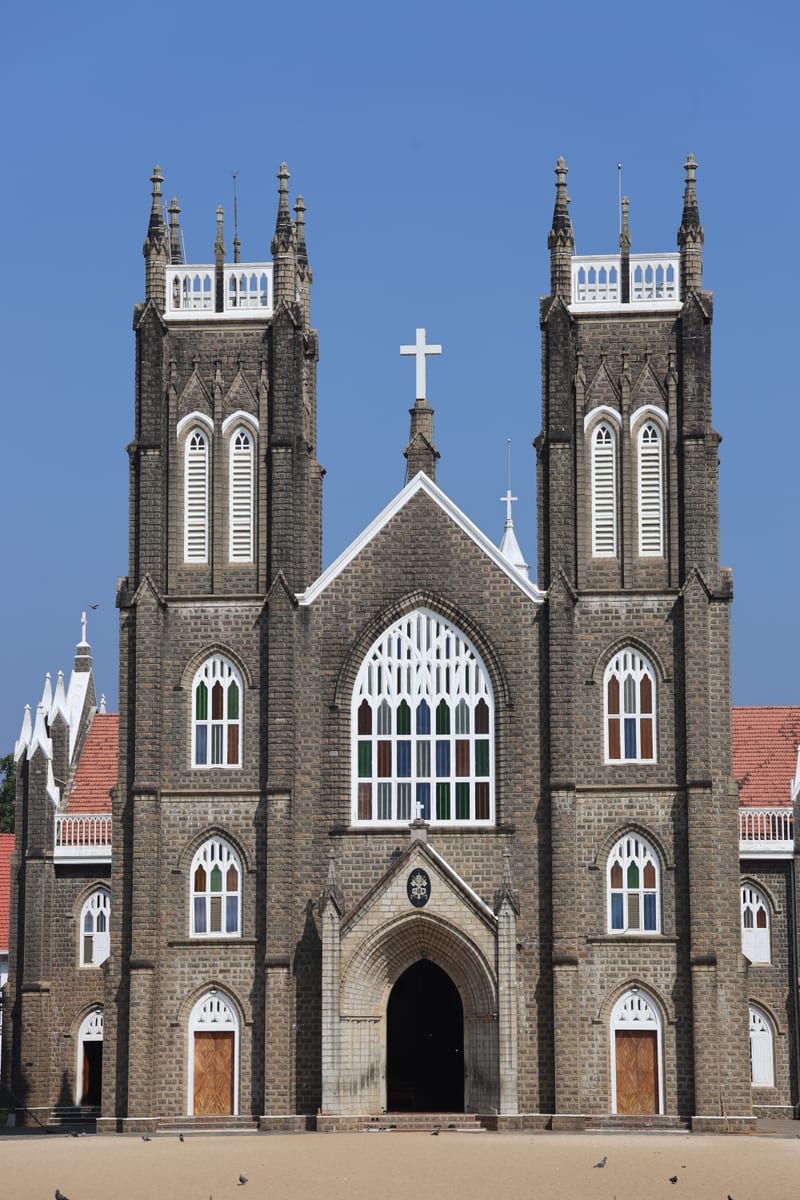
churchArthunkal Church

7.0 km · ~18 min by auto

St Andrew’s Forane Basilica at Arthunkal, a major coastal pilgrimage church north of Alappuzha.

beachAndhakaranazhi Beach

Estuary beach at the north Alappuzha coast near Cherthala where backwater meets sea.

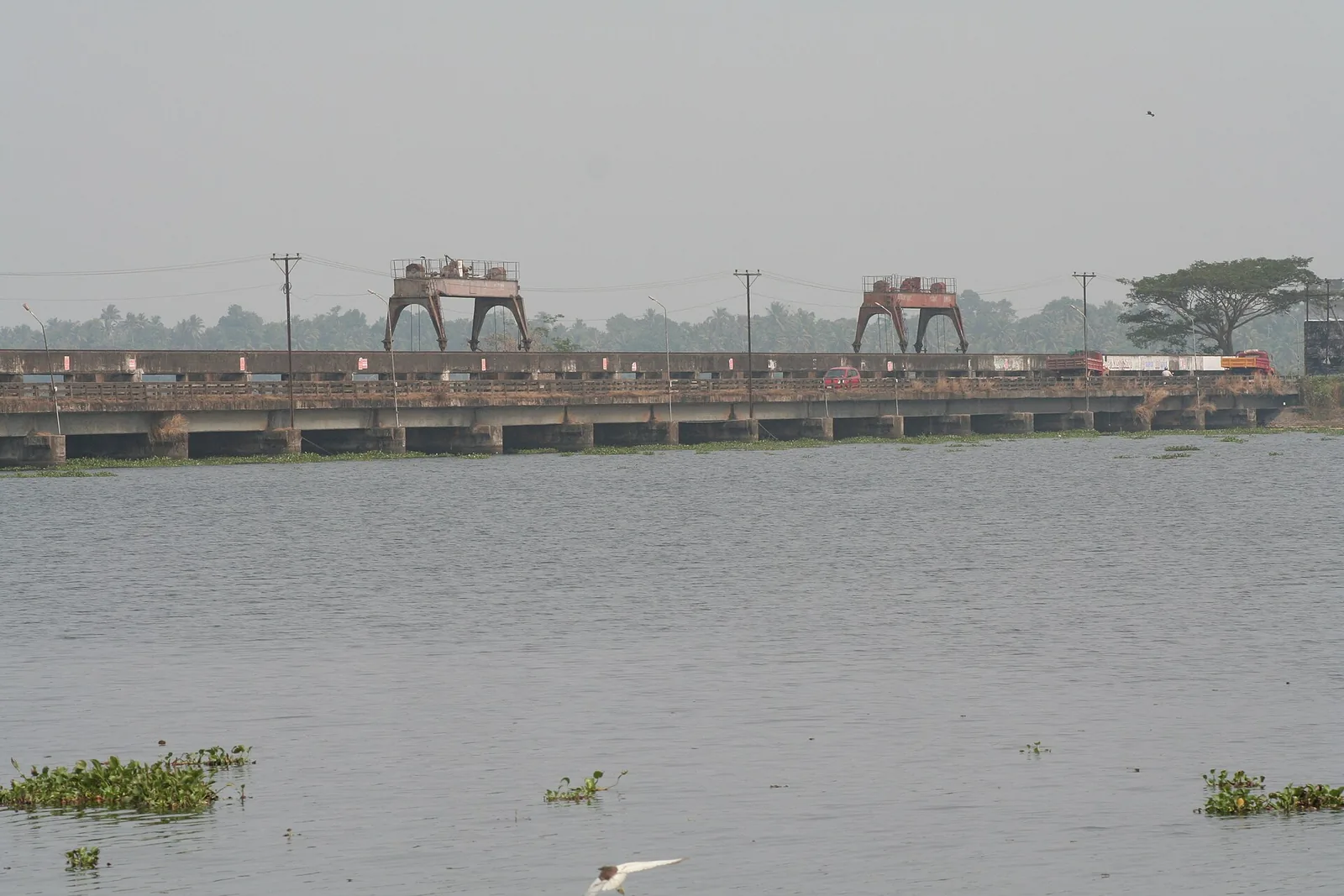
damThanneermukkom Bund

13.9 km · ~23 min by cab

Salt-water barrier and bridge across Vembanad Lake that keeps the sea out of Kuttanad’s paddy in the cropping season — a long causeway with lake views.

Roampedia is commission-free — own or know a stay, eatery, guide or shop near Marari Beach? List it and it appears here once verified.

Add a nearby business
Before you go

Marari Beach — at a glance

TimingsOpen public beach accessible at any time; there are no fixed gates or hours. For safety and the best experience visit in daylight, ideally early morning for the fishing activity and late afternoon for sunset, and avoid the shore after dark as it is unlit and unpatrolled.
Best timeBest from roughly November to March, when the weather is dry and pleasant. Avoid the southwest monsoon (around June to September), when heavy rain and rough, hazardous seas make swimming unsafe, though the village and palm groves look their greenest.

Entry: Free — no entry ticket for the beach. Parking, where available near access points, may carry a small charge, and some frontage adjoining resorts is private.

Dress code: This is a public beach fronting a traditional fishing village, so dress modestly — light, respectful clothing is appreciated, and locals generally do not swim in brief swimwear. Sunbathing and swimwear are more relaxed within the private resort stretches; away from those, cover up and be mindful of the village community.

Photography: A wonderful beach for photography: catamarans and fishing nets on the sand, coconut-palm silhouettes, and golden Arabian Sea sunsets. Early morning and late afternoon give the best light. Always ask before photographing fishermen or villagers up close, and be respectful around the working fishing scenes.

Getting here

How to reach Marari Beach

  • ✈︎ By air The nearest airport is Cochin International Airport (Nedumbassery), roughly 85–90 km / about 1.5 hours away by taxi.
  • 🚆︎ By train Mararikulam railway station is the closest railhead, only about 3 km from the beach; Alappuzha (Alleppey) station is around 11–16 km, with Ernakulam (Cochin) and Kottayam as larger railway options.
  • 🚗︎ By road Reached via NH 66 and local roads through Mararikulam; travelling from the Alleppey side, a turn off the highway around Kalavoor junction leads west to the beach road at Kattur. Taxis and autos serve the area.
  • 🚌︎ By bus State and private buses run along the Cochin–Alappuzha route via S.L. Puram / the Mararikulam area on NH 66; from the nearest bus stop, take an auto-rickshaw or taxi the short remaining distance to the beach.
Getting back

If you are travelling by bus or ferry, check the return service with the operator before setting out. Leave time to reach the stop or jetty after your visit.

Ask at the bus stand for the time of the last service back, not the next one. If you miss it, an auto or app cab is the fallback — agree the fare before you get in.

Do

Things to do

  • Take a long, unhurried walk along the wide open sands.
  • Watch the fishermen launch and land their boats and shore-seines at dawn or dusk.
  • Cycle or stroll through the coconut groves and quiet village lanes.
  • Stay for the sunset over the Arabian Sea.
  • Book an Ayurveda treatment, spa session or sunrise yoga at one of the resorts.
  • Feast on fresh, just-landed seafood at a beach shack or resort.
  • Combine a beach stay with an Alappuzha backwater cruise or houseboat trip.
Getting around Marari Beach

If you need step-free access, contact the site before travelling. Ask about a level entrance, steps along the route, the nearest drop-off point, seating and accessible toilets.

Practical things near Marari Beach
What the cash actually costs
  • Withdrawing from a bank that is not your own is free for a set number of times a month, then costs up to ₹23 plus GST — about ₹27 a withdrawal. This is not one of the RBI’s six metro centres, so the allowance here is the higher one: at least five free other-bank withdrawals a month, and at least five at your own bank.
  • That free allowance belongs to Indian bank accounts. On a card issued abroad your own bank’s international withdrawal and exchange charges apply instead. If the machine offers to bill you in your home currency, choose rupees — the conversion rate on that offer is set by the machine, not by your bank.
  • Choose a well-lit ATM, preferably at a bank branch. Shield your PIN, avoid help from strangers and use your bank’s support number if a withdrawal fails or the machine retains your card.

Charge cap and free-transaction limits: Reserve Bank of India, in force since 1 May 2025.

These services are listed within about 1.2 km of Marari Beach. Walking distances follow mapped routes; access and opening hours can change. Other services may be closer but are not included here.

Nearby

What’s near Marari Beach

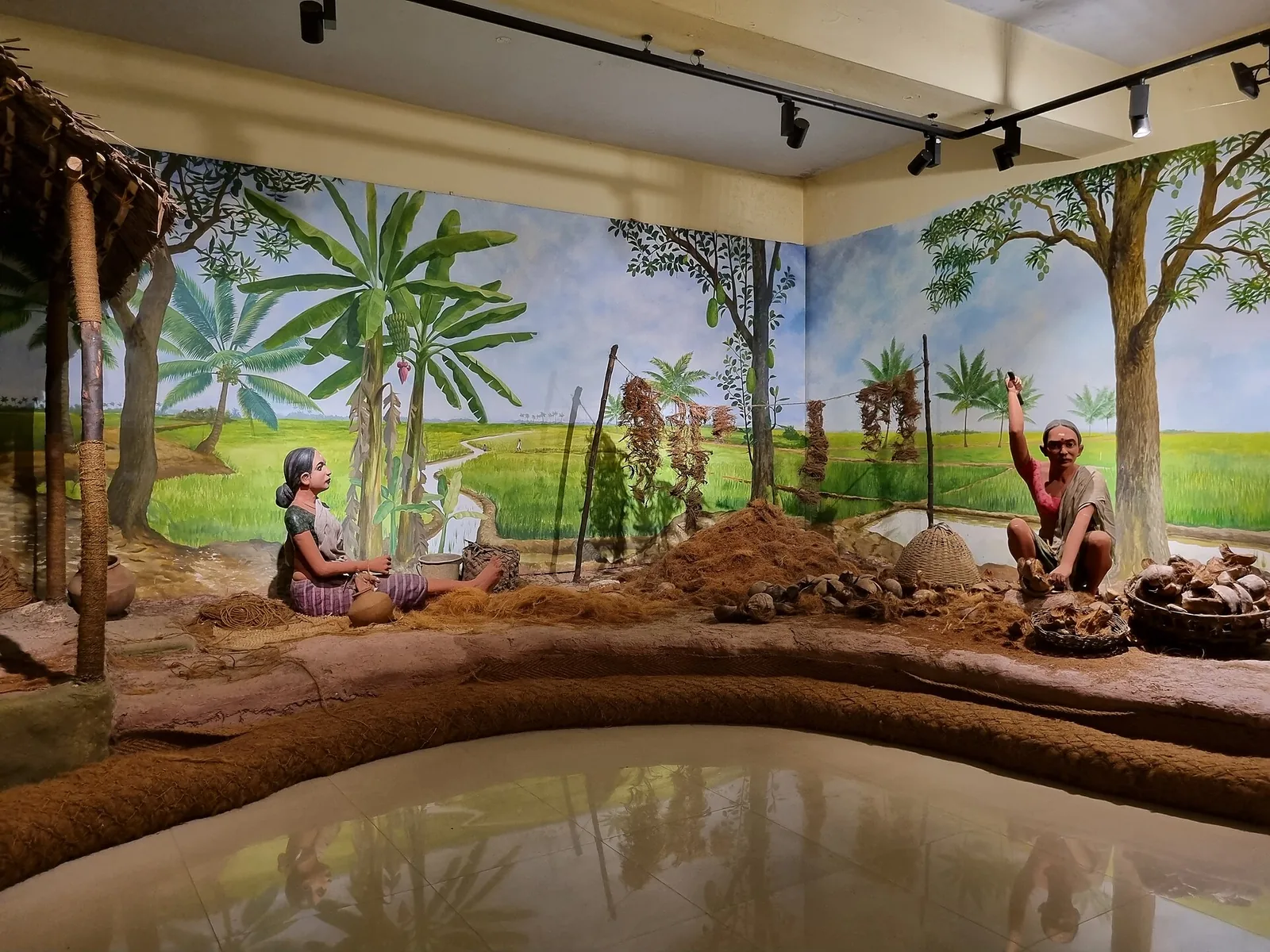
museumInternational Coir Museum

Museum on Kerala’s coir (coconut-fibre) heritage — the craft Alappuzha built its trade on.

5.0 km · ~12 min by auto · straight line
churchArthunkal Church

St Andrew’s Forane Basilica at Arthunkal, a major coastal pilgrimage church north of Alappuzha.

7.0 km · ~18 min by auto · straight line
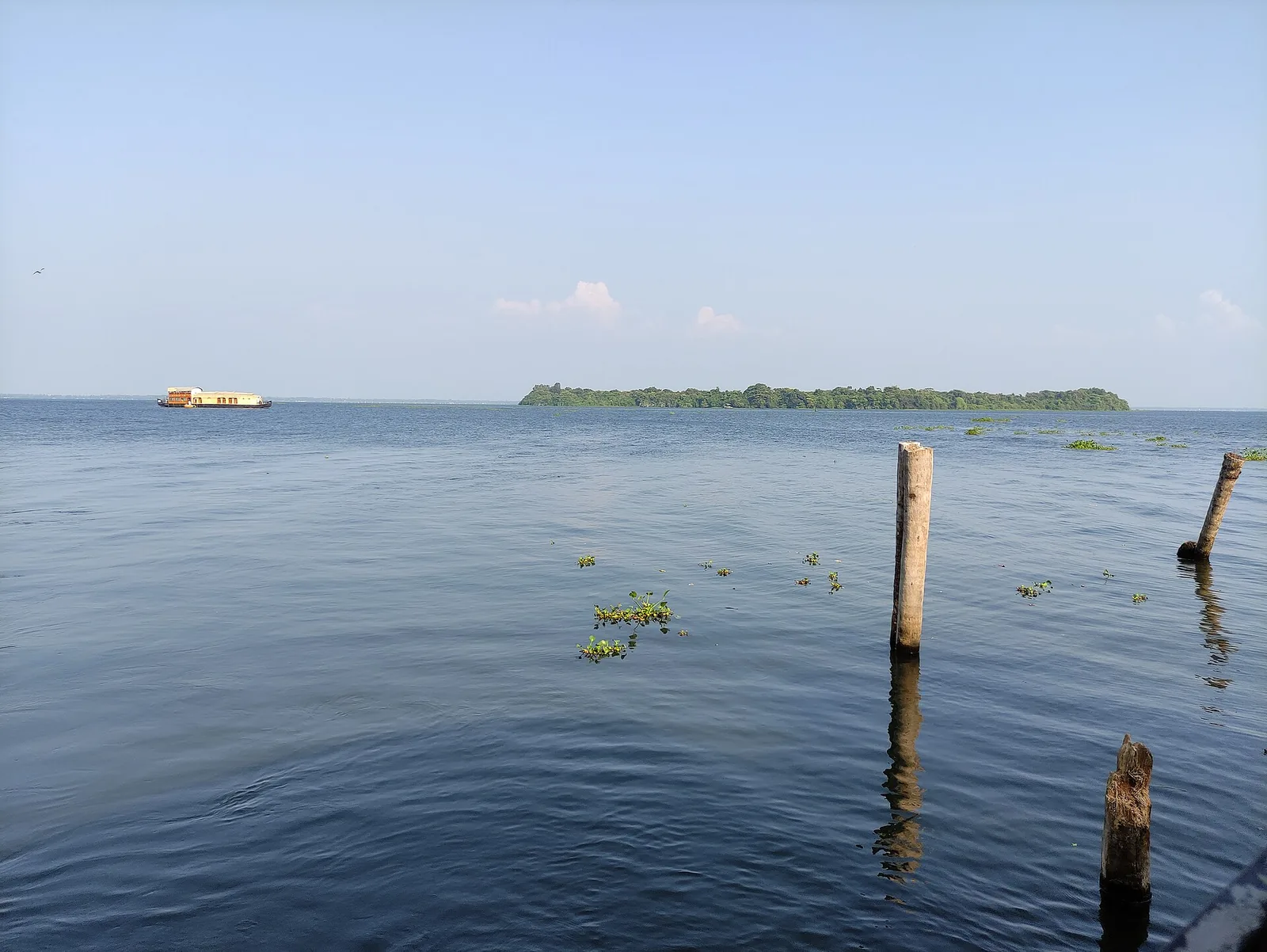
islandPathiramanal Island

Small Vembanad Lake island known for birdwatching.

9.6 km · ~16 min by cab · straight line
templeCherthala Karthyayani Temple

The Devi temple in the middle of Cherthala town, one of the 108 Durgalayas — where the goddess sits about four feet below ground level, hundreds of cockerels released as offerings live in the compound, and the town’s own name is said to come from the legend of her rescue from the mud.

10.8 km · ~18 min by cab · straight line
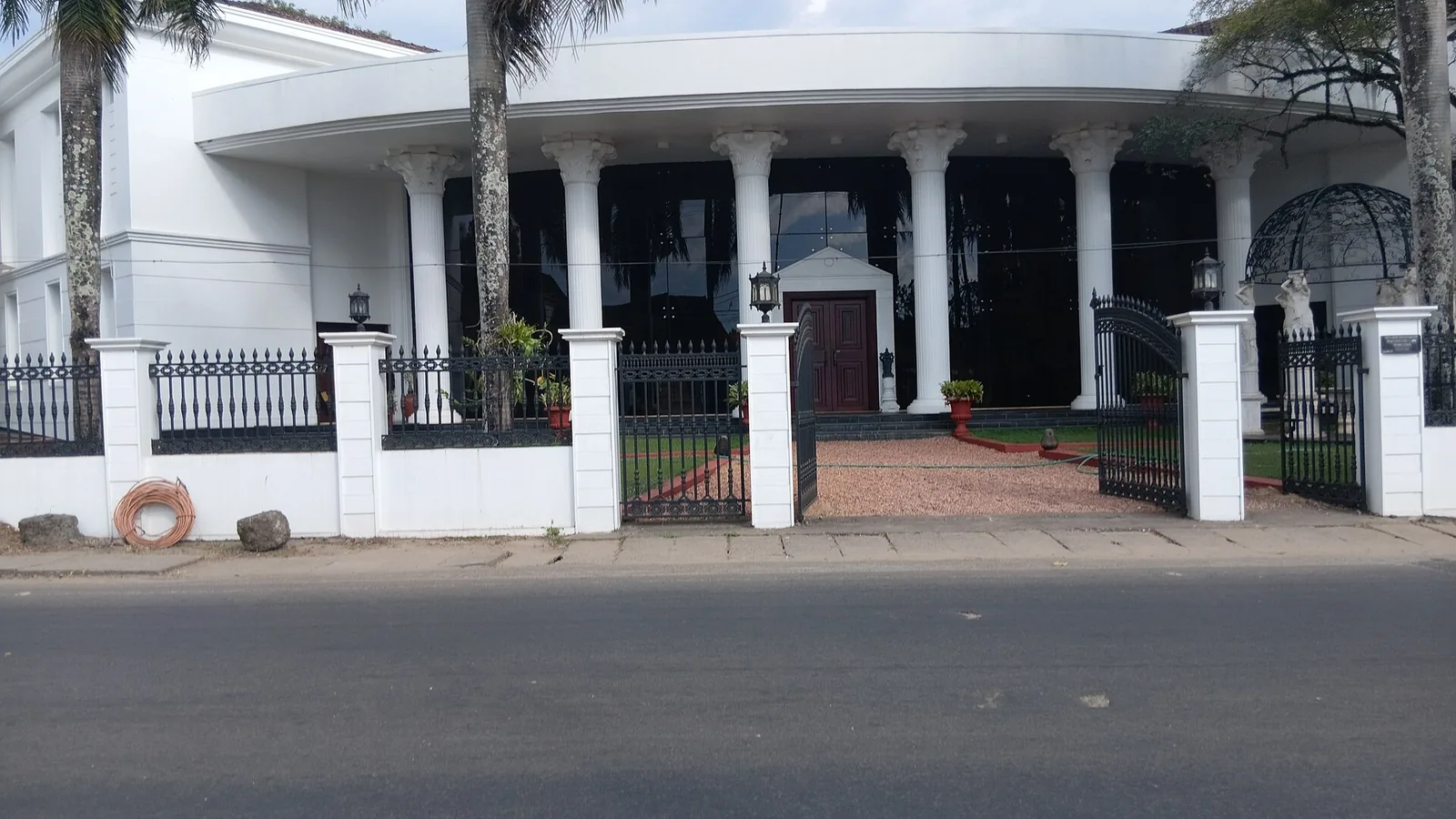
museumRevi Karunakaran Museum

Private memorial museum in Thathampally with a large collection of paintings, ivory, crystal and antiques.

11.5 km · ~19 min by cab · straight line
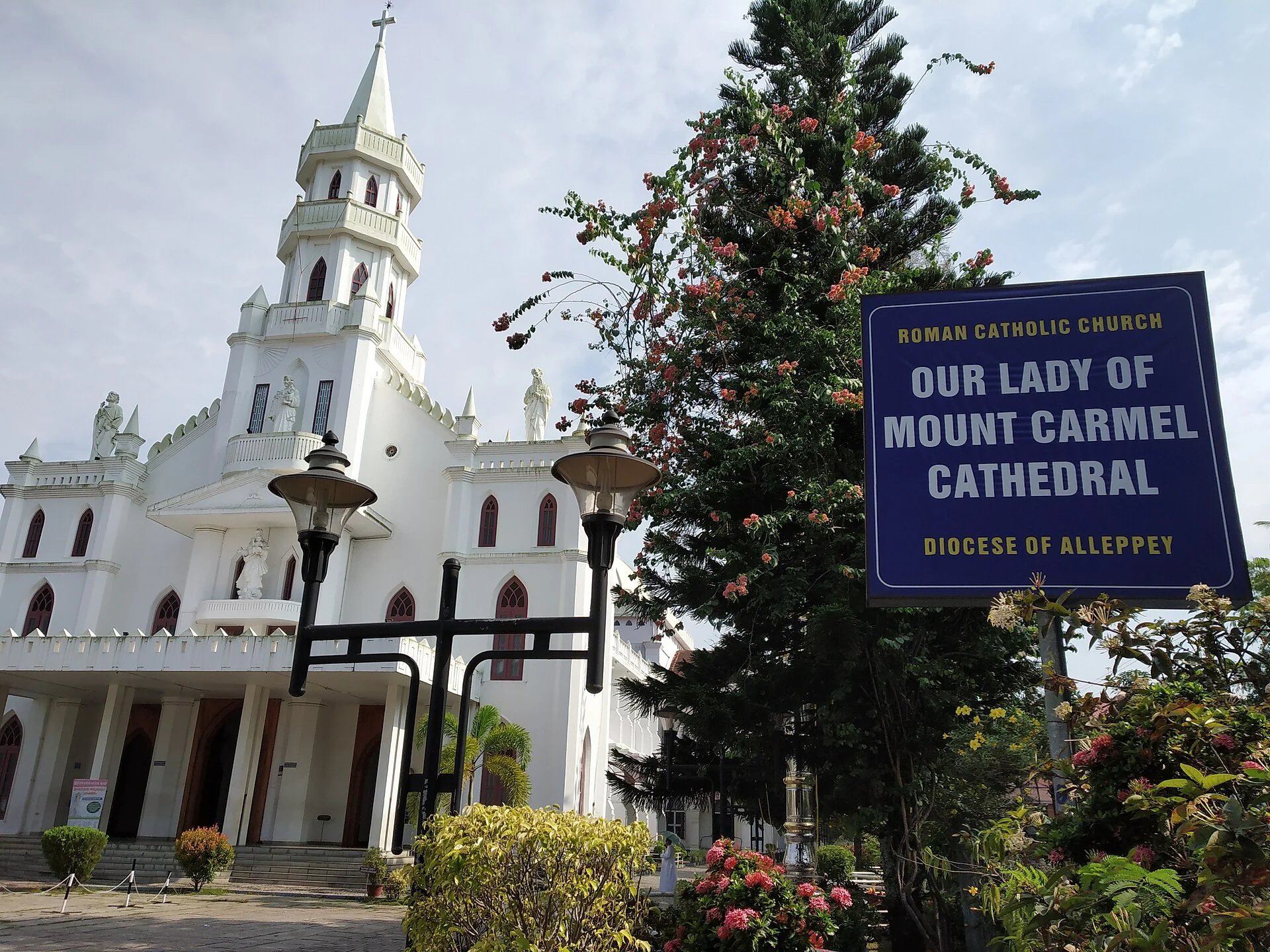
churchOur Lady of Mount Carmel Cathedral

Landmark 19th-century cathedral of the Alappuzha diocese near the town centre.

11.7 km · ~20 min by cab · straight line
beachAlappuzha Beach & Lighthouse

Pair Alappuzha’s broad town beach and old pier remains with the red-and-white lighthouse on C.C.S.B. Road, commissioned in 1862 and still maintained as a navigational light.

11.8 km · ~20 min by cab · straight line
townAlappuzha / Alleppey town

Backwater and houseboat hub with canals, beach, lighthouse and Finishing Point jetty.

11.9 km · ~20 min by cab · straight line
templeMullakkal Temple

Central Alappuzha town temple (Mullakkal Rajarajeswari) famous for the annual Mullackal Chirappu festival.

12.2 km · ~20 min by cab · straight line
backwaterPunnamada Lake

Finishing-point lake of the Nehru Trophy Boat Race and the main houseboat cruising water off Alappuzha.

12.3 km · ~20 min by cab · straight line
damThanneermukkom Bund

Salt-water barrier and bridge across Vembanad Lake that keeps the sea out of Kuttanad’s paddy in the cropping season — a long causeway with lake views.

13.9 km · ~23 min by cab · straight line
heritagePunnapra Vayalar Memorial

Martyrs’ memorial (Rakthasakshi Mandapam) to the 1946 Punnapra–Vayalar uprising, on the coastal belt north of Punnapra on the Alappuzha side.

14.2 km · ~24 min by cab · straight line

All 3 places to visit in Mararikulam →

Nearby toilets, pharmacies, ATMs, seating and vets are community-mapped and may be incomplete or out of date. Map data © OpenStreetMap contributors | Walking times © openrouteservice.org by HeiGIT

On the map

Where Marari Beach is

Good to know

Marari Beach — frequently asked

Where exactly is Marari Beach and what is it known for?

Marari Beach is at Mararikulam village in Alappuzha (Alleppey) district, on Kerala’s Arabian Sea coast roughly midway between Alappuzha and Cochin. It is known for being a long, laid-back, palm-fringed beach fronting a working fishing village, and for its relaxed eco and Ayurveda resorts — a tranquil alternative to Kerala’s busier beaches.

Is Marari Beach safe for swimming?

Treat it with caution. This is an open Arabian Sea beach with natural currents and surf, and it is generally not patrolled by lifeguards. It is best enjoyed for wading near the shore, walking and sunset-watching; if you do swim, stay close in, avoid rough or monsoon-swollen seas, never swim alone, and follow any local or resort advice.

How is Marari different from Kovalam or Varkala?

Marari is wider, much less built up and far less commercial. Instead of a promenade of cafes, shops and hotels, you get a working fishing beach, coconut groves, low-key resorts and a modest fringe of chairs, umbrellas and snack sellers at the top of the sand. It suits travellers wanting rest and a village atmosphere rather than nightlife.

Is Marari Beach really deserted?

No, and it is worth knowing before you arrive. Marari is quiet compared with Kerala’s resort beaches and it is never wall-to-wall, but on a fine evening — especially at weekends and in the December-to-February season — it fills with local families, kite flyers, kite and snack hawkers, umbrellas and sunloungers, and a long line of people paddling at the water’s edge. Photographs from 2022, 2024 and 2025 all show the same thing. For genuine solitude, come early in the morning, or simply walk fifteen minutes along the sand away from the main access point.

Is there a temple at Marari Beach, and what is the sea arattu?

The Mararikulam Mahadeva temple is not on the beach — it stands about 2 km inland, roughly half a kilometre west of NH-66. But its ten-day festival in the Malayalam month of Kumbham (February–March) ends on the new moon with the arattu, the ceremonial bathing of the deity, and at Mararikulam that bath is taken in the Arabian Sea: the procession leaves the temple by its western gate and walks the two kilometres down to this shore. It is one of a small number of Kerala temples whose arattu is a sea bath — the Janardanaswamy temple at Varkala and the Thiruvanchikulam Shiva temple at Kodungallur are two others. Dates shift each year with the Malayalam calendar, so confirm locally.

Can I combine Marari with the Alleppey backwaters?

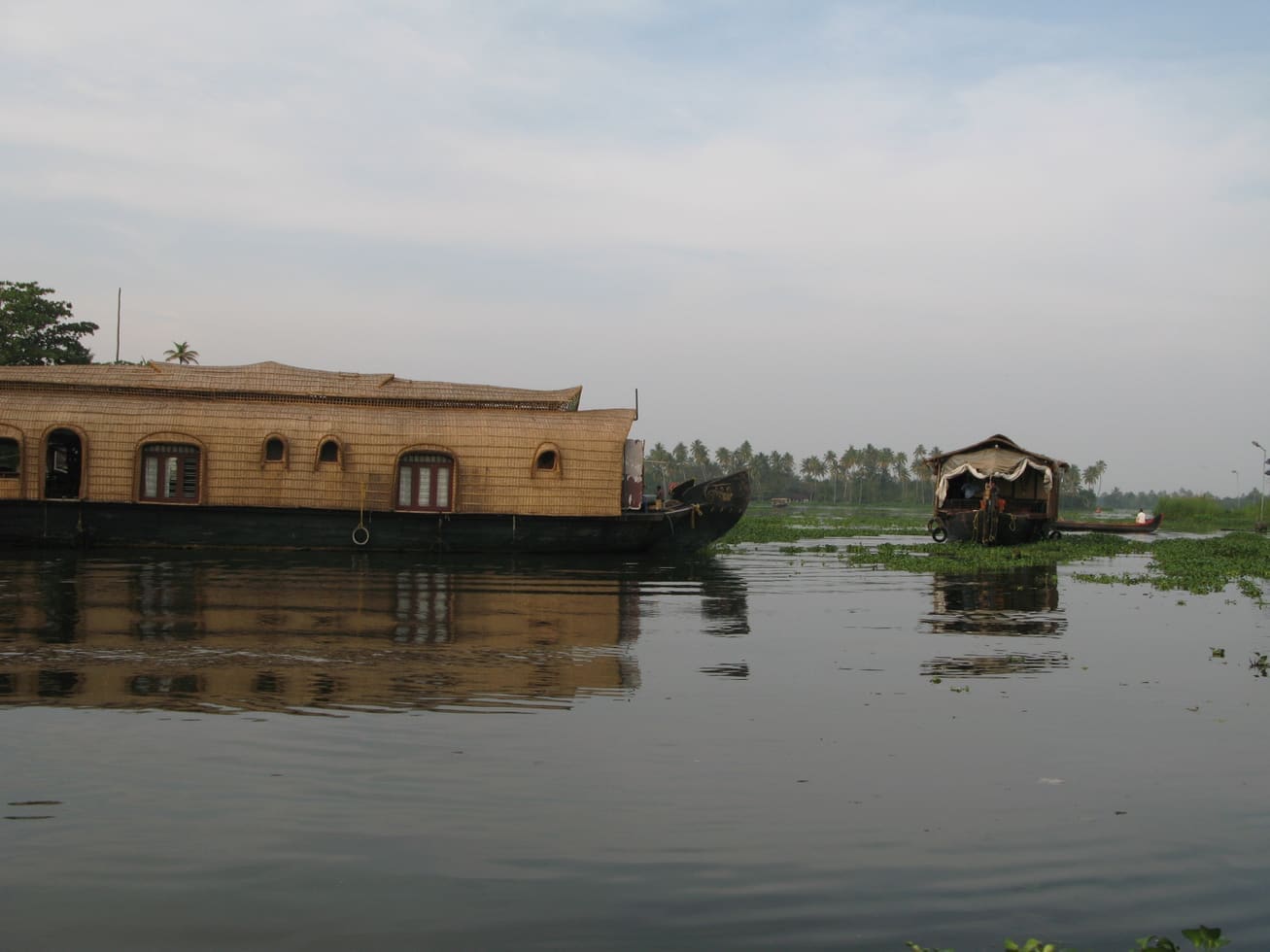
Yes — that is one of its biggest draws. Alappuzha and its famous backwater houseboats are only a short drive away (Alleppey town is around 11 km), so many visitors pair a restful beach stay at Marari with a backwater cruise or overnight houseboat trip.

When is the best time to visit Marari Beach?

The pleasant, dry stretch from roughly November to March is ideal for the beach. The southwest monsoon (around June to September) brings heavy rain and rougher, more dangerous seas, though it turns the palm groves lush and green.

Is there an entry fee for Marari Beach?

No — it is an open public beach with no ticket to reach the sand. Some access points and resort stretches may involve parking charges or restricted private frontage, so check locally.

What are the entry fee and timings at Marari Beach?

Entry: Free — no entry ticket for the beach. Parking, where available near access points, may carry a small charge, and some frontage adjoining resorts is private. Timings: Open public beach accessible at any time; there are no fixed gates or hours. For safety and the best experience visit in daylight, ideally early morning for the fishing activity and late afternoon for sunset, and avoid the shore after dark as it is unlit and unpatrolled.

How do I reach Marari Beach?

Base in Mararikulam for beach time, or visit as a half-day from Alappuzha town. Confirm exact beach access and property location before booking a stay. Use Marari as a slow coast stop rather than trying to combine too many inland attractions the same day.

How much time do I need for Marari Beach?

2 to 3 hours for a beach stop; 1 to 3 nights for a relaxed stay.

What else is near Marari Beach?

Nearby you can pair International Coir Museum (5.0 km), Arthunkal Church (7.0 km), Pathiramanal Island (9.6 km), Cherthala Karthyayani Temple (10.8 km).

What should I know before visiting Marari Beach?

Follow lifeguard/local warnings and avoid rough-sea swimming. Avoid isolated beach stretches after dark. Use known taxis/autos for late returns from restaurants or the railway station.

Image credits

Photographs: Mahendra M (CC BY-SA 3.0), Vis M (CC BY-SA 4.0), Gannu03 (CC BY-SA 4.0), Krissubh (CC BY-SA 4.0). Wikimedia Commons.