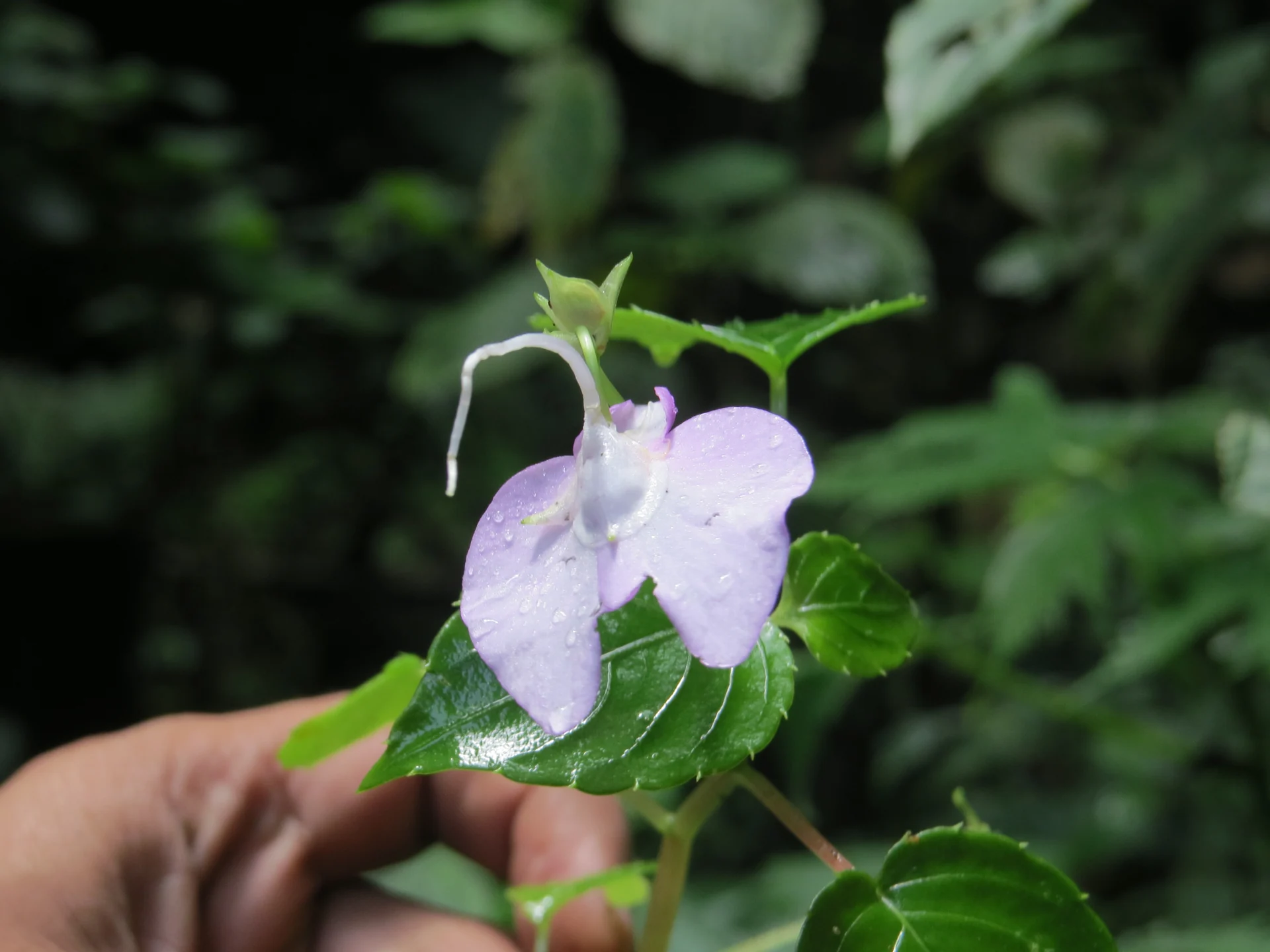
A flower in Mannavan Shola can be a more revealing introduction to Anamudi Shola than a photograph of a distant summit. The national park protects a group of high-elevation forests with their own history. It is not the Anamudi summit excursion inside Eravikulam, despite the shared first word in the name.
Three forests before one national park
The park’s management plan traces Mannavan, Pullaradi and Idivara to forest reservation under Travancore in 1901. Water protection was central to that decision. The important historical unit was therefore the forested catchment: slopes, vegetation and the water moving through them, rather than a viewpoint selected for its panorama.
That history predates the national-park designation in December 2003 by more than a century. The two dates describe different stages of protection. An older forest reserve became part of a later national-park arrangement; the trees and streams did not suddenly begin their ecological role when the newer name appeared on a sign.
Keeping the three component names in mind also improves a visit. Mannavan is a particular forest, not a casual synonym for every part of Anamudi Shola. A photograph labelled Mannavan should not automatically be placed at Methappu, and an accommodation booking at Methappu does not establish access to every interior route.
Looking below the canopy
The management plan identifies the tree fern Cyathea crinita as a flagship feature of Mannavan. It directs attention to vegetation that can be lost in a general description of green hills. A fern’s form, a climbing stem or a flower at the path edge belongs to a different visual scale from the continuous canopy seen across a valley.
The botanical photograph heading this story shows a pale lilac flower with a long curved spur, supported beside its leaves for the camera. It is a close botanical record, not a picture of a visitor picking flowers. On a permitted walk, observation should leave plants where they grow; a guide can explain a feature without requiring a specimen to be taken home.
The distinction matters because an intact-looking canopy does not reveal every ecological condition beneath it. The management plan discusses invasive vegetation and restoration as well as native forest. A hillside can contain different histories of land use, and the aim of management may be to recover a more appropriate plant community rather than simply increase the number of visible trees.
What the history changes for a visitor
Approach Anamudi Shola as a protected catchment and living forest. A quieter walk that notices leaf forms, damp hollows and vegetation layers can answer more about the place than a hurried search for a high point. Ask the guide which component forest the route enters and how that area fits the park.
The historical account gives a reason for the controlled visit: the landscape’s value extends beyond what can be photographed in one afternoon. Forest protection, water and the smaller plants belong to the same story. The practical details of entry and the named accommodation remain in the main Anamudi Shola guide, so a historical read need not double as a booking instruction.
Plan the visit: Anamudi Shola.