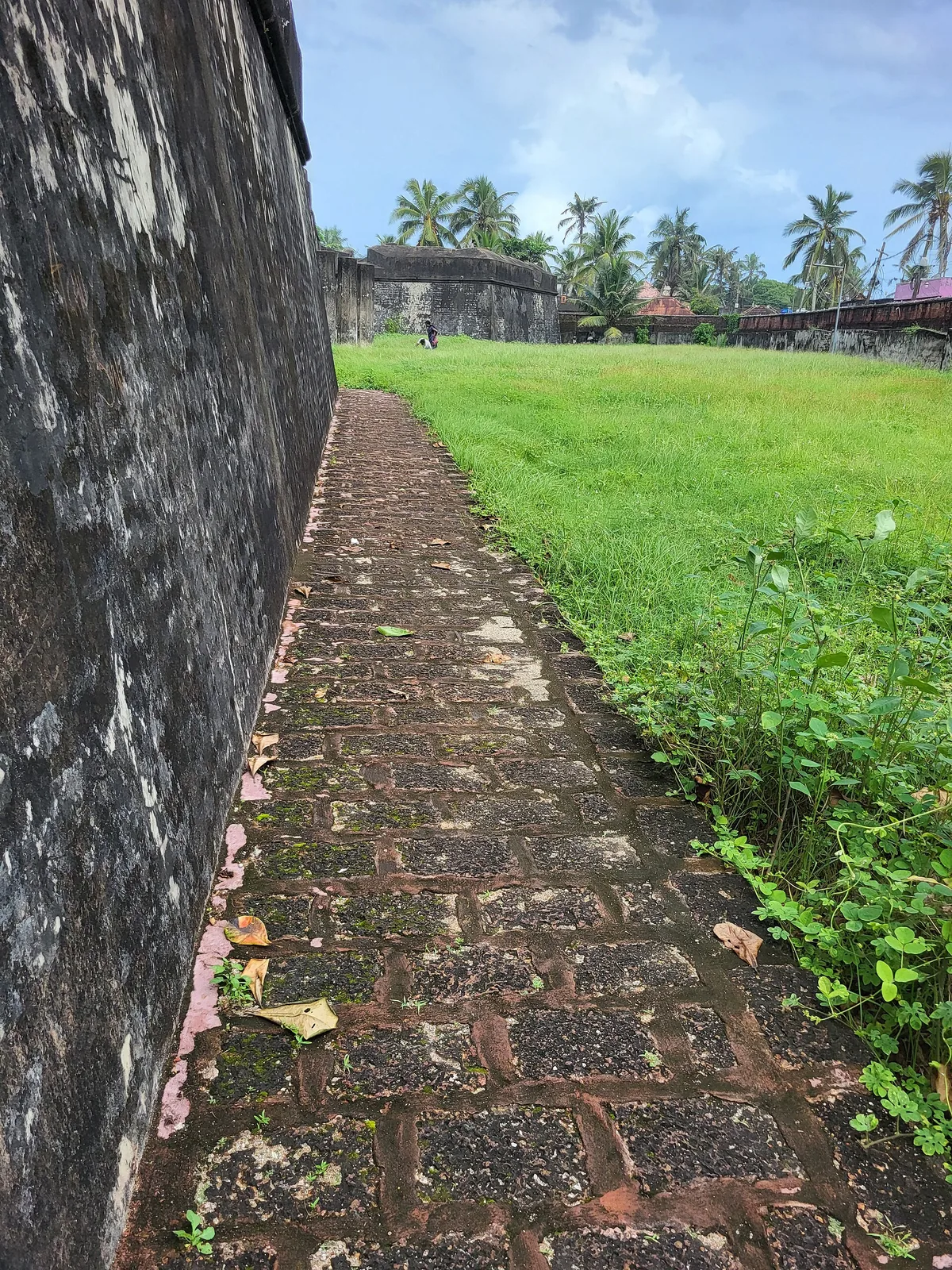
Anchuthengu in the first half of the eighteenth century was a small, unhealthy, precarious place: a laterite square on a sandspit, a factory, a garrison, a cemetery filling steadily, and a European population you could count without much effort.
Two children born inside it went on to occupy permanent positions in English letters. That is a strange statistic for a settlement this size, and neither of them is mentioned on the site.
Robert Orme, born 1728
Orme was born at Anjengo in 1728 — seven years after the massacre of 1721, in the fort that had then been besieged for six months. His father was a surgeon in the Company’s service.
He went into the Company himself, spent years in Bengal and on the Coromandel coast, and became its historiographer: the author of the standard eighteenth-century history of the British in India. His work is the account through which a great deal of that period was read for the next hundred years — the source that later historians argued with, quarried and depended on.
There is something appropriate about the Company’s official historian being born in the fort where its most spectacular early humiliation had just taken place. He grew up, in a literal sense, inside the material.
Eliza Draper, born 1744
Sixteen years later, Elizabeth Sclater was born at Anjengo. She married an East India Company official, Daniel Draper, and in 1767 in London she met Laurence Sterne — by then famous for Tristram Shandy and in the last year of his life.
What followed was one of the more scrutinised attachments in English literary history: the letters, and the Journal to Eliza that Sterne kept for her after she sailed back to India. She is “Eliza” in his correspondence and in a considerable body of scholarship since, and the relationship has been read variously as an infatuation, a performance and a genuine late attachment. She left her husband some years later, returned to England, and died in 1778, in her thirties.
Why a tiny settlement produced them
It is less a coincidence than a demographic effect. Company settlements were small, closed, intermarried and, crucially, connected. Everyone in them was in correspondence with London, everyone’s children were sent back or married into the same network, and a birth in an obscure factory on the Travancore coast placed you inside an imperial administrative class that was numerically minute and disproportionately documented.
It also reflects who wrote things down. The Indian population of Anchuthengu in those decades was many times larger, and virtually nothing about individual lives among it survives. The eighteenth century at this fort is legible only through the people who were writing letters to England, which is why two of its children are known in detail and the rest are not known at all.
The cemetery
The English graveyard beside the fort is the other half of this. It is small, weathered, partly legible, and it is the record of how badly Europeans did on this coast — fever, mostly, and young.
Stand in it and the Orme and Draper stories acquire their proper proportion. Two people born here became famous. A great many more were buried here in their twenties, and the Indian village around them, which supplied the labour, the boats, the food and the pepper, left no monument at all.
Frequently asked questions
Who was Robert Orme?
The East India Company’s historiographer and the author of the standard eighteenth-century history of the British in India. He was born at Anjengo in 1728, seven years after the Attingal Outbreak, and died in 1801.
Who was Eliza Draper?
Born at Anjengo in 1744, she married a Company official and, in London in 1767, met Laurence Sterne. She is the “Eliza” of his letters and of the Journal to Eliza, one of the best-documented attachments in eighteenth-century English literary history. She died in 1778.
Is there anything to see connected with them?
Nothing marked. The fort, the English cemetery beside it and the lighthouse are what survive, and neither Orme nor Draper is commemorated on the site. The cemetery is the closest thing to a context for them.
How large was the European population at Anjengo?
Small — a garrison, a factory staff and their families, numbering in the dozens rather than the hundreds for most of the period. The surrounding Indian village was many times larger, but almost nothing about individual lives in it was recorded.
Why is so little known about the Indian population?
Because the surviving record is the Company’s correspondence with London, which documented Europeans and counted everyone else. The eighteenth century at this fort is legible only through the people who were writing letters home.
What is the English cemetery like?
Small, weathered and partly legible, immediately beside the fort. It is largely a record of how badly Europeans fared here — fever, mostly, and young — and it is generally empty of visitors.