An airport company’s river project
Cochin International Airport Limited identifies Arippara on the Iruvanjippuzha as the site of its 4.5 MW hydroelectric project, commissioned in 2021. The connection is unusual: a visitor arriving for a waterfall is also beside a river used in the renewable-energy programme of the company behind Kochi’s airport.
CIAL Infrastructures’ 2021–22 annual report records the project’s inauguration during that financial year. A later CIAL presentation hosted by the International Civil Aviation Organization gives a more detailed account of the scheme. Together they make it possible to understand an operating energy asset rather than relying on an old proposal description.
The route the water takes
The technical presentation describes an overflow weir directing water into an intake pool. From there, an intake and water-conductor system lead towards the generating arrangement. These are different components with different tasks: collecting and directing water is not the same stage as turning its energy into electricity.
A surge tank moderates changes in the system during load acceptance and rejection. A penstock then feeds two machines rated at 2.25 MW each. The presentation identifies horizontal Francis turbine equipment in a surface powerhouse on the river’s right bank. The two machine ratings explain the scheme’s total installed capacity.
That capacity is a power rating, not the amount of electricity produced in a year. Actual energy generation depends on operation over time. Keeping the units distinct helps a reader understand the project’s scale without treating one number as a constant output.
From the powerhouse to the electrical network
The company’s annual report identifies power evacuation from Arippara at 33 kV. This is the transmission stage after generation: the project has to connect its electrical output to the wider network, as well as guide water through the hydraulic equipment.
The engineering sequence can therefore be followed in a clear order: intake, water-conductor system, surge tank, penstock, generating machines and electrical connection. Each name adds a specific function to what might otherwise be described simply as a dam beside a waterfall.
What this means for a waterfall visitor
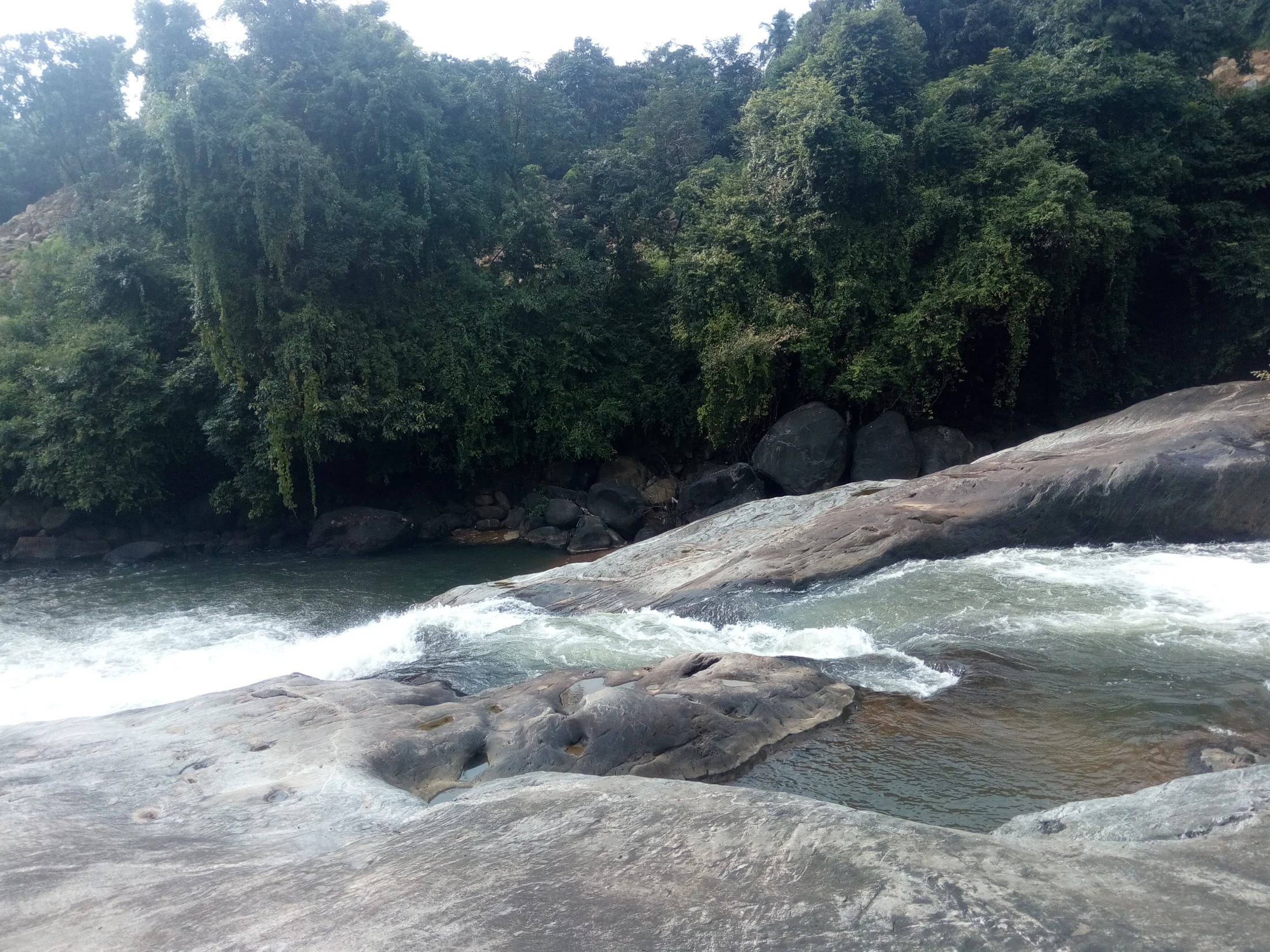
The story photograph shows river channels crossing dark rock. It provides landscape context for the project, while the operator’s technical account explains equipment that is not visible in that frame. The public waterfall visit has its own arrival point and access arrangements.
Keep those arrangements separate from the power infrastructure. A visit to the falls does not include inspection of the intake, powerhouse or electrical equipment; any such access would need explicit operator authorisation. Follow the current visitor route and infrastructure boundaries.
Arippara’s engineering history adds another way to understand the river without displacing the waterfall itself. The rock-and-water landscape remains the subject of the public visit, while the 2021 project explains a specific modern use of the same watercourse.
Sources: CIAL project identity, CIAL technical presentation, slide 21 and CIAL Infrastructures 2021–22 annual report, page 24.
Plan the visit: Arippara Waterfalls.