A seasonal cascade has more than one appearance
DTPC Kottayam describes Aruvikkuzhi as strongest in the rainy season and reduced to a trickle in summer. That seasonal character should be part of the decision to visit. The waterfall is not a permanent reproduction of the fullest image in a gallery.
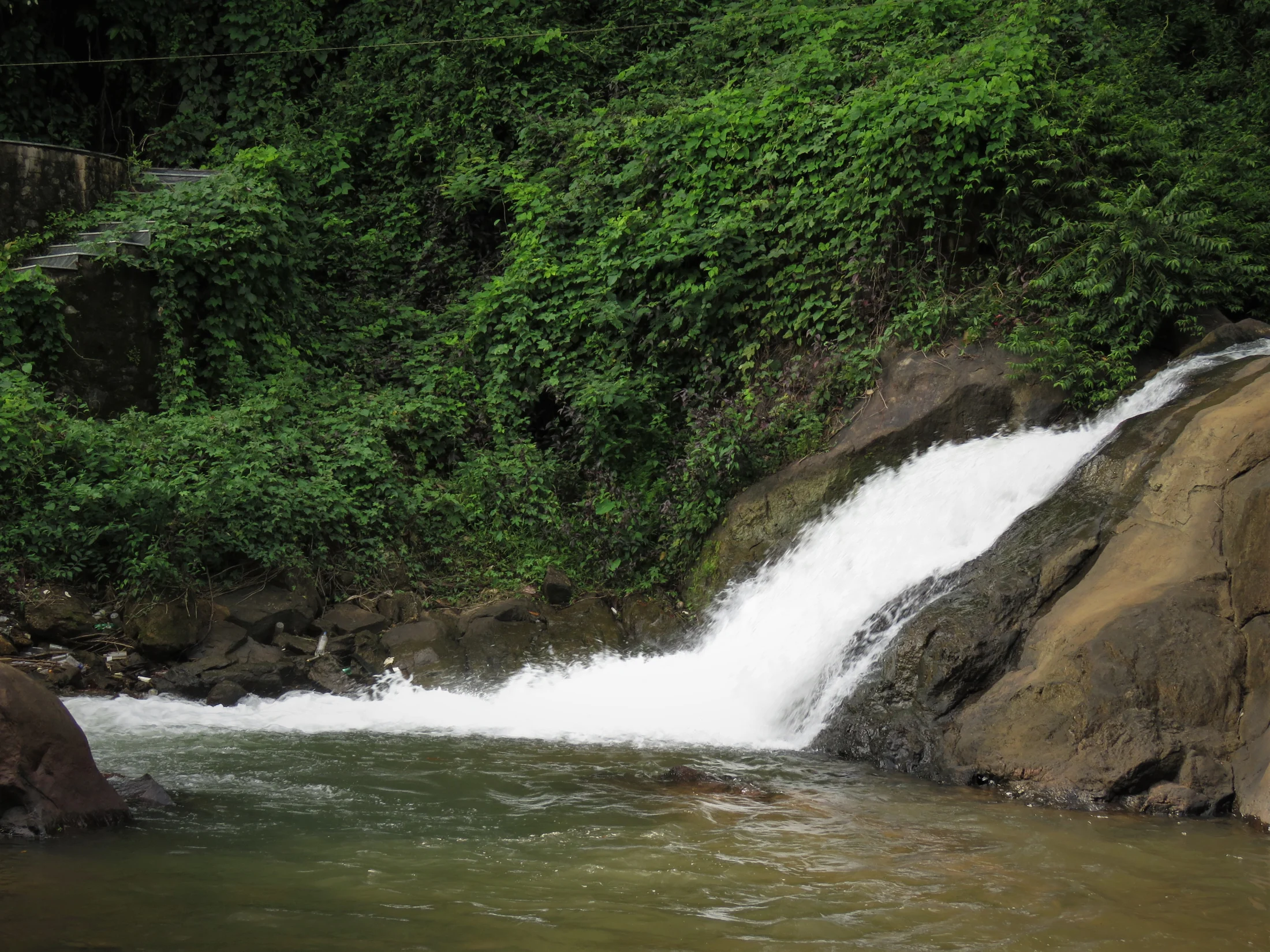
The story photograph shows a concentrated white chute against dark rock. It records a particular flow and angle. Another frame can reveal more exposed steps or a broader surrounding surface without referring to a different waterfall.
The rock becomes more or less visible
When water occupies less of the channel, the shape of the rock can become a larger part of the view. Edges, grooves and stepped surfaces are easier to distinguish. When flow increases, white water can join those features into a stronger continuous movement.
This is a visual change, not a recommendation to walk onto the exposed channel. A rock surface that appears dry in one section can be wet or uneven nearby, and the view from the authorised approach is sufficient to appreciate the cascade’s structure.
The district description places the waterfall among rubber plantations. That surrounding land use gives Aruvikkuzhi an inland Kottayam context rather than the appearance of a remote high-mountain plunge. Keep the cultivated setting and the natural channel together when understanding the landscape.
Choosing a visit in wetter weather
The DTPC account identifies June to September as a favourable period for the water’s appearance. Rainy-season timing, however, also requires attention to the actual site and road conditions. A stronger cascade can coincide with wet approaches and a need to remain farther from the channel.
Use the current permitted viewing area and any local closure directions. The objective is to see the seasonal landscape safely, not to get as close as possible to the drop. A published best-season description should never be read as a promise that every rainy day is suitable.
If the visit falls in a drier period, decide whether the rock-and-vegetation setting still fits the itinerary. A modest flow can be an honest part of the place’s annual cycle, provided it is not sold as permanent heavy water.
Make photographs useful to the next visitor
Include the date or season when sharing an image whose flow is central to its appeal. Retain enough rock and bank to explain the setting, rather than presenting a tight crop that hides how much of the channel is visible.
Avoid attaching an exact height to a frame simply because the drop appears dramatic. The district and tourism descriptions use differing figures, and a photograph does not resolve their measurement basis. The visible sequence of rock and water is enough to describe the scene accurately.
Aruvikkuzhi rewards that seasonal honesty. The visit can focus on flowing water in a wetter period or on the cascade’s exposed structure at a lower flow, while remaining one recognisable place in the rubber-growing landscape near Pallickathodu.
Sources: DTPC Kottayam: seasonal visitor information and Kottayam district destination account.
Plan the visit: Aruvikkuzhi Waterfall.