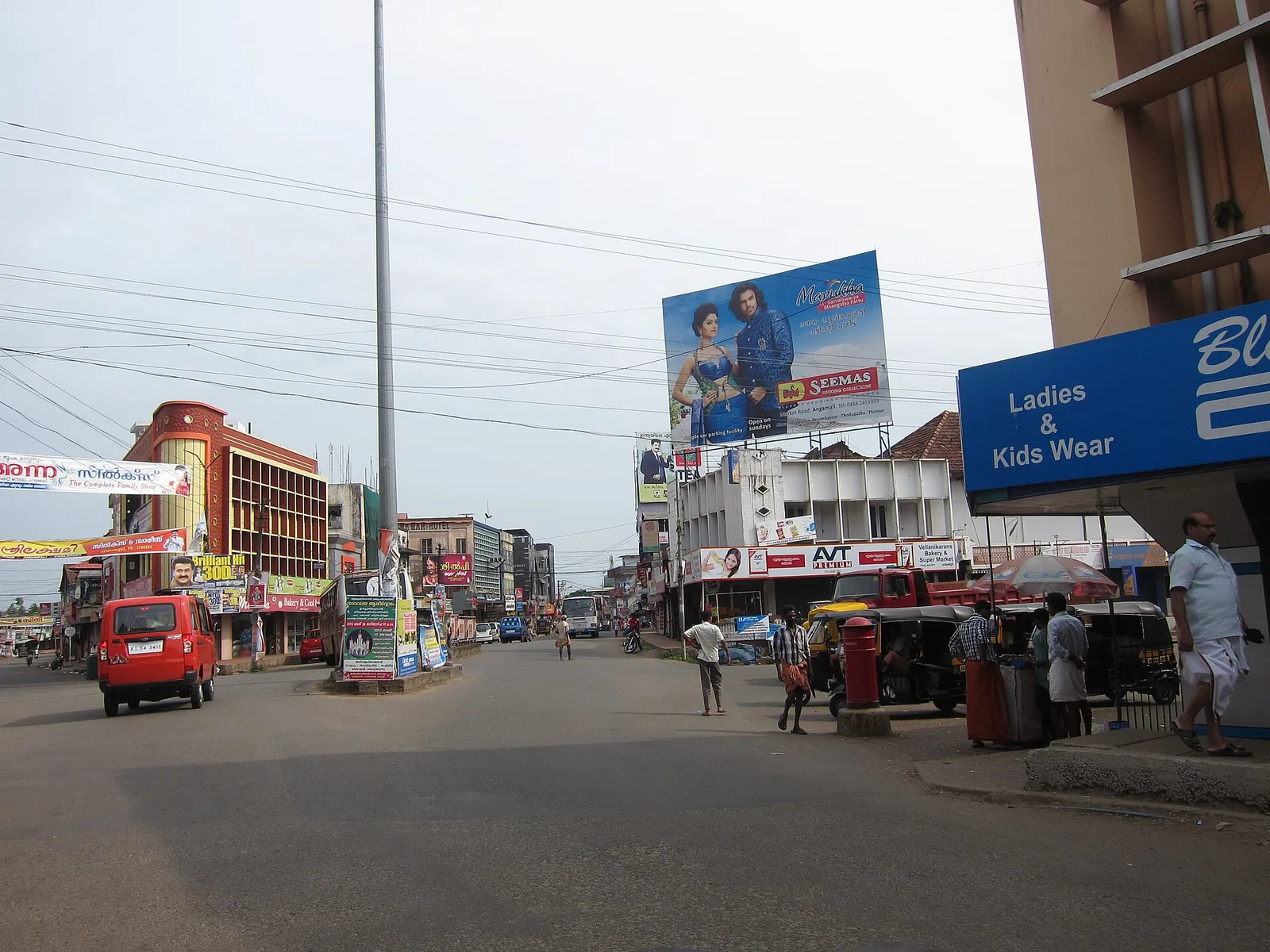
The line everybody repeats about Chalakudy Market is that Sakthan Thampuran established a pandikasala here and settled Syrian Christian traders around it, and that in his time it became one of the major markets of Kerala. All of that is in the sources. None of it explains why a raja based at Thrissur would take an interest in a patch of ground thirty kilometres south, and the answer to that question is more interesting than the fact itself.
What the man was doing
Rama Varma, remembered as Sakthan Thampuran, ruled Cochin from 1790 to 1805 and died in the last of those years. His reign is conventionally described as the end of the chieftains’ dominance in Cochin and the beginning of the modern period, and that is not flattery — it is a description of a programme. He replaced the tax-collecting rights of local lords with officials he appointed himself, grouped villages into taluks and taluks into subas, built kacheris for litigation, and put inspectors over his own officers with severe penalties for corruption. He brought temple administration under the government and broke the political power of the Nambudiri yogams at Thrissur and Peruvanam.
A ruler doing all of that needs revenue he can see. Land revenue was already fought over. Trade revenue was the growth area — and trade revenue was in somebody else’s hands.
The monopoly he wanted broken
Malayalam accounts of the reign are direct about who controlled Cochin’s commerce: Konkani Brahmins, some Nair houses, and a section of the Latin Christians. The Konkani merchants in particular had built their wealth on connections with the Dutch, and had become rich enough for that to be a political fact rather than a commercial one.
Sakthan demanded more revenue from them. They used their Dutch leverage and began falsifying their returns. The quarrel escalated: the raja sent officers to seize part of the treasure the community held at the Thirumala Devaswom, the merchants attempted to move the valuables to Alappuzha, the attempt was intercepted, and three men including the merchant leader remembered as Devareshakini were put to death and the property taken into the state treasury. This is not a marginal episode. It is the central fact about commerce in Cochin in those years.
Which is where Chalakkudy comes in
Read the Chalakkudy depot against that background and it stops looking like municipal improvement. Syrian Christians were the other established trading community in the country, long resident and — crucially — with no Dutch patron. Settling them around a new wholesale depot, on a site the state controlled, at the foot of the only road into the Anamalai forests, put a taxable commerce where the raja could count it and gave it to people whose position depended on him.
It also had the merit of being where the goods were. Forest produce and hill spices had to come out somewhere, and the geography of the Ghats gave that somewhere only one address. A depot at Chalakkudy did not have to attract trade. It only had to be there when the trade arrived.
The same instinct is visible elsewhere in the same reign and just afterwards. At Thrissur, Sakthan cleared the teak wood in front of the Vadakkunnathan temple to make an open ground people could move across freely. At Aluva, Malayalam sources record that a Cochin queen ordered the market there to be built, with land taken from the state’s own holdings for the purpose. Markets in this state were routinely made, not found.
The one correction the story needs
There is a version of this that goes too far, and it is worth heading off because it is the version that sounds best. It runs: Sakthan Thampuran brought Christian traders to Chalakkudy, and the town’s Christian character dates from him.
St Mary’s Forane Church stands 375 metres from the market yard. Its parish tradition holds that a Christian community was worshipping in Chalakkudy from around AD 600, on a site on Palace Road, and that it moved to the present ground about AD 1300 — five hundred years before Sakthan. Those are traditional dates, not documented ones, and should be read as a parish’s account of itself rather than as history. But the tradition does not need to be accurate to make the point. A community with a settled site and a stated founding legend, whatever its real age, was here well before the eighteenth century.
So the accurate sentence is narrower and better: the raja did not introduce merchants to Chalakkudy. He concentrated a merchant community that was already present, gave it a yard and a depot, and taxed what passed across it. The parish was raised to a forane in 1937 and the church rebuilt in 1987, with the old carved wooden altar kept in place — a building that has been continuously in use next to a market that has been continuously in use.
What survived
Sakthan Thampuran is remembered for Thrissur — the palace, the pooram, the cleared maidan. Chalakkudy got the unglamorous half of the same policy, and it is the half that is still running. The depot became a chantha, the chantha acquired a market complex in 1928 when road traffic stopped stopping here, and the yard is still full on Tuesday and Friday mornings two hundred and twenty years after the man who planted it died.
Frequently asked questions
When did Sakthan Thampuran rule Cochin?
From 1790 to 1805. He was born in 1751 and died in 1805, and the Chalakkudy depot belongs somewhere inside that fifteen-year reign; no source gives a more exact year.
Did he found Chalakudy Market?
The sources say he established a pandikasala — a wholesale depot — here and settled traders around it, and that the market became one of the major markets of Kerala in his time. They do not say he created trade on this ground from nothing, and the older name Kunnathangadi, an angadi name meaning a permanent street of shops, suggests trade here before him.
Why did he settle Syrian Christian traders here?
The sourced context is that Cochin’s commerce was dominated by Konkani Brahmin merchants with Dutch connections, whom Sakthan was in open conflict with over revenue. Syrian Christians were the other long-established trading community and had no such patron. That reading is ours, drawn from the sourced facts; no source states the motive directly.
How old is the church next to the market?
St Mary’s Forane Church holds by parish tradition that the community dates from about AD 600 and moved to its present site around AD 1300. Those are traditional dates rather than documented ones. What is documented is that the parish was raised to forane status in 1937 and the church rebuilt in 1987, retaining the original carved wooden altar.