What to expect
Highlights
- Heritage experience at Chalakudy Market
- Architecture, local stories and old trade/cultural routes
- Good fit for guided walks and nearby cafes/shops
The town’s wholesale produce yard on Market Road, the oldest continuously working institution in Chalakkudy — a Sakthan Thampuran-era pandikasala that still holds its traditional Tuesday and Friday markets and takes hill produce down State Highway 21.
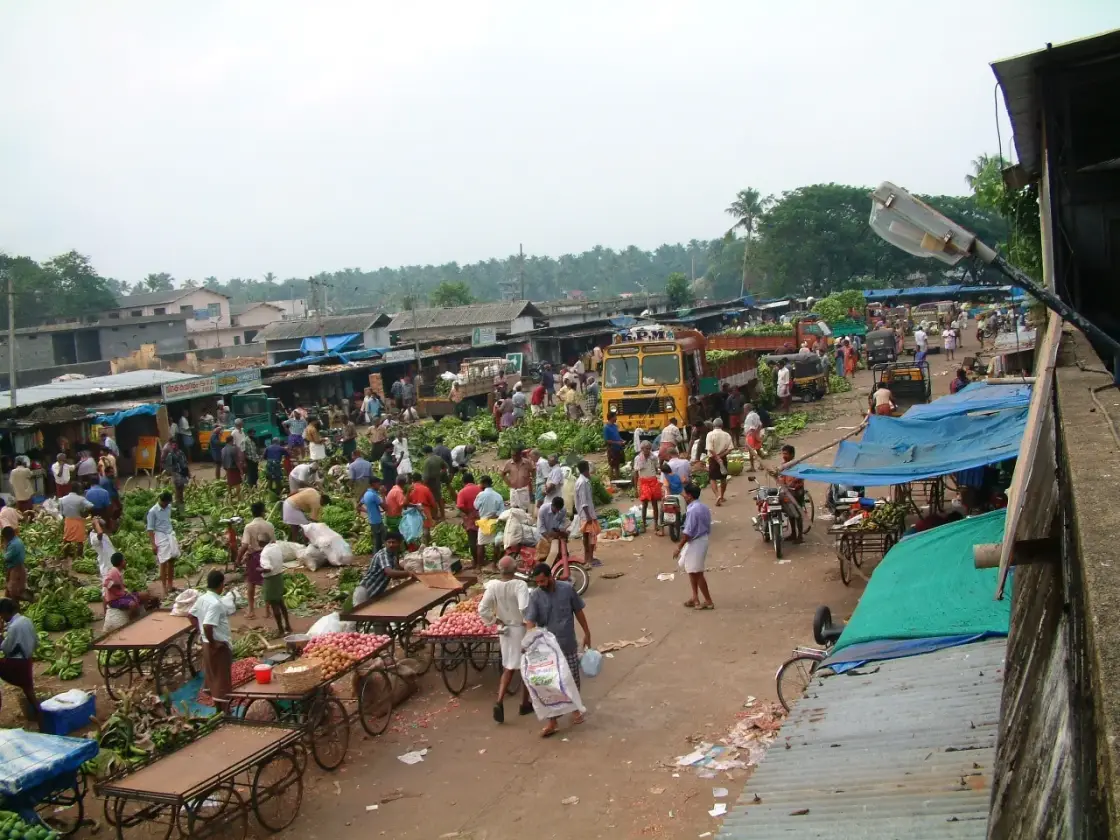
Chalakudy Market is a working wholesale and retail trading yard at the north end of Chalakkudy town in Thrissur district, about 250 metres south of Chalakkudy North Junction on Market Road. The marketplace polygon in OpenStreetMap encloses roughly 7,660 square metres — call it three quarters of a hectare — measuring about 133 metres north to south and 69 metres across, which makes it a genuinely large open yard by the standards of a Kerala municipal market. It has traded under the name Kunnathangadi for longer than anyone can document, it was rebuilt as a market complex in 1928 after road traffic stopped coming through it, and the customary weekly market days are still Tuesday and Friday. What passes across it is hill produce and spices brought down State Highway 21 from the Anamalai edge, and plantains, vegetables and fish from the lowland villages around the town.
Start with the physical thing, because almost nothing written about this market describes it. The yard sits on the east side of Market Road — a Major District Road rather than a highway — a couple of hundred metres south of North Junction, in Chalakkudy’s Thachudaparambu neighbourhood, postcode 680307. Its mapped footprint covers about 7,660 square metres: roughly 133 metres north to south and 69 metres across at its widest. That is a large open floor for a retail market and explains its role as a yard where lorries can turn, unload and reload.
The best single piece of evidence about how it works is a photograph taken on 17 April 2007 and released into the public domain by the Malayalam Wikipedian who took it. It shows the yard mid-session from a first-floor vantage on the west side, and every element of the trade is legible in it. Green plantain bunches are stacked directly on the beaten earth in heaps a metre high, running the length of the yard. A yellow lorry stands in the middle with its bed already loaded with green produce, and a second lorry waits behind it. Along the near edge stand a dozen wooden handcarts on bicycle wheels — the standard Kerala market barrow — carrying shallots, small onions and tomatoes for retail sale. Blue and green tarpaulins are lashed over the permanent shed roofs down both sides. There are perhaps eighty people in frame and none of them is idle.
The photograph settles an argument that the written sources leave open. This is not a picturesque weekly bazaar; it is a bulking yard. Produce arrives in quantity, is sorted and consolidated on the floor, and leaves by lorry for somewhere else. The handcarts along the edge are the retail tail of a wholesale operation, not the point of it. That is what a pandikasala was for in the first place, and it is what the yard is still doing two centuries later, which is a more interesting continuity than the fact that the market is old.
Where the goods come from is the other half of the answer, and Chalakkudy has an unusual catchment for a lowland town. State Highway 21 begins in this town and climbs 86 kilometres east to the Tamil Nadu boundary at Malakkappara, passing Thumboormuzhi, Athirappilly, Vazhachal and the Sholayar reservoirs on the way. Along its upper reaches are the Vazhachal and Malayattoor forest divisions and, at the top, tea estates owned by Tata. Everything grown on that road — tea, coffee, pepper, cardamom, nutmeg, and the plantains and tapioca of the settlements between — has one practical way down to a buyer, and it comes through Chalakkudy. There is no second road. That geographical fact, and not any decision by a municipality, is why a market here has never quite died.
The trades that grew up around the yard are still visible in the streets and they are not the trades you would predict. Within 450 metres of the market centroid there are at least four furniture and timber businesses — C.V. Woods, Kidangans Modern Furniture, Happy Birthday Furnitures and one plainly signed Modern Furniture — which is the surviving retail end of the timber economy that the forest tramway once fed. There is a comparable cluster of bakeries: Mody, Joy Luck, Navya, Minerva, Orange and Chacko’s all trade within the same short radius, several of them with more than one outlet. And there are at least eight banks and co-operative societies inside the same circle, including the Thrissur District Co-operative Bank, the Irinjalakuda Town Co-operative Bank and the Chalakudy Service Co-operative Bank. Wholesale markets run on credit, and the density of small co-operative lenders around a market yard is a direct measure of how much of it is transacted on paper.
The rhythm is the part visitors get wrong. Both Malayalam and English sources state that the traditional weekly markets still convene on Tuesdays and Fridays, and those are the days on which the yard is full. On other days it trades, but at a fraction of the volume, and a visitor arriving at eleven on a Thursday morning will find a quiet shed and conclude, wrongly, that the market is finished. The working hours are also earlier than most people expect. Wholesale produce markets in Kerala do their business between roughly five and nine in the morning; by mid-morning the lorries have gone and what remains is the retail tail.
The market is municipal property. Chalakkudy became Kerala’s twenty-sixth municipality on 1 April 1970, and Kerala municipalities hold, maintain and lease their markets, letting the stalls and the right to collect the daily entry fees. The municipal office — a blue two-storey building with a clock tower, about 600 metres from the yard — is the market’s landlord, and the Municipal Bus Stand shopping complex a similar distance away is the same institution doing the same thing in a newer idiom. This matters practically: opening hours, fees and stall allocation are set by a local body, not by a trade association, and they change without notice.
What a visitor should actually do here is simple and it is not shopping. Come between six and eight on a Tuesday or Friday morning, stand at the north end of the yard where the lorries turn, and watch a two-hundred-year-old freight system run for an hour. You will see hill produce arrive, be weighed, be argued over and leave. Buy fruit from a handcart if you want something to hold, drink a tea at one of the bakeries on the way out, and then get on with the day. This is not a sight; it is a place doing work, and the honest reason to stop is that very few travellers on the Athirappilly road ever see the town do any.
A market this old ought to come with a founding legend, and this one does not — what it has instead is its vocabulary, and the words turn out to carry more information than a legend would. Three different Malayalam nouns have been attached to this single patch of ground, and each of them describes a different kind of institution. Sorting them out is the nearest thing this place has to a myth section, and unlike a legend it can be checked.
The oldest of the three is angadi, in the compound Kunnathangadi. An angadi is a permanent street of shops — a bazaar in the literal sense of a built-up trading lane, occupied by resident merchants who live above or behind their premises. It is a settlement word. A place called an angadi has traders in it on a Wednesday afternoon in the monsoon. That the market’s oldest recorded name is an angadi name, and not a chantha name, says that the trade here was continuous and residential before it was periodic.
The obvious reading of the first half is kunnu, a hill, giving “the bazaar on the rise”. It is a satisfying reading and I do not think a visitor should be given it without a warning. Sampling the 30-metre SRTM elevation model at the yard returns about 10 metres above sea level, while points three to seven hundred metres to the south and north-east return 17 to 20 metres. On that data the market floor is the low ground, not the high ground. Thirty-metre elevation data over a built-up town is coarse and I would not hang an argument on it, but it is enough to say that if the name means a hill, the hill is not the yard — it is more likely the older settlement that the yard was later laid out below. There is also a trap for anyone searching: a second Kunnathangadi exists in Thrissur district, in Arimbur panchayat on State Highway 75, some 25 kilometres away, and it has nothing to do with this market.
The second word is chantha, and it means something quite different: a periodic market, a gathering on named days. The Tuesday-and-Friday pattern is the chantha, and it is a genuinely old institution across Kerala, where many towns are still known by their market day. Why Chalakkudy’s days are Tuesday and Friday, I could not establish. Both the Malayalam and the English Wikipedia articles state the two days in what is plainly the same sentence translated, so this is one source rather than two, and neither offers a reason. Weekly market days in Kerala were usually fixed to avoid clashing with the chantha days of neighbouring towns, so that the same traders and the same carts could work a circuit; that is the standard explanation and it is almost certainly the right shape of answer here, but I have found nothing that documents it for Chalakkudy and I am not going to assert it.
The third word is pandikasala, and it is the one that explains the market’s function. The term is standard for a wholesale depot or bonded warehouse, and its first element is read two ways that pull in different directions. One reading takes pandi as the Pandi or Pandya country — the Tamil side of the Western Ghats — making a pandikasala the shed where goods that came over the passes were held and broken up. The other treats the word as a worn-down form of a general storehouse term of the bhandagara family, with no geography in it at all. The sources disagree and I am printing both, because the first reading is so neat a fit for a town at the foot of the only road over the mountains that it would be very easy to publish it as fact. What is not in dispute is what a pandikasala did: it held bulk goods belonging to somebody who was not the producer, which is the definition of a wholesale trade and the reason this yard needed to be as large as it is.
The market has one sacred object of its own, and it is small and easily missed. Fifty-six metres from the centre of the yard stands a wayside chapel that OpenStreetMap records simply as Market Kappela — the market chapel. A kappela is the smallest unit of Kerala Catholic devotion, a roadside shrine rather than a parish church, and one standing inside a market yard is the traders’ own, put up by the people who worked there. I could find no founding date, no dedication and no history for it in any source, English or Malayalam, and I am not going to invent any of the three. That it exists at all, at that distance, is the evidence: the people who built it are the people the market was built for.
That leads to the one claim about this market that most needs qualifying, and it is a claim our own town page carries in good faith. Sakthan Thampuran is said to have settled Syrian Christian traders around the depot he established here. He very probably did. But St Mary’s Forane Church, 375 metres from the yard, holds by parish tradition that a Christian community was worshipping in Chalakkudy from about AD 600, on a site on Palace Road, and moved to its present ground around AD 1300 — five centuries before Sakthan. Those dates are tradition and not documentation, and should be read as what a parish says about itself. But even at their weakest they are enough to change the sentence: a raja at the end of the eighteenth century did not introduce a merchant community to Chalakkudy. He concentrated one that was already here, and gave it a yard.
The market’s documented history begins with a policy, not with a founding. Rama Varma, the Cochin raja remembered as Sakthan Thampuran, reigned from 1790 to 1805 and spent those fifteen years dismantling the power of the landed chieftains and the temple oligarchies and rebuilding the state’s revenue on officials he appointed himself. Establishing a pandikasala at Chalakkudy and settling traders around it belongs to that programme. It was not municipal improvement; it was an attempt to put a taxable, state-facing commerce where the raja could see it.
The other half of the motive is who already controlled the trade. Malayalam sources on Sakthan’s reign are explicit that the commerce of Cochin was in the hands of Konkani Brahmins, some Nair houses and a section of the Latin Christians, and that the Konkani merchants in particular had built their wealth on Dutch connections. Sakthan demanded more revenue from them, they used their Dutch leverage and falsified their returns, and the quarrel ended with the raja sending officers to seize part of the treasure held at the Thirumala Devaswom temple and with three men, including the merchant leader remembered as Devareshakini, put to death. Seen against that, planting a depot at Chalakkudy and settling Syrian Christian traders around it reads as what it probably was: building an alternative merchant class that owed its position to the raja rather than to the Dutch.
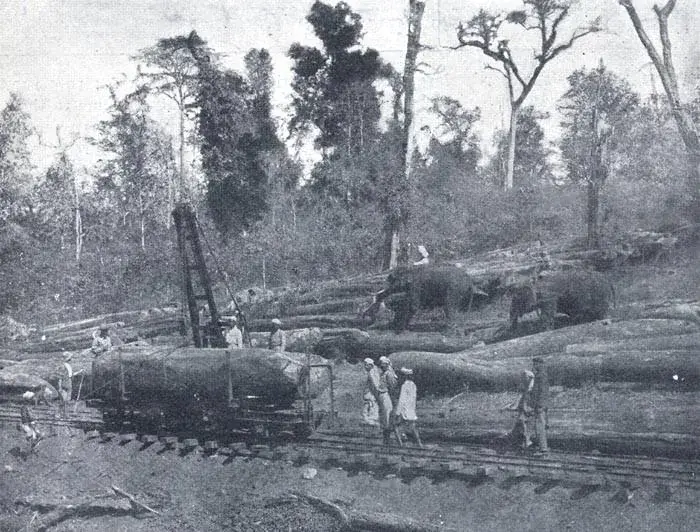
It worked. Malayalam sources record that in Sakthan’s time Chalakkudy chantha was one of the major markets of Kerala. The catchment did the rest: the yard sat at the bottom of the route into the Anamalai forests, and everything that came out of those forests had to be broken up and sold somewhere before it could go anywhere else. From the early twentieth century that flow was mechanised, when the Cochin State Forest Tramway began bringing timber down from the hills to the town — a system whose own construction date the sources dispute and which is set out on our Chalakkudy town page rather than here.
Then the roads changed, and the market’s fortunes went with them. Both the Malayalam and English accounts say the same thing in the same words: trade centred on Kunnathangadi chantha declined because of the expansion of road infrastructure. The mechanism is worth stating plainly, because it sounds paradoxical. Better roads did not stop goods moving; they stopped goods stopping. Once a lorry could run from the hills to Thrissur or Kochi without breaking bulk, the bulking yard in between lost its reason to exist, and the market that had been made by being the only place to stop was unmade by no longer being necessary.
The response was a building. A new market complex was put up in 1928 to arrest the decline — the one intervention in this market’s history that anybody bothered to date. Neither source says who built it, what it cost, or where on the site it stood, and I could not confirm from any source whether that 1928 fabric survives in the present yard; the tarpaulin-covered sheds visible in the 2007 photograph could be of almost any date. What can be said is that the intervention did not fail: the weekly chantha still convenes on the same two days a century later.
The administrative frame arrived afterwards. Chalakkudy became Kerala’s twenty-sixth municipality on 1 April 1970, which is when the market formally became municipal property to be maintained and leased, and in 2013 the town became the headquarters of a new Chalakkudy taluk carved out of Mukundapuram. The market is older than both of those arrangements by more than a century and a half, and has outlasted the plywood works, the tanneries, the potteries and the tramway that were once the reasons people came here.
It is one of the very few places on the Athirappilly road where you can watch an ordinary Kerala town doing its actual work rather than servicing visitors.
The yard is genuinely large — about three quarters of a hectare — and on a Tuesday or Friday morning it fills.
You can see the whole hill-produce chain arrive and leave in an hour, which is otherwise invisible from the tourist road.
The furniture workshops and the unusual density of old bakeries in the surrounding streets are the surviving trace of a timber economy.
It costs nothing, it takes forty minutes, and it is 250 metres from the junction most people drive straight through.
It is the oldest continuously functioning institution in a town whose famous industries have all closed.
Road km to Thrissur; ghat roads and traffic vary — allow extra.
November to February and early mornings are best for walking; avoid midday heat where possible.
Live forecast loads in your browser.
Sun and moon are calculated for this location and shown in IST. Photography windows are the hour around sunrise and sunset; the sunset bearing is degrees clockwise from true north. Moon phase is accurate to about half a day.
Verified hotels, homestays, restaurants, experiences, sights, shops and rentals around Chalakudy Market — commission-free, with direct contact. Filter by what you need.
Kerala Tourism approved tour operator in the heart of Chalakudy town, near the KSRTC bus stand and the gateway to the Athirappilly and Vazhachal waterfalls. It is a Government of India recognised operator handling domestic and international holiday packages, ticketing and visa support with a direct office phone and email.
Hotel restaurant in Chalakkudy. Athirappilly Residency, Chalakkudy, Thrissur district, Kerala · Hotel restaurant.
Athirapilly Green Trees Chalakudy is an Athirappilly-route resort at Pillappara/Vettilappara on Athirapally Road. Direct and Kerala Tourism sources list phone and email contacts, making it a stronger record than an OTA-only stay entry. Athirapilly, Athirappilly route resort.
Athirappilly Residency stay record at Chalakkudy for waterfall-route overnights. Chalakudy, Thrissur district, Kerala · Athirappilly, Chalakudy route hotel.
Chalakudy/Angamaly taxi operator with direct contact, address and Athirappilly transfer page. Chalakudy, Athirappilly taxi, Transfer.
Hydel Palace Hotel and Resorts at Vettilappara near the Chalakudy/Athirappilly route. Hydel, Chalakudy hotel.
Chalakkudy-to-Athirappilly transfer context for waterfall-route planning. Chalakudy / Athirappilly route, Kerala · Kerala, Taxi and tour transfer support.
Book with the place itself. India’s cyber-crime coordination centre warned in April 2025 that convincing copies of hotel and pilgrimage booking sites are being pushed through sponsored search and social ads, taking payment for rooms the property never hears about. Every listing here links to the business’s own contact details and its own Google or Bing profile — we take no commission and sit in nobody’s payment path. If a booking page reached you through an ad, check the address bar against the property’s own site before you pay. Fraud can be reported on cybercrime.gov.in or on 1930.
Find food, accommodation and activities across Chalakkudy. Browse the guides for places to eat, stay and explore along your route.
5 more places around Chalakkudy. Open a guide to plan the visit and onward journey.
A major Marian pilgrimage church at Koratty, widely known as Koratty Muthy, with ordinary visits requiring different planning from the October feast.
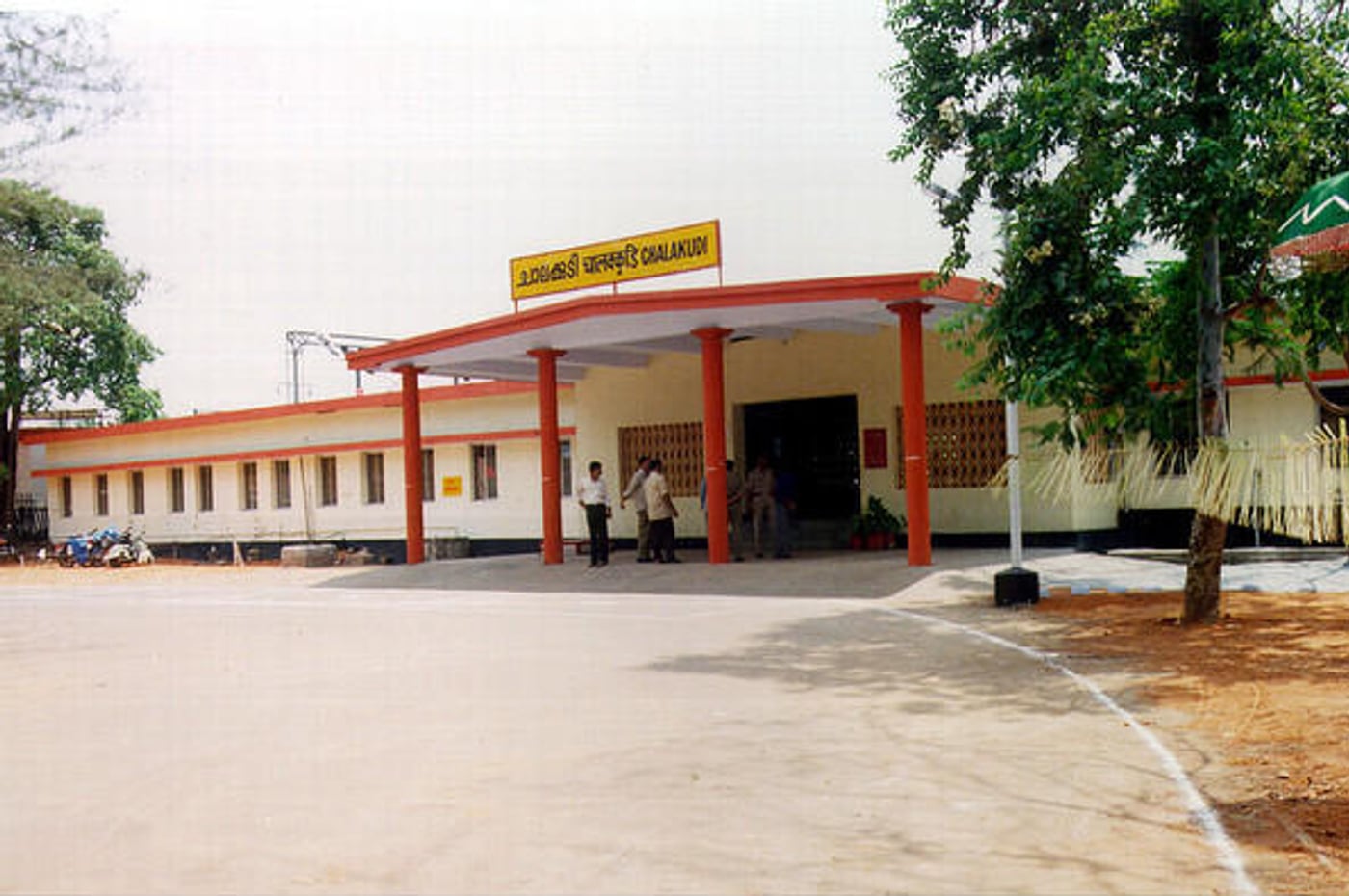
2.0 km · 25 min walk
Chalakudi station, code CKI, on the Shoranur–Cochin Harbour section — the railhead the Cochin State Forest Tramway was extended to reach, and the transfer point for Athirappilly. About 1.4 km west of the highway, which catches most visitors out.
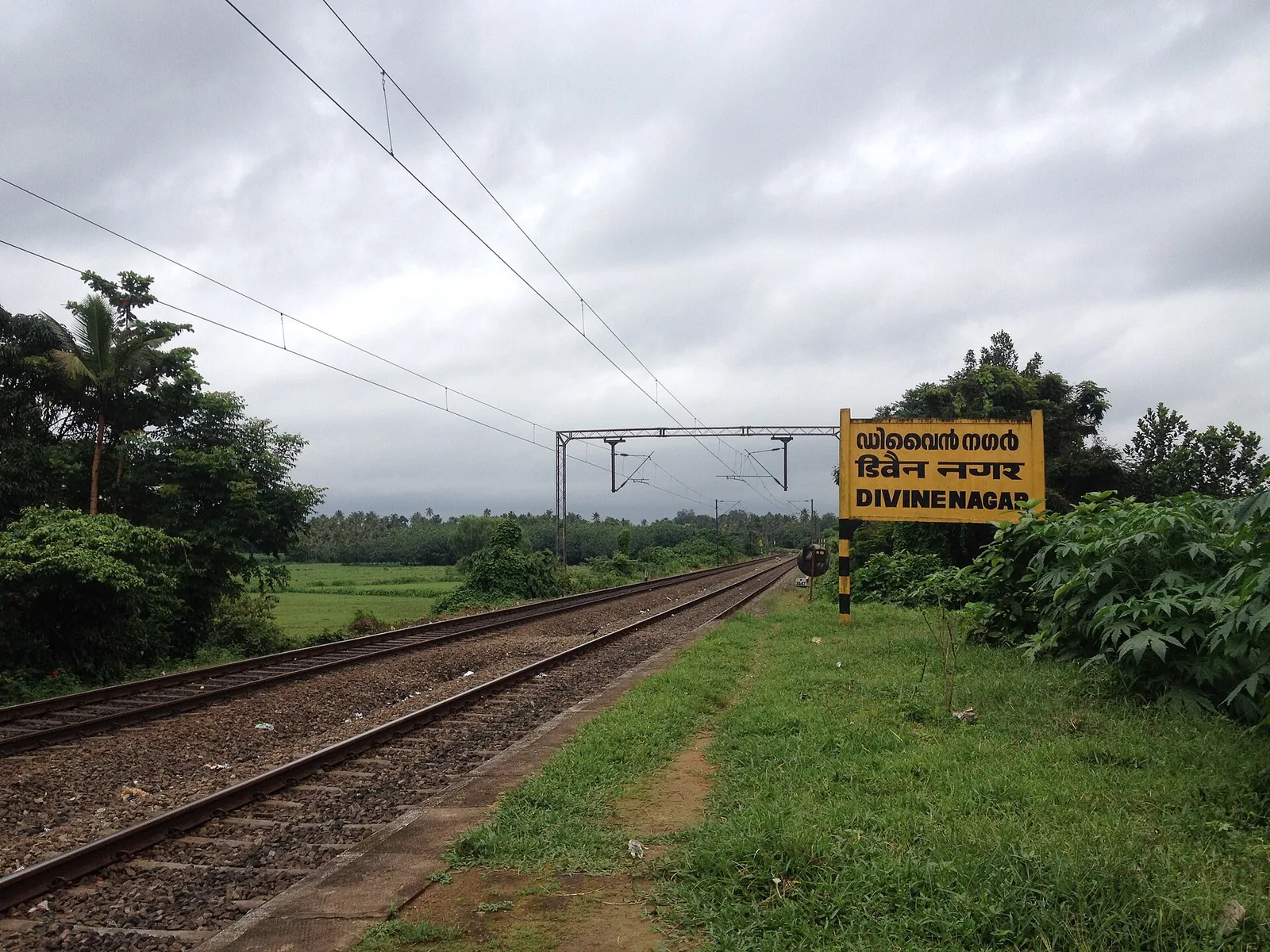
1.7 km · 21 min walk
The Vincentian Congregation’s residential retreat centre on NH 544 at Muringoor, which by its own account takes about five thousand people a week for a six-day retreat in seven languages and houses two thousand more in five charitable homes — on volume, the largest organised draw in Chalakkudy taluk after the falls. Indian Railways opened a halt called Divine Nagar for it in 1996.
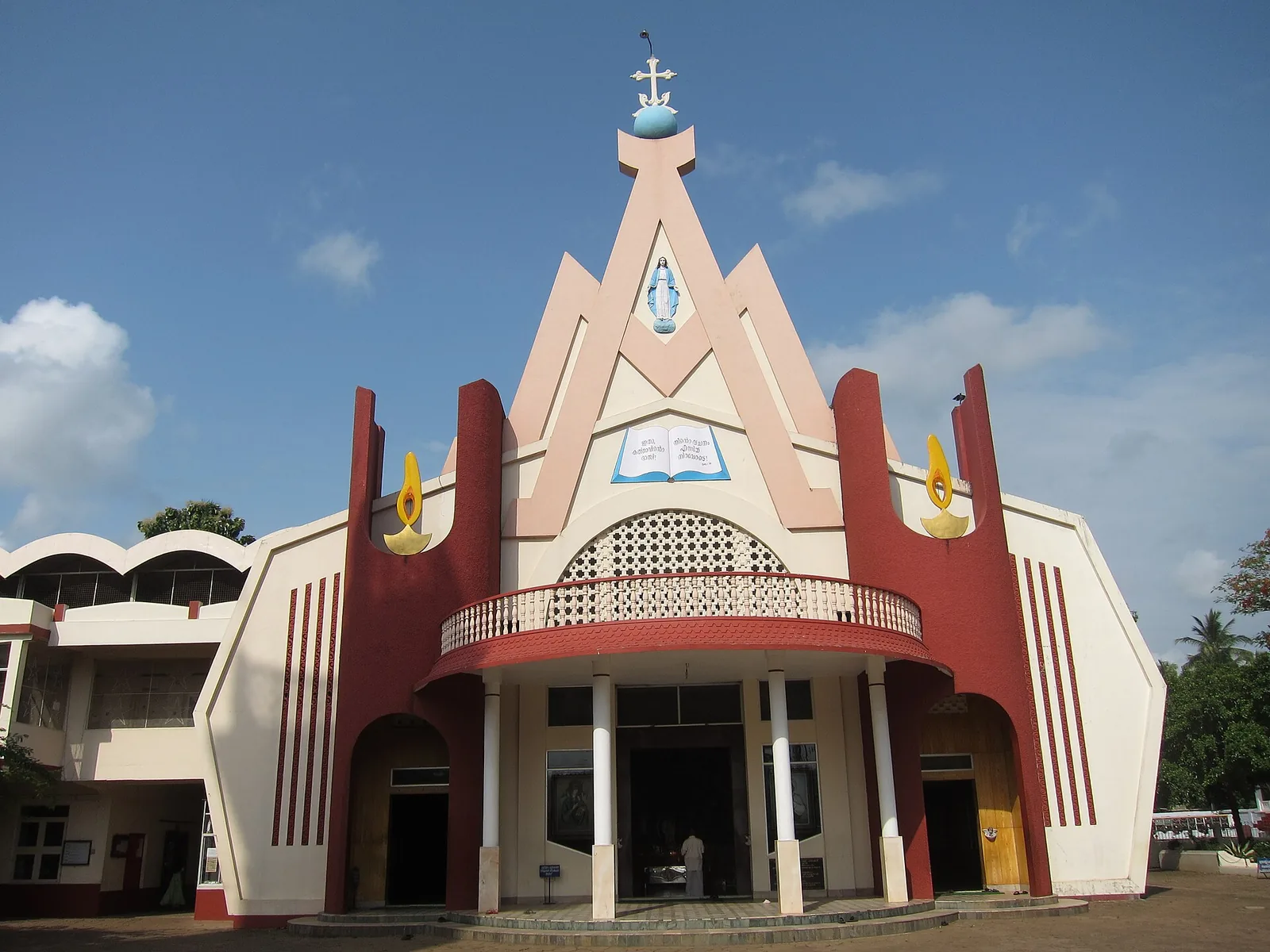
380 m · 5 min walk
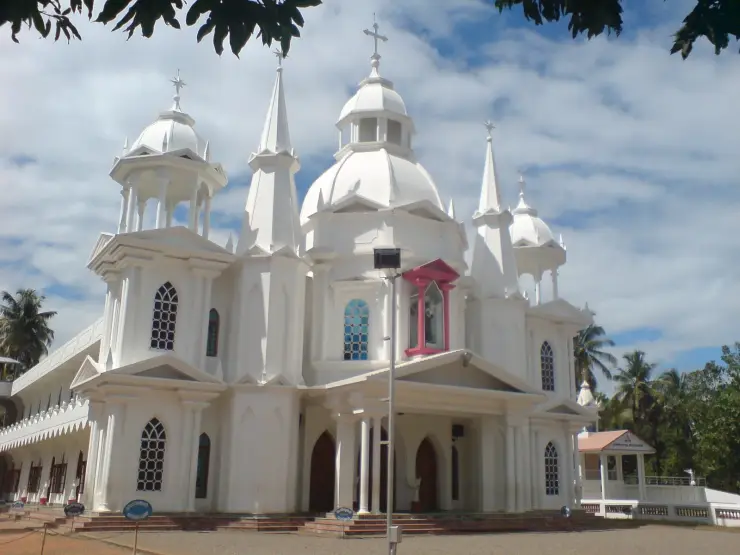
St Mary’s Forane Church on Church Road, the Syro-Malabar forane that governs seventeen daughter parishes across the Chalakkudy countryside and keeps the ambu perunnal, the arrow feast the town observes across community lines. The present building was rebuilt in 1987; the belfry is 1913 and the bell 1887.
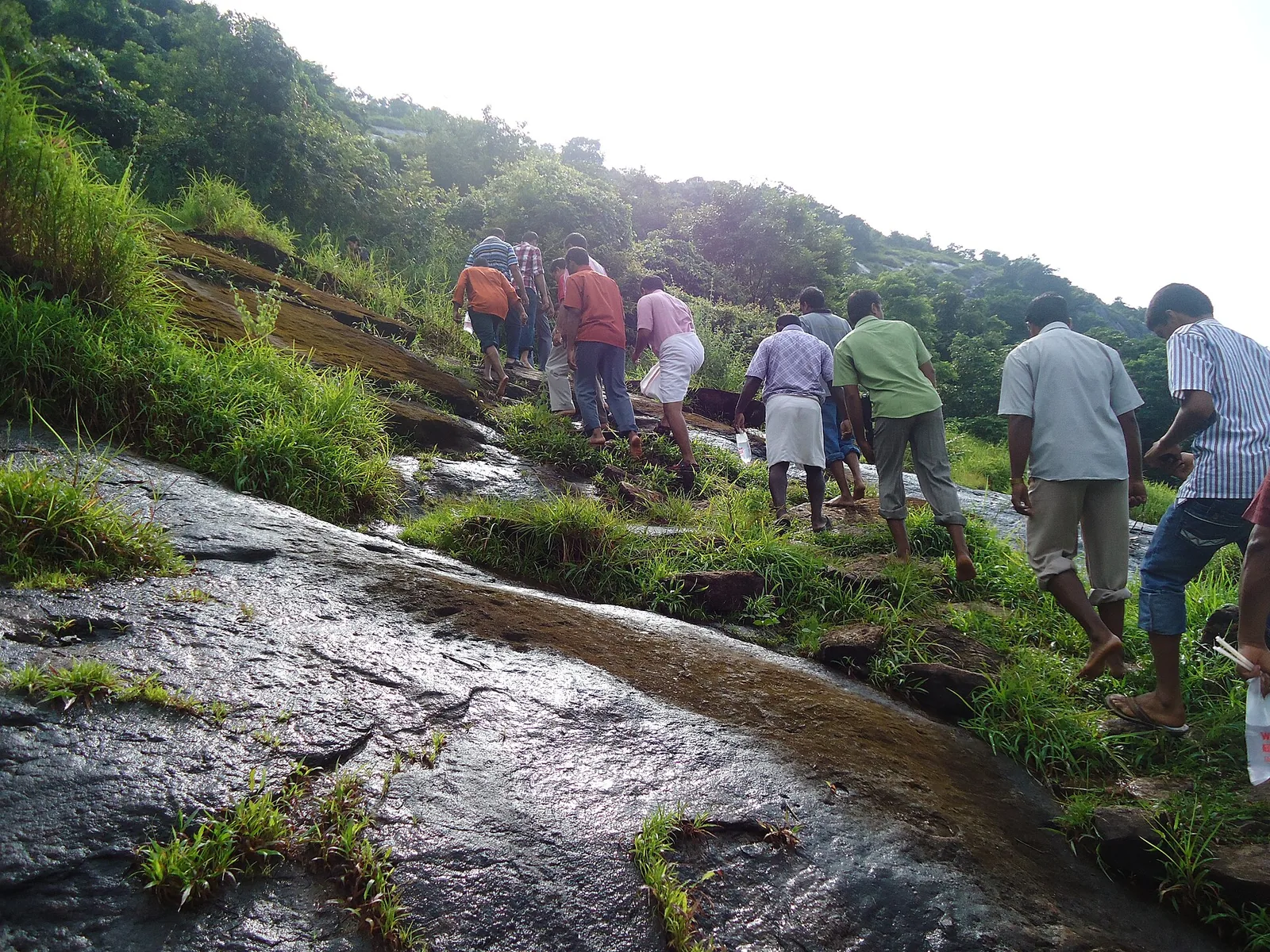
5.9 km · ~15 min by auto
A hill of crosses about 5 km north of Chalakkudy that local devotion ranks with Malayattoor — fourteen crosses up a kilometre of bare sheet rock to a hilltop shrine at about 310 m. The pilgrimage was begun in 1940 by the vicar of Perambra after a dream; April is its busiest month.
Roampedia is commission-free — own or know a stay, eatery, guide or shop near Chalakudy Market? List it and it appears here once verified.
Add a nearby businessEntry: No entry fee — an open municipal market yard.
On Market Road (a Major District Road), about 250 m south of Chalakkudy North Junction and roughly 1.5 km north of the KSRTC and private bus stands at South Junction. Chalakudi railway station (code CKI) is about 2 km west on Mala Road — far enough that you should not plan to walk it with luggage.
If you are travelling by bus or ferry, check the return service with the operator before setting out. Leave time to reach the stop or jetty after your visit.
Ask at the bus stand for the time of the last service back, not the next one. If you miss it, an auto or app cab is the fallback — agree the fare before you get in.
If you need step-free access, contact the site before travelling. Ask about a level entrance, steps along the route, the nearest drop-off point, seating and accessible toilets.
Charge cap and free-transaction limits: Reserve Bank of India, in force since 1 May 2025.
These services are listed within about 1.2 km of Chalakudy Market. Walking distances follow mapped routes; access and opening hours can change. Other services may be closer but are not included here.
Emergency numbers are verified against official government and state tourism sources. 112 works anywhere in India.
St Mary’s Forane Church on Church Road, the Syro-Malabar forane that governs seventeen daughter parishes across the Chalakkudy countryside and keeps the ambu perunnal, the arrow feast the town observes across community lines. The present building was rebuilt in 1987; the belfry is 1913 and the bell 1887.
380 m · 5 min walk · straight lineThe Vincentian Congregation’s residential retreat centre on NH 544 at Muringoor, which by its own account takes about five thousand people a week for a six-day retreat in seven languages and houses two thousand more in five charitable homes — on volume, the largest organised draw in Chalakkudy taluk after the falls. Indian Railways opened a halt called Divine Nagar for it in 1996.
1.7 km · 21 min walk · straight lineChalakudi station, code CKI, on the Shoranur–Cochin Harbour section — the railhead the Cochin State Forest Tramway was extended to reach, and the transfer point for Athirappilly. About 1.4 km west of the highway, which catches most visitors out.
2.0 km · 25 min walk · straight lineA hill of crosses about 5 km north of Chalakkudy that local devotion ranks with Malayattoor — fourteen crosses up a kilometre of bare sheet rock to a hilltop shrine at about 310 m. The pilgrimage was begun in 1940 by the vicar of Perambra after a dream; April is its busiest month.
5.9 km · ~15 min by auto · straight line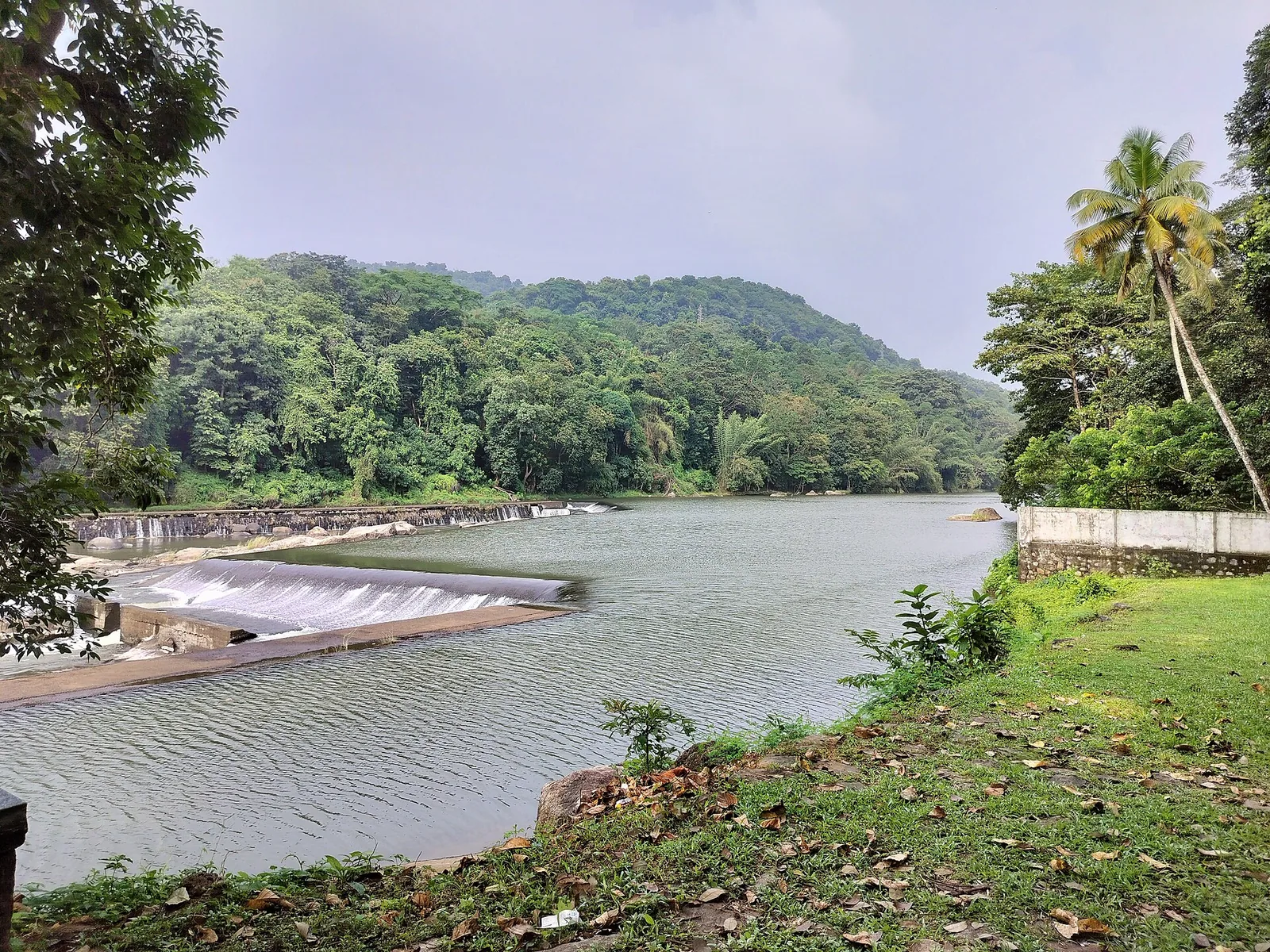
A check dam, hanging garden and butterfly garden on the Chalakudy river near Athirappilly, a popular picnic and day-trip stop.
12.4 km · ~21 min by cab · straight lineA longstanding Catholic pilgrimage church at Mapranam associated with the Holy Cross and annual feast observances.
14.8 km · ~25 min by cab · straight line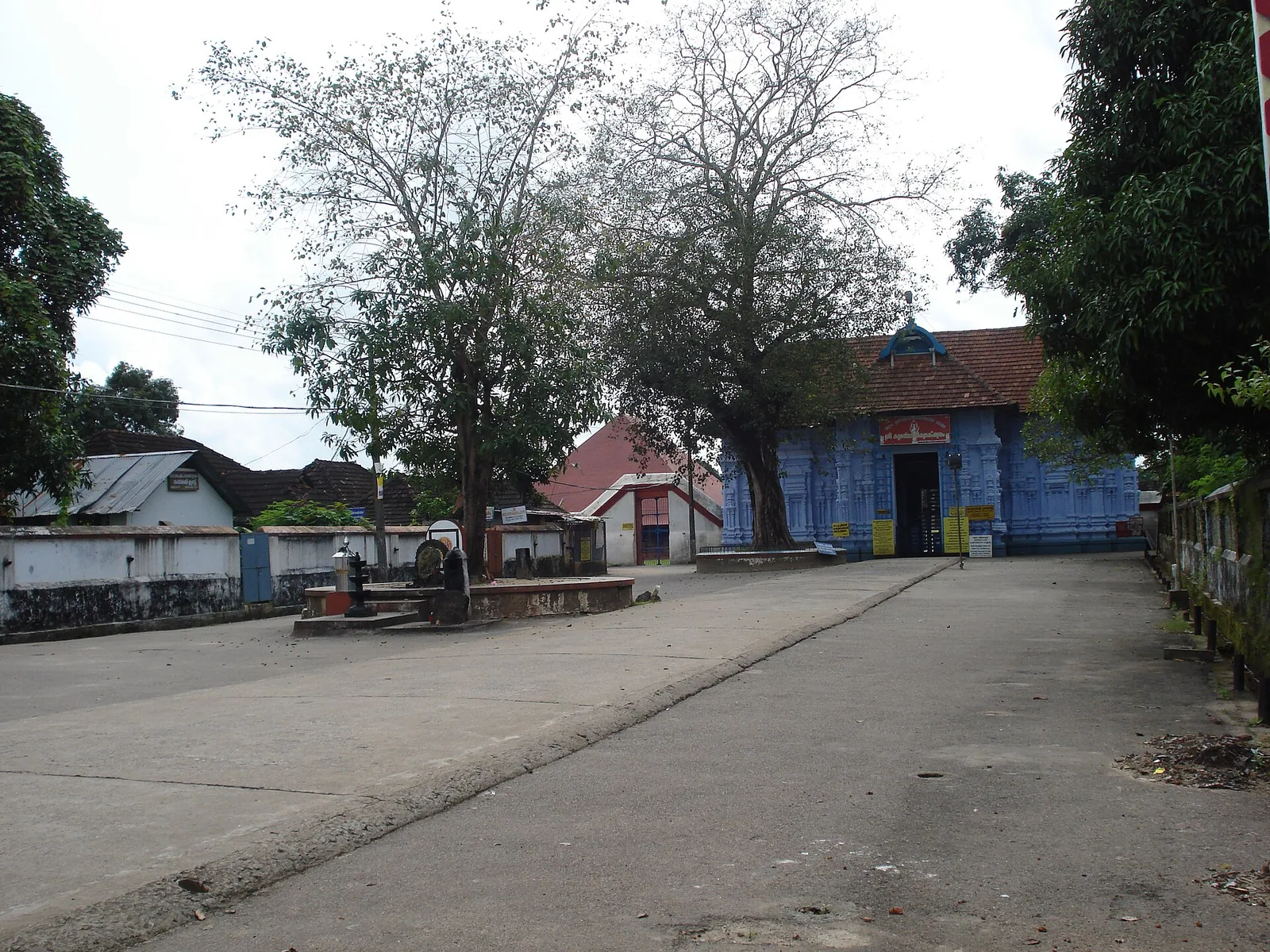
Rare temple at Irinjalakuda dedicated to Bharata, one of the Nalambalam (four-temple) Rama circuit shrines.
15.5 km · ~26 min by cab · straight line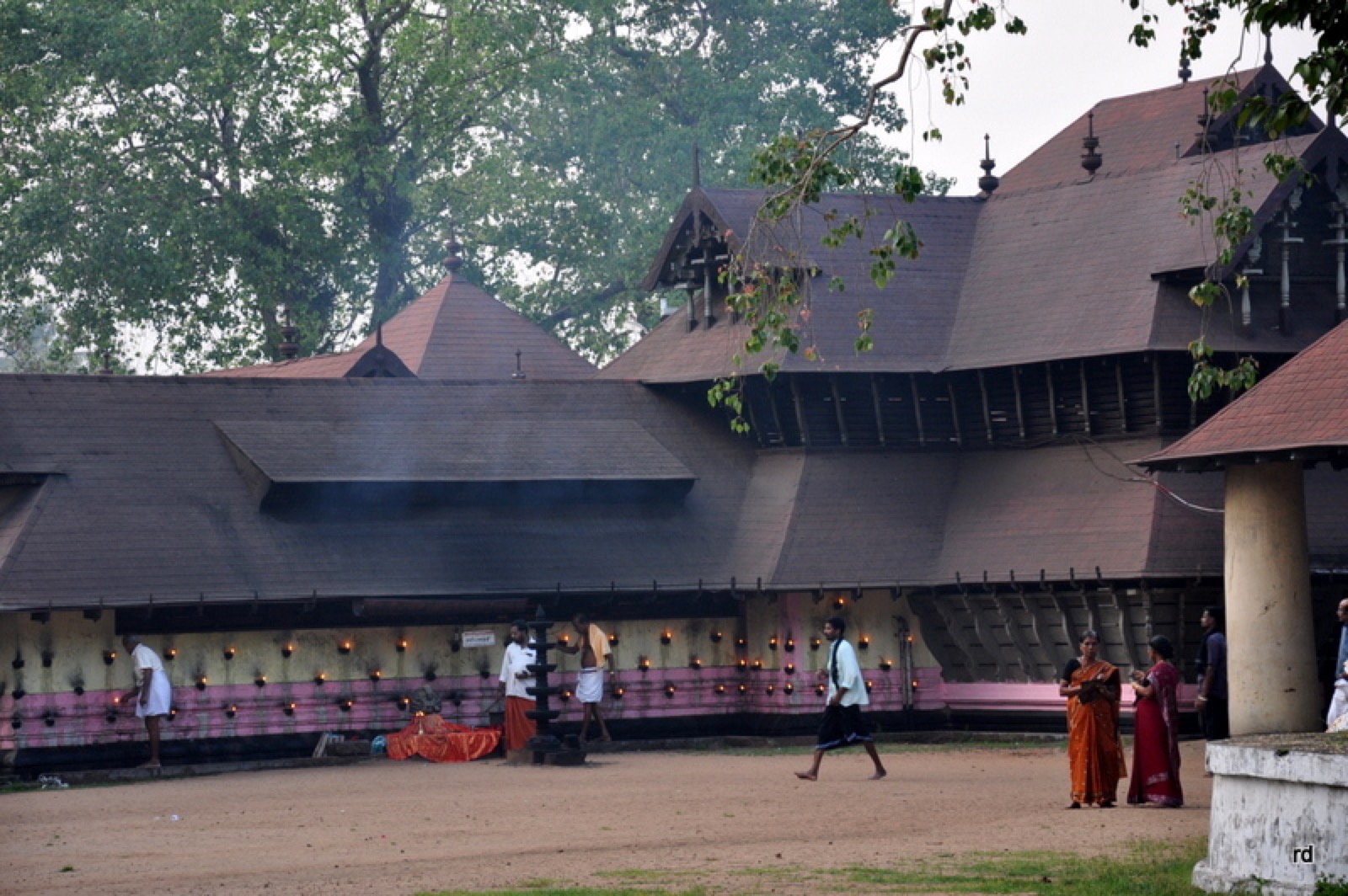
The Sree Kurumba (Bhagavathy) temple at Kodungallur, an ancient and powerful Devi shrine associated with the Bharani festival.
17.8 km · ~30 min by cab · straight line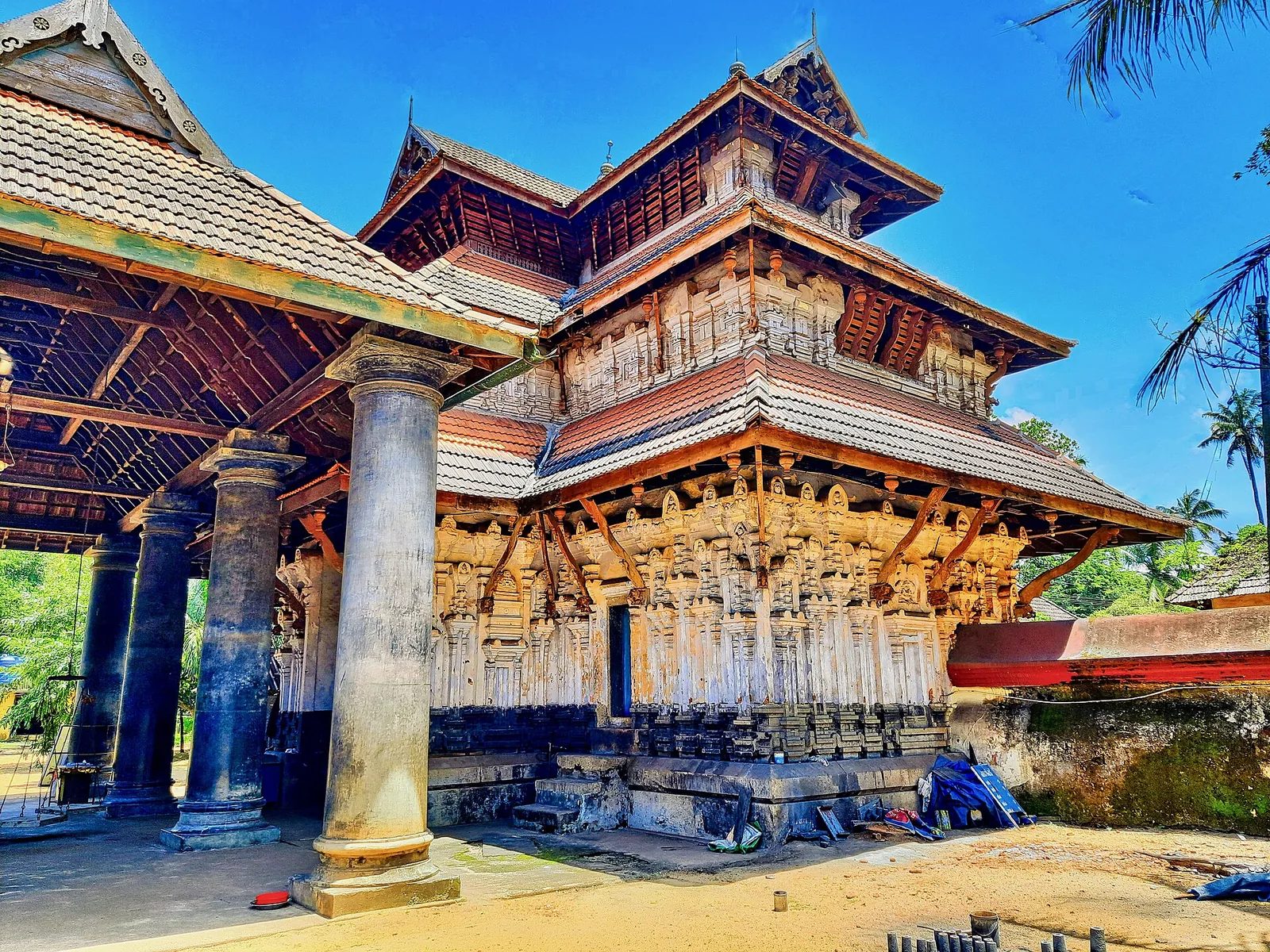
Ancient Shiva temple at Kodungallur linked with the old Chera capital of Mahodayapuram.
18.0 km · ~30 min by cab · straight line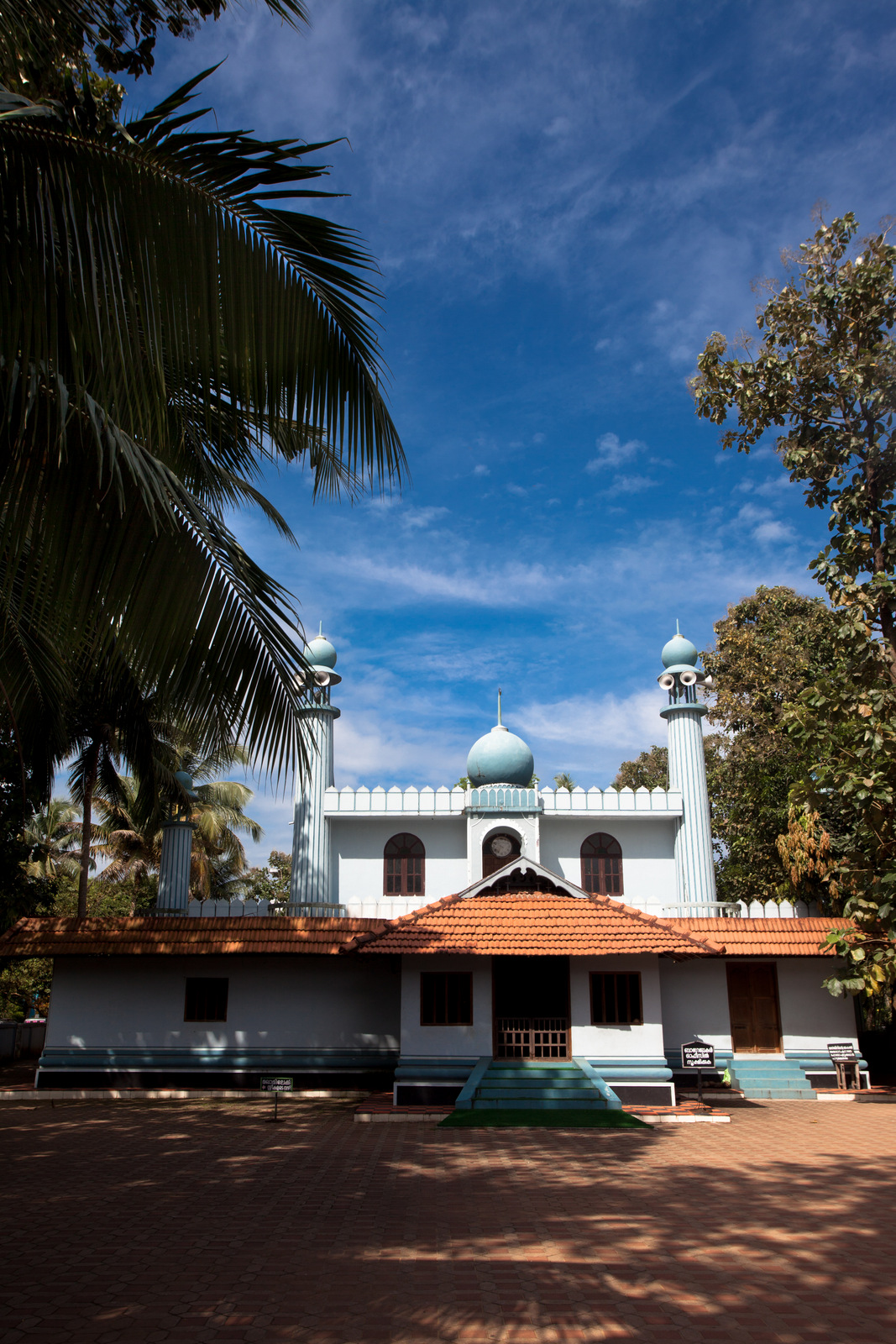
At Kodungallur, held by tradition to be the oldest mosque in the Indian subcontinent (7th century).
18.2 km · ~30 min by cab · straight line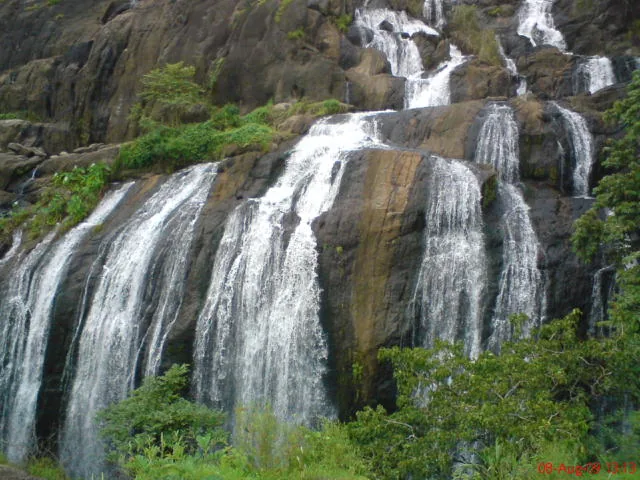
A forest waterfall and fish sanctuary near Marottichal in the hills east of Thrissur, reached by a short walk.
19.4 km · ~32 min by cab · straight line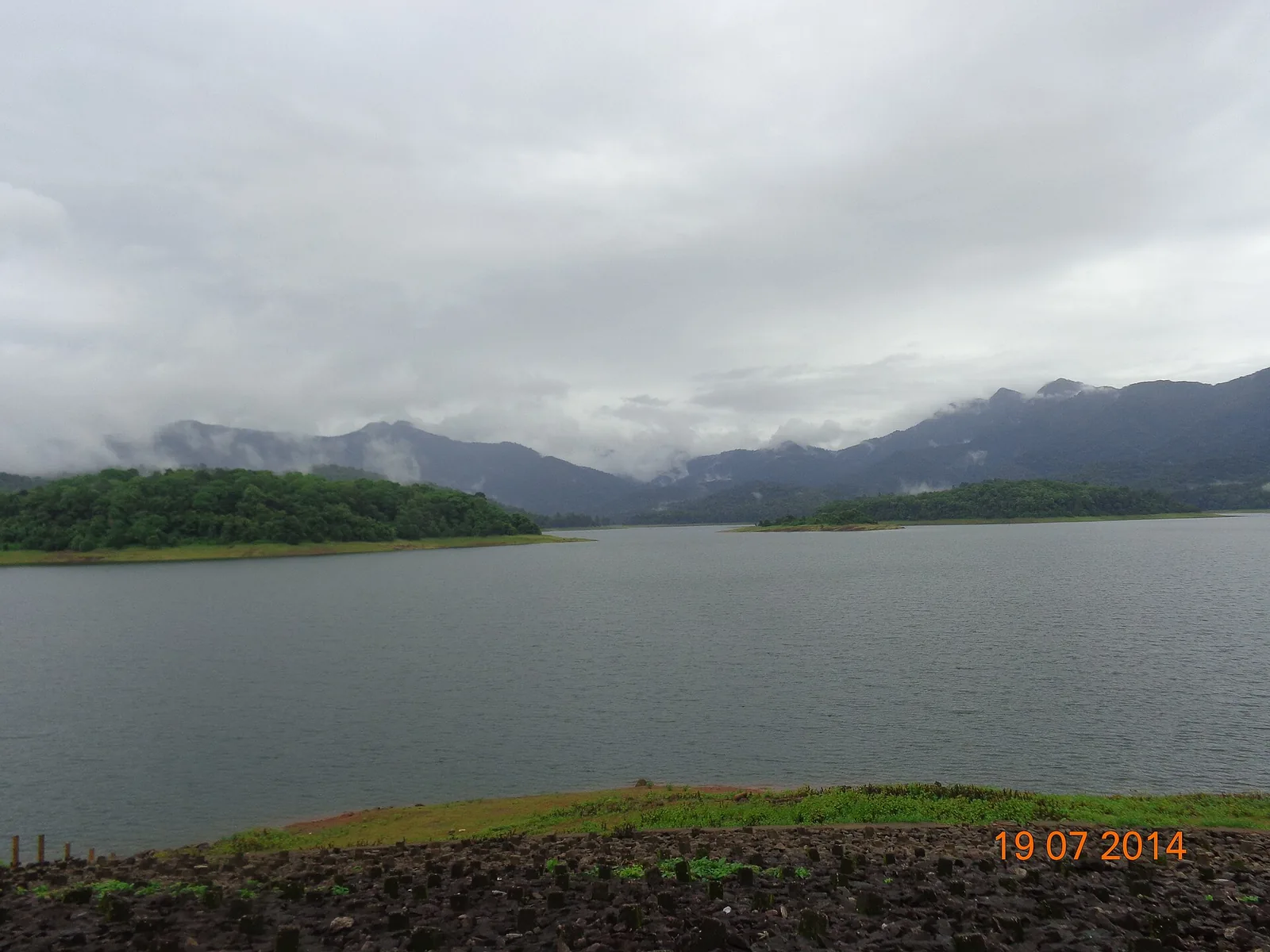
A reservoir and eco-tourism spot at the edge of the Chimmony Wildlife Sanctuary east of Thrissur, with boating and forest views.
19.8 km · ~33 min by cab · straight lineNearby toilets, pharmacies, ATMs, seating and vets are community-mapped and may be incomplete or out of date. Map data © OpenStreetMap contributors | Walking times © openrouteservice.org by HeiGIT
Tuesday and Friday. Both Malayalam and English sources record those as the traditional weekly market days and they are still the days the yard fills. The market trades on other days too, but at much lower volume, so arriving mid-week and finding it quiet is not a sign that it has closed.
Early. Wholesale produce trading in Kerala markets is done between roughly five and nine in the morning; by mid-morning the lorries have loaded and left and only the retail handcarts remain. Six to eight on a Tuesday or Friday is the hour that shows you what the place is for.
No. It is an open municipal market yard and there is no ticket for a visitor. Traders pay the municipality for stalls and daily entry, but nobody will charge you to walk in and look.
Hill produce and spices brought down State Highway 21 from the Athirappilly, Sholayar and Malakkappara stretch — pepper, nutmeg, cardamom and the produce of the settlements along that road — together with plantains, vegetables, tapioca and fish from the lowland villages around the town. A public-domain photograph of the yard from April 2007 shows plantain bunches heaped on the ground the length of the market, with shallots, small onions and tomatoes on handcarts along the edge.
Angadi means a permanent street of resident shopkeepers, as distinct from a chantha, which is a market held on named days. The first element is usually read as kunnu, a hill. Elevation data does not support that reading for the yard itself, which sits lower than the ground a few hundred metres away, so if the name refers to a rise it is probably the older settlement above the market rather than the market floor. Note also that there is an unrelated Kunnathangadi in Arimbur panchayat, about 25 km away.
Nobody can date its beginning. Its first documented moment is the reign of Sakthan Thampuran, 1790 to 1805, when a wholesale depot was established here and traders were settled around it, and Malayalam sources record it as one of the major markets of Kerala in his time. The angadi name and the parish tradition of a Christian trading community here from far earlier both suggest trade on this ground well before that.
I could not establish that from any source. The construction of a new market complex in 1928, to revive trade that had fallen away as roads improved, is recorded in one sentence that both Wikipedia language editions carry; no source says who built it, what it looked like, or whether that fabric is part of the present yard. The sheds in the 2007 photograph cannot be dated from the photograph.
November to February and early mornings are best for walking; avoid midday heat where possible.
Entry: No entry fee — an open municipal market yard. Timings: Trading from around 05:00; wholesale activity is effectively over by 09:00 and the yard is quiet by late morning. The traditional weekly market days are Tuesday and Friday.
Base yourself in Chalakkudy or a nearby town in Thrissur, then confirm the last-mile route locally before leaving. Walkable heritage areas are best done slowly; combine nearby streets, museums, markets and food stops. If the visit depends on forest, temple, boat, ferry, weather or seasonal access, check the official/local rule on the day before travel.
1 to 3 hours.
Nearby you can pair Chalakkudy Forane Church (380 m), Muringoor Divine Retreat Centre (1.7 km), Chalakkudy railway station (2.0 km), Kanakamala Kurishumudi (5.9 km).
Watch traffic on narrow heritage streets. Keep valuables close in crowded markets.
Written about Chalakudy Market itself — its history, its legends and the arguments about them.
These guides explore Chalakkudy and the surrounding area. Choose a visit that fits your interests, allowing separately for travel between stops.


Route-level itineraries and practical guides for the rest of Kerala.
Photographs: Challiyan at Malayalam Wikipedia (Public domain), കാക്കര (CC BY-SA 3.0), Scientific American (Public domain), Challiyan at ml.wikipedia (CC BY-SA 3.0). Wikimedia Commons.