What to expect
Highlights
- Mosque visit at Cheraman Juma Masjid
- Local Islamic heritage and coastal/trade history where relevant
- Nearby food streets and markets
At Kodungallur, held by tradition to be the oldest mosque in the Indian subcontinent (7th century).
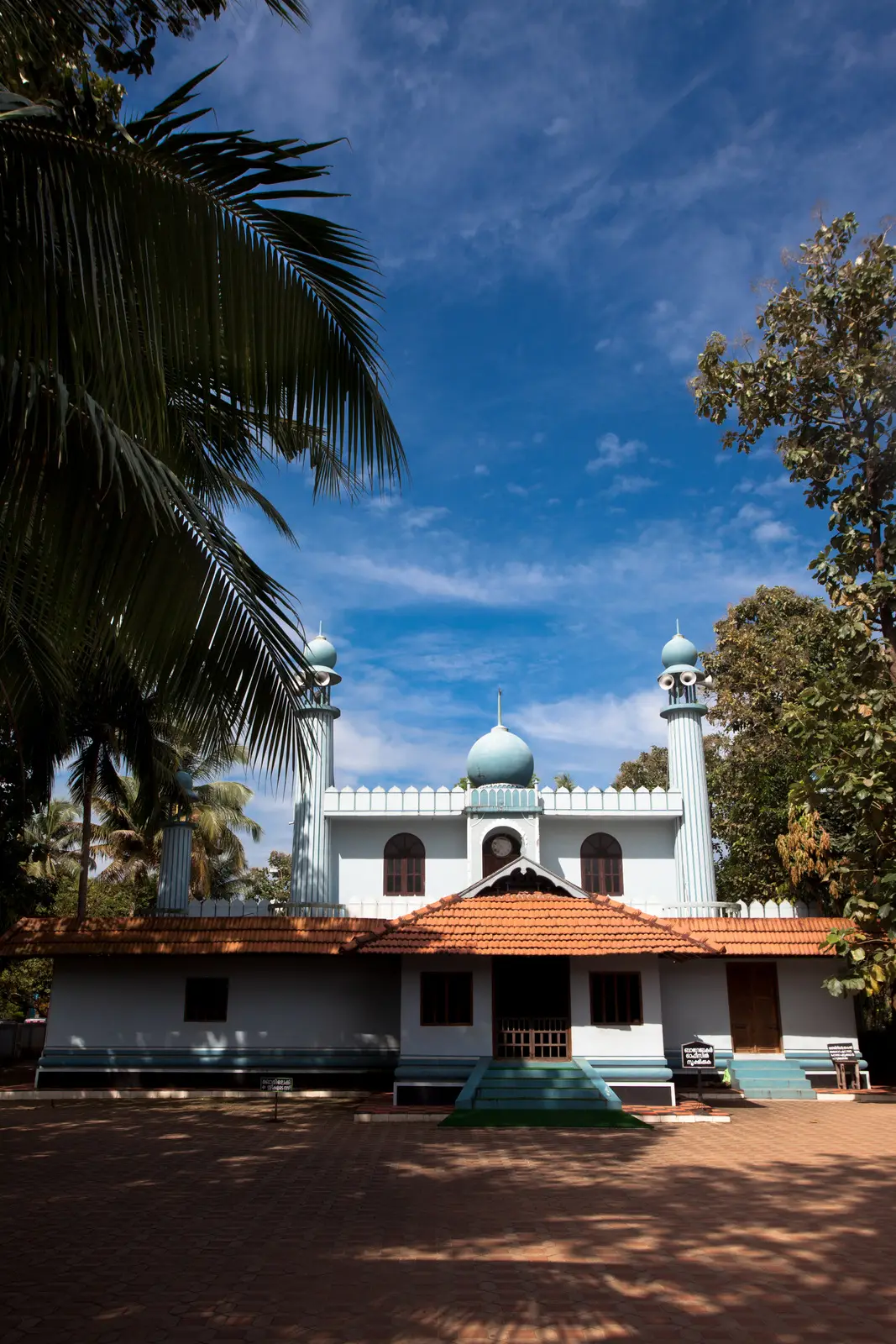
Check entry arrangements. Ask the mosque when sightseeing visits are welcome and which areas you may enter. Check dress and footwear requirements before going inside, and avoid interrupting prayers.
Dress respectfully and follow the institution’s admission and photography rules.
A mosque that looks more like a Kerala tharavad than a place with domes and minarets — where an oil lamp is said to have burned for centuries, and where tradition claims Islam first put down roots in India, on the old spice coast of Kodungallur.
Cheraman Juma Masjid stands at Methala, just outside Kodungallur in Thrissur district, on the deltaic land that historians associate with the ancient port of Muziris. By tradition it is honoured as one of the oldest mosques in India — indeed in the whole Indian subcontinent — and pilgrims and heritage travellers from many faiths come to see it. Whether or not the earliest dates are literally accurate (and scholars disagree — see below), the mosque is unmistakably old, deeply venerated, and quite unlike the domed mosques most visitors picture.
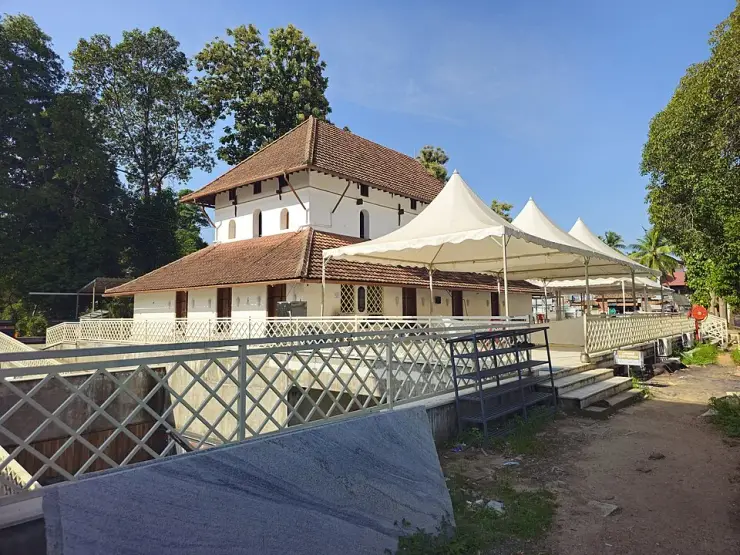
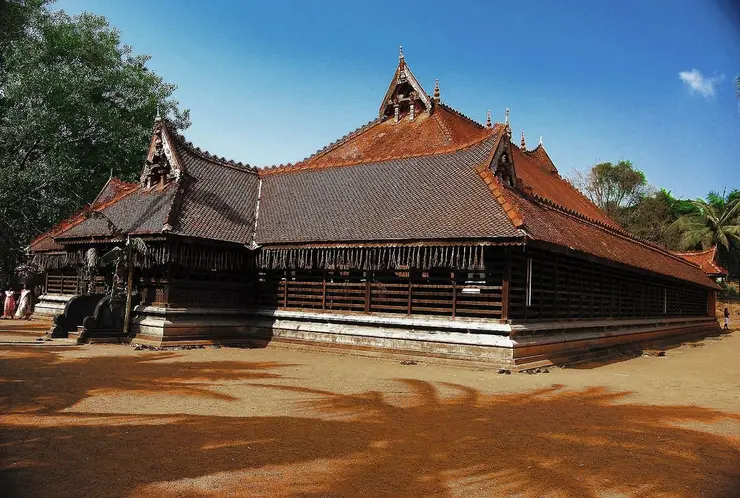
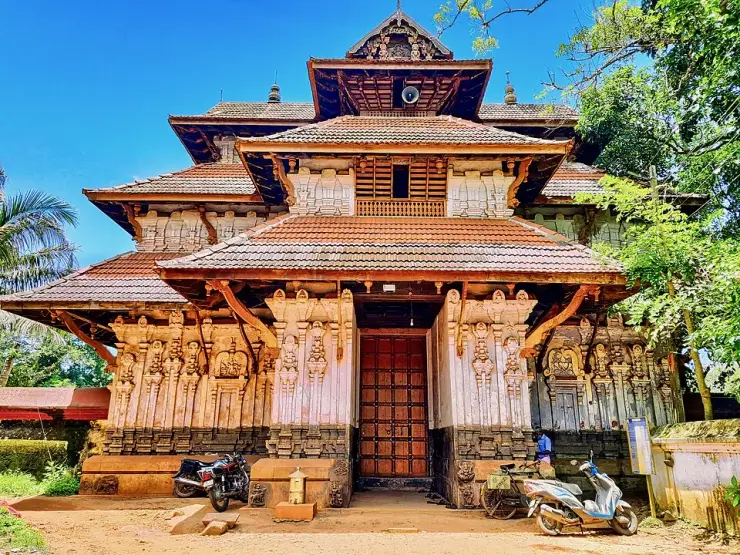
What first strikes you is the architecture. For most of its life the mosque wore the plain, humane look of Kerala vernacular building: a sloping tiled roof, timber walls and columns, carved wooden doors, and a lamp burning in the prayer hall — the same visual language you find in the region’s temples and ancestral homes. There were no towering minarets and no onion domes; the building sat low and quiet among the coconut palms, and that restraint is a large part of why people find it moving.
At the heart of the mosque is the famous oil lamp — a large hanging brass lamp that devotees say has been kept alight more or less continuously for centuries, replenished by visitors who bring oil as an offering regardless of their own religion (traditional belief; the “continuously burning” and age claims are devotional, not documented — treat as tradition). Local accounts link the lamp to the royal family of Kodungallur. Alongside it, the inner sanctum, the old wooden steps and parts of the timber ceiling are said to preserve the mosque’s most ancient fabric.
The site is also a living place of worship, not a museum piece. Daily prayers are held here and the five-times rhythm of the mosque continues as it has for generations. That means the experience of visiting shifts through the day — hushed and open between prayers, focused and private during them — and visitors are expected to respect that (confirm current norms on site). A small heritage museum and interpretive displays nearby help tell the longer story of Islam’s arrival on the Malabar coast, set within the wider Muziris Heritage circuit.
Cheraman Juma Masjid is known locally for crossing community lines. Some families, including non-Muslim families, are reported to hold Vidyarambham—the child’s first-writing ceremony—at the mosque, while people of different faiths contribute oil for the lamp. These are living local traditions whose observance varies; ask at the mosque rather than expecting a scheduled performance. In a region proud of trade-borne coexistence, the mosque has become a quiet symbol of that shared past.
For the traveller, the mosque rewards a slow, respectful visit rather than a quick photo stop. Read the panels, sit with the age of the place, notice the woodwork and the lamp, and then use it as a doorway into the rest of Kodungallur’s layered heritage — its temples, its Muziris associations, and its role as one of the oldest continuously significant settlements on the Kerala coast.
The mosque’s origin is wrapped in one of Kerala’s most famous legends — that of Cheraman Perumal, the last of the Chera kings said to have ruled from Kodungallur (Muziris). As the story is traditionally told, the king witnessed the miracle of the moon splitting in two, learned from Arab traders that this was attributed to the Prophet Muhammad, and secretly set sail for Arabia, where he is said to have met the Prophet and embraced Islam. He is believed to have died on the return voyage, but not before entrusting letters to his companions asking his kinsmen back home to receive and help the Muslim missionaries who would follow.
According to the same tradition, an early Islamic traveller and propagator, Malik Ibn Dinar, arrived at Kodungallur carrying those letters and is credited with founding this mosque — conventionally dated to around 629 CE (AH 7), during the Prophet’s own lifetime — along with a chain of other early mosques along the Malabar coast. The mosque is popularly said to hold, or be associated with, the tombs of members of Malik Ibn Dinar’s family. This is why it is so often called the first mosque in India and one of the first places outside Arabia where Friday (Jumuah) prayers were offered.
It should be stressed that this is tradition and devotional history, not settled fact. The Cheraman Perumal conversion narrative survives mainly in much later accounts, and historians have long debated both the story and the mosque’s true age. It is presented here as a cherished legend that gives the site its meaning for millions of believers — not as a verified historical event.
The traditional founding date of about 629 CE, and the claim to be the oldest mosque in India, are widely repeated in popular and tourism accounts and are central to the site’s identity (traditional/devotional dating — treat as such). Some scholars, however, question this. Analyses of the surviving structure and of the written sources have led a number of historians to argue that the building we can actually document is considerably later — with estimates ranging into the medieval centuries — and to treat the Cheraman Perumal foundation story as legend rather than record (scholarly view; the debate is unresolved).
What is clearer is that the mosque was renovated repeatedly over its long life — traditional accounts speak of works around the 11th century and again in the 18th century — while, it is said, keeping its innermost fabric and its distinctive Kerala temple-style character (dates per tradition; hedge). This is the appearance that made it famous: timber, tiled roof, lamp and pond, closer in spirit to a Kerala shrine than to Indo-Islamic mosque architecture.
In the modern era the building was substantially reconstructed. A major refurbishment in the 1970s (commonly cited as 1974) and later additions gave the mosque concrete extensions and, at some stage, domes and minarets in a more conventional Indo-Islamic idiom, changing its silhouette and partly concealing the old exterior (exact dates and sequence are reported inconsistently across sources). Accounts differ on precisely when the domes and minarets were added, so treat any single year with caution.
More recently, the mosque was restored under the Muziris Heritage Project — a Government of Kerala heritage-conservation initiative — with conservation architect Benny Kuriakose associated with the work. The restoration, carried out over roughly the late 2010s into the early 2020s, set out to strip back the modern concrete additions and recover the mosque’s original Kerala-style appearance using old photographs and historical study, while also adding facilities such as expanded prayer space. A dedicated Islamic Heritage Museum was established as part of the complex.
Today the mosque’s standing rests on two things that do not depend on winning the dating argument: its role as a genuinely ancient and continuously venerated centre of Muslim worship on the Malabar coast, and its symbolic place in Kerala’s story of early, peaceable contact between the Arab world and the Indian coast. As part of the Muziris Heritage circuit it is now firmly on the map as a heritage destination as well as a mosque (details of museum, timings and works may change — confirm locally).
See a mosque venerated as one of the oldest in India, tied by tradition to the Prophet’s own lifetime (dating debated — but the reverence is real).
Experience rare Kerala temple-style mosque architecture — timber, tiled roof and lamp instead of domes and minarets.
Stand before the ancient hanging oil lamp that devotees of all faiths keep fuelled with offerings of oil.
Feel the living legend of Cheraman Perumal and Malik Ibn Dinar, at the very site the story is anchored to.
Visit the small Islamic Heritage Museum and displays that trace Islam’s early arrival on the Malabar coast.
Use it as the gateway to Kodungallur’s wider Muziris heritage — ancient port, temples and layered history in one compact area.
Road km to Thrissur; ghat roads and traffic vary — allow extra.
Outside prayer rush, unless visiting for worship.
Live forecast loads in your browser.
Sun and moon are calculated for this location and shown in IST. Photography windows are the hour around sunrise and sunset; the sunset bearing is degrees clockwise from true north. Moon phase is accurate to about half a day.
Verified hotels, homestays, restaurants, experiences, sights, shops and rentals around Cheraman Juma Masjid — commission-free, with direct contact. Filter by what you need.
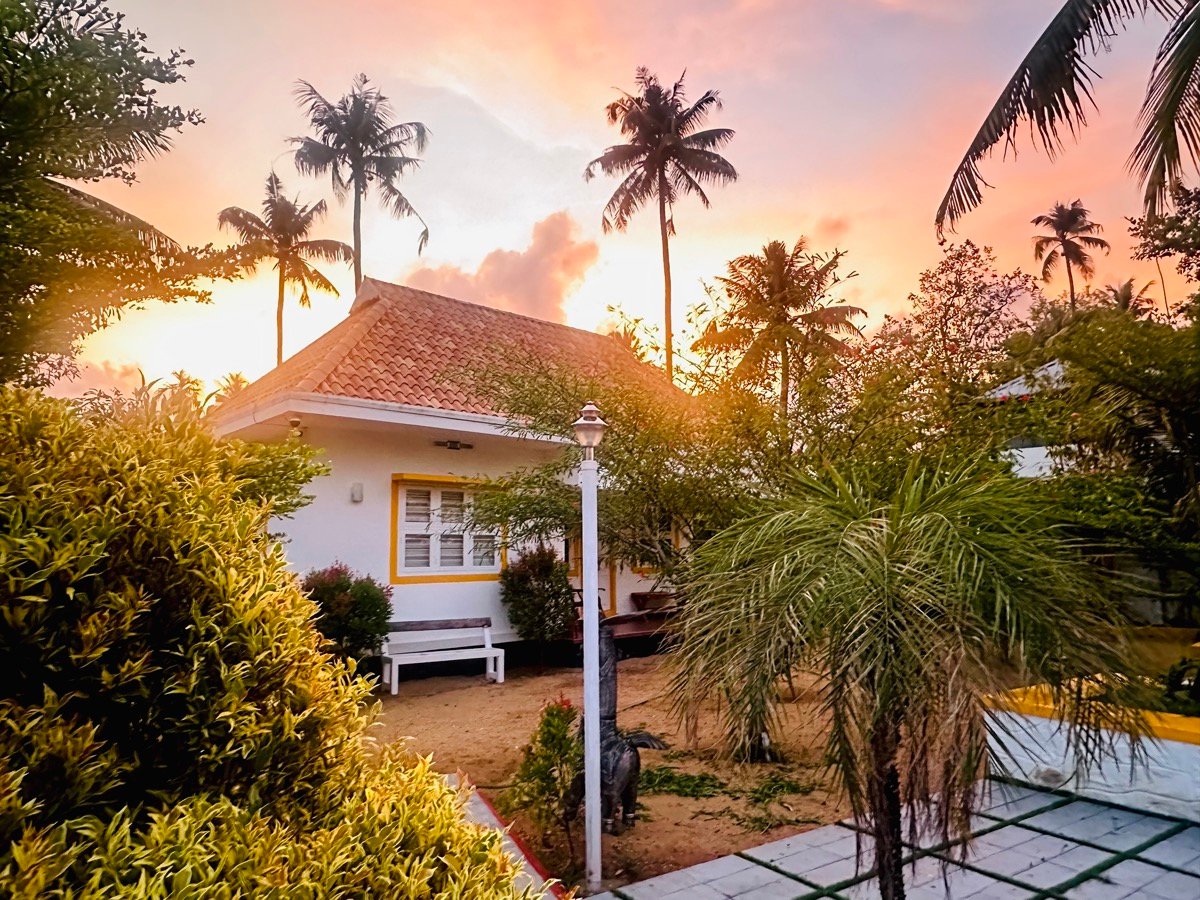
Kerala Tourism-listed private backwater villa at Undekadavu, Elthuruth, Kodungallur. Kodungallur stay, Backwater villa, Elthuruth.
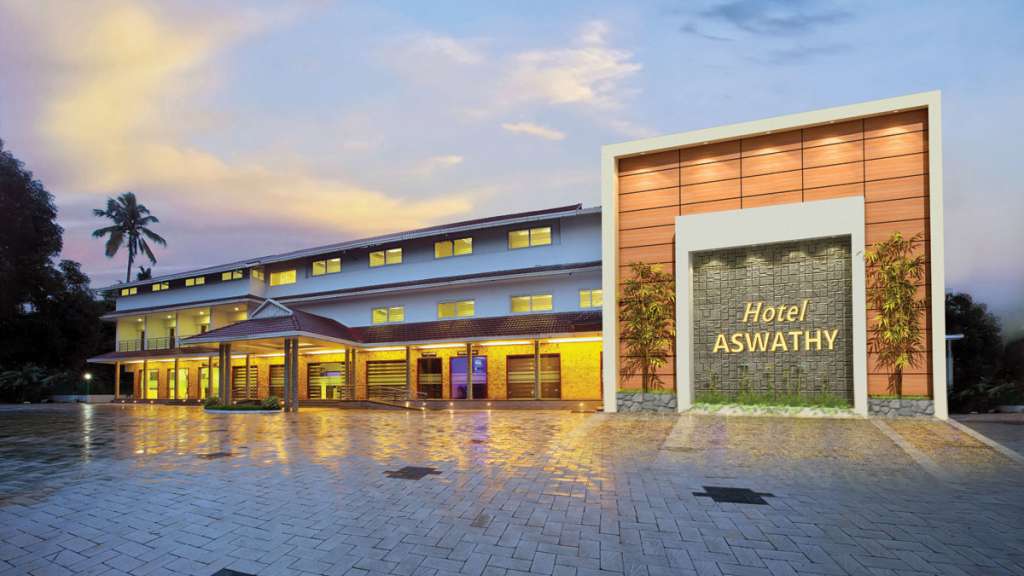
Hotel in Kodungallur. Kodungallur stay, South Nada, Hotel.

Kerala Tourism Muziris source for Munakkal Beach, seven kilometres from Kodungallur town. Munakkal Beach, Azhikode, Kodungallur.
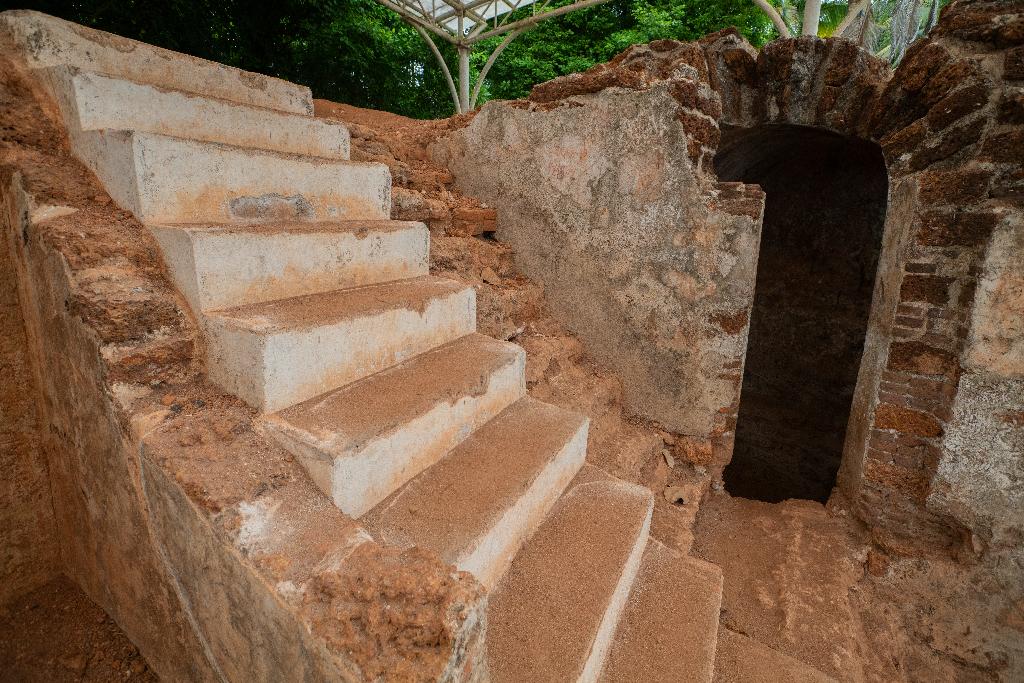
Kerala Tourism Muziris heritage-site source for Kottappuram Fort near Kodungallur. Kottappuram Fort, Muziris, Kodungallur.
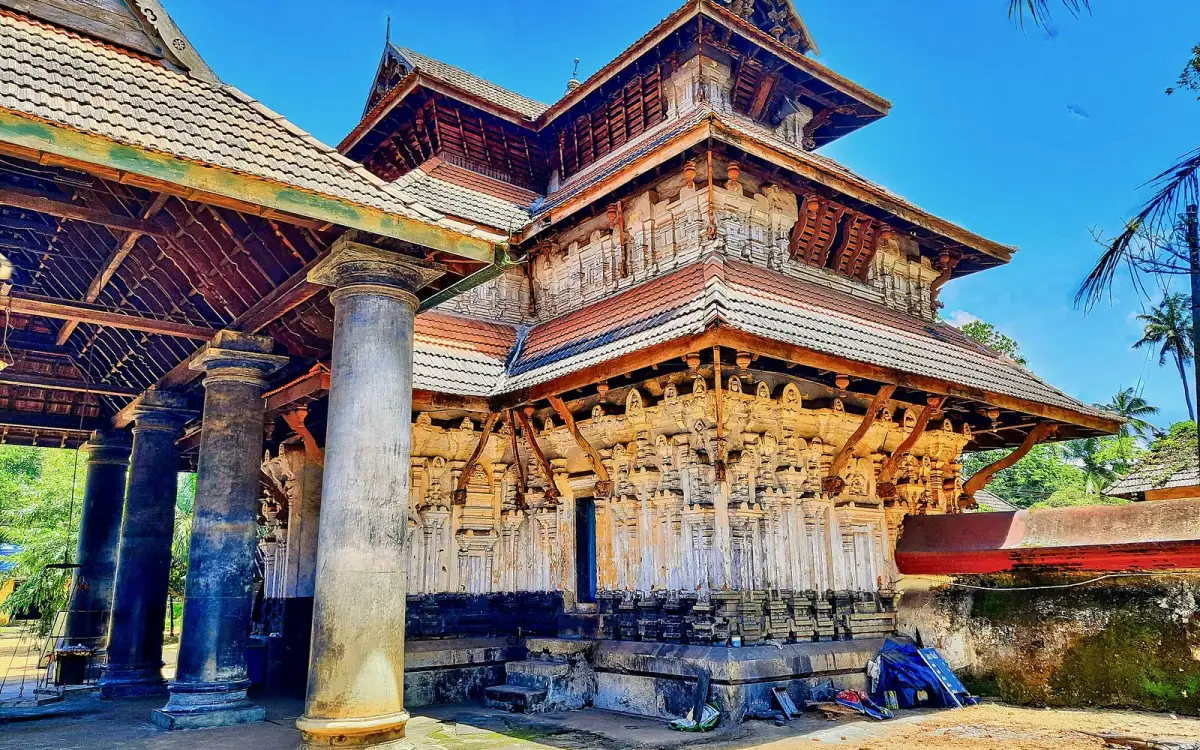
Thiruvanchikulam Mahadeva Temple is a historic Kodungallur-area Shiva temple and Muziris religious-site stop; use official sources for current pooja, offering and visitor details. Temple rules apply · Kodungallur, Thiruvanchikulam, Temple.
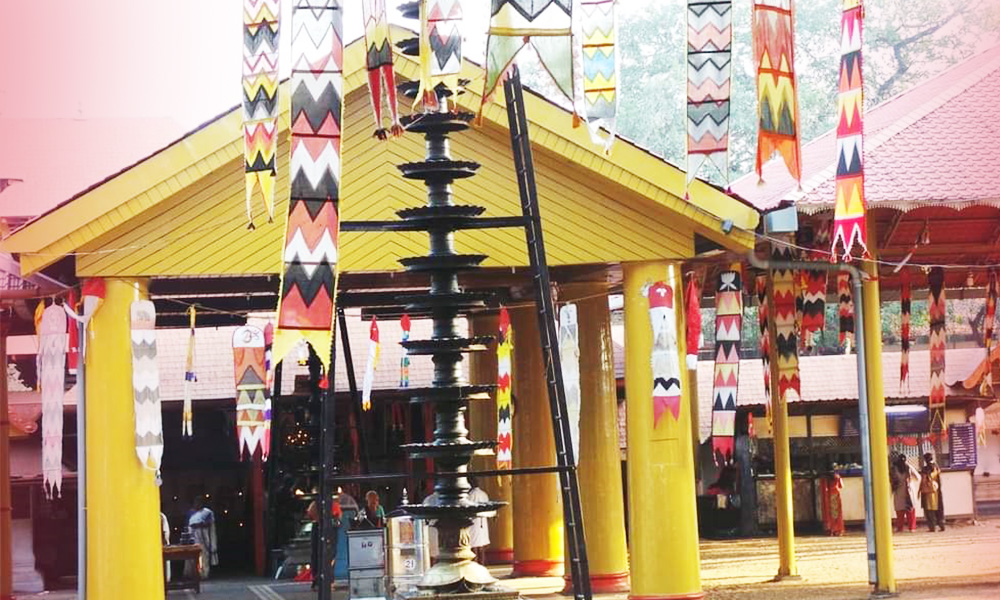
Official temple contact for Kodungallur Bhagavathy Temple at Thekkenada Road. Temple rules apply · Kodungallur, Bhagavathy Temple, Temple.
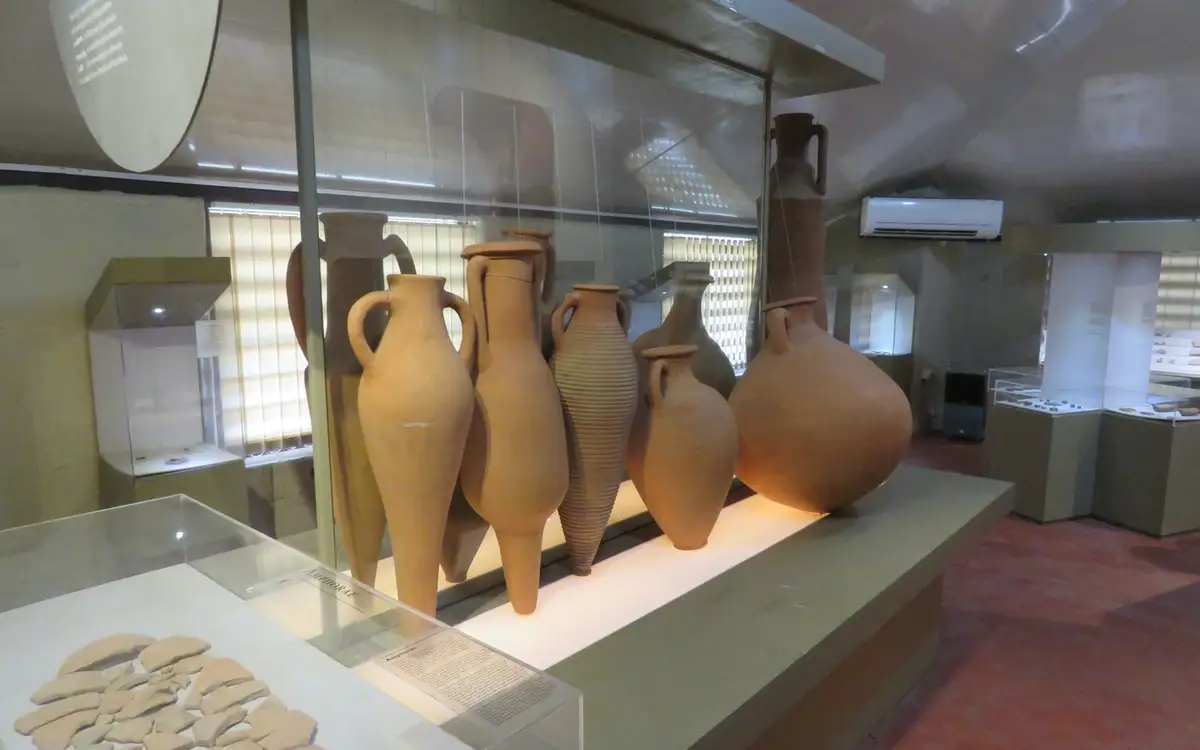
Muziris Heritage Project is the official heritage-conservation and visitor framework covering the Kodungallur and North Paravur heritage zone, useful for museums, hop-on hop-off boat service and local heritage planning. Muziris, Kodungallur, Heritage.
Standalone restaurant on NH 66, Kodungallur with direct contact page. Kodungallur food, Restaurant, NH 66.
Cheraman Juma Masjid is a major Kodungallur heritage and pilgrimage stop, often described by Kerala Tourism as India first mosque; visitors should check current access and prayer-time etiquette before arrival. Mosque rules apply · Kodungallur, Cheraman Juma Masjid, Muziris.
Book with the place itself. India’s cyber-crime coordination centre warned in April 2025 that convincing copies of hotel and pilgrimage booking sites are being pushed through sponsored search and social ads, taking payment for rooms the property never hears about. Every listing here links to the business’s own contact details and its own Google or Bing profile — we take no commission and sit in nobody’s payment path. If a booking page reached you through an ad, check the address bar against the property’s own site before you pay. Fraud can be reported on cybercrime.gov.in or on 1930.
Find food, accommodation and activities across Kodungallur. Browse the guides for places to eat, stay and explore along your route.
2 more places around Kodungallur. Open a guide to plan the visit and onward journey.
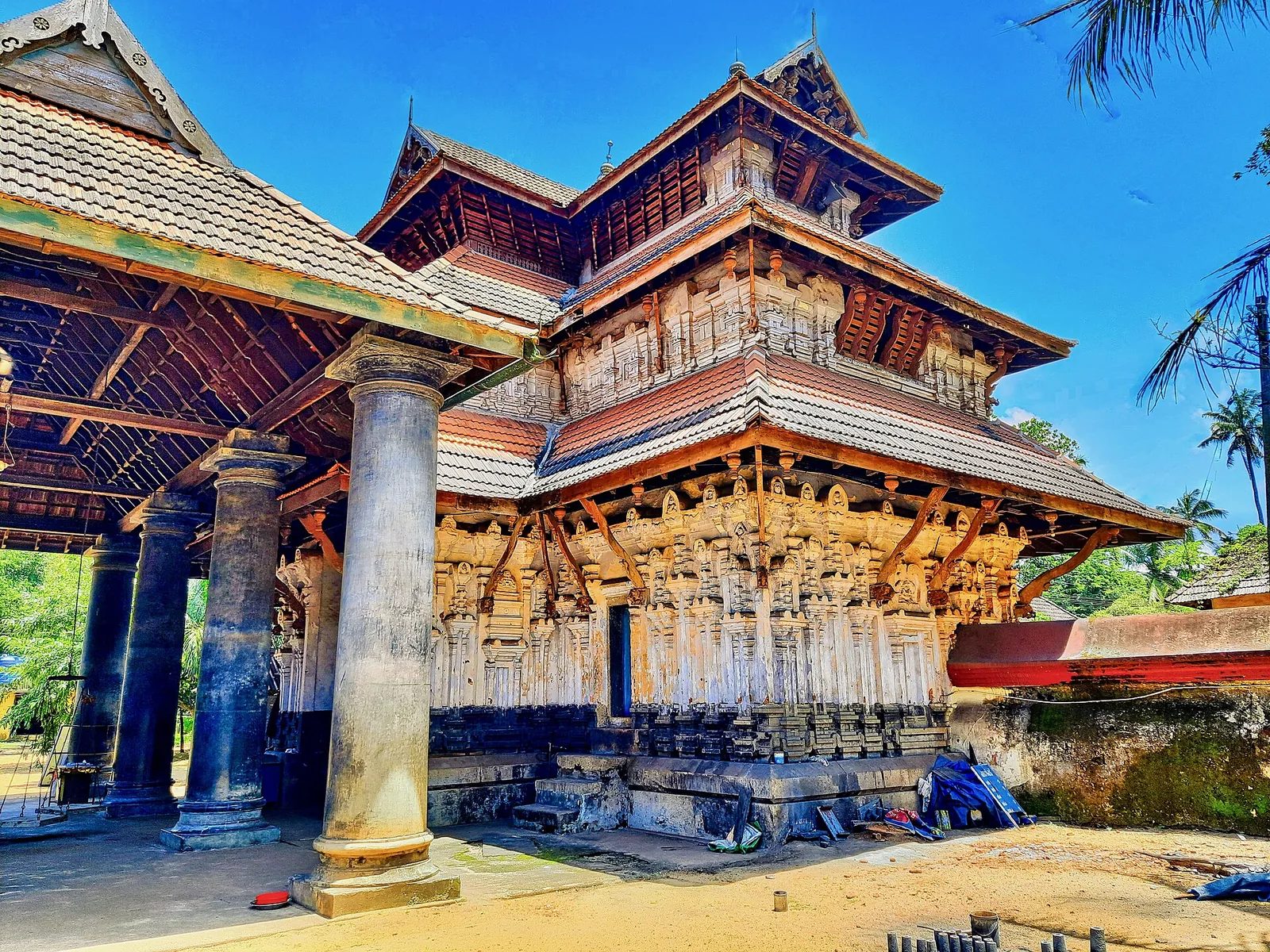
570 m · 7 min walk
Ancient Shiva temple at Kodungallur linked with the old Chera capital of Mahodayapuram.
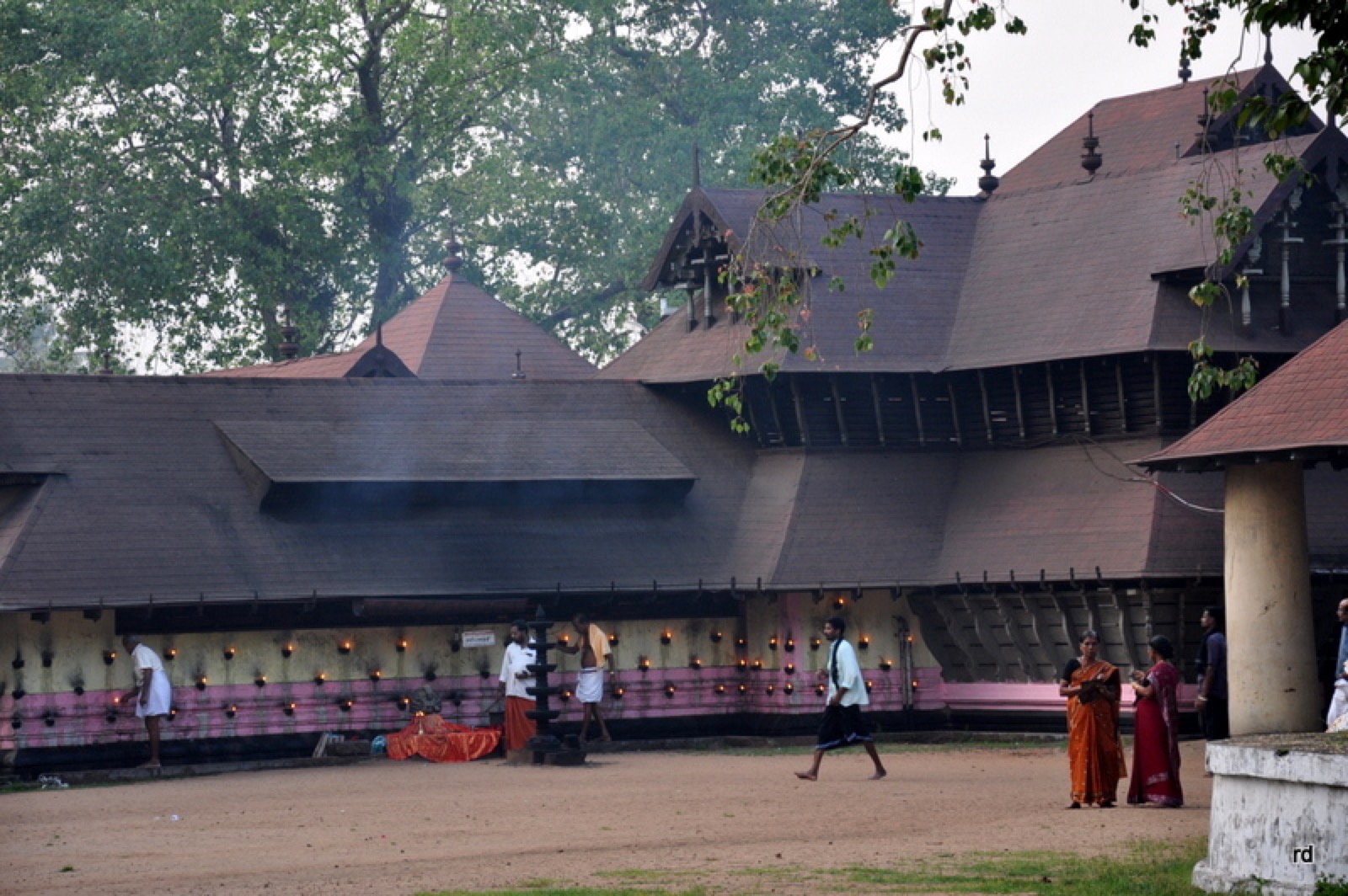
1.6 km · 20 min walk
The Sree Kurumba (Bhagavathy) temple at Kodungallur, an ancient and powerful Devi shrine associated with the Bharani festival.
Roampedia is commission-free — own or know a stay, eatery, guide or shop near Cheraman Juma Masjid? List it and it appears here once verified.
Add a nearby businessEntry: Usually free; donations are welcome and oil is often offered for the lamp.
Dress code: Dress modestly, as at any place of worship — cover shoulders and legs, and it is respectful for women to carry a scarf to cover the head; shoes are removed before entering prayer areas.
Festivals: The main observances are the Islamic calendar’s prayers and festivals such as Ramadan and the two Eids; it is also associated with heritage events under the Muziris Heritage Project, and some families hold Vidyarambham here.
Photography: Photography of the exterior and heritage features is generally tolerated, but always ask permission first, avoid photographing during prayers or of worshippers without consent, and follow any posted restrictions.
If you are travelling by bus or ferry, check the return service with the operator before setting out. Leave time to reach the stop or jetty after your visit.
Ask at the bus stand for the time of the last service back, not the next one. If you miss it, an auto or app cab is the fallback — agree the fare before you get in.
If you need step-free access, contact the site before travelling. Ask about a level entrance, steps along the route, the nearest drop-off point, seating and accessible toilets.
Charge cap and free-transaction limits: Reserve Bank of India, in force since 1 May 2025.
These services are listed within about 1.2 km of Cheraman Juma Masjid. Walking distances follow mapped routes; access and opening hours can change. Other services may be closer but are not included here.
Emergency numbers are verified against official government and state tourism sources. 112 works anywhere in India.
Ancient Shiva temple at Kodungallur linked with the old Chera capital of Mahodayapuram.
570 m · 7 min walk · straight lineThe Sree Kurumba (Bhagavathy) temple at Kodungallur, an ancient and powerful Devi shrine associated with the Bharani festival.
1.6 km · 20 min walk · straight line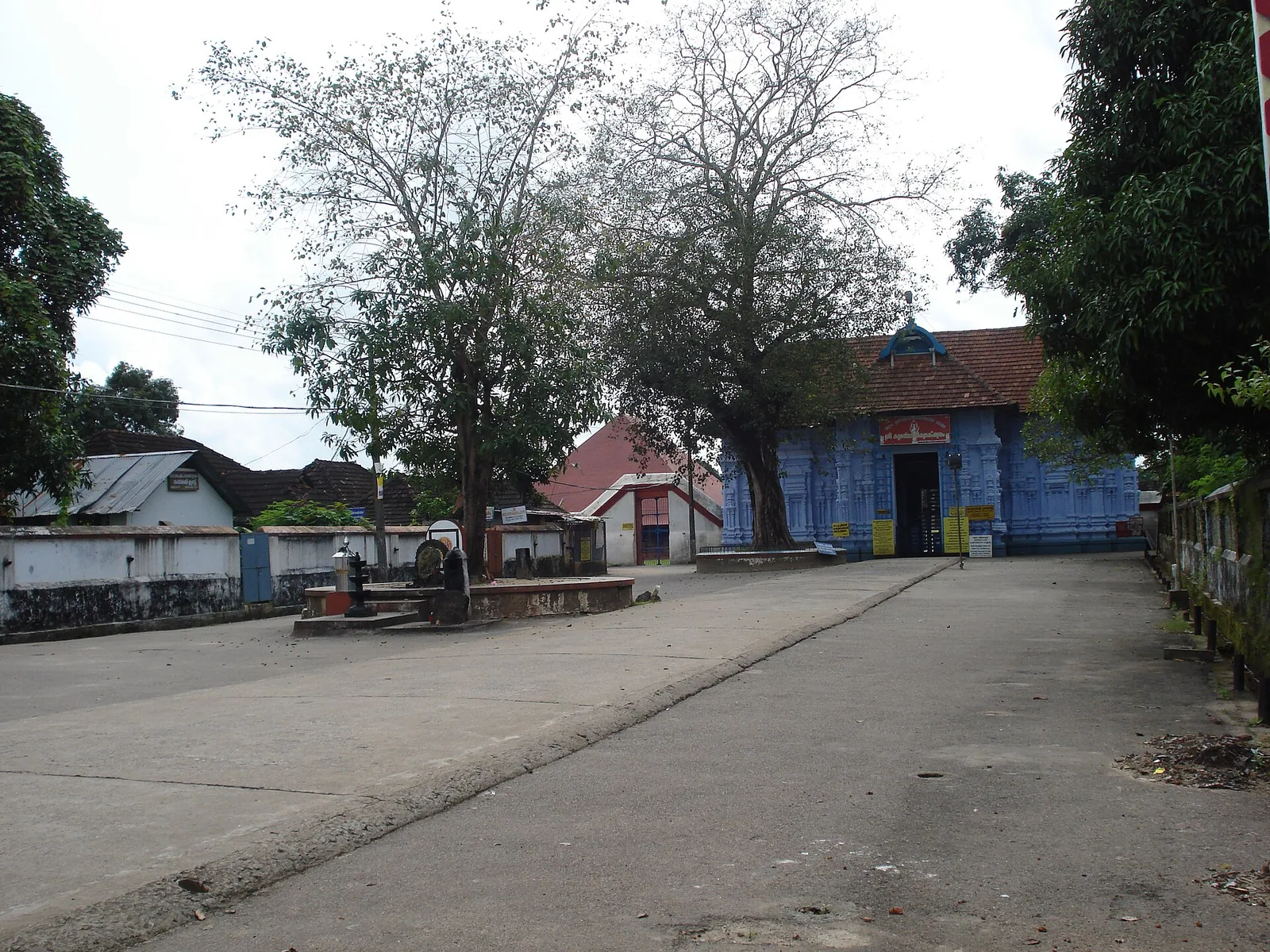
Rare temple at Irinjalakuda dedicated to Bharata, one of the Nalambalam (four-temple) Rama circuit shrines.
14.8 km · ~25 min by cab · straight line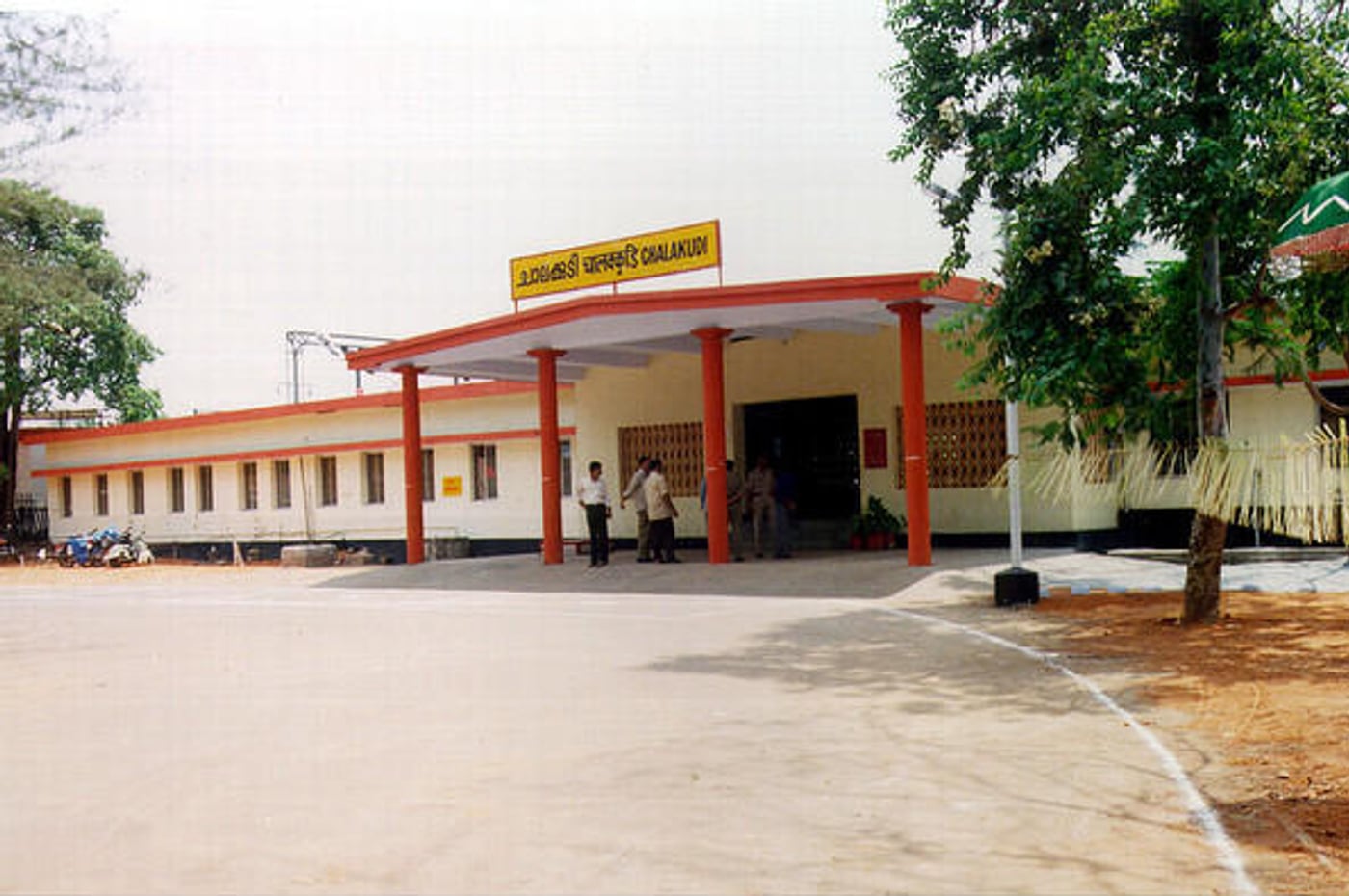
Chalakudi station, code CKI, on the Shoranur–Cochin Harbour section — the railhead the Cochin State Forest Tramway was extended to reach, and the transfer point for Athirappilly. About 1.4 km west of the highway, which catches most visitors out.
16.4 km · ~27 min by cab · straight line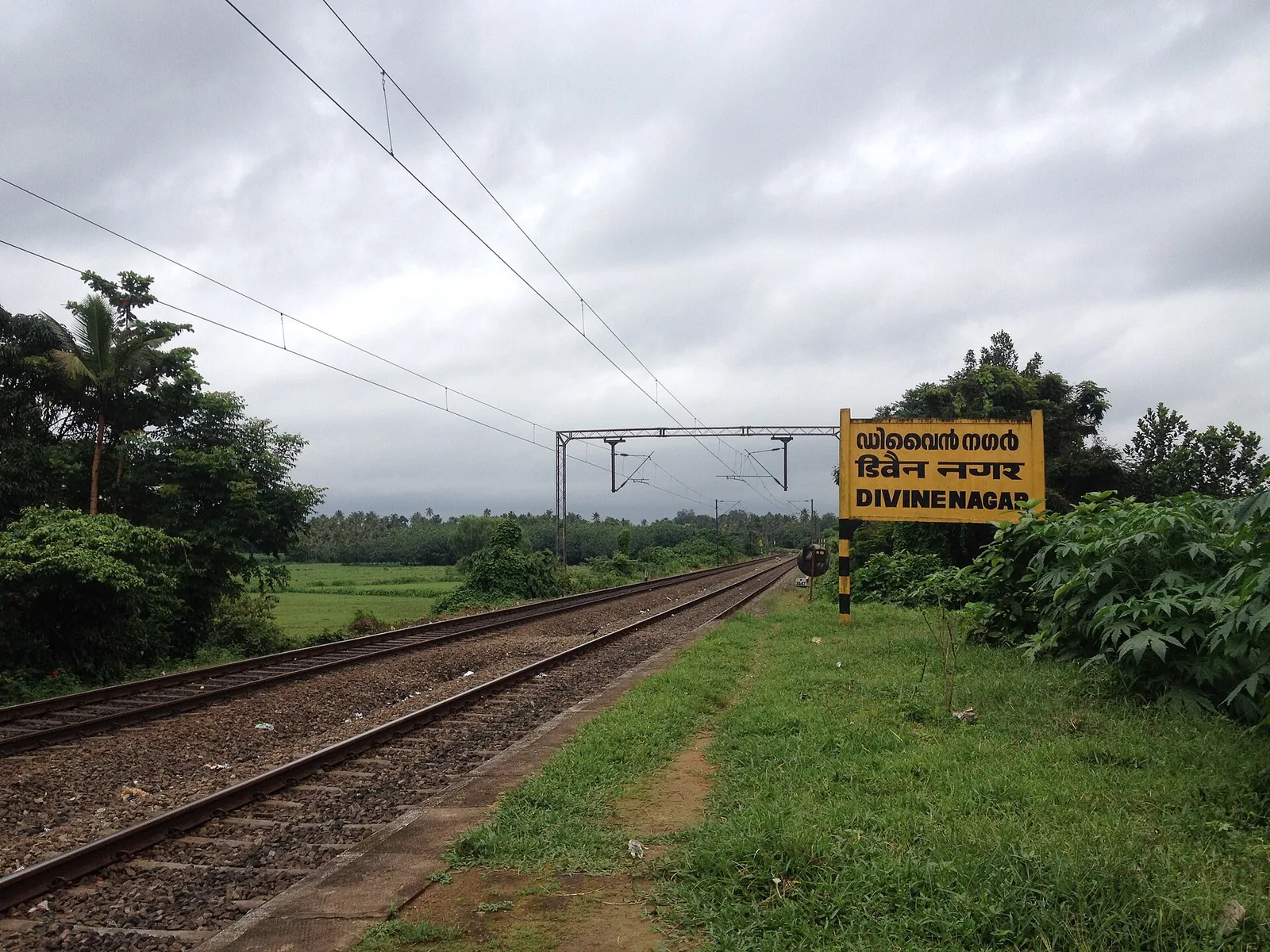
The Vincentian Congregation’s residential retreat centre on NH 544 at Muringoor, which by its own account takes about five thousand people a week for a six-day retreat in seven languages and houses two thousand more in five charitable homes — on volume, the largest organised draw in Chalakkudy taluk after the falls. Indian Railways opened a halt called Divine Nagar for it in 1996.
17.2 km · ~29 min by cab · straight line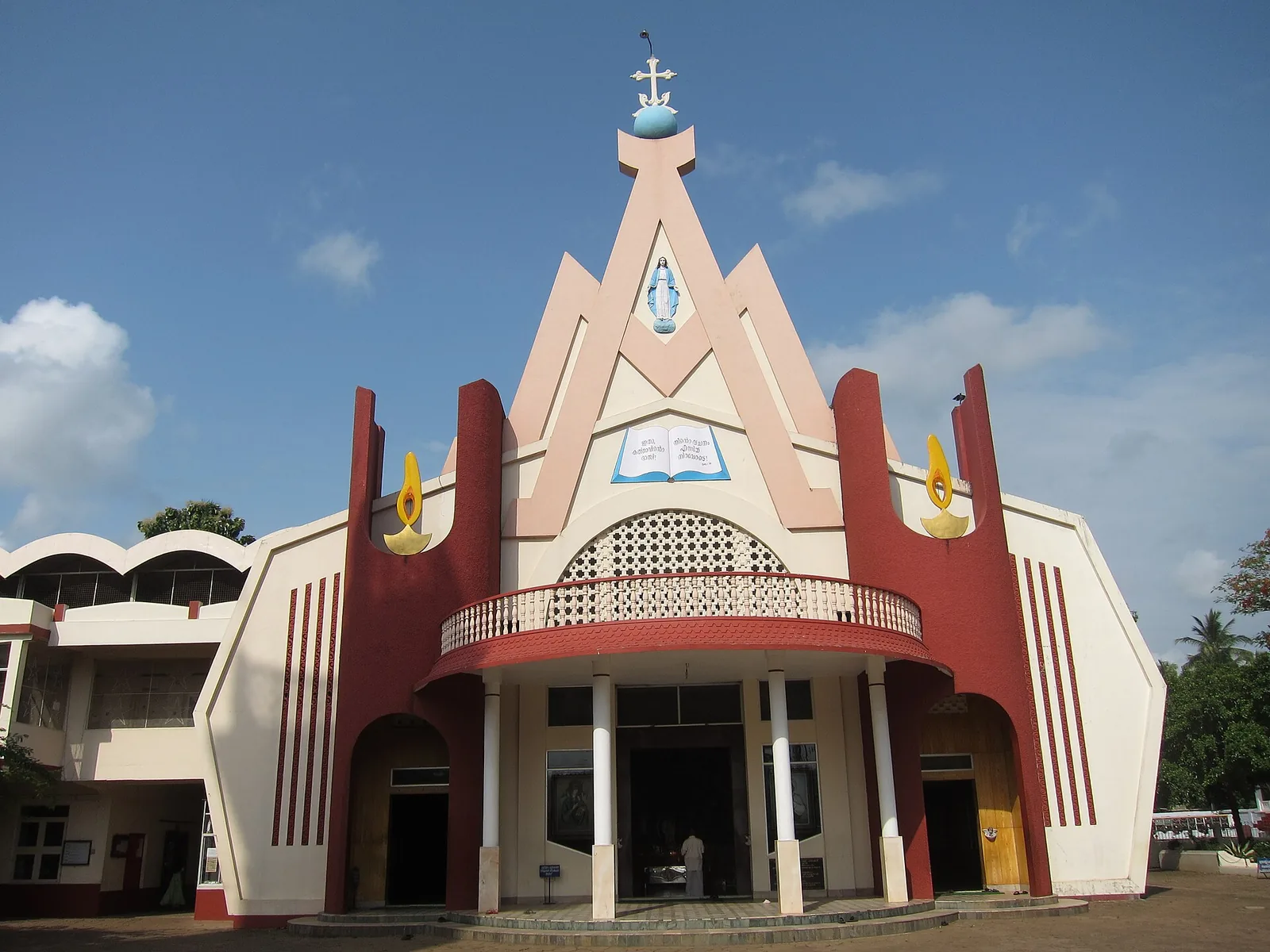
St Mary’s Forane Church on Church Road, the Syro-Malabar forane that governs seventeen daughter parishes across the Chalakkudy countryside and keeps the ambu perunnal, the arrow feast the town observes across community lines. The present building was rebuilt in 1987; the belfry is 1913 and the bell 1887.
18.0 km · ~30 min by cab · straight line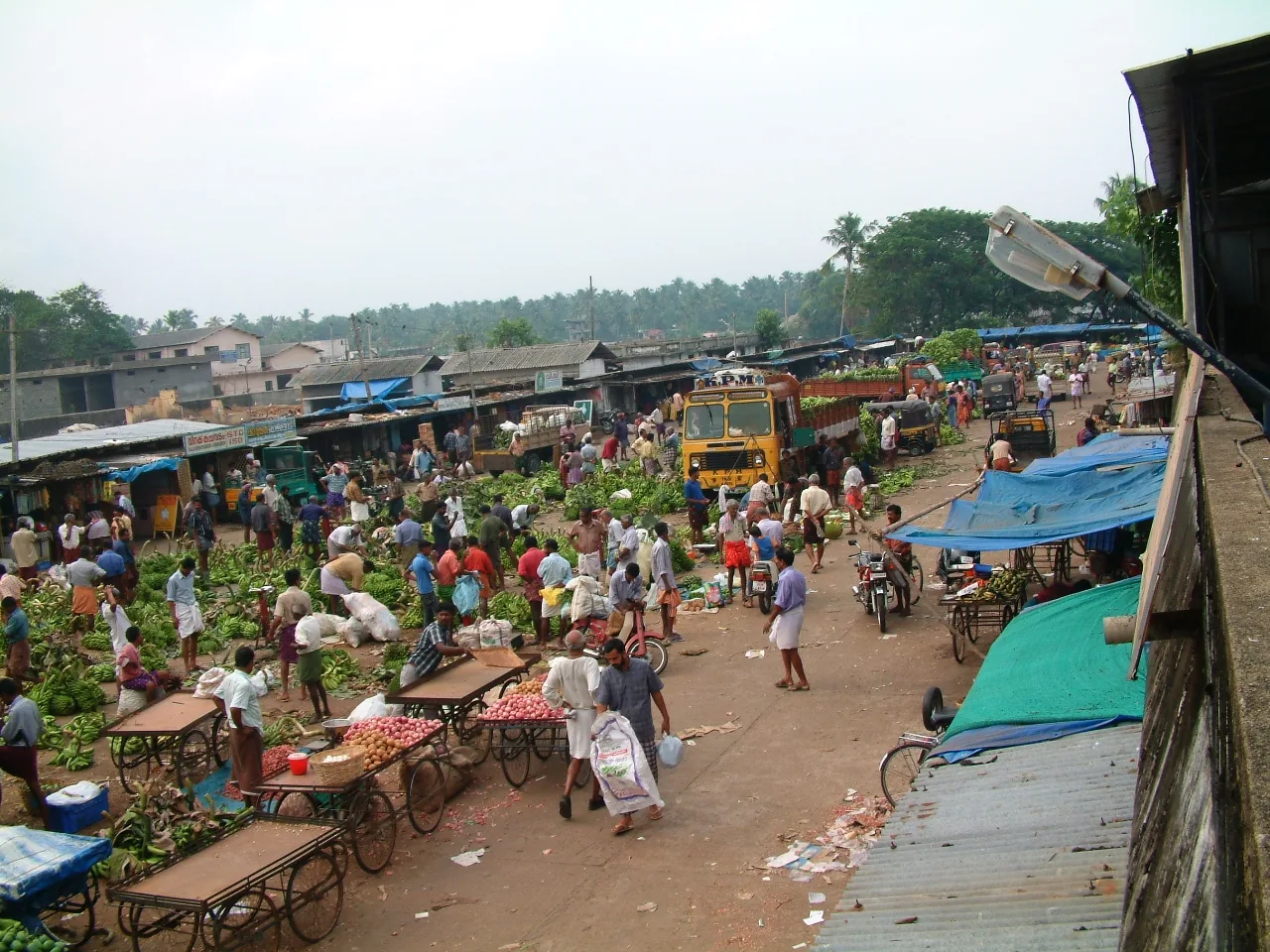
The town’s wholesale produce yard on Market Road, the oldest continuously working institution in Chalakkudy — a Sakthan Thampuran-era pandikasala that still holds its traditional Tuesday and Friday markets and takes hill produce down State Highway 21.
18.2 km · ~30 min by cab · straight lineA longstanding Catholic pilgrimage church at Mapranam associated with the Holy Cross and annual feast observances.
18.8 km · ~31 min by cab · straight line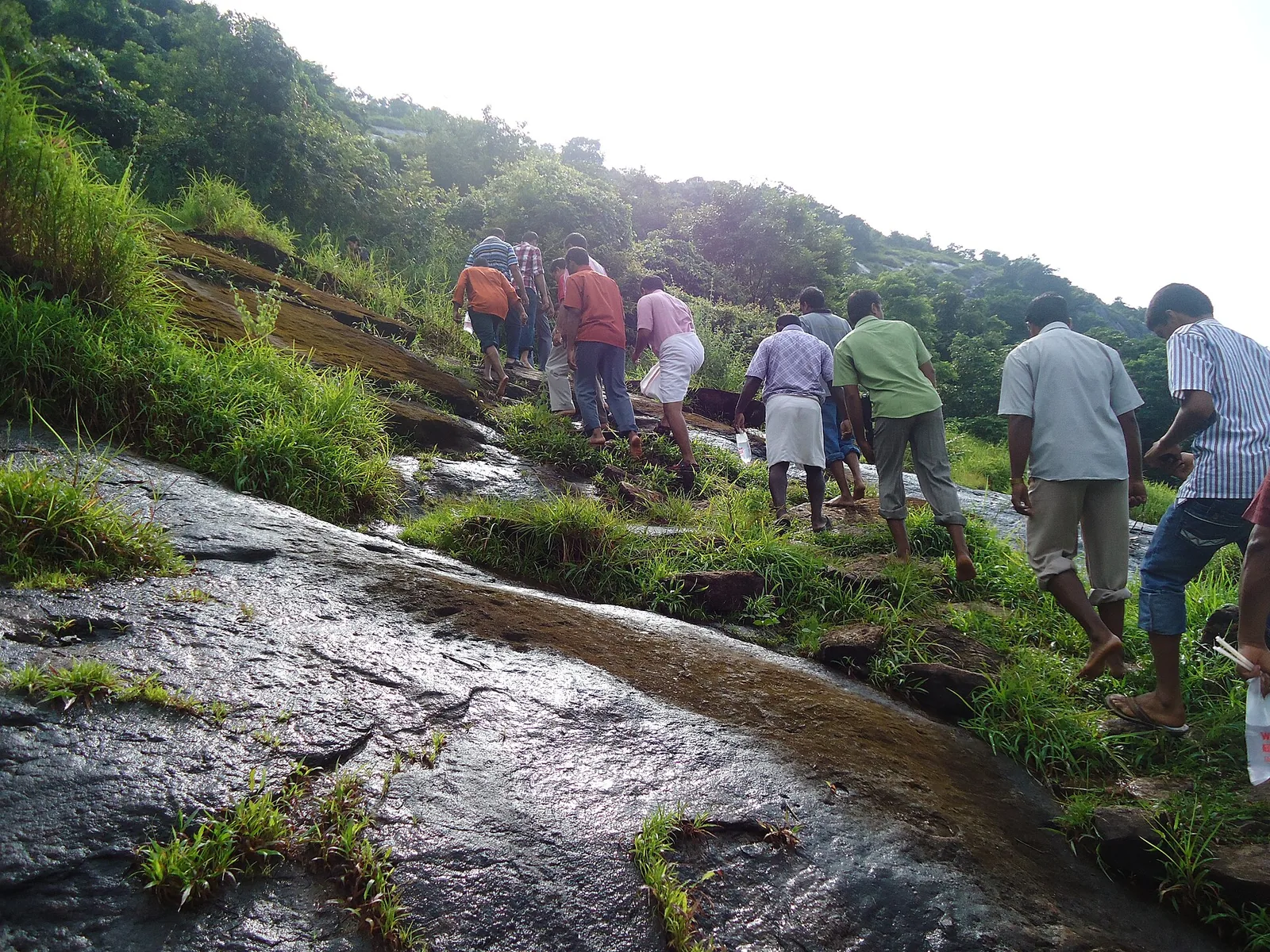
A hill of crosses about 5 km north of Chalakkudy that local devotion ranks with Malayattoor — fourteen crosses up a kilometre of bare sheet rock to a hilltop shrine at about 310 m. The pilgrimage was begun in 1940 by the vicar of Perambra after a dream; April is its busiest month.
22.3 km · ~37 min by cab · straight line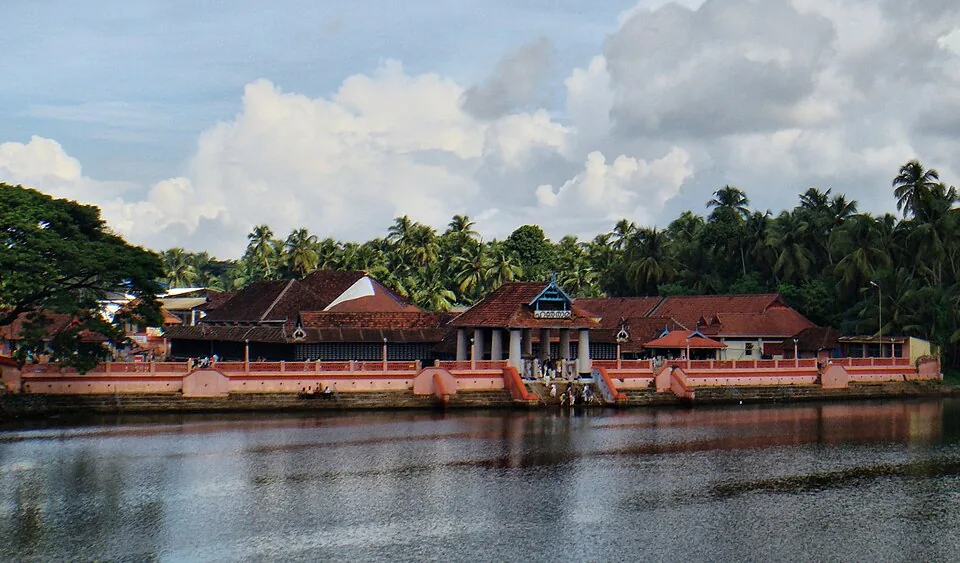
Sree Rama temple on the Theevra river near Triprayar, another of the Nalambalam circuit shrines.
24.3 km · ~41 min by cab · straight line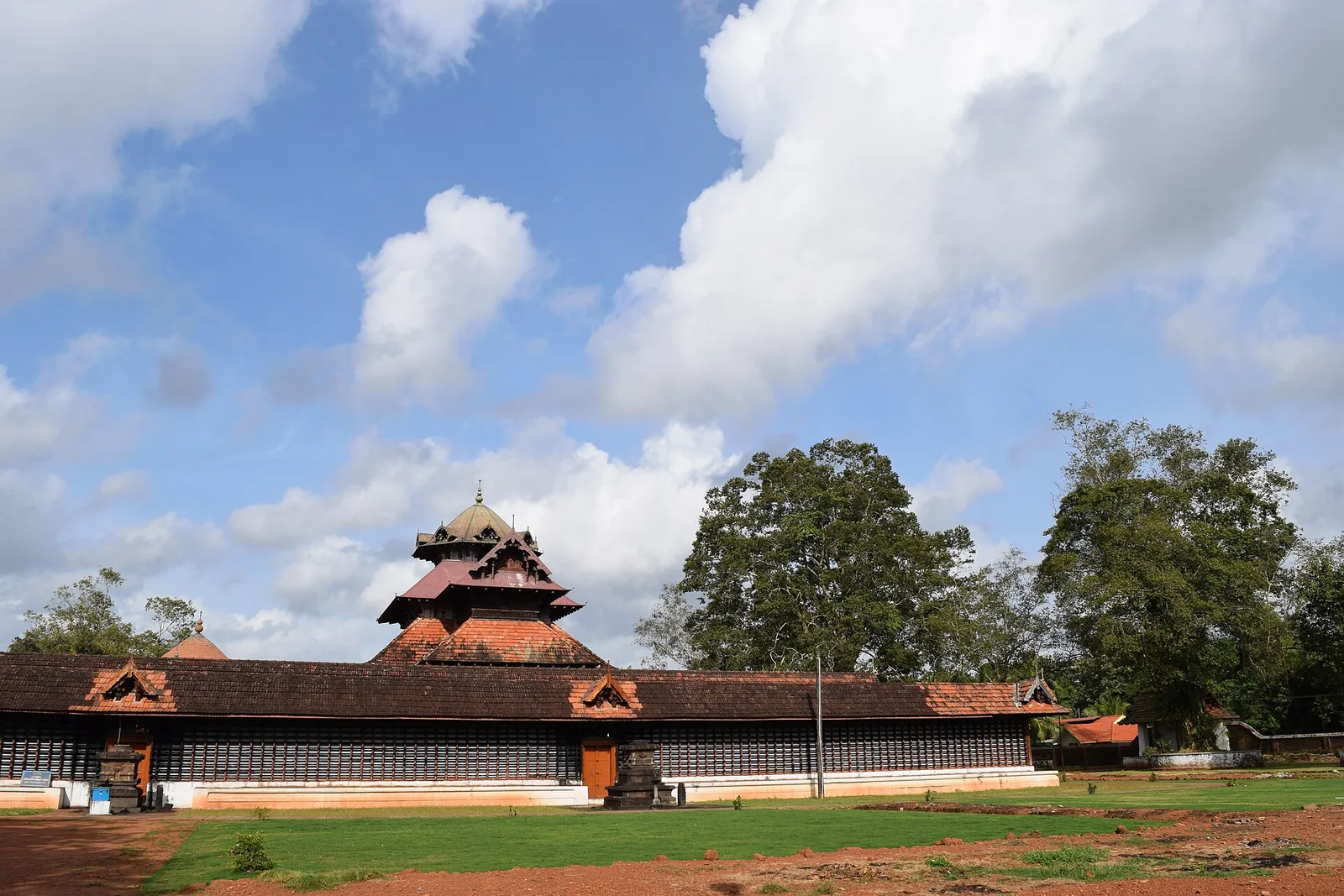
An ancient Shiva temple at Cherpu south of Thrissur, the ritual centre of the historic Peruvanam Pooram.
25.0 km · ~42 min by cab · straight line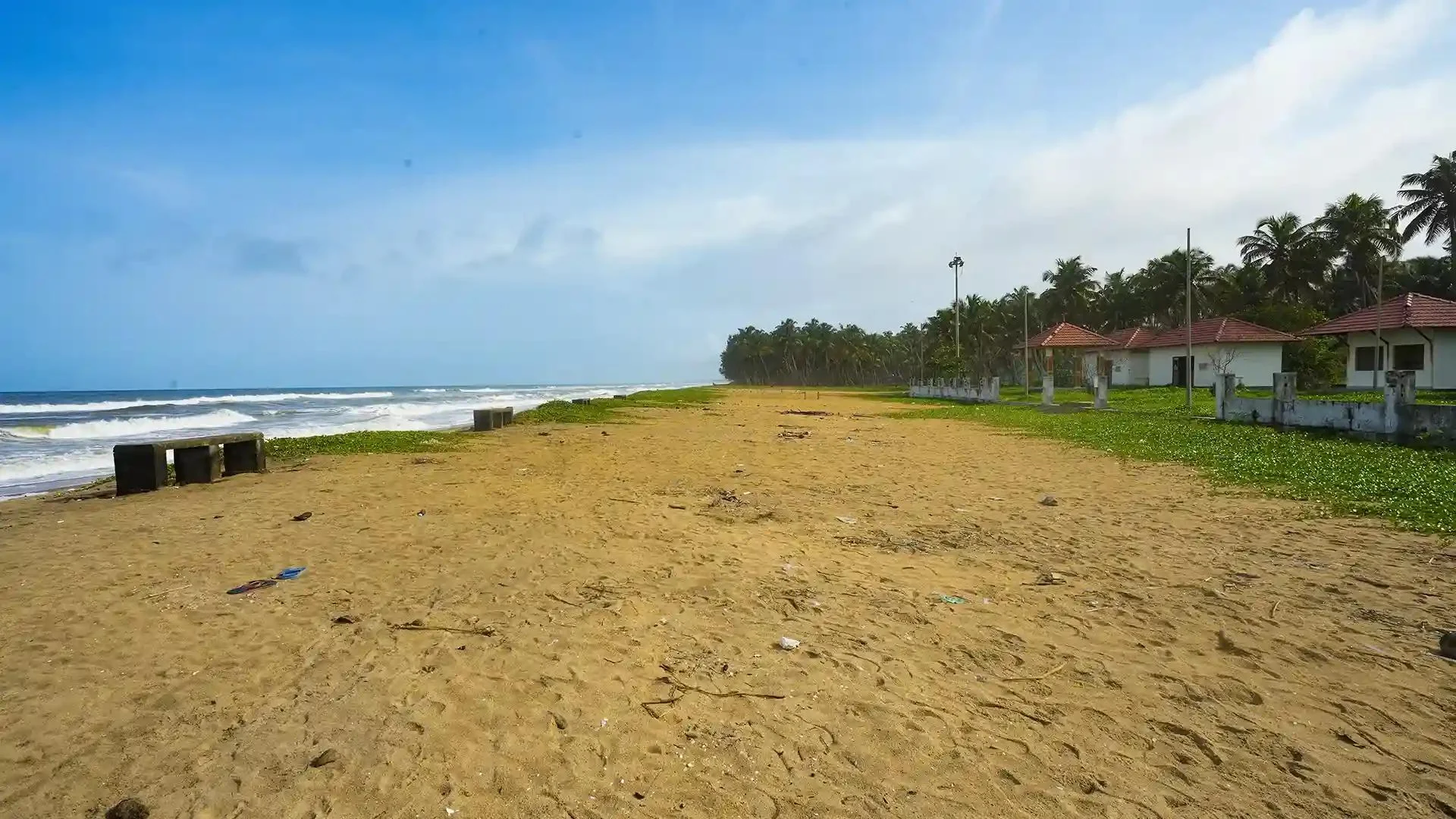
Nattika Beach is the Arabian Sea shore of Nattika in Thrissur district, also identified by Kerala Tourism as Attakuzhi Bandhar Kadapuram. Its long sand frontage, fishing-life connections and association with the Malayalam film Chemmeen give it a character distinct from a resort’s private grounds. Use the named public beach approach for a shore visit, with Nattika and Triprayar providing the wider town plan. The beach, Triprayar Sree Rama Temple and any accommodation property require separate arrival instructions.
25.7 km · ~43 min by cab · straight lineNearby toilets, pharmacies, ATMs, seating and vets are community-mapped and may be incomplete or out of date. Map data © OpenStreetMap contributors | Walking times © openrouteservice.org by HeiGIT
It is very widely described as one of the oldest — often the oldest — mosque in India, and tradition dates it to around 629 CE. However, some historians dispute this and place the documented structure much later, so it is best treated as a deeply venerated site of contested but very early origin rather than a proven date.
Yes — it is both a working mosque and a heritage draw, and visitors of all faiths commonly come to see it. As with any active mosque, access to prayer areas may be restricted during prayer times and there may be norms around who enters certain areas — please confirm on site and follow the caretakers’ guidance.
A large brass hanging lamp in the mosque is said to have been kept burning for centuries, replenished by devotees — including people of other faiths — who bring oil as an offering (devotional tradition; the age and continuous-burning claims are not documented). Locally it is linked to the royal family of Kodungallur.
Historically it was built in the traditional Kerala style — sloping tiled roof, timber, lamp and pond — rather than with domes and minarets. Modern reconstruction in the 20th century added concrete, domes and minarets, but a later restoration under the Muziris Heritage Project aimed to recover the original Kerala look.
Entry is generally free; a donation is welcome. It is typically open through the day, roughly early morning to evening, but as a working mosque the atmosphere and access shift around the five daily prayer times, so plan around those.
It is reported as a local tradition that some families, including non-Muslim families, choose to hold Vidyarambham here. The practice reflects Kodungallur’s history of cross-community coexistence, but observance varies and should not be treated as a scheduled visitor event.
Outside prayer rush, unless visiting for worship.
Entry: Usually free; donations are welcome and oil is often offered for the lamp. Timings: Generally open through the day, indicatively from early morning to evening (some sources cite roughly 5.30 am to 8.30 pm) — but this is a working place of worship, so access and atmosphere revolve around the five daily prayer times; visit between prayers for a quieter, more open experience.
Base yourself in Kodungallur or a nearby town in Thrissur, then confirm the last-mile route locally before leaving. Plan around prayer times and local visitor rules. If the visit depends on forest, temple, boat, ferry, weather or seasonal access, check the official/local rule on the day before travel.
30 minutes to 1 hour.
Nearby you can pair Thiruvanchikulam Mahadeva Temple (570 m), Kodungallur Bhagavathy Temple (1.6 km), Koodalmanikyam Temple (14.8 km), Chalakkudy railway station (16.4 km).
Avoid crowding entry areas during prayer times. Respect gendered or restricted spaces.
Written about Cheraman Juma Masjid itself — its history, its legends and the arguments about them.
These guides explore Kodungallur and the surrounding area. Choose a visit that fits your interests, allowing separately for travel between stops.
Route-level itineraries and practical guides for the rest of Kerala.
Photographs: Shahinmusthafa (CC BY-SA 3.0 / GFDL), Abdullanafih (CC BY-SA 4.0), Aruna at Malayalam Wikipedia (CC BY-SA 3.0), Vis M (CC BY-SA 4.0). Wikimedia Commons.