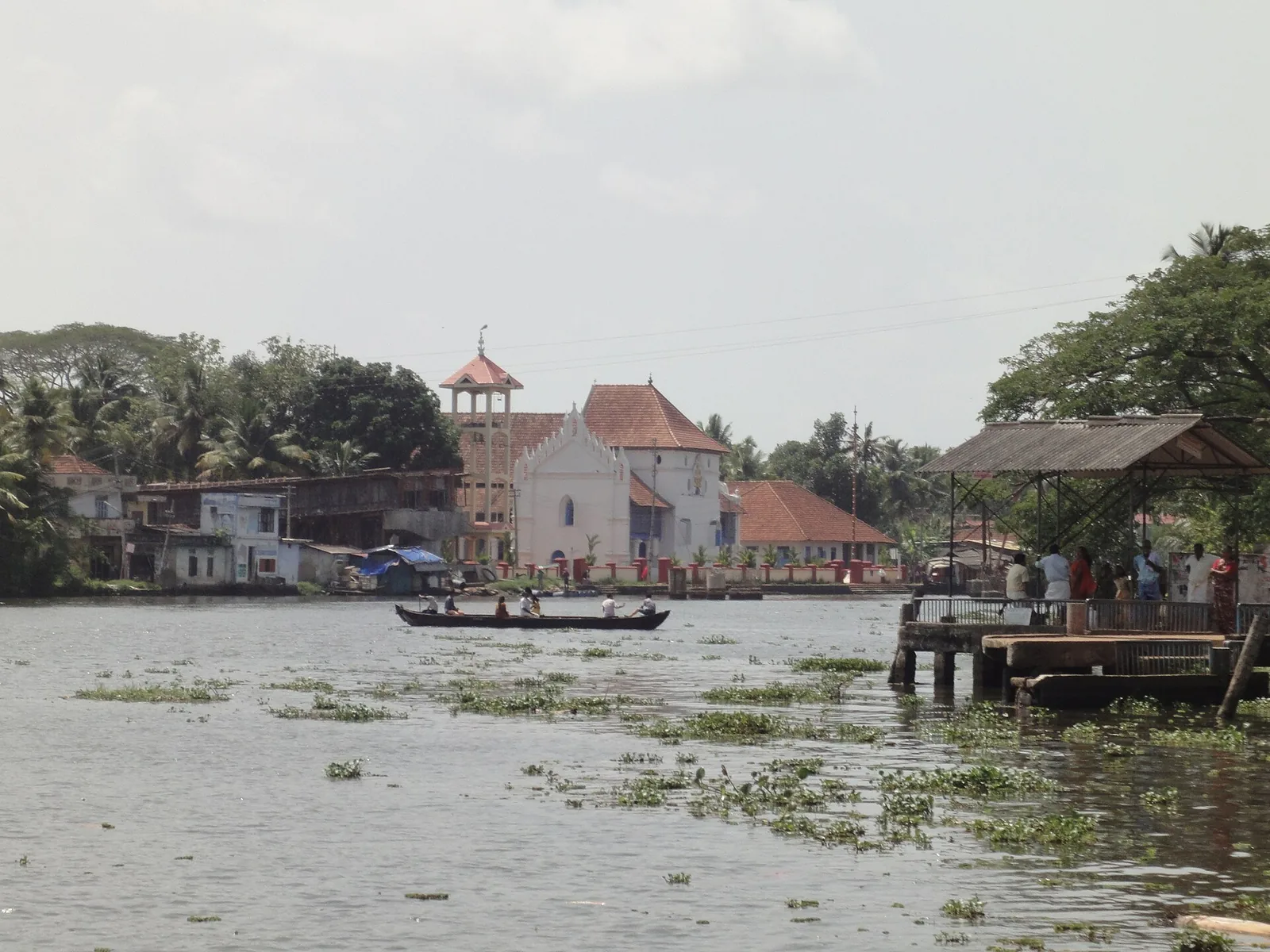
Every year the snake boat season in Kerala starts on one stretch of the Pamba at Champakulam. Kerala Tourism calls this race the oldest of its kind in the state. The race carries the full name Champakulam Moolam Vallamkali. Each part of that name tells you something. Champakulam is the village. Moolam is a star. Vallamkali means the boat game.
How the date is fixed
Most big events in Kerala now keep a fixed date. This race does not. It is held on the day of the Moolam star in the Malayalam month of Mithunam. The Champakulam Grama Panchayat sets out this rule on its own website. Mithunam runs from the middle of June to the middle of July. The Moolam star falls once in each lunar cycle, so the race day moves every year.
You can see this in recent years. Onmanorama reported that the race in 2024 was held on 22 June, and called it the 100th edition. In 2025 the paper reported the race date as 9 July. That is a gap of more than two weeks between two years. So never plan a trip around last year’s date. Wait for the date that the organisers and the district announce for your year.
Why Moolam? The answer is in the legend. The race remembers the day a Krishna idol travelled by water to the temple at Ambalappuzha. That journey ended on Moolam day. The full story of the night before is told in the night a god slept in a Christian house. In short, the idol rested overnight at the Mappilassery house in Champakulam. The next morning the king and the people took it on to Ambalappuzha Sree Krishna Temple in a great procession of boats.
What happens before the first boat moves
The race has two halves. One is a ritual and the other is a sport. The ritual comes first, and it is not for show.
A team from the Ambalappuzha temple comes to the Mappilassery house with palpayasam. This is the sweet milk offering for which the temple is known. Prayers are said in the house. The panchayat states that the race begins only after these prayers are over. Kerala Tourism records that the parish church at Champakulam has its own duty too. By custom it supplies rope and bamboo for the event. So a Hindu temple, a Christian family and a Christian church each play a part before a single oar touches the water.
After the ritual comes the water procession. Decorated boats move along the river to the sound of vanchippattu, the boat songs of Kuttanad. The panchayat also mentions folk art shown on kettuvallams, the big covered boats. Then the heats begin.
The boats that race
The stars of the day are the chundan vallams, the long snake boats. Each one is owned by a village or a boat committee, and each one is rowed by a club. In 2025 Onmanorama reported nine snake boats in the race. The same report said smaller boats race as well, in the veppu and odi classes.
Clubs take the race seriously for a practical reason. It comes early in the season. Onmanorama noted that most clubs treat it as a trial run before the Nehru Trophy Boat Race at Punnamada. Crews test their rowers, their rhythm and their boat. Repairs and rower trials start weeks before. In 2025 the paper said heavy floods in late May had held up practice, and clubs were racing to catch up.
The trophy and the two dates of history
The race grew from a village ritual into a formal contest in two steps. Kerala Tourism records that in 1927 M.E. Watts, then Diwan of Travancore, inaugurated it as an organised race. Then in 1952 Sri Chithira Thirunal Balarama Varma came to watch. He was Rajapramukh of Travancore-Cochin at the time. He instituted a trophy for the winning snake boat. The panchayat states that the main race has been rowed for this Rajapramukhan Trophy ever since.
Note the year. The Nehru Trophy at Punnamada also began in 1952. So both of the great trophies of Alappuzha date from the same year. Champakulam keeps the older ritual, and Punnamada draws the bigger national crowd.
The Champakulam Chundan
A village that hosts a boat race wants its own boat to win. Champakulam has one. Kerala Tourism tells its story on the Champions Boat League pages. The first Champakulam Chundan was launched in 1974. It won the home race in that first year. It won again in 1975 and 1976, a hat-trick. It reached the Nehru Trophy final in each of those three years.
Its best years at Punnamada came later. The boat won the Nehru Trophy for the first time in 1989. It won again in 1990 and 1991, a second hat-trick. Its next win there came in 2009. By then the old boat was ageing, and it was retired. A new Champakulam Chundan was launched in 2013. Kerala Tourism says the boat is owned by 250 shareholders and can carry 100 people. That ownership model is the key to the whole sport. A snake boat belongs to the people of a place, not to one rich owner.
How the boats are designed and built is a story of its own. Read the boat and the drawing for the carpenters behind the chundan.
How to watch the race
Plan around the river, because the village is small and the banks are narrow. The panchayat says tens of thousands of people come, including visitors from abroad. Arrive early in the morning. The ritual and the procession are the parts most visitors miss, and they are worth more than a good view of one heat.
Bring water, a hat and patience. The race comes in the monsoon months, so rain is likely at some point in the day. Stand back from wet and crowded edges, and keep children close. Plan your return before you arrive, because roads out of the village fill up when the final ends.
If you have more than one day, stay in Kuttanad itself. You can then see the paddy fields and canals before and after the race. Many people also visit the temple at Ambalappuzha on the same trip. It is the other end of the journey the race remembers.
For a full day in this water country, pair the race with Champakulam village, the wider paddy land of Kuttanad, the reclaimed fields of R Block, the boat-race lake at Punnamada and the story of the night a god slept in a Christian house.
Frequently asked questions
When is the Champakulam Moolam boat race held?
On Moolam star day in the Malayalam month of Mithunam, which falls in June or July; the exact date changes each year.
Why is it called the Moolam race?
It is named after the Moolam star, the day the Krishna idol was taken to Ambalappuzha in the legend.
What trophy do the snake boats race for?
The Rajapramukhan Trophy, instituted in 1952 by Sri Chithira Thirunal Balarama Varma.
Is it the first snake boat race of the season?
Yes, Kerala Tourism and Onmanorama both describe it as the race that opens the season.
Which is the home boat of Champakulam?
The Champakulam Chundan, first launched in 1974 and replaced by a new boat in 2013.