Kerala produces a great deal of writing about religious harmony, most of it general and most of it forgettable. Champakulam has something else: a specific obligation, owed by a named temple to a named family, at a known address, discharged every year, and load-bearing — because until it is done, the boat race does not start.
A rejected idol and a deadline
The traditional account places the events in 1545. Pooradam Thirunal Devanarayanan, raja of Chembakassery, had built his temple at Ambalappuzha and set the date for the installation of the deity, when his priests examined the intended Krishna idol and declared it unfit for the purpose.
The date could not move. So the king sent for a substitute — the Krishna of the Karinkulam Parthasarathy temple at Kurichi, near Changanassery, in the keeping of the Kurichi Valiyamadam family. This was no ordinary image: tradition held that Krishna had given it to Arjuna himself. The minister sent to fetch it is named in the Malayalam account as Parayil Menon.
Nightfall on the Pamba
They brought it back the way everything travelled in Kuttanad, by water, and night overtook them on the river. This was not a trivial problem. There were robbers on these waterways, and the party was carrying an object of enormous value in every sense.
They looked for somewhere safe. The obvious candidate, the Madathil temple, was judged not safe enough for a night. And so, on the king’s own instruction, the god of the Chembakassery kings was carried into a Christian house.
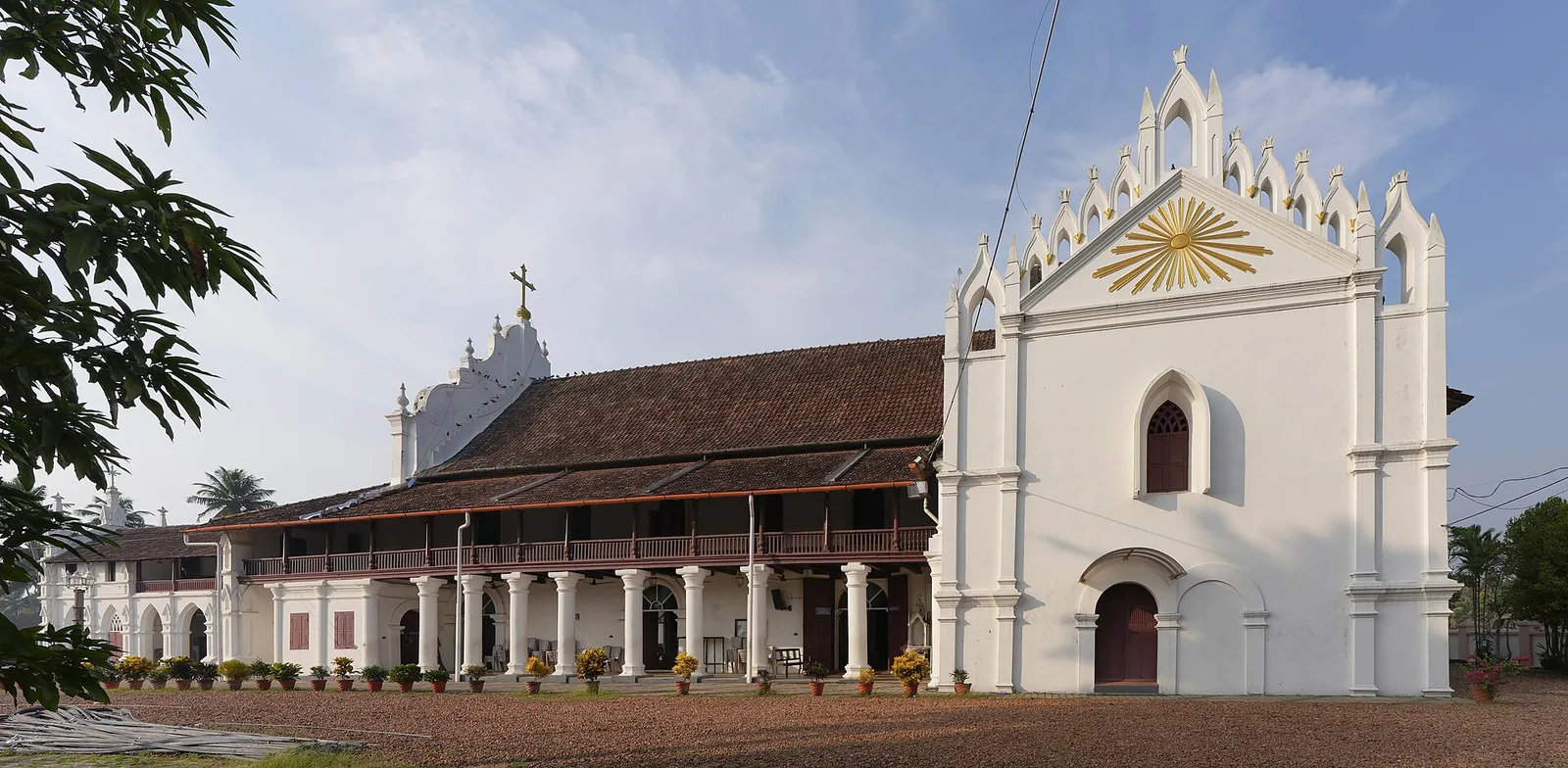
The Malayalam is precise about whose. They set the Krishna idol down at the house of Itti Thomman of Koyikkari Mappilassery, at Champakulam — a loyal subject and a confidant of the raja. He and his household took in the men and the image and gave them honour, and through that night pujas were offered to Krishna under a Catholic roof.
Moolam
The next day was Moolam, which happens to be Krishna’s own birth asterism. The king came down in person with his retinue, and the villagers came out with him on the water, and the idol went on to Ambalappuzha in a flotilla of boats with Itti Thomman travelling alongside it.
It is worth being clear about what that flotilla was. The village did not line the banks to watch a king go by. It got into its boats and escorted a god downstream to his installation. The raja, the account says, was moved enough by the way his Christian subjects had received a Hindu deity that he ordered a water carnival at Champakulam every year on that day. The race that grew out of it is a re-enactment of an escort, not of a contest — which may be why the ritual half of it has outlasted every change in who runs the sporting half.
The Moolakazhcha
The present-day ceremony is visible; its uninterrupted performance across every year since the sixteenth century cannot be independently established.
Every year, before any boat moves, a delegation from the Ambalappuzha Sree Krishna temple travels to the Mappilassery house at Champakulam. They bring the temple’s own palpayasam — the milk payasam Ambalappuzha is famous for across India, the one with its own legend attached — and they present it to the karanavar, the head of the household. A nilavilakku, the standing brass lamp of Kerala, is lit in that house, and prayers are said.
This is the Moolakazhcha. Only when it is finished does the Champakulam boat carnival begin.
Sit with the shape of it for a moment. A Hindu temple carries its consecrated food to a named Christian family, into their own house, among their crucifix and their statues of Joseph and the Virgin, and lights a lamp there — and the great public event of the district, which tens of thousands come for, waits until that private courtesy has been paid. The family keeps a perpetual lamp of its own for it, the Vazhakoombu Vilakku, the banana-blossom lamp, burning in the prayer room among the Christian images. The household remembers a sequence reaching back toward the sixteenth century.
It is not a festival of tolerance staged for anyone’s benefit. It is a debt, from a king to a household, that a temple still pays.
What not to confuse it with
Two neighbouring traditions get folded into this one constantly and should not be. The Aranmula Parthasarathy palliyodam legend and the origin of the Nehru Trophy on Punnamada are different stories belonging to different places, and neither has anything to do with Itti Thomman. If an account of Champakulam mentions Nehru, it has drifted; that is a different race at a different place in a different month.
- Kerala Tourism: Ambalappuzha Sangham and Mappilassery tradition
- The idol journey is a recorded local tradition. The present procession is documented; an uninterrupted annual sequence since 1545 is not independently established.
Frequently asked questions
What is the Moolakazhcha?
The ceremony that must precede the Champakulam boat race. A delegation from the Ambalappuzha Sree Krishna temple brings the temple’s palpayasam to the Mappilassery house at Champakulam — a Christian household — presents it to the head of the family, and a nilavilakku is lit and prayers said there. Only then does the race begin.
Who was Itti Thomman?
Itti Thomman of Koyikkari Mappilassery, a Christian of Champakulam and a confidant of the raja of Chembakassery. In 1545 his household sheltered the Krishna idol being carried to Ambalappuzha overnight, and pujas were offered to it in his house. He travelled with the flotilla the next morning.
Why was the idol being moved at all?
The raja Pooradam Thirunal Devanarayanan had built the temple at Ambalappuzha and fixed the installation date when his priests judged the intended Krishna idol unfit. A replacement was fetched from the Karinkulam temple at Kurichi — an image tradition says Krishna gave to Arjuna — and it was that idol which spent the night at Champakulam.
How long has the Moolakazhcha been performed?
The family’s claim is that it has run unbroken since 1545, close to five hundred years. The competitive race, by contrast, was only inaugurated as a formal contest in 1927 — the ritual is much older than the regatta.