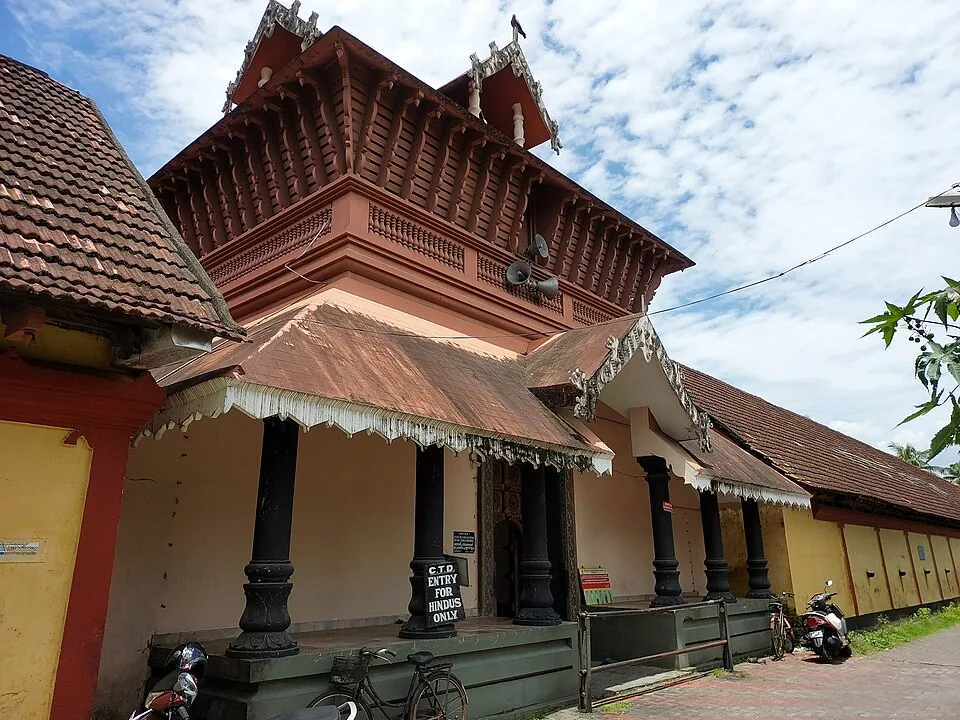
A temple that needs three consecrations in three centuries is a temple that keeps being emptied. The Cochin Thirumala Devaswom at Gosripuram was consecrated in 1599, again in 1719 and again in 1881, and the gaps between those dates are filled with two expulsions, a fire, a flight and a sixty-one-year absence.
2 March 1662: the Portuguese
The Konkani community of Cochin had backed the Dutch against the Portuguese in the long contest for the port, on the reasonable calculation that a Protestant trading company would be less interested in converting them than the power that had driven them out of Goa in the first place. When the Portuguese retaliated, they did so thoroughly: on 2 March 1662 the community’s houses, markets and this shrine were plundered and burned.
The Konkanis fled Cochin for Udayamperur and remained there roughly ten months. It was during that exile — homeless, with the deity displaced for the second time in a century — that the community took the pledge that would eventually give the kingdoms of Cochin and Travancore sixteen Tirumala Devaswoms. Faced with the loss of their only temple, they resolved to build fifteen more.
The Dutch defeated the Portuguese on 6 January 1663, and the temple was reconstructed with their assistance. Hold that next to the Paradesi Synagogue a few streets away, burned by the Portuguese in the same reprisal and also restored under the Dutch. Two refugee communities, arrived from opposite ends of the map, lost their houses of worship in the same year and rebuilt them in the same change of regime.
- 1599 — first pratishtha, by Swami Sudhindra Tirtha of the Kumbakonam Math.
- 2 March 1662 — Portuguese plunder and burn the temple; the community flees to Udayamperur for ~10 months.
- 6 January 1663 — the Dutch defeat the Portuguese; the temple is rebuilt with their help.
- 1719 — second pratishtha, by Swami Devendra Tirtha and Swami Madhavendra Tirtha of Sri Kashi Math.
- 12 October 1791 — the temple is plundered under Sakthan Thampuran; the Konkanis flee to Alappuzha with the deity.
- 7 February 1853 — the idol returns to Cochin, under Kerala Varma IV.
- 1881 — third pratishtha, by Swami Bhuvanendra Tirtha and Swami Varadendra Tirtha.
12 October 1791: the longer wound
The 1662 fire is the episode every account mentions. The one almost nobody tells is what happened a hundred and thirty years later. On 12 October 1791 the temple was plundered under Sakthan Thampuran, and the Konkani community fled Cochin again — this time to Alappuzha, taking the deity with them.
The idol did not come back. Not for a year, not for a decade. It returned to Cochin on 7 February 1853, in the reign of Kerala Varma IV: a gap of sixty-one years in which the central institution of Kerala’s Gowda Saraswats physically existed in another town. Two full generations of Konkani Kochi grew up with their principal deity somewhere else.
That is the longest interruption in the temple’s history by a very wide margin, and it is the least discussed. The 1662 burning fits the tidy narrative of colonial religious violence and gets retold; the 1791 plunder was carried out under a Malayali ruler and does not, so it drops out of the story.
What three consecrations mean
A pratishtha is not redecoration. It is the ritual installation that makes a building a temple, and needing it three times means the sanctity was three times interrupted. The first was performed in 1599 by Swami Sudhindra Tirtha of the Kumbakonam Math, in the lunar month of Chaithra, on the full-moon day, with the moon in conjunction with the Chitra star — a level of precision the community has kept in its records for four hundred years.
The second, in 1719, was conducted by Swami Devendra Tirtha and Swami Madhavendra Tirtha of Sri Kashi Math. The third, in 1881, by Swami Bhuvanendra Tirtha and Swami Varadendra Tirtha — a generation after the deity came home from Alappuzha. The eight-day Aarat festival still commemorates the first of the three.
Why it is worth knowing before you go
Because Mattancherry is sold as the quarter where everybody got along, and the density of it — synagogue, palace, Jain temple, Konkani temple and spice godowns inside a few hundred metres — genuinely is remarkable. But the density was produced by displacement, and the peace had gaps in it that are recorded to the day.
Standing at the Gosripuram gate with the dates in your head, the compound stops being a pretty temple in a back street and becomes what it is: a building that has been burned once, emptied twice, reconsecrated three times, and is still, every morning, open.
Frequently asked questions
What happened to the Cochin Thirumala Devaswom in 1662?
On 2 March 1662 the Portuguese plundered and burned the temple, along with the houses and markets of the Konkani community, in reprisal for the community having supported the Dutch in the contest for Cochin. The Konkanis fled to Udayamperur for around ten months. The Dutch took the city on 6 January 1663 and the temple was rebuilt with their assistance.
Why was the temple emptied in 1791?
On 12 October 1791 the temple was plundered under Sakthan Thampuran, and the Konkani community fled to Alappuzha taking the deity with them. It is the less-told of the temple’s two catastrophes, partly because it does not fit the familiar narrative of colonial religious violence.
How long was the deity away from Cochin?
Sixty-one years. The idol left in 1791 and did not return until 7 February 1853, in the reign of Kerala Varma IV. That is by far the longest interruption in the temple’s history — considerably longer than the famous Portuguese burning of 1662.
What are the sixteen Tirumala Devaswoms?
A pledge taken by the Konkani community during their exile at Udayamperur after the 1662 destruction: to establish sixteen Tirumala Devaswoms across the kingdoms of Cochin and Travancore. Having lost their only temple, they committed to founding fifteen more.
How many times has the temple been consecrated?
Three. The first pratishtha in 1599 by Swami Sudhindra Tirtha of the Kumbakonam Math; the second in 1719 by Swami Devendra Tirtha and Swami Madhavendra Tirtha of Sri Kashi Math; the third in 1881 by Swami Bhuvanendra Tirtha and Swami Varadendra Tirtha. Each one marks an interruption in the temple’s sanctity.
Is the Paradesi Synagogue’s 1662 story connected?
Yes, directly. The Portuguese burned the Paradesi Synagogue in the same 1662 reprisal, and it too was restored after the Dutch took Cochin. Two refugee communities from opposite ends of the world lost their houses of worship in the same year, a few streets apart, and rebuilt them under the same new regime.