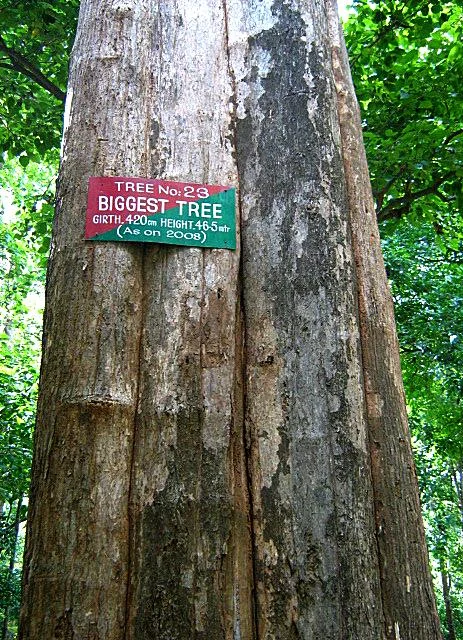
A small label on a large tree can contain several different kinds of information. In this archival photograph from Conolly’s Plot, tree number 23 is identified beside measurements dated 2008. The tree supplies an immediate sense of scale; the label supplies a record. Reading the two together is useful, as long as an old measurement is not silently turned into a current one.
The number identifies the tree
A tree number is a way of distinguishing one individual within a stand. It does not tell the visitor that the tree is the oldest, tallest or most valuable. Those are different claims requiring different evidence. Begin by treating the number as an identifier, much as a museum catalogue number identifies an object.
That simple distinction is helpful in a plantation where many tall trunks can look similar from below. A numbered individual can be observed, measured and discussed over time. The number makes a record possible without relying on an informal description such as the biggest tree near the path.
Read the date before repeating the figures
The photographed sign gives a girth of 4.20 metres and a height of 46.5 metres with a 2008 date. These are the values recorded on that sign at that time. They are not presented here as measurements made during a current visit. The year is part of the information, not an optional footnote.
Girth and height also describe different dimensions. One concerns the trunk’s circumference at the stated measurement position; the other concerns vertical extent. A photograph from the ground can convey the impression of both, but perspective does not provide an accurate substitute for measurement.
A photograph is a record with limits
The image clearly documents a label and the tree surface around it. It does not establish whether the label remains in the same condition today, whether the tree has been remeasured or whether another tree now carries a different distinction. Those questions belong to the current site interpretation and management records.
This matters particularly at Nilambur, where accounts of Conolly’s Plot, teak research and famous individual trees can become mixed together. A named tree elsewhere in Kerala should not inherit this label’s measurements, and a superlative attached to another location should not be transferred to this trunk.
Use the label to slow the visit down
Look at the bark, the direction of the trunk and the surrounding canopy before moving on. Then read whatever current interpretation is available for that individual. The combination of close observation and a dated record is more informative than collecting a single impressive number.
At Nilambur Teak Museum, representations of other famous trees provide a further reason to keep names and locations distinct. A museum image, a replica and a living numbered tree are different objects. Understanding which one is in front of you helps preserve the meaning of each part of the Nilambur teak story.
Sources: The dated photograph and its metadata and Kerala Tourism’s Conolly’s Plot account.
Plan the visit: Conolly’s Plot.