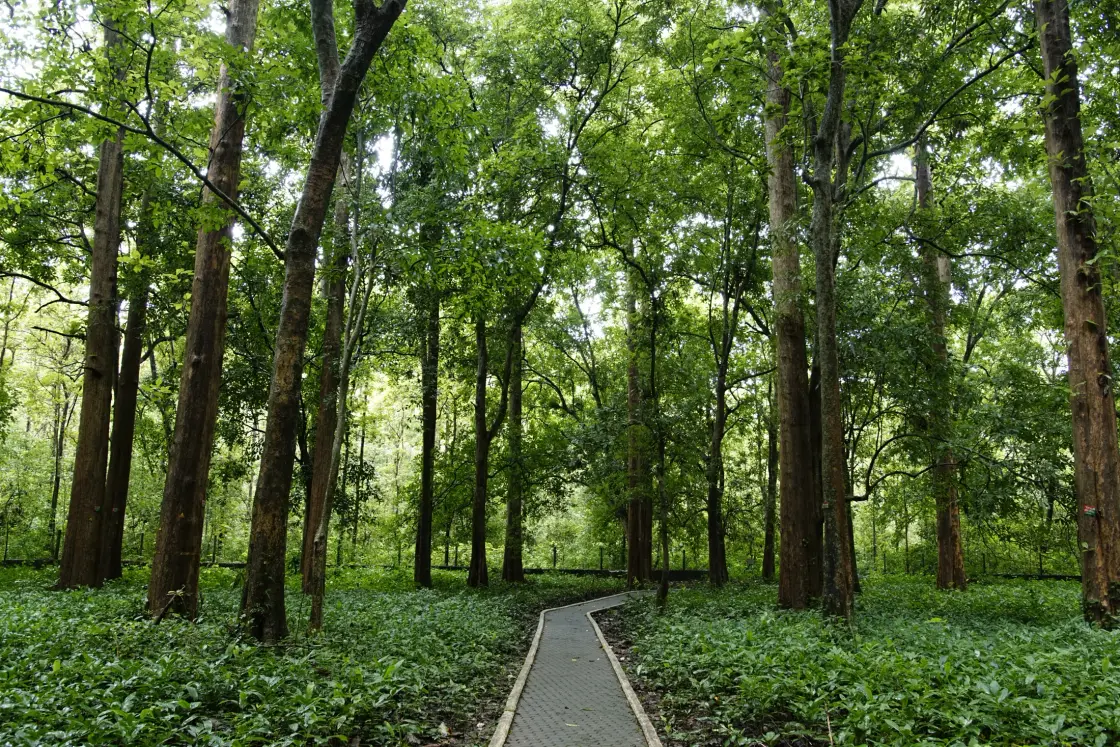
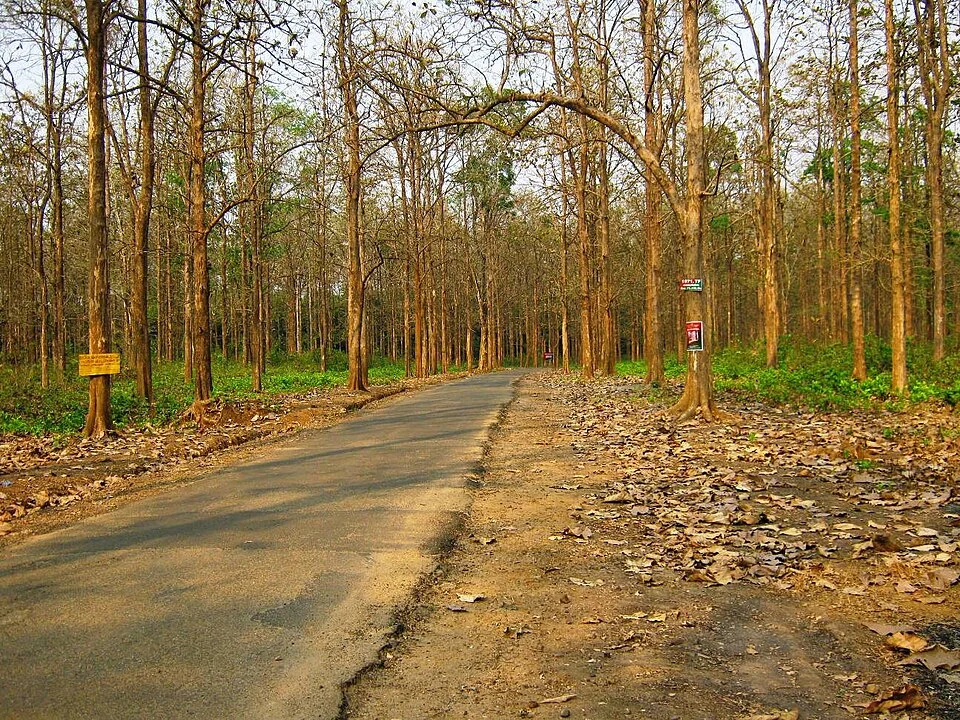
The most striking feature of Conolly’s Plot is vertical: long teak trunks rise through a canopy that can make the planted landscape feel much larger than the path beneath it. The small labels on those trunks bring a second scale into view—the individual tree as a measured and remembered specimen.
The story of Conolly’s Plot
A photograph of a winding path between the trees reveals two different kinds of order. The paved route turns around the trunks, while the trunks themselves rise with the characteristic straightness that made teak valuable as timber. This is an appropriate place to think about the difference between appreciating a tree’s living form and understanding the economic purpose for which a plantation was created.
The name on the sign is only part of the history. Conolly was the Malabar collector associated with the initiative, but official accounts also recognise Chathu Menon’s practical work in raising and maintaining teak. Establishing a plantation required more than assigning land: seeds had to germinate, young plants had to survive and the growing stand had to be tended over time.
That distinction matters when the site is reduced to a claim about being the oldest. Its value lies in the evidence of an early, sustained effort to cultivate a timber species systematically. The broad 1840s context is more useful than treating every published year as if it referred to one single planting ceremony. Different accounts discuss early trials, planted stands and the later preserved plot.
A labelled tree makes this history tangible. An archival photograph records Tree No. 23 with a sign giving measurements as of 2008. The date is essential: a number on a living tree is a measurement made at a particular time, not a timeless fact. A visitor can use such labels to notice the tree’s girth and vertical growth without turning an old figure into today’s size.
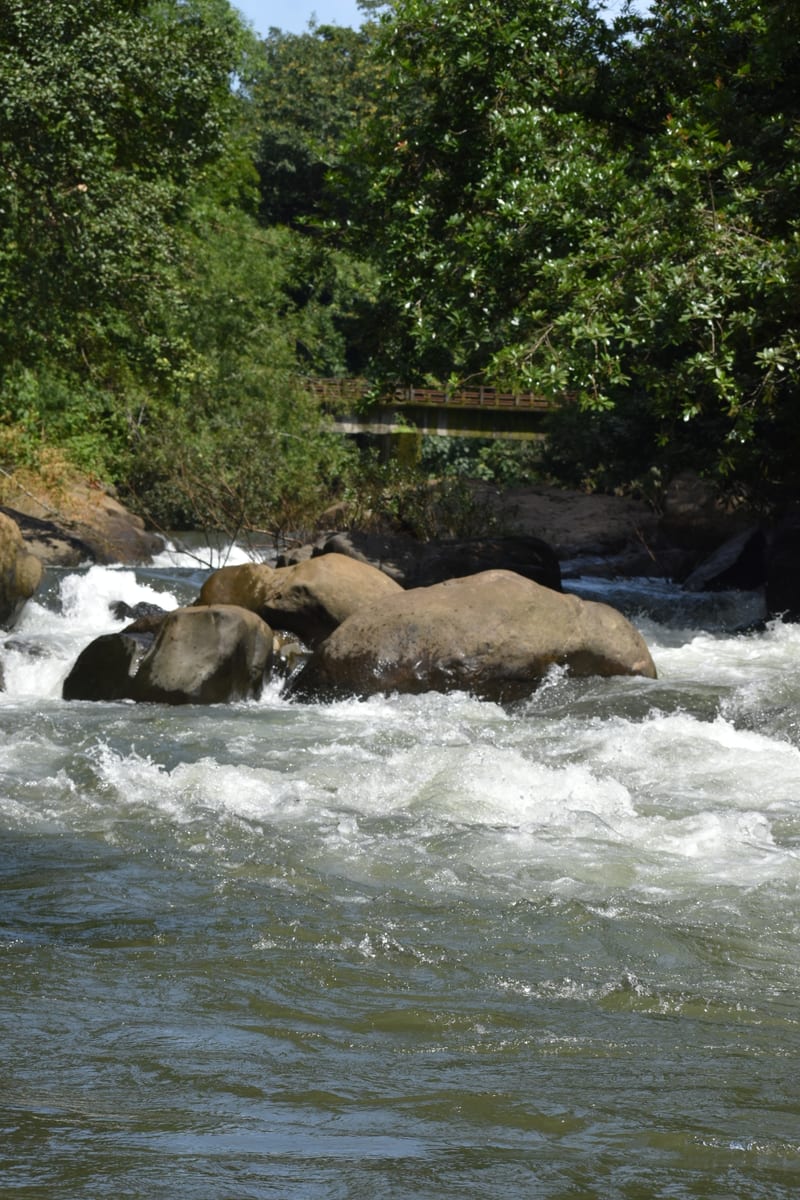
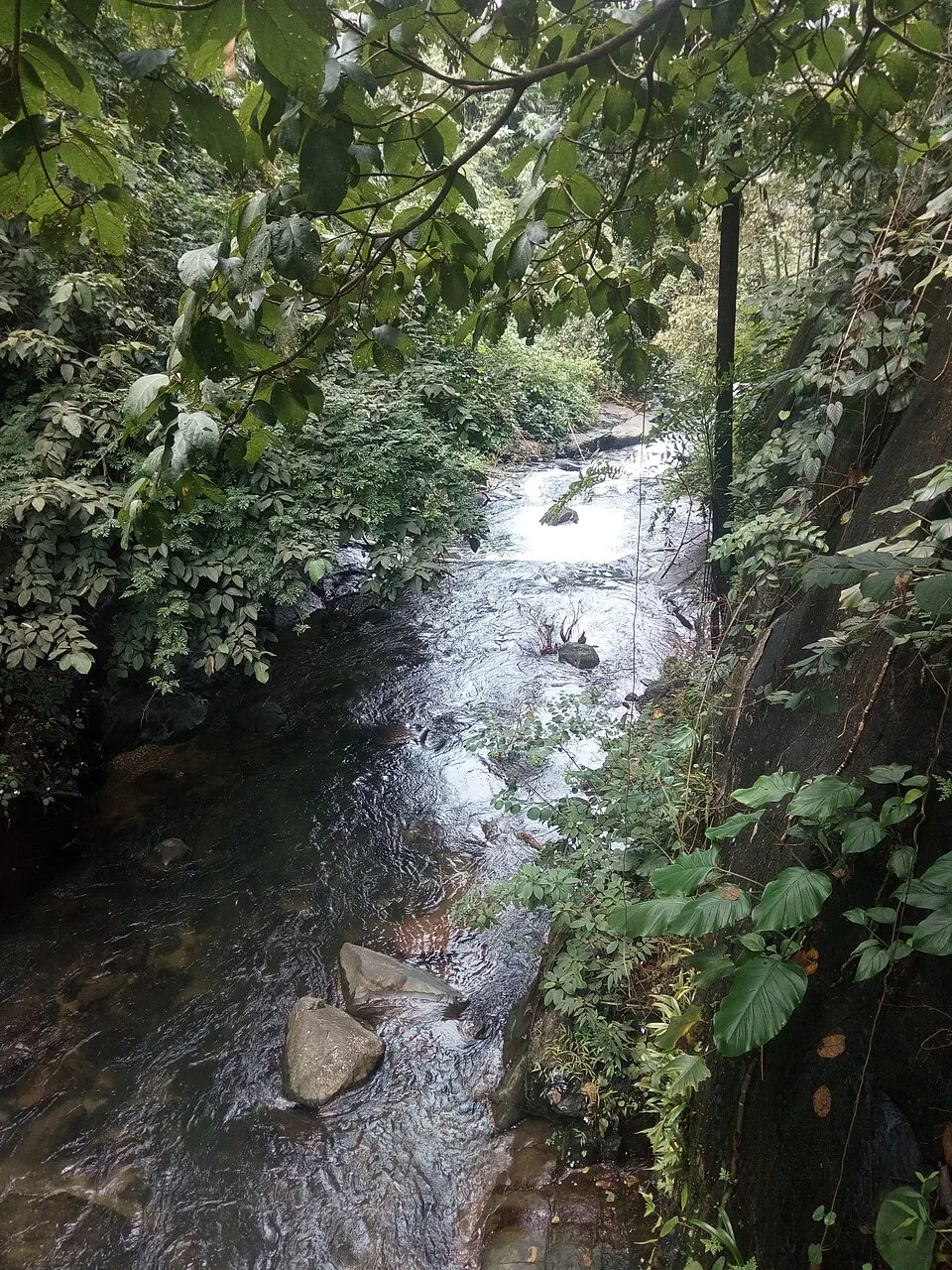
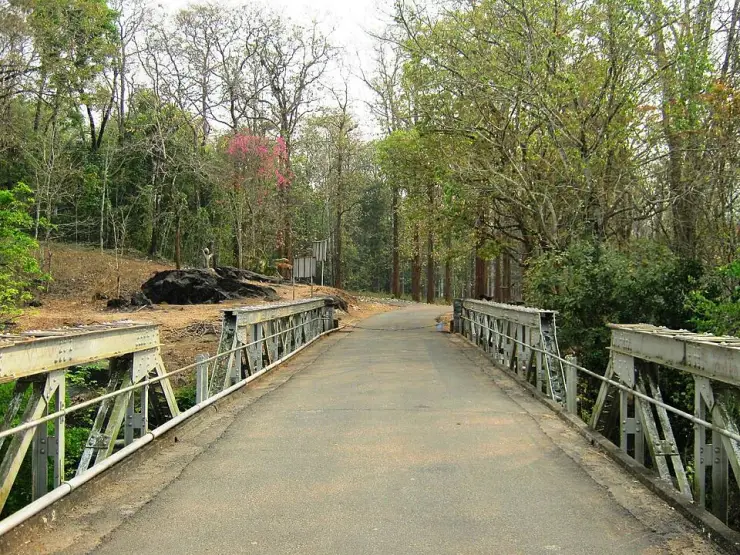
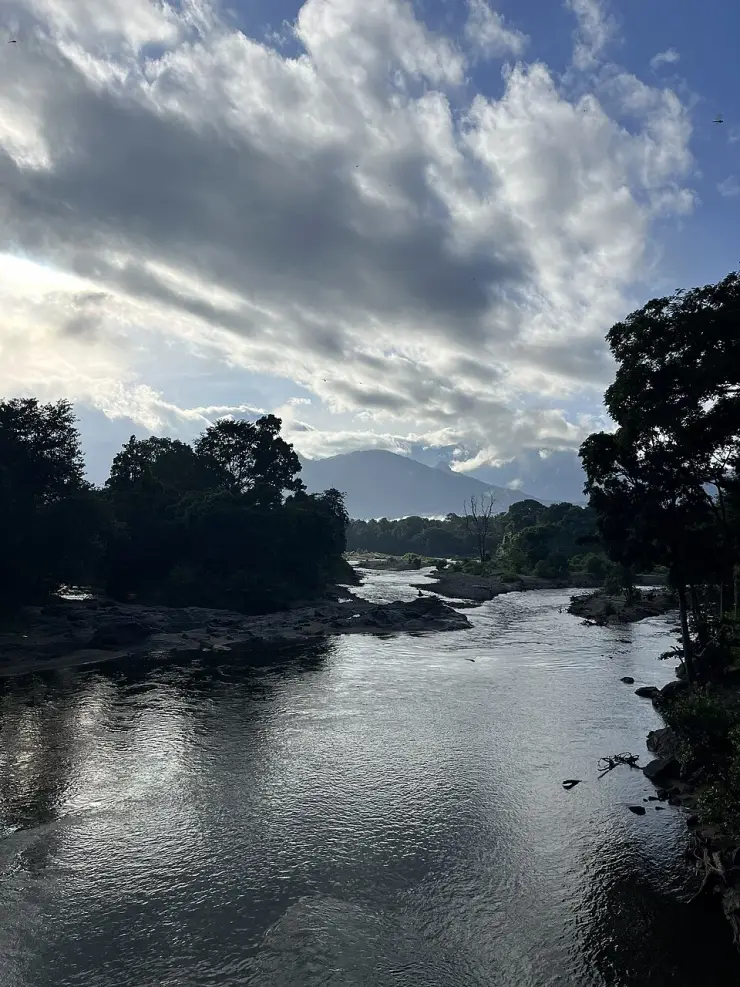
The river also belongs to the story. Kerala Tourism places the plot beside the Chaliyar and a joining watercourse, while historic visitor photographs show elevated bridge access. River boundaries give the plantation a distinct setting, but they also make access vulnerable to changing conditions. The trees can remain the same heritage subject while the practical way of reaching them changes.
The present ecotourism centre broadens the visit beyond teak alone. The Forest Department describes medicinal and ornamental plants, a butterfly garden, a star-themed planting area and a canopy walkway. These are visitor collections with their own purpose. They should not be confused with the original teak stand or used to imply that every tree beside a modern path dates from the nineteenth century.
The canopy walkway offers a different way of observing a wooded setting. From an elevated route, leaves and branches become nearer features rather than a ceiling far above the ground. Its usefulness is in changing the level of observation. It is not evidence that the older suspension bridge across the river has reopened, and the two structures should not be described interchangeably.
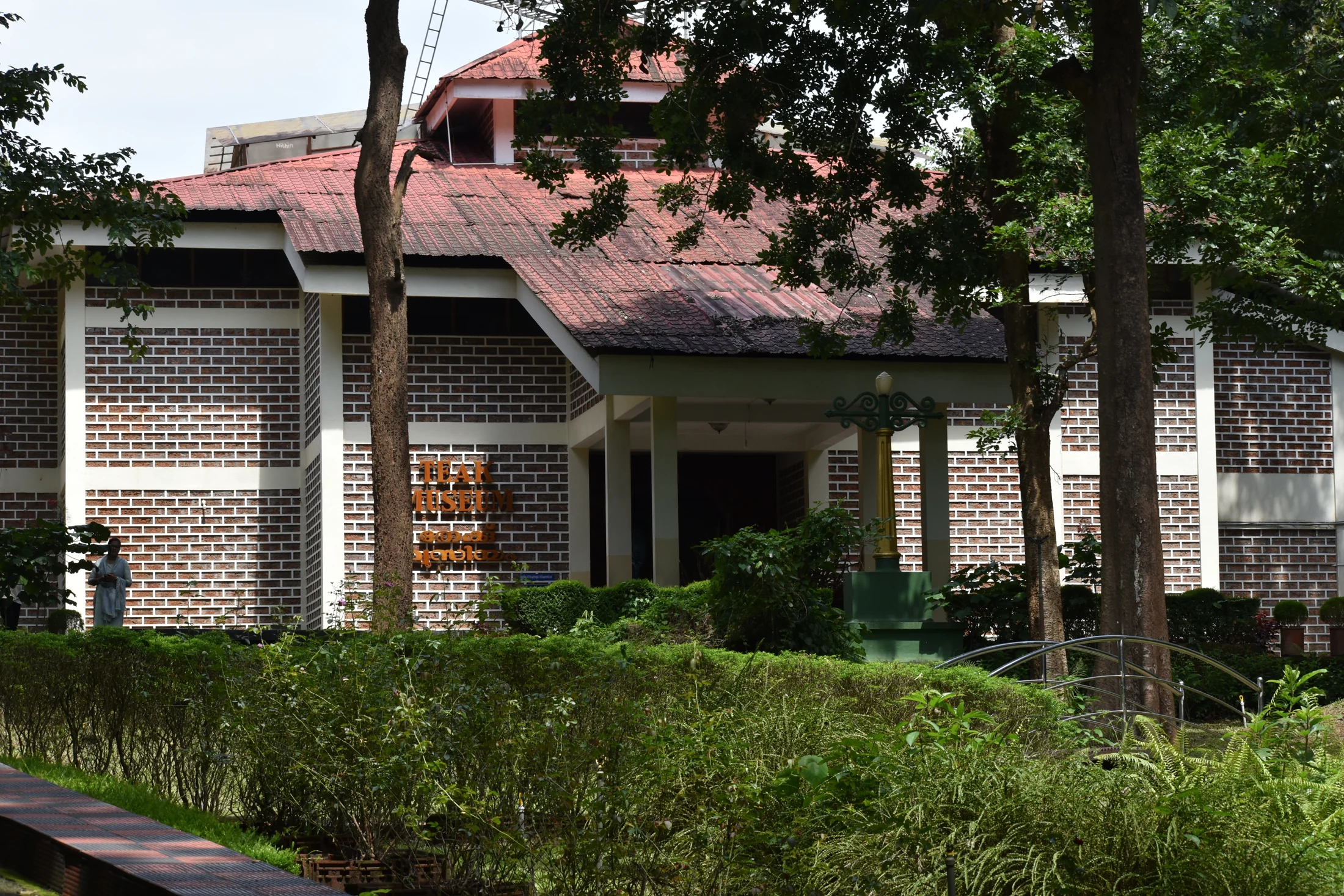
A second visit to the Teak Museum can answer questions left by the trees. At the KFRI campus, roots, logs, timber products and displays of propagation explain processes that are difficult to see in a standing plantation. Conolly’s Plot supplies the living landscape; the museum gives the species a wider material and scientific context. Each can be enjoyed on its own, but keeping their addresses distinct makes the pairing work.
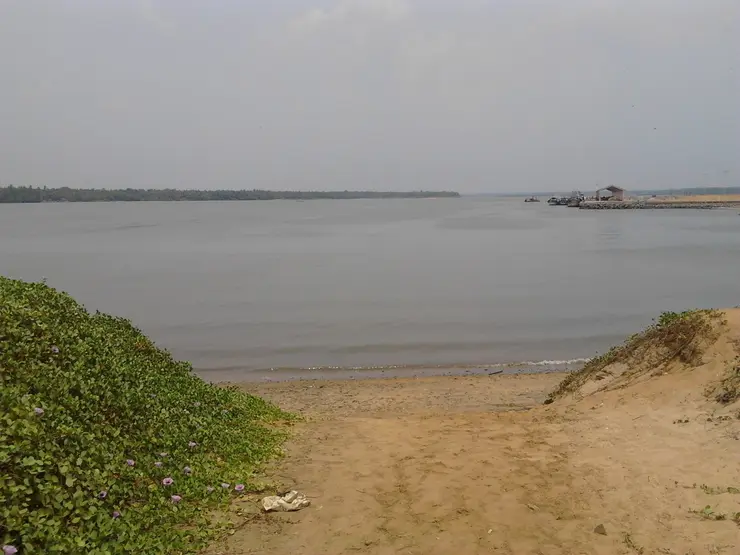
The river junction helps explain the plot’s shape. Kerala Tourism identifies the Chaliyar and Kurinjipuzha as two of its boundaries and places their meeting at the edge of the plantation. A riverbank view consequently tells a different part of the story from a close portrait of a numbered tree: one shows the land’s limits, the other an individual within the stand. Neither requires treating the river as a swimming area or the opposite bank as freely accessible.
For a child or a first-time visitor, a useful comparison is the trunk, the leaf canopy and the label. The trunk makes the timber’s scale tangible, the canopy shows the living growth above it, and the label connects one specimen to a system of observation. At the separate museum, a root display adds the part normally hidden below ground. Together these views turn the broad word ‘teak’ into a whole tree with different structures and uses, without requiring an expert to identify every neighbouring plant.
The plantation's early nursery work was experimental. The Forest Department's history describes unsuccessful attempts before Chathu Menon raised seedlings using treated seed. It then records planting young material into prepared pits and later thinning the growing stand. Those are separate operations, requiring attention at different stages of a tree's life. A mature straight trunk hides this long sequence of decisions. Looking at the stand with the nursery in mind restores some of the labour that a collector's name alone cannot convey.
The department records the start of thinning under Chathu Menon in 1854. In a planted stand, removing selected trees gives the retained trees more growing space. The gaps therefore belong to the plantation's management history; they need not represent a failed planting or an unfinished row. A preserved heritage plot has a different present purpose from a commercial stand approaching harvest, so its modern care should not be inferred from a nineteenth-century thinning schedule.
Nilambur's forestry history continued beyond the first successful planting. The department dates the division's first working plan to 1894. A working plan moves the discussion from individual trees to the management of a larger forest area over time. This gives a useful distinction while visiting: the numbered tree is one observed specimen, Conolly's Plot is a particular preserved stand, and Nilambur Forest Division covers a much broader administrative landscape. A fact about one scale does not describe every tree at the others.
The timber purpose also complicates a purely celebratory reading of the site. Plantation establishment sought a continuing supply of valuable wood; it was not the same project as protecting a diverse forest without harvesting. The preserved trees now allow visitors to examine that history in a living setting. Appreciating their size can sit alongside questions about why they were planted, whose practical work made them survive and how a single-species crop differs from the surrounding forest vegetation.
Carry those questions into the separate Teak Museum if making both visits. Its seed, propagation and thinning displays explain the operations named in the plantation history, while the timber objects show the demand behind them. At the plot, the useful final comparison is between the retained old trees and the younger planting collections within the present visitor centre. Both are living plants, but their dates and purposes differ. Reading a label carefully is the simplest way to keep those histories attached to the right specimen.