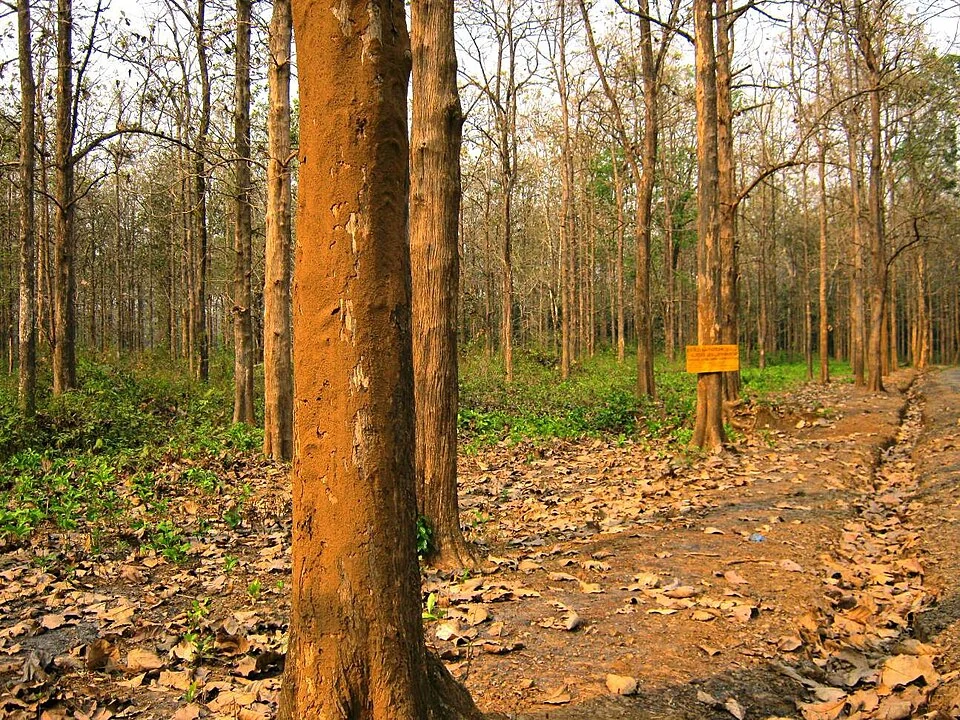
Tall trunks rise above a brown carpet of fallen leaves, with green growth closer to the ground. A small yellow board stands beside the approach. This Nedumkayam photograph is bright and relatively open between the stems, a useful corrective to the expectation that every place called rainforest must look dark, wet and densely green at every moment.
The destination name is larger than one frame
Nedumkayam’s visitor area includes tree-lined roads, clearings, riverbanks and a history of teak management. A single label cannot describe every surface encountered along that approach. The forest’s variety becomes clearer when the visitor notices these differences instead of looking only for an image already imagined before arrival.
The fallen leaves are part of the photographed season. They change the colour of the ground and make the lower vegetation stand out. A drier-looking frame should not be dismissed as the wrong destination simply because a promotional photograph from another period is greener.
At the same time, do not identify every straight trunk as teak without a reliable explanation. The local account establishes teak plantations as part of the setting; an individual tree still needs its own identification. A guide or readable species board can connect the general history with the particular tree in front of the group.
The road records human use
The approach is not an accidental gap in untouched woodland. Nedumkayam contains a bridge, depot, rest house and former elephant kraal associated with organised forest work. Seeing a road among the trees is therefore consistent with the place’s history.
That history offers a useful distinction between planted or managed stands and the wider forest landscape. They can exist within the same broad destination while differing in structure and purpose. A visitor need not collapse them into one undifferentiated green background.
Keep observation to the permitted circuit. A neat-looking line between trunks or a side track can lead away from public access. The openness of the understory does not establish permission to walk wherever the ground appears easy.
Look for changes along a short visit
Compare the tree-lined approach with a bamboo clump, an open clearing or the wooded riverbank. Differences in light and density can be noticed without travelling deep into the reserve. A modest sightseeing circuit can therefore support a meaningful forest observation.
The current Forest Department product is sightseeing. Older descriptions of a longer waterfall trek should not be used to extend that circuit independently. If a separate walk is desired, obtain its actual permission and guiding arrangement.
The Karulai Village Office account explains the forestry setting, while the current ecotourism service provides the operating context. Together they make room for a forest that is historically used, seasonally changing and more varied than a single promotional adjective.
Plan the visit: Nedumkayam rainforest trek.