A city of two and a half million people is named after a pond, and nobody can agree which pond, or why.
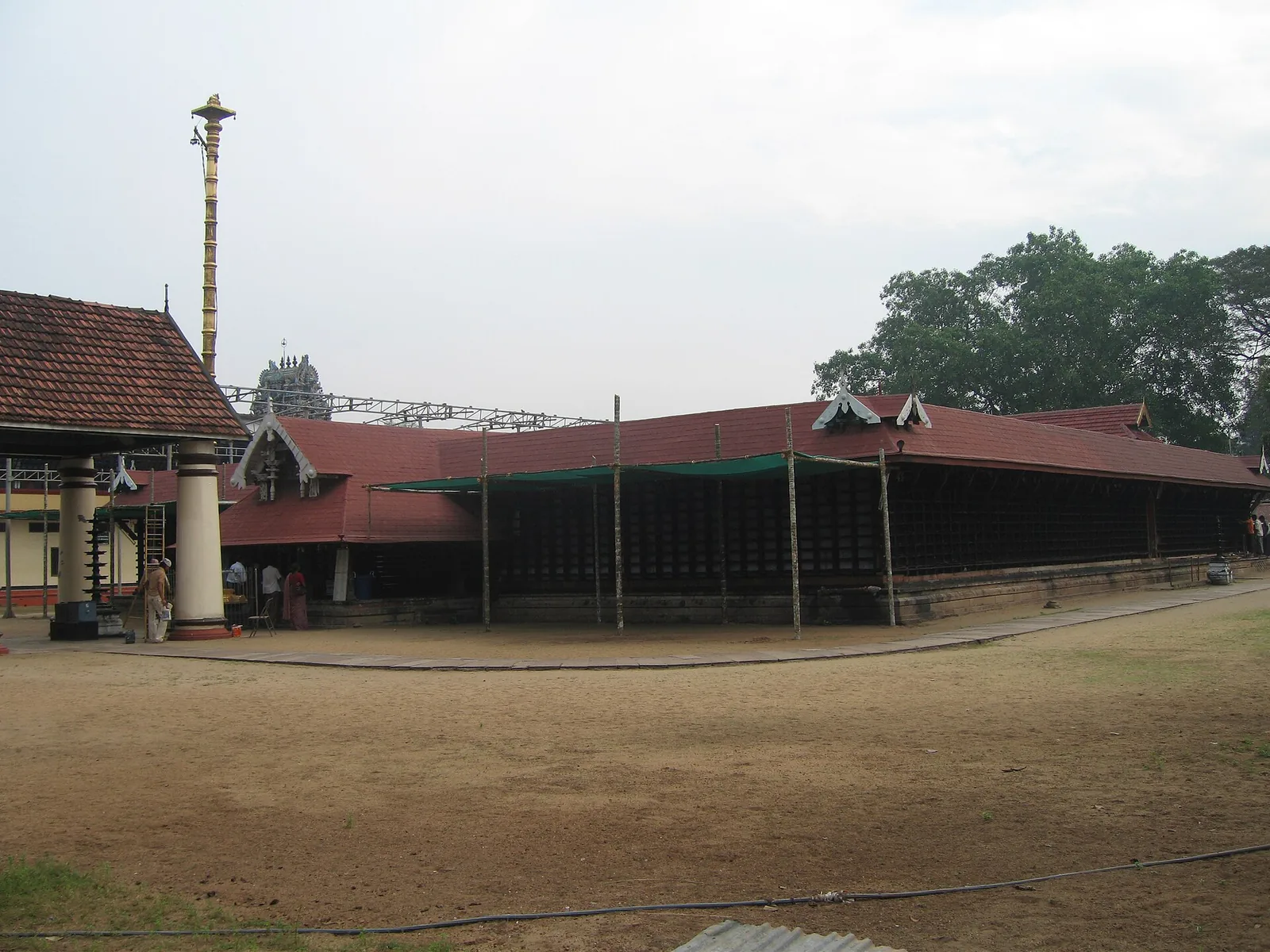
The pond in question is beside Ernakulathappan Temple, the presiding Shiva shrine of mainland Kochi. Every derivation of the name Ernakulam ends in “kulam”, which is simply Malayalam for a pond or tank. It is everything in front of that syllable that is contested — and there are four candidates, not the two that most accounts, ours included until now, bother to mention.
One: the serpent-sage
The temple’s own story, and by far the most repeated. A devotee — Devala, in some tellings — was cursed to carry the body of a serpent. Dragging himself through the forest that then covered this shore, he found a Shiva lingam sunk in the mud and settled there, half-snake, in penance. Villagers who caught sight of him called him Rishi Nagam, the saint-serpent.
Shiva and Parvati appeared and told him to bathe in the pond beside the lingam. He immersed himself, the curse lifted, and the place became “Rishinagakulam” — the pond of the serpent-sage — from which, worn down over centuries of speech, Ernakulam is said to descend. The deity was accordingly Rishinagakulathappan before he was Ernakulathappan.
Two: a Tamil word for Shiva
The second reading gives “Erayanarkulam” — the pond of Erayanar, Erayanar being a name for Shiva. That looks tidy, but there is a wrinkle in it worth noticing: Erayanar is a Tamil address, used in Chennai rather than in Kerala.
If that derivation is right, the name of Kerala’s commercial capital is a Tamil import that travelled up the coast and stuck. For a port that has been absorbing Tamil, Kannada, Arab, Jewish, Portuguese and Dutch arrivals for two thousand years, that is not implausible — it may be the least surprising thing on this list.
Three and four: mud, and water that stays
Now the two nobody puts on a signboard.
Komattil Achutha Menon derived the name from “erangiyal”, a type of mud. On a shore that was still swamp within living memory of the temple’s own reconstruction, that is not a frivolous suggestion.
And the fourth gives “Eere Naal Kulam”, the pond that always has water — a plain description of a tank that does not dry out through the hot months.
- Rishinagakulam — the pond of the serpent-sage. The temple’s own legend.
- Erayanarkulam — the pond of Erayanar, a Tamil name for Shiva.
- Erangiyal — a type of mud. Proposed by Komattil Achutha Menon.
- Eere Naal Kulam — the pond that always has water.
What the shape of the list tells you
Look at the four together. Two of them are miracles and two of them are descriptions of wet ground.
Place-names, in general, are the second kind. Settlements get named for what is physically there — the ford, the hill, the pond that does not fail in March — because those are the names that are useful to say. Sacred etymologies tend to arrive later, when the original word has worn past recognition and somebody needs to explain what it must have meant.
That is not a debunking, and we would not tell you the serpent-sage is wrong. It is a caution about the direction of travel. A pond that always holds water is exactly the sort of thing a town on a swampy shore names itself after, and the legend is exactly the sort of thing that grows on top of a name nobody can parse any more. Both may be true in sequence.
The temple says its best image is not its oldest
While you are unpicking things: the shrine contains a second, quieter claim that almost no visitor account repeats.
Inside the compound stands a Kirathamoorthy shrine — Shiva as the Kirata, the tribal hunter who fought Arjuna during his forest penance in the Mahabharata — and the lingam there is held by tradition to be the one Arjuna himself worshipped. Which would make it older than the presiding deity in the main sanctum.
Temples do not usually volunteer that their headline image is the junior one. It is unsignposted, and you will have to ask. Like the name stories, it is tradition rather than record, and we tell it as such.
And the building is younger than any of it
One firm date, to anchor a page full of soft ones. The Cochin Diwan Edakkunni Sankara Warrier found the temple dilapidated and began rebuilding it in 1842; the new complex opened for worship in 1846, with two gopura mandapams in traditional Kerala style, and the same patronage raised it to the rank of a royal temple of the Kochi kingdom.
So the fabric a visitor walks into is a Victorian-era reconstruction, whatever the age of the site beneath it. Do not read antiquity into the timber.
One last thing to notice while you are in there, because nothing labels it: alongside the Kerala-style shrines the enclosure holds a Murugan temple built in the Tamil manner and a Hanuman temple in the Kannada manner, with a banyan of some two hundred years beside the latter. A port drew in Tamil and Kannada communities, they wanted their gods in their own idiom, and the city’s principal temple made room inside its own wall. The etymology argument about whether Ernakulam is a Tamil word or a Malayalam one is, in a sense, settled physically in that courtyard.
Frequently asked questions
What does the name Ernakulam mean?
Nobody is certain. Four derivations circulate: Rishinagakulam, the pond of the serpent-sage, from the temple legend; Erayanarkulam, the pond of Erayanar, a Tamil name for Shiva; erangiyal, a type of mud, proposed by Komattil Achutha Menon; and Eere Naal Kulam, the pond that always has water. All four end in kulam, meaning pond. The disagreement is entirely about what precedes it.
Which derivation is most likely?
We would not name a winner, but it is worth noticing that two of the four are miracles and two are plain descriptions of wet ground. Place-names usually begin as descriptions and acquire sacred explanations later, once the original word has worn past recognition. That argues mildly for the pond-that-never-dries or the mud, with the legend growing on top. It does not disprove the legend.
Is Erayanar really a Tamil word?
It is a Tamil address for Shiva, associated with Chennai rather than with Kerala, which is the interesting part of that derivation — it would make the name of Kerala’s commercial capital a Tamil import carried up the coast. Given how much else in Kochi arrived by sea or road from elsewhere, that would be entirely in character.
What is the Kirathamoorthy shrine?
A shrine within the compound to Shiva as the Kirata, the tribal hunter of the Mahabharata who fought Arjuna during his penance. Temple tradition holds that its lingam is the one Arjuna worshipped, making it older than the presiding deity of the main sanctum. It is not signposted; ask if you want to find it.
How old is the present temple building?
The current complex dates from a reconstruction begun in 1842 by the Cochin Diwan Edakkunni Sankara Warrier and opened for worship in 1846, when two gopura mandapams were added and the temple was raised to royal status within the Kochi kingdom. The site and the deity are held to be far older; the building is not.
Why are there Tamil and Kannada style temples inside a Kerala temple?
Because Kochi was a working port. Tamil and Kannada communities settled here in numbers, wanted their own deities in their own architectural idiom, and the city’s principal temple accommodated them within its enclosure — a Murugan shrine in Tamil style and a Hanuman shrine in Kannada style, the latter beside a banyan of around two hundred years. It is one of the clearest physical records of the city’s mixed population, and there is no interpretation of it on site.