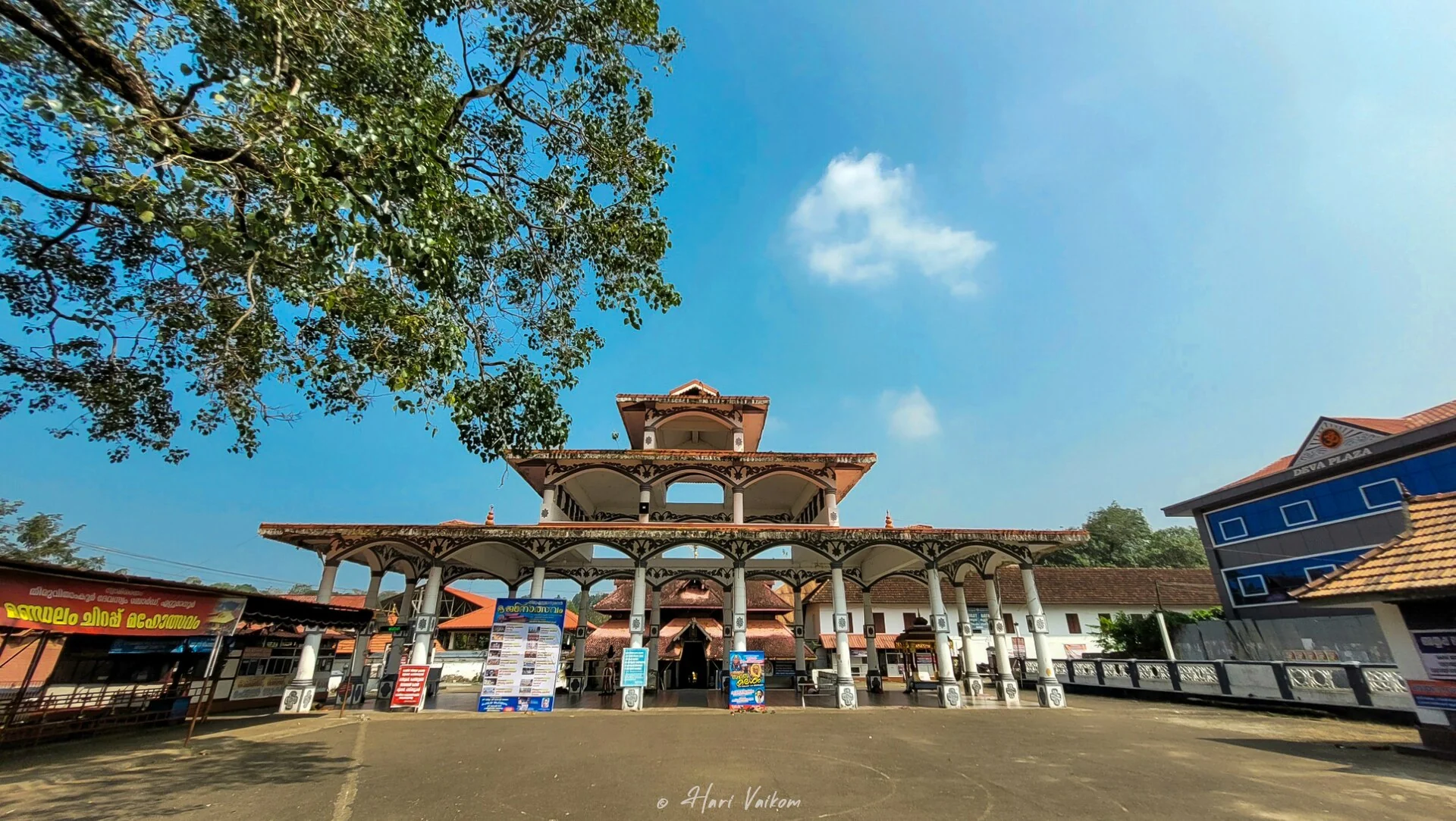
The Ettumanoor Mahadeva temple, an ancient Shiva shrine near Kottayam where legend says the Pandavas and the sage Vyasa once worshipped, is famous for two things kept mostly out of sight: a set of golden elephants, and a mural regarded as one of the finest in India.
The ezharaponnana
Ezharaponnana means “the seven-and-a-half golden elephants.” They are seven small elephants about two feet high and one more only a foot tall — hence “seven and a half” — carved from jackfruit wood and covered in some thirteen kilograms of gold. For most of the year they stay in the temple vault; only once a year, at the midnight of the eighth day of the festival, are they brought out for the devotees to see.
A king’s offering
Tradition attributes the golden elephants to Marthanda Varma, the ruler who founded the kingdom of Travancore. The reason is told in different ways: some say the elephants were an offering of penance for damage done to the temple during Travancore’s annexation of the Thekkumkoor kingdom; others that they were promised in a moment of danger, as the armies of Tipu Sultan pressed on Travancore’s frontier.
The dancing Shiva on the wall
The temple’s other treasure hangs in plain sight. Its Pradosha Nritham fresco — Shiva in his cosmic dance — is counted among the great wall paintings of India, a masterpiece of the Kerala mural tradition in its rich ochres and greens. The temple’s Arattu festival, around Thiruvathira in February–March, is when the shrine and its art are at their most alive.
Visiting Ettumanoor
The temple stands just north of Kottayam town on the road to Ernakulam. Timings and the dress code are on the Ettumanoor place page; more of the district is on the Kottayam hub.
Frequently asked questions
What is the ezharaponnana at Ettumanoor?
It is a set of seven-and-a-half golden elephants — seven about two feet tall and one about a foot tall — made of jackfruit wood covered in gold, kept in the temple vault and shown to devotees once a year during the festival.
Who gave the golden elephants to Ettumanoor?
Tradition credits Marthanda Varma, the founder of Travancore. The reason is told variously as a penance for wartime damage to the temple, or a vow made when Tipu Sultan’s army threatened Travancore.
Why is Ettumanoor temple famous for its murals?
Its Pradosha Nritham fresco, depicting Shiva’s cosmic dance, is considered one of the finest examples of Kerala mural art and among the great wall paintings of India.