A small area contains several histories
A visit to Hosdurg can bring a fort, a Shiva temple and an ashram into the same town itinerary. They are close enough to be discussed together, but they are not three names for one attraction. Their histories and visitor expectations differ.
Hosdurg is the Nayaka-associated fortification on the low hill in Kanhangad. Its rounded bastion and ramp are the focus of the heritage stop. The nearby religious institutions should enter the plan under their own names, with the approach and admission appropriate to each.
Karpooreswara has a specific Nayaka connection
Kerala Tourism’s Malabar account identifies the Poonkavanam Karpooreswara Temple to the southwest of the fort and states that the Nayakas also built it. The temple is dedicated to Shiva. This gives a concrete historical and geographical link between the fort visit and a separate place of worship.
The connection can help explain the locality, but it does not make the temple an open annex of the fort. A person coming for masonry and photographs needs to adjust to a functioning shrine’s dress, access and worship requirements. Follow the temple’s own directions rather than assuming the fort’s conditions apply.
Nithyananda Ashram belongs to another story
The same tourism account identifies Nithyananda Ashram nearby as a spiritual centre. Its presence adds a further layer to Kanhangad’s cultural landscape. It should be approached as an institution with its own activities and spaces, not as the fort’s interpretation centre.
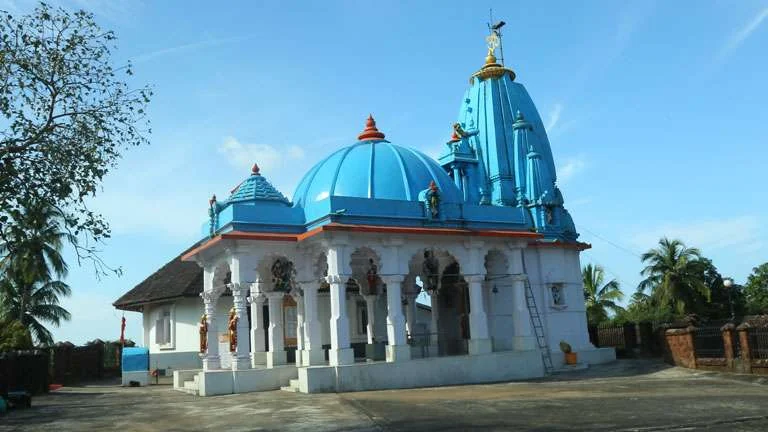
Kerala Tourism’s photograph shows the ashram’s temple with blue domes and a taller blue tower above a white colonnaded base. Its form is quite different from Hosdurg’s rounded laterite bastion. That visible distinction helps orient the visit: the temple belongs to the religious institution, while the fort remains a separate heritage stop.
Tourism descriptions of the wider locality also mention caves. The label requires care: laterite openings described near a fort bastion and caves associated with a spiritual institution should not automatically become one military tunnel network. Use the institution’s own interpretation for the spaces it manages.
That distinction improves the itinerary as well as the history. Agree which place you intend to enter and where the vehicle will meet you afterwards. A general instruction to wait “at the caves” is less useful than the name of the actual institution or fort approach.
Keep the town in the plan
Kanhangad railway station and bus stand provide the transport context for these visits. The final town journey remains separate from arrival by train or intercity bus. Hosdurg’s mapped road approach is a practical first reference when the fort is the initial stop.
Allow the interests of the group to shape the sequence. Someone focused on the fort’s form may spend their time below the ramp; a devotee may give the temple or ashram a longer, separate visit. The locality supports both purposes without requiring every visitor to follow an invented single circuit.
The result is a clearer picture of Kanhangad: a Nayaka fort, a related Shiva temple and a neighbouring spiritual centre, held together by geography while retaining their own identities.
Sources: Kerala Tourism: Hosdurg Fort, the state tourism historical account and DTPC Kasaragod. Kerala Tourism: Hosdurg in Malabar. Kerala Tourism: Nithyananda Ashram.
Plan the visit: Hosdurg Fort.