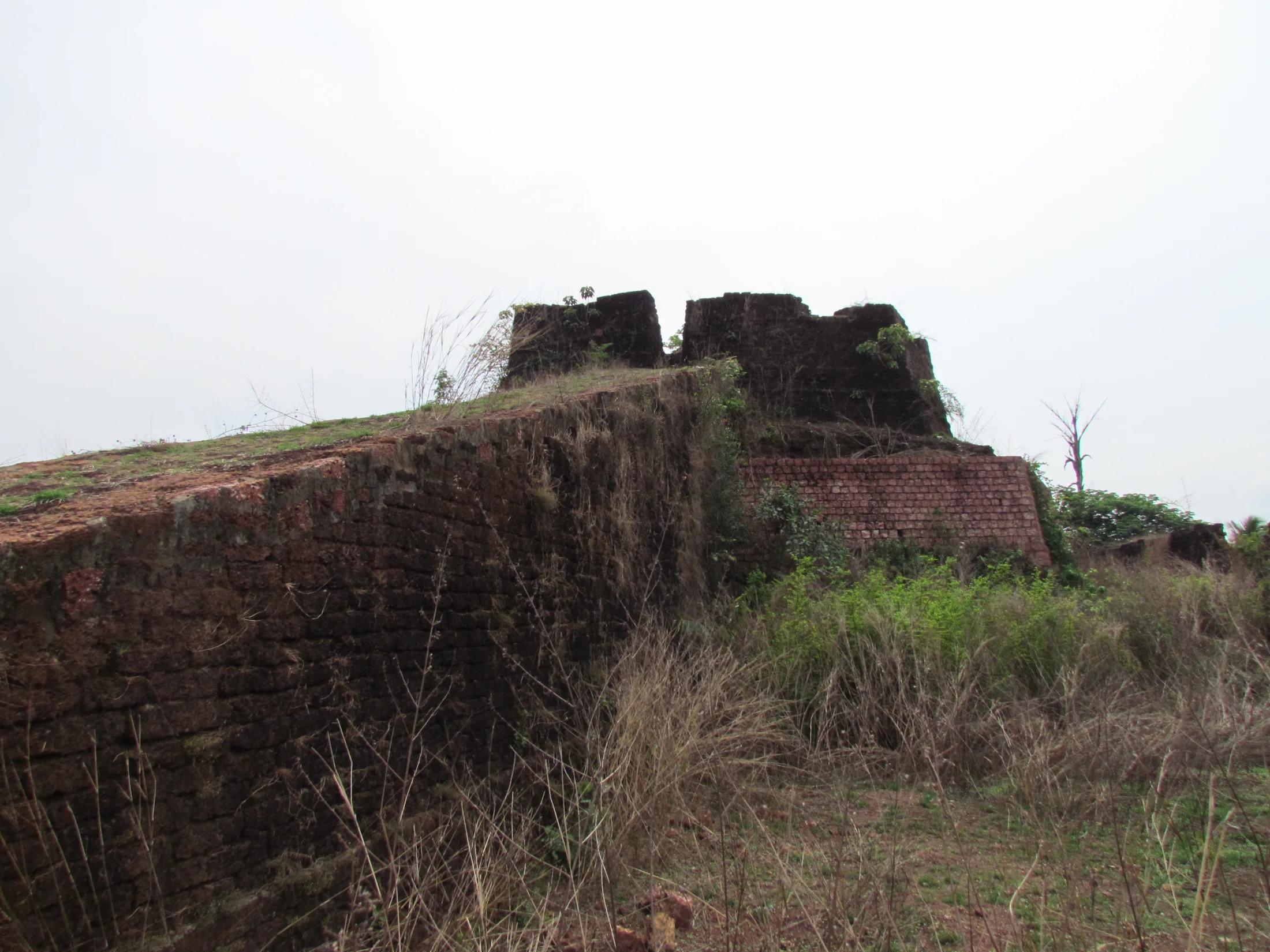
Three names lead to one fort
Hosdurg Fort is also called Kanhangad Fort, after the town in which it stands. The name Hosdurg means “new fort”; the Malayalam name Puthiya Kotta expresses the same idea. These names identify a particular surviving fortification on a low hill, while Hosdurg also names a wider locality and administrative area.
For the visitor, the distinction is practical. A direction to Hosdurg alone can stop at the neighbourhood; a direction to the fort should end at its street-side approach. The rounded bastion and rising ramp give the destination a visible identity once you arrive.
The Nayakas connect it to a larger regional history
Kerala Tourism associates the fort with Somasekhara Nayaka of the Ikkeri dynasty. Its historical account places this within the extension of Bednur Nayaka control into territory earlier associated with the Kolathiri chieftains. DTPC likewise attributes the structure to Somasekhara Nayaka of the Keladi Nayakas.
Ikkeri, Keladi and Bednur appear in accounts of this ruling house and its centres. Seeing the terms together helps a reader recognise the shared historical setting rather than assume that every differently named account describes a separate builder.
The surviving walls give that regional history a local form. The subject is a fort in Kanhangad, connected to a wider pattern of Nayaka fortification along the northern Kerala coast. A precise construction year is less useful here than understanding that relationship and looking closely at what remains.
Compare a feature, not an entire visitor experience
The state tourism account notes similarities between Hosdurg’s bastions and elevated observation structures and those at other regional forts, including Bekal and Kumbala. The rounded defensive form is therefore a useful feature to compare on a wider heritage journey.
Hosdurg’s present setting is distinctive: a surviving group of structures within a working town, with roads and later community uses nearby. Bekal’s sea-edge views and larger visitor circuit belong to Bekal. Carrying those expectations to Hosdurg can obscure the smaller fort’s own relationship with Kanhangad.
Let the name sharpen the visit
Begin below the raised masonry and look at how the ramp leads towards the bastion. Then turn towards the surrounding town. The fort is both an object to examine and a landmark that helped give the locality its name.
This is the value of understanding “new fort” before arriving. The phrase turns a name on a map into a question about regional power, defensive building and the survival of a historic structure inside a modern settlement. The answer is visible in a concentrated form at Hosdurg.
Sources: Kerala Tourism: Hosdurg Fort, the state tourism historical account and DTPC Kasaragod.
Plan the visit: Hosdurg Fort.