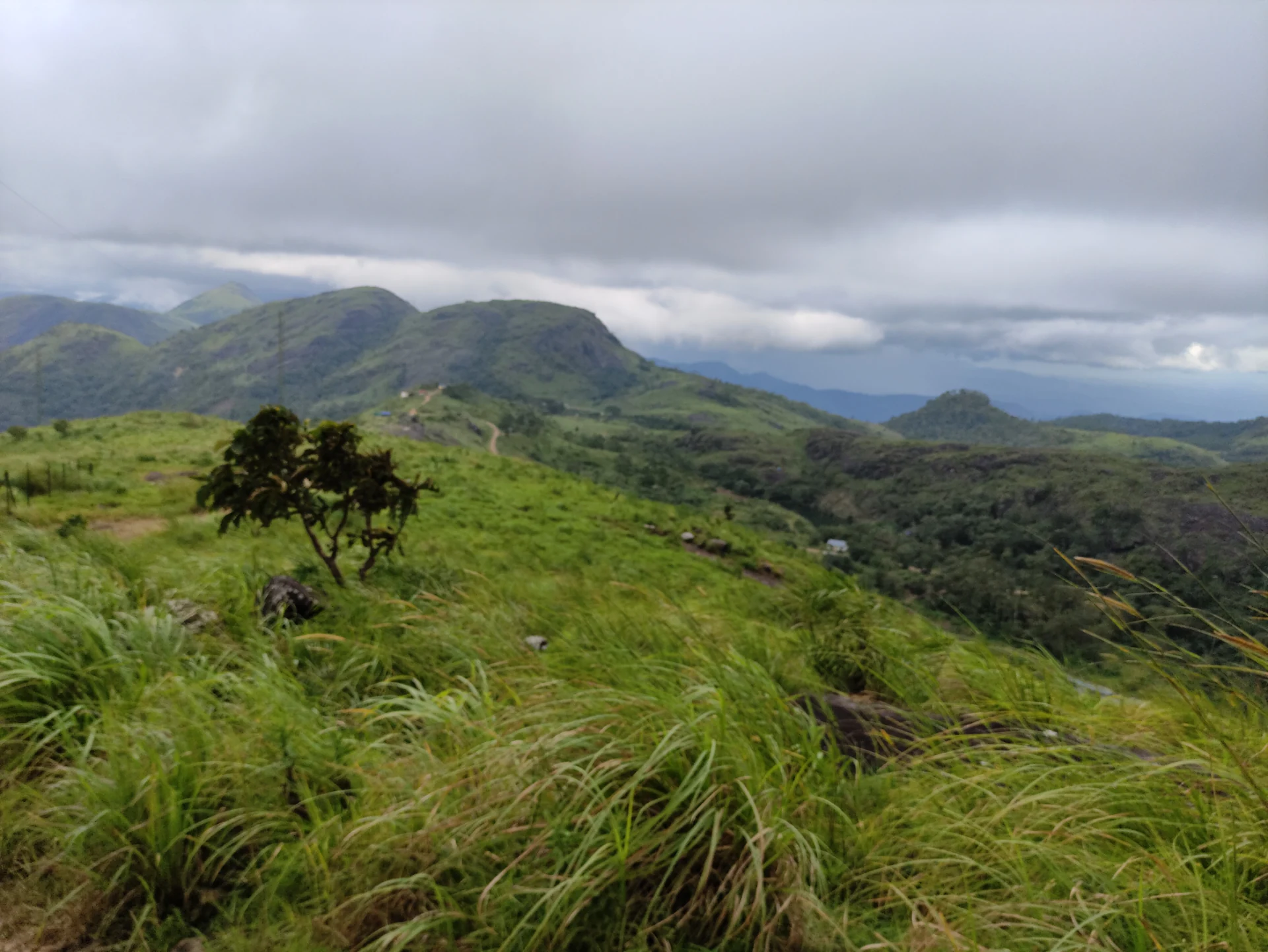
Grass-covered hills extend behind a small tree, while a track and mast remain visible in the foreground. The Ilaveezhapoonchira scene is open, but it is not a place without trees, roads or human use. That observation is a useful companion to the name tradition often repeated about the destination.
Give the valley a shape
DTPC Kottayam names Mankunnu, Kudayathoormala and Thonippara as the hills framing the Ilaveezhapoonchira landscape. These names provide more structure than the general phrase hill viewpoint. They direct attention to a valley enclosed by several forms rather than to a single isolated summit.
Ask a knowledgeable local guide to identify the actual hills from the permitted viewing position. A name learned from a destination article should not be assigned to the first visible peak. Mist and changing angle can alter the apparent relationship between slopes, especially when only part of the skyline is visible.
The valley’s seasonal relationship with water is also part of the district description. Rain can transform a hollow into a more water-filled scene. That is different from identifying every distant patch of water below the viewpoint as the named pool.
Keep the tradition in its own voice
The district account connects the pool with the Pandavas and Draupadi during their exile. It also explains the place name through an image of a pool or bund where leaves do not fall. These are cultural explanations attached to the landscape, not dated records of a historical visit.
The tale can enrich the experience without being turned into a claim of proof. A sheltered hollow surrounded by open high ground is a setting that invites stories about privacy, water and refuge. Understanding that appeal is different from asserting that a particular rock marks an authenticated episode from the Mahabharata.
Nor should the name explanation become an absolute botanical statement. Trees are visible within the wider landscape. The poetic image belongs to the place’s remembered account; it does not require a visitor to deny what can be seen in the photograph or on the approach.
A story is not a direction to a pond
Hearing about Draupadi’s bathing place does not authorise a descent to an unmarked hollow or establish a safe route into water. The actual walking visit remains within the locally accepted approach and viewing ground.
Keep the older narrative and present-day access side by side. One explains a cultural association; the other determines where the group can walk and return. Both can be respected without making either do the other’s job.
Read the DTPC account of Ilaveezhapoonchira for the hill names and tradition. Then use the visit to observe the valley’s real forms, including the ordinary tree, track and mast that make the landscape more specific than a legend alone.
Plan the visit: Ilaveezhapoonchira trek.