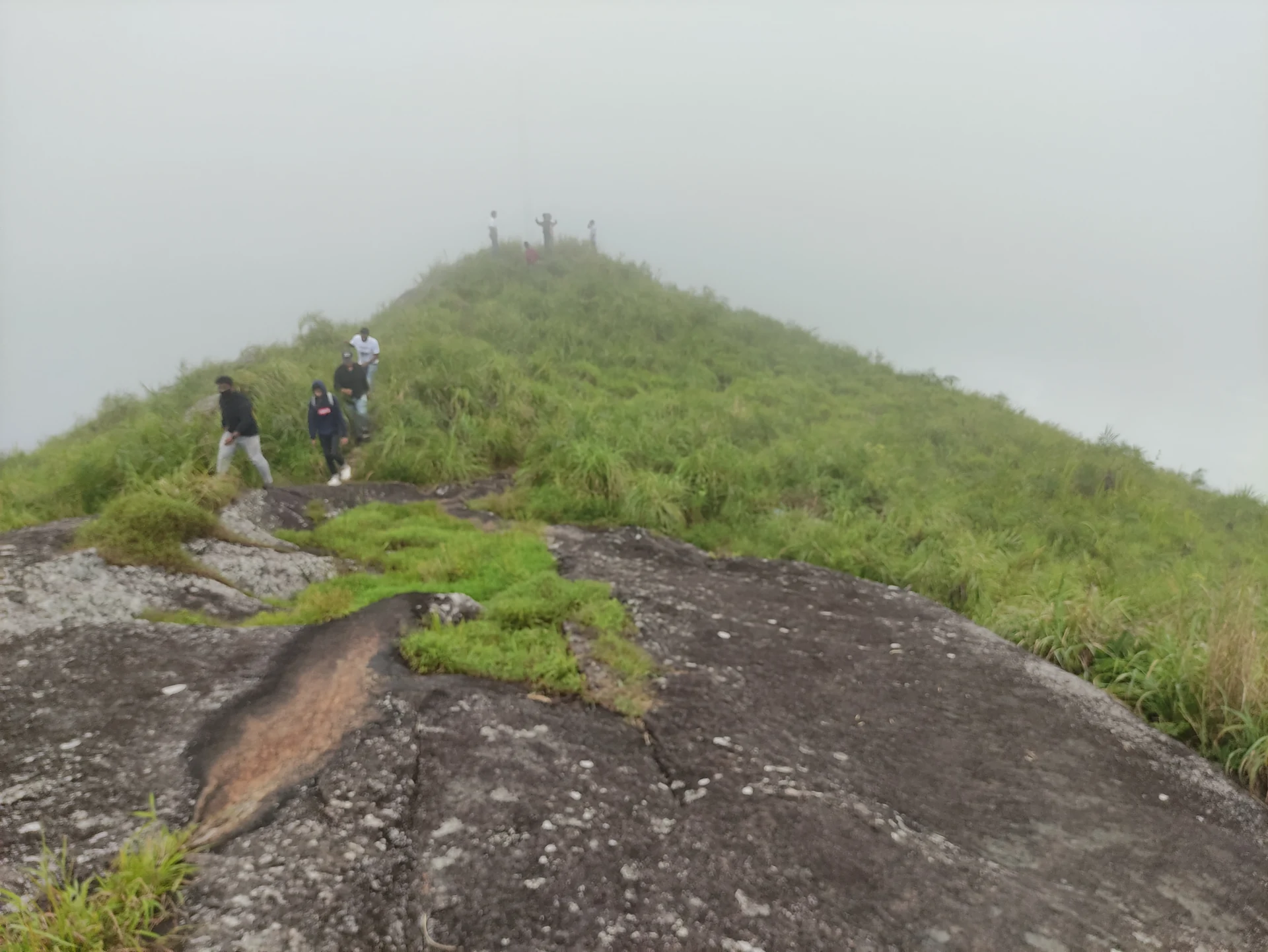
Visitors follow a narrow grassy ridge above exposed rock in an Ilaveezhapoonchira photograph. It shows the upper walking landscape, but not how each person reached it. Some visitors may have walked a longer approach; others may have used a vehicle for part of the journey. That distinction is the starting point for a realistic plan.
Choose the effort before the final approach
DTPC Kottayam describes both trekking and a jeep journey along a narrow, winding road. These are different ways of approaching the same hill landscape, not separate destinations. A jeep can reduce the length of the approach on foot, while a longer walk makes the journey itself a larger part of the outing.
Decide according to the group’s actual walking ability and the conditions on the day. The apparent closeness of a hill in a photograph does not describe the distance from the current visitor roadhead, and a short remaining distance can still involve uneven stones or sloping rock.
If using a jeep, agree what the service covers. The drop-off, waiting arrangement and return need to be clear before the group leaves the base. An ascent transfer should not be assumed to include an unscheduled late pickup from any point on the road.
A vehicle does not remove the landscape
The upper ground remains a hill setting after a jeep ride. Grass can conceal uneven edges, and rock can become slippery when wet. Someone with limited balance may need a modest viewing position even if the vehicle has removed much of the distance.
Keep that person’s needs in the decision from the beginning. It is more useful to agree a place where everyone can stop comfortably than to arrive above and discover that the last stretch is unsuitable for part of the group.
The walking option also needs a clear limit. A track continuing towards a mast or a private compound is not necessarily part of the public route. The extent of the permitted visit should come from current local arrangements, not from how far a visible road seems to continue.
Give the descent its own time
The return is a walking leg, not simply the outward journey played backwards. Sloping stone may feel more demanding going down, especially as tiredness increases or mist thickens. Keep enough time to descend without hurrying for a vehicle or closing time.
A half-day allowance in the wider itinerary is a planning margin, not a promised trail duration. Use it to absorb the final road approach, the chosen walking extent and a considered return. Avoid stacking another distant attraction so tightly afterwards that the hill visit becomes a race.
The DTPC destination guide establishes the walking and jeep choices. At the roadhead, turn those choices into a specific agreement for the group. The best option is the one that leaves time and attention for the hills themselves.
Plan the visit: Ilaveezhapoonchira trek.