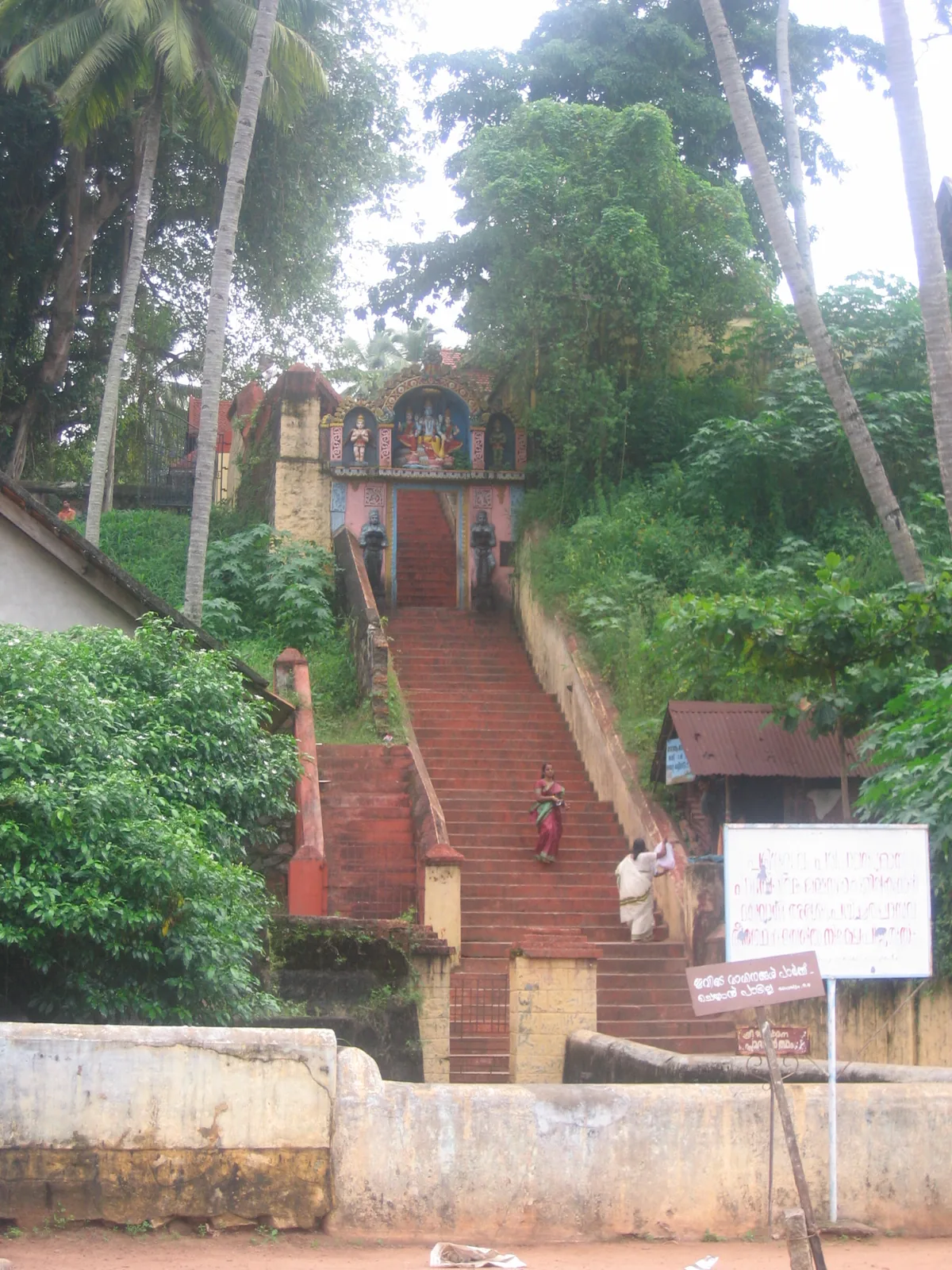
A flight of steps leads to Janardanaswamy Temple; below lies Papanasam Beach. To a holiday visitor they may look like separate stops. For families performing ancestral rites, they belong to one religious landscape. Kerala Tourism says priests from the temple help devotees perform bali on the shore.
The day the connection becomes visible
Karkidaka Vavu is the new moon in Karkidakam, usually July or August. Families gather at riverbanks and beaches across Kerala to honour departed ancestors. At Papanasam, Kerala Tourism describes offerings prepared with sacred grass, sesame, rice and water and notes that thousands may come. The exact date changes each year, and local arrangements govern access on the day.
The belief is that the offering helps the departed attain liberation. A visitor need not share that belief to understand what is happening: people are remembering relatives in a public place, under the guidance of priests, while the beach continues to serve the rest of the town.
Why “Dakshina Kashi” is more than a nickname
Kerala Tourism’s Sivagiri account says Varkala’s “Southern Kashi” name draws on Janardanaswamy Temple, Papanasam and the sacred Sivagiri hill together. The title should not be reduced to a claim that this temple copies Varanasi or that only one rite gives the whole town its meaning.
Sivagiri also carries a distinct modern history. Kerala Tourism records that Sree Narayana Guru established a hermitage there in 1904 and died there in 1928. His samadhi became another pilgrimage centre. A visit from the older Vishnu shrine to Sivagiri thus crosses different traditions and periods within one town.
Sharing the shore respectfully
When rites are underway, leave working room for participants and priests and ask before photographing anyone. Use a different part of the beach for recreation. These are practical courtesies at a place where an ordinary shoreline is also the setting for grief and remembrance.
Two places in one act of remembrance
The temple and the beach work together in the pilgrim’s understanding of Varkala. The temple gives a devotional centre; Papanasam provides the water where offerings and bathing take place. Calling the town “Dakshina Kashi” points to that sacred geography, but it should not flatten Varkala into a copy of another city. Its coast, cliff and local practices give the rites their own setting.
On Karkidaka Vavu the relationship is easier for an outsider to notice because more families gather. The Papanasam festival story follows that day. The significance does not vanish on quieter dates, and it does not require a visitor to enter a ceremony to understand that mourning and recreation may share the shore.
A useful visit connects the sites with restraint: learn what the rites mean, leave working space for participants, then see the temple and sea as parts of one living landscape rather than two sightseeing stops.
Frequently asked questions
What happens at Papanasam on Karkidaka Vavu?
Families perform bali in memory of departed ancestors, with priests from Janardanaswamy Temple assisting. It falls on a changing new-moon date in July or August.
Why is Varkala called Dakshina Kashi?
Kerala Tourism links the title to Janardanaswamy Temple, Papanasam Beach and Sivagiri together, rather than to one building alone.
Can visitors go to the beach during the rites?
Access depends on local arrangements. Give participants space, avoid intrusive photography and use another stretch for beach recreation.