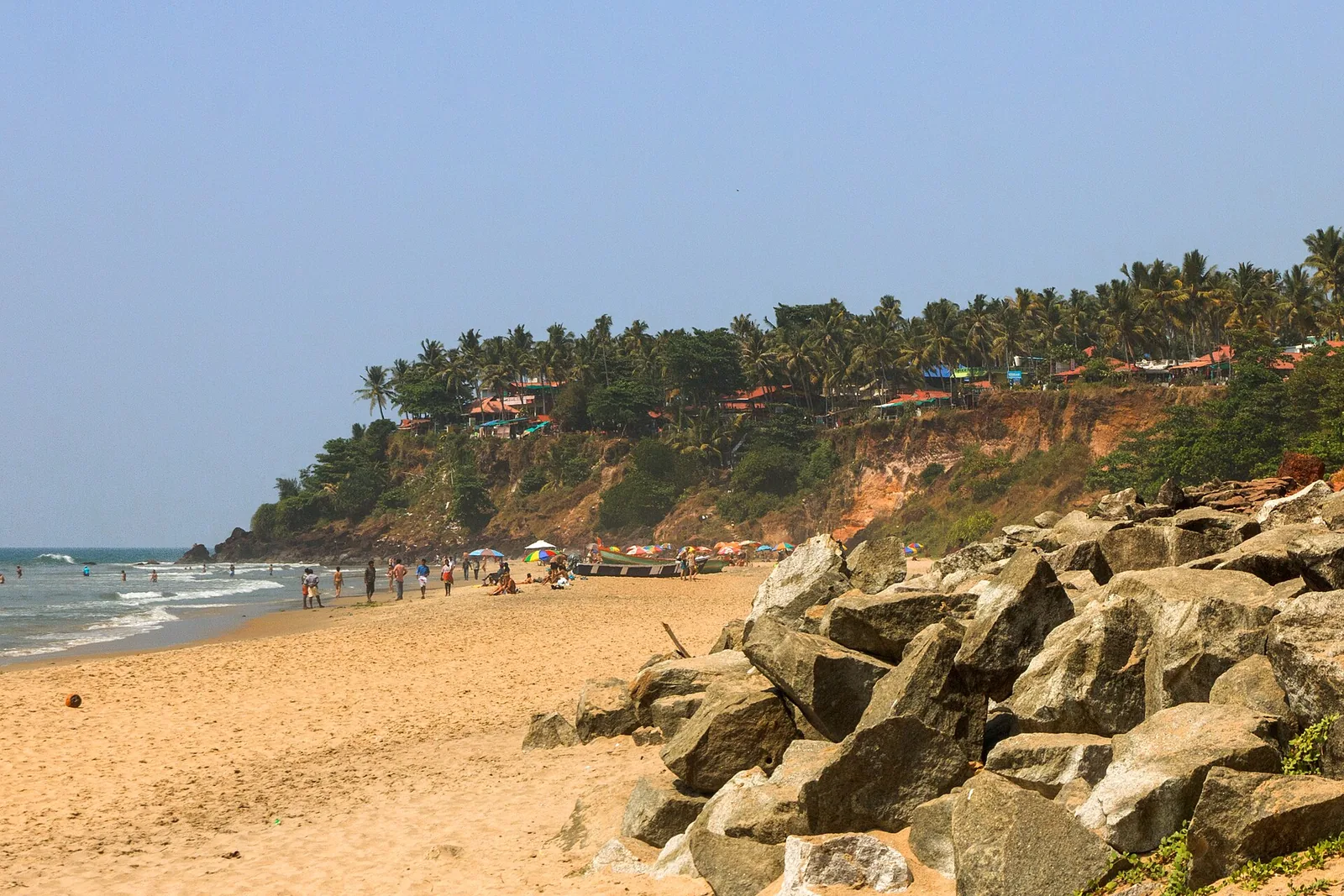
For most of the year Papanasam Beach does two things at once. Sunbeds, surf lessons and the café strip above occupy the middle and south; at the northern end, early most mornings, priests sit under temporary awnings working through family after family performing rites for the dead. The two ends coexist and largely ignore each other.

On one morning a year that arrangement disappears, and the entire beach becomes the second thing.

Karkidaka Vavu

Karkidakam is the last month of the Malayalam calendar, falling roughly from mid-July to mid-August. Vavu is the new moon. Karkidaka Vavu — the new-moon day of that final month — is the principal day in the Kerala year for remembering the dead, and it is observed at river mouths, temple tanks and beaches across the state.

Varkala draws one of the largest gatherings. People arrive from well before dawn; the sand fills; the shallows fill; and the sea is lined with people standing waist-deep. Buses run specially, the cliff steps become one-directional by sheer weight of numbers, and the town operates on a completely different footing for the day.

The timing is not incidental. Karkidakam is the deep monsoon month — traditionally the lean season, the month of scarcity, and the month associated with rest, ayurvedic treatment and religious observance rather than work. It is the point in the year when the calendar turns inward, and the rites for the dead sit at its close.

What is actually being performed

The rite is bali tarpanam — sometimes pitru tarpanam, the offering to the fathers. In outline: the person performing it bathes, faces the appropriate direction, and offers rice, black sesame and water, usually shaped into small balls of cooked rice, while naming their departed forebears. A priest guides the words. The offerings are then carried into the sea and released.

It is not a funeral. It is a recurring obligation owed by the living to the dead — pitru karma, the duties to one’s ancestors — performed annually rather than once. That is why the same families return, and why the beach is busy on ordinary mornings as well as on the great day.

The whole thing is quick, and strikingly unceremonious to watch. There is no procession, no music and very little that reads as spectacle. People queue, sit, perform, walk into the water, and leave.

Why the sea, and why here

The offering has to be released into moving water. A river, an estuary or the open sea all serve. What makes Varkala one of the principal sites in the south is a combination of three things in one place: the Janardanaswamy temple on the headland, the springs emerging from the cliff, and open west-facing water.

That combination is the basis of the town’s older name, Dakshina Kashi — the Kashi, or Varanasi, of the South. Varanasi is where the north performs these rites; the epithet claims equivalent standing for Varkala, and it is claimed on exactly this ground rather than on the temple alone. The beach name says the same thing more directly: papa nasam, the destruction of sins.

The pairing is meant to be used in sequence — darshan at the temple above, the offering at the shore below. Many families still do it in that order.

Being there without intruding

This is the part worth getting right. What you are watching is grief, performed in the open only because the sea is where it has to happen. It is not part of the attraction, and the families involved have not chosen to be observed.

Watching quietly from a distance is generally accepted and nobody will object. Photographing families at close range is a different matter, and on Karkidaka Vavu it is plainly out of place. If you want images, the cliff path above gives you the scale of the gathering without putting a lens in anyone’s face.

Swimming and sunbathing are also out that morning, in the same way they would be at any other site given over to a religious observance. If you specifically want a beach day, this is the one date in the year to pick a different beach — Kappil a few kilometres north is quiet by comparison.

Dress as you would to enter a temple rather than as you would for the beach, keep off the awning areas where priests are working, and do not step over or between people mid-rite. None of this is signposted. It is simply what everyone else is doing.

Frequently asked questions

When is Karkidaka Vavu?

It falls on the new-moon day of Karkidakam, the last month of the Malayalam calendar, which runs roughly from mid-July to mid-August. The exact date shifts each year with the lunar calendar, so check locally before planning around it.

What is bali tarpanam?

An offering made to departed ancestors — rice, black sesame and water, usually with cooked rice shaped into small balls, offered with the names of the dead spoken and then released into the sea. It is an annual obligation rather than a funeral rite, which is why the same families return year after year.

Are the rites only performed on Karkidaka Vavu?

No. They are performed year-round, most mornings, at the northern end of the beach with a priest under a temporary awning. Karkidaka Vavu is when the practice expands from one corner of the beach to all of it and draws tens of thousands of people.

Can visitors watch?

Watching quietly from a distance is generally accepted. Photographing families at close range is not, and is particularly inappropriate on Karkidaka Vavu. The cliff path above gives you a view of the scale of the gathering without intruding on anyone.

Can I swim at Papanasam on Karkidaka Vavu?

In practice, no. The beach and the shallows are given over to the rites from before dawn, and swimming or sunbathing would be badly out of place. If you want a beach day on that date, Kappil Beach a few kilometres north is far quieter.

Why is Varkala a major site for these rites?

Because three things coincide here: the Janardanaswamy temple on the headland, the freshwater springs emerging from the cliff, and open west-facing sea. That combination is what earned the town the name Dakshina Kashi, the Varanasi of the South, and it is why the beach is called Papanasam — the destruction of sins.