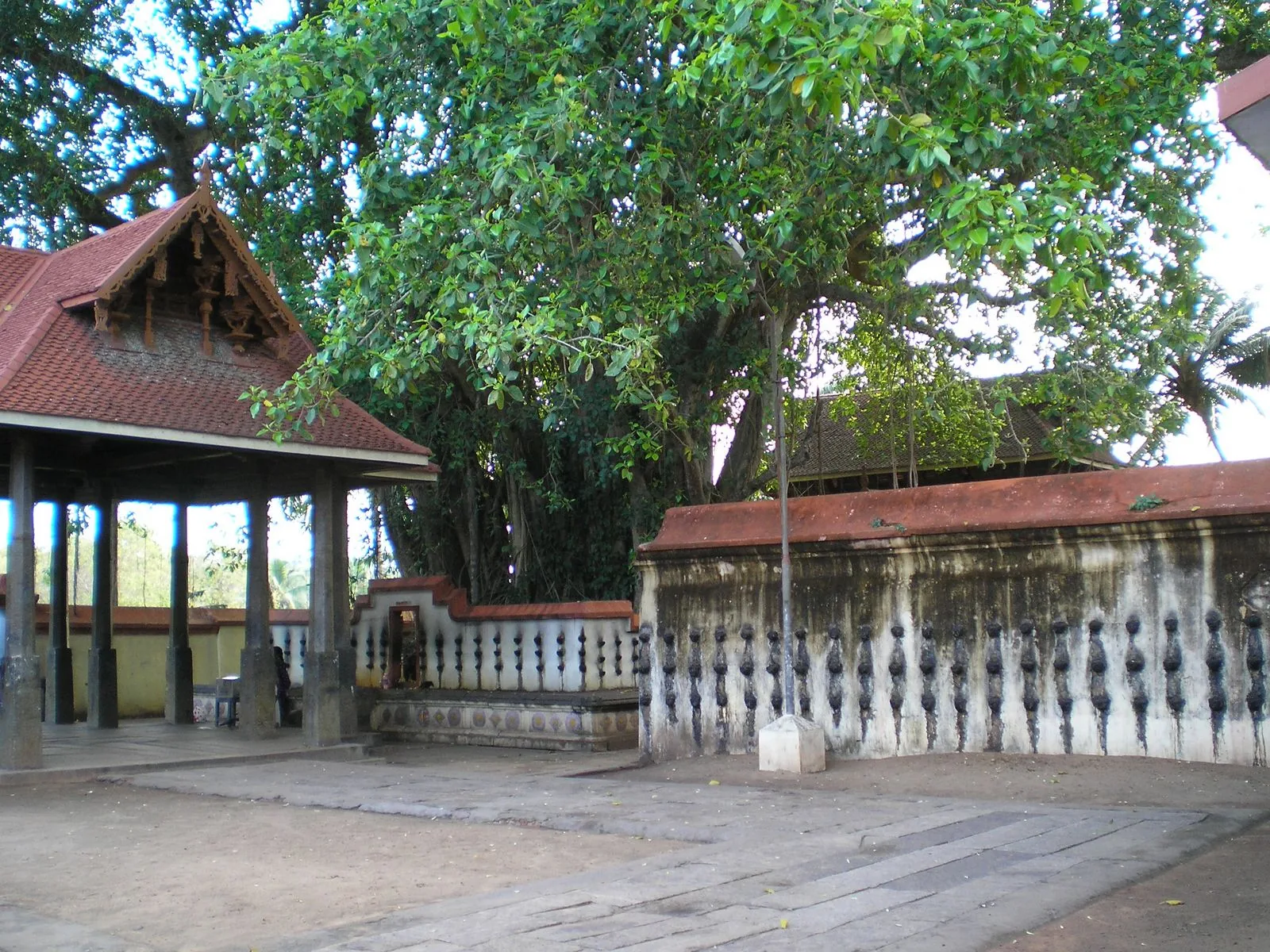
The Janardanaswamy Temple is often described as 2,000 years old. The number is memorable; the evidence is more interesting. Kerala Tourism records an inscription dated 1252 CE on the lower part of the mandapam in front of the shrine. That does not tell us when worship first began. It does mean the site has a dated medieval witness.
Three dates, three different kinds of evidence
The 1252 inscription anchors part of the temple’s history in the thirteenth century. Kerala Tourism’s longer temple account also describes an inscription recording renovation under Umayamma Rani, who ruled in the late seventeenth century. A bell at the temple carries 1757, although Tourism cautions that this may be its casting year. Construction, renovation and an object’s date are different claims; none is automatically the founding year.
Why an older story survives
The temple legend retold by Kerala Tourism begins with a shrine built by devas, fallen into ruin and restored by a Pandya king after he recovered the idol from the sea. This is a sacred explanation of continuity through loss and renewal. It is not an archaeological date for either the first shrine or its rebuilding.
A visitor can hold both kinds of account without forcing them into one timeline. The legend explains why the place matters in religious memory; the dated inscription shows that a temple stood here by 1252. The seventeenth-century renovation and eighteenth-century bell show later care and exchange. The founding remains unknown in the public material cited here.
What to look for
Kerala Tourism places the inscription low on the mandapam before the shrine. Ask on site whether it can be viewed without crossing a worship area or interrupting a ritual. The temple is a living place of worship, not an open museum. The useful question is not whether a round age sounds ancient enough, but what each surviving mark can actually date.
Frequently asked questions
Is the temple exactly 2,000 years old?
Kerala Tourism often gives that traditional age, but its own detailed account says the original construction date is unavailable. The exact founding year is not established by the cited public sources.
What does the 1252 inscription prove?
It provides a dated medieval witness at the temple. It does not by itself date the original foundation or every part of the present building.
What other dates are documented?
Kerala Tourism describes a later renovation under Umayamma Rani and a bell marked 1757; it cautions that 1757 may be the bell’s casting year.