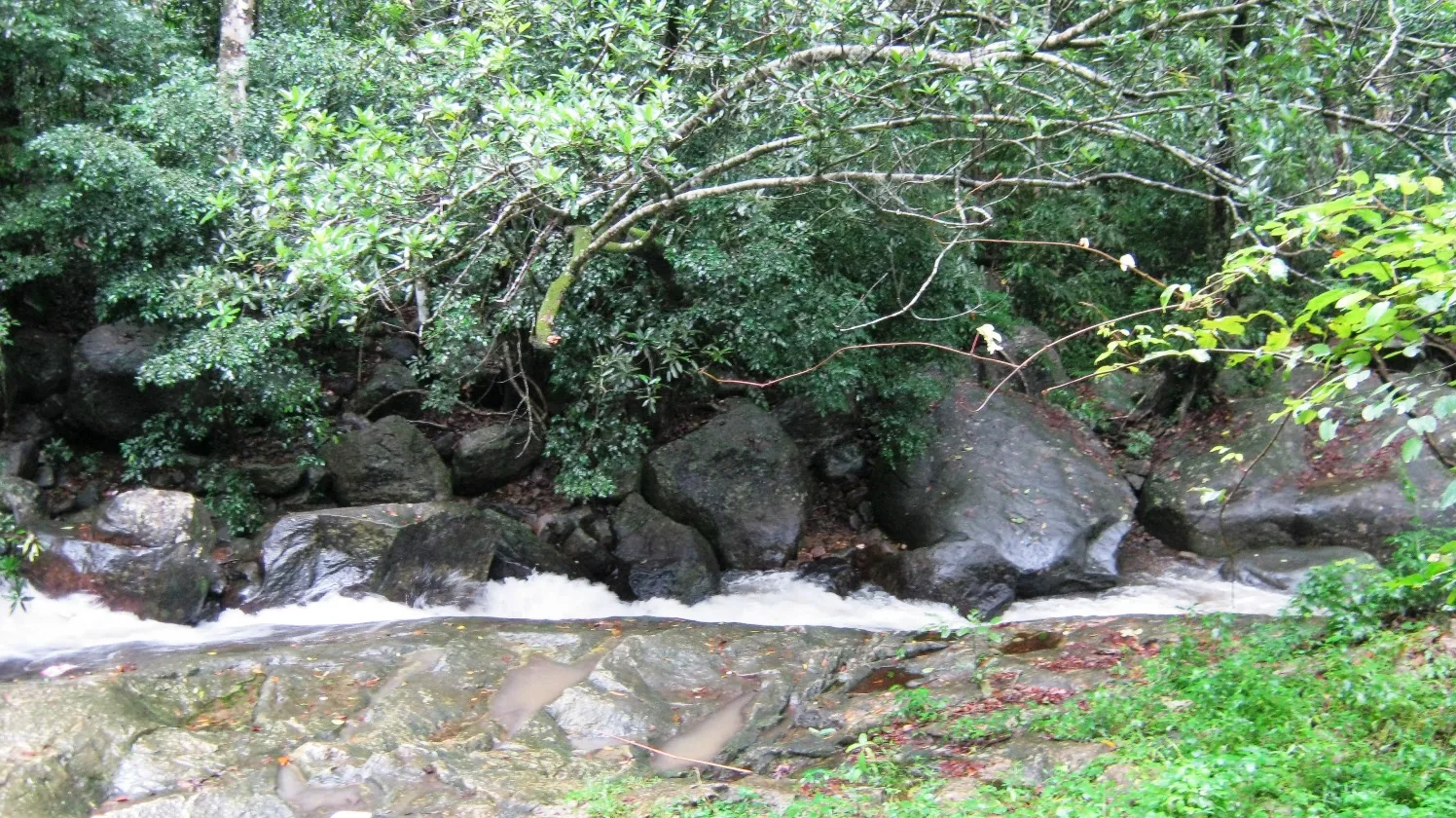
At Kallar, clear weather beside the road can offer false reassurance. Kerala Tourism’s ecotourism account warns that rain on mountains out of sight can change the river quickly. The water at a crossing has travelled through a catchment wider than the patch of sky above a visitor’s head. That simple geographical fact should guide a Meenmutty Falls plan more than a sunny photograph taken at the trailhead.
Rain arrives by river
A stream gathers water from slopes upstream. When rain falls there, its rise may reach a lower bend after the local shower has passed, or while no rain has fallen there at all. The tourism warning is specific to Kallar’s setting and more useful than a vague statement that waterfalls can be dangerous. It explains why the visible weather and the river’s condition can disagree.
The boulders that give Kallar its name add another temptation: a clear-looking pool can seem like a safe place to step in. Kerala Tourism’s Kallar destination page says river entry is banned during heavy rain and high water. That published rule is not a complete safety assessment for all other times. Follow the current staff and posted restrictions, especially near a managed waterfall trail or crossing.
The trail is not separate from the water
The approach to Meenmutty follows the river through forest. A rise in water can affect a crossing, footing or the permitted turnaround point. Staff may shorten or close the outing after weather upstream even if a traveller has already reached the centre. The safe response is to ask what is open now and accept the answer, not to search for an unofficial path around a closed section.
This is one reason a fixed kilometre promise is weak travel advice. The route that can be walked depends partly on conditions beyond the visitor’s sight. A good itinerary leaves a second choice: observe the river from safe public ground, continue toward Ponmudi if that road is open, or return another day for the managed walk.
Read the river before the waterfall
Kallar’s moving water, stone bed and forested banks are not a failed version of Meenmutty when the falls trail is closed. They are the setting that gives the waterfall its force. Watch from an established viewpoint and consider where the water has come from before deciding where to go next.
The Kallar trail account explains the walk when it is operating; the Meenmutty name guide keeps the destination straight. Neither can overrule the current condition of the river. A blue sky is one observation. The catchment is the larger story.