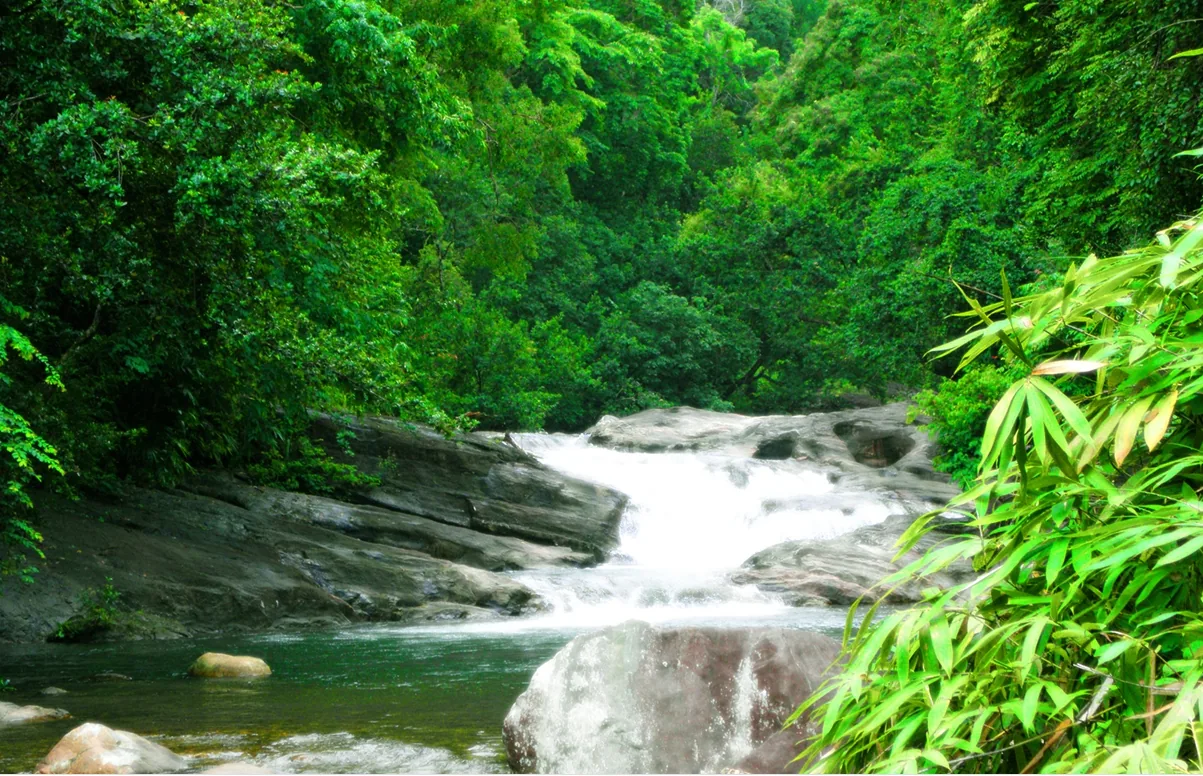
Type “Meenmutty Falls” into a map before a Ponmudi journey and the first result need not belong to the journey at all. The name is used for more than one Kerala waterfall. The one described by Kerala Tourism near Kallar belongs to Thiruvananthapuram district, on the river route below Ponmudi. Identifying that setting is the first part of a successful visit.
Start with Kallar, not the shared name
Kerala Tourism places Kallar on the road toward Ponmudi and describes a boulder-strewn river. Its destination account places Meenmutty Waterfall inside the forest from this stop. A separate tourism article relates the falls to the upper Vamanapuram river course. Together, the district, river and Ponmudi approach distinguish this Meenmutty from the better-known namesakes elsewhere in the state.
The name alone cannot do that work. A photograph may show a real cascade and still belong to another trail. A driver told only “Meenmutty” may choose the wrong road. Add “Kallar” and “Thiruvananthapuram” to a search, then compare the route with the current Forest Department or tourism operator information before booking transport.
The final approach is a managed walk
The Kerala Tourism Kallar page describes an approach road of about three kilometres, with part accessible by vehicle and the rest on foot. Another account frames the outing as a forest walk beside the river. Those descriptions are useful orientation, but they are not a promise that the same vehicle drop-off or trail length operates after every season of maintenance and rain.
At the current reporting point, ask where the permitted walk begins, whether a guide is required, what ticket applies and when visitors must return. The Forest Department’s ecotourism list includes Kallar, but a listing is not a same-day open-trail notice. The river can change with rainfall in mountains beyond the roadside view.
A waterfall with a clear address
Once the destination is fixed, the rest of the story becomes about the approach rather than the search result. The tourism description puts river on one side of the narrow path and forest on the other. This is why a guided visit can be worthwhile even if the final cascade is briefly seen or the route is shortened for safety.
For the walking experience, read the Kallar Meenmutty trail story; for the catchment warning, read why clear local sky does not settle river safety. The simple rule before either story is to name the right district. “Meenmutty” is a beginning of directions, not a complete address.