Thiruvananthapuram’s sights keep office hours. The Padmanabhaswamy temple runs on darshan slots, the Napier and the art gallery close in the afternoon, the zoo shuts its gates. By half past five a visitor with energy left has nowhere obvious to put it — except the twenty-one acres across the road from the museum compound, where the day is only beginning.

What the grounds are

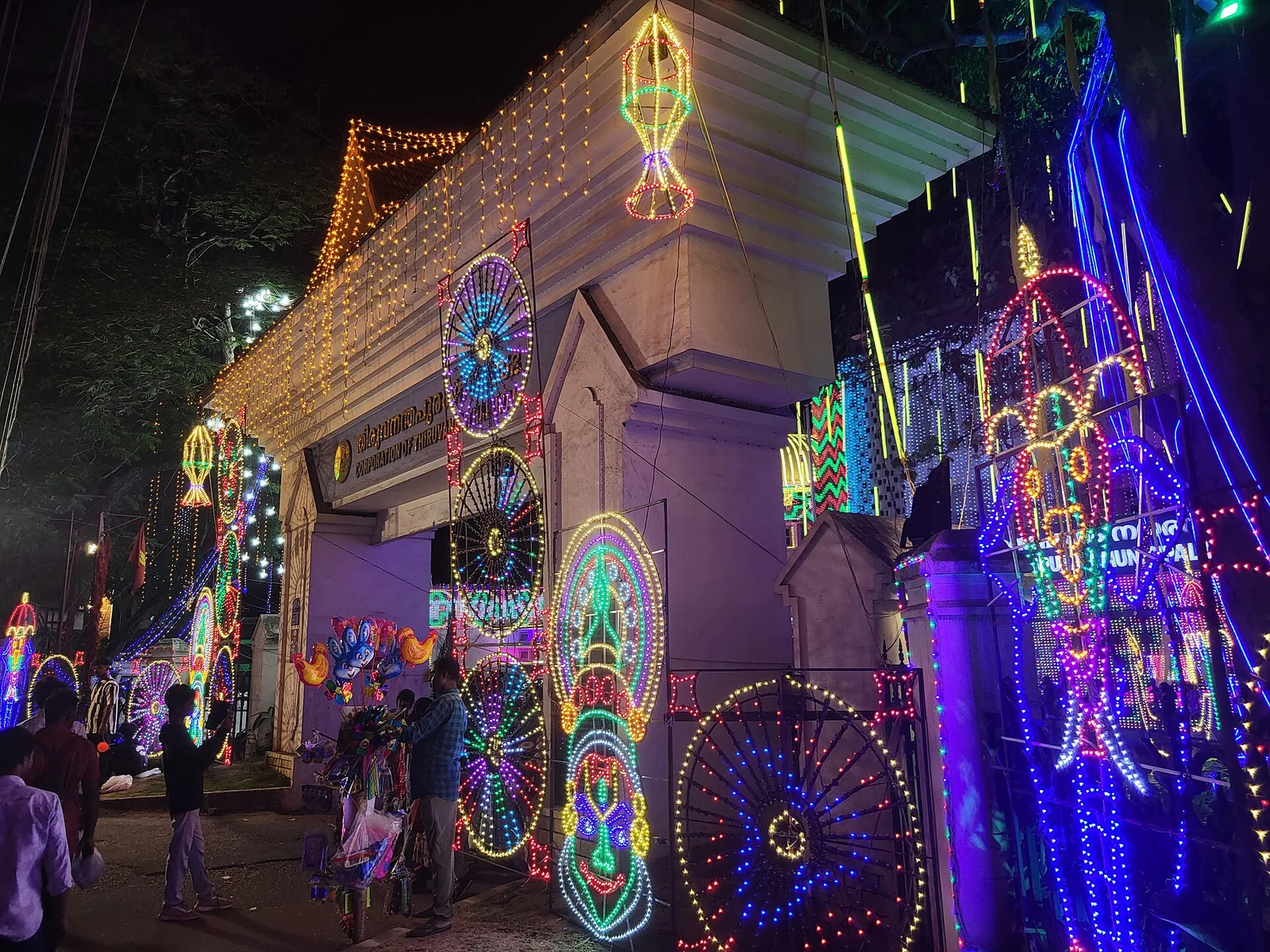
The Kanakakunnu compound is a low hill of lawn and old trees with a nineteenth-century palace on top of it and two performance spaces built into the grounds: the Nishagandhi open-air amphitheatre and the smaller, indoor Sooryakanthi auditorium. The state holds it, the Kerala Tourism Development Corporation maintains it, and INTACH lists the palace as a heritage monument. In practice it functions as the capital’s public event space — book fairs, craft and handloom exhibitions, food festivals, flower shows, school and state functions, and the week of Onam celebrations that fills the whole hill with stalls and strings of light.

The practical consequence for a visitor is that it is very hard to turn up here and find nothing on. That is not a promise about any particular evening — programmes are local and rarely advertised in English — but the base rate is high, and the walk is worth having even on the rare blank night.

QR codes on the trees

One layer of the grounds is invisible unless somebody tells you about it. The plantings across the twenty-one acres have been catalogued and tagged with QR codes by the Department of Botany at the University of Kerala — scan one and you get the species, its botanical characteristics, origin, distribution and flowering season. Its creators describe it as India’s first digital garden. Outdoor signage weathers and not every code will necessarily scan on the day you visit, so treat it as a bonus rather than an attraction; but if you have ever walked through a tropical garden wondering what anything is called, this is the rare place that answers.

How to use an evening here

Come across from the museum compound in the last hour of daylight, when the heat has gone and the light on the palace is at its best — the building faces its lawn well and photographs better at dusk than at noon. Walk the perimeter first; the hill gives you a sense of the Museum–PMG quarter that you do not get from the road. Then find whatever is happening and decide whether to stay. Families arrive from about six, and the atmosphere from then on is closer to a town park in the evening than to a heritage site, which is exactly its value.

Set your expectations about the building itself. Kanakakunnu is a venue, not a museum: its rooms follow the event calendar and are not reliably open, and there is no permanent collection to see. If you want a palace interior, that is Kuthiramalika at East Fort, covered in Nineteen Rooms of Travancore. What Kanakakunnu offers is the grounds and the programme, and it offers them at the hour when everything else in the city has closed.

The palace’s own history — including the claim about Swathi Thirunal that cannot be true — is in A Palace Built for Parties, and the January dance festival has its own piece in Seven Nights in January.

Frequently asked questions

What is there to do at Kanakakunnu in the evening?

Walk the twenty-one acres of lawn and trees, and see what is programmed — book fairs, craft and handloom exhibitions, food festivals, flower shows and state functions run through the year, with performances at the Nishagandhi amphitheatre and the Sooryakanthi auditorium. Families arrive from around six.

Can you go inside the palace?

Not reliably. It is a working venue rather than a museum, so its rooms follow the event calendar and there is no permanent collection. If a palace interior is what you want, visit Kuthiramalika at East Fort instead.

What is the digital garden at Kanakakunnu?

The plantings across the grounds carry QR codes catalogued by the University of Kerala’s Department of Botany; scanning one returns the species, characteristics, origin, distribution and flowering season. Its creators describe it as India’s first digital garden. Codes weather outdoors, so treat it as a bonus.

What else is nearby?

It sits directly across from the museum compound holding the Napier Museum, the Sree Chitra Art Gallery and the zoo, so the standard plan is museums in the afternoon and Kanakakunnu from late afternoon into the evening.