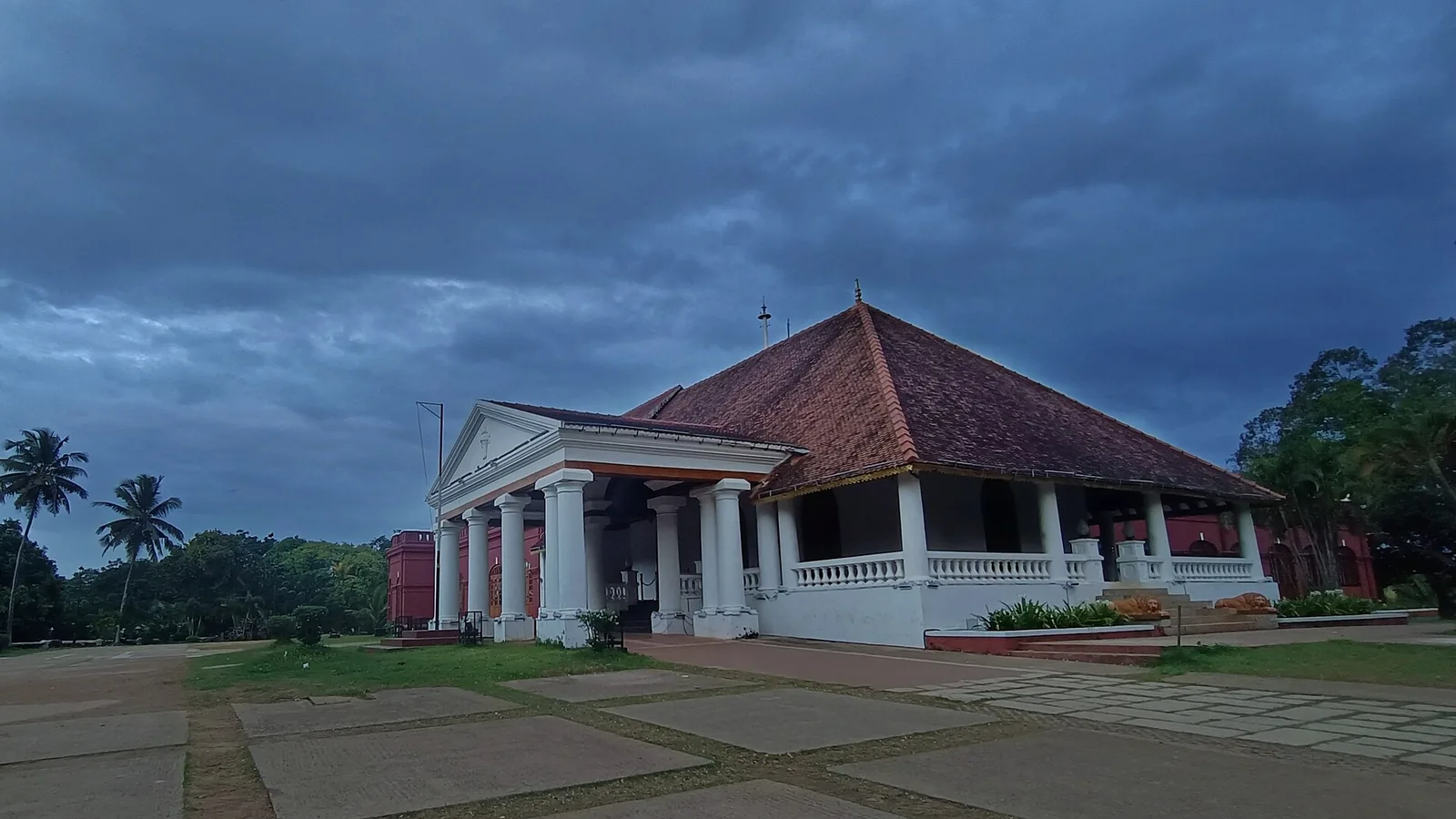
The usual question about Kanakakunnu Palace is who built it. A second question makes a visit more interesting: whom was it built to welcome, and whom does it welcome now? Above Thiruvananthapuram’s museum quarter, the building and its grounds tell a story of hospitality changing scale. A royal guest-house setting became a public cultural address.
The royal name in the record
Kerala Tourism associates the palace with the rule of Sree Moolam Thirunal and says it was built as a guest house. The department’s historical wording is qualified: it describes the building as “said to have been built” during his rule. That supports the association, while leaving room between a tourism account and a dated construction record.
It is useful to keep that limit in the story. An exact completion day, a named architect or a colourful founding incident should not be added merely because a palace article seems to require them. The guest-house purpose already supplies a strong starting point: this was a building arranged for receiving people, rather than a collection museum created for today’s visitors.
Look at the entrance before looking for a date
The department describes red brick, white dressings, a circular hall and a neoclassical entrance portico, alongside Kerala and Gothic influences. Those features give you things to notice from an accessible part of the site: the relationship between the entrance and the main building, the contrast of materials, and the hall as an organising element.
Reading a building this way is an interpretation, not a claim that its architect left a particular message. It makes the visit more rewarding than treating the facade as a background for a photograph. Ask how a guest would have approached the house and how the entrance frames that arrival. If interiors are open for your particular visit, the objects inside add another layer; do not assume a standing palace-room tour from an old description.
The grounds take on another kind of hospitality
The palace now appears in a different calendar. Kerala Tourism identifies it with cultural programmes, seminars and exhibitions; the Nishagandhi Auditorium hosts the department’s classical dance festival. The building remains a landmark, but an event can move the centre of attention outdoors, from the facade to a stage and an audience.
This change does not require the palace to disappear behind a new use. Its setting helps make a public occasion recognisable. The same place can be approached as architecture during one visit and as a performance venue during another. A useful traveller’s question is therefore “what is happening here on my date?” as well as “who built it?”
Choose a visit that matches the place
For a history-focused outing, combine the palace setting with the nearby museum quarter, keeping the museums’ admission and opening arrangements separate. For a cultural evening, choose an announced event and plan around its starting time, entrance and return journey. If interior access is essential to your plan, confirm it directly before travelling.
There is no need to turn every visit into a complete account of Travancore. One building can provide a smaller, clearer story: the way hospitality moved from royal guests towards the city’s public life. Kanakakunnu becomes more than another palace stop when you notice that change in who is being received.
Use the Kanakakunnu Palace visitor guide for the location and related attractions. Continue with the Nishagandhi festival story if a performance is the reason for your visit.
- Kerala Tourism: palace history and architecture
- Kerala Tourism: Nishagandhi’s venue
- The account preserves the source’s qualified attribution. Interior access and event arrangements require a current check.