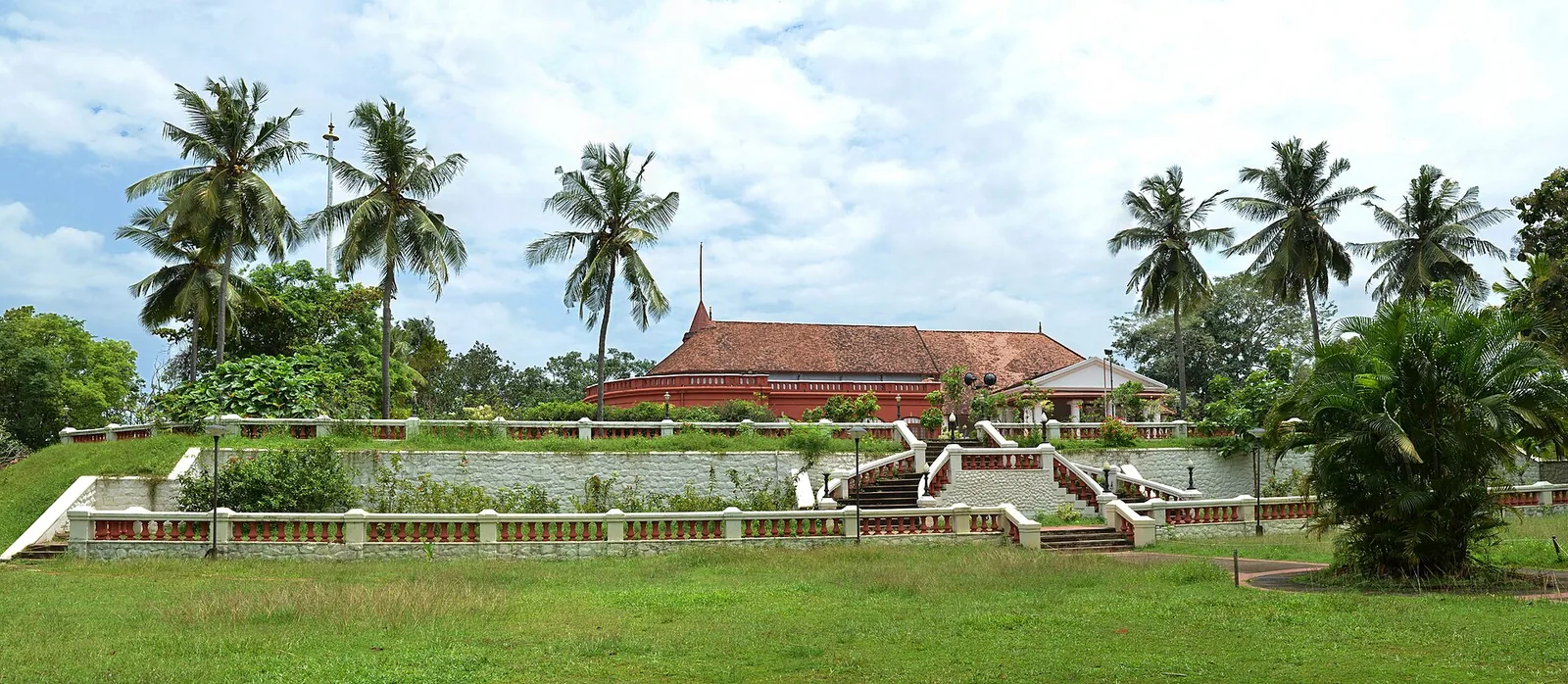
On an ordinary evening Kanakakunnu’s grounds are an open city place. During the Nishagandhi Dance Festival, the auditorium draws an audience with a specific reason to gather: a sequence of performances on a published programme. The palace remains in view, but live dancers and musicians carry the story of the night.
A festival of different forms
Kerala Tourism’s festival description names Bharatanatyam, Kathak, Odissi, Mohiniyattam, Manipuri and Kuchipudi among the forms presented. It also describes Kathakali, music and related arts. This variety is part of the point. Nishagandhi is not one generic “classical dance show” repeated each night, and a visitor should choose a date by the actual programme rather than by the festival name alone.
The venue matters too. Performances take place at the Nishagandhi Auditorium in the grounds of Kanakakunnu Palace. The building’s royal guest-house history gives the setting an older layer, while the audience belongs to a modern public arts event. Treat the palace as context, not as a museum that stays open because a festival is running outside.
A dated programme, not an annual promise
Kerala Tourism recorded one edition in February 2026 and publishes later events through its calendar. Those records are snapshots of particular seasons. The next edition’s dates, artists, seating and admission rules should be checked on the current festival page. A free-entry note on a general description should not be assumed to cover every event, reserved section or future policy without confirmation.
Arrive with enough time to find the entrance and the current seating arrangement. Follow the organiser’s photography and performance rules. The reward is to let one full evening unfold rather than trying to sample the stage between other sightseeing stops.
The hill between festivals
Outside the festival, Kanakakunnu’s grounds can have a quieter public life. The palace history explains why this building became the event’s backdrop. Neither page should promise a Nishagandhi performance on an ordinary visit.
The festival’s real story is the temporary transformation: a former royal setting becomes a shared stage for several dance traditions. The precise performers change; that relationship between place and live art is why the evening matters.