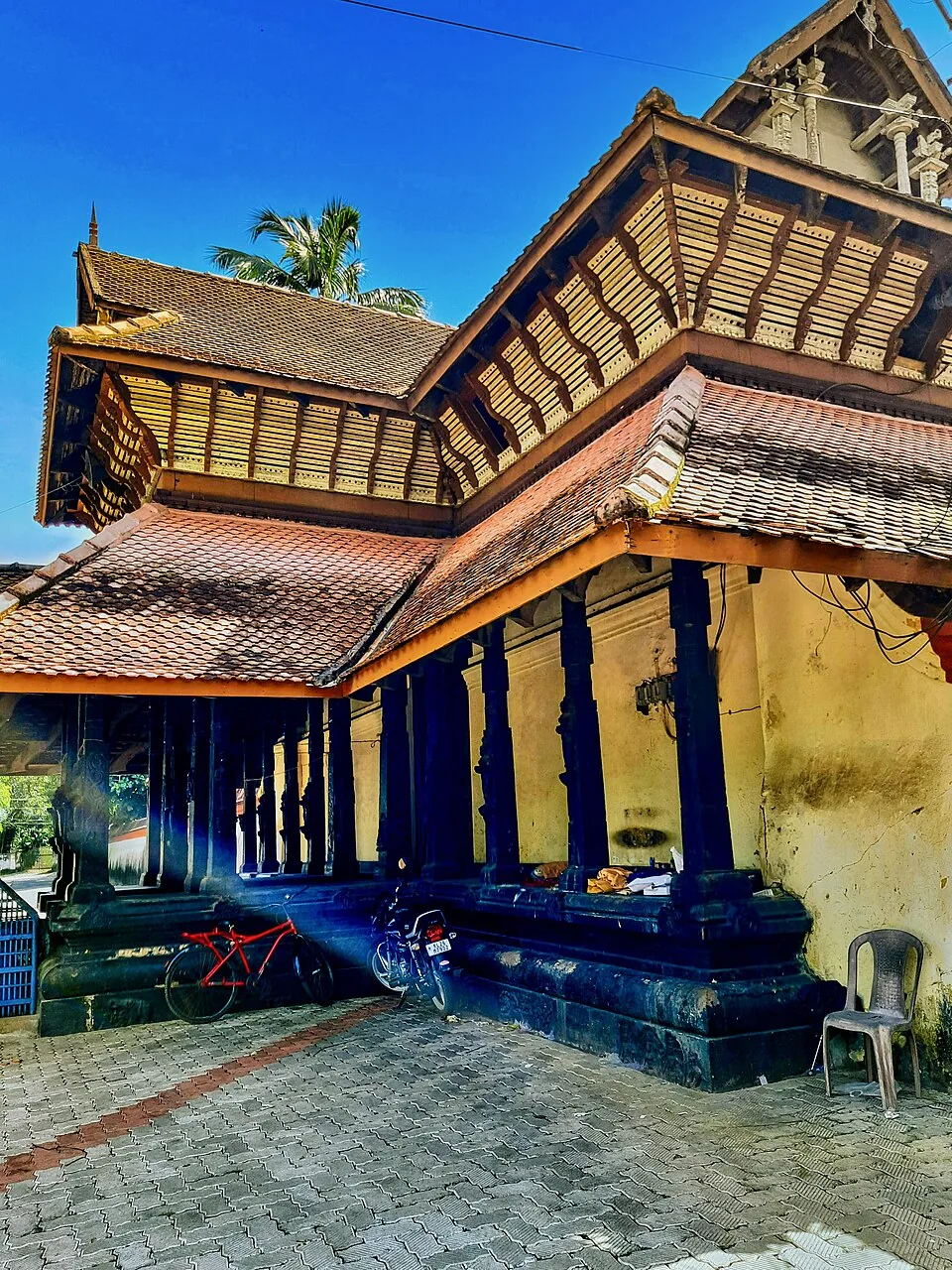
Kerala has older temples than Kandiyoor Sree Mahadeva Temple. What it does not have is an older temple that says, in an inscription of its own, when it began.
A narrow claim, carefully made
The claim usually quoted runs: the Kandiyoor temple is the earliest temple about which there is an epigraph about its origin in A.D 823, during the reign of Rajasekhara Varman. Read that again, because it is more careful than it first looks. It is not a claim to be the oldest temple in Kerala. It is a claim about evidence — the earliest one whose own beginning is written down on a stone that is still there.
Rajasekhara Varman was the Chera ruler of Mahodayapuram, and the ninth century is where the rest of the record starts too. The complex has been described as ninth-century work credited to him, restored and expanded in the thirteenth.
- The English Wikipedia article on Mavelikkara says the temple was founded in AD 731.
- The English Wikipedia article on the temple itself gives 823, citing an epigraph, and the Malayalam article agrees.
- No epigraph is cited for 731. This site follows 823 and tells you the other figure exists.
The Kandiyoorabdam
What happened next is the unusual part. The foundation was consequential enough locally that an era was reckoned from it — the Kandiyoorabdam, the Kandiyoor era — and it was used in this country until the Kollam era displaced it.
The Kollam era, the Kollavarsham, begins in 825 AD and is still in everyday use in Kerala. Kandiyoor’s era begins two years earlier. Two calendars, founded within a couple of years of each other, one of which went on to organise a state’s ritual year while the other stayed in one river valley.
We know the temple era was still being counted long afterwards because of how the 1218 inscription is dated: in Kollavarsham 393 and in the Kandiyoorabdam, both at once. That is four hundred years after the foundation, and someone was still keeping the older count.
A building that is also an archive
The stones here have produced inscriptions running from the ninth century to the fifteenth. One, in Sanskrit and grantha script, sits before the srikovil and commemorates a Kothavarman of the Odanad house. The great one, of 1218, is in vattezhuthu and was read by T. A. Gopinatha Rao, the epigraphist who opened up much of Travancore’s written past. It records a restoration begun in Thulam of Kollavarsham 392 and finished on the eighth of Medam in 393, and it names the people who paid for it.
It also records something else, which has its own story on this site: that the temple was a place where the Natyasastra was taught and performed, and that the woman at the centre of the restoration was one of its devadasis.