What to expect
Highlights
- Temple visit at Kandiyoor Sree Mahadeva Temple
- Kerala temple architecture and rituals
- Local food, shops and pilgrim services nearby
The Shiva temple west of Mavelikkara whose 823 AD epigraph makes it the earliest Kerala temple with a dated inscription about its own origin — Shiva in the kirata hunter form, once the capital shrine of Odanad, and the richest single record of devadasi authority in this region.
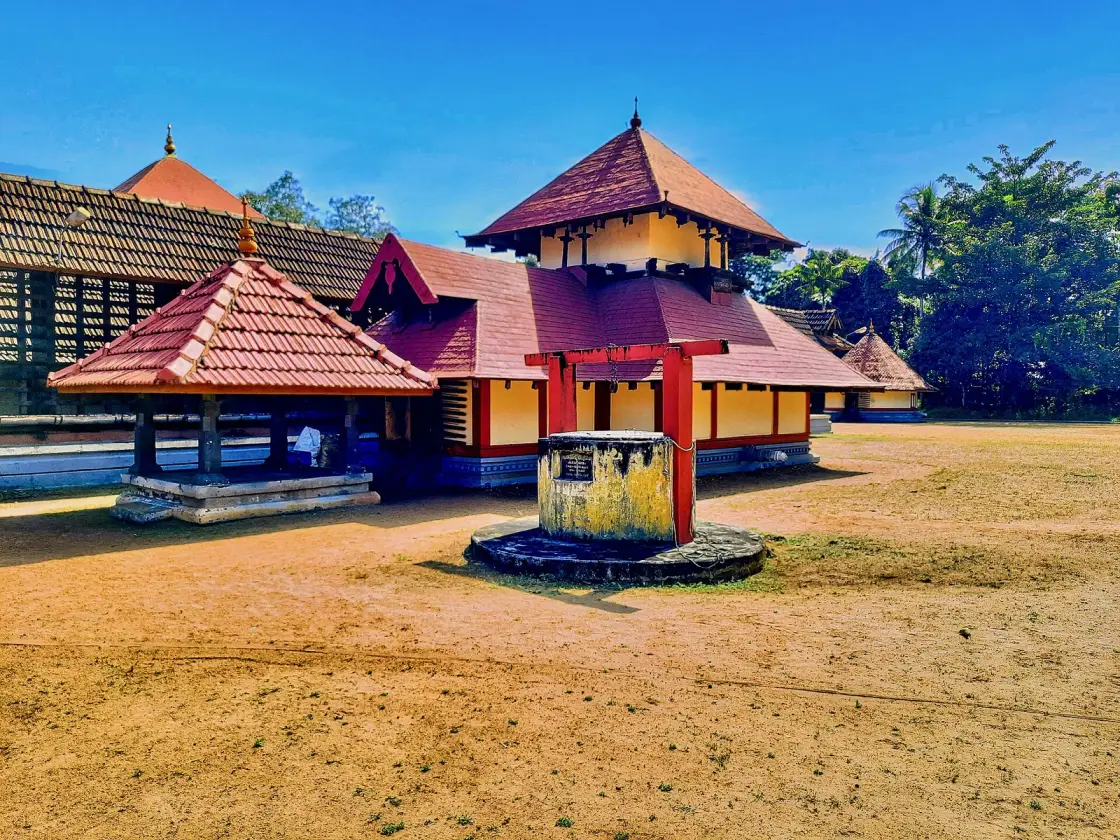
Check entry arrangements. Ask temple staff about visitor entry, dress requirements and access to the inner shrine before you travel, especially if you are visiting as a non-Hindu.
Dress respectfully and follow the institution’s admission and photography rules.
Two kilometres west of Mavelikkara, on the Haripad road, stands a temple that once told Kerala what year it was. Kandiyoor Sree Mahadeva Temple carries an epigraph dating its own origin to 823 AD, in the reign of the Chera king Rajasekhara Varman — and for a long stretch afterwards the country around it counted its years in the Kandiyoorabdam, the Kandiyoor era, reckoned from that foundation, until the Kollam era displaced it. Very few Indian temples have started a calendar. Fewer still have kept the inscriptions to prove it: the stones here have yielded a documentary record running from the ninth century to the fifteenth, and one of them, cut in 1218, is the clearest surviving evidence anywhere in this part of Kerala that the temple was run, danced in, and repaired at the instance of its devadasis.
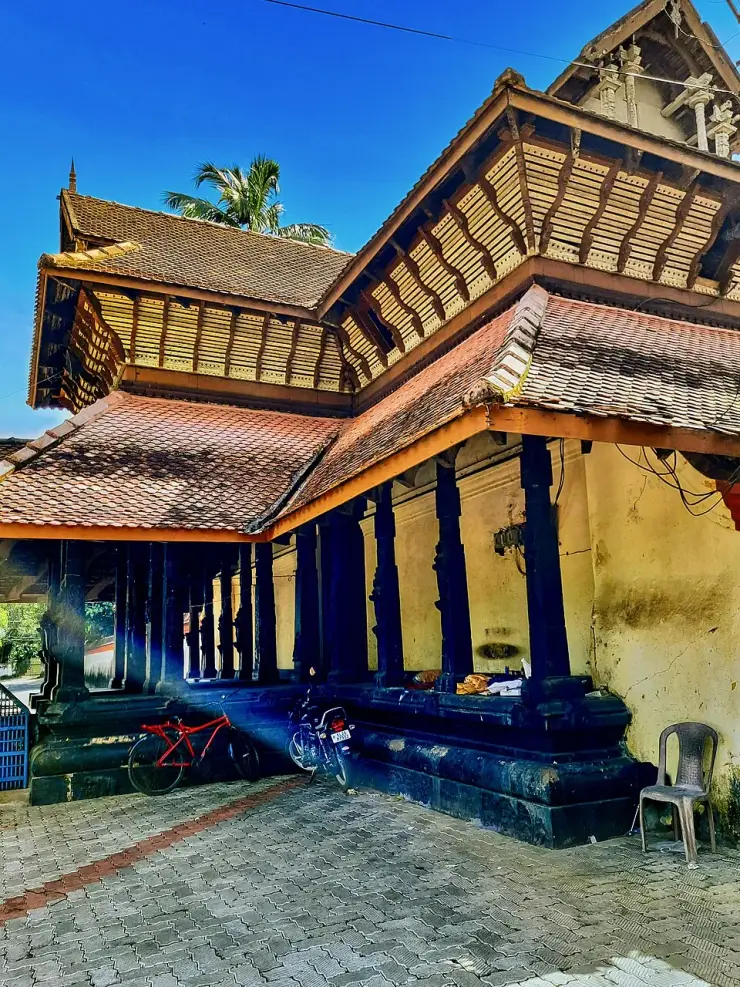
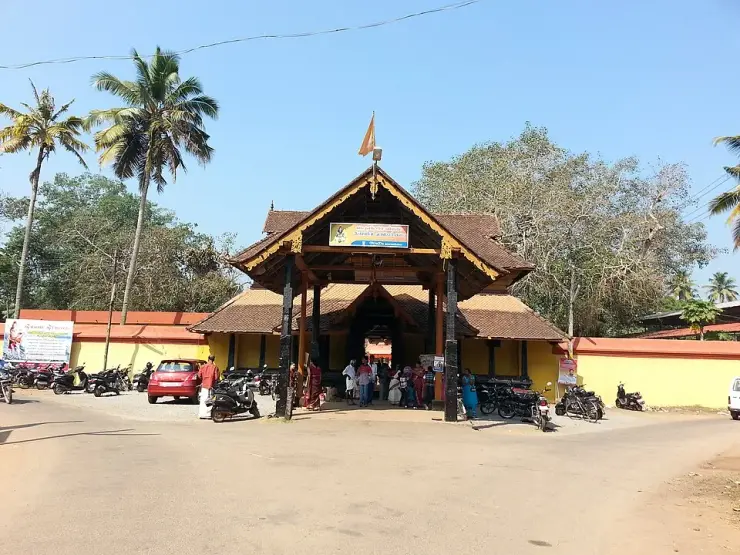
Kandiyoor stands about 2.2 km west of the centre of Mavelikkara, in the Onattukara country of eastern Alappuzha, on the road that runs down towards Haripad. The compound is large — the temple’s own reckoning is about seven and a half acres — and it is walled on all four sides, with gopurams on each, so that the first thing you meet is not the shrine but a gateway. The eastern gopuram is the one most people use, a two-storeyed block of tiled roofs and dark timber gables standing straight off the road, with the temple’s carved gable-end above it and the everyday traffic of a small town parked underneath. Inside, the ground opens out into a wide, level sand courtyard, and the noise stops.
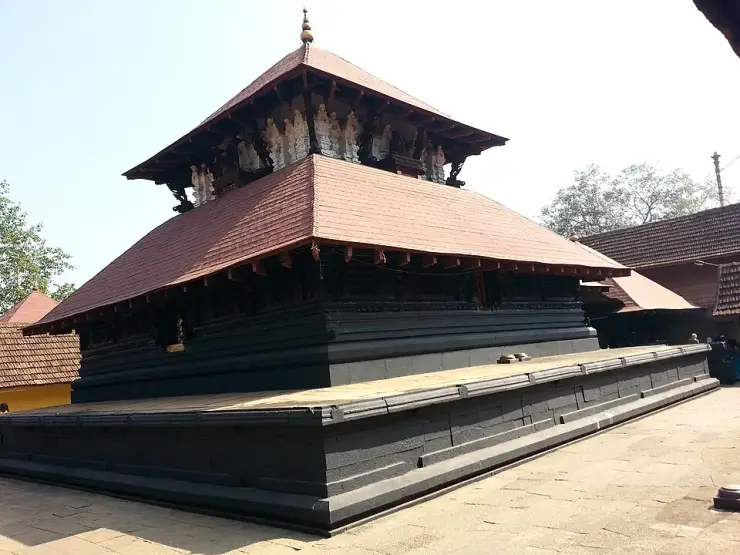
The sreekovil is the reason to come, and it is worth walking all the way round. It is a two-tiered shrine on a black granite plinth, the lower walls of dark dressed timber panelled with carving, the roofs copper-red and pyramidal, and under the upper eave a continuous band of small pale sculpted figures — the miniature panels for which this complex is a well-known source. The plan is square. (⚠ The Malayalam article describes the lower storey as circular and the upper as square; the photographs and the CC0 description of the photo set both give a square main shrine, and a separate Commons file explicitly notes that the apsidal shrine on this site is not the main temple. We follow the photographs and record the disagreement.) The deity is Shiva as Kiratamurti, the hunter — the form he takes in the Mahabharata to fight Arjuna over a boar — installed as a lingam and facing east.
What is unusual about the complex is how crowded it is with other gods. Around the central shrine stand eleven further sanctums, built in different periods, so that between them the site reveres essentially every major strand of Hindu practice: Mahavishnu, Parvati as Annapurneshwari, Gosala Krishna, Sastha, Ganapathy in two shrines including a Moola Ganapathy, Subrahmanya, Nagaraja and Nagayakshi in their own pair, and Brahmarakshas. Five of these are themselves Shiva, brought in from other Shiva temples and re-installed here under their home names — Shankaran, Srikanthan, Mrityunjayan, Parvatheeshan and Vadakkunnathan. By the count of subsidiary deities, the Malayalam account places Kandiyoor second in the country, behind only Thiruvanchikulam.
The temple is administered today by the Travancore Devaswom Board, and its tantric rites belong to the Nedumpilly Tharananallur family of Irinjalakuda, reckoned the senior tantri lineage of Kerala. The flagstaff was raised on the fifteenth of Makaram in the Malayalam year 1103, which is about 1928, and is gold-sheathed now. There is a temple elephant; the one that carried the name Kandiyoor Srikanthan died of a snakebite, and Prem Shankar serves in his place.
The calendar’s centre of gravity is Dhanu. The annual utsavam is a ten-day festival held in Dhanu (December–January) on the Thiruvathira asterism, closing with the arattu procession. Shivaratri, on the fourteenth of the dark fortnight of Kumbham (February–March), is the other great day. Through the rest of the year the observances are the Shaiva ones you would expect and which fill a small temple week: every Monday, the pradosha at dusk, and the monthly return of Thiruvathira. Darshan follows ordinary Kerala temple hours, early morning and evening, with the nada shut in the middle of the day — festival days rearrange all of it, and the sensible course is to ask locally rather than to trust a printed time.
One custom is worth knowing before you walk round: the western door does not open. The tradition is that after the war between Odanad and Kayamkulam the defeated Kayamkulam Raja came here, surrendered his sword at the deity’s feet and left westward, and that the west nada has stayed shut ever since. Whether or not the sword is history, the closed door is real and the reason given for it is the one the temple gives.
The founding legend begins with a sage looking for the best place on earth. Mrigandu Muni — the father of Markandeya, the boy who cheated death by clinging to a Shiva lingam — is said to have obtained a divine image of Kiratamurti, Shiva in the form of the hunter, and to have gone searching for ground worthy of it. He came at last to the bank of the Achankovil, saw the country there, and set the lingam down. The name is said to come out of that moment: kandathil nalla ur, “of what he saw, the good place”, worn down over centuries to Kandiyoor. It is a folk etymology and it should be read as one — it is the derivation the temple gives, not a demonstrated one — but it is the story the place tells about itself, and it is unusually gentle for a foundation legend. No war, no curse, no severed head. A man looked around and decided this would do.
A second story is not gentle at all, and it explains a different name. In this account Brahma, the creator, tried to deceive Mahavishnu — the old quarrel over which of the two was the greater, in which Brahma claimed to have found the top of Shiva’s infinite column of fire when he had not. Shiva’s answer, here, was to take off one of Brahma’s five heads with the nail of his little finger, and the tradition sets that act on this riverbank. Because the deity who did it is Srikanthan, the place became Srikanthiyur, which contracts, again, to Kandiyoor. Two legends, two etymologies, one name: the temple has never chosen between them and neither will this page.
Behind both stands the largest claim of all, and the one made about a great many Kerala temples. Parashurama, the axe-bearing avatar who is said to have raised Kerala out of the sea, is credited with performing the lingapratishtha here, and Kandiyoor is counted among the hundred and eight great Shivalayas he is said to have consecrated. The tradition is stated without elaboration in the Malayalam account, which is the honest way to carry it. It is worth adding a caution that applies across this whole site: the 108 Shivalayas and the 108 Sastha shrines are different sets, no two published lists of either agree in full, and being “one of the 108” is a statement about tradition rather than about a register anyone can check.
The myth that is enacted rather than told is the daily one. Shiva at Kandiyoor is held to show three different faces at three points of the day, and the same stone is worshipped as a different god at each. At dawn he is Dakshinamurti, the young teacher facing south under the banyan, who instructs in silence and grants knowledge. At noon he is Umamaheshwara, Shiva with Uma, the conjugal form, the god at ease with his wife. In the evening he returns to Kiratamurti, the hunter — the form Mrigandu Muni is said to have brought here, the form of the fight in the forest and of dissolution at the end of things. A worshipper who comes to Kandiyoor three times in one day is not visiting the same temple three times.
The Buddhist layer under all of this is not a myth but it lives in the same half-lit country. A Hinayana Buddhist centre is held to have stood near here, in the keeping of the Kannankara Panicker family, and to have been displaced when the Shiva temple grew; the fourteenth-century Malayalam messenger-poem Unnuneeli Sandesam is cited for the connection. A Buddha image that belonged to it survived. It was found — and here the sources part company, one saying it came out of paddy fields near this temple, another that it was recovered from the Achankovil river — and it now stands on a pedestal at the road junction in front of the Sree Krishna Swamy Temple in Mavelikkara town, which is called Buddha Junction for it. Mavelikkara is one of the places where Kerala’s Buddhist past is not an inference but an object you can walk up to, and the road it stands on runs from here.
The single most important fact about Kandiyoor is documentary rather than architectural. As the English article puts it: “The Kandiyoor temple is the earliest temple about which there is an epigraph about its origin in A.D 823 during the reign of Rajasekhara Varman.” That is a narrow and careful claim and it is worth reading exactly as written — not the oldest temple in Kerala, but the earliest one whose own beginning is recorded in an inscription. Rajasekhara Varman was the Chera ruler of Mahodayapuram, and the ninth century is where the photographic record of the complex begins too: the CC0 description of the photo set calls it a ninth-century complex credited to Rajasekhara Varman and restored and expanded in the thirteenth. (⚠ en.wikipedia’s article on Mavelikkara gives a different figure, AD 731. No epigraph is cited for it. We follow 823, and note that the other number is in circulation.)
The foundation was consequential enough to start a clock. An era called the Kandiyoorabdam was reckoned from the temple’s establishment and used locally until the Kollam era — the Kollavarsham, which begins in 825 AD and is still in use in Kerala — took its place. The two run only two years apart at their origins, which is a coincidence worth pausing over rather than smoothing away: a regional temple era and the state’s enduring calendar were founded within living memory of each other. The 1218 inscription is dated in both systems at once, in Kollavarsham 393 and in Kandiyoorabdam, and that double dating is the evidence that the temple era was still being counted four hundred years on.
That 1218 inscription is the richest thing on the site. It was cut in vattezhuthu, the old round Malayalam-Tamil script, and read by T. A. Gopinatha Rao, the epigraphist who did more than anyone to open up Travancore’s inscriptions. It records a restoration: work begun in Thulam of Kollavarsham 392 and finished on the eighth of Medam in 393. It names the sponsors and donors. And it records that the temple was a place of Natyasastra study — dance and music taught and performed, with tevadichi, devadasi, performances. The person at the centre of it is a woman. She appears as Unni, or Unniyachi, or Unnunili depending on which account you read; she was a devadasi of this temple; she was the wife of Ravi Kerala Varma, the king of Venad; and it was at her instance that the restoration was sponsored, with her taking part in the kalasam ceremony when the work was done.
It is worth being plain about why that matters. A queen who is also a temple dancer is not an anomaly in Kerala — there are more than ten historic inscriptions recording devadasis in Kerala temples — but the Kandiyoor record is the fullest one for this region, and the Malayalam account goes further, naming a line of devadasi heirs: Cherukara Kuttathi, whom the Kandiyoor Mattam Raja of the day married, and after her Cherukara Unniyadi, Muttur Ilayachi, Unniyachaki, Karungade Unnulikkal. The fourteenth-century Sanskrit work Shivavilasam by Damodara Chakyar is cited for the temple being under devadasi control. Taken together this is documentation of women holding institutional authority over a major temple, by name, across generations — the kind of thing that is usually inferred and here is written down. The dance traditions attached to it are compared with the Nangyar, Kuttachi and related lineages.
The politics of the place are Odanad’s. Kandiyoor was once the capital of Odanad, the medieval principality of this stretch of coast, and the temple was its state shrine; the 1218 restoration was carried out under Rama Kotha Varma of Odanad, and a second inscription in Sanskrit and grantha script, set before the srikovil, commemorates a Kothavarman of the same house. Odanad was later absorbed by Kayamkulam, and Kayamkulam in turn was annexed by Marthanda Varma in the great Travancore expansion of the eighteenth century. The closed western door belongs to that sequence: the story is that the beaten Kayamkulam Raja laid his sword before the deity here and went out to the west, and the door has not been opened since. The temple that had been the centre of a kingdom ended as one shrine among many under the Travancore Devaswom Board, which administers it still.
For the epigraph, which is a genuinely rare thing. This is the earliest Kerala temple whose own origin is recorded in an inscription — 823 AD, in the reign of Rajasekhara Varman — and the stones here have gone on producing inscriptions from the ninth century to the fifteenth. You are standing in a building that is also an archive.
For the Kandiyoorabdam. A temple foundation important enough that the country round it counted its years from that date, and went on doing so for four centuries afterwards, is not something you meet often. The 1218 inscription is dated in the temple’s own era and in the Kollam era at the same time.
For the devadasi record. The 1218 stone names a devadasi of this temple who was also the wife of the king of Venad, and records that the restoration happened at her instance and that she took part in the consecration. The Malayalam account names five more women after her. It is the clearest documentation of devadasi authority in this part of Kerala.
For the sreekovil and the little figures. A two-tiered square shrine on a black granite plinth, dark carved timber, and a band of miniature sculpted panels under the upper eave, with eleven further shrines around it — by one reckoning the second-largest set of subsidiary deities of any temple in India.
For the three faces. Dakshinamurti at dawn, Umamaheshwara at noon, Kiratamurti in the evening. If you have the day to spare, come at all three and see whether the difference is in the temple or in you.
Road km to Alappuzha; ghat roads and traffic vary — allow extra.
Morning or early evening is usually best; festival days can be powerful but crowded.
Live forecast loads in your browser.
Sun and moon are calculated for this location and shown in IST. Photography windows are the hour around sunrise and sunset; the sunset bearing is degrees clockwise from true north. Moon phase is accurate to about half a day.
Verified hotels, homestays, restaurants, experiences, sights, shops and rentals around Kandiyoor Sree Mahadeva Temple — commission-free, with direct contact. Filter by what you need.
Travancore Devaswom Board temple at the heart of Mavelikkara town. Mavelikara, Alappuzha, Kerala 690101.
The stone Buddha that gives Buddha Junction its name, sheltered in a roadside pavilion beside the Krishna Swamy Temple — one of the relics of Kerala’s Buddhist past.
State-owned memorial house of A.R. Rajaraja Varma, 'Kerala Panini'.
Cathedral of the Malankara Orthodox Diocese of Mavelikara at Puthiyacavu.
Full-service hotel at Mitchel Junction with conference and banquet space.
The town's CMS-founded Anglican church, now CSI Madhya Kerala Diocese. CSI Christ Church, Mavelikara, Alappuzha, Kerala 690101.
A Kerala PWD Class II rest house at Mavelikara. Government rest houses like this are often the only formal accommodation in a small Onattukara town.
Multi-cuisine restaurant inside Hotel Travancore Regency, Mitchel Junction.
KVIC-aided khadi institution at Pallarimangalam, Mavelikara.
Kerala State Road Transport Corporation depot serving Mavelikkara town.
Mavelikkara’s railhead, station code MVLK. It sits on Southern Railway’s Kollam–Kottayam–Ernakulam line and serves the Onattukara country around the town.
Book with the place itself. India’s cyber-crime coordination centre warned in April 2025 that convincing copies of hotel and pilgrimage booking sites are being pushed through sponsored search and social ads, taking payment for rooms the property never hears about. Every listing here links to the business’s own contact details and its own Google or Bing profile — we take no commission and sit in nobody’s payment path. If a booking page reached you through an ad, check the address bar against the property’s own site before you pay. Fraud can be reported on cybercrime.gov.in or on 1930.
Find food, accommodation and activities across Mavelikkara. Browse the guides for places to eat, stay and explore along your route.
Roampedia is commission-free — own or know a stay, eatery, guide or shop near Kandiyoor Sree Mahadeva Temple? List it and it appears here once verified.
Add a nearby businessEntry: No ticket. Entry is free; vazhipadus and archanas are paid for individually at the counter.
Dress code: The usual Travancore Devaswom Board convention: mundu or dhoti for men, who remove their shirts inside the temple; saree, set-mundu or long skirt with a blouse for women. Entry to the temple proper follows the standard Kerala practice.
Festivals: The ten-day Dhanu utsavam on Thiruvathira, ending with the arattu. Shivaratri in Kumbham. Through the rest of the year the Shaiva weekly and monthly observances — Mondays, the pradosha at dusk, and the monthly return of Thiruvathira.
Photography: Devaswom rules apply around the sreekovil; ask at the office rather than assuming. The eastern gopuram from the road, the sand courtyard, the two-tiered sreekovil on its black granite plinth and the carved miniature panels under the upper eave are the frames people actually get.
If you are travelling by bus or ferry, check the return service with the operator before setting out. Leave time to reach the stop or jetty after your visit.
Ask at the bus stand for the time of the last service back, not the next one. If you miss it, an auto or app cab is the fallback — agree the fare before you get in.
If you need step-free access, contact the site before travelling. Ask about a level entrance, steps along the route, the nearest drop-off point, seating and accessible toilets.
Charge cap and free-transaction limits: Reserve Bank of India, in force since 1 May 2025.
These services are listed within about 1.2 km of Kandiyoor Sree Mahadeva Temple. Walking distances follow mapped routes; access and opening hours can change. Other services may be closer but are not included here.
Emergency numbers are verified against official government and state tourism sources. 112 works anywhere in India.
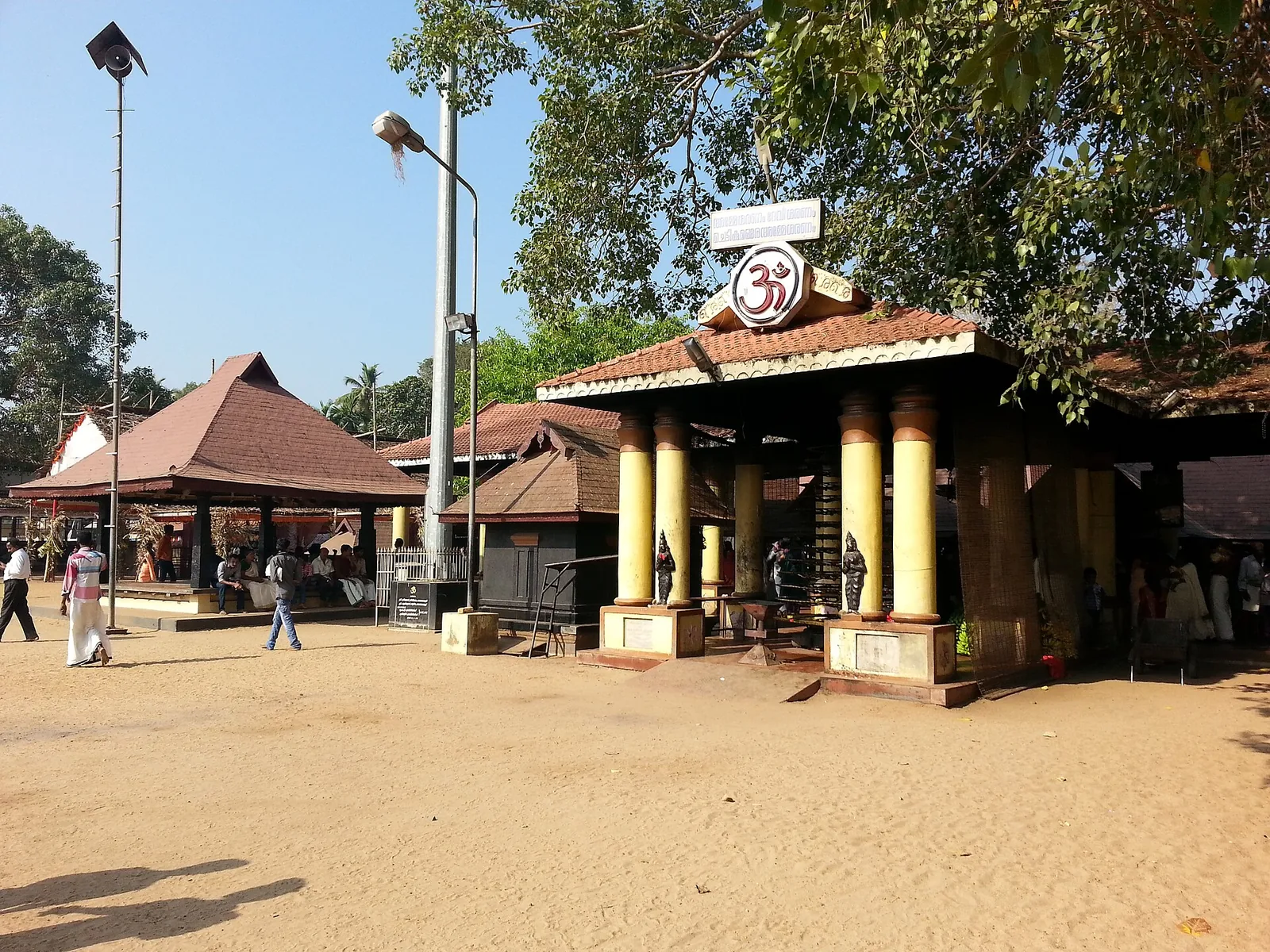
Major Bhagavathy temple near Mavelikkara, famous for its Kettukazhcha and Kumbha Bharani festivals.
3.2 km · ~8 min by auto · straight line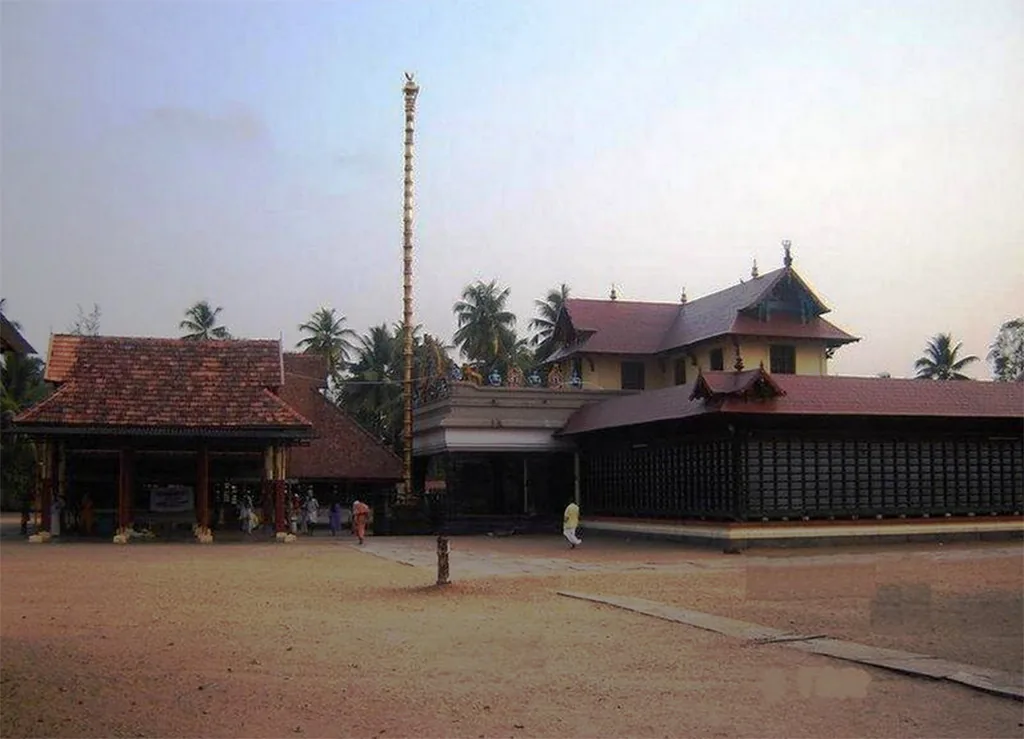
One of Kerala’s oldest Subramanya (Murugan) temples, in the south-Alappuzha town of Haripad.
9.2 km · ~15 min by cab · straight line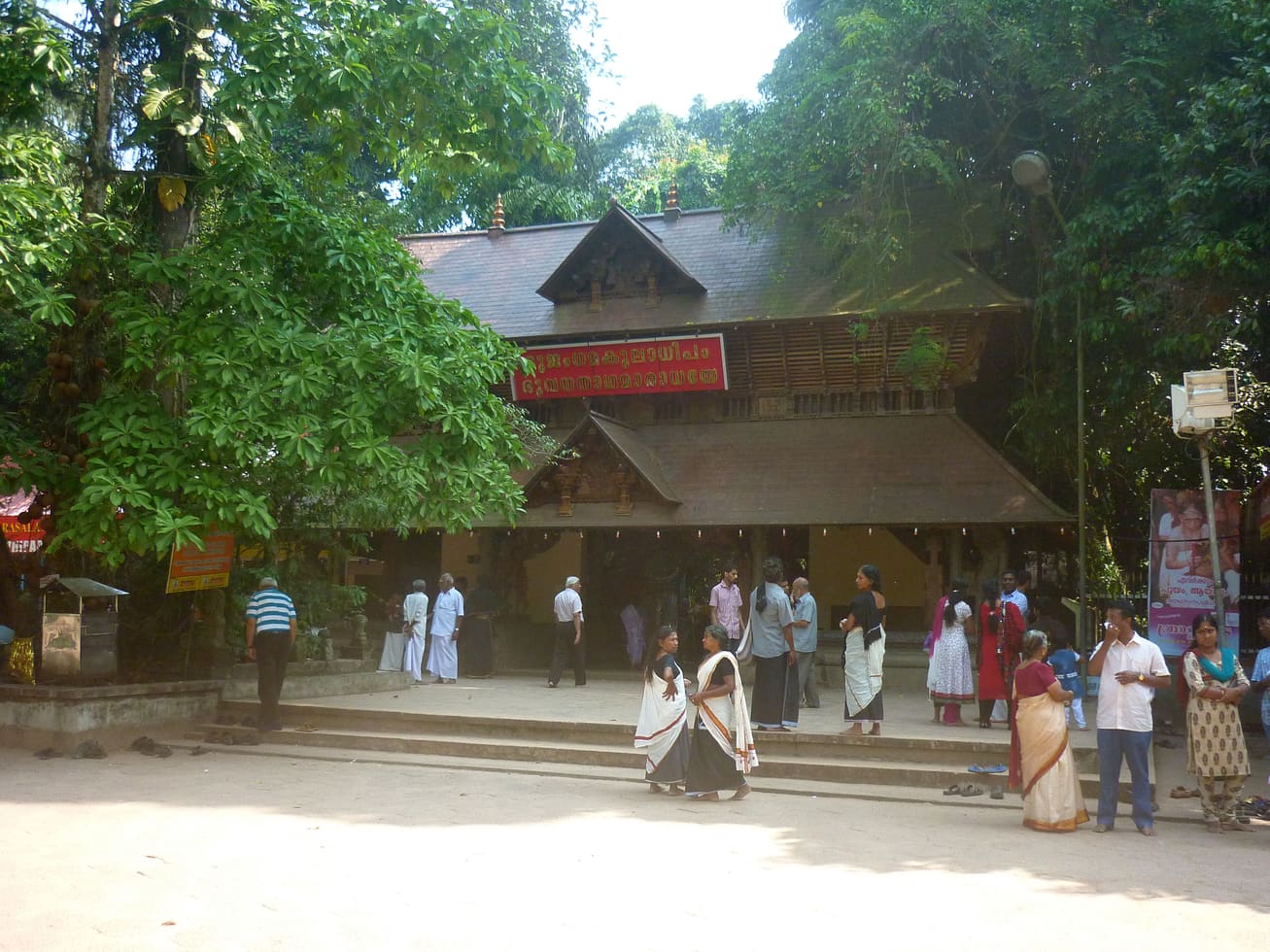
Major serpent shrine set in a sacred grove.
10.1 km · ~17 min by cab · straight line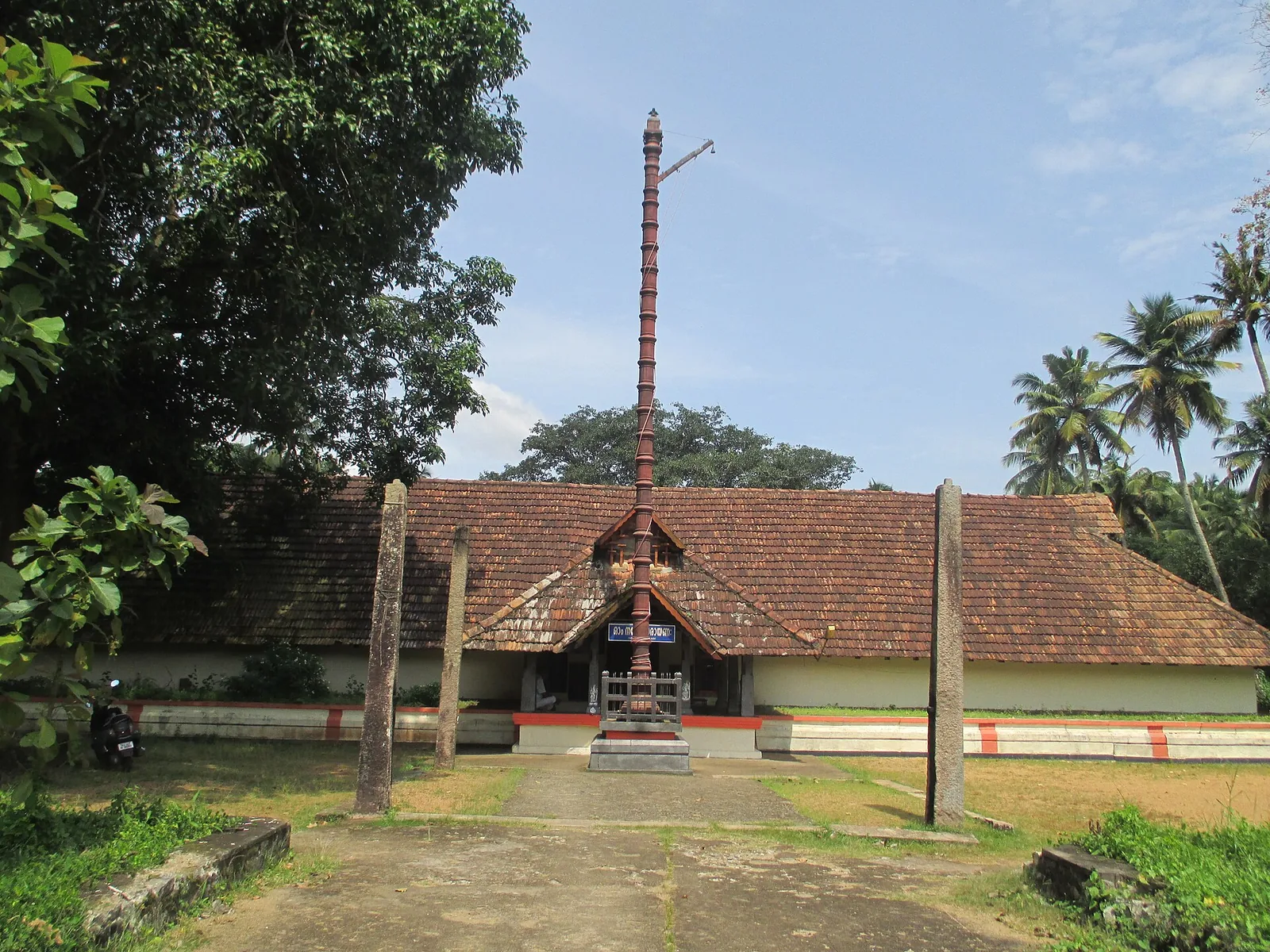
The Yudhishthira temple of the five Pancha Pandava shrines around Chengannur and one of the 108 Divya Desams, at Mundankavu — where the god is Imayavarappan, “lord of those who came before”, and darshan is held incomplete until you have also worshipped at the Shankha Theertham tank.
11.6 km · ~19 min by cab · straight line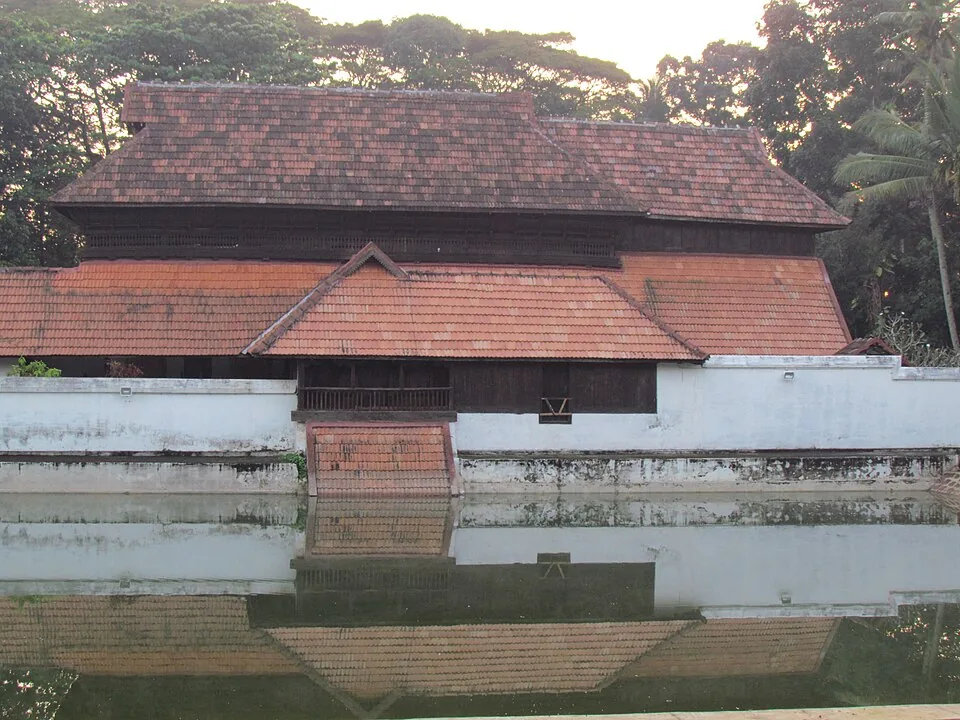
Restored 18th-century Travancore palace at Kayamkulam, home to the huge Gajendra Moksha mural.
11.7 km · ~19 min by cab · straight line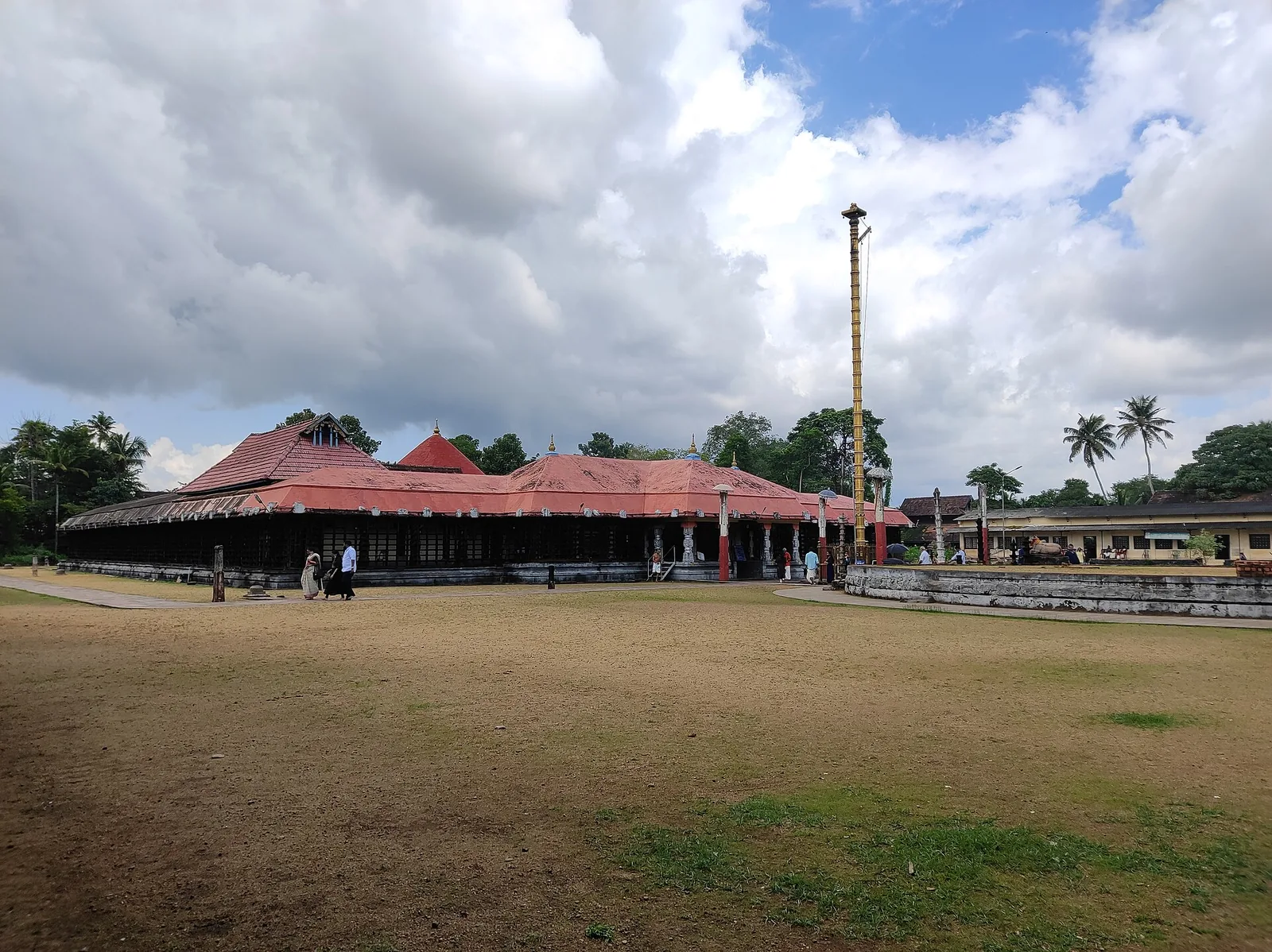
The great Shiva–Parvati temple of Chengannur, where the goddess is held to menstruate and the Thripputhaarattu is observed — one of the 108 Shivalayas, and the temple where the Thazhamon Madom tantris perform their first puja before they may officiate at Sabarimala.
11.9 km · ~20 min by cab · straight line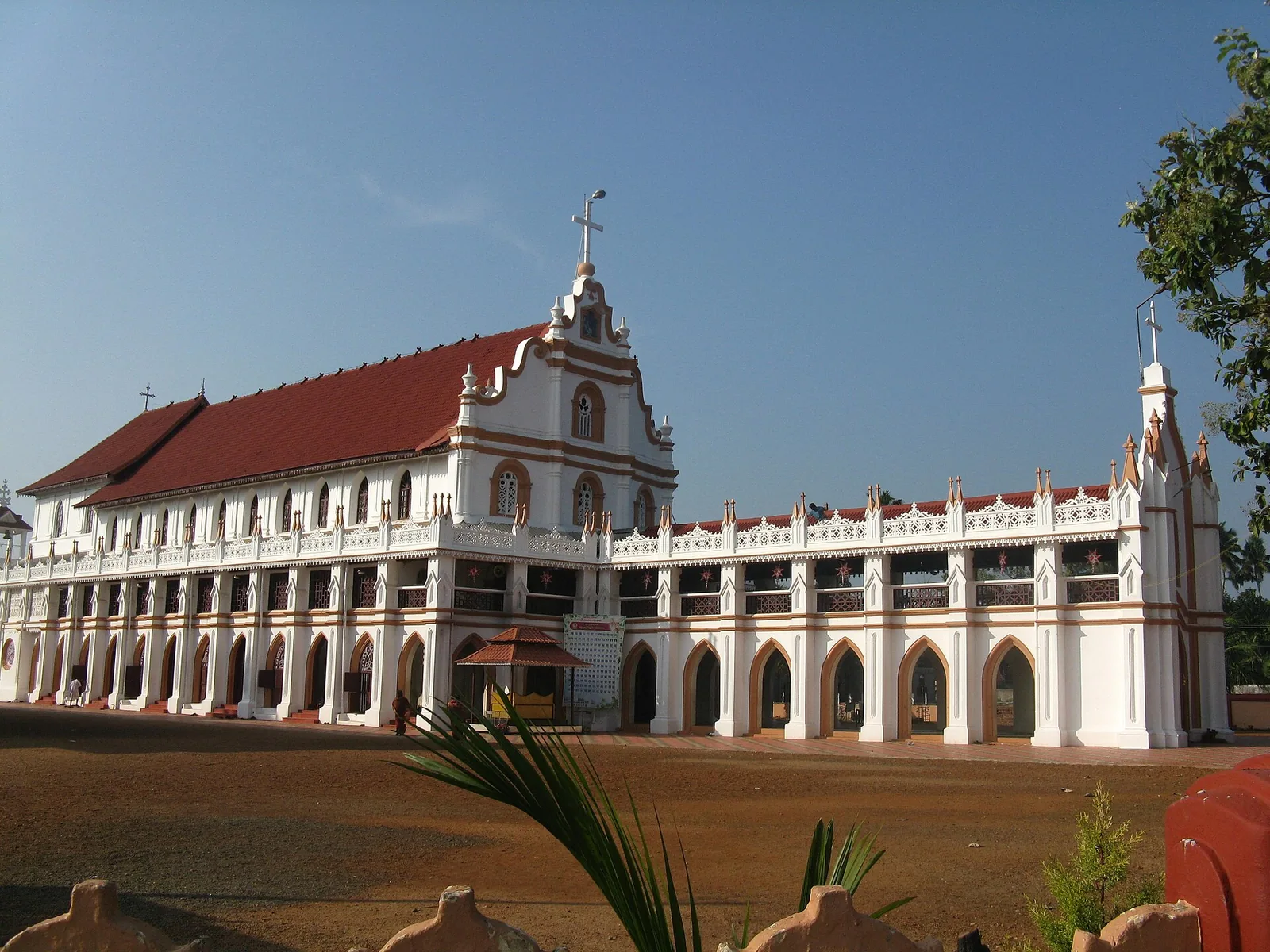
St George Forane Church at Edathua in Kuttanad, known for its large annual pilgrimage feast.
14.0 km · ~23 min by cab · straight line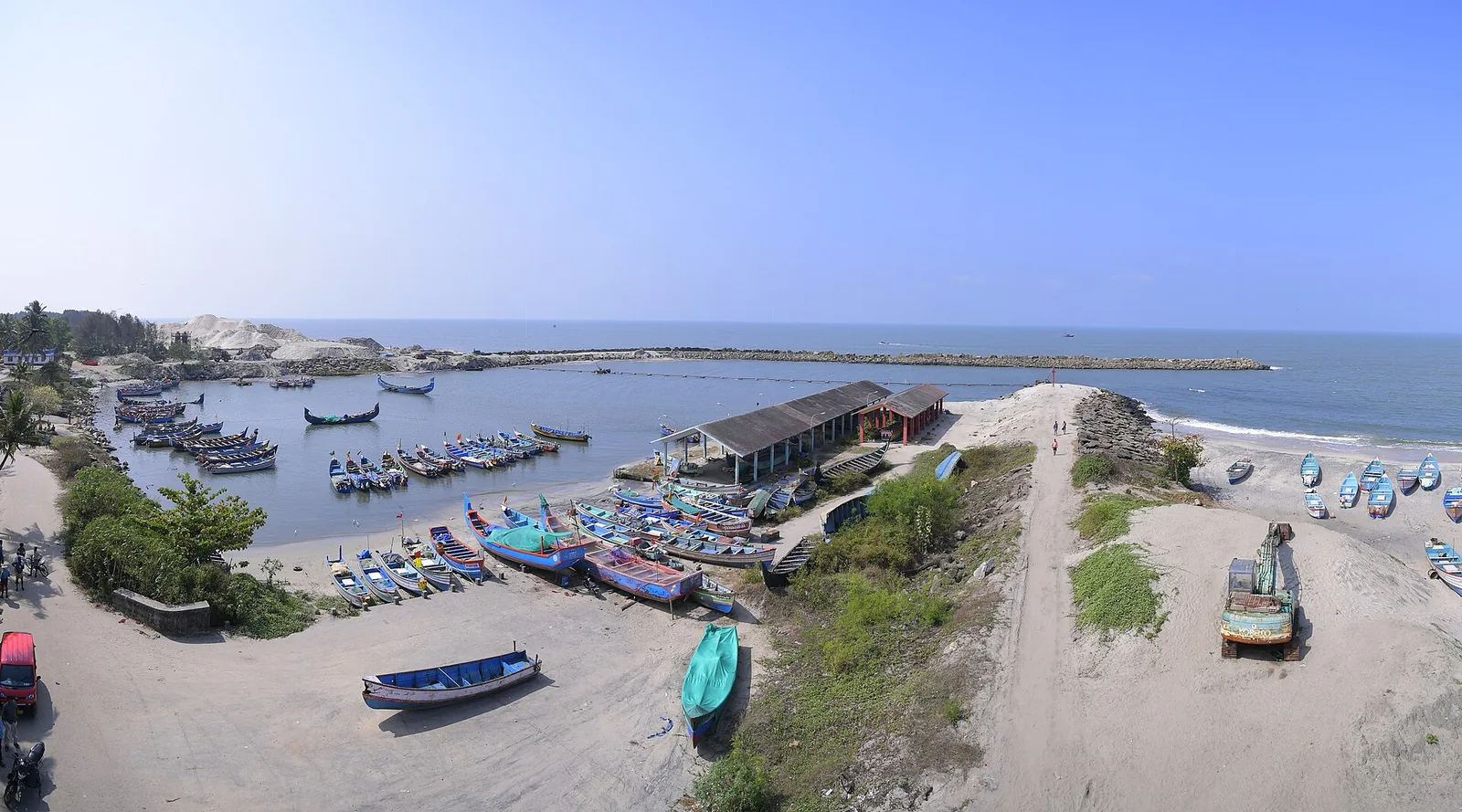
Working fishing harbour and 1955 flood spillway where the Thottappally leading channel meets the sea, south of Ambalappuzha — a painted fleet, two breakwaters and heaps of titanium-bearing black sand, rather than a quiet beach.
17.9 km · ~30 min by cab · straight line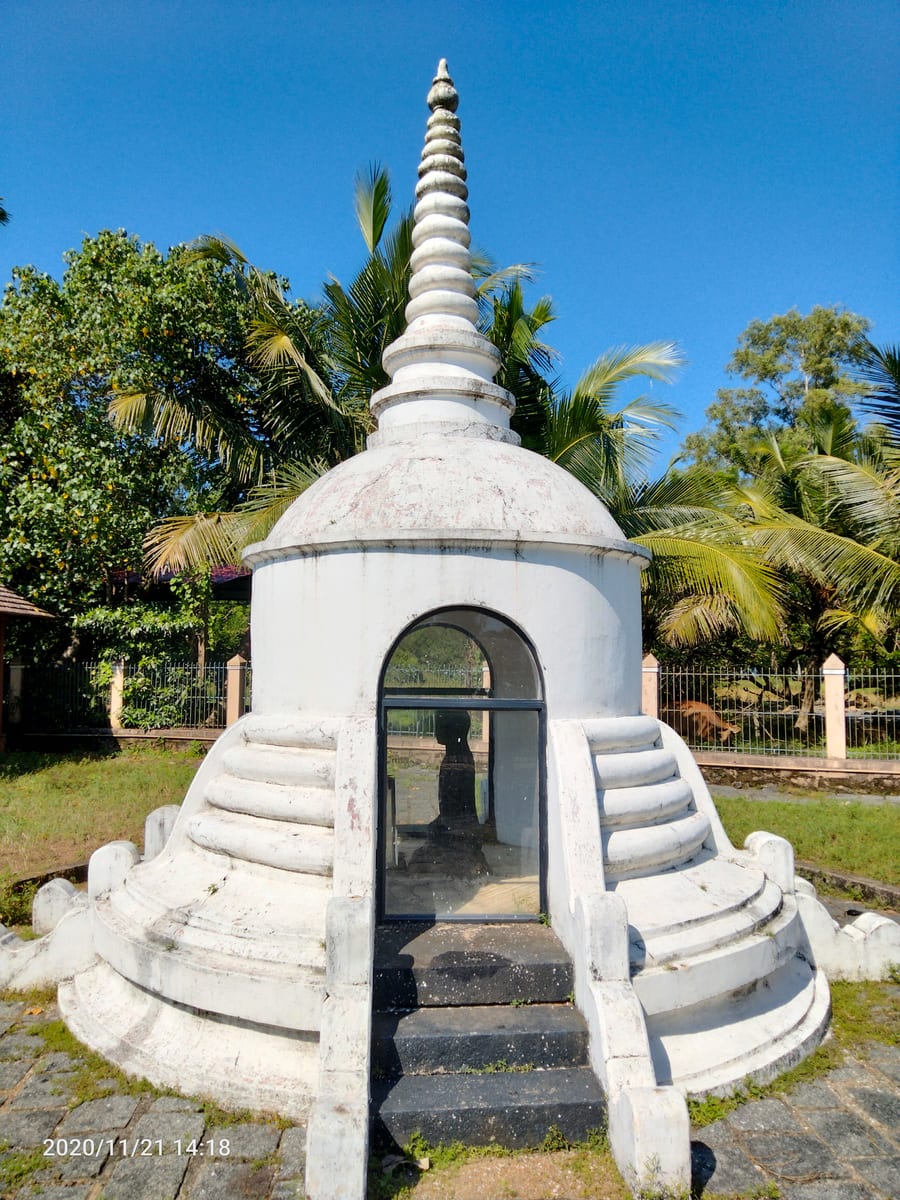
Ancient black-granite Buddha statue at Karumadi near Ambalappuzha, a relic of Kerala’s Buddhist past.
21.1 km · ~35 min by cab · straight line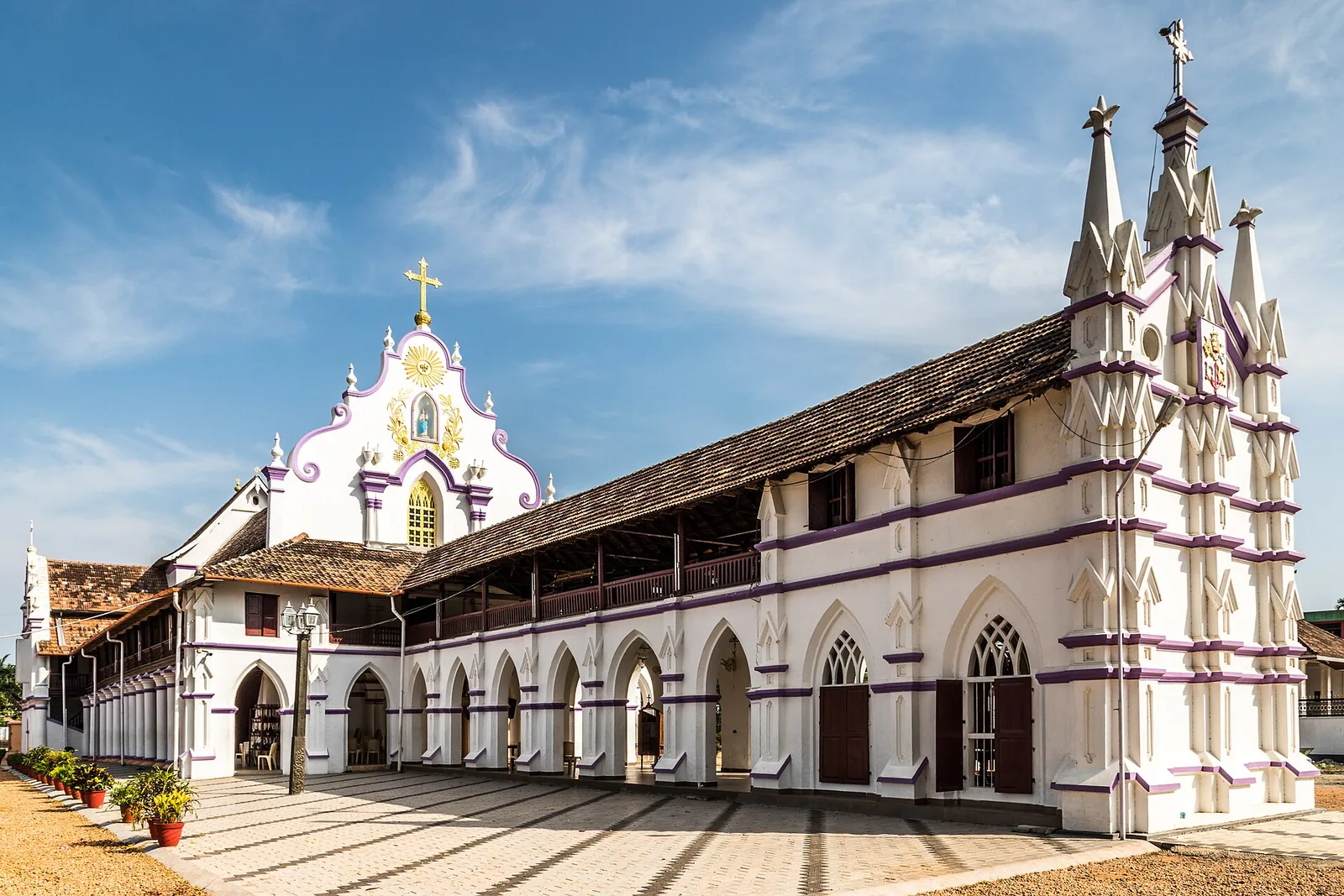
Kuttanad village on the Pamba known for the Champakulam Moolam snake-boat race and Kalloorkad St Mary’s Basilica.
21.6 km · ~36 min by cab · straight line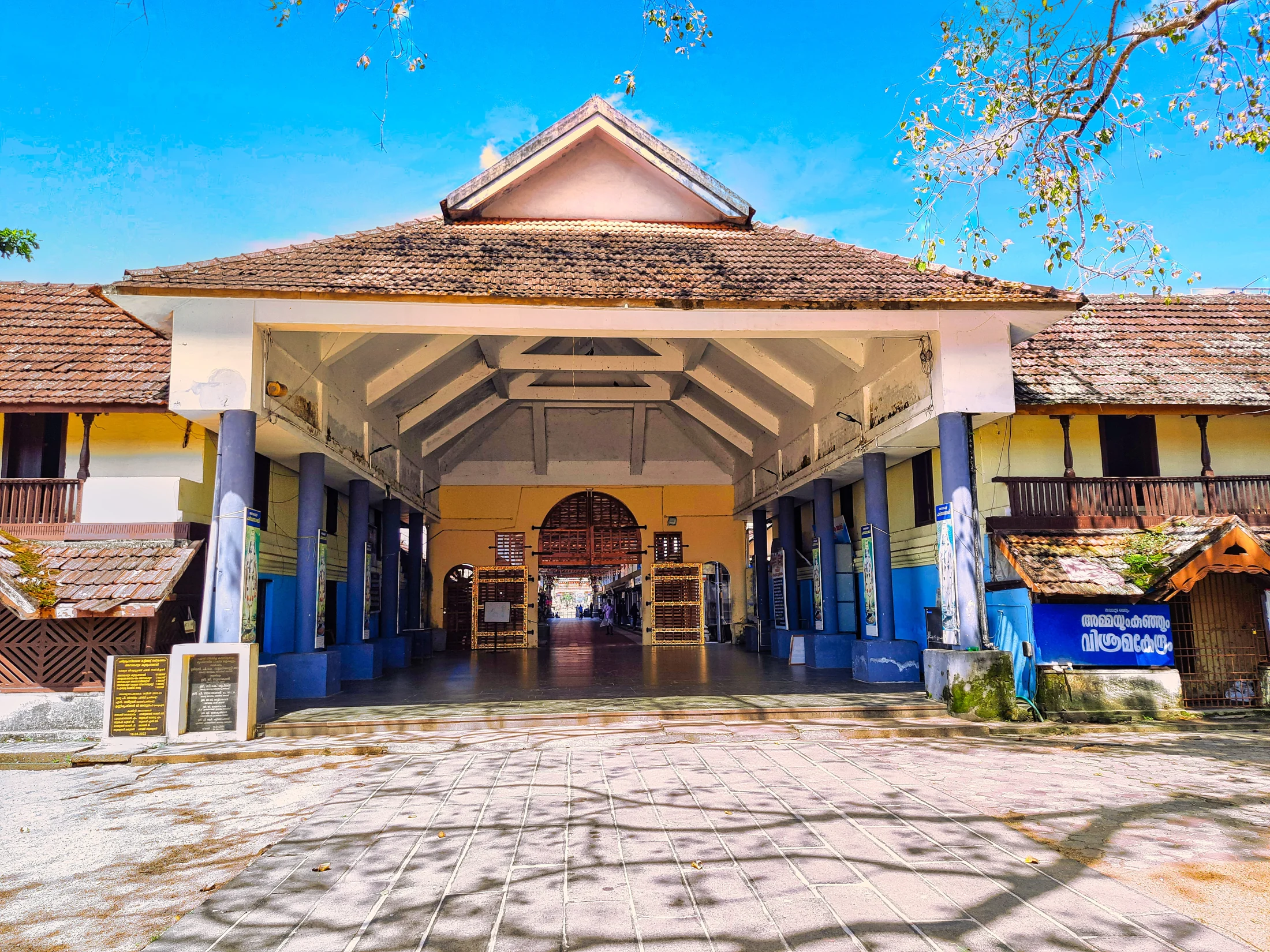
Ambalappuzha Sree Krishna Temple is an active temple in Ambalappuzha town, south of Alappuzha, administered by the Travancore Devaswom Board. Krishna is worshipped here as Parthasarathy, Arjuna’s charioteer. The temple combines a broad tank, tiled courtyards and painted ritual spaces with two enduring cultural associations: Palpayasam offered to the deity, and Kunchan Nambiar’s creation of Thullal. A visit works best when darshan, the permitted exterior spaces and any offering collection are planned around the temple’s morning or evening opening.
22.8 km · ~38 min by cab · straight line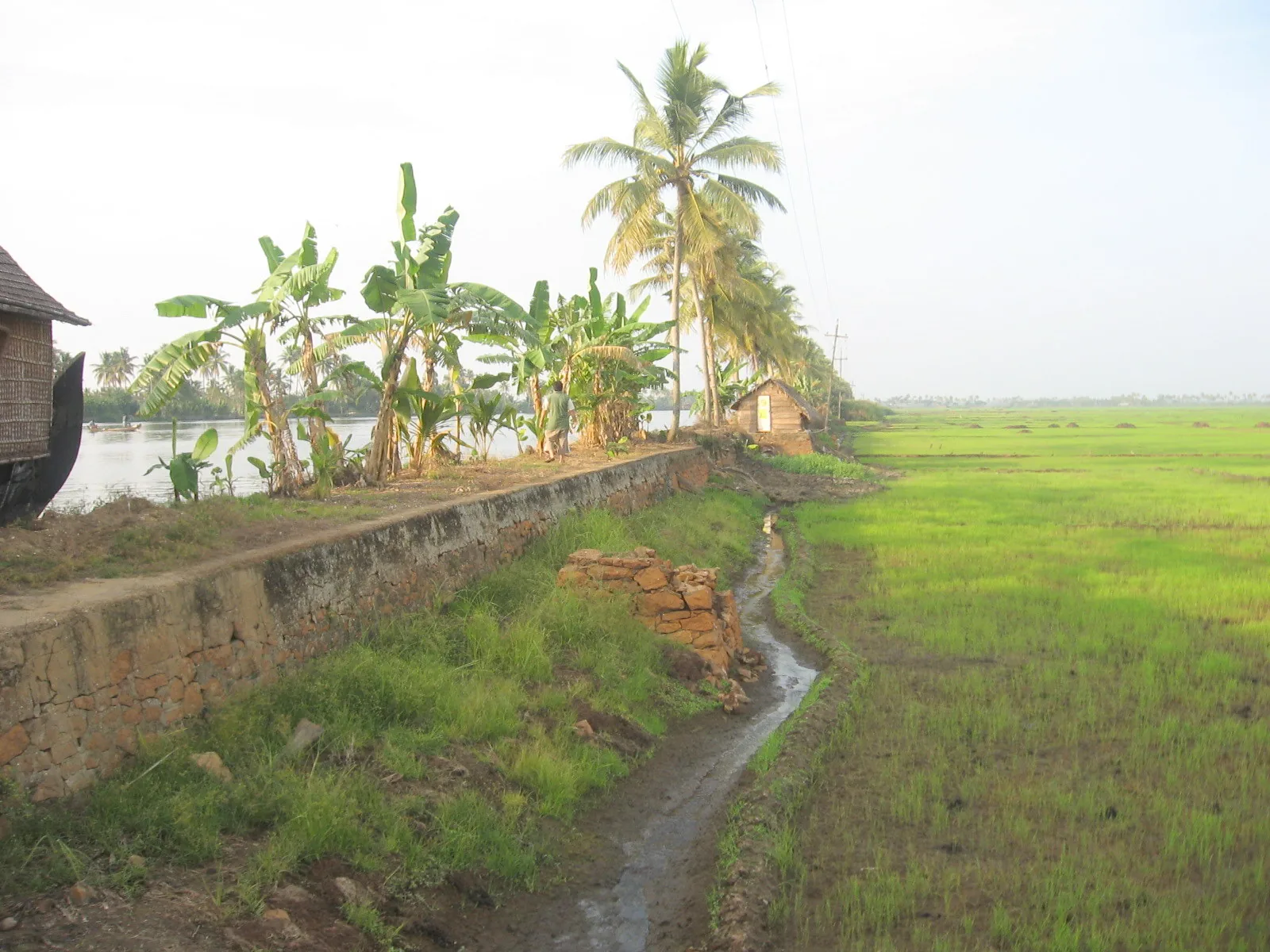
Low-lying paddy and canal region known as Kerala’s rice bowl.
24.5 km · ~41 min by cab · straight lineNearby toilets, pharmacies, ATMs, seating and vets are community-mapped and may be incomplete or out of date. Map data © OpenStreetMap contributors | Walking times © openrouteservice.org by HeiGIT
The temple’s own epigraph gives 823 AD, in the reign of the Chera king Rajasekhara Varman, and this is described as the earliest Kerala temple with a dated inscription about its own origin. The complex was restored and expanded in the thirteenth century, and an inscription of 1218 records that work in detail. ⚠ You will also see AD 731 quoted — it appears in the English Wikipedia article on Mavelikkara, with no epigraph cited for it. We follow 823.
A local era counted from the temple’s foundation, used in this region until the Kollam era (Kollavarsham, which begins in 825 AD) replaced it. The 1218 inscription is dated in both systems at once, which is how we know the temple era was still being reckoned four centuries after it began.
Shiva as Kiratamurti, the hunter — the form he takes in the Mahabharata to contend with Arjuna — installed as an east-facing lingam. Tradition holds that the god shows three different faces through the day: Dakshinamurti the teacher at dawn, Umamaheshwara at noon, and Kiratamurti again in the evening.
The tradition is that after the war between Odanad and Kayamkulam the defeated Kayamkulam Raja surrendered his sword before the deity here and left by the western nada, and that it has remained shut ever since. The closed door is real; the story attached to it is the temple’s own.
A Hinayana Buddhist centre is held to have stood nearby, kept by the Kannankara Panicker family, and the fourteenth-century Unnuneeli Sandesam is cited for the link. A Buddha image from it survives and now stands at Buddha Junction in front of the Sree Krishna Swamy Temple in Mavelikkara town, about 1.3 km away. ⚠ Sources differ on where it was found — one says paddy fields near this temple, another the Achankovil river.
The ten-day annual utsavam falls in Dhanu (December–January) on the Thiruvathira asterism and closes with the arattu. Shivaratri, in Kumbham (February–March), is the other major day. Mondays, the pradosha at dusk and the monthly Thiruvathira are kept through the year.
The temple is about 2.2 km west of the centre of Mavelikkara on the Haripad road, near Kandiyoor junction. Mavelikkara railway station, on the Thiruvananthapuram–Ernakulam line, is the nearest railhead, and autorickshaws and local buses run out from the town. Forty-five minutes to an hour is enough to walk the compound properly; allow more on festival days.
The Sree Krishna Swamy Temple and Buddha Junction are about 1.3 km east in Mavelikkara town, and St Mary’s Orthodox Cathedral at Puthiyakavu is close by. Chettikulangara Devi Temple, famous for its Kumbha Bharani kettukazhcha, is about 4 km south-west. Chengannur, with its Mahadeva temple and the Pancha Pandava shrines, is roughly 15 km north-east.
Morning or early evening is usually best; festival days can be powerful but crowded.
Entry: No ticket. Entry is free; vazhipadus and archanas are paid for individually at the counter. Timings: Ordinary Kerala Shaiva temple hours — early morning and evening darshan, with the nada shut through the middle of the day. The temple does not publish a fixed timetable we can verify, so no exact times are given here; festival days rearrange everything.
Base yourself in Mavelikkara or a nearby town in Alappuzha, then confirm the last-mile route locally before leaving. Check temple entry customs, dress rules and festival crowd conditions before arrival. If the visit depends on forest, temple, boat, ferry, weather or seasonal access, check the official/local rule on the day before travel.
45 minutes to 2 hours, longer during festival or queue periods.
Nearby you can pair Chettikulangara Devi Temple (3.2 km), Haripad Sree Subramanya Swamy Temple (9.2 km), Mannarasala Sree Nagaraja Temple (10.1 km), Thrichittatt Maha Vishnu Temple (11.6 km).
Use official counters for offerings/tickets where applicable. Keep footwear and valuables secure in crowded areas.
Written about Kandiyoor Sree Mahadeva Temple itself — its history, its legends and the arguments about them.
Route-level itineraries and practical guides for the rest of Kerala.
Photographs: Ms Sarah Welch (CC0), RajeshUnuppally (CC BY-SA 3.0). Wikimedia Commons.


