What to expect
Highlights
- Temple visit at Chengannur Mahadeva Temple
- Kerala temple architecture and rituals
- Local food, shops and pilgrim services nearby
The great Shiva–Parvati temple of Chengannur, where the goddess is held to menstruate and the Thripputhaarattu is observed — one of the 108 Shivalayas, and the temple where the Thazhamon Madom tantris perform their first puja before they may officiate at Sabarimala.
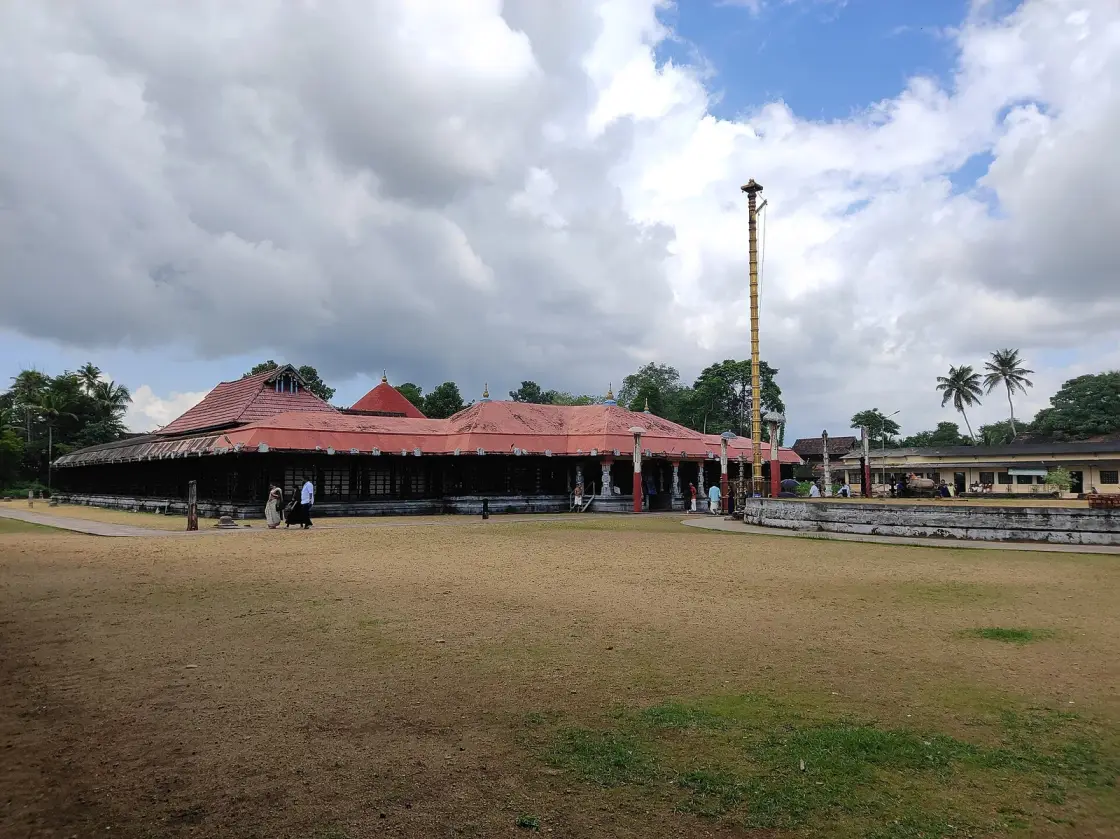
Check entry arrangements. Ask temple staff about visitor entry, dress requirements and access to the inner shrine before you travel, especially if you are visiting as a non-Hindu.
Dress respectfully and follow the institution’s admission and photography rules.
In the middle of a small Pampa-side town in eastern Alappuzha stands a temple that keeps one of the most extraordinary observances in Indian religion. Chengannur Mahadeva Temple holds Shiva and Parvati in a single sanctum, back to back — he facing east, she facing west — and it is the goddess, not the god, who has made the place famous. Here the Devi is held to menstruate. When the priest lifts the previous night’s flowers at dawn and finds a stain on her garment, her doors are shut for three days, and on the fourth morning she is carried down to the river to bathe and brought home on a female elephant, with Shiva himself waiting at the eastern gate to receive her. It is called the Thripputhaarattu, the temple says it happens several times a year, and the news goes out through the newspapers.
Chengannur Mahadeva Temple stands about five hundred metres east of the MC Road in the centre of Chengannur, a municipal town of some twenty-three thousand people on the Pampa in the eastern corner of Alappuzha district. The railway station and the KSRTC stand are both about a kilometre away, which matters more here than at most temples: Chengannur is the railhead that Sabarimala pilgrims use, and the temple is part of that traffic rather than apart from it. A board on the temple’s own street front reads SABARIMALA EDATHAVALAM — CHENGANNUR DEVASWOM, marking it as an official halt on the pilgrim road, and a second board beside it counts the distances out in four scripts: Chengannur Mahadeva Temple, 0 km; Pandalam Valiyakoickal Temple, 15 km; Sabarimala, 92 km. (Those are the temple’s own posted figures, read off the board in photographs; treat them as the Devaswom’s reckoning rather than as a measured road distance.)
The building you meet first is not the shrine but the great eastern gopuram, a tall two-storeyed block of tiled roofs and timber gables rising straight off the street with ഓം നമ ശിവായ across the lintel. Pass through it and the scale changes completely: a wide, open, sandy courtyard, a gold-sheathed flagstaff carrying its Nandi finial, and the long low sweep of the temple itself under red tile, ringed by the lamp-studded outer wall. Off to one side lies the temple tank with its worn stone ghats, green with reflected trees. It is a big complex, and it is worth walking rather than crossing.
The sanctum is the thing to understand. Shiva — Thrichengannurappan, as the temple’s own signboards style him — is a self-manifested lingam about three feet high, facing east; because it is svayambhu, it was never dressed or smoothed, and the pedestal was lowered down over the stone rather than the stone being fitted to the pedestal. Directly behind him, sharing the same sreekovil and facing the opposite way, west, is the Devi. The arrangement is read as Ardhanarishwara, the god who is half woman, split into two doorways on two sides of one building — and it means the temple has two nadas that open onto two different worlds, which is exactly what makes the Thripputhaarattu possible.
By the ritual book this is a Shiva temple and not a joint one. The flag-hoisting festival, the five daily pujas and the sreebalis are all his; the Devi has three pujas and a deeparadhana, and even on her own occasions Shiva takes the first turn. She has no melsanthi of her own. Yet it is the Devi who fills the town, and the Malayalam account says so plainly: her greater standing came from what devotees believe, not from what the ritual order grants her. People come to her with marriage difficulties, with troubled marriages, and with gynaecological and menstrual illness. That gap between the liturgy and the devotion is the most interesting fact about the place, and it is not a modern development. (⚠ Our English and Malayalam sources disagree on the ritual detail — the English Wikipedia article credits Parvati with three sreebalis of her own. We follow the fuller Malayalam account here and flag the disagreement rather than choosing silently.)
The Thripputhaarattu itself runs like this. The temple holds that the Devi becomes rajaswala — that she menstruates — and the sign is found, not scheduled: when the melsanthi removes the nirmalya, the previous day’s flowers, and sees the mark on the udayada, the garment covering the image. The western nada, hers, then closes for three days, and her chaitanya is shifted out of the image into the balibimba so that worship continues without her. On the fourth morning she is taken in procession to Mithrappuzhakkadavu, the ghat on the Pampa, for the arattu — the same rites as any other temple bathing, performed for a reason no other temple has. She is rested afterwards in the kulippura on the riverbank and brought back in state on a pidiyana, a female elephant. Chengannurappan comes out to the eastern anakkottil to meet her; after the two are carried together, she goes in by the west door and he completes his circuit and enters by the east. For twelve days from the onset, the Haridra Pushpanjali is offered — an archana with turmeric that the Malayalam source says is performed at no other temple in Kerala — and thousands come for it.
The rest of the calendar is unusually long. The annual festival is twenty-eight days, hoisted on the Thiruvathira asterism in Dhanu (December) and closing with the arattu on Thiruvathira in Makaram (January), in the Pampa. Other Kerala temples once kept twenty-eight-day festivals; Chengannur is the only one that still does. Shivaratri in Kumbham brings the Araya fishing community up from Alappad on the Kollam coast to perform the Parisham Vayppu, which is described in the myth section below and is not a performance for visitors. Daily darshan is 4.30 am to 11 am and 5 pm to 8 pm, taken from the temple’s own listing rather than from a travel page — though on eclipse days the nada shuts an hour before the eclipse begins and does not reopen until purification is done, and festival days rearrange everything.
The oldest story here begins with a wedding and a tilting planet. When Shiva married Parvati, so vast a company of gods and sages gathered in the north to watch — Brahma, Vishnu, Indra, Lakshmi, Saraswati and a long file behind them — that everyone feared the earth would tip under the weight. Shiva’s remedy was to send the sage Agastya south to sit on the other end. The gods doubted that so short a man could balance a world, but Agastya settled into tapas on the hill called Shonadri, which is Chengannur, and held the earth level; and with his inner sight he watched the wedding he had been sent away from. Afterwards Shiva came south with Parvati to visit him, and it was here, at Shonadri, that the goddess had her first period, and the ritushanti — the rite that follows a girl’s first menses and completes the marriage — was performed on the spot. The pond in the temple grounds called Shakti Theertham is said to be that place, with the remains of Agastya’s fire-pit beneath its water; the meenoottu, the feeding of the tank’s fish, is offered there. This is the legend the Thripputhaarattu belongs to, and it is worth saying plainly what it means: the observance is not an oddity attached to the temple, it is the temple’s founding event repeated.
Agastya asked that the two of them stay so he could go on worshipping them, and they appeared here of themselves. That original shrine is the Kunnathu Mahadeva Temple to the north-east, and tradition holds that a Chengannur darshan is incomplete until you have been there too. Kunnathu Mahadevan is said to be fond of children, so children are brought to him against the ailments of infancy, and the offering made for them is called Kottum Chiriyum, “drumming and laughter” — sweets and fruit are offered and given out, and the children clap and laugh while it is done.
The temple’s own origin story is later and much more earthbound. Parashurama, having brought brahmins to Kerala and settled them in sixty-four gramams, built them a hundred and eight Shivalayas and a hundred and eight Durgalayas, and Chengannur was one of the sixty-four. The land where the temple now stands was dense forest, leased by the Vanjippuzha Thampuran to a man named Nayanarupilla. A Pulaya woman working for him came into the forest to cut grass and stopped to whet her sickle on a stone, and the stone bled. Word went up from her to Nayanarupilla and from him to the Thampuran, who came with brahmins, among them the senior Potti of Thazhamon Madom. The Potti said it was a self-manifested lingam, and that the bleeding would stop only if it were bathed in thirty-six para of ghee — and if it were not, the jyotirlingam would vanish. The ghee was brought and the abhishekam performed. That a temple’s foundation should be discovered by a labouring woman of the lowest caste, and that the tradition should have kept her in the story rather than tidied her out of it, is worth noticing.
Then Uliyannur Perunthachan arrived — the master carpenter of the Parayi Petta Panthirukulam, the twelve siblings of Kerala legend. He drew up the measurements for the sreekovil, the mandapams, the koothambalam and the gopurams, left, and came back three months later to find everything finished except the koothambalam, which was to be built as an ellipse and which no craftsman could raise. He built it himself in a matter of days, and carved a stone image of the Devi for it. The ellipse is the point of the story, and the sequel is in the history section: it burned, and it is the one part of this temple that has never been rebuilt.
Two more traditions attach the Devi to people rather than to gods. Kannaki, the woman who burned Madurai and is worshipped as a form of Kali, is said to have rested and done penance here on her way to Kodungallur, and Chengannuramma is worshipped in that Mahakali aspect because of it — and it is the Malayalam source itself, not a travel writer, that compares this temple to Kamakhya in Assam and offers the Thripputhaarattu as the evidence. The second tradition says the Devi is the daughter of an Araya king: cursed by Shiva, Parvati was born into a fishing family and chose, in her swayamvara, a fisher youth who was Shiva himself. The Arayans of Alappad, the sandspit between the sea and the backwater in what is now Kollam district, hold that they descend from her. The rite that carries this is the Parisham Vayppu at Shivaratri, and the story behind it is precise: after a fire in the temple the Devi’s image melted, and no metalworker could reproduce it; the ruler was told in a dream to look through the palm-leaf records, and found an ola in Perunthachan’s hand foretelling exactly that fire and stating that he had sunk a second panchaloha image of the Devi in the deep pool by Parakkadavu on the Pampa. The townspeople dived and found nothing. Alappad Arayans who had come upriver to fish went down and brought it up. Because that day was Shivaratri, and because it was they who gave the god his goddess back, they come every Shivaratri as the Devi’s father’s people and pay the parisham — the bride-price of their own marriage custom — to Mahadeva.
The honest history of this temple is shorter than its legends, and the Malayalam account says so itself, which is unusual enough to be worth repeating. Whatever the antiquity claimed for the site, it observes, the Shiva temple at Chengannur is historically not very old. What is old here is the goddess: worship of a mother deity of fertility, in the Kannaki conception, is held to have gone on at this spot long before the Shiva temple existed. The temple as a building belongs to the era of the Vanjippuzha Thampurans, the ruling house seated at Chengannur, who installed Chengannur Thevar and raised the complex. This is a rare and useful shape for a Kerala temple record: a source that sets out its own legend at length and then declines to date the building by it.
The temple burned. The Malayalam sources place the fire in the period of the Vanjippuzha house and record that the reconstruction was carried out under experts brought from Thanjavur, during the time of the Travancore kings. It was not a quick job. Work stopped repeatedly and dragged on for years, and it left the language a proverb: ചെങ്ങന്നൂർ മതിൽക്കകത്തെ പണി, “the work inside the Chengannur walls”, for a task that never ends. Almost everything lost was rebuilt. The exception is Perunthachan’s elliptical koothambalam. Nobody could reproduce it, and — this is the detail that gives the site its melancholy — nobody has since tried. The ground where it stood is still empty.
The temple’s tantric authority belongs to Thazhamon Madom, seated at Mundankavu near Chengannur, one of the two families reckoned the oldest tantri lineages in Kerala. The family is known worldwide as the tantris of Sabarimala, and the connection runs the other way from what most visitors assume: when a member of the family completes his training, his first puja is performed here at Chengannur. Only afterwards is he entitled to officiate at Sabarimala or anywhere else. The melsanthi and keezhsanthi appointments are the Devaswom Board’s; the temple is administered by the Travancore Devaswom Board. That single fact — that the Sabarimala priesthood begins at this altar — explains why a town of twenty-three thousand people has a temple of this size.
Chengannur also produced a saint, and through him something larger. Viralminda Nayanar, counted sixth among the sixty-three Nayanars of Tamil Shaivism, was born at Sengunru, generally identified with modern Chengannur, in the Chera country; he was a contemporary of Sundarar and of the Chera king Rajashekhara Varman, and he and Cheraman Perumal Nayanar are the only two Nayanars from Kerala. His story is a quarrel. Holding that honouring Shiva’s devotees outranked worshipping Shiva, he objected when Sundarar walked past the assembled devotees at Thiruvarur and went straight to the sanctum — and excommunicated not only Sundarar but Shiva himself for having accepted the worship. To make peace Sundarar composed the Tiruthonda Thogai, the hymn listing the holy devotees, which is the first compilation of the Nayanars and the seed of the canonical sixty-three. The list exists because a man from this town lost his temper about precedence. (⚠ Some accounts add that he endowed this temple with land. We have not found that in a source we can check, so it is not stated here as fact.)
The name is the one thing this page will not settle. The tradition, given in the Malayalam article, runs from the Sanskrit Shonadri — the red hill — through Malayalam Chenkunnur, which contracts to Chengannur. It is a clean derivation and it fits the Agastya legend, but ml.wikipedia flags it as unsourced in its own text, and we print it the same way: as what the temple tradition holds, not as settled etymology. One thing can be added in its favour without overstating it. The twelfth-century Tamil Periya Puranam names Viralminda’s birthplace Sengunru, a form carrying the same “red hill” sense, so the name-shape is attested a long way back rather than being a modern invention — though since Sengunru is identified with Chengannur partly because the names match, that is corroboration of the form’s antiquity and not independent proof of the derivation.
For the Thripputhaarattu, which has no parallel in Kerala. A temple that observes its goddess’s menstruation, closes her doors for three days, takes her to the river to bathe and brings her home on a female elephant to be met by her husband at the gate — and announces it in the newspapers when it happens — is not something you will encounter anywhere else in the state.
For the sanctum itself. Shiva facing east and Parvati facing west inside one sreekovil, read as Ardhanarishwara, with the lingam self-manifested and left unshaped. It is an unusual arrangement and it is the physical reason the Thripputhaarattu can be observed at all — two doors, two worlds, one building.
For the Haridra Pushpanjali, offered on the twelve days that follow the onset and, according to the Malayalam sources, performed at no other temple. If you happen to be in Chengannur during those days, the temple is a different place entirely.
For the twenty-eight-day festival, from Thiruvathira in Dhanu to Thiruvathira in Makaram, ending with the arattu in the Pampa. Several Kerala temples once ran festivals this long; this is the last one that still does.
Because it is where the Sabarimala tantris begin. Thazhamon Madom, based a short way off at Mundankavu, sends its newly trained members here for their first puja before they may officiate on the hill — a piece of the Sabarimala story that almost nobody stops for on the way past.
Because it is easy. The temple is about a kilometre from Chengannur railway station and five hundred metres off the MC Road, in the middle of a working town — one of the least effortful major temple visits in Kerala, and a natural stop for anyone travelling the Pampa valley or heading for Sabarimala, Aranmula or Pandalam.
Road km to Alappuzha; ghat roads and traffic vary — allow extra.
Morning or early evening is usually best; festival days can be powerful but crowded.
Live forecast loads in your browser.
Sun and moon are calculated for this location and shown in IST. Photography windows are the hour around sunrise and sunset; the sunset bearing is degrees clockwise from true north. Moon phase is accurate to about half a day.
Verified hotels, homestays, restaurants, experiences, sights, shops and rentals around Chengannur Mahadeva Temple — commission-free, with direct contact. Filter by what you need.
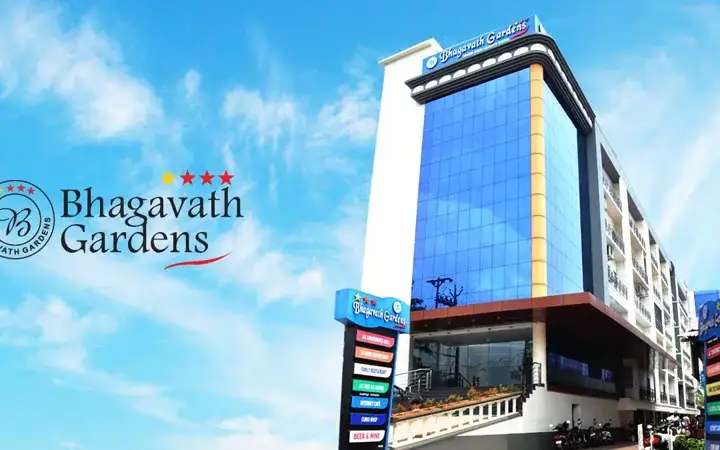
A Market Road hotel in Chengannur town, with restaurants and meeting spaces described in its property listing. Its town location is the main reason to compare it with a more distant resort. Confirm the room category, current dining service and your arrival arrangements directly.
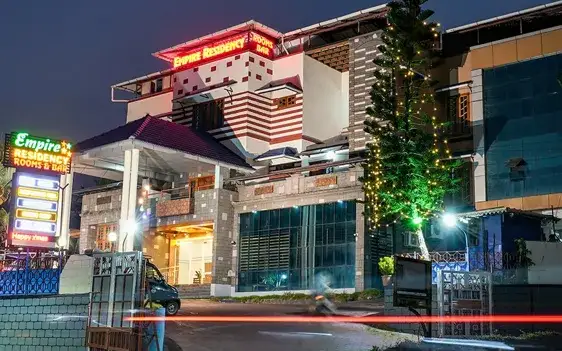
Empire Residency is at Angadikkal, Puthenkavu, in Chengannur. Use its actual address when comparing it with hotels on Market Road or near the railway station. Before reserving, request the room category, meal plan and travel time to your next Chengannur stop.
Two-star hotel near the Head Post Office, working since 1981. Near Head Post Office, Chengannur, Kerala 689121.
Christian College Junction family restaurant, Indian, Chinese and Arabic food.
Railway station in Chengannur. Railway Station Road, Chengannur, Alappuzha, Kerala 689121.
KSRTC depot that runs the round-the-clock Pamba pilgrim buses. Main Central Road, Chengannur, Alappuzha, Kerala 689121.
Divya Desam at Puliyoor, the Pandava temple attributed to Bhima.
Temple in Chengannur. Temple Road, Thiruvanvandoor, Alappuzha, Kerala.
Ancient Syrian church shared by Orthodox and Mar Thoma parishes. Chengannur, Alappuzha, Kerala 689121.
1793 cathedral at Puthencavu where three Malankara prelates are interred.
Book with the place itself. India’s cyber-crime coordination centre warned in April 2025 that convincing copies of hotel and pilgrimage booking sites are being pushed through sponsored search and social ads, taking payment for rooms the property never hears about. Every listing here links to the business’s own contact details and its own Google or Bing profile — we take no commission and sit in nobody’s payment path. If a booking page reached you through an ad, check the address bar against the property’s own site before you pay. Fraud can be reported on cybercrime.gov.in or on 1930.
Find food, accommodation and activities across Chengannur. Browse the guides for places to eat, stay and explore along your route.
2 more places around Chengannur. Open a guide to plan the visit and onward journey.
A prominent Bhagavathy pilgrimage temple at Neerattupuram, especially associated with the women-led Pongala; ordinary worship and festival-day planning differ substantially.
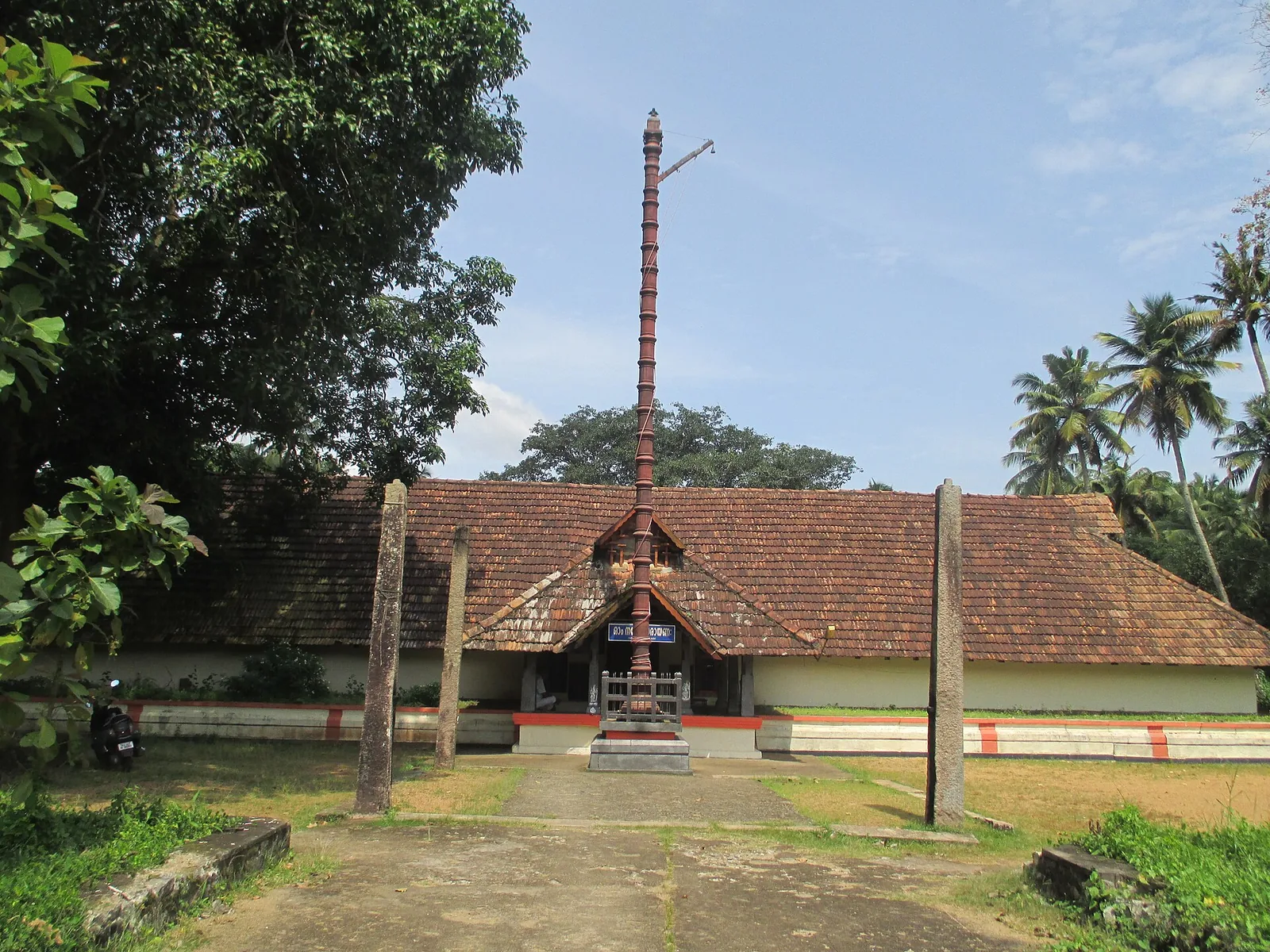
820 m · 10 min walk
The Yudhishthira temple of the five Pancha Pandava shrines around Chengannur and one of the 108 Divya Desams, at Mundankavu — where the god is Imayavarappan, “lord of those who came before”, and darshan is held incomplete until you have also worshipped at the Shankha Theertham tank.
Roampedia is commission-free — own or know a stay, eatery, guide or shop near Chengannur Mahadeva Temple? List it and it appears here once verified.
Add a nearby businessEntry: No ticket. Entry is free; vazhipadus such as the Haridra Pushpanjali, meenoottu, dhara, neypayasam and the archanas are paid for individually at the counter.
Dress code: Enforced, and in the strict Travancore Devaswom Board form: mundu or dhoti for men, who remove their shirts inside the temple; saree, set-mundu or long skirt with a blouse for women. Trousers, shorts and shirts are not accepted inside. Entry to the temple proper follows the usual Kerala convention and is for Hindus.
Festivals: The 28-day Thiruvutsavam, Dhanu Thiruvathira to Makaram Thiruvathira, with the arattu in the Pampa — other Kerala temples once ran festivals this long and this is the last that still does. Mahashivaratri, when Araya families from Alappad in Kollam district perform the Parisham Vayppu. And the Thripputhaarattu, which is not a calendar festival at all: the goddess's western nada closes for three days, and on the fourth morning she goes to Mithrappuzhakkadavu on the Pampa for the arattu and returns on a female elephant.
Photography: Photography inside the temple follows Devaswom rules and is restricted around the sreekovil — ask at the office rather than assuming. The eastern gopuram from the street, the courtyard, the flagstaff and the tank are the frames most visitors actually get.
If you are travelling by bus or ferry, check the return service with the operator before setting out. Leave time to reach the stop or jetty after your visit.
Ask at the bus stand for the time of the last service back, not the next one. If you miss it, an auto or app cab is the fallback — agree the fare before you get in.
If you need step-free access, contact the site before travelling. Ask about a level entrance, steps along the route, the nearest drop-off point, seating and accessible toilets.
Charge cap and free-transaction limits: Reserve Bank of India, in force since 1 May 2025.
These services are listed within about 1.2 km of Chengannur Mahadeva Temple. Walking distances follow mapped routes; access and opening hours can change. Other services may be closer but are not included here.
Emergency numbers are verified against official government and state tourism sources. 112 works anywhere in India.
The Yudhishthira temple of the five Pancha Pandava shrines around Chengannur and one of the 108 Divya Desams, at Mundankavu — where the god is Imayavarappan, “lord of those who came before”, and darshan is held incomplete until you have also worshipped at the Shankha Theertham tank.
820 m · 10 min walk · straight line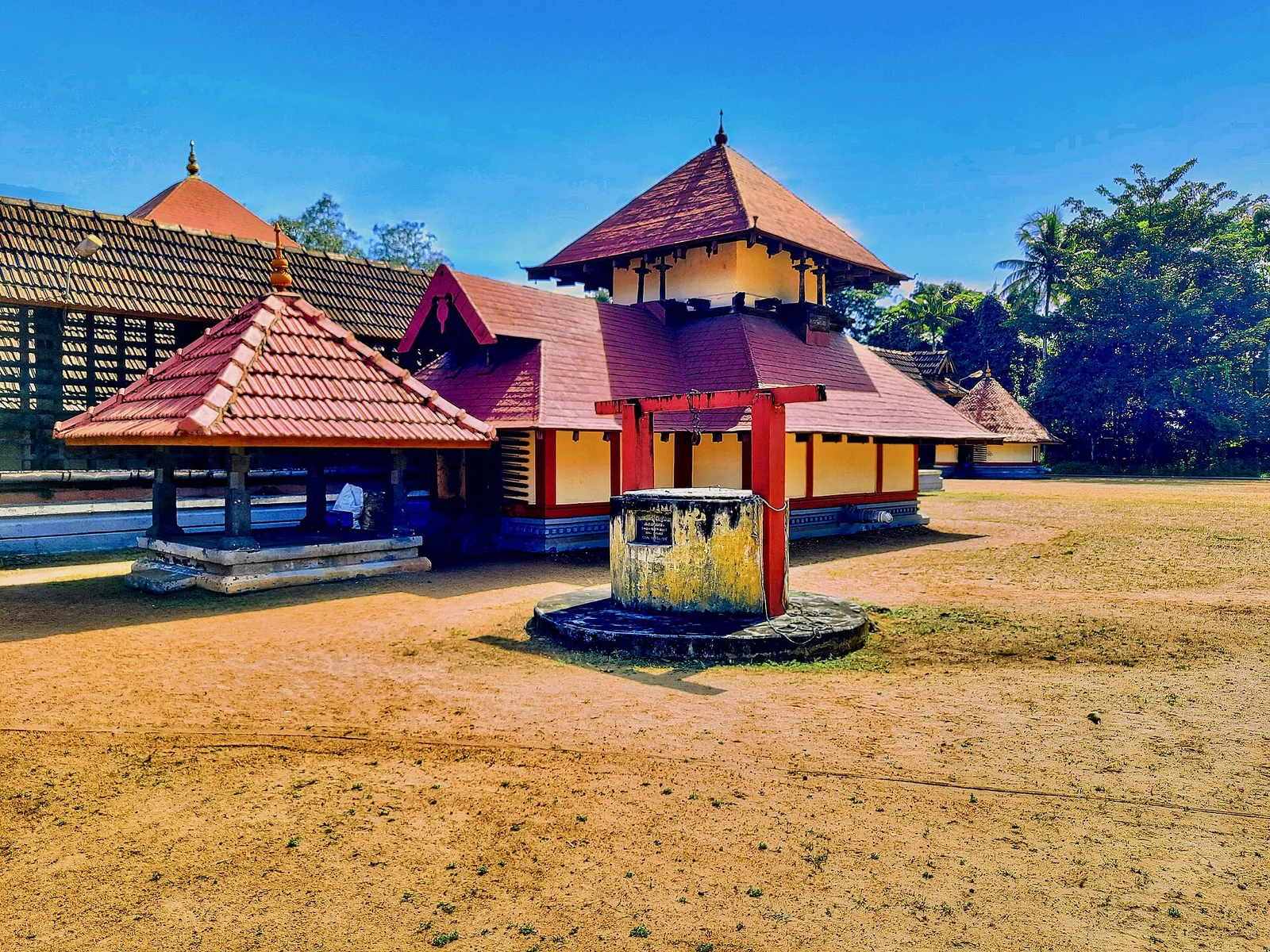
The Shiva temple west of Mavelikkara whose 823 AD epigraph makes it the earliest Kerala temple with a dated inscription about its own origin — Shiva in the kirata hunter form, once the capital shrine of Odanad, and the richest single record of devadasi authority in this region.
11.9 km · ~20 min by cab · straight line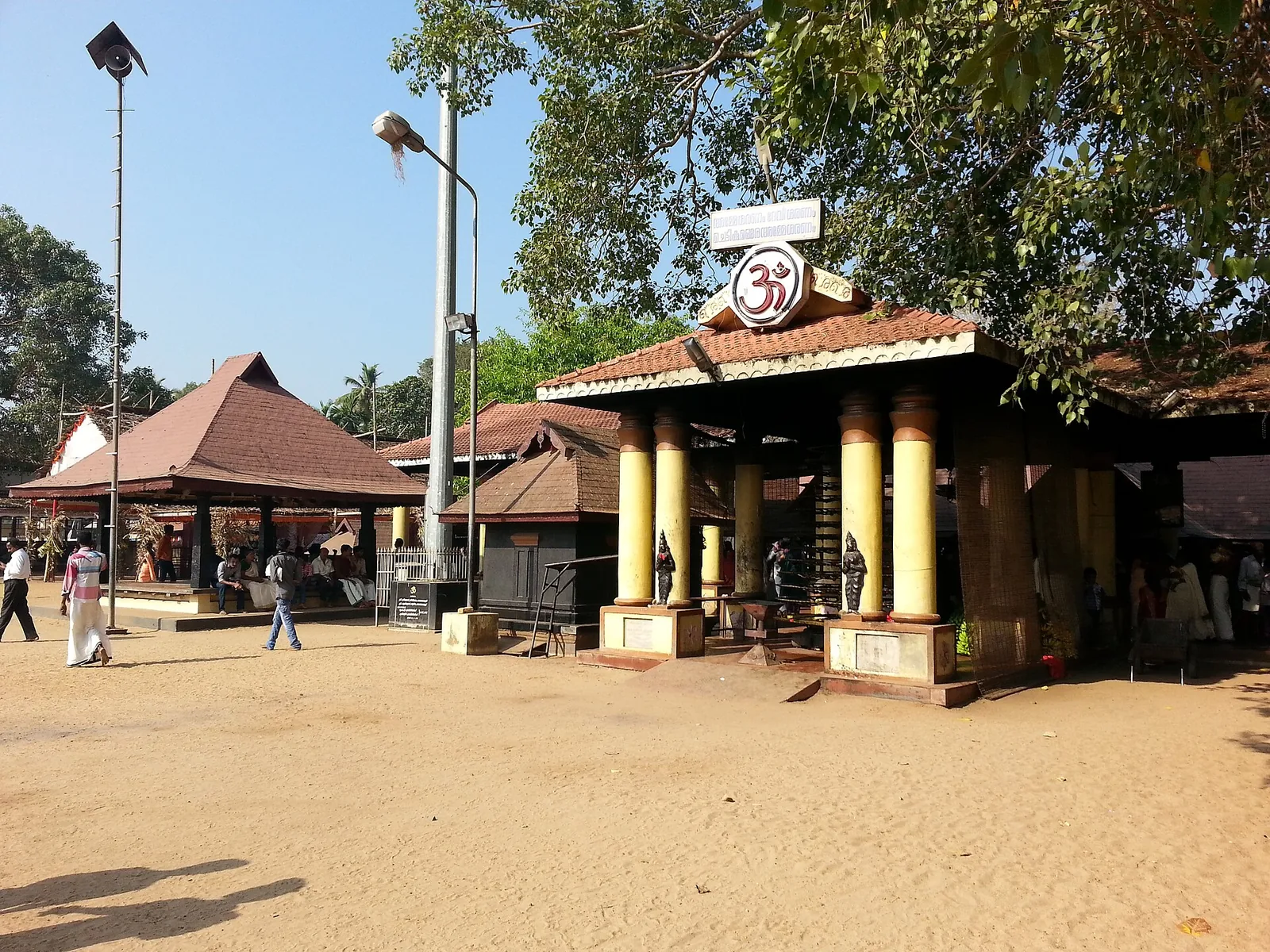
Major Bhagavathy temple near Mavelikkara, famous for its Kettukazhcha and Kumbha Bharani festivals.
14.9 km · ~25 min by cab · straight line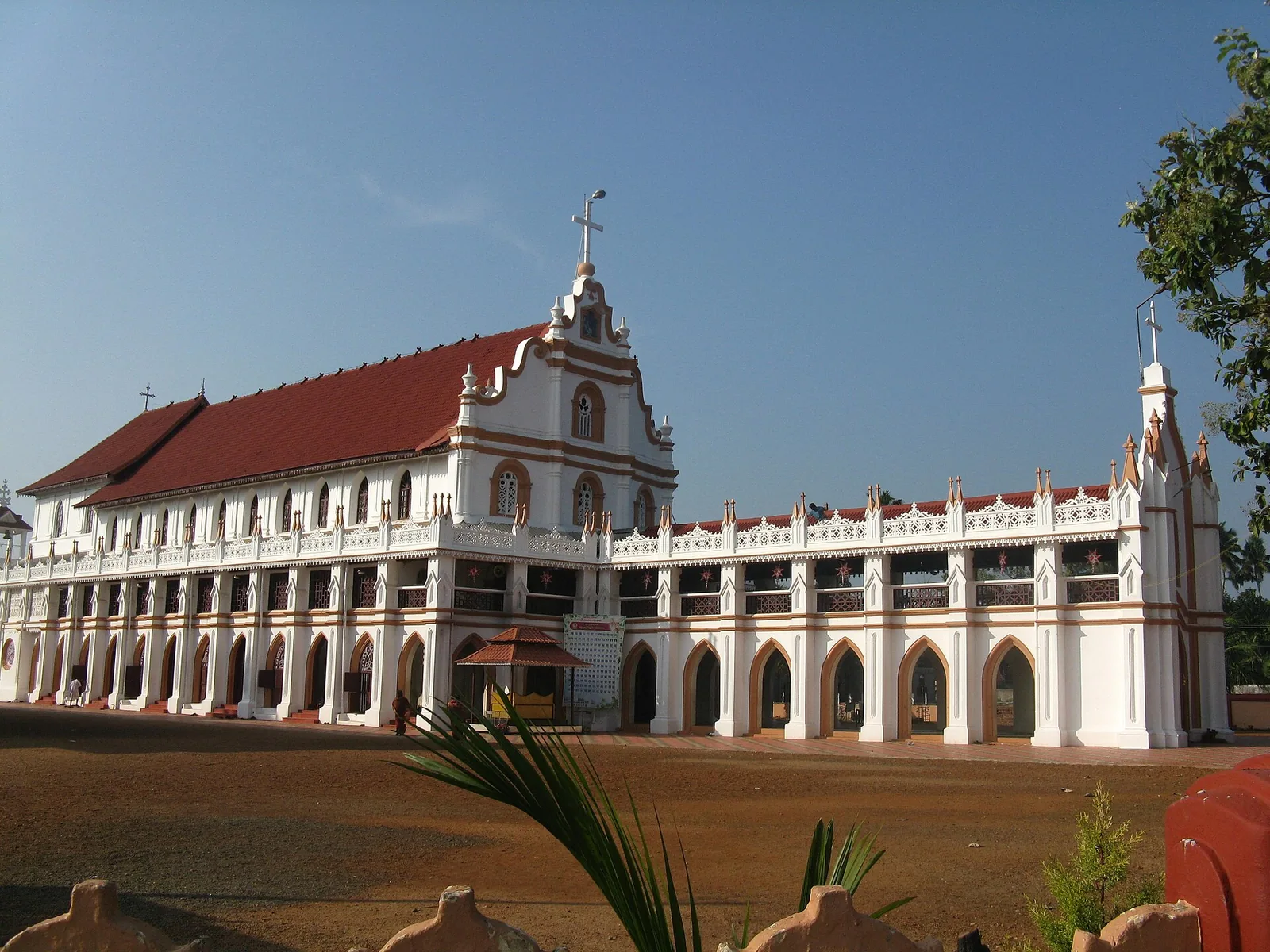
St George Forane Church at Edathua in Kuttanad, known for its large annual pilgrimage feast.
15.7 km · ~26 min by cab · straight line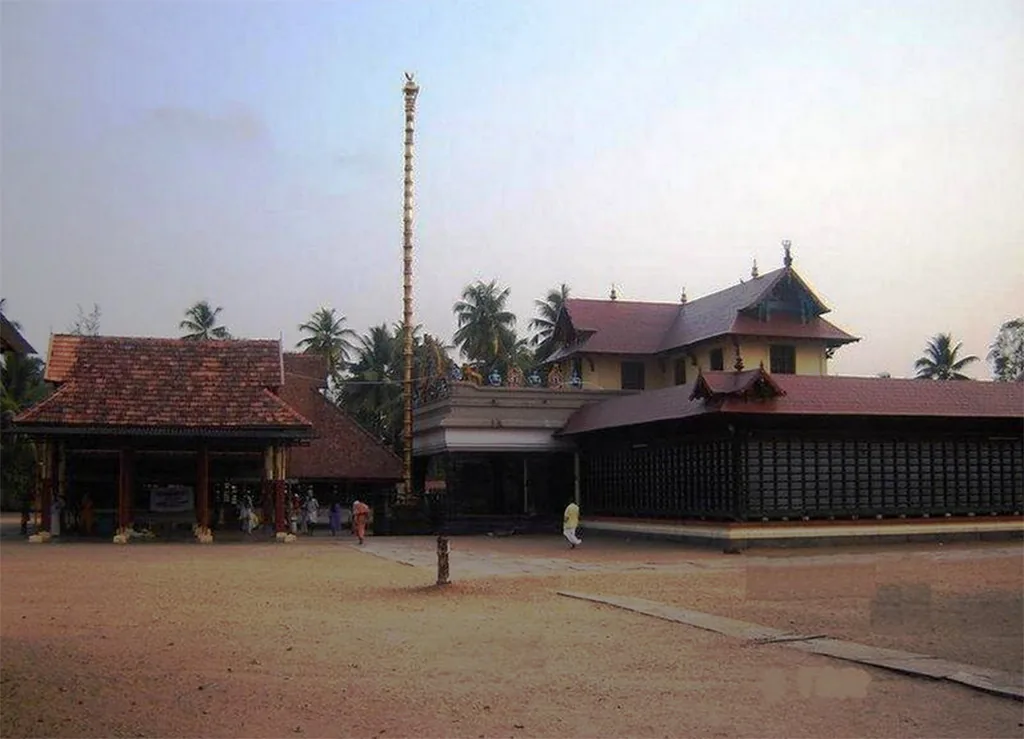
One of Kerala’s oldest Subramanya (Murugan) temples, in the south-Alappuzha town of Haripad.
18.2 km · ~30 min by cab · straight line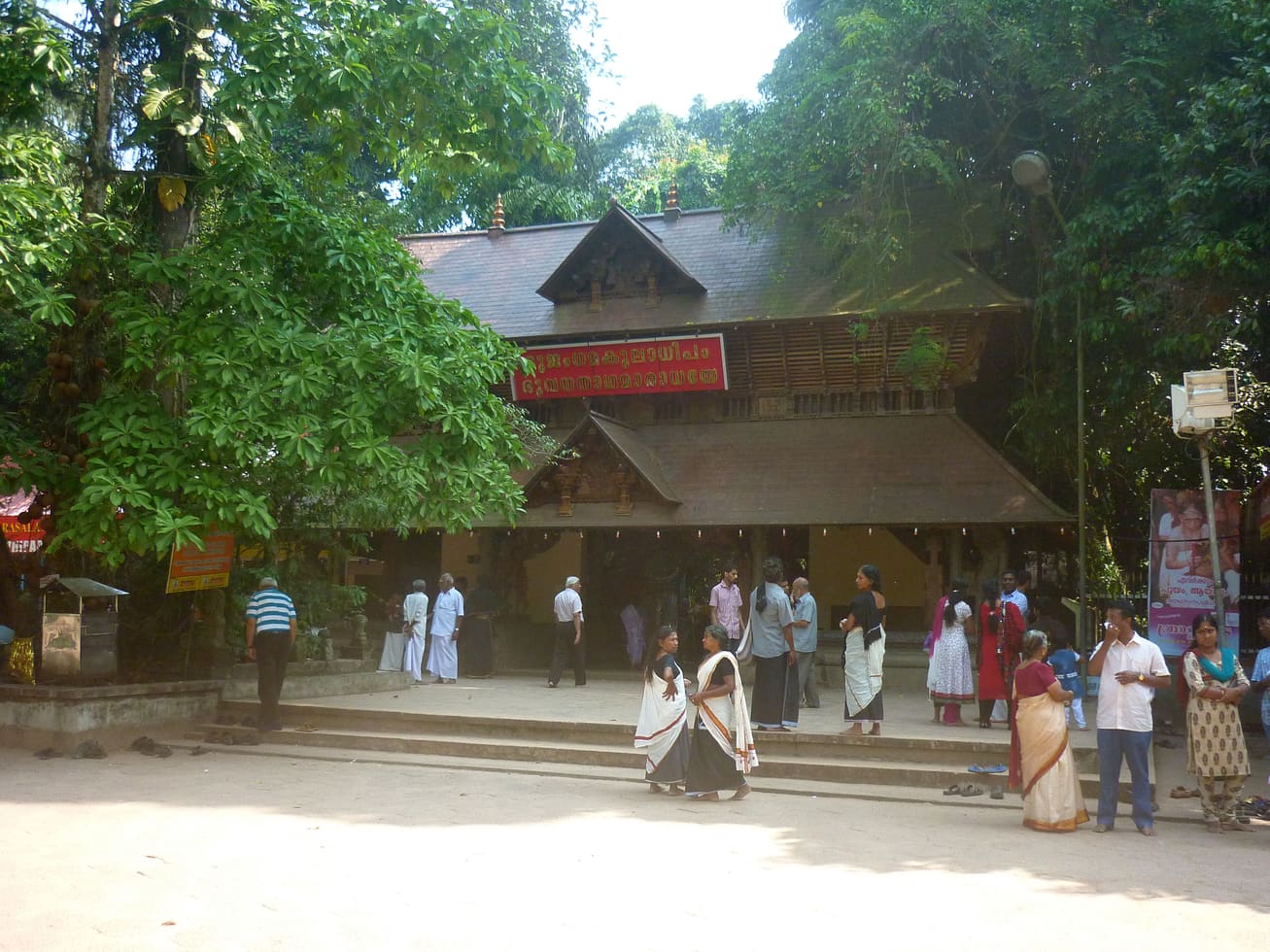
Major serpent shrine set in a sacred grove.
18.6 km · ~31 min by cab · straight line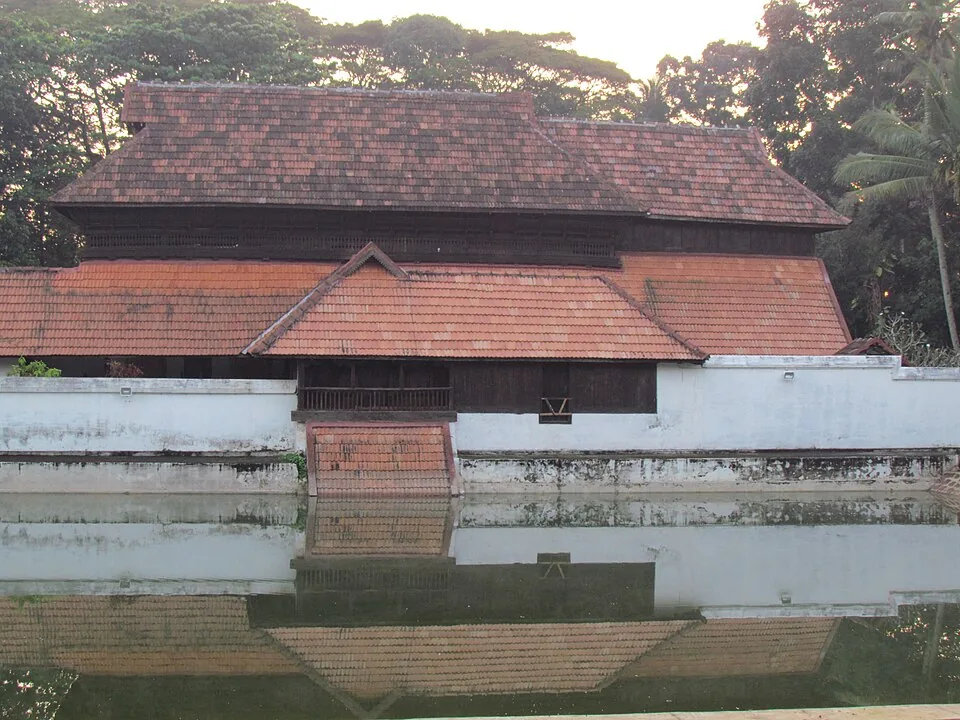
Restored 18th-century Travancore palace at Kayamkulam, home to the huge Gajendra Moksha mural.
22.4 km · ~37 min by cab · straight line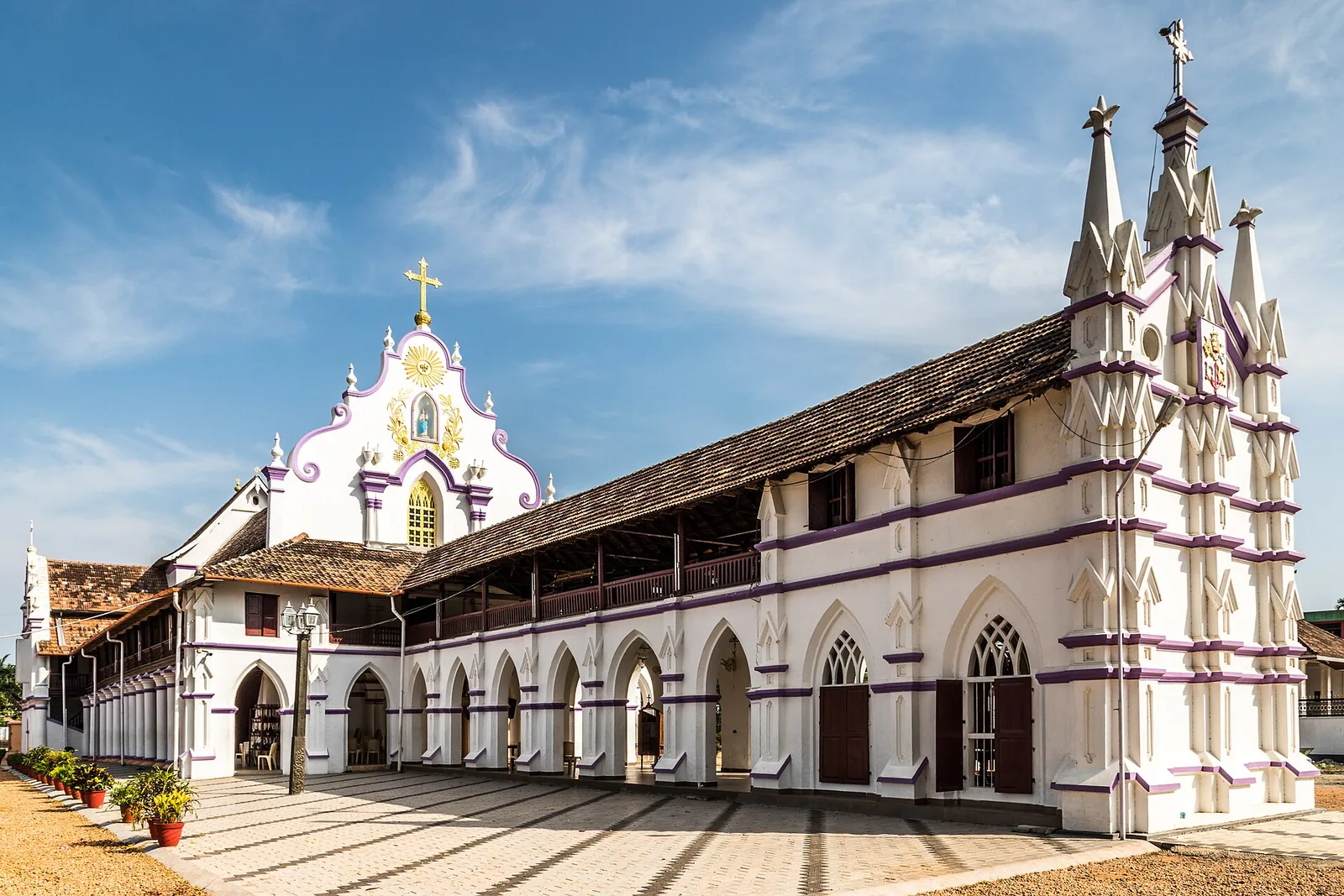
Kuttanad village on the Pamba known for the Champakulam Moolam snake-boat race and Kalloorkad St Mary’s Basilica.
23.8 km · ~40 min by cab · straight line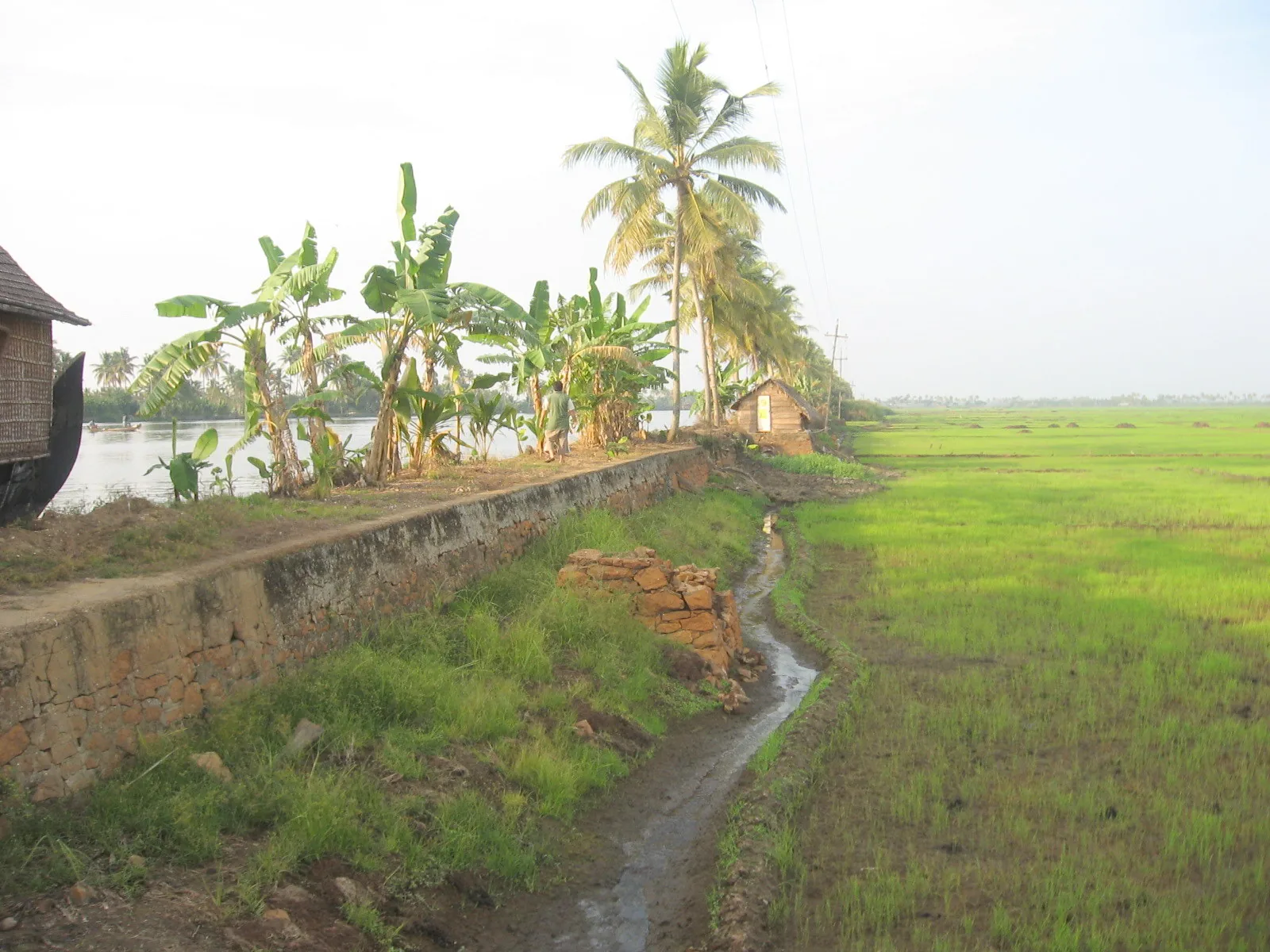
Low-lying paddy and canal region known as Kerala’s rice bowl.
24.3 km · ~40 min by cab · straight line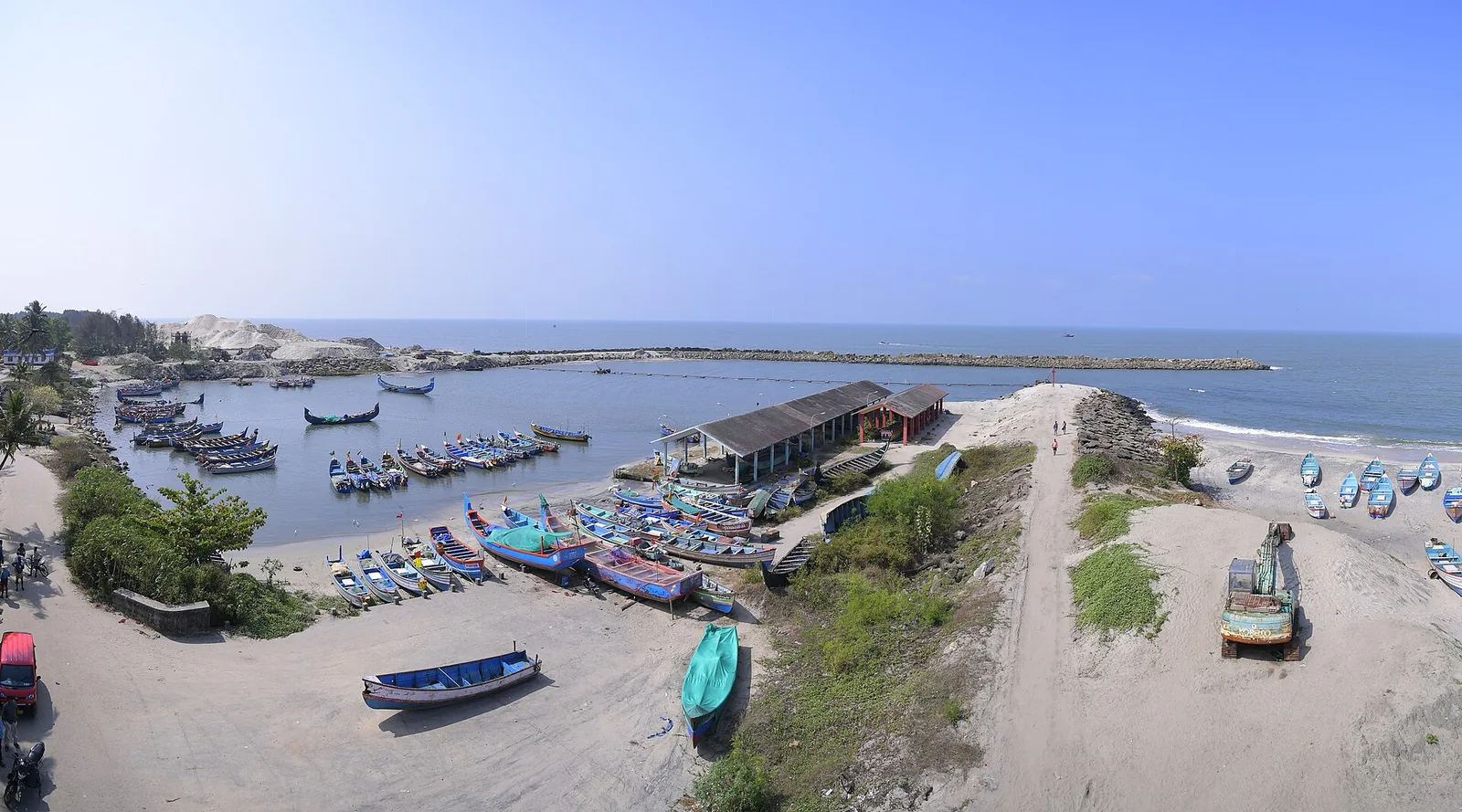
Working fishing harbour and 1955 flood spillway where the Thottappally leading channel meets the sea, south of Ambalappuzha — a painted fleet, two breakwaters and heaps of titanium-bearing black sand, rather than a quiet beach.
25.4 km · ~42 min by cab · straight line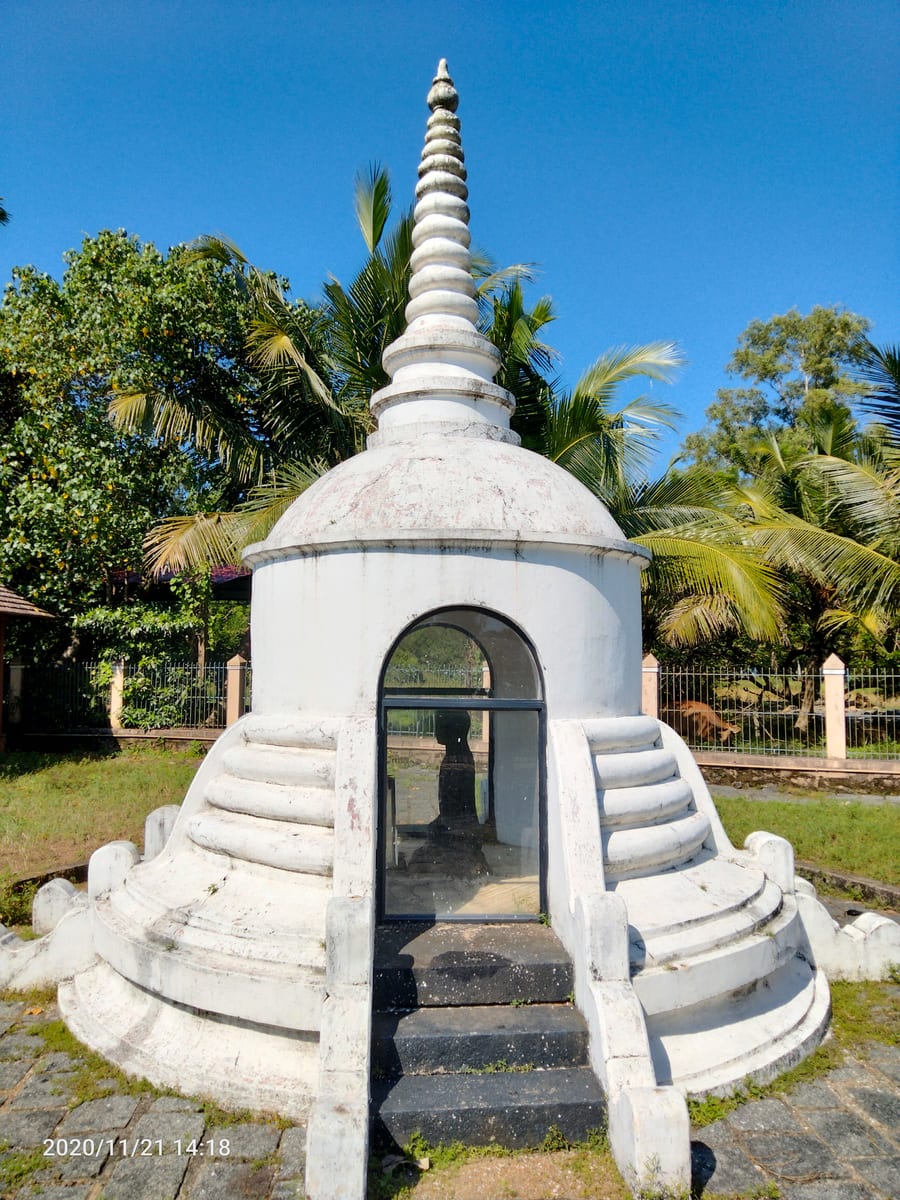
Ancient black-granite Buddha statue at Karumadi near Ambalappuzha, a relic of Kerala’s Buddhist past.
25.4 km · ~42 min by cab · straight line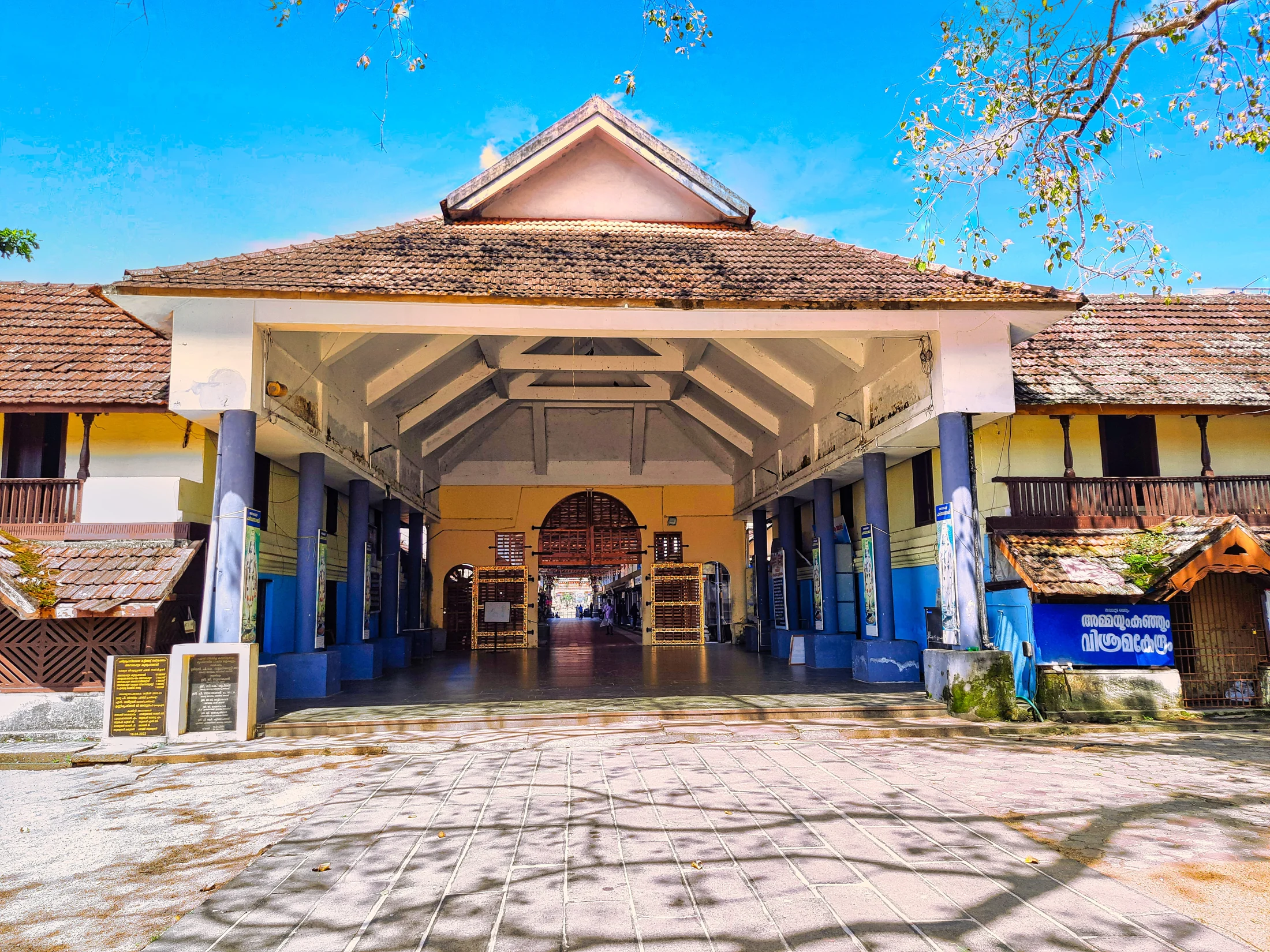
Ambalappuzha Sree Krishna Temple is an active temple in Ambalappuzha town, south of Alappuzha, administered by the Travancore Devaswom Board. Krishna is worshipped here as Parthasarathy, Arjuna’s charioteer. The temple combines a broad tank, tiled courtyards and painted ritual spaces with two enduring cultural associations: Palpayasam offered to the deity, and Kunchan Nambiar’s creation of Thullal. A visit works best when darshan, the permitted exterior spaces and any offering collection are planned around the temple’s morning or evening opening.
27.4 km · ~46 min by cab · straight lineNearby toilets, pharmacies, ATMs, seating and vets are community-mapped and may be incomplete or out of date. Map data © OpenStreetMap contributors | Walking times © openrouteservice.org by HeiGIT
It is the observance of the goddess’s menstruation. The sign is discovered rather than scheduled — when the priest removes the previous day’s flowers and finds a stain on the image’s garment — so it cannot be diarised. The temple says it happens several times a year and informs devotees through the media when it does. Her western nada then closes for three days and she is taken to the Pampa for the arattu on the fourth morning, returning on a female elephant. If you want to see it you will have to watch local Malayalam news and be able to travel at short notice.
There is no ticket. Darshan is roughly 4.30 am to 11 am and 5 pm to 8 pm, taken from the temple’s own published timings rather than a travel listing. Those hours change on festival days, on days with udayasthamana puja, and on eclipse days, when the nada closes an hour before the eclipse starts and reopens only after purification. Offerings and vazhipadus are paid for separately at the counter.
Chengannur is a Travancore Devaswom Board temple and the usual Kerala convention applies: entry to the temple proper is for Hindus, and the traditional dress code is enforced — mundu or dhoti for men, who remove their shirts inside, and saree, set-mundu or long skirt and blouse for women. Trousers, shorts and shirts are not accepted inside. The outer street front, the gopuram and the tank are public.
It is a Shivaratri rite in which Arayans — a fishing community from Alappad, on the coast in Kollam district — come to Chengannur as the goddess’s father’s people and pay the bride-price to Shiva. It follows a legend that their ancestors recovered the Devi’s image from a pool in the Pampa after a fire destroyed the original. It is a living community obligation rather than a display, and the respectful way to encounter it is as one more worshipper in the crowd, not as an audience.
The temple is about 500 m east of the MC Road in Chengannur town, with the railway station and the KSRTC bus stand each roughly a kilometre away — the station is a major stop on the Thiruvananthapuram–Ernakulam line and is the usual railhead for Sabarimala. Autos run from either. Forty-five minutes to an hour is enough for an ordinary visit; on festival days or during the twelve days of Haridra Pushpanjali, allow considerably more and expect queues.
Chengannur sits in the Pampa valley among a dense cluster of temples. Aranmula Parthasarathy Temple, of the metal mirrors and the snake-boat regatta, is about 10 km east in Pathanamthitta district; Pandalam, the palace town of the Ayyappa story, is around 15 km by the temple’s own reckoning; and Sabarimala is some 92 km on by the same board. The Pampa ghats at Chengannur, including Mithrappuzhakkadavu where the arattu is held, are close to the temple.
Morning or early evening is usually best; festival days can be powerful but crowded.
Entry: No ticket. Entry is free; vazhipadus such as the Haridra Pushpanjali, meenoottu, dhara, neypayasam and the archanas are paid for individually at the counter. Timings: Darshan roughly 4.30 am to 11 am and 5 pm to 8 pm. These are the temple's own published timings, not a travel listing. ⚠ They move on festival days and on days with udayasthamana puja (eighteen pujas are scheduled on those), and on eclipse days the nada closes an hour before the eclipse begins and reopens only after the purification rites.
Base yourself in Chengannur or a nearby town in Alappuzha, then confirm the last-mile route locally before leaving. Check temple entry customs, dress rules and festival crowd conditions before arrival. If the visit depends on forest, temple, boat, ferry, weather or seasonal access, check the official/local rule on the day before travel.
45 minutes to 2 hours, longer during festival or queue periods.
Nearby you can pair Thrichittatt Maha Vishnu Temple (820 m), Kandiyoor Sree Mahadeva Temple (11.9 km), Chettikulangara Devi Temple (14.9 km), Edathua Church (15.7 km).
Use official counters for offerings/tickets where applicable. Keep footwear and valuables secure in crowded areas.
Written about Chengannur Mahadeva Temple itself — its history, its legends and the arguments about them.


These guides explore Chengannur and the surrounding area. Choose a visit that fits your interests, allowing separately for travel between stops.


Route-level itineraries and practical guides for the rest of Kerala.
Photographs: Akhilan (CC BY-SA 4.0), Ssriram mt (CC BY-SA 4.0), Ms Sarah Welch (CC0), Balablitz (CC BY-SA 3.0), Ms Sarah Welch, CC0, via Wikimedia Commons (CC0), Dvellakat (CC BY-SA 3.0), Sundeep.sivadasan (CC0). Wikimedia Commons.