Places to Visit in Mavelikkara

Market and temple town on the Achankovil in eastern Alappuzha — Kandiyoor’s 823 AD epigraph, the Buddha at Buddha Junction, and the Onattukara country of Chettikulangara’s kettukazhcha.

Mavelikkara
Practical guide

Plan Mavelikkara

Who's going?Tailor Mavelikkara to your trip
DistrictAlappuzha
RoleOnattukara temple town
Time neededHalf a day if you take in Buddha…
Places to visit1Listed businesses5

Mavelikkara is a market and temple town on the Achankovil river in the old Onattukara country, and it holds three unusually important things while signposting almost none of them: the 1753 treaty that ended Dutch power on this coast was signed here, an old Buddha image stands enshrined at a junction named for it, and the Kandiyoor Mahadeva temple west of town carries an 823 AD epigraph — the earliest dated foundation record of any Kerala temple.

Half a day covers all three if you know what you are looking at. Expect a working town rather than a heritage circuit: there is no marker for the treaty a visitor can easily find, and the Buddha stands at a live road junction.

What to expect

Highlights

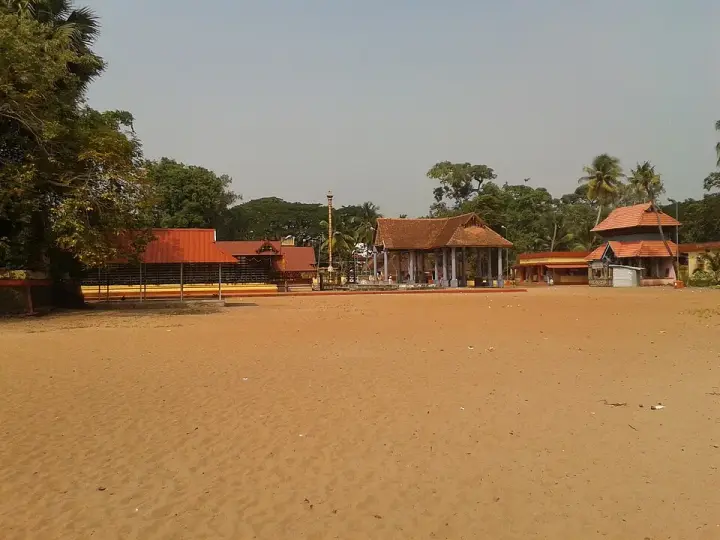
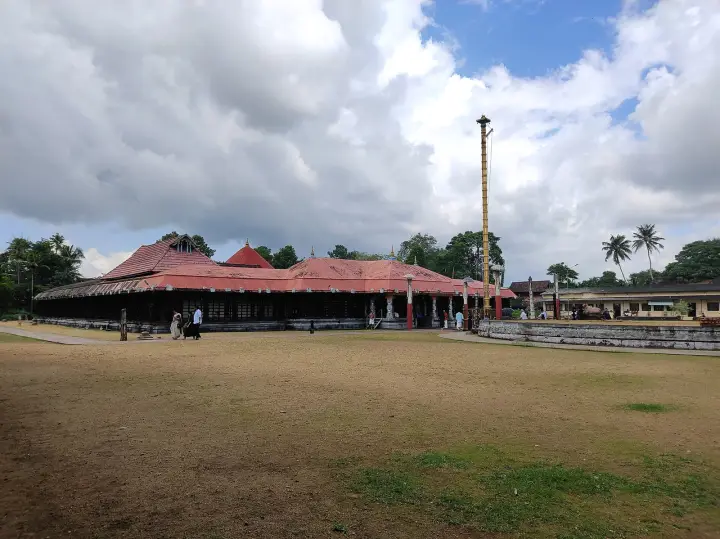
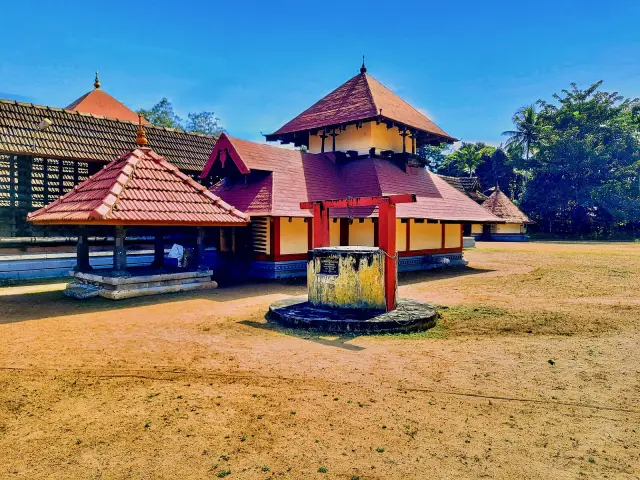
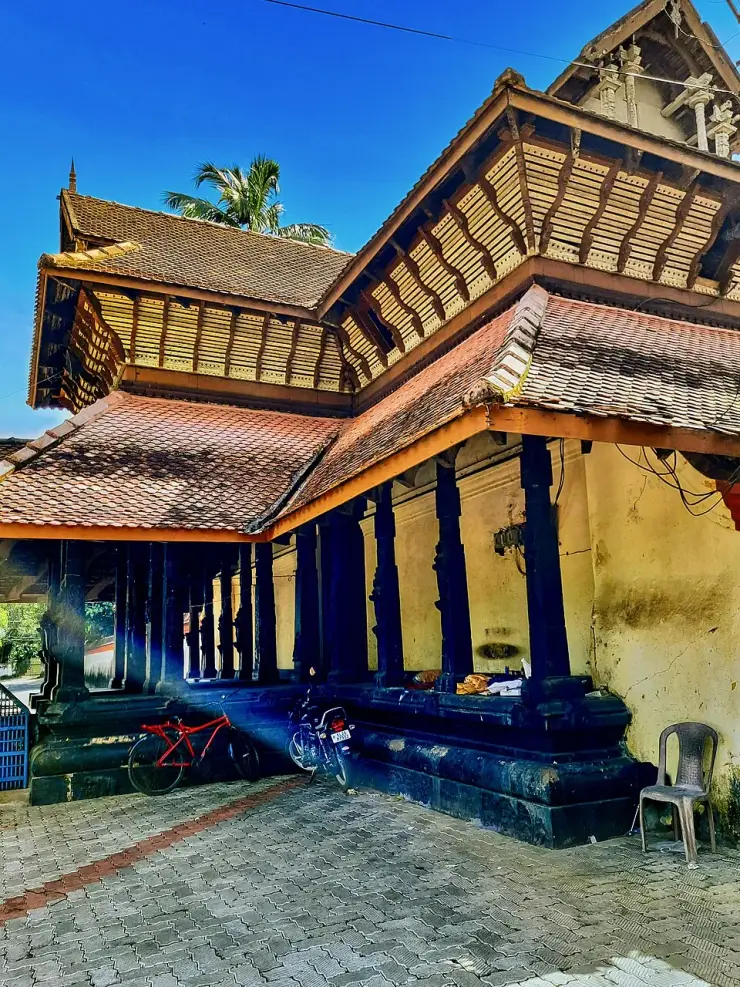
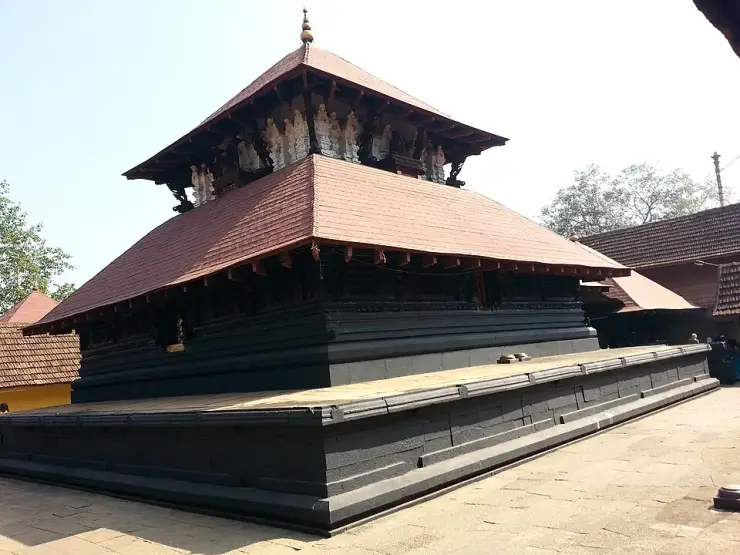
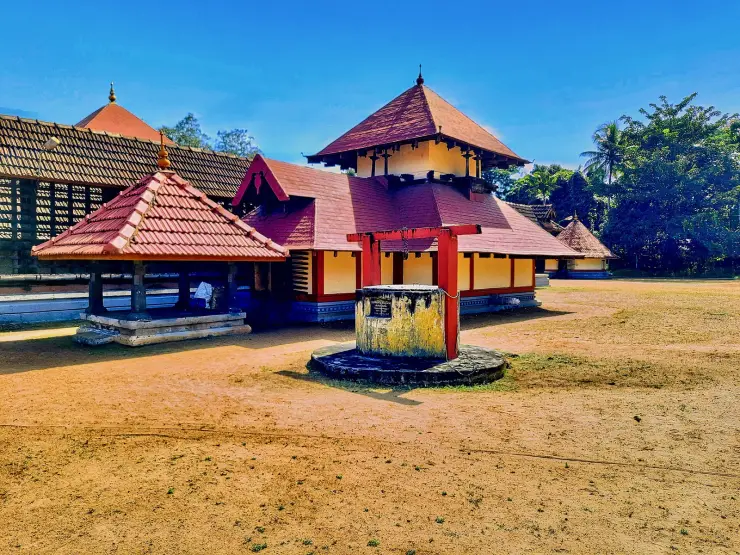
  • Kandiyoor Sree Mahadeva Temple — The Shiva temple west of Mavelikkara whose 823 AD epigraph makes it the earliest Kerala temple with a dated inscription about its own origin — Shiva in the kirata hunter form, once the capital shrine of Odanad, and the richest single record of devadasi authority in this region.
Getting there

How to visit

  • Nearest airport: Cochin (COK), ~86 km
  • Rail gateway: Alappuzha (coastal line)
Timing

Best time to visit Mavelikkara

October–February is the pleasant season inland. The Chettikulangara Bharani (February–March) and the Onattukara festival calendar are the busiest local dates.

Weather in MavelikkaraSeasonal guide

Live forecast loads in your browser.

Today at Mavelikkara
Sunrise6:12 am
Sunset6:14 pm
Golden hour best light5:14 pm–6:14 pm
Blue hour after sunset6:14 pm–6:39 pm
Sun sets toward compass bearingW · 266°
Moon tonight🌖 Waning gibbous · 61%

Sun and moon are calculated for this location and shown in IST. Photography windows are the hour around sunrise and sunset; the sunset bearing is degrees clockwise from true north. Moon phase is accurate to about half a day.

The story

The story of Mavelikkara

A market and temple town on the Achankovil river in eastern Alappuzha, in the old Onattukara country. Its name is on one of the decisive documents of Kerala's history: the Treaty of Mavelikkara, signed here on 15 August 1753, which ended Dutch power on this coast. It also holds an old Buddha image, enshrined in a small shrine at a junction named for it, and a temple whose inscription is the earliest dated foundation record of any Kerala temple.

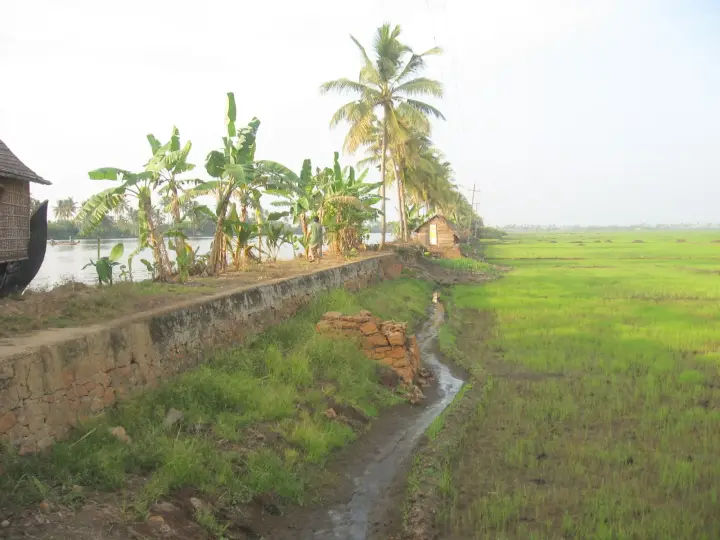
Mavelikkara stands on the Achankovil, one of the rivers that drains the Western Ghats into the Vembanad system, in the eastern, drier, higher part of Alappuzha district — a long way in feel from the houseboats and paddy of Kuttanad even though they share a district. This is Onattukara: an old regional name for the tract covering roughly Mavelikkara, Karthikappally and Karunagappally, sandy soil, sesame country, and a distinct cultural identity within central Travancore.

The town's claim on history is a single day. On 15 August 1753, at Mavelikkara, Anizham Thirunal Marthanda Varma of Travancore and the Dutch East India Company signed a treaty of peace and friendship. It is worth being precise about what it did, because it is one of the most frequently misdescribed documents in Kerala's history and it is misdescribed almost everywhere.

The Dutch undertook a strict policy of peace and to stay out of disputes involving Travancore. They renounced their alliances with the other chiefs and nobles of Malabar — which was the heart of it, because those alliances were the instrument through which the Company had intervened in Kerala politics for a century. There were provisions on the extradition of deserters and the restoration of Dutch goods and people shipwrecked on the Travancore coast. The Dutch were to supply Travancore with war material annually, and Travancore was to sell them a fixed quantity of pepper at fixed rates. An annual present of 5,000 guilders was agreed, with the final say on payment left to Batavia.

Read as a list of clauses that is a commercial arrangement. Read as a settlement it is a surrender. A trading company that had spent a century making and breaking Malabar chiefs agreed to stop doing so, and agreed to supply weapons to the power that had beaten it — the same power that had destroyed a Dutch force at Colachel eleven years earlier. It effectively ended Dutch political and commercial dominance on the Kerala coast and left Marthanda Varma free to go on consolidating without foreign interference. That happened here.

What it did not do is settle Karappuram, and that confusion is worth naming because it is everywhere. The transfer of Karappuram and Alangad from Cochin's orbit to Travancore is a separate matter, and the battle at Purakkad is 1755 and was fought against the Zamorin. The treaty signed at Mavelikkara concerned the Dutch and nothing else.

The town's second layer is much older and much stranger. At a road junction in front of the Krishna Swamy temple sits a Buddha in the meditation posture, and the junction is called Buddha Junction for it. The image is attributed to the ninth or tenth century, when this part of Kerala held Buddhist settlements that were later comprehensively overwritten — one of the few periods of Kerala's religious history that is hard to see precisely because so little of it survives above ground.

It is not, as it is usually described, standing in the open at the foot of a tree. It is enshrined — housed in a small white masonry shrine with decorated pilasters, a gabled front and a domed superstructure carried up into a tiered gold finial, set inside a low perforated wall with its own gate, beneath a large tree. The form of that crown is worth a look, because it reads as a stupa rather than as an ordinary Kerala shrine roof, which is an unusual thing to raise over an image here. And the pedestal is dated: 1923 AD, cut into the base. That dates the pedestal and the enshrinement rather than the image, and it is a useful corrective to accounts that present the whole thing as an ancient survival sitting where it was found.

A short way west of the town is the Kandiyoor Sree Mahadeva Temple, which carries what is, as far as we can establish, the earliest dated inscription any Kerala temple holds about its own foundation — an epigraph of 823 AD — along with a local era counted from that foundation and a thirteenth-century inscription naming a devadasi of the temple who was also the wife of the king of Venad. That page tells it properly. It is the single best reason to come out this way.

Mavelikkara also has a quieter reputation as a schooling town: an Anglo-Vernacular School was operating here under Travancore by 1865, and the town has kept an association with education and with Carnatic music and the arts since. Today it is a taluk headquarters and a market town — buses, shops, the river, temples — with an unusual density of history for its size and very little signage to tell you so.

Legend & myth

The first and most useful thing we can do here is unpick a confusion, because the Treaty of Mavelikkara is one of the most commonly misdescribed events in Kerala's history and we know that from having got it wrong ourselves. Our own pages once said that Travancore attacked in 1753 in what is remembered as the Purakkad war and annexed Karappuram outright under the Treaty of Mavelikkara. Three separate things in that sentence were wrong, and correcting them is the clearest way to say what the treaty was.

The treaty was between Travancore and the DUTCH. It was signed at Mavelikkara on 15 August 1753 and its subject was the Dutch East India Company's position in Kerala: non-intervention, the renunciation of Company alliances with the other chiefs and nobles of Malabar, extradition of deserters, restitution of shipwrecked Dutch goods and men, an annual Dutch supply of war material, a fixed quantity of Travancore pepper at fixed rates, and an annual present of 5,000 guilders subject to Batavia's decision. It did not concern Karappuram and settled nothing about it.

The battle at Purakkad is dated 1755, not 1753, and was fought against the Zamorin of Calicut — a different opponent and a different war from the Karappuram transfer. And Karappuram, with Alangad, was a tributary territory of Cochin rather than a Travancore conquest of that year; "attacked and annexed outright" overstates what happened. We would add, having looked again while writing the Cherthala page, that even the year usually given for the Karappuram transfer is not secure: 1753, 1755 and 1762 all appear in print and the Alappuzha district administration's own history gives no year at all.

The second area is the Buddha, where the written accounts and the photographs disagree and the photographs win. Sources describe a large bronze Dhyana Buddha at the foot of a tree — some placing it in the eastern courtyard of the Krishna Swamy temple, others at the road junction in front, which is named Buddha Junction in consequence. The photographs show something more specific and more interesting: the image is enshrined, housed in a small white masonry shrine with decorated pilasters, a gabled front, a domed superstructure and a tiered gold finial, inside its own low perforated wall with a gate, beneath a big tree. Seen that way, "in the eastern courtyard" and "at the junction" are probably not rival claims at all but the same walled compound described from inside and from the road. The description that is simply wrong is the one everybody repeats: the image is not sitting in the open at the foot of a tree.

Two further things follow from looking rather than reading. The material is everywhere given as bronze; in the photographs it reads as dark stone, which is what most surviving Kerala Buddhas of this period are. We will not certify either from a photograph, so this page states no material. And the pedestal carries a date cut into its base — 1923 AD — which no written account we found mentions at all. It dates the pedestal and the enshrinement rather than the image, but it matters, because it means the setting you see is an early twentieth-century act of preservation and not an ancient survival left where it fell. The provenance is contested too: one account has the image retrieved from paddy fields near Kandiyoor, another recovered from the Achankovil river. Both are published, both are plausible, and picking one to make the sentence flow better would be inventing a fact. What is not in dispute is the context: this tract held Buddhist settlement in that period, and the image is a survivor of it.

The third is a caution about superlatives in this district, which we apply to ourselves. Claims of the "only such temple in India" kind attach easily to places around Mavelikkara — the Chunakkara temple carries one — and they are almost always unverifiable as stated. Where we repeat one we will say who is making it. Where we cannot attribute it, we leave it out, and that is why some things you may read elsewhere about this area do not appear on our pages.

The fourth is scale, and it is the practical one. Mavelikkara is a working taluk town of ordinary size with an extraordinary quantity of history attached to it and almost no interpretation on the ground. There is no treaty museum, no marker of the 1753 signing that a visitor can easily find, and the Buddha stands at a road junction with traffic going round it. If you come expecting the history to be presented, you will be disappointed; if you come knowing what happened here, it is one of the more remarkable small towns in Kerala.

More about Mavelikkara

History

Mavelikkara lies on the Achankovil river in eastern Alappuzha district, in the old regional tract of Onattukara, which covers roughly the Mavelikkara, Karthikappally and Karunagappally areas and is distinguished by its sandy soils and its own cultural identity within central Travancore.

The town gives its name to the Treaty of Mavelikkara, concluded between Maharaja Anizham Thirunal Marthanda Varma of Travancore and the Dutch East India Company and signed here on 15 August 1753. Under it the Dutch undertook a strict policy of peace and non-interference in Travancore's disputes and renounced their alliances with the other chiefs and nobles of Malabar; provision was made for the extradition of deserters and the restoration of Dutch goods and personnel shipwrecked on the Travancore coast; the Company was to supply war material annually and Travancore to sell it a fixed quantity of pepper at fixed rates; and an annual present of 5,000 guilders was agreed, subject to the decision of the Dutch authorities at Batavia.

Its effect was to end Dutch political and commercial dominance on the Kerala coast, eleven years after Travancore's defeat of a Dutch force at Colachel, and to leave Marthanda Varma free to continue his expansion and consolidation without foreign intervention. The treaty is frequently and wrongly cited as the instrument by which Karappuram passed to Travancore; it concerned the Dutch alone.

The area holds evidence of Buddhist settlement in the ninth and tenth centuries. A Buddha image in the meditation posture, attributed to that period, stands at Mavelikkara — described in some accounts in the eastern courtyard of the Krishna Swamy temple and in others at the road junction before it, which is named Buddha Junction for it. It is enshrined in a small masonry shrine with a domed, stupa-like crown and a tiered finial, and its pedestal is dated 1923 AD. Accounts of its recovery differ, one giving paddy fields near Kandiyoor and another the Achankovil river; it is usually described as bronze, though photographs suggest dark stone.

West of the town, the Kandiyoor Sree Mahadeva Temple carries an epigraph of 823 AD — the earliest dated inscription of any Kerala temple concerning its own foundation — together with the Kandiyoorabdam, a local era counted from that foundation, and a 1218 inscription naming a devadasi of the temple who was also the wife of the king of Venad.

Mavelikkara has a long association with education and the arts in Travancore; an Anglo-Vernacular School was operating in the town by 1865. It is today a taluk headquarters and market town of Alappuzha district.

Why visit

To stand where the Treaty of Mavelikkara was signed on 15 August 1753 — the settlement that ended Dutch political and commercial power on the Kerala coast.

For the bronze Dhyana Buddha of the 9th–10th century at Buddha Junction, one of the visible survivors of a Buddhist Kerala that was very thoroughly overwritten.

For the Kandiyoor Sree Mahadeva Temple just west of town, whose 823 AD epigraph is the earliest dated foundation inscription of any Kerala temple, with its own local era counted from it.

For Onattukara itself — the sandy, sesame-growing eastern tract of Alappuzha that feels nothing like the district's backwater half.

As an unusually dense piece of history for a small working town, almost none of it signposted, which makes it a rewarding stop for anyone who reads before they travel.

For the Achankovil riverfront and the temple town rhythm of a place that is a market and a taluk headquarters first and a destination second.
Before you go

Mavelikkara — at a glance

Getting here

How to reach Mavelikkara

  • ✈︎ By air Trivandrum international airport is roughly 105 km south; Cochin international airport is further but well connected.
  • 🚆︎ By train Mavelikkara has its own station on the Kollam–Kottayam–Ernakulam line.
  • 🚗︎ By road Inland from the NH-66, about 30 km south-east of Alappuzha town, on the Onattukara road network.
  • 🚌︎ By bus KSRTC and private services connect Mavelikkara with Alappuzha, Kayamkulam, Chengannur and Kollam.
Getting back

Check your return bus or ferry with the operator before setting out. Leave time to reach the stop or jetty after your visit, and arrange a return vehicle in advance for a remote outing.

Ask at the jetty or the stand for the time of the last service back, not the next one. If you miss it, an auto or a taxi is the fallback — agree the fare before you get in.

Getting around Mavelikkara

If you need step-free access, contact the site before travelling. Ask about a level entrance, steps along the route, the nearest drop-off point, seating and accessible toilets.

Practical things near Mavelikkara
Bus stopsMavelikara Private Bus Stand 318 m · 4 min walkMapped Jan 2025DirectionsTaxi & auto standsAuto Taxi Stand 120 m · 1 min walkMapped Oct 2020DirectionsParkingParking 1.2 km · 14 min walkMapped May 2020DirectionsHospitalVrindavan Ayurveda Nursing Home Hospital293 m · 4 min walkMapped Sept 2023DirectionsClinicKottackal Aryavaidhyashala Clinic410 m · 5 min walkMapped May 2020DirectionsATMATM 174 m · 2 min walkMapped Sept 2023DirectionsBankState Bank of India 383 m · 5 min walkMapped Sept 2023DirectionsWater & snacksRation Shop 263 m · 3 min walkMapped Aug 2022DirectionsGroceries & bakerySupreme Bakery403 m · 5 min walkMapped May 2020DirectionsBookshopVidhyarambham Bookshop385 m · 5 min walkMapped May 2020DirectionsPost officePostOffice Post office524 m · 6 min walkMapped Mar 2019DirectionsSomewhere to prayPlace of worship 697 m · 8 min walkMapped May 2020DirectionsPark or gardenMavelikkara Municipal park 454 m · 5 min walkMapped Aug 2022DirectionsPublic art & memorialsRajiv Gandhi Statue Public artwork1.5 km · 18 min walkMapped Jul 2020Directions
What the cash actually costs
  • Withdrawing from a bank that is not your own is free for a set number of times a month, then costs up to ₹23 plus GST — about ₹27 a withdrawal. This is not one of the RBI’s six metro centres, so the allowance here is the higher one: at least five free other-bank withdrawals a month, and at least five at your own bank.
  • That free allowance belongs to Indian bank accounts. On a card issued abroad your own bank’s international withdrawal and exchange charges apply instead. If the machine offers to bill you in your home currency, choose rupees — the conversion rate on that offer is set by the machine, not by your bank.
  • Choose a well-lit ATM, preferably at a bank branch. Shield your PIN, avoid help from strangers and use your bank’s support number if a withdrawal fails or the machine retains your card.

Charge cap and free-transaction limits: Reserve Bank of India, in force since 1 May 2025.

These services are listed within about 1.2 km of Mavelikkara. Walking distances follow mapped routes; access and opening hours can change. Other services may be closer but are not included here.

Nearby bases

Where to go from Mavelikkara

Alappuzha town, Alappuzha townHouseboat base
Town / base

Alappuzha town

Canals, beach, lighthouse and main houseboat departure point.

Alappuzha BeachAlappuzha LighthouseFinishing PointCanal walks
Open Alappuzha town guide →
Kuttanad, KuttanadBackwater village base
Town / base

Kuttanad

Low-lying paddy and canal region for slow village travel.

Kuttanad canalsPaddy fieldsChampakulamNedumudy
Open Kuttanad guide →
Mararikulam, MararikulamBeach base
Town / base

Mararikulam

Quiet beach belt north of Alappuzha town.

Marari BeachFishing villagesArthunkal Church
Open Mararikulam guide →
Ambalappuzha, AmbalappuzhaTemple base
Town / base

Ambalappuzha

Historic Krishna temple town south of Alappuzha.

Ambalappuzha Sree Krishna TempleKarumadikuttanPunnapra beach belt
Open Ambalappuzha guide →
Haripad and Mannarasala, Haripad and MannarasalaTemple base
Town / base

Haripad and Mannarasala

Serpent shrine and temple circuit in south Alappuzha.

Mannarasala TempleHaripad templesKayamkulam lake side
Open Haripad and Mannarasala guide →
Cherthala, CherthalaCoastal taluk-town base
Town / base

Cherthala

Taluk town on NH-66 between Alappuzha and Kochi — the Karthyayani temple at its centre, the Cherthala Pooram and its padayanis, and the lagoon-and-coast country north of Alappuzha.

Cherthala Karthyayani TempleKakkathuruthu
Open Cherthala guide →
Chengannur, ChengannurPampa-side temple base
Town / base

Chengannur

Rail and pilgrim town on the Pampa in eastern Alappuzha, carrying two crowds. It starts the Pancha Pandava circuit of five Divya Desams, and it is the railhead most Sabarimala pilgrims arrive at.

Chengannur Mahadeva TempleThrichittatt Maha Vishnu TempleChakkulathukavu Bhagavathy Temple
Open Chengannur guide →
In the district

Where Mavelikkara sits in Alappuzha district

District HQAlappuzha
LandscapeBackwaters & coastal Kuttanad

Alappuzha district is known for: The Alleppey backwaters, houseboats and the Nehru Trophy Boat Race.

Houseboat cruisesAlleppey Beach & pierKuttanad — farming below sea level
Stay · eat · do · rent · see · shop

Places in Mavelikkara

Every verified place in Mavelikkara — filter by what you’re after.

Top pick
Temple · Mavelikkara
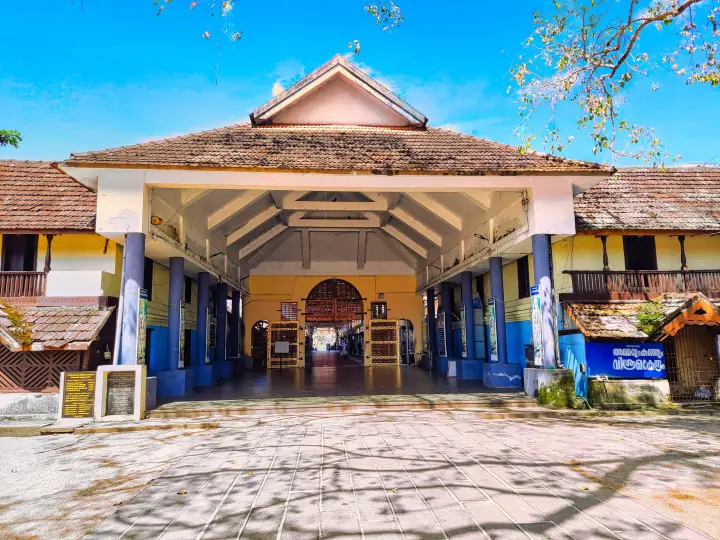
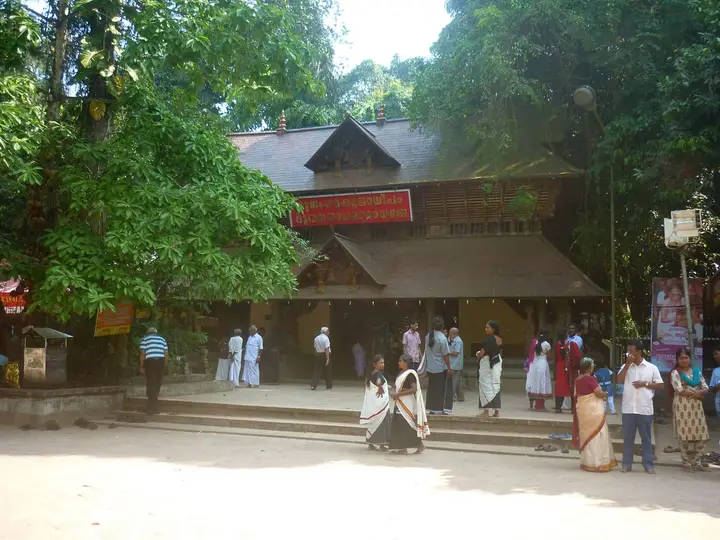
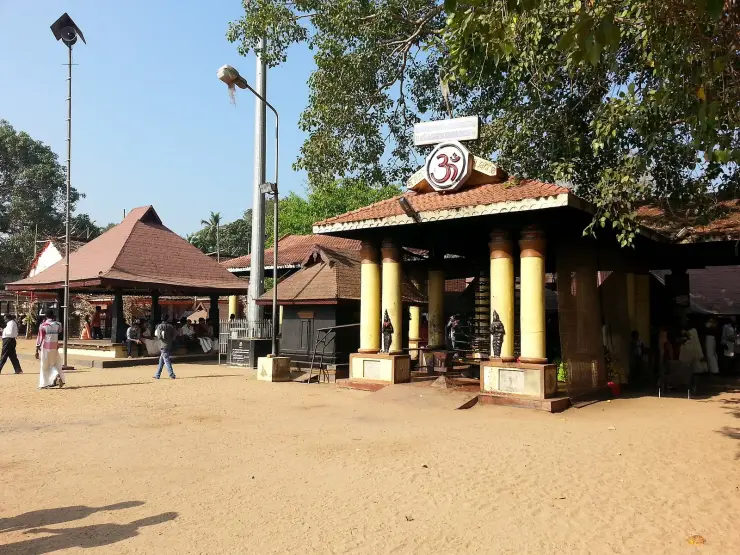
Mavelikara Sree Krishna Swamy Temple

Travancore Devaswom Board temple at the heart of Mavelikkara town. Mavelikara, Alappuzha, Kerala 690101.

DirectionsView guide
Top pick
Monument · Mavelikkara
Buddha Junction Buddha Statue

The stone Buddha that gives Buddha Junction its name, sheltered in a roadside pavilion beside the Krishna Swamy Temple — one of the relics of Kerala’s Buddhist past.

DirectionsView guide
Top pick
Museum · Mavelikkara
Sarada Mandiram (A.R. Rajaraja Varma Memorial)

State-owned memorial house of A.R. Rajaraja Varma, 'Kerala Panini'.

DirectionsView guide
Top pick
Church · Mavelikkara
St Mary's Orthodox Cathedral, Puthiyakavu

Cathedral of the Malankara Orthodox Diocese of Mavelikara at Puthiyacavu.

DirectionsView guide
Top pick
Hotel · Mavelikkara
Hotel Travancore Regency

Full-service hotel at Mitchel Junction with conference and banquet space.

Directions Commission-freeView details
Church · Mavelikkara
CSI Christ Church, Mavelikara

The town's CMS-founded Anglican church, now CSI Madhya Kerala Diocese. CSI Christ Church, Mavelikara, Alappuzha, Kerala 690101.

DirectionsView guide
Government rest house · Mavelikkara
PWD Rest House, Mavelikara

A Kerala PWD Class II rest house at Mavelikara. Government rest houses like this are often the only formal accommodation in a small Onattukara town.

Directions Commission-freeView details
Restaurant · Mavelikkara
Hut Restaurant, Hotel Travancore Regency

Multi-cuisine restaurant inside Hotel Travancore Regency, Mitchel Junction.

Directions Commission-freeView details
Handicrafts & khadi · Mavelikkara
Alleppey Sarvodaya Sangh (Khadi)

KVIC-aided khadi institution at Pallarimangalam, Mavelikara.

Directions Commission-freeView details
Government office · Mavelikkara
Mavelikara Municipality Office

Government office in Mavelikkara.

Directions Commission-freeView details
Bus station · Mavelikkara
KSRTC Depot, Mavelikkara

Kerala State Road Transport Corporation depot serving Mavelikkara town.

Directions Commission-freeView details
Railway station · Mavelikkara
Mavelikara Railway Station (MVLK)

Mavelikkara’s railhead, station code MVLK. It sits on Southern Railway’s Kollam–Kottayam–Ernakulam line and serves the Onattukara country around the town.

Directions Commission-freeView details
Fast food · Mavelikkara
KFC Mavelikkara

Fast food in Mavelikkara.

Directions Commission-freeView details

Book with the place itself. India’s cyber-crime coordination centre warned in April 2025 that convincing copies of hotel and pilgrimage booking sites are being pushed through sponsored search and social ads, taking payment for rooms the property never hears about. Every listing here links to the business’s own contact details and its own Google or Bing profile — we take no commission and sit in nobody’s payment path. If a booking page reached you through an ad, check the address bar against the property’s own site before you pay. Fraud can be reported on cybercrime.gov.in or on 1930.

Places to visit

The places themselves, around Mavelikkara

The best tourist places to visit in Mavelikkara — temples, viewpoints, lakes, heritage and nature, each with a full guide, how to reach it and what to see nearby.

For hotels, homestays and local businesses

Get listed in Mavelikkara for free

Roampedia is commission-free. Travellers discover your business, book directly and contact you through official details. Basic listings are free, while Gold and Platinum package upgrades can be requested from the owner dashboard after approval.

List your business — free
Read before you go

Mavelikkara guides, stories & itineraries

Stories & history of Mavelikkara

Written about Mavelikkara itself — its history, its legends and the arguments about them.

Nearby in Alappuzha

Wider reading from Alappuzha. The stories about Mavelikkara itself are above.

Planning a trip to Mavelikkara

The practical half — what is actually here, in what order to see it, and how to arrive.

Kerala-wide guides & itineraries

Route-level itineraries and practical guides for the rest of the state.

See all 100 Alappuzha guides & stories →

Map

Where things are in Mavelikkara

FAQ

Mavelikkara travel FAQs

What was the Treaty of Mavelikkara?

A treaty of peace and friendship signed at Mavelikkara on 15 August 1753 between Maharaja Anizham Thirunal Marthanda Varma of Travancore and the Dutch East India Company. The Dutch agreed to non-interference in Travancore's disputes and renounced their alliances with the other chiefs and nobles of Malabar; there were terms on deserters and shipwrecked Dutch goods, an annual Dutch supply of war material, Travancore pepper at fixed rates, and an annual present of 5,000 guilders subject to Batavia. It ended Dutch dominance on the Kerala coast.

Did the Treaty of Mavelikkara transfer Karappuram to Travancore?

No, and this is a very common error — one we had to correct on our own pages. The treaty concerned the Dutch alone. The transfer of Karappuram and Alangad from Cochin's orbit to Travancore is a separate matter, and the battle at Purakkad is dated 1755 and was fought against the Zamorin of Calicut.

What is Buddha Junction at Mavelikkara?

A road junction named for a Buddha image in the meditation posture, attributed to the 9th–10th century, in front of the Krishna Swamy temple. It is not out in the open under a tree as it is usually described: it is enshrined in a small white shrine with a domed, stupa-like crown inside its own low-walled enclosure, and the pedestal is dated 1923 AD — which dates the enshrinement, not the image. Its recovery is disputed (paddy fields near Kandiyoor, or the Achankovil river), and it is usually called bronze although photographs suggest dark stone.

What is Onattukara?

An old regional name for the tract covering roughly the Mavelikkara, Karthikappally and Karunagappally areas of what is now Alappuzha district — sandy soils, sesame cultivation and a distinct identity within central Travancore. It is still used locally and commercially, notably for Onattukara sesame.

What else is worth seeing near Mavelikkara?

The Kandiyoor Sree Mahadeva Temple west of town, whose 823 AD epigraph is the earliest dated Kerala temple foundation inscription. Chettikulangara, famous for its kettukazhcha, is a few kilometres away. The Krishna Swamy temple in the town has a lamp pillar associated with the 18th-century Travancore–Dutch settlement.

How do I reach Mavelikkara?

Mavelikkara has its own railway station on the Kollam–Kottayam–Ernakulam line. By road it is inland from the NH-66, roughly 30 km south-east of Alappuzha town. Trivandrum and Cochin international airports are both reachable, Trivandrum somewhat nearer.

What are the best places to visit in Mavelikkara?

Top places to visit in Mavelikkara include Kandiyoor Sree Mahadeva Temple — each has a full guide with how to reach it and what to see nearby on this page.

What is the best time to visit Mavelikkara?

October to March is the driest and most comfortable season to visit Mavelikkara and the rest of Kerala. The June–September monsoon is lush and green but wet, and often brings lower low-season prices.

Photographs: Dvellakat (CC BY-SA 4.0), Unknown author (Public domain), Raku2040 (CC BY-SA 3.0). Wikimedia Commons.

Image credits